Artwork
地蔵菩薩像|Jizō Bosatsu
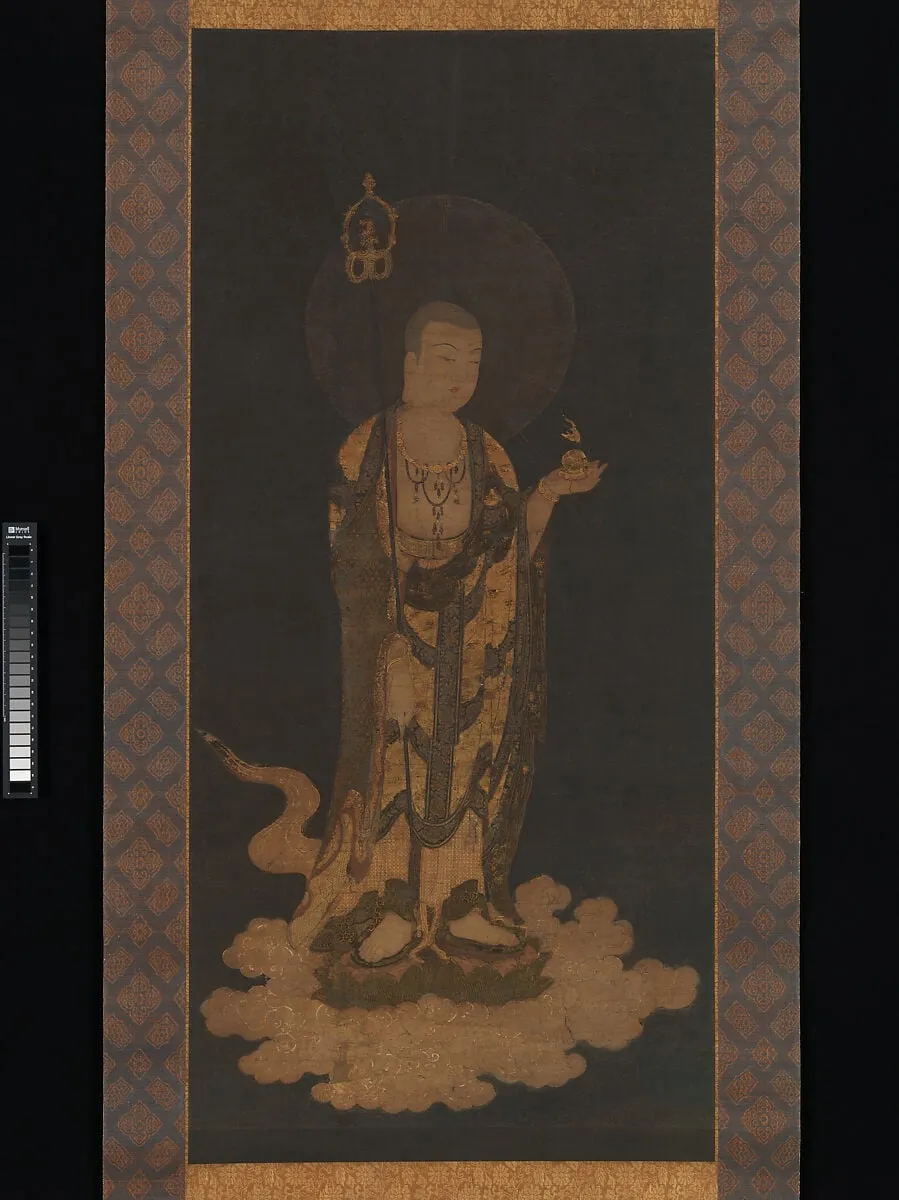
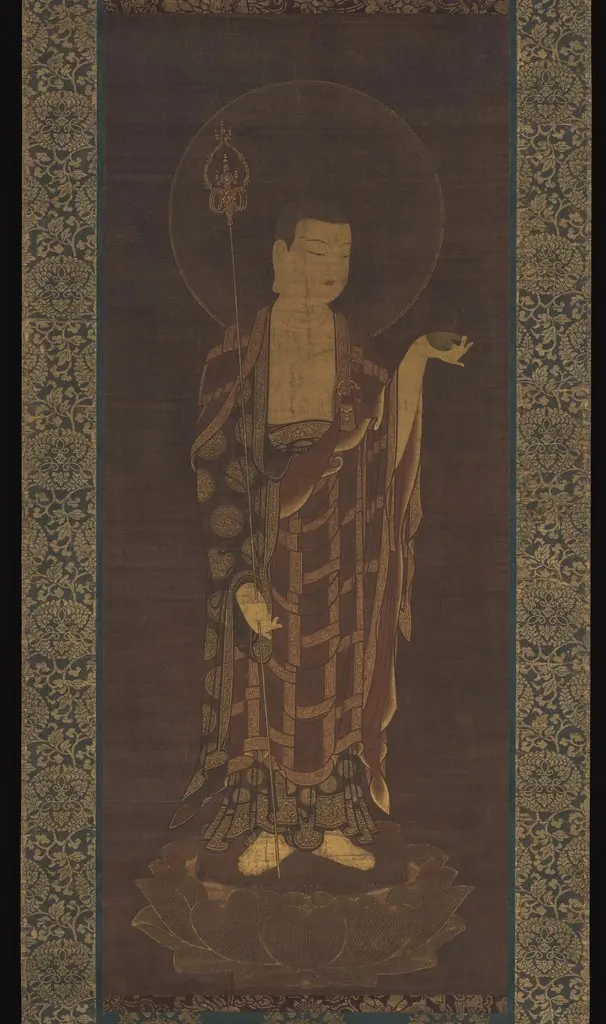
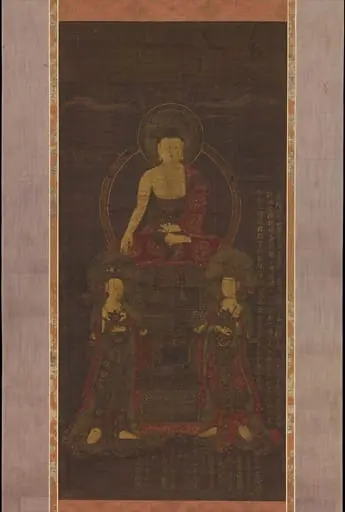
地蔵菩薩像|Jizō Bosatsu is an ink painting. It dates from 1449 and is held in the collection of the Metropolitan Museum of Art. Jizō Bosatsu is a 15th-century Japanese hanging scroll, crafted with ink, color, and gold on silk.
- Accession no.
- 69.139
- Credit line
- Gift of John M. Crawford Jr., 1969
About this work
Subject & Meaning
Created in 1449, the image presents the figure within the context of Buddhist iconography, where the Bodhisattva serves as a central spiritual subject.
The work depicts a Bodhisattva, specifically identified as Jizō Bosatsu, rendered as a religious painting from Japan. Created in 1449, the image presents the figure within the context of Buddhist iconography, where the Bodhisattva serves as a central spiritual subject. As a hanging scroll executed in ink, color, and gold on silk, the piece functions as an object of religious devotion.
The depiction aligns with the genre of religious art, emphasizing the spiritual significance of the Bodhisattva rather than a secular narrative.
Technique & Style
Jizō Bosatsu is executed as a hanging scroll in ink, color, and gold on silk, a refined combination of media characteristic of mid-fifteenth-century Japanese devotional painting. The use of silk as a support allowed for the delicate layering of pigments and the application of gold, which would have produced a luminous surface suited to the religious function of the image. The painting is held in the collection of the Metropolitan Museum of Art.
The dating to 1449 situates the piece within the Muromachi period, a time when such polychrome Buddhist scrolls on silk were produced for devotional use.
History & Provenance
The hanging scroll painting known as Jizō Bosatsu was created in Japan in 1449. The work is attributed to an anonymous artist and executed in ink, color, and gold on silk. It currently resides in the collection of the Metropolitan Museum of Art, where it is classified as religious art depicting a Bodhisattva.
No specific details regarding the original commission, the patron who ordered the work, or the intermediate ownership chain prior to its arrival at the museum are provided in the available records.
Legacy
The 1449 hanging scroll depicting Jizō Bosatsu, executed in ink, color and gold on silk, entered the collection of the Metropolitan Museum of Art, where its display among Asian religious works has contributed to continued scholarly attention on the figure within both Japanese and broader art historical contexts. Its status as a religious painting from the Muromachi period illustrates the stylistic development of Buddhist iconography in Japanese art, and its presence in a major Western museum has helped sustain interest in Jizō Bosatsu imagery beyond Japan. The work's attribution to an anonymous painter underscores the tradition of collective artistic practice in Buddhist visual culture.
Overview
Jizō Bosatsu is a 15th-century Japanese hanging scroll, crafted with ink, color, and gold on silk. It portrays Jizō, a revered figure in Buddhist tradition, known for his compassionate role. The artwork's vibrant palette and use of precious metals contribute to its gentle and protective aura, characteristic of devotional paintings from this period, despite the artist remaining unknown.
Artist & collection

 작자미상 수월관음도 고려|作者未詳 水月觀音圖 高麗|Water-Moon Avalokiteshvara
 Untitled
 Avalokiteshvara (Guanyin), the Bodhisattva of Compassion
 十一面観音影向図|Eleven-Headed Kannon on Mount Fudaraku
 釈迦三尊十六善神像|Shaka (Shakyamuni), the Historical Buddha, with Two Attendant Bodhisattvas and Sixteen Benevolent Deities
 석가삼존도 조선|釋迦三尊圖 朝鮮|Shakyamuni triad