Artwork
작자미상 수월관음도 고려|作者未詳 水月觀音圖 高麗|Water-Moon Avalokiteshvara
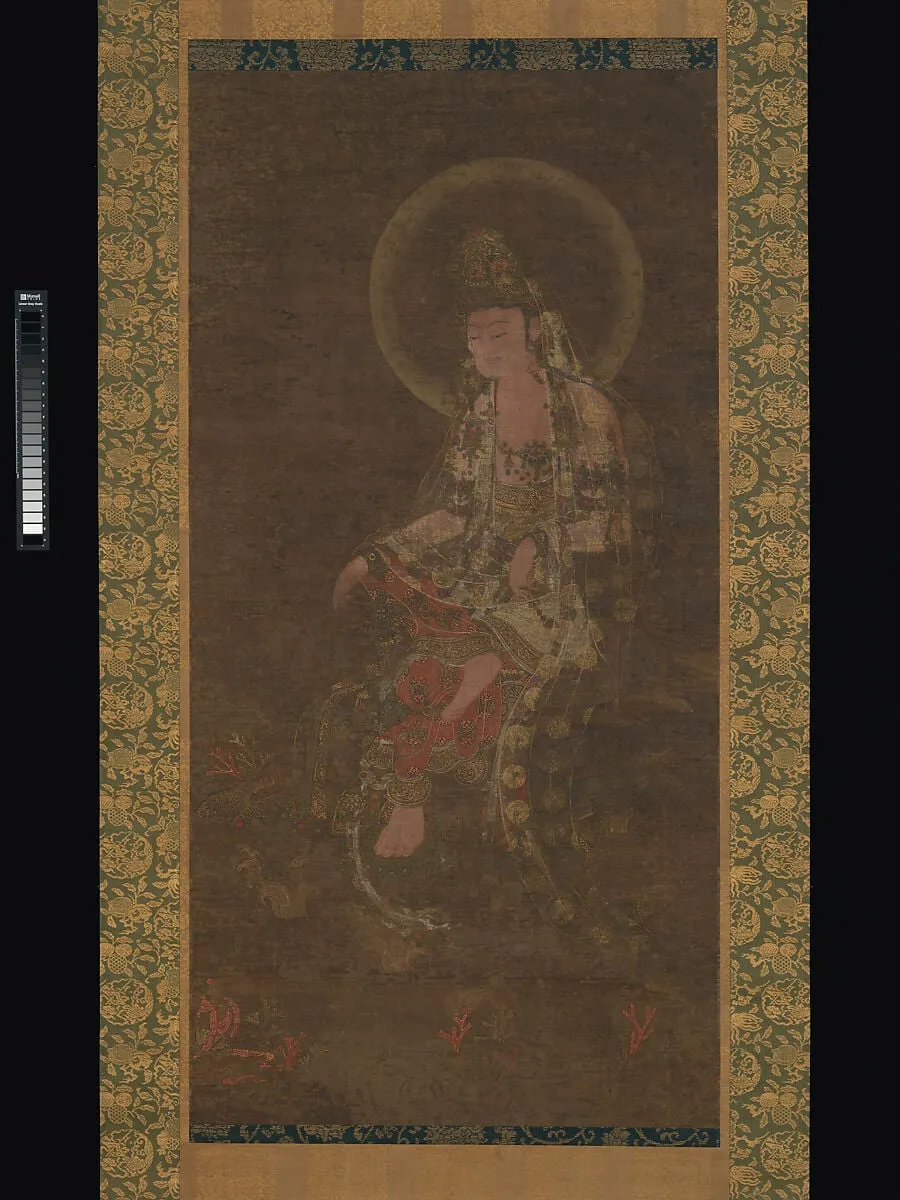
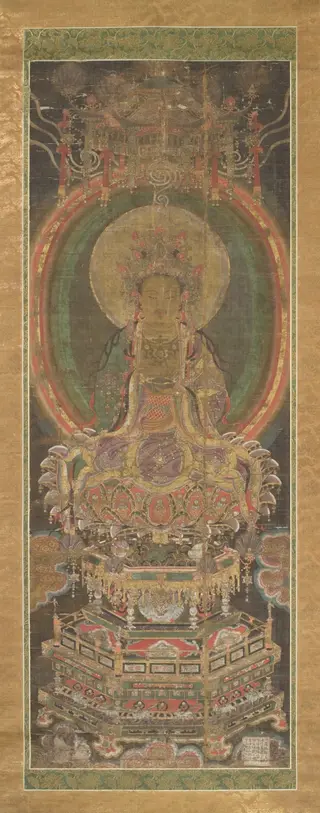
작자미상 수월관음도 고려|作者未詳 水月觀音圖 高麗|Water-Moon Avalokiteshvara is an ink painting. It dates from 1346 and is held in the collection of the Metropolitan Museum of Art. This hanging scroll, titled Water-Moon Avalokiteshvara, is rendered in ink, color, and gold on silk.
About this work
Subject & Meaning
Its depiction of the moon reinforces the notion of illumination and spiritual clarity.
The work portrays Avalokiteśvara, the Buddhist bodhisattva of compassion, identified by the moon motif that gives the piece its name “Water‑Moon Avalokiteshvara.” The figure is shown holding a lotus and a willow branch, symbols of purity and healing, while a luminous moon hovers above a calm water surface, evoking the celestial realm and the merciful grace of the deity. The painting’s religious context in Goryeo‑era Buddhist art underscores its role as an object of devotion, expressing the belief that compassion extends across both earthly and cosmic spheres. Its depiction of the moon reinforces the notion of illumination and spiritual clarity.
Technique & Style
The painting is executed as a hanging scroll using ink, mineral colors, and gold on fine woven silk, employing the delicate yet luminous palette characteristic of Goryeo Buddhist icon painting. The body of Avalokiteshvara is rendered in subtle gradations of cinnabar, azurite, and malachite, while gold outlines and highlights define drapery and nimbus, a technique that enhances the figure’s three-dimensional presence against the silk’s lustrous ground. The water and moon backdrop is articulated with fine mineral washes and ink wash, producing a shimmering nocturnal effect.
Formal qualities include elongated proportions, serene facial modeling with downcast eyes and faint smile, and a gently swaying posture; stylistic hallmarks such as the lotus pedestal, nimbus, and attendant apsaras align with Goryeo period Buddhist iconography and courtly refinement.
Overview
This hanging scroll, titled Water-Moon Avalokiteshvara, is rendered in ink, color, and gold on silk. It depicts a tall, radiant golden figure seated upon a rock, bathed in the light of a full moon. The deity is characterized by multiple arms, each gracefully holding distinct attributes such as a vase, a lotus, and a string of beads, enveloped by soft, luminous clouds.
Context
This artwork originates from Korea during the Goryeo dynasty, a period spanning the 10th to 14th centuries. During this era, Buddhism permeated all facets of society, serving as the foundational spiritual and cultural force. Consequently, Buddhist themes and iconography became central to artistic production, with paintings like this Water-Moon Avalokiteshvara reflecting the profound religious devotion and artistic skill of the time.
Artist & collection

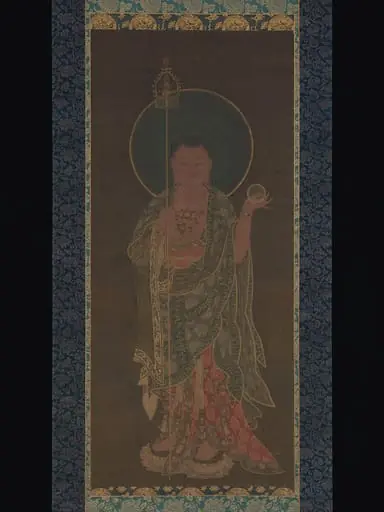
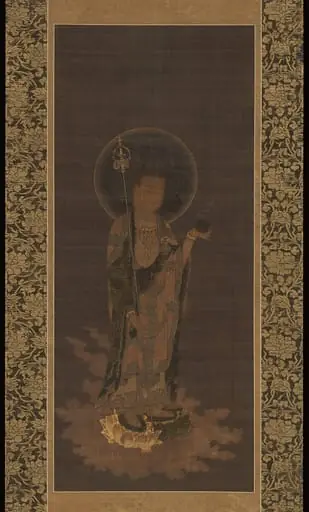 地蔵菩薩来迎図|Welcoming Descent of the Bodhisattva Jizō
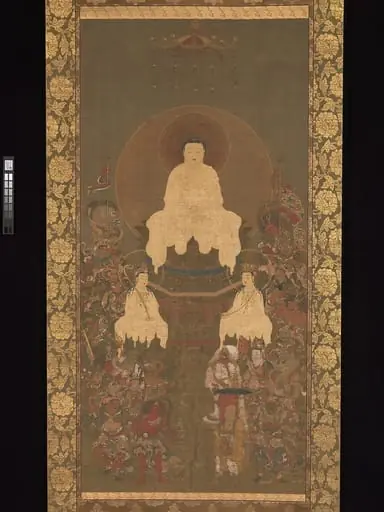 釈迦三尊十六善神像|Shaka (Shakyamuni), the Historical Buddha, with Two Attendant Bodhisattvas and Sixteen Benevolent Deities
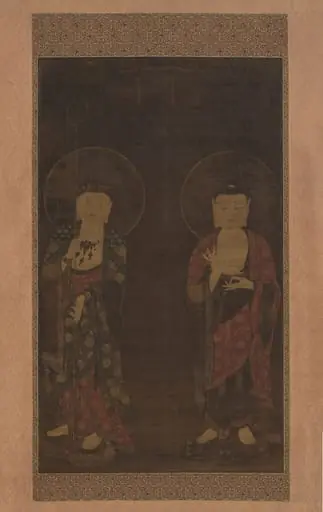 아미타불과 지장보살도 고려|阿彌陀佛・地藏菩薩圖 高麗|Amitabha and Kshitigarba
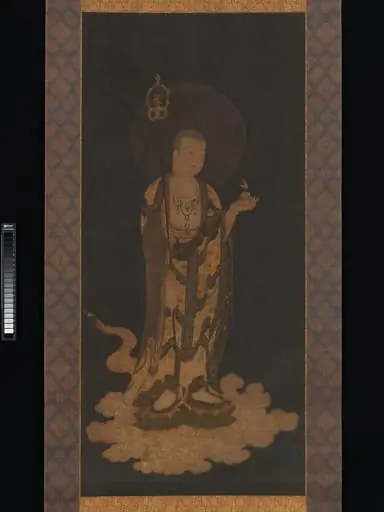 地蔵菩薩像|Jizō Bosatsu
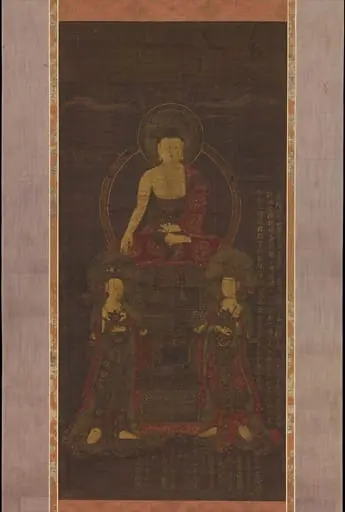 석가삼존도 조선|釋迦三尊圖 朝鮮|Shakyamuni triad
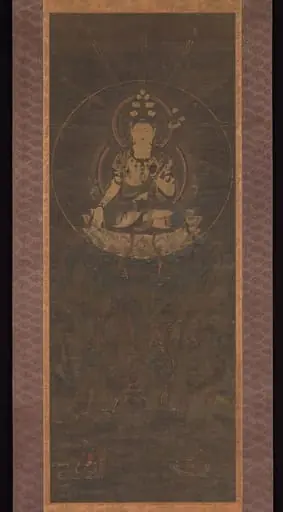 十一面観音影向図|Eleven-Headed Kannon on Mount Fudaraku
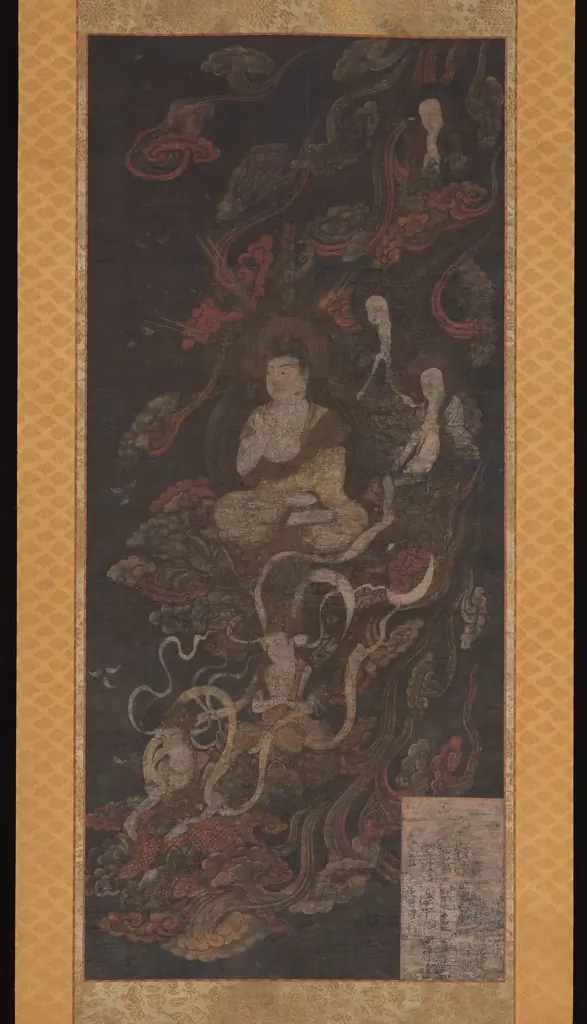 Welcoming Descent of Amida, the Buddha of Infinite Light, and His Holy Retinue
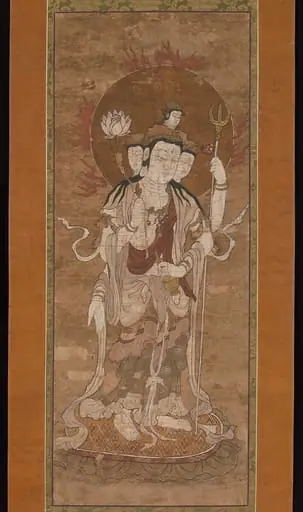 十二天像(梵天)|One of the Twelve Devas: Bonten
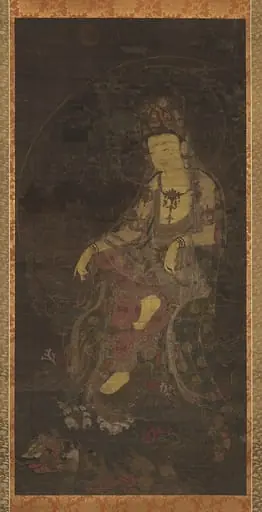
 Avalokiteshvara (Guanyin), the Bodhisattva of Compassion