Artwork
Kakemono
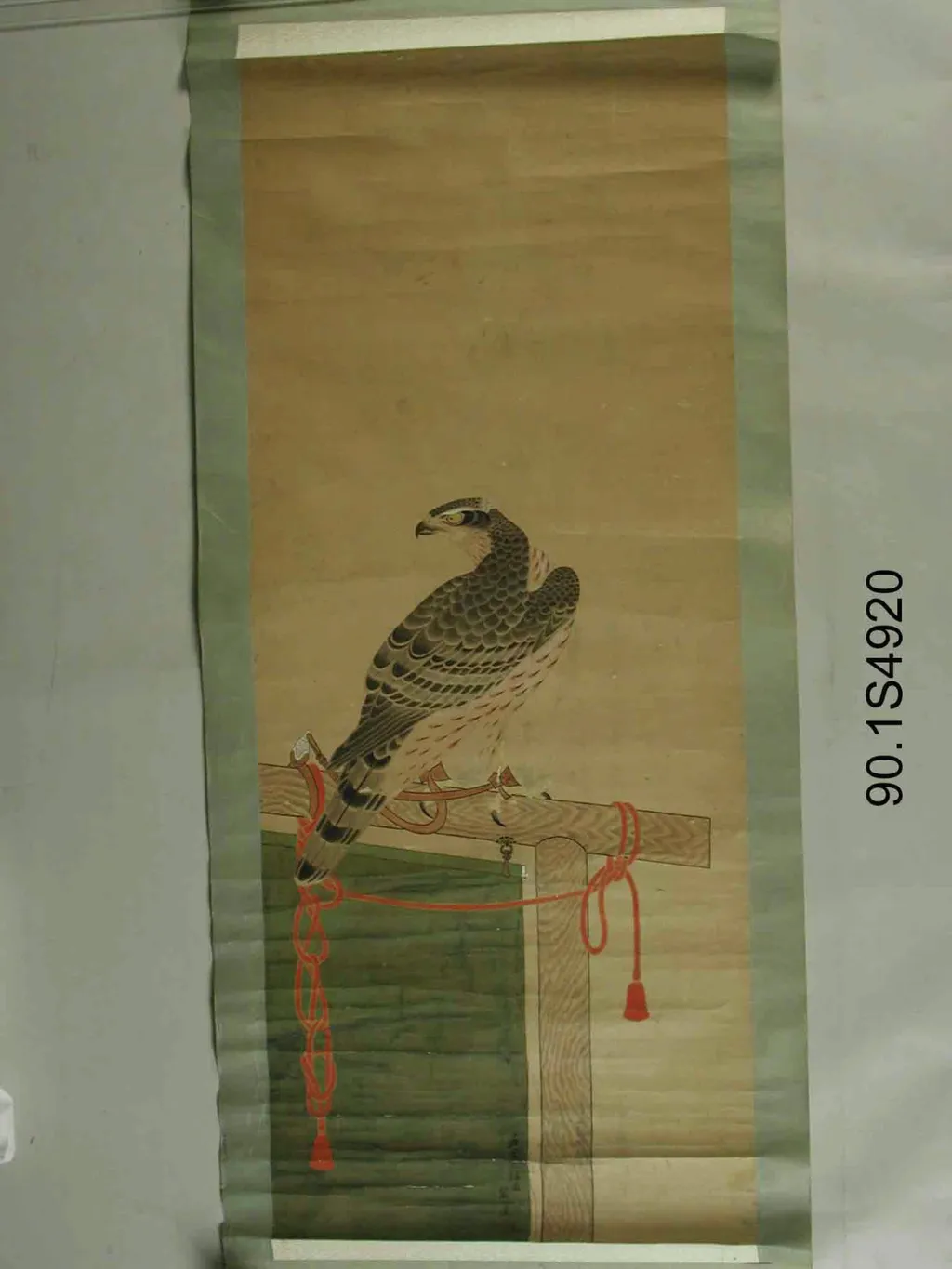
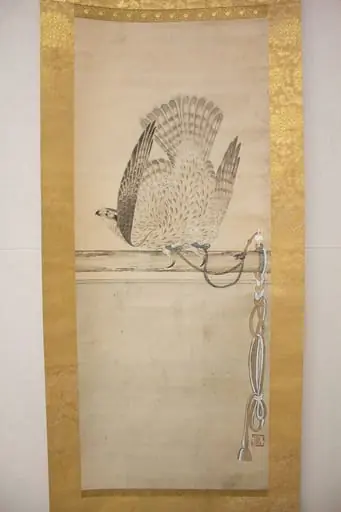
Kakemono is an unspecified painting by Unknown. It dates from 1850 and is held in the collection of the Detroit Institute of Arts.
About this work
Overview
The background is a soft, neutral tone that recedes, focusing attention on the bird’s still presence.
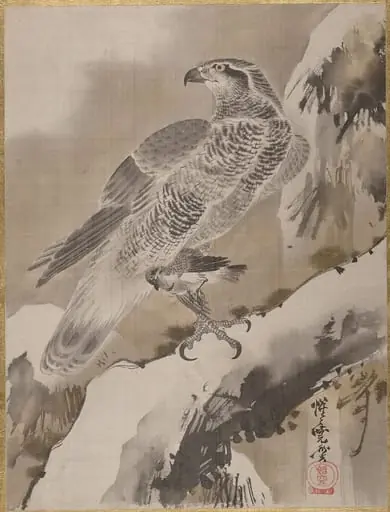
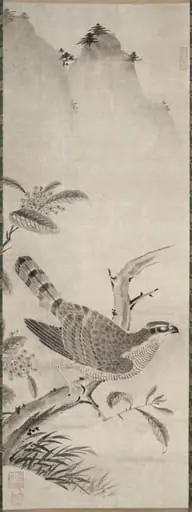
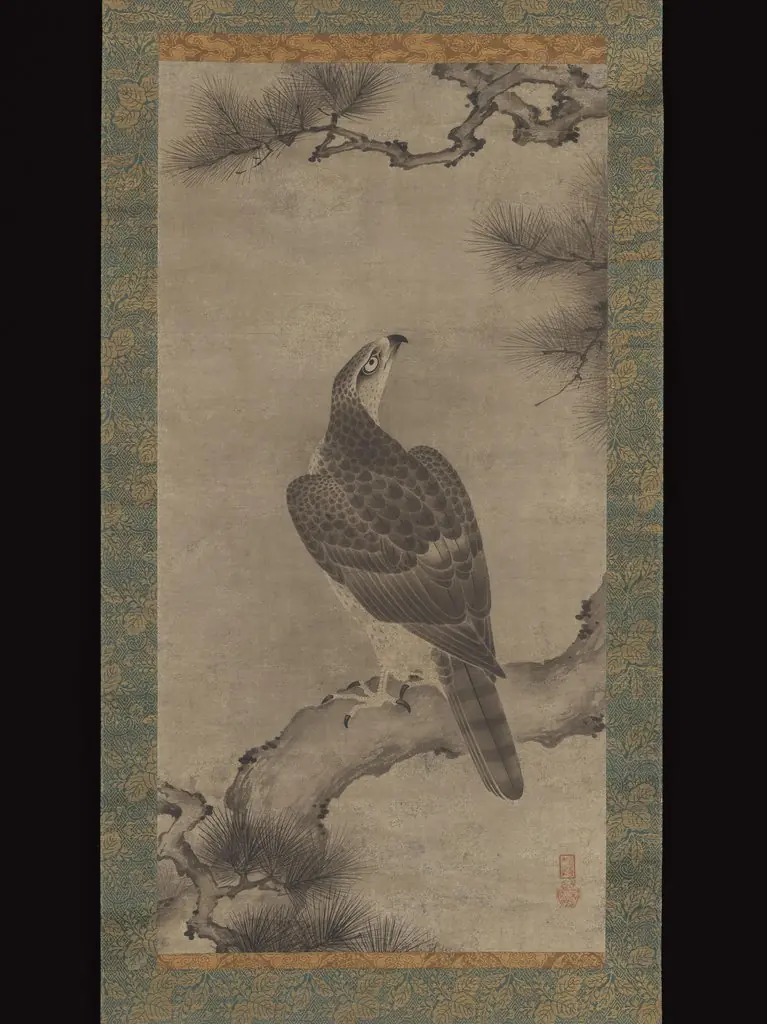
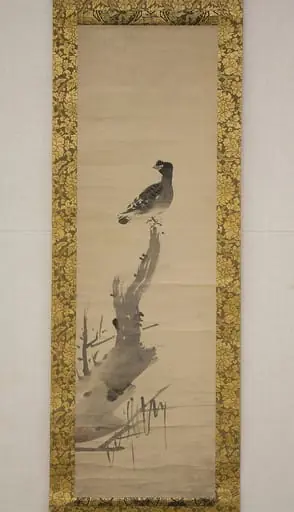
This kakemono is a vertical hanging scroll painting featuring a raptor perched on a wooden stand. Rendered in subtle browns and whites, the bird’s plumage is detailed with quiet precision. A single red cord loops around the stand, introducing a restrained contrast.
The background is a soft, neutral tone that recedes, focusing attention on the bird’s still presence. Its gaze, turned leftward, suggests awareness beyond the frame without disrupting the scene’s calm.
Subject & Meaning
The bird of prey, likely a hawk or falcon, symbolizes vigilance and composure in Japanese visual culture. Its poised stance on a training stand evokes the tradition of falconry, a practice associated with aristocratic discipline and spiritual focus. The absence of motion or drama conveys inner stillness, aligning with Zen ideals of mindful presence.
The red cord may reference ceremonial or practical elements of bird handling, grounding the image in real-world context.
Technique & Style
The painting employs ink and mineral pigments on paper, applied with controlled brushwork to suggest texture without overt detail. Feathers are suggested through layered washes and fine lines, avoiding hyperrealism in favor of suggestive elegance. The muted palette and deliberate negative space reflect the aesthetic of yūgen, profound grace and subtle depth. The composition follows the kakemono format’s vertical emphasis, guiding the eye upward and inward.
History & Provenance
Attributed to an unknown artist, the work likely dates to the Edo period, when bird-and-flower paintings flourished among urban elites and monastic circles. Its preservation as a hanging scroll suggests it was displayed in a tokonoma, the alcove of a traditional room. No documented ownership history survives, but its condition and materials are consistent with works produced for private contemplation rather than public exhibition.
Context
This piece belongs to a broader tradition of Japanese nature painting that treats animals not as subjects of spectacle but as embodiments of natural order. Similar works by artists like Kano Tan'yū or Maruyama Ōkyo emphasize restraint and observation over drama. The kakemono format itself, used for both religious and secular imagery, facilitated intimate viewing, encouraging quiet reflection rather than public display.
Legacy
Though unsigned, the painting exemplifies the enduring influence of Edo-period naturalism in Japanese art. Its quiet dignity reflects a cultural preference for understated expression, influencing later generations of painters who sought harmony between observation and abstraction. Such works continue to inform contemporary interpretations of Japanese aesthetics, particularly in the emphasis on stillness and the poetic potential of the everyday.
Artist & collection