Artwork
Untitled
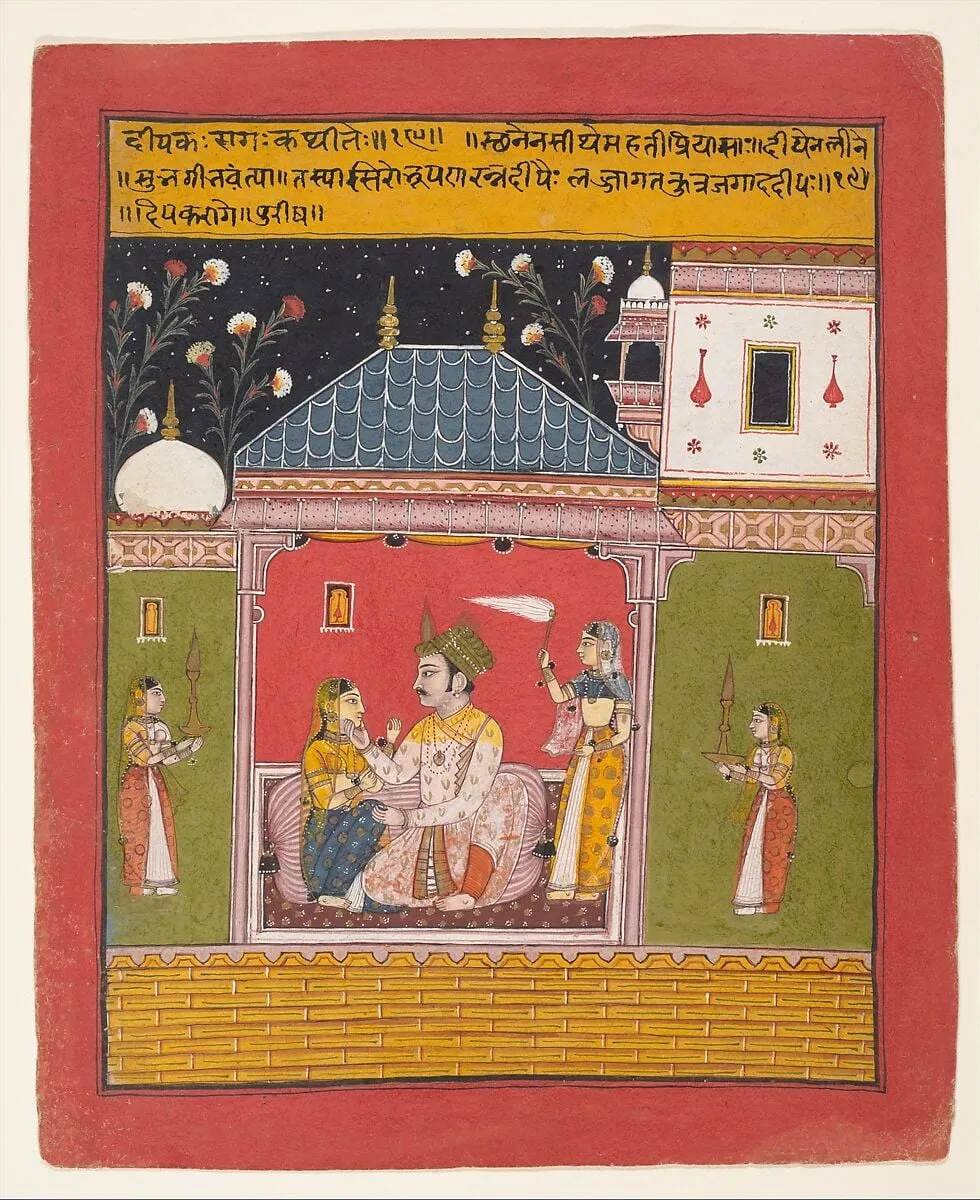
Untitled is a watercolor painting. It dates from 1635 and is held in the collection of the Metropolitan Museum of Art.
About this work
Subject & Meaning
The painting, dated 1635, is an ink and opaque watercolor on paper work classified as a genre scene, showing a lamp, a man, a pavilion, and a woman. It originates from India and is housed in the Metropolitan Museum of Art. The work is attributed to an anonymous painter, and the depicted elements, a lamp, a man, a pavilion, and a woman, form the subject of the composition.
Technique & Style
Created in 1635, this anonymous Indian work is executed in ink and opaque watercolor applied to a paper support.
Created in 1635, this anonymous Indian work is executed in ink and opaque watercolor applied to a paper support. The piece is a genre scene characterized by its depiction of a man, a woman, a lamp, and a pavilion. The use of opaque watercolor suggests a technique intended to create solid, vibrant forms against the paper ground, typical of the period's album painting traditions. The work remains part of the collection at the Metropolitan Museum of Art.
History & Provenance
The work titled Untitled was produced in 1635 in India by an anonymous painter. It is an ink and opaque watercolor painting on paper, classified as a genre scene depicting a lamp, a man, a pavilion, and a woman. The piece is currently held in the collection of the Metropolitan Museum of Art. No commissioning patron or ownership chain before museum acquisition is documented.
Context
The painting, dated 1635, is an ink and opaque watercolor on paper attributed to an anonymous Indian artist and held in the Metropolitan Museum of Art. It is categorized as a genre scene depicting a lamp, a man, a pavilion, and a woman. The composition reflects 17th-century Indian visual culture and workshop production from the period.
Overview
This untitled painting, rendered in ink and opaque watercolor on paper, depicts a nocturnal gathering. Within a pavilion, two women are seated, while a man stands nearby. The scene is illuminated by glowing paper lanterns, casting light on the figures. Originating from central India, the creator of this work remains unidentified.
Artist & collection

 Untitled
 Pancham Raga
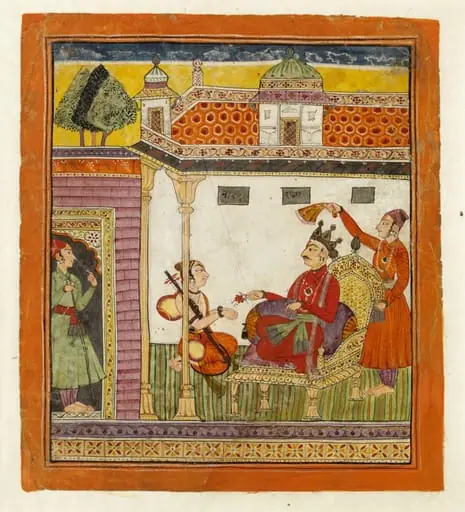 Mangala Raga
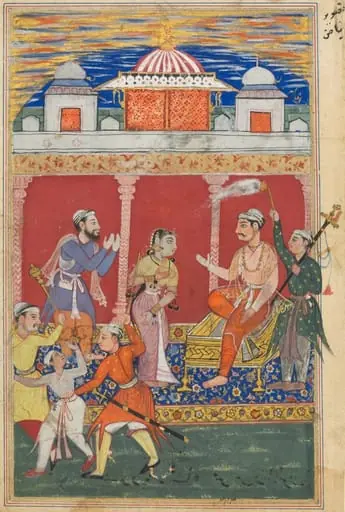 The prince’s ordeal continues, he is ordered away to be executed for the fifth time, from a Tuti-nama (Tales of a Parrot): Eighth Night
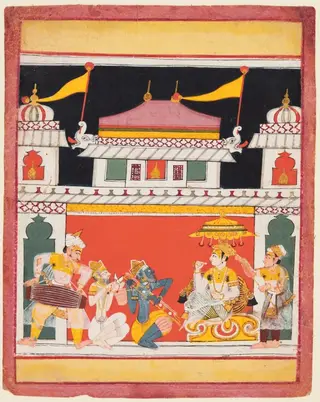 Three Musicians Perform Before a King: Shri Raga, from a Ragamala
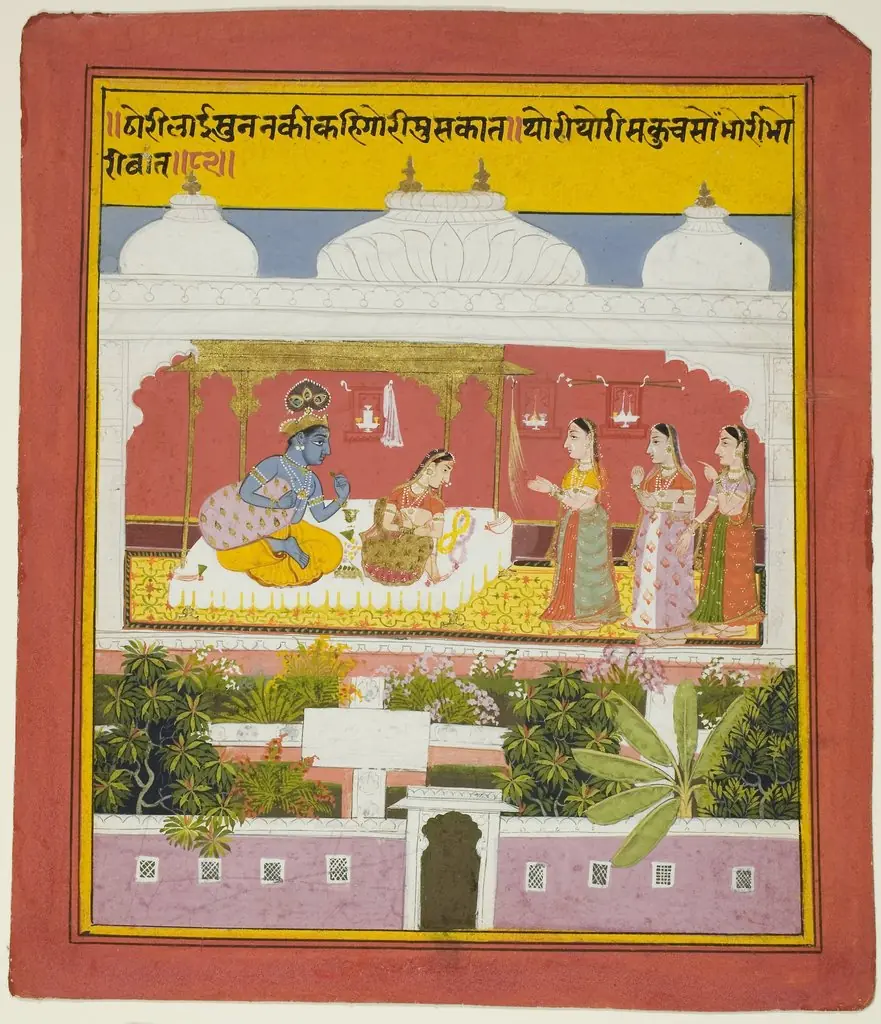 Krishna and Radha in a Pavilion, page from a copy of the Sat Sai Seven Hundred Verses)
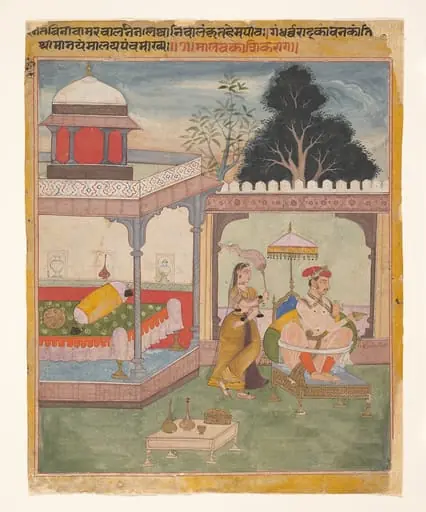 Untitled
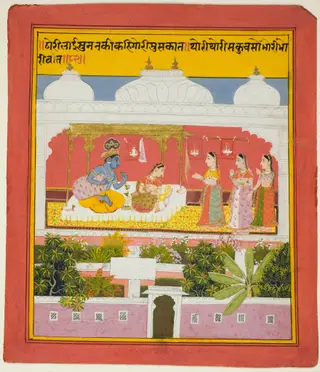 Krishna and Radha in a Pavilion, from a copy of the Seven Hundred Verses (Sat Sai) of Bihari
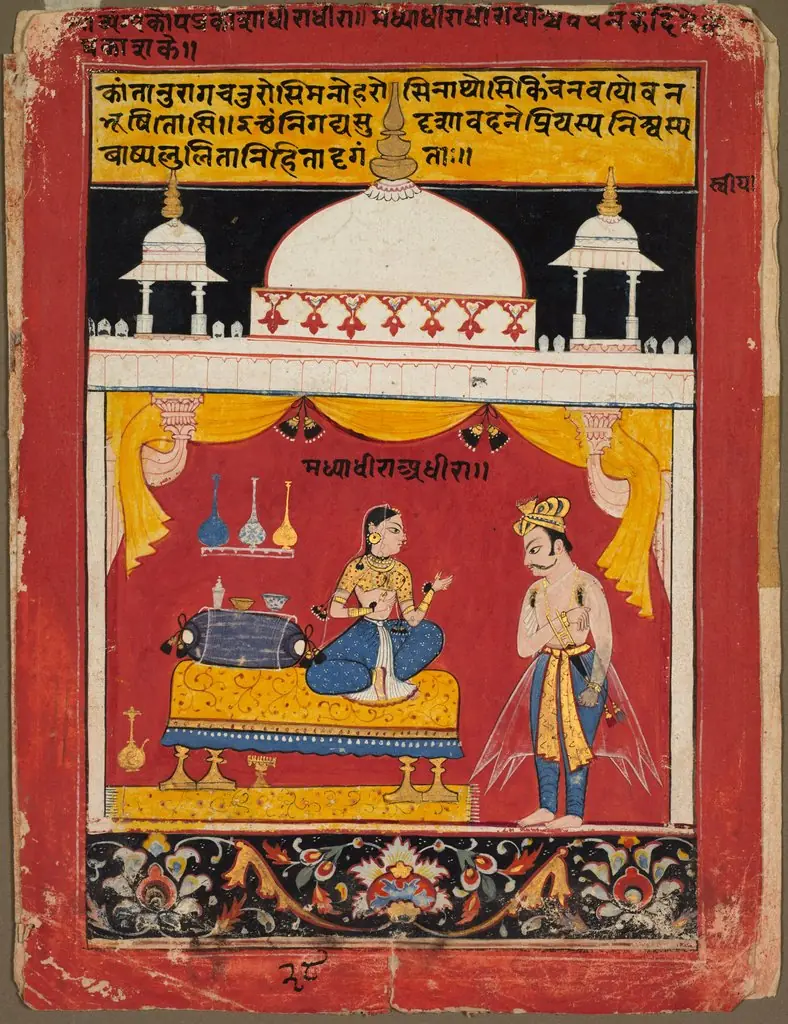 A Young, Angry Heroine, Folio 28 from a Rasamanjari
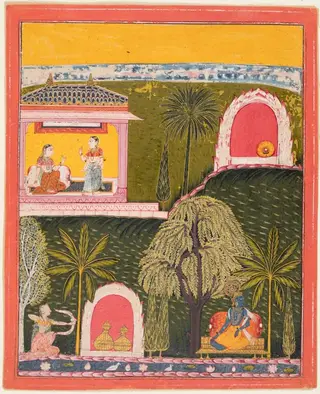 Rati, the Goddess of Erotic Love, Takes Aim at Krishna, from a Rasikapriya