Artwork
Rama, Sita, Lakshmana and Hanuman
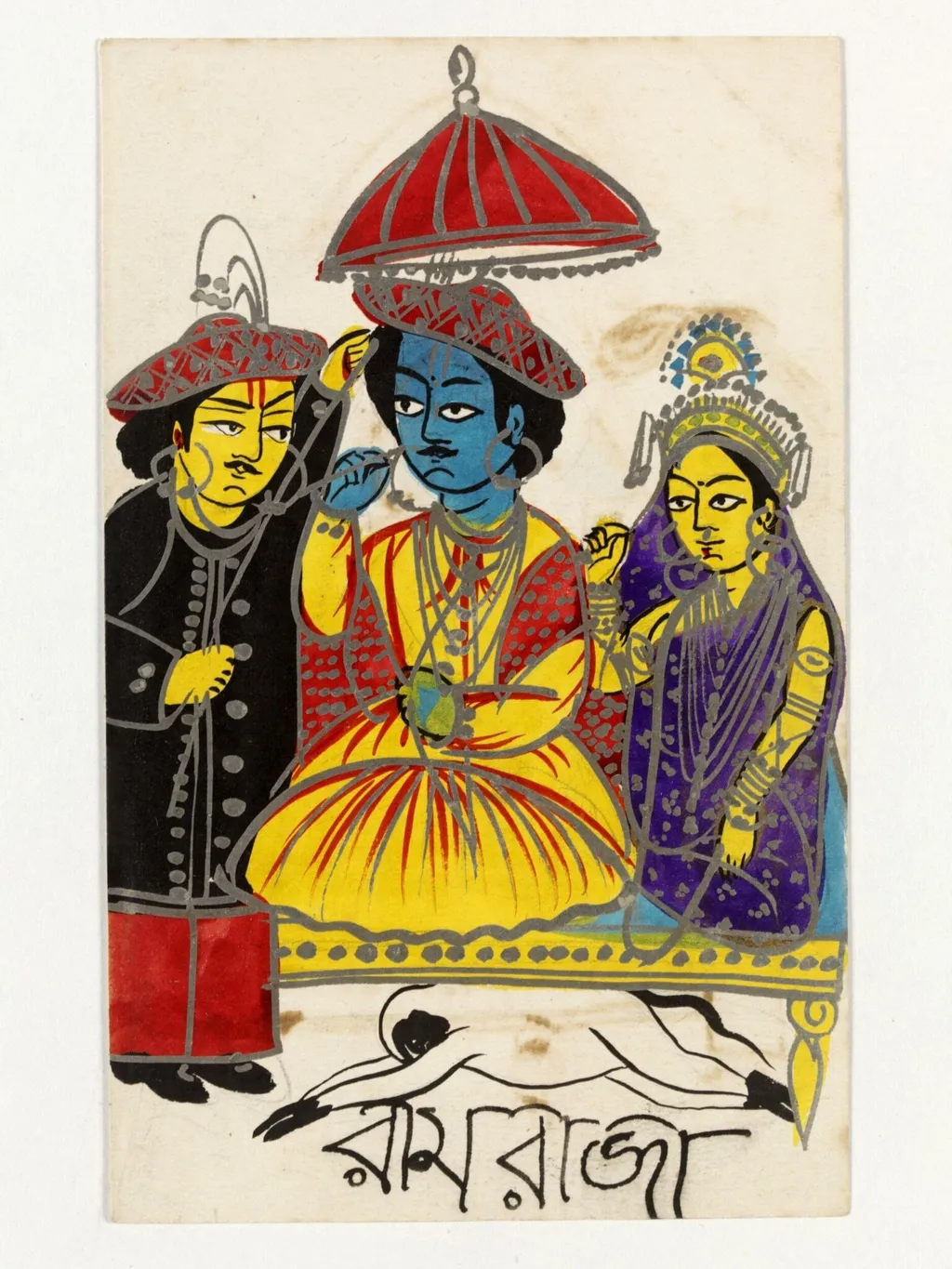
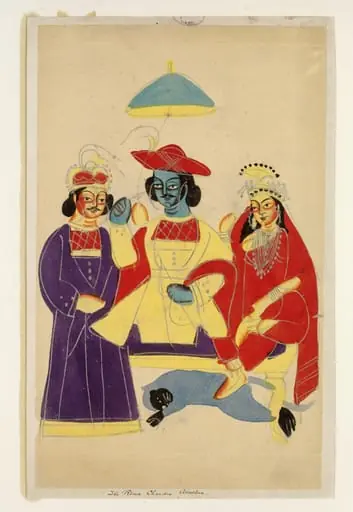
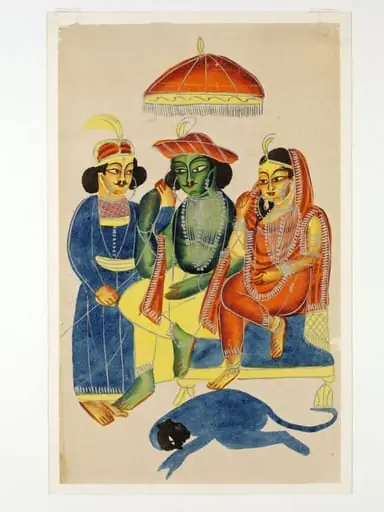
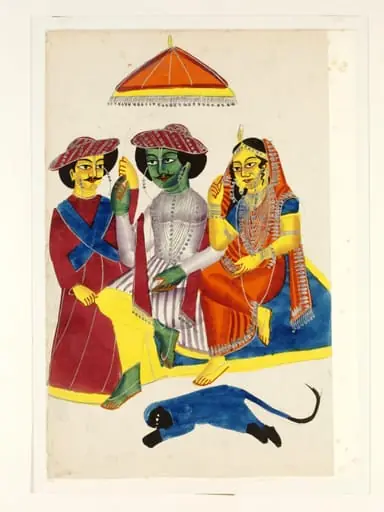
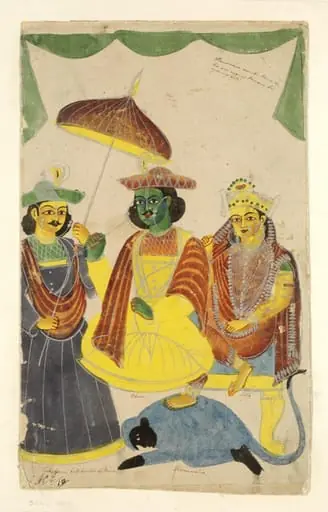
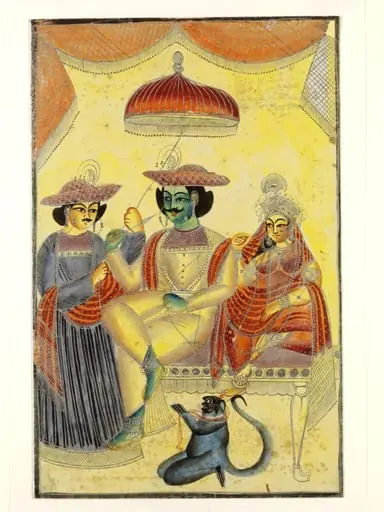
Rama, Sita, Lakshmana and Hanuman is a paint painting by the Impressionist artist Unknown. It dates from 1890 and is held in the collection of the Victoria and Albert Museum.
About this work
Overview
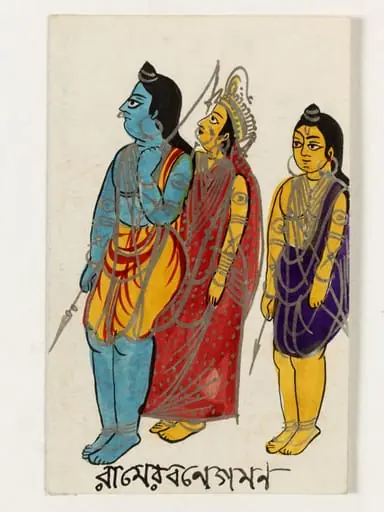
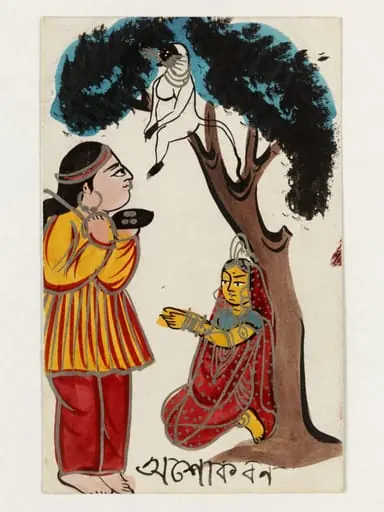
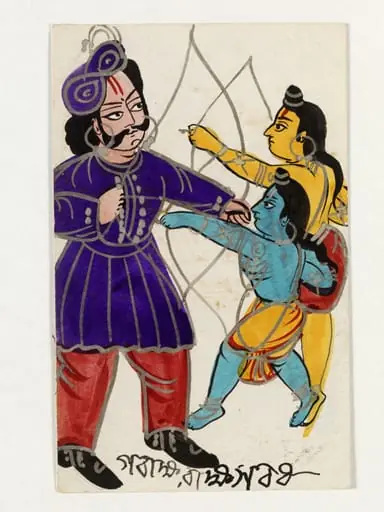
The composition is flat, with bold outlines and vivid pigments, typical of the tradition that flourished during British colonial rule.
This watercolour and tin-alloy painting on paper portrays a moment from the Ramayana, featuring Rama and Sita seated on a throne, Lakshmana holding a royal umbrella, and Hanuman in prostration before them. Executed in the Kalighat style, it reflects the artistic practices of 19th-century Bengal, where rural painters adapted their craft for urban markets in Calcutta. The composition is flat, with bold outlines and vivid pigments, typical of the tradition that flourished during British colonial rule.
Subject & Meaning
The scene captures Hanuman’s devotion to Rama and Sita, a central theme in the Ramayana. His prostrate posture signifies humility and service, while Rama and Sita’s seated position on the throne conveys royal authority and divine status. Lakshmana’s presence, holding the umbrella, reinforces his role as protector and loyal brother.
The imagery draws from widely recognized Hindu narratives, resonating with both religious devotion and cultural identity in colonial Bengal.
Technique & Style
The painting employs rapid, confident brushwork and flat areas of intense colour, yellow, red, and purple, to define the figures. Outlines are strong and unmodulated, avoiding shading or perspective. The throne’s red canopy and minimal background emphasize the subjects without environmental detail.
Tin-alloy particles in the paint add subtle shimmer, a hallmark of Kalighat works. The style prioritizes symbolic clarity over naturalism, suited for mass appeal and devotional use.
History & Provenance
Created in the mid-to-late 19th century, this work emerged from Kalighat, a temple precinct near Calcutta where artists produced affordable religious imagery for pilgrims and urban buyers. As British colonial administration shifted the capital to Calcutta in 1833, these painters adapted to new audiences, blending mythological themes with contemporary social observation. The painting’s survival reflects its circulation beyond temple contexts into domestic and collector spaces.
Context
Kalighat painting developed as a response to urbanization and colonial influence, merging traditional iconography with simplified forms suited to quick production. Artists, often from rural backgrounds, worked near the Kalighat temple, selling works to pilgrims and middle-class buyers. The style avoided European academic conventions, instead preserving indigenous visual language while responding to changing markets and cultural pressures under British rule.
Legacy
Kalighat paintings like this one represent a pivotal moment in Indian art history, bridging folk traditions and modern commercial art. They influenced later nationalist movements and modernist reinterpretations of Indian iconography. Though no longer produced in the same form, their aesthetic, bold, direct, and rooted in narrative, continues to inform contemporary Indian visual culture and scholarly study of colonial-era art.
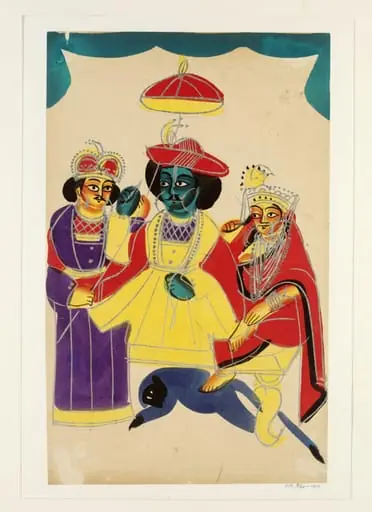
Artist & collection