Artwork
Konrad von Bemelberg (1494-1567)
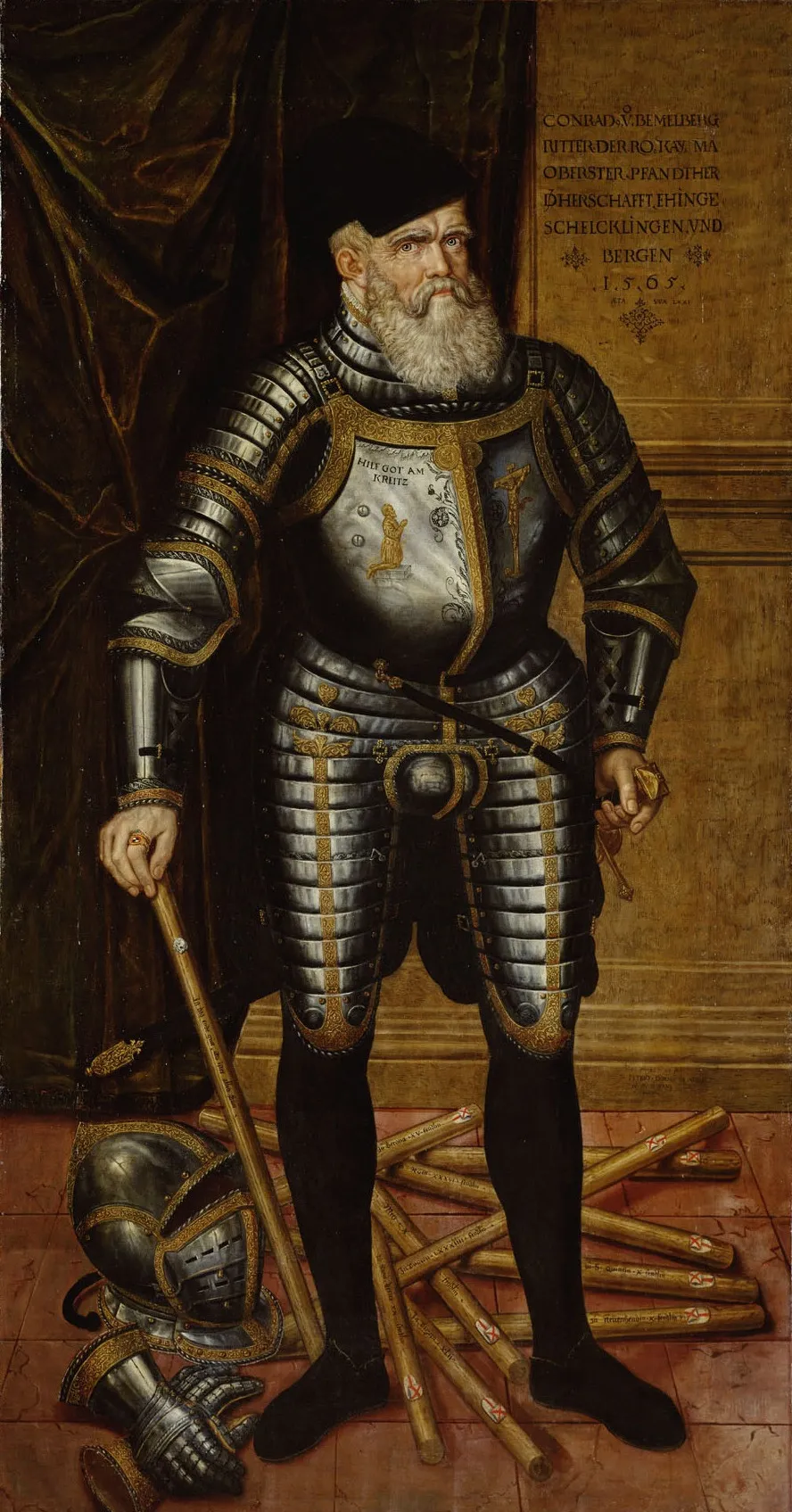
Konrad von Bemelberg (1494-1567) is an unspecified painting by the Late Mannerist artist Unknown. It dates from 1592 and is held in the collection of the Kunsthistorisches Museum. The work is a portrait of Konrad von Bemelberg (1494‑1567), presented in full armor.
About this work
Overview
Konrad von Bemelberg (1494-1567) is a posthumous full-length portrait of the German Landsknecht commander Konrad von Boyneburg, also known as Konrad von Bemelberg, painted by Petrus Dorisy in 1582. The oil painting, measuring 209.5 by 109 centimeters, depicts the aged military leader standing in elaborate plate armor and is now held in the Gemäldegalerie of the Kunsthistorisches Museum, Vienna, under inventory number 3849. The work is significant as a rare visual document of a prominent Imperial mercenary captain, executed with meticulous attention to the textures of steel, gold, and fabric, and it preserves detailed inscriptions about his career and troops.
Subject & Meaning
The painting portrays Konrad von Bemelberg at the age of seventy-one, as indicated by the inscription recording the year 1565 and his age.
The painting portrays Konrad von Bemelberg at the age of seventy-one, as indicated by the inscription recording the year 1565 and his age. He stands in full plate armor with a long white beard and black cap, his right hand resting on a wooden staff or baton while his left holds a small object near his waist. The armor itself carries religious iconography: an etched scene on the breastplate shows a kneeling Landsknecht before a crucifix with the inscription HILF GOT AM KREITZ, a devotional image that also appeared on his actual field armor. The paneled wooden wall to the right bears his name, titles, and date, while the floor at his feet is scattered with numerous wooden command staffs marked in red and white, each inscribed with the number of troops he commanded at various campaigns, including Verona, Rome, Metz, Hungary, Saint-Quentin, and others. His personal motto, Ist das endt gutt So ist es alles Gutt, also appears. These elements together construct a memorial to his military service and piety, blending personal devotion with professional pride.
Technique & Style
The painting is executed in oil on canvas or panel with a smooth, highly finished technique that demonstrates meticulous attention to surface textures. The artist renders metallic reflections on the steel-gray armor with precision, contrasting the hard gleam of the metal with the extensive gold decorative trim along edges, hinges, and borders. The dark draped fabric to the left creates a heavy curtain effect that sets off the figure, while the reddish-brown tiled floor grounds the composition. Lighting falls evenly from the left, producing subtle shadows that model the rounded forms of the armor. The frontal, monumental presentation of the standing figure, occupying most of the vertical composition, follows conventions of Northern European court and military portraiture, though the specific combination of full-length format with such detailed documentary inscriptions is unusual.
Context
Konrad von Bemelberg was a significant military figure in the service of the Habsburgs, participating in major campaigns including the Battle of Pavia in 1525 for Emperor Charles V and the Battle of Saint-Quentin in 1557 for King Philip II of Spain. He was also involved in the notorious Sack of Rome in 1527. Raised to Baron of the Holy Roman Empire in 1554, he held the lordships of Ehingen, Schelklingen, and Bergen. The portrait by Petrus Dorisy belongs to a tradition of posthumous commemorative portraiture of military leaders in the late sixteenth century, produced when the reputation of such commanders was being codified for posterity. The painting's pairing with his actual armor in the Ambras collection reflects the Renaissance interest in preserving the material culture of notable individuals.
Legacy
The portrait has remained associated with Bemelberg's actual armor, a light field cuirass produced by Wolfgang Grossschedel of Landshut around 1535-1540 with etched decoration attributed to Ambrosius Gemlich. This armor, now in the Hofjagd- und Rüstkammer of the Kunsthistorisches Museum (inventory A 376), was documented in the 1596 Ambras inventory. The nineteenth-century interest in documenting such historical collections is evidenced by a photograph of the armor's breastplate taken by Andreas Groll around 1858-1859, now in the British Library collections. The continued pairing of portrait and armor in the Kunsthistorisches Museum preserves a rare conjunction of painted image and historical object, offering insight into how a celebrated Landsknecht commander was memorialized shortly after his death.
Artist & collection









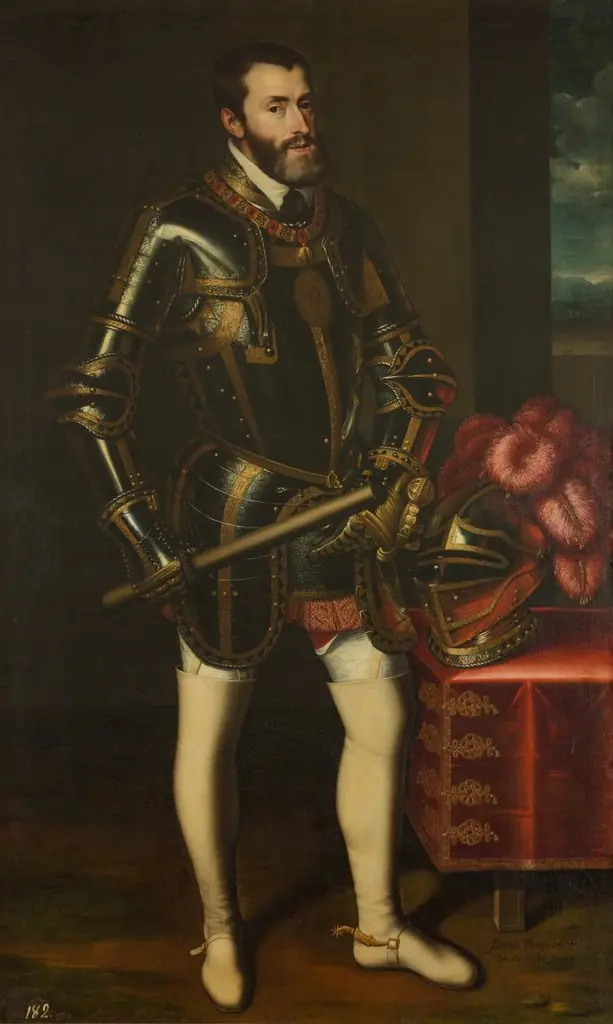
- The Emperor Charles V
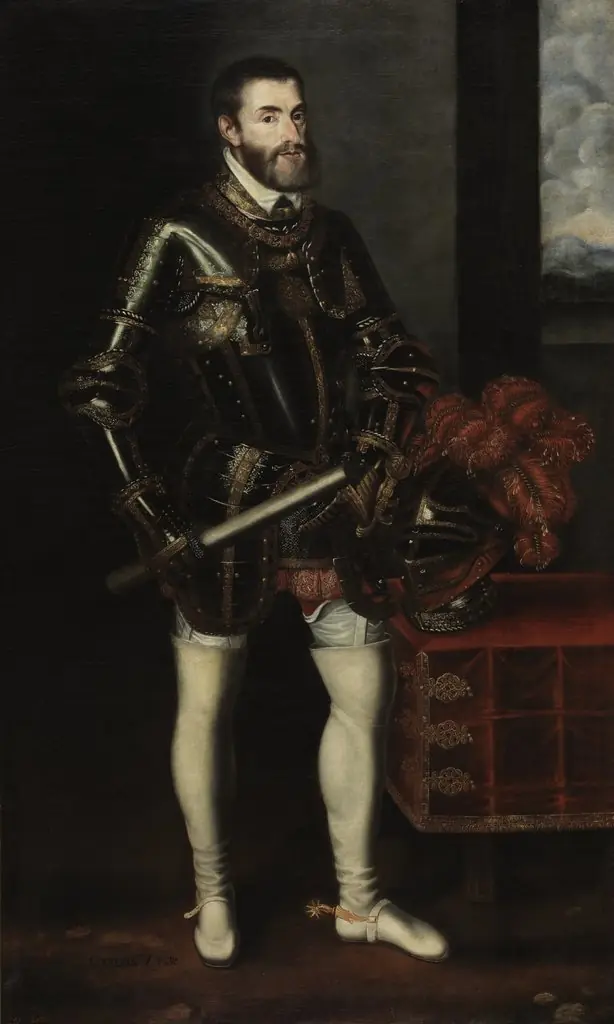 Charles V in Armour
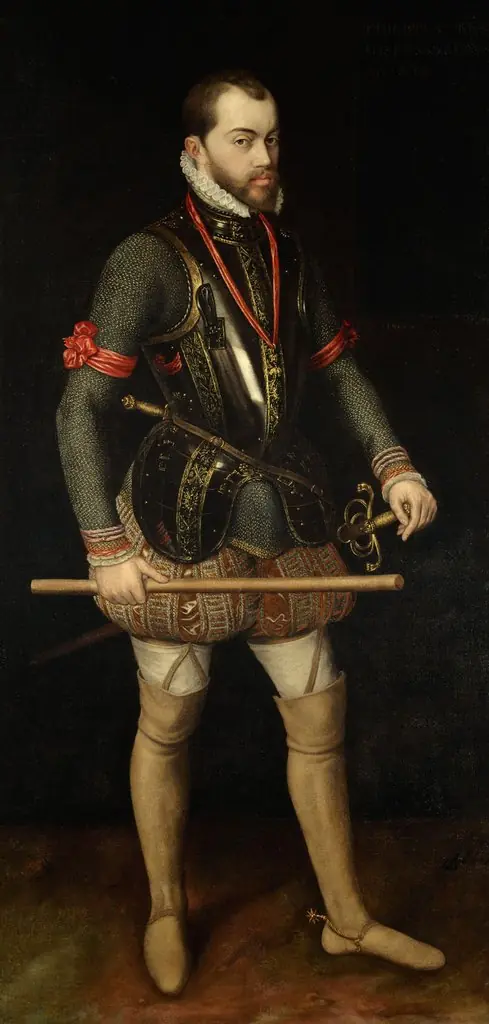 Portrait of Philip II of Habsburg (1527-1598)
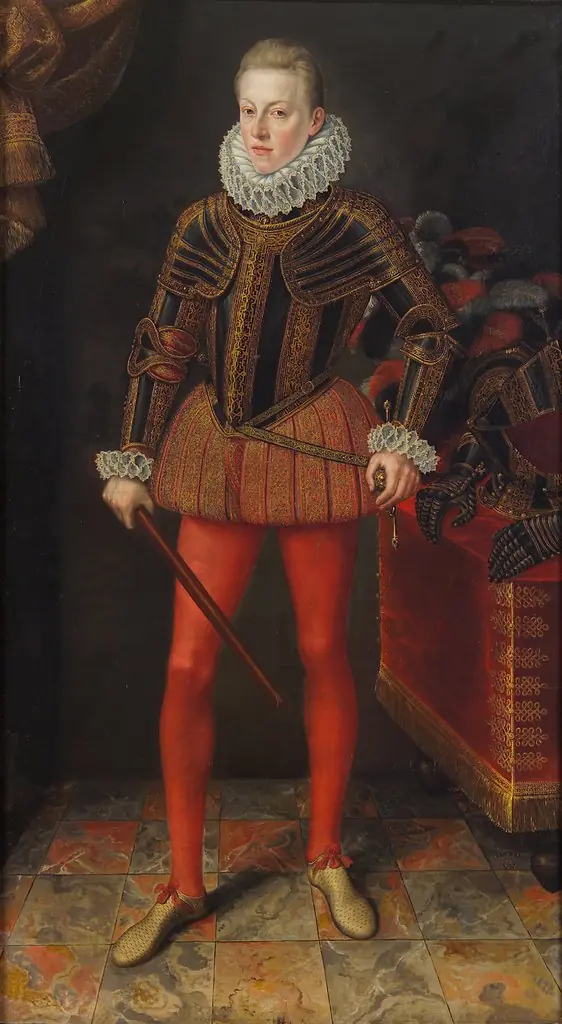 Portrait of Matthias II of Habsburg (1557-1619), the future Holy Roman Emperor
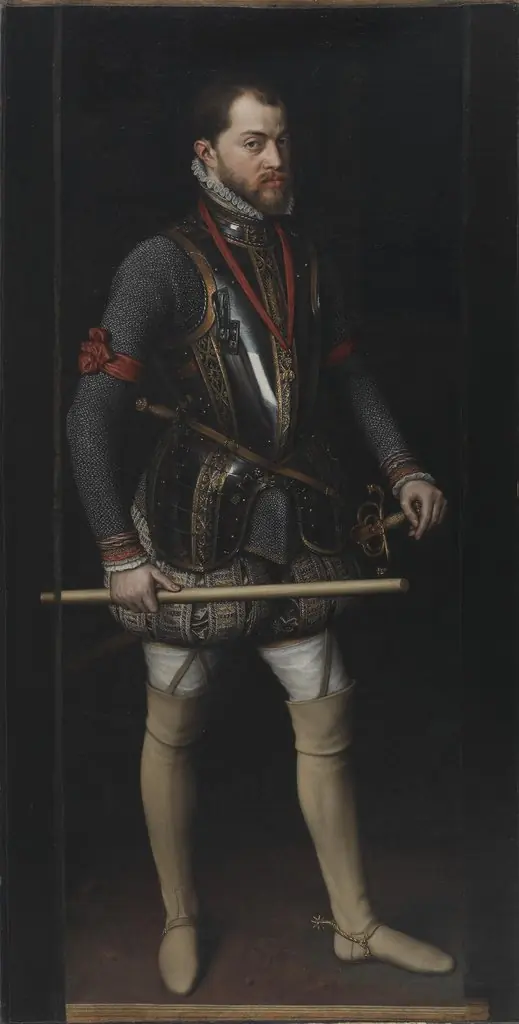 Philip II of Spain
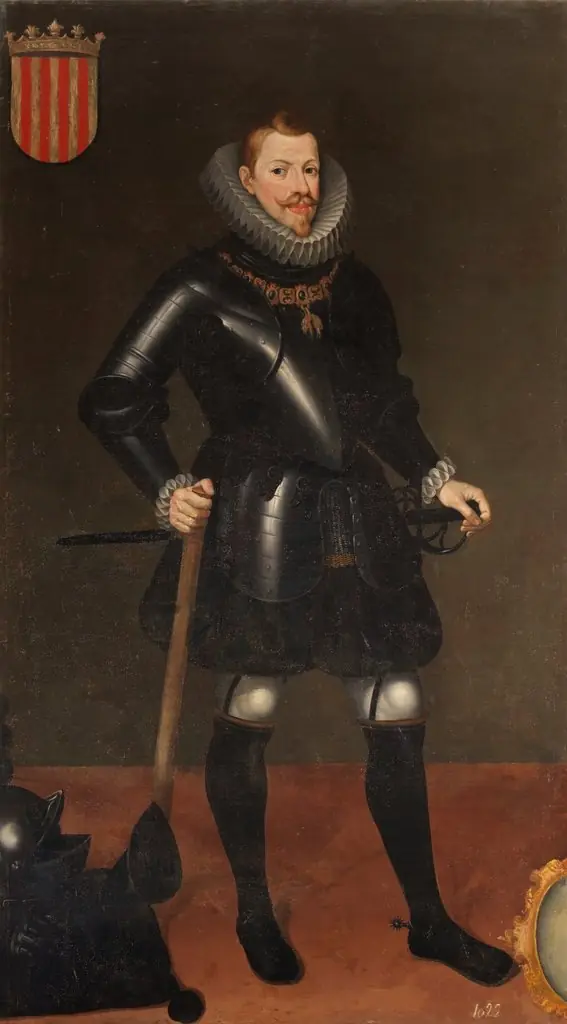 Felipe III El Piadoso y El Bueno
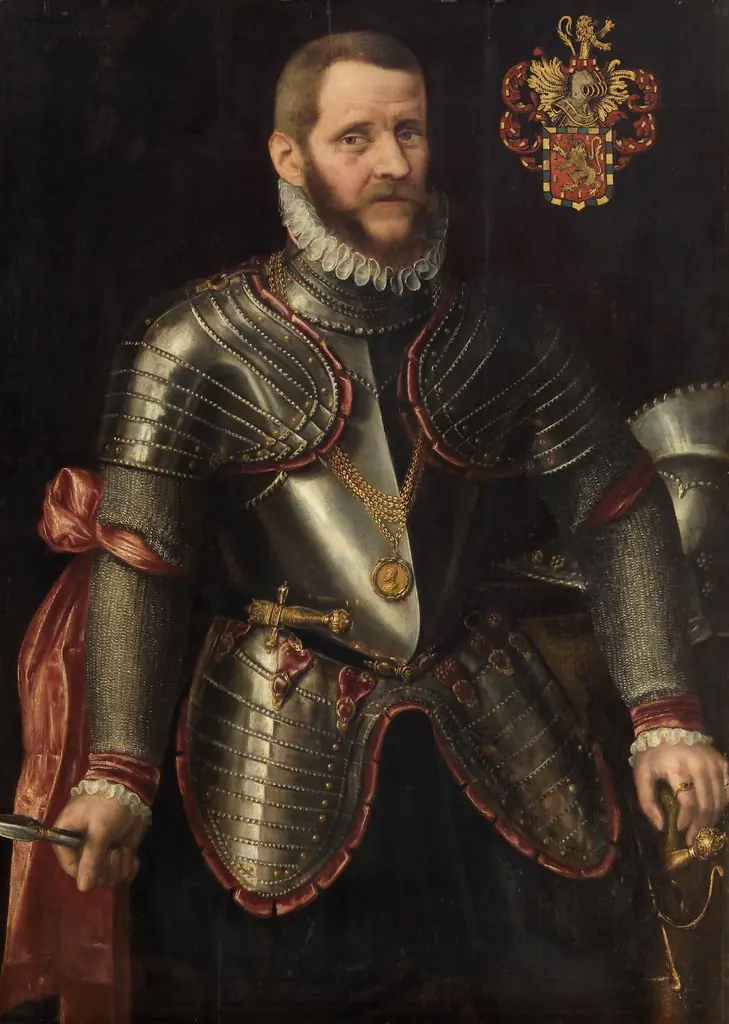 Offizier der spanischen Truppen in den Niederlanden
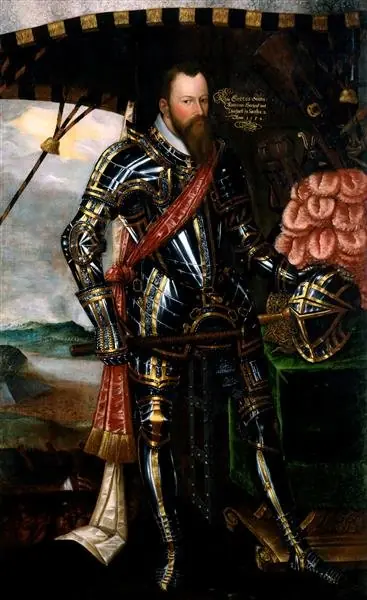 Kurfürst Moritz von Sachsen (1521-1553)
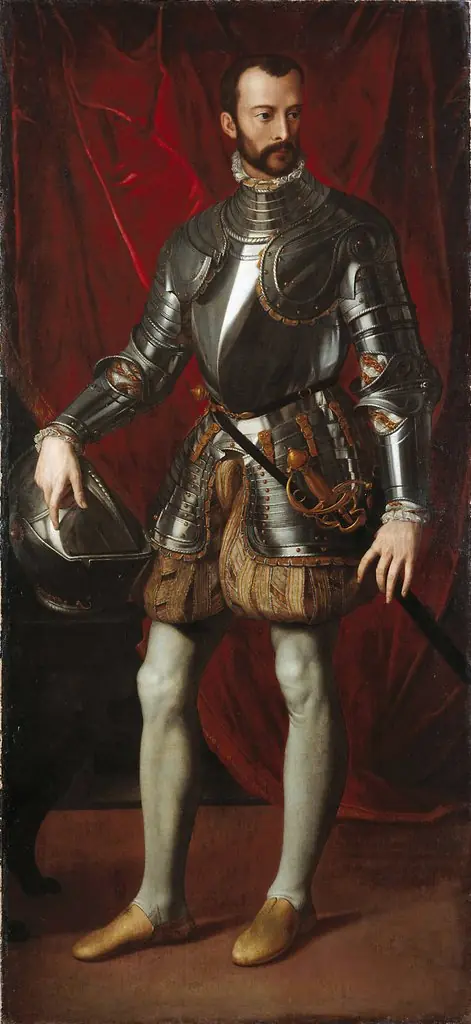 Großherzog Francesco I. (1541-1587) von Toskana
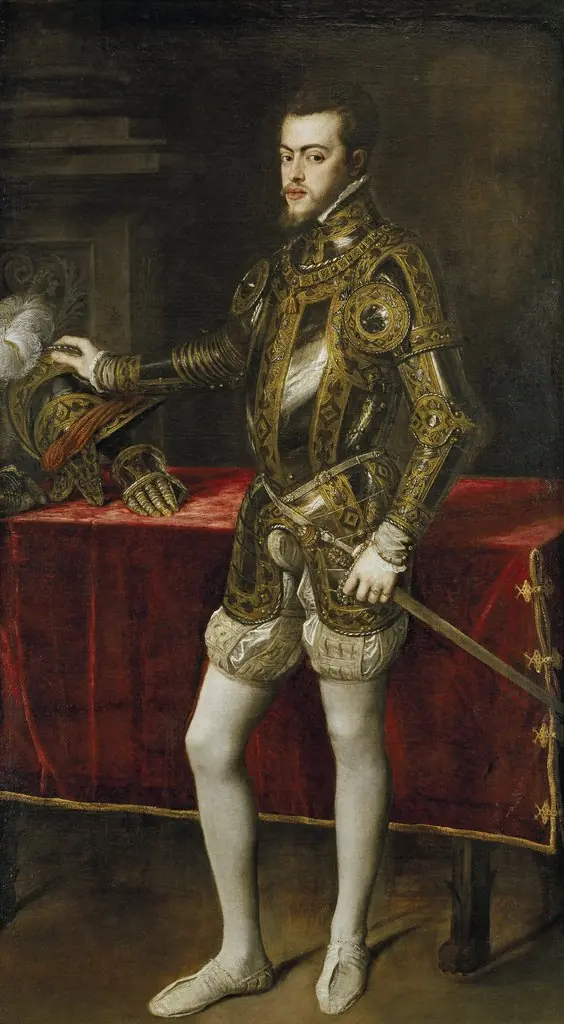 Philip II in Armour
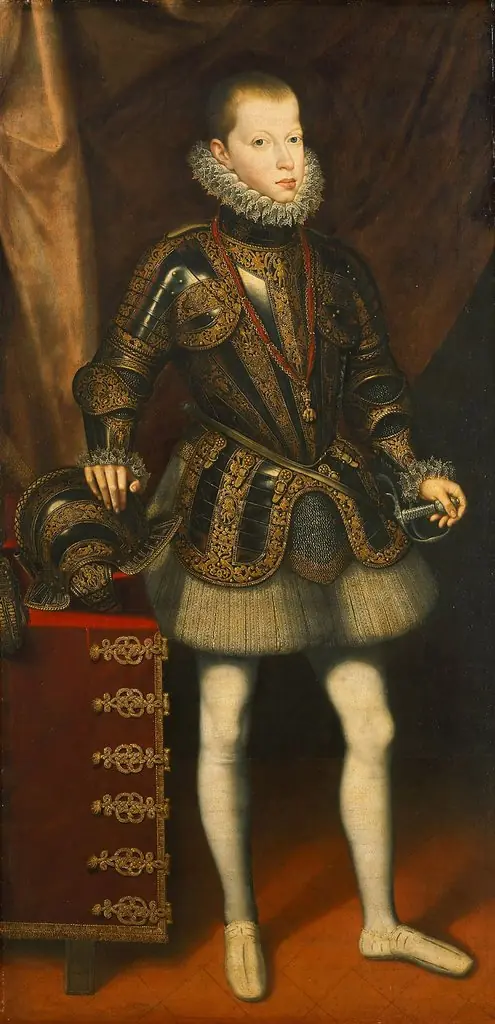 Infant Philipp in einem Harnisch
 Portrait of Afonso de Albuquerque