Artwork
Krishna celebrates Holi
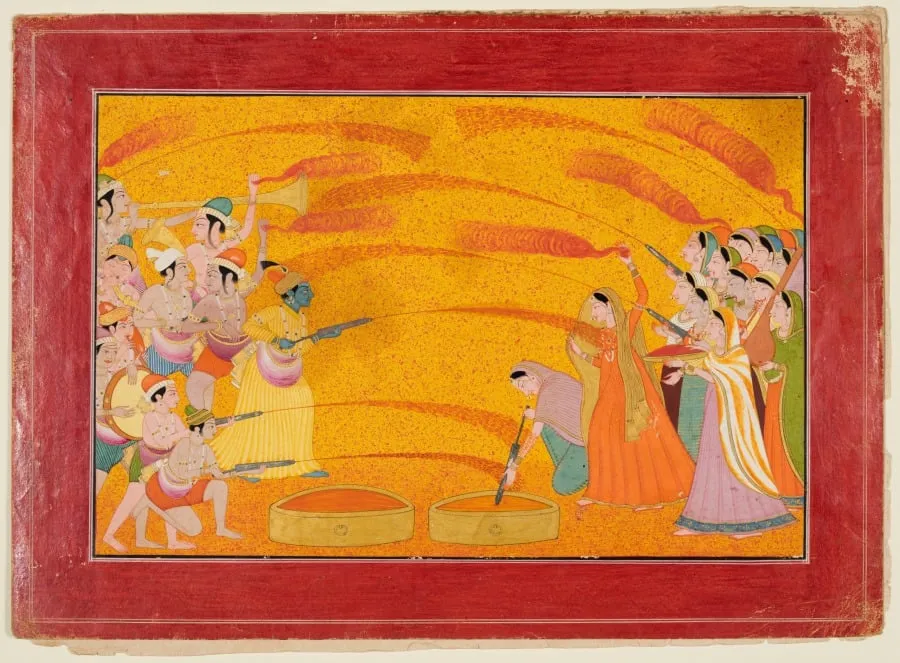
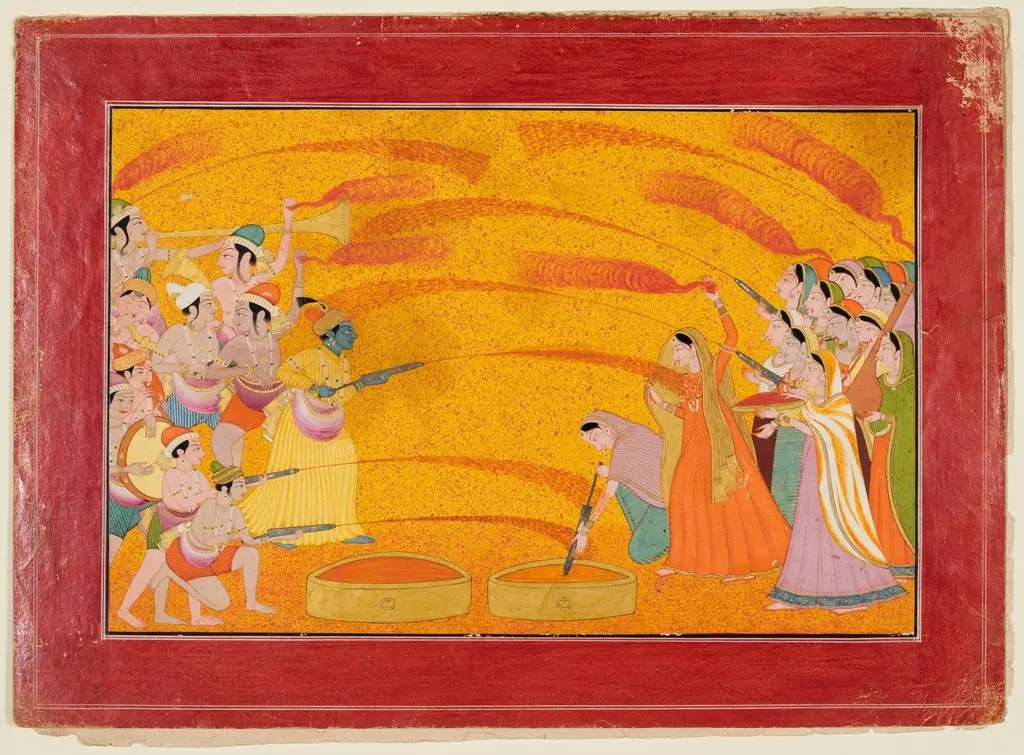
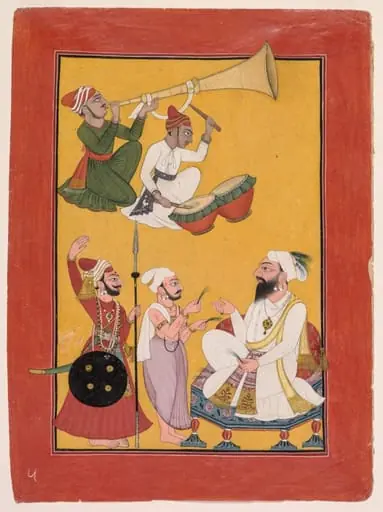
Krishna celebrates Holi is an unspecified painting by the Pahari Painting artist Unknown. It dates from 1770 and is held in the collection of the Cleveland Museum of Art. This painting depicts the Hindu deity Krishna participating in Holi, the spring festival marked by the playful exchange of colored powders.
- Accession no.
- 2018.104
- Credit line
- Purchase and partial gift from the Catherine and Ralph Benkaim Collection; Severance and Greta Millikin Purchase Fund
About this work
Overview
This painting depicts the Hindu deity Krishna participating in Holi, the spring festival marked by the playful exchange of colored powders.
This painting depicts the Hindu deity Krishna participating in Holi, the spring festival marked by the playful exchange of colored powders. Created in the Pahari region of northern India, the scene captures a moment of communal joy among cowherds and milkmaids. The composition is dense with figures, instruments, and blooming flora, reflecting the vibrancy of the celebration and the intimate, pastoral setting associated with Krishna’s youth.
Subject & Meaning
Krishna, identifiable by his blue skin, is shown as the central figure engaging with a gopi, or milkmaid. While others join in the revelry, the painting suggests a deeper connection between Krishna and the gopi, symbolizing divine love and spiritual intimacy. The act of throwing color becomes more than festivity, it evokes the idea of divine grace reaching the soul, a recurring theme in devotional traditions of the region.
Technique & Style
The artist employs fine brushwork and delicate lines to render figures and foliage with precision. Bright mineral pigments create vivid contrasts against muted backgrounds, enhancing the sensory energy of the scene. The flattened perspective and rhythmic arrangement of figures reflect the Pahari school’s emphasis on lyrical composition over naturalism, prioritizing emotional resonance over spatial depth.
History & Provenance
Originating in the hill kingdoms of northern India during the 18th century, this work likely belonged to a royal court that patronized devotional art. Pahari painters often illustrated episodes from Krishna’s life for private devotion or ceremonial display. The painting’s survival suggests it was carefully preserved, possibly within a lineage of collectors or temple-associated households.
Context
Holi celebrations in the Pahari region were deeply tied to local interpretations of Krishna’s pastoral legends. Artworks like this served both religious and cultural functions, reinforcing community identity through shared myth. The inclusion of musical instruments, drums, flutes, vina, highlights the integration of sound and color in ritual expression, mirroring the multisensory nature of the festival itself.
Legacy
This painting exemplifies how regional Indian art adapted religious narratives into intimate, visually rich compositions. Its influence can be traced in later Pahari and Rajasthani works that continued to explore Krishna’s earthly interactions. Today, it remains a key reference for understanding the devotional aesthetics of 18th-century northern India, valued for its quiet precision and emotional nuance.
Artist & collection









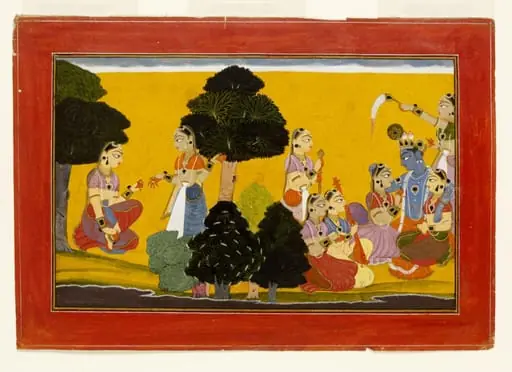
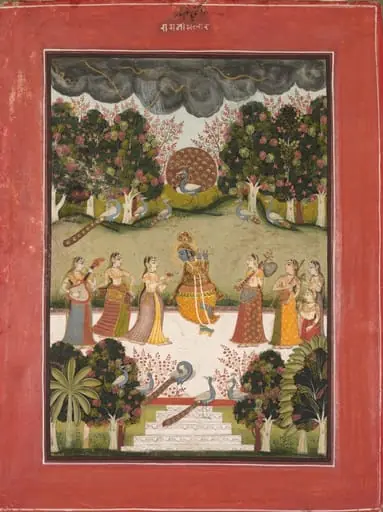 Malar Ragini: Krishna Playing the Flute to Seven Gopis Holding Musical Instruments, from the Ragamala Series
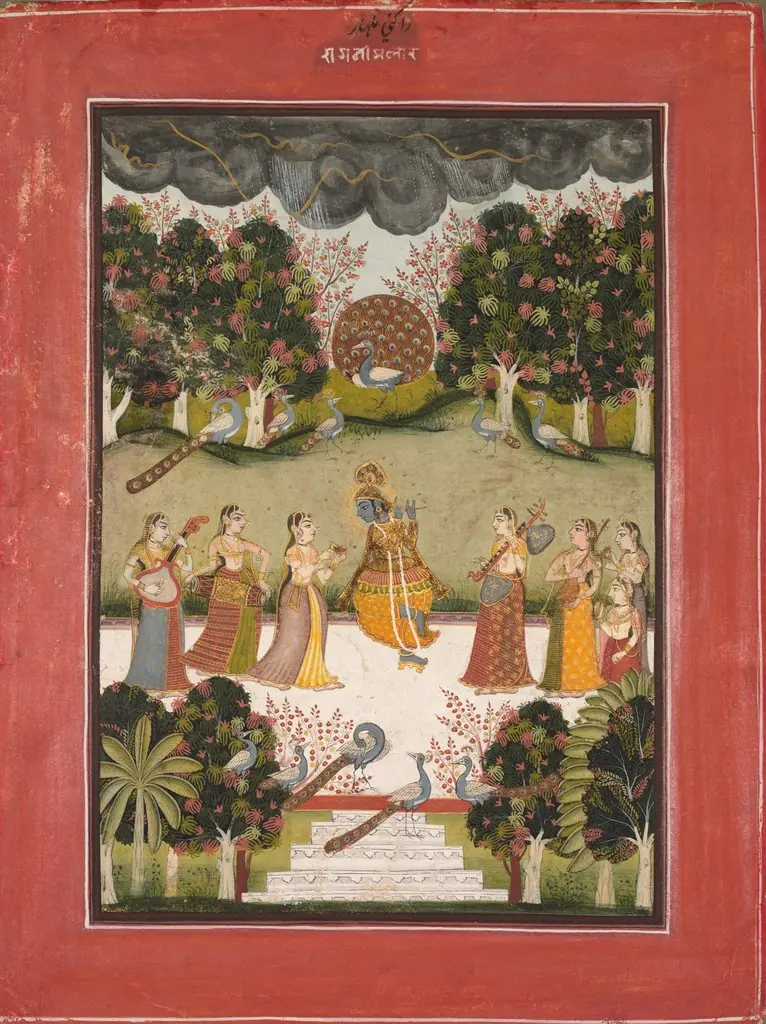 Malar Ragini: Krishna Playing the Flute to Seven Gopis Holding Musical Instruments, from the Ragamala Series
 Radha and Krishna
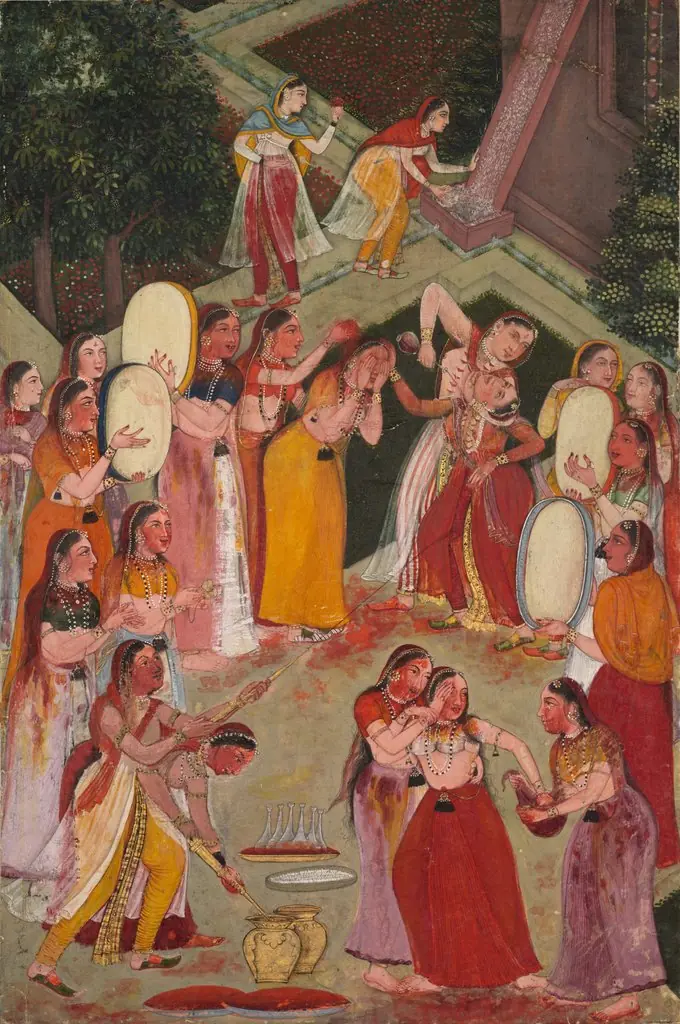 Girls Spraying Each Other at Holi
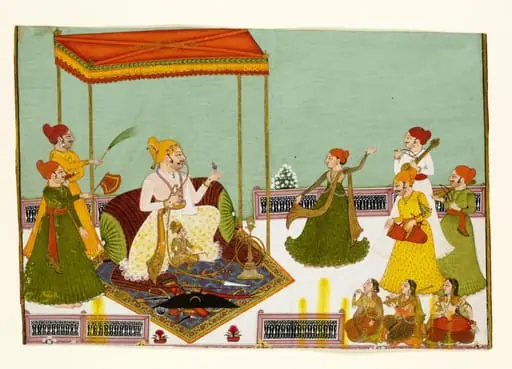 Raja Ajit Singh of Bundi
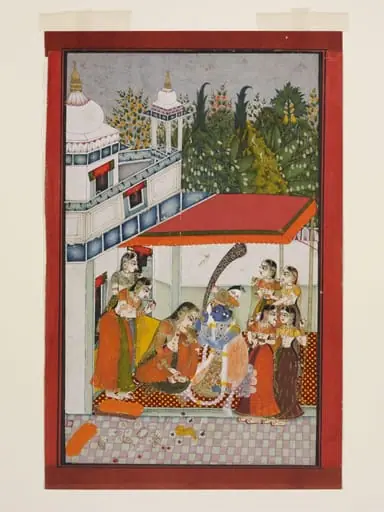 Radha and Krishna
 Celebrations of Krishna's Birth, from a Bhagavata Purana