Artwork
Parivati Placing a Wedding Garland on Shiva (verso)
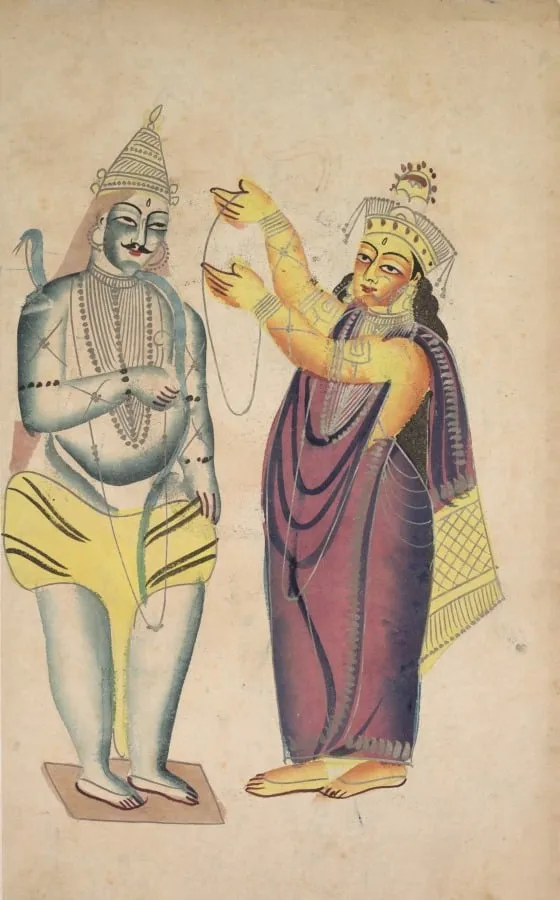
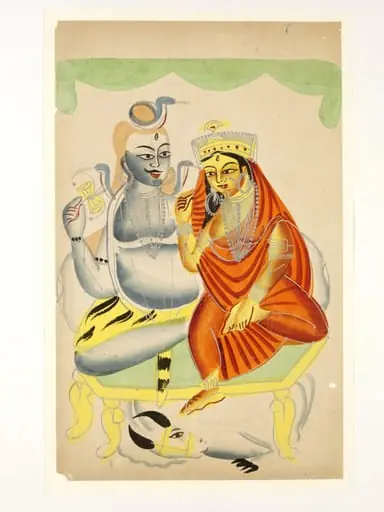
Parivati Placing a Wedding Garland on Shiva (verso) is an unspecified painting by the Bengal School artist Unknown. It dates from 1890 and is held in the collection of the Cleveland Museum of Art. This painting depicts a ritual moment between two figures, likely the Hindu deities Parvati and Shiva, rendered in the Kalighat style.
- Accession no.
- 2003.129.b
About this work
Overview
This painting depicts a ritual moment between two figures, likely the Hindu deities Parvati and Shiva, rendered in the Kalighat style. Executed on paper with bold outlines and vivid, flat colors, it reflects the folk-art traditions of 19th-century Bengal. The composition is symmetrical and intimate, focusing on gesture and adornment rather than spatial depth.
Subject & Meaning
The scene illustrates Parvati placing a wedding garland around Shiva’s neck, symbolizing their sacred union. The figures’ regal attire and jewelry signify divine status, while the act of garlanding represents ritual consent and marital bond in Hindu tradition. The simplicity of the scene emphasizes spiritual intimacy over narrative complexity.
Technique & Style
The painting employs flat planes of bright pigment, blue, yellow, purple, with minimal shading and clean, unbroken outlines. Details like jewelry and headdresses are rendered with precision, yet the overall form remains stylized and two-dimensional. This approach aligns with Kalighat’s folk aesthetic, prioritizing symbolic clarity over naturalism.
History & Provenance
Created in mid-19th century Calcutta, this work likely originated from a Kalighat patua artist’s studio near the Kalighat temple. Painted on inexpensive paper for pilgrims and urban buyers, such works were mass-produced and often sold as devotional or souvenir imagery, reflecting the intersection of religion and commerce in colonial Bengal.
Context
Kalighat paintings emerged alongside urbanization and temple pilgrimage in Calcutta, blending traditional iconography with contemporary visual language. Artists adapted mythological themes for a growing middle-class audience, using accessible styles that resonated with both religious devotion and popular taste, distinct from elite Mughal or Rajput traditions.
Legacy
These works preserved Hindu iconography through a vernacular lens, influencing later Indian modernists and collectors of folk art. Though initially dismissed as commercial, Kalighat paintings are now recognized for their expressive economy and cultural insight, offering a window into the religious life of 19th-century Bengal.
Artist & collection









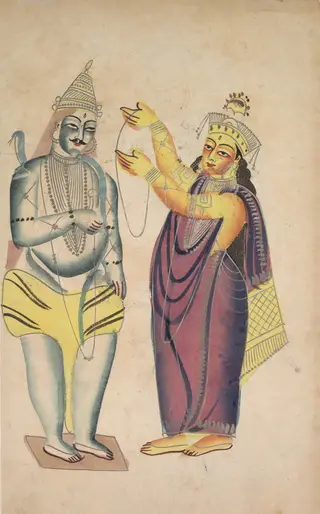
- Parivati Placing a Wedding Garland on Shiva (verso)
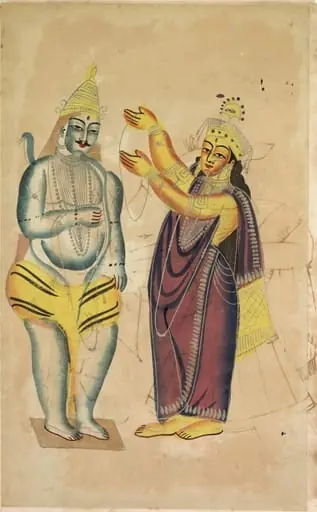 Parvati Placing a Wedding Garland on Shiva (recto), from a Kalighat album
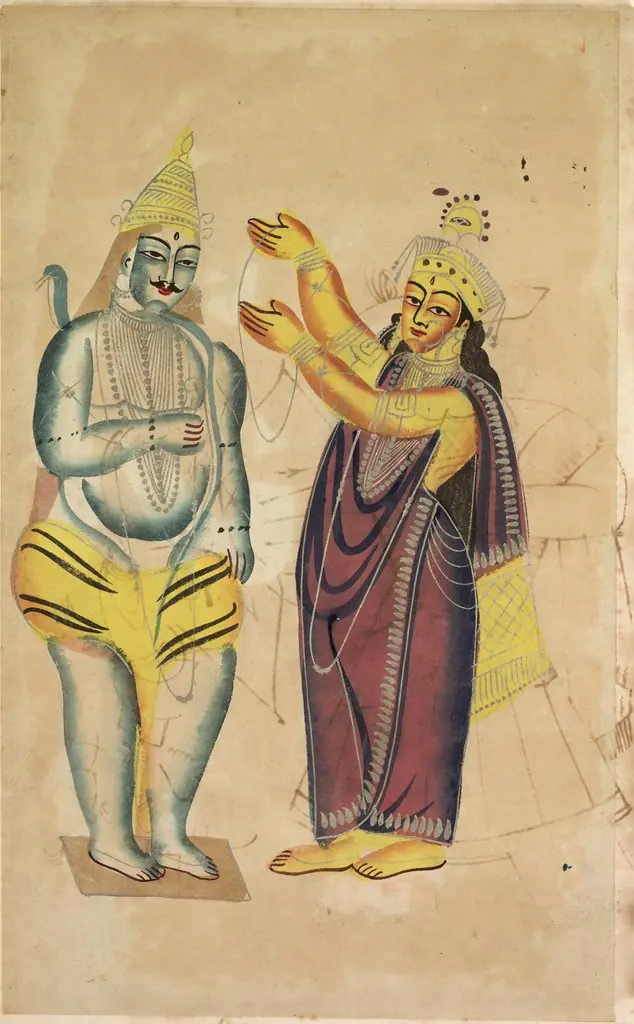 Parvati Placing a Wedding Garland on Shiva (recto), from a Kalighat album
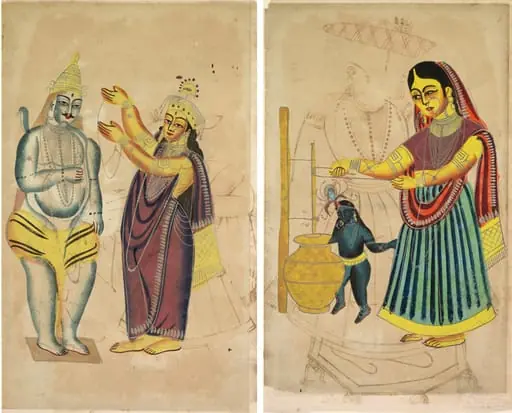 Leaf from a Kalighat album: Parvati Placing a Wedding Garland on Shiva (recto); Yasoda Churning Butter (verso)
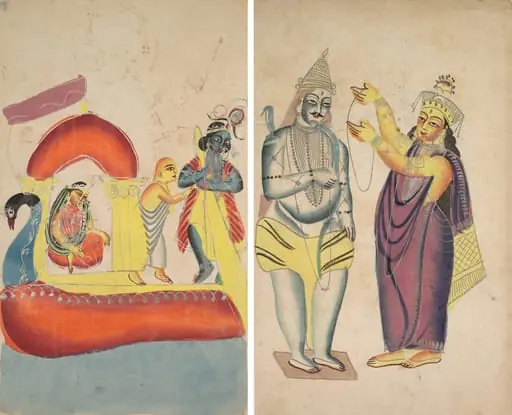 Krishna Ferrying Radha Across the Yamuna River (recto); Parivati Placing a Wedding Garland on Shiva (verso)
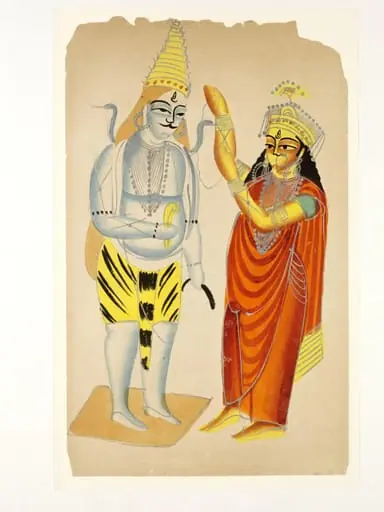 Parvati and Shiva
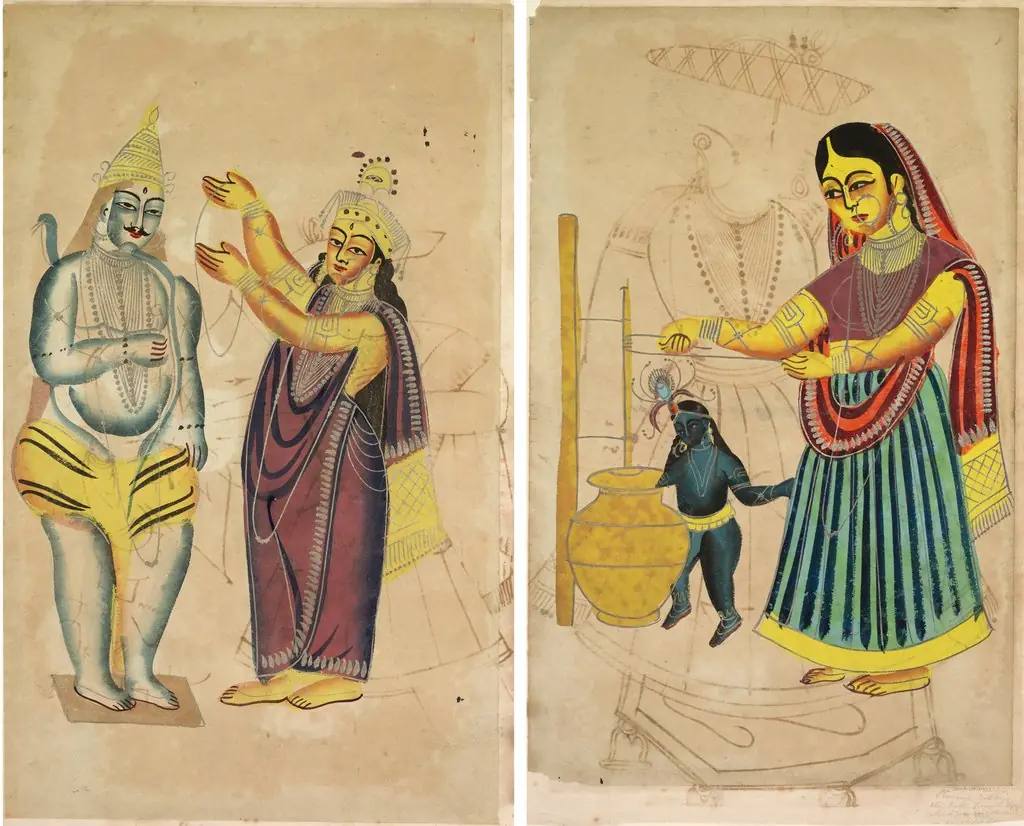 Leaf from a Kalighat album: Parvati Placing a Wedding Garland on Shiva (recto); Yasoda Churning Butter (verso)
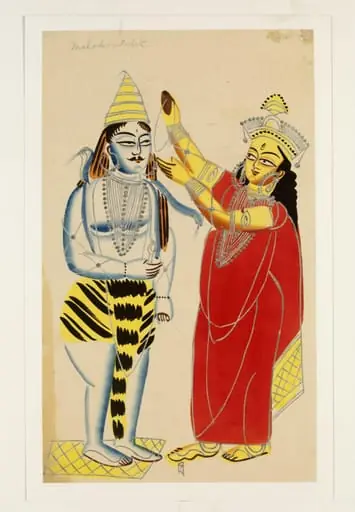 Parvati and Shiva
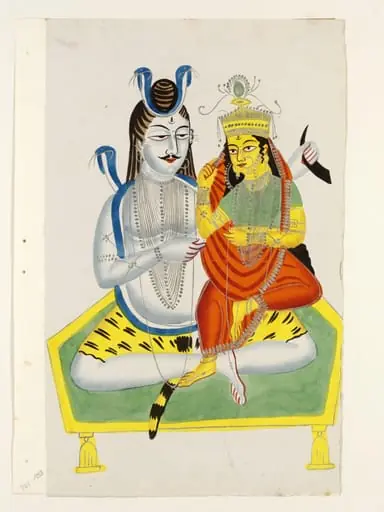 Shiva and Parvati
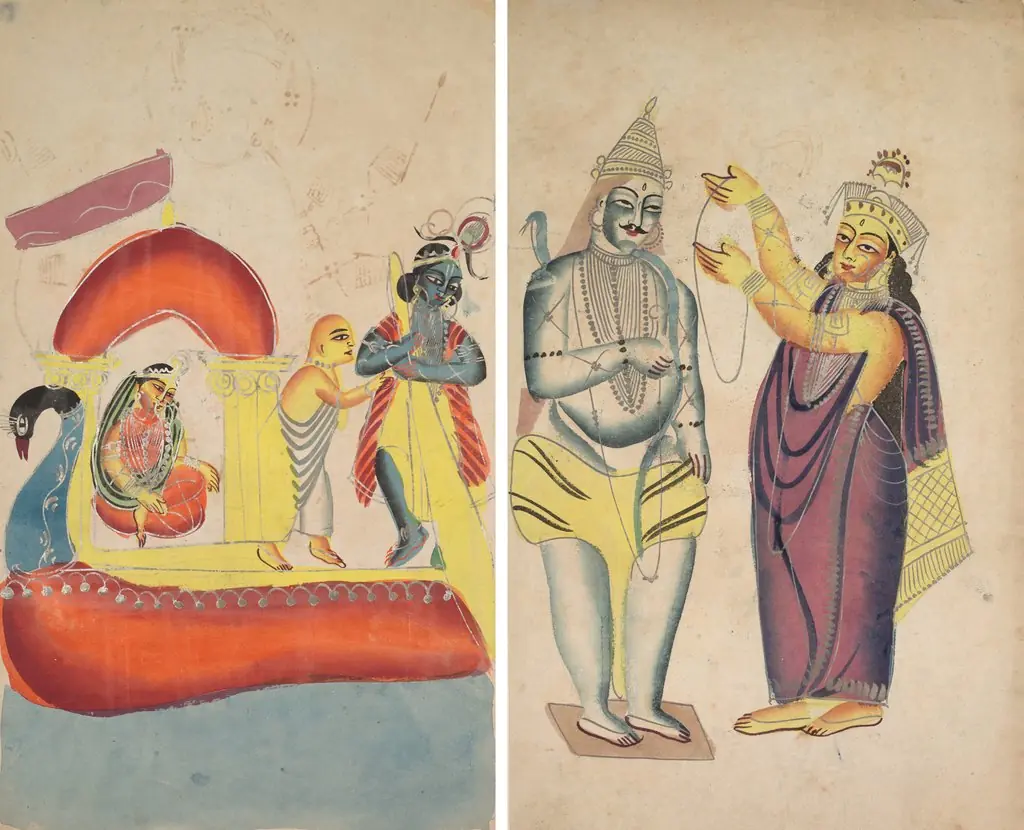 Krishna Ferrying Radha Across the Yamuna River (recto); Parivati Placing a Wedding Garland on Shiva (verso)
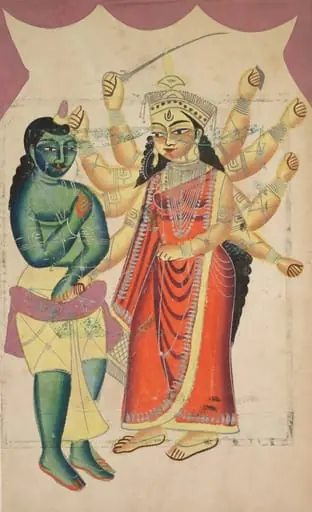 Durga (verso), from a Kalighat album
 Shiva, Parvati and Nandi