Artwork
Parivati Placing a Wedding Garland on Shiva (verso)
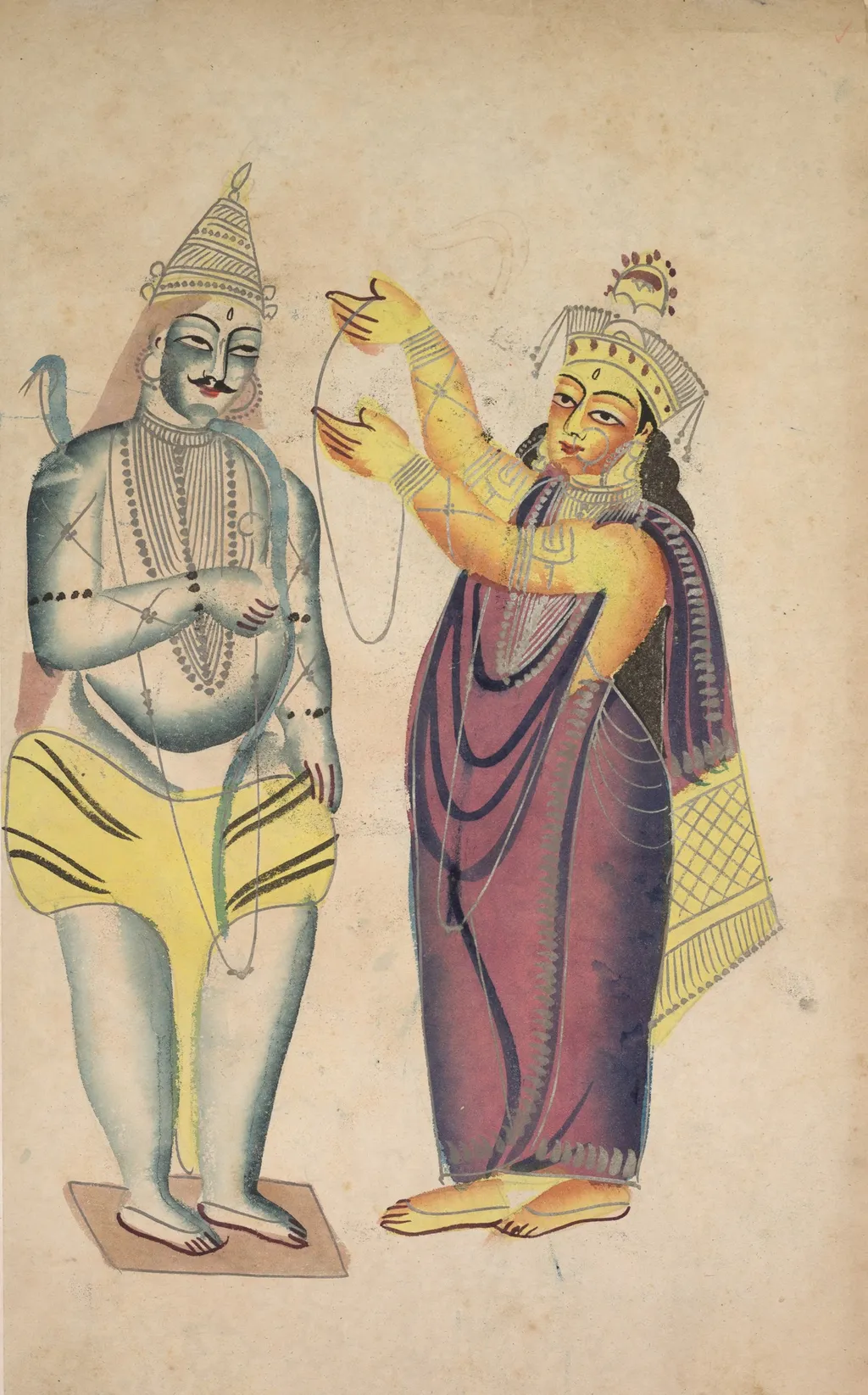
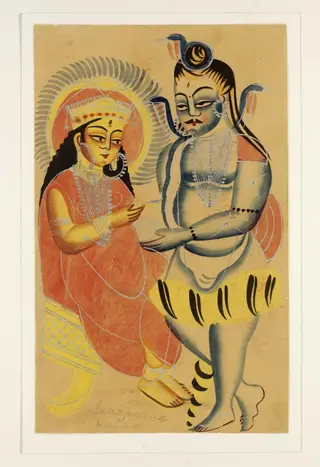
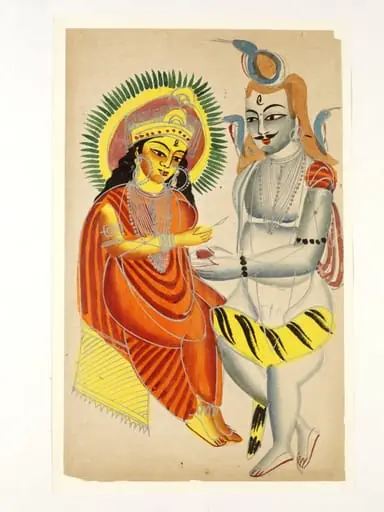
Parivati Placing a Wedding Garland on Shiva (verso) is an unspecified painting. It dates from 1896 and is held in the collection of the Cleveland Museum of Art. The work depicts two standing figures rendered in bold contour lines against an unadorned backdrop.
About this work
History & Provenance
The painting Parivati Placing a Wedding Garland on Shiva (verso) is held in the collection of the Cleveland Museum of Art.
The painting was created in Kolkata around 1890 by an unidentified artist. Its early ownership and any possible commission are not recorded in the available sources. The work entered the Cleveland Museum of Art in 2003 and is accessioned as 2003.129.b, where it remains in the museum's collection.
The painting Parivati Placing a Wedding Garland on Shiva (verso) is held in the collection of the Cleveland Museum of Art. The institution assigns the work the accession number 2003.129.b. Created in 1890, the piece was produced in Kolkata and is classified as a painting within the museum's holdings.
Context
Parivati Placing a Wedding Garland on Shiva (verso) is a painting dating to 1890, created in Kolkata and held by the Cleveland Museum of Art. Scholarship on the work remains sparse, with no major critical essays cited in available records; its reception during the artist’s lifetime is undocumented. The piece is situated within the broader corpus of 19th-century Indian painting, reflecting colonial-era artistic production in Bengal.
Its attribution to an unknown hand, despite being cataloged in major collections, underscores ongoing challenges in reconstructing artistic authorship from this period.
Legacy
The painting's legacy resides in its role as a representative example of 19th-century Bengali religious art, reflecting devotional practices within the Kolkata artistic milieu. Its depiction of Parivati adorning Shiva with a garland offers insight into marital symbolism in Hindu iconography, contributing to scholarly discussions on gendered ritual imagery. The work is held in the Cleveland Museum of Art collection, ensuring continued access for study and interpretation.
Overview
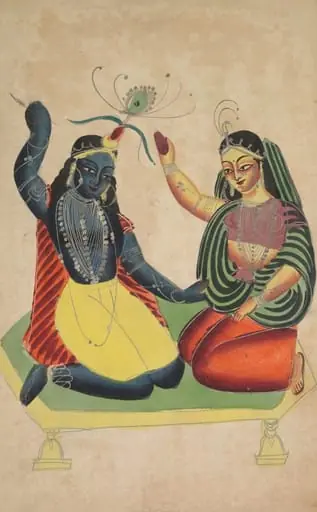
The work depicts two standing figures rendered in bold contour lines against an unadorned backdrop. The left figure is dressed in a striped yellow‑blue garment and a tall, pointed headdress, clutching a small object. The right figure wears a yellow skirt with a red sash, a jeweled crown, and lifts a garland with both hands.
Subject & Meaning
The gesture of presenting the garland suggests a ritual of marriage, likely portraying a bride offering a wedding garland to a deity or groom. The simplified facial expressions convey a ceremonial solemnity while retaining a gentle, approachable tone.
Technique & Style
Executed with flat, saturated hues and minimal shading, the painting relies on strong outlines to define form. The lack of modeling creates a graphic quality typical of certain regional devotional panels, emphasizing symbolic color over naturalistic depth.
Artist & collection

- Parivati Placing a Wedding Garland on Shiva (verso)
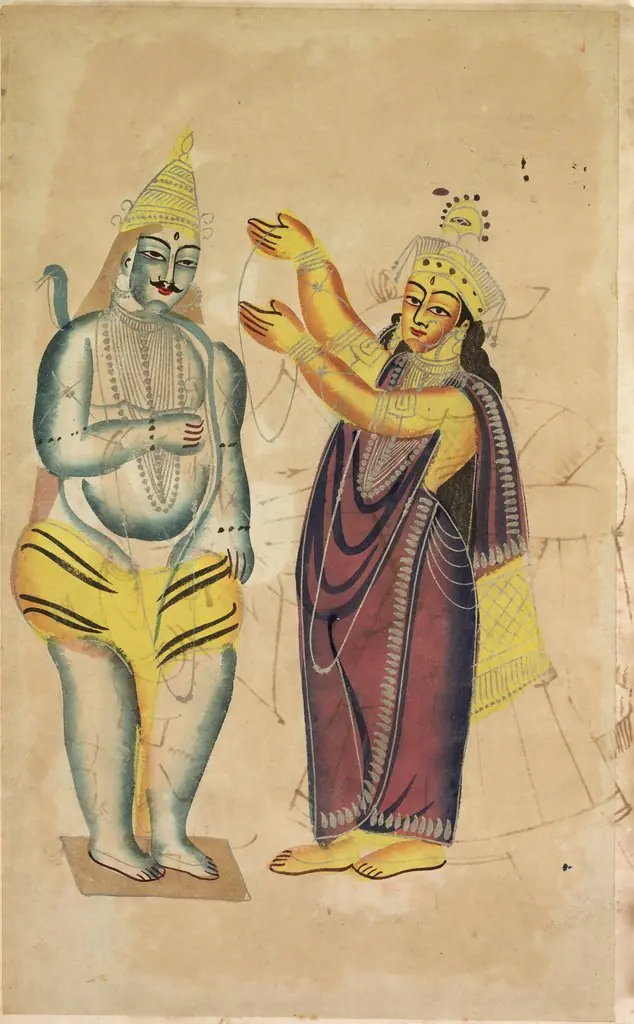 Parvati Placing a Wedding Garland on Shiva (recto), from a Kalighat album
 Parvati Placing a Wedding Garland on Shiva (recto), from a Kalighat album
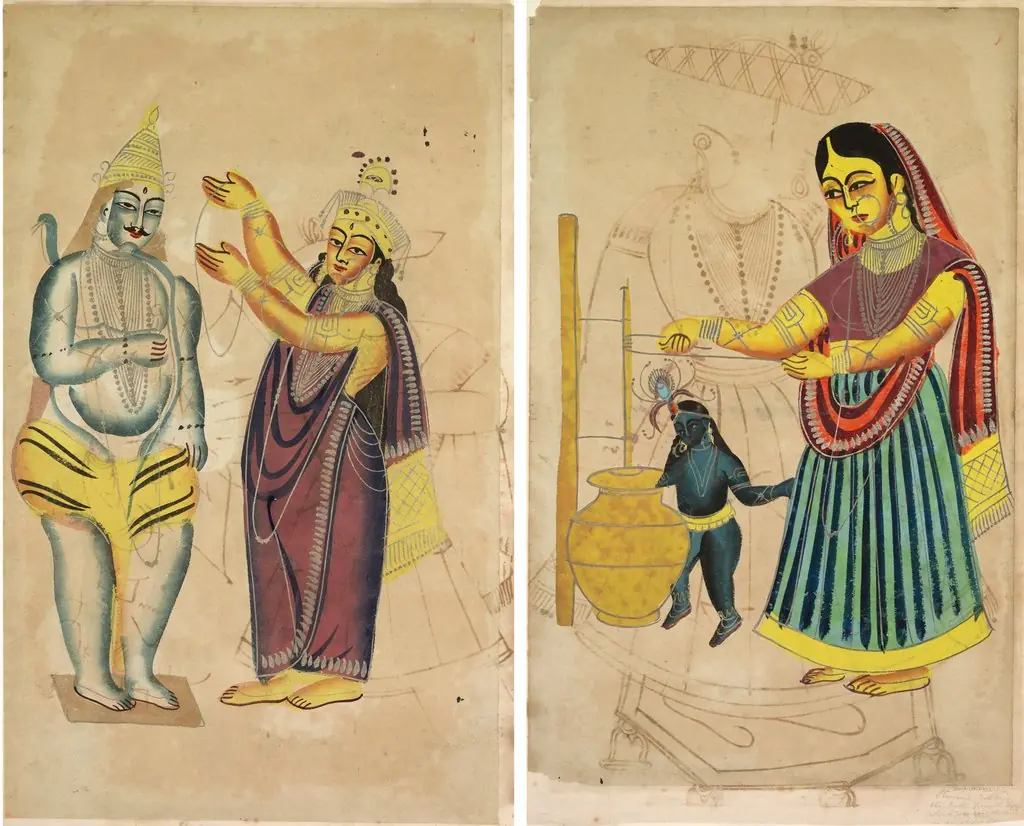 Leaf from a Kalighat album: Parvati Placing a Wedding Garland on Shiva (recto); Yasoda Churning Butter (verso)
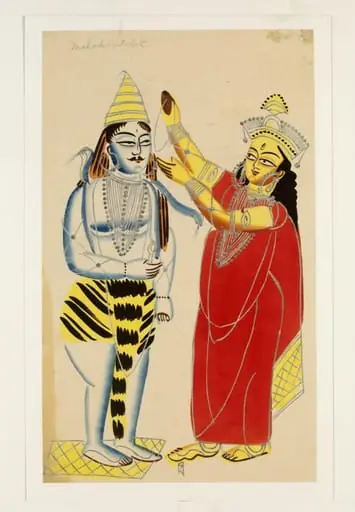 Parvati and Shiva
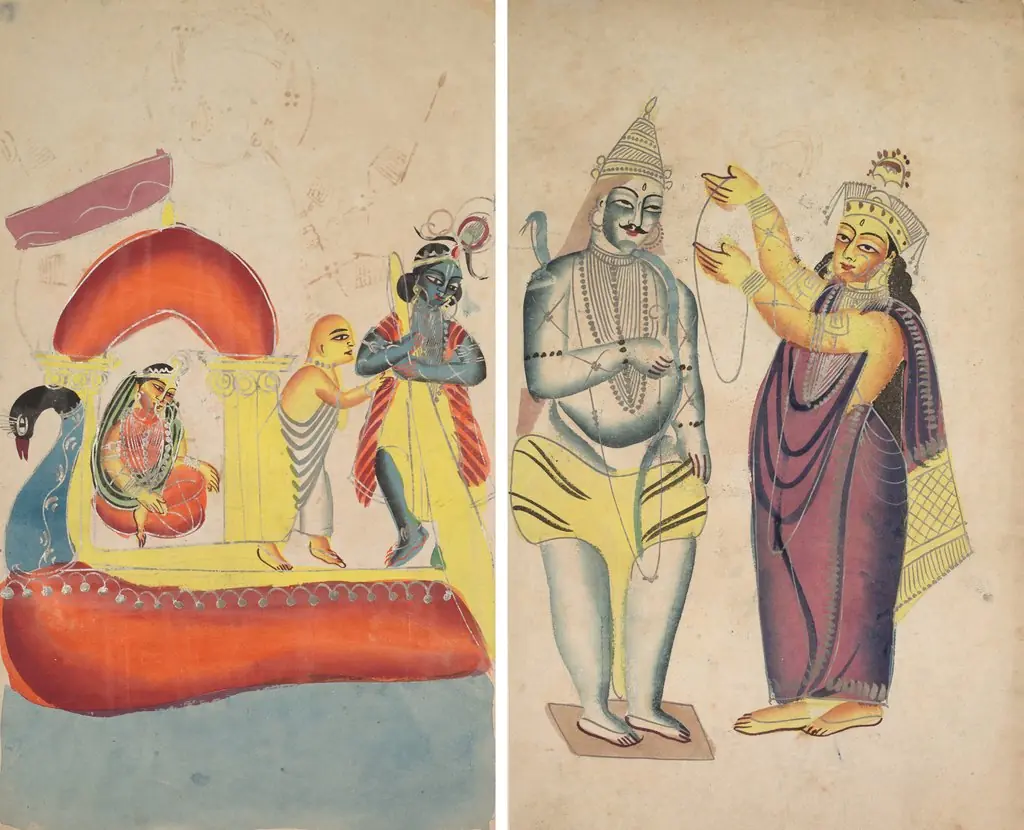 Krishna Ferrying Radha Across the Yamuna River (recto); Parivati Placing a Wedding Garland on Shiva (verso)
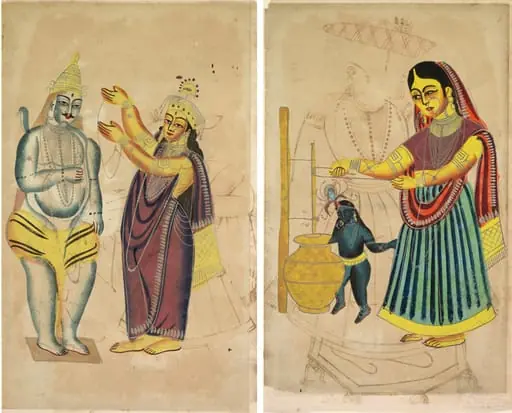 Leaf from a Kalighat album: Parvati Placing a Wedding Garland on Shiva (recto); Yasoda Churning Butter (verso)
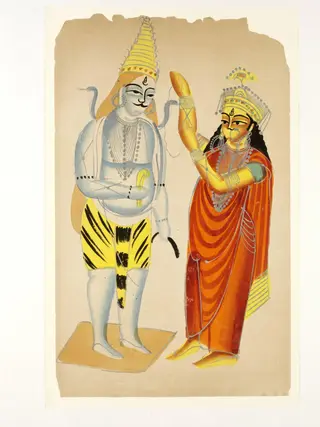 Parvati and Shiva
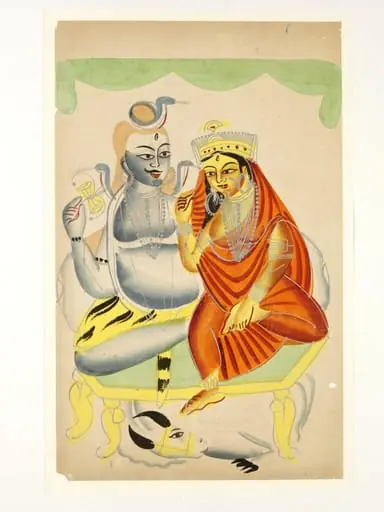 Shiva, Parvati and Nandi
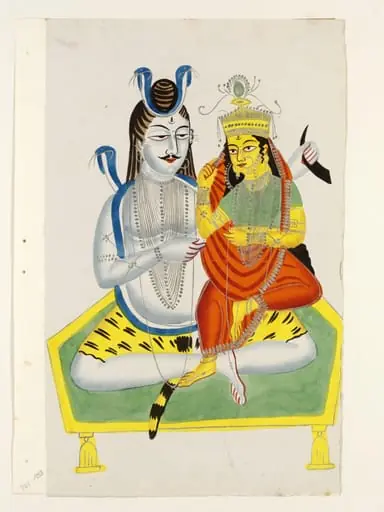 Shiva and Parvati
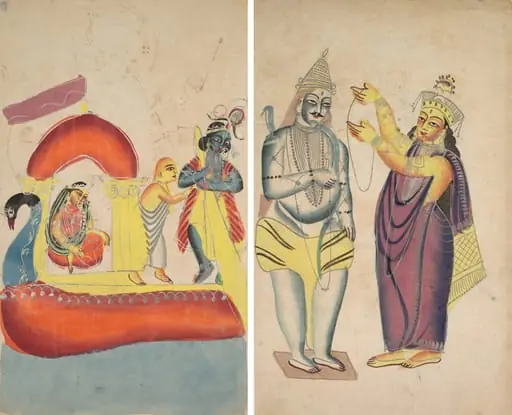 Krishna Ferrying Radha Across the Yamuna River (recto); Parivati Placing a Wedding Garland on Shiva (verso)
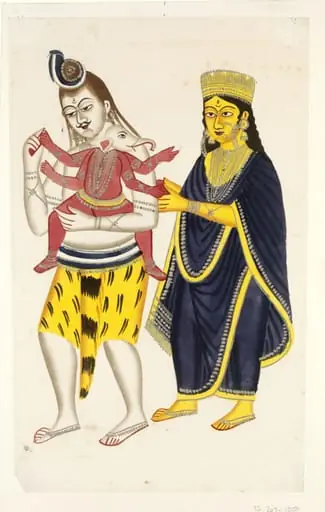 Shiva, Parvati and Ganesha