Artwork
Madonna and Child with Saint Catherine
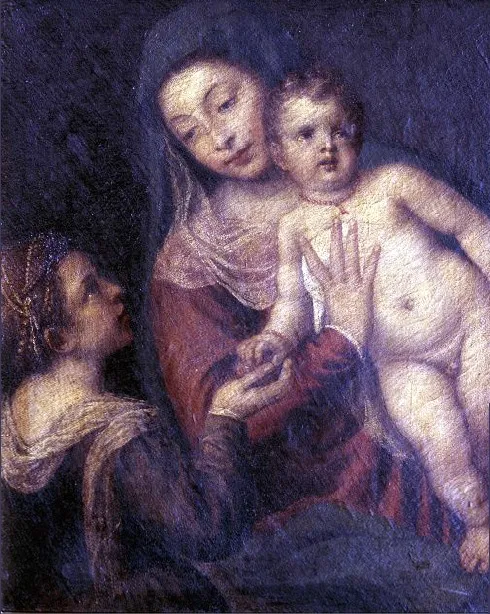
Madonna and Child with Saint Catherine is an oil painting by the Early Baroque Italian artist Unknown. It dates from 1600 and is held in the collection of the Uffizi Gallery.
About this work
Overview
Madonna and Child with Saint Catherine is a 1600 oil on canvas painting by the workshop of Titian, belonging to the Venetian school.
Madonna and Child with Saint Catherine is a 1600 oil on canvas painting by the workshop of Titian, belonging to the Venetian school. Measuring 75 by 60 centimeters, the work is held in the Uffizi Gallery in Florence under catalogue number 949. The composition adapts a known Titian design, replacing Mary Magdalene with Saint Catherine of Alexandria. Its attribution has been a subject of scholarly debate, with assessments ranging from the master's nephew to his broader workshop, though it is currently classified as a studio production reflecting the master's compositional inventions.
Subject & Meaning
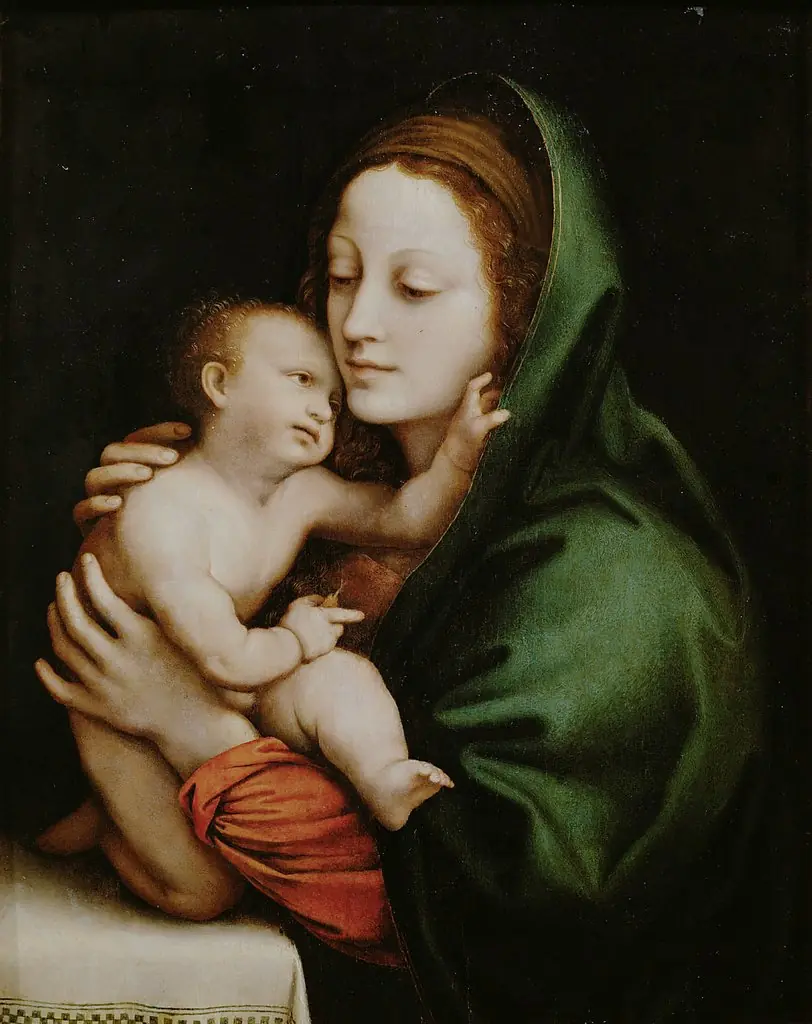
The painting depicts the Virgin Mary holding the Christ Child, accompanied by a kneeling Saint Catherine of Alexandria. Mary is shown in traditional red garments and blue drapery, the latter color symbolizing purity and virginity in Christian iconography. The Christ Child stands upright on Mary's left hip, extending his left arm outward while holding her hand. Saint Catherine, identifiable by her ornate head covering and dark dress with a white collar, kneels at the lower left with hands clasped, gazing upward in devotion toward the central pair. The intimate grouping reflects the sacra conversazione tradition, presenting a devotional image of maternal bond and saintly intercession.
Technique & Style
Executed in oil on canvas, the work demonstrates the Venetian school's characteristic handling of color and light. The palette is dominated by deep blues, crimsons, and warm flesh tones, set against a dark, undefined background that lacks any landscape or architectural elements. Light falls selectively from the upper left, illuminating the faces, the infant's body, and the kneeling saint's collar, while heavy shadows envelop the rest of the scene. The brushwork features soft, blended passages in the flesh areas and looser handling in the drapery and background. The paint surface exhibits visible craquelure throughout.
History & Provenance
The painting is first recorded in the collection of cardinal-deacon Carlo de' Medici. Upon his death in 1666, an inventory of his goods was made and the work entered the Uffizi. It was restored around the end of the 18th century, when its present carved and gilded frame was likely added. By 1776, the painting was prominent enough to be included in Johann Zoffany's famous depiction of the Tribuna of the Uffizi. The work remains in the Galleria degli Uffizi as part of its permanent collection.
Context
The painting occupies a complex position within Titian scholarship due to its workshop origins. Art historians Crowe and Cavalcaselle attributed the work to Titian's nephew, Marco Vecellio. The 1926 Uffizi catalogue, edited by Giovanni Poggi, classified it simply as a work of the school of Titian. Harold Wethey disagreed with both conclusions, arguing instead that the painting was an early copy of a lost autograph work by Titian himself. The composition was one Titian returned to multiple times, with variants in the Hermitage Museum and the Museo nazionale di Capodimonte substituting Mary Magdalene for Saint Catherine.
Artist & collection









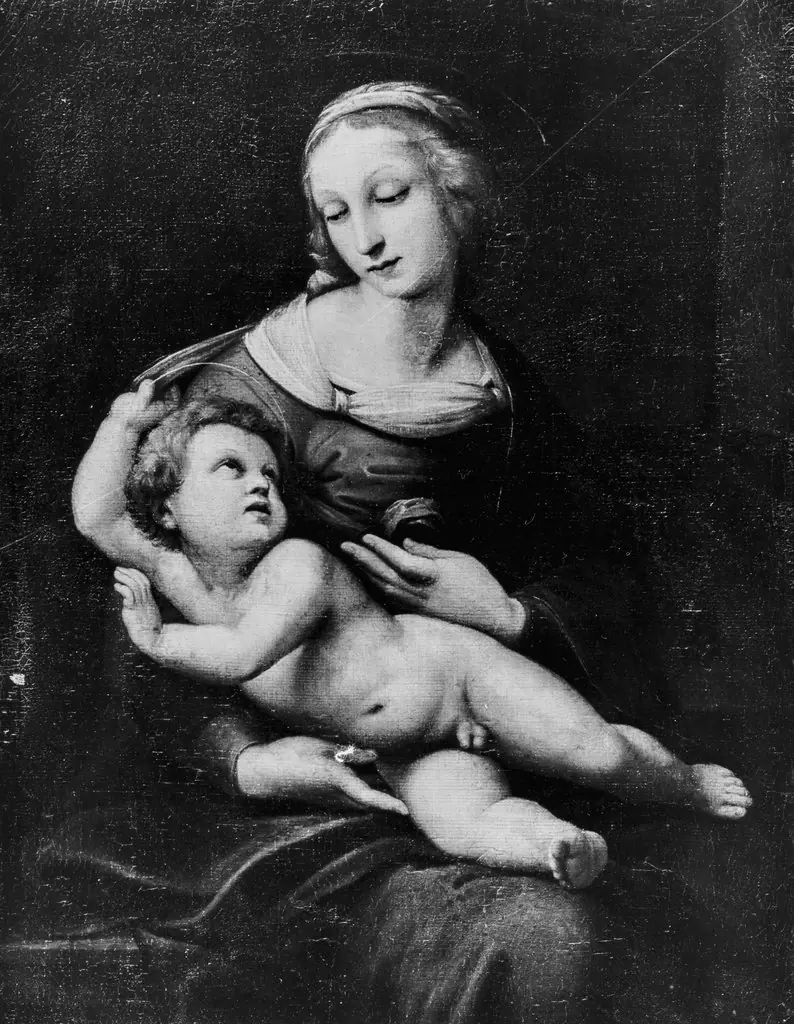 The Virgin and Child
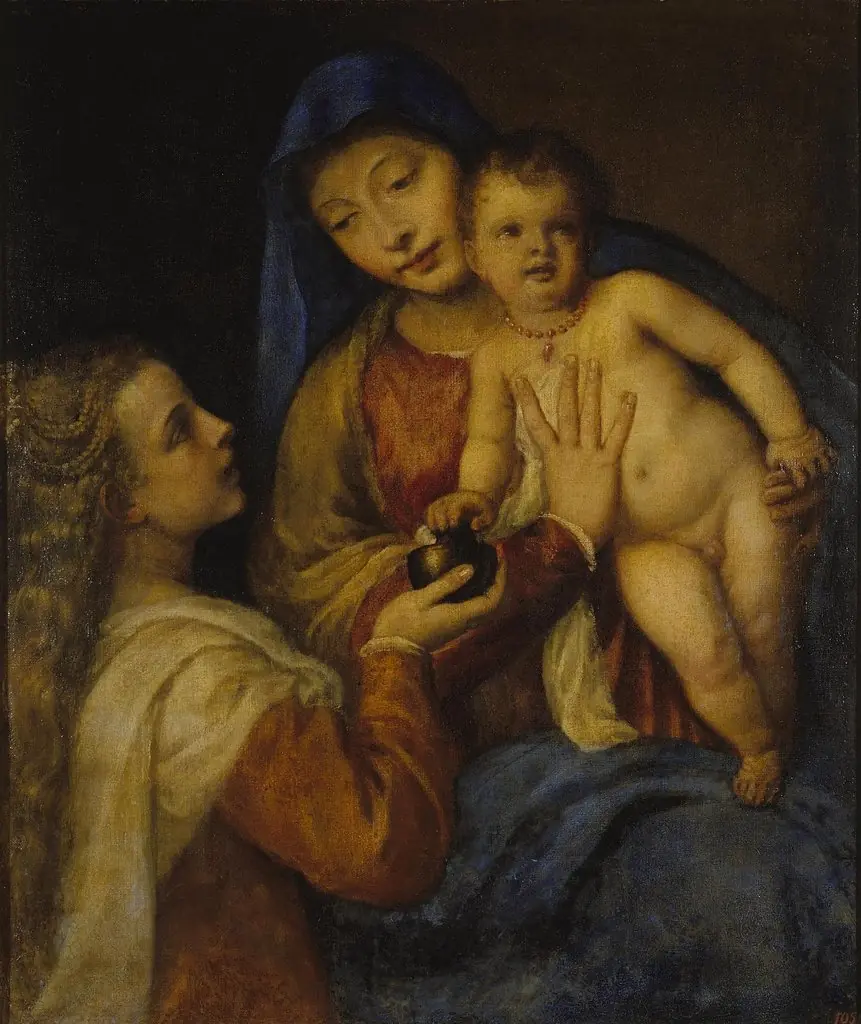 Madonna and Child with Mary Magdalene
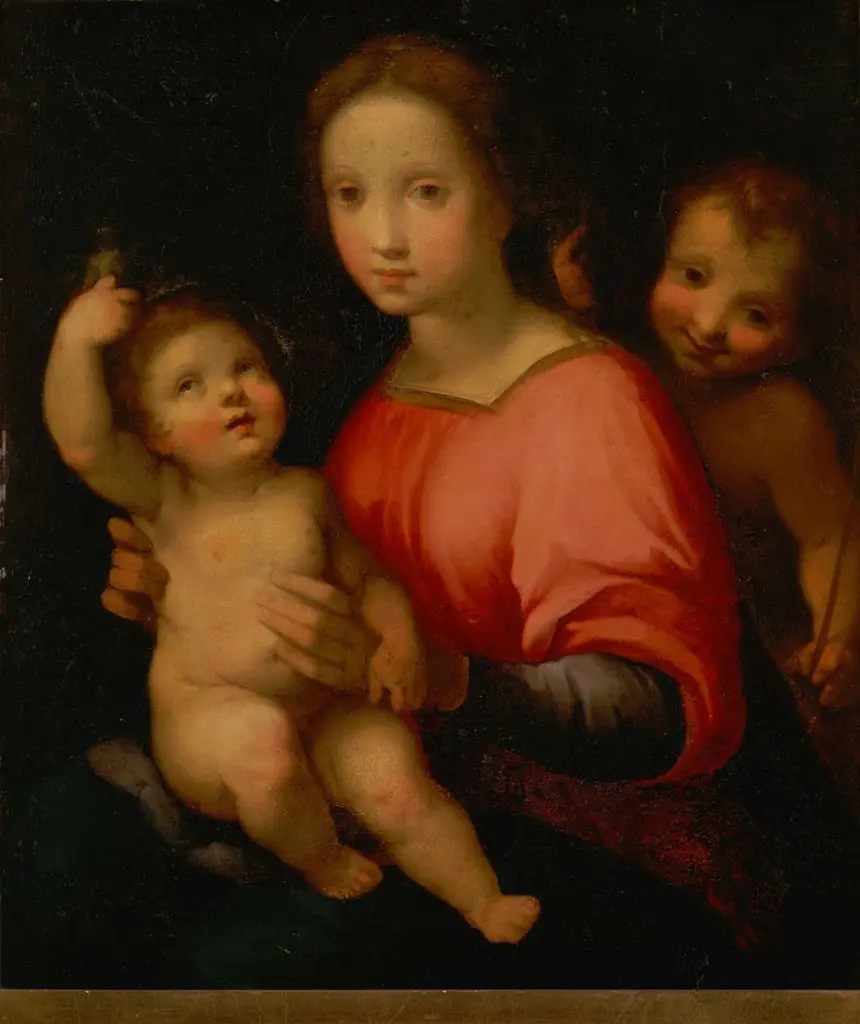
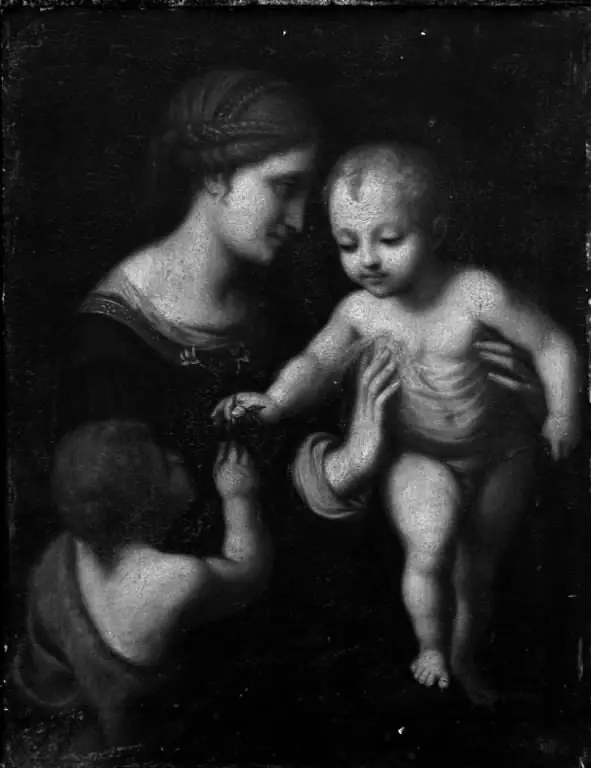 Virgin and Child with St. John
 Virgin and Child with St. John
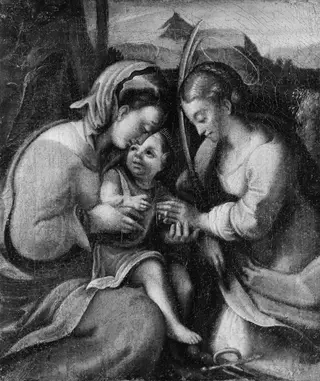 The Mystic Marriage of Saint Catherine
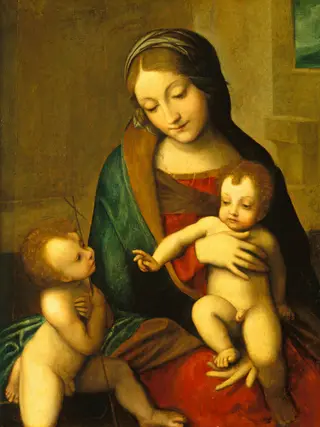 Madonna and Child with the Infant Saint John
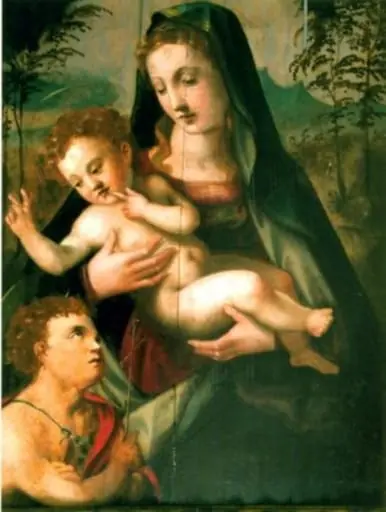 Maria cu Iisus în brațe și Ioan Botezătorul copil
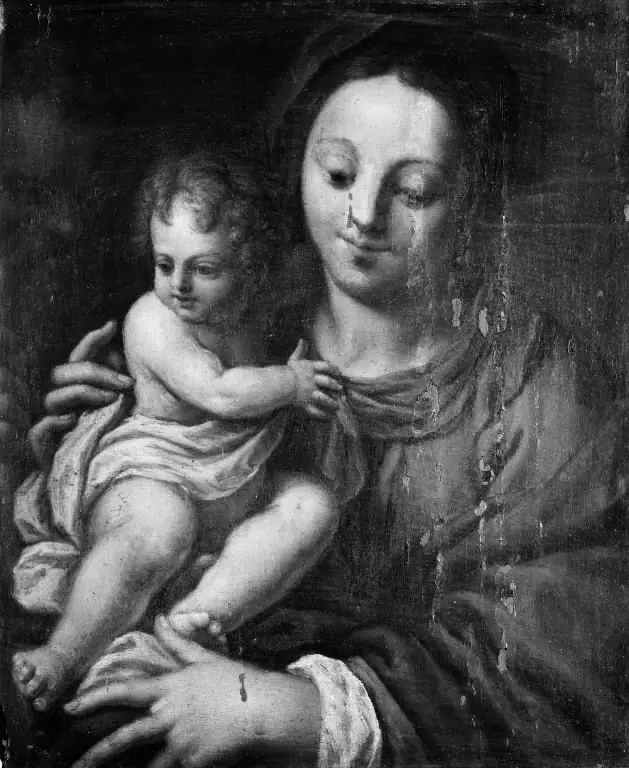 Virgin and Child
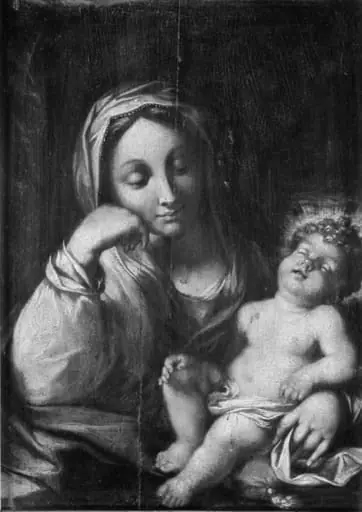 Virgin and Child
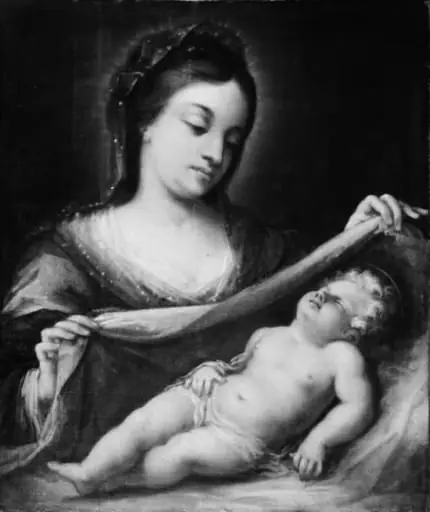 Virgin and Child
 Maria mit Kind
- Madonna and Child with Saint John