Artwork
Madonna i en glorie af engle
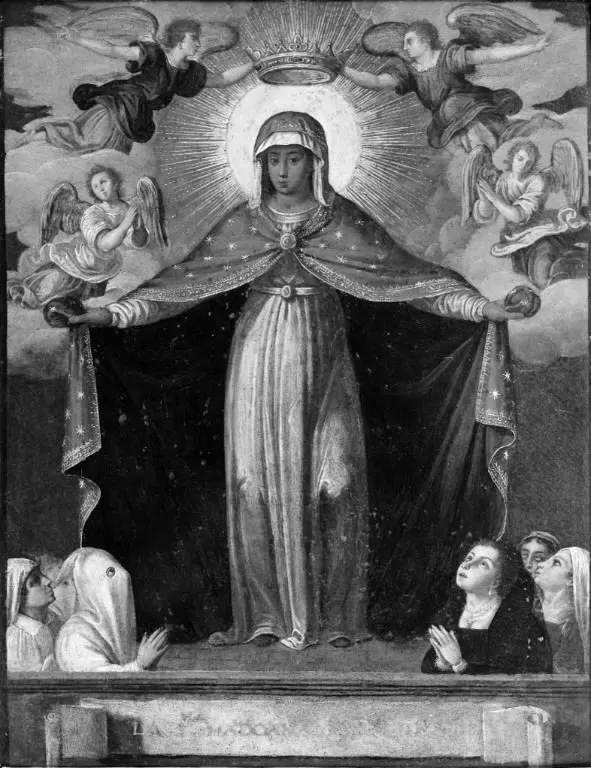
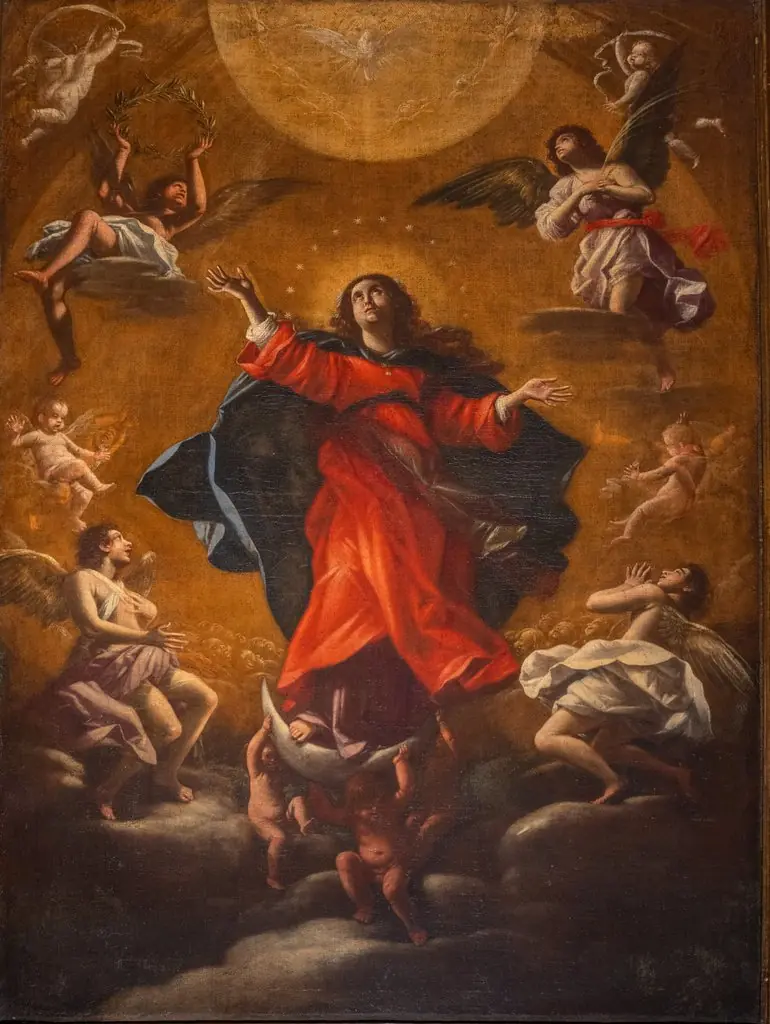
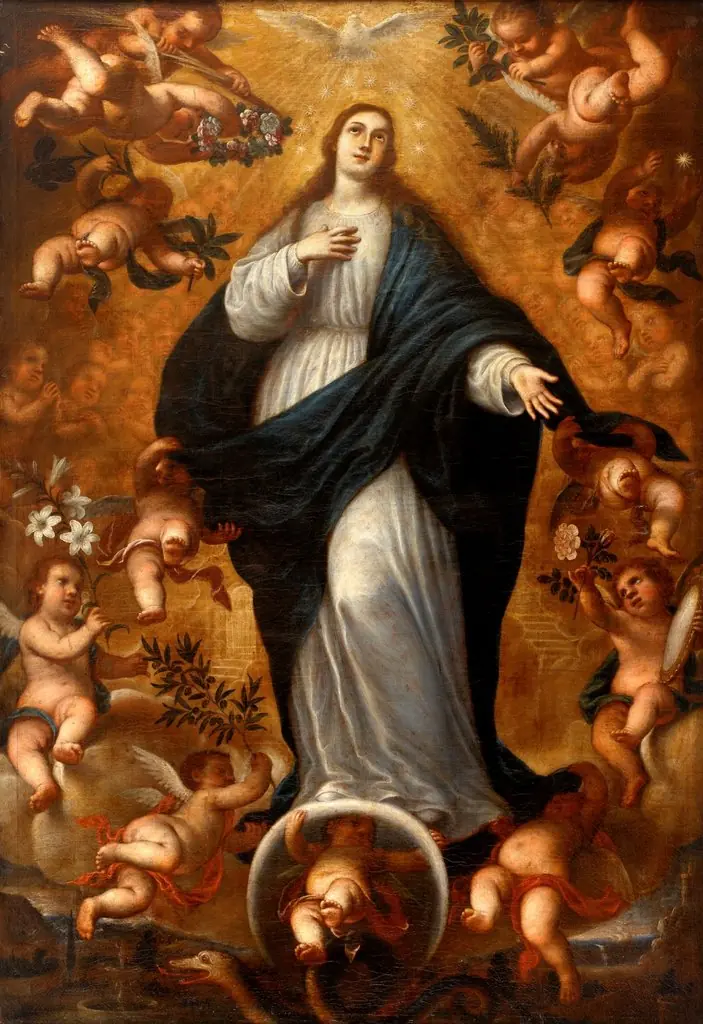
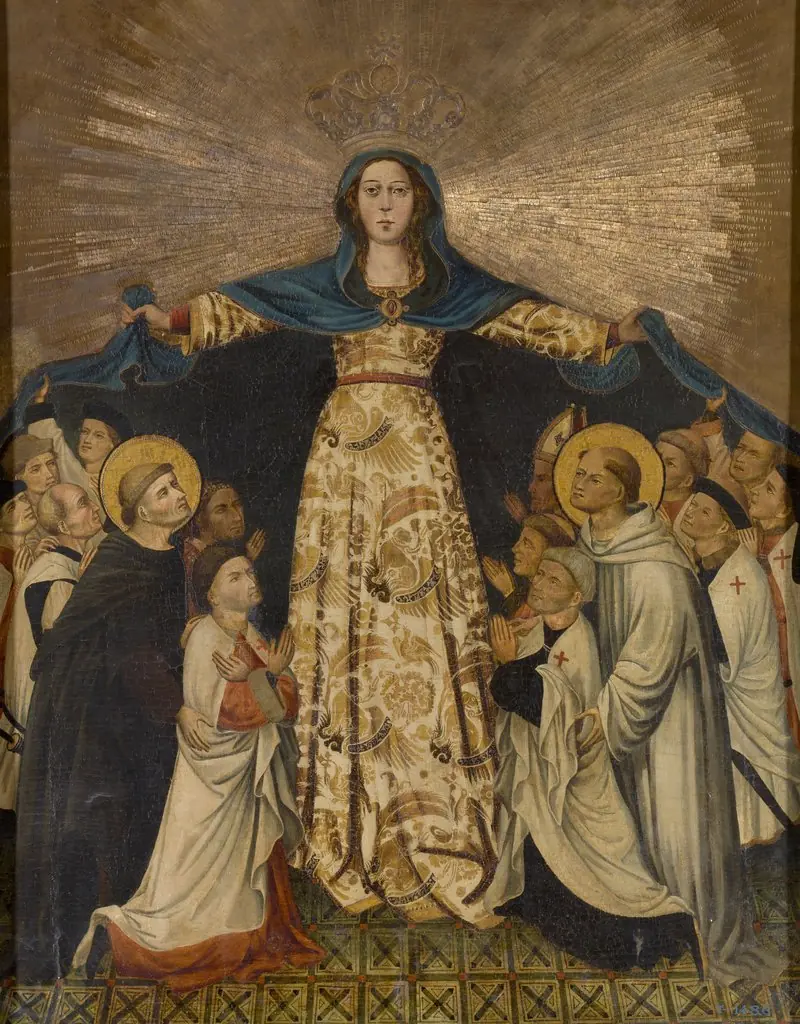
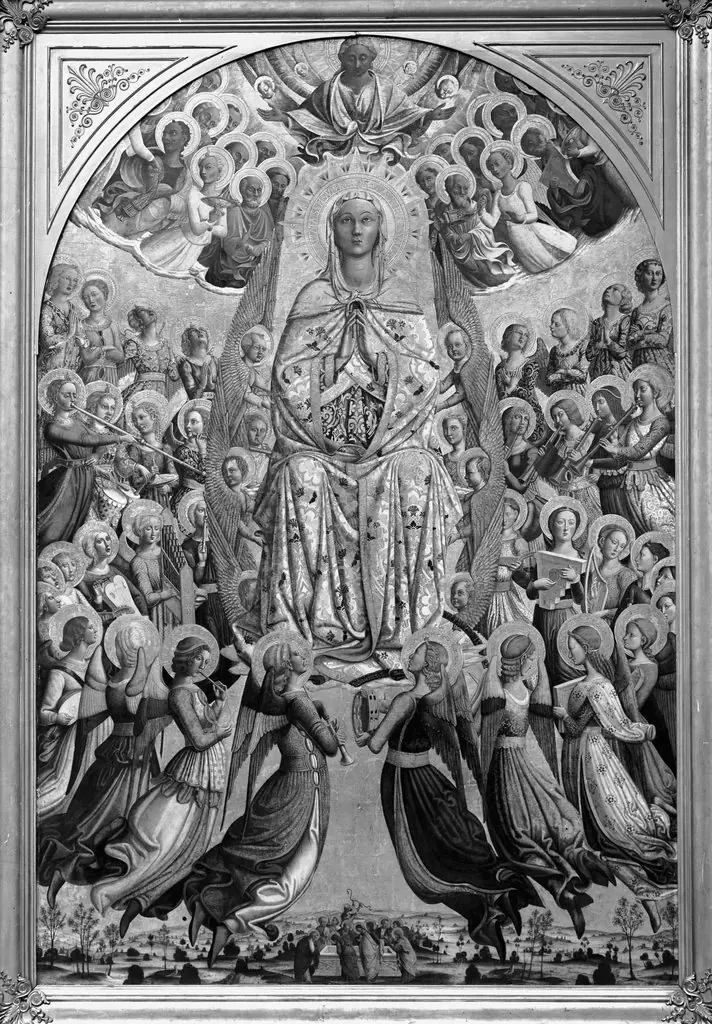
Madonna i en glorie af engle is an unspecified painting by the German Romanticist artist Unknown. It dates from 1848 and is held in the collection of the Statens Museum for Kunst. This painting portrays the Virgin Mary elevated in celestial glory, surrounded by angels and worshippers below.
About this work
Overview
The composition is vertically structured, drawing the eye upward from the earthly figures to the heavenly realm above.
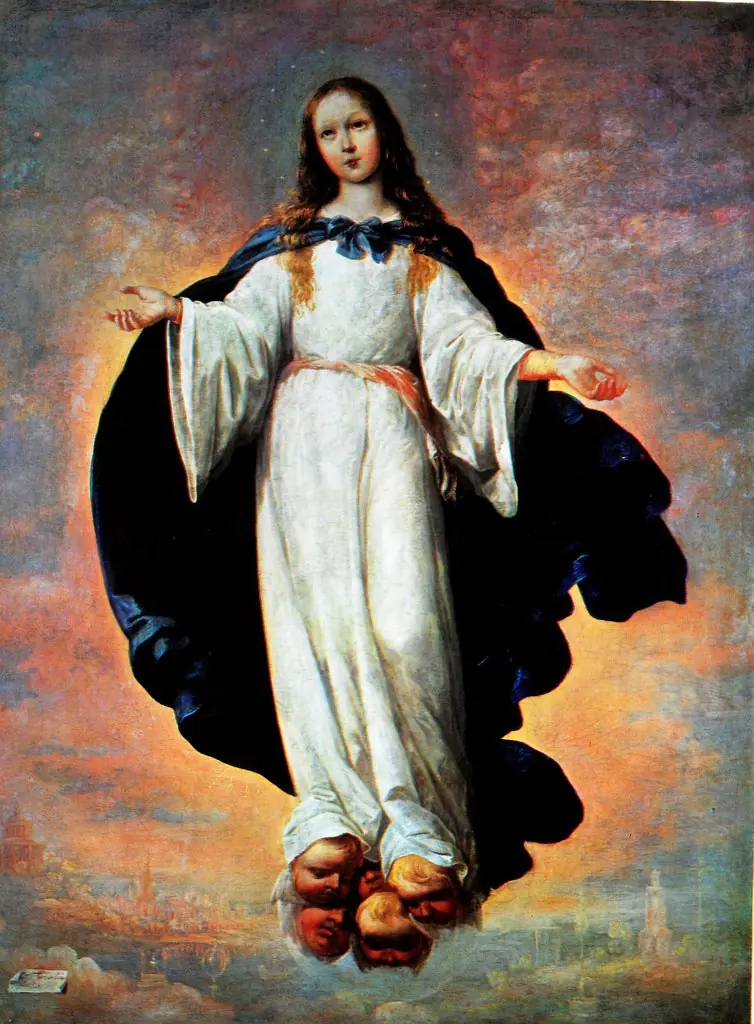
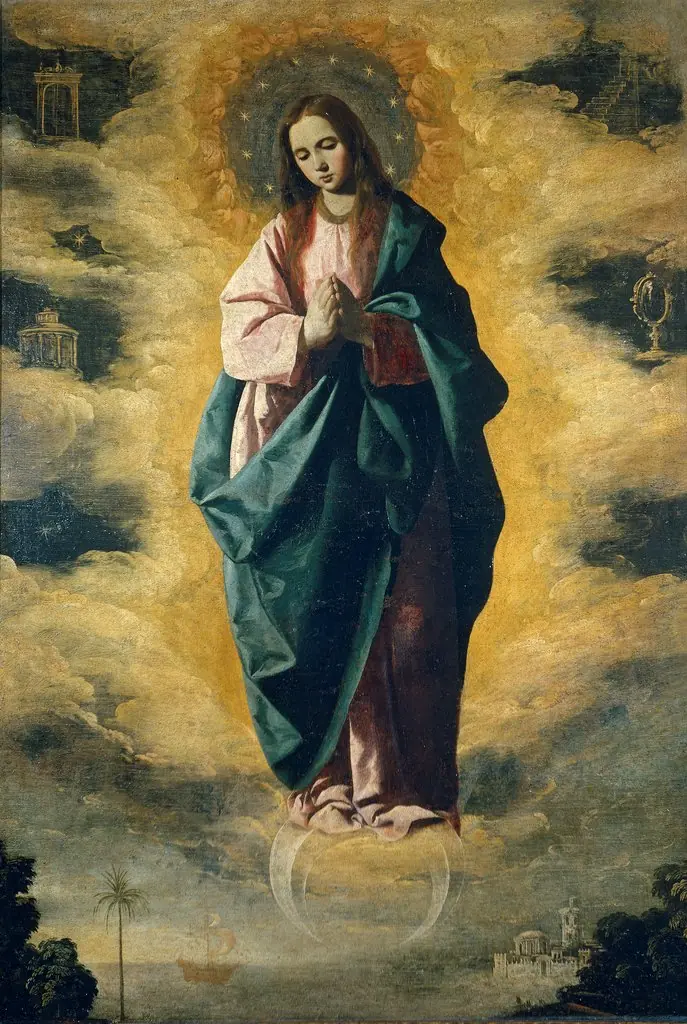
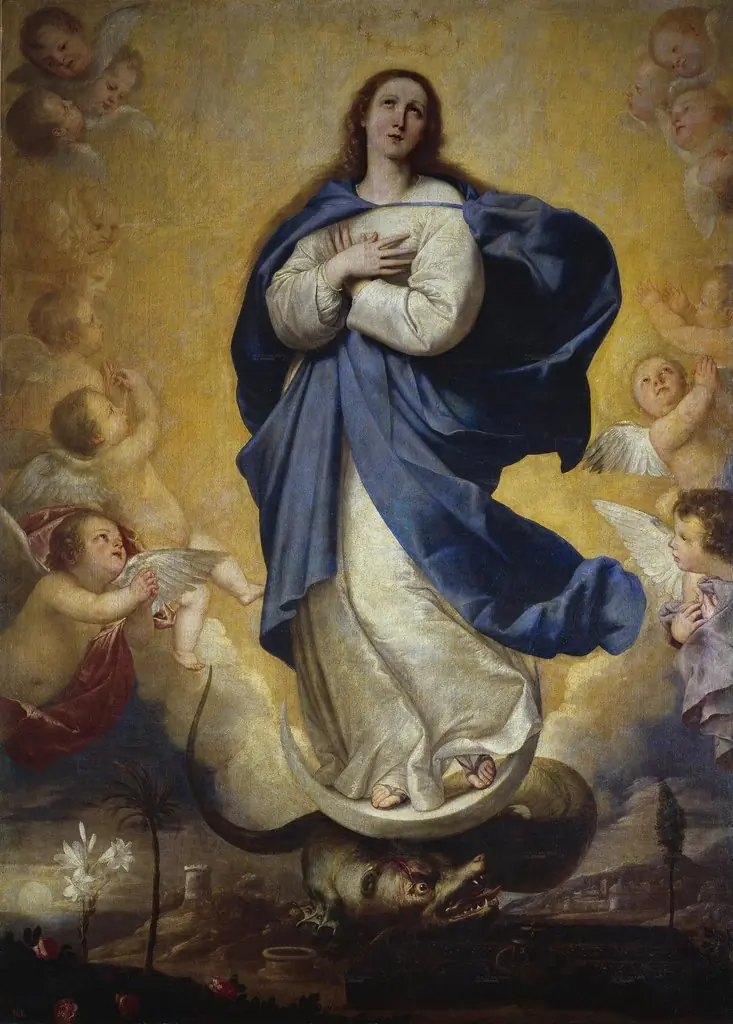
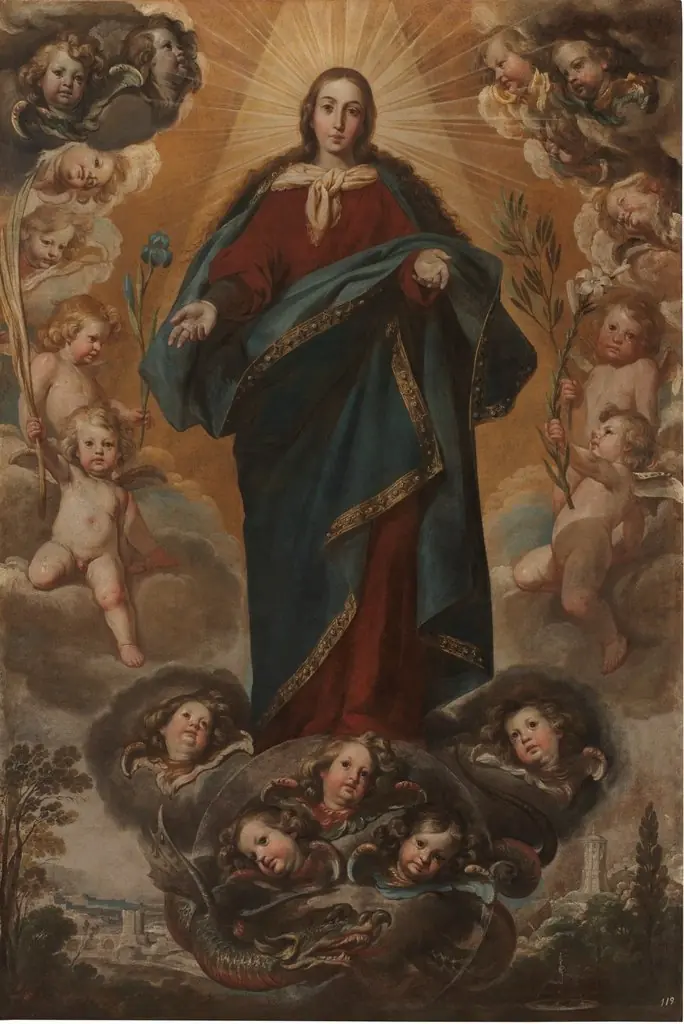
This painting portrays the Virgin Mary elevated in celestial glory, surrounded by angels and worshippers below. She is depicted mid-motion, arms outstretched, as if in intercession. A radiant halo encircles her, and her robe is embroidered with stellar motifs, suggesting divine association.
The composition is vertically structured, drawing the eye upward from the earthly figures to the heavenly realm above.
Subject & Meaning
The Virgin Mary is shown as the Queen of Heaven, receiving a crown from an angel while standing as an intermediary between the divine and the faithful. The figures below, in somber attire and prayerful gestures, represent the devout seeking her intercession. The stars on her garment and the celestial light reinforce her role as a symbol of purity and heavenly authority within Christian devotion.
Technique & Style
The artist employs strong contrasts of light and shadow to isolate the Virgin and angels against a dark background, enhancing their spiritual presence. Drapery is rendered with careful attention to volume and texture, while the angels’ wings and the crowd’s gestures are rendered with restrained detail. The lighting suggests a theatrical, almost stage-like setting, emphasizing the sacred moment over naturalistic space.
History & Provenance
The painting originates from a Northern European devotional tradition of the late 16th or early 17th century, likely created for a private chapel or religious institution. Its style aligns with regional interpretations of Marian iconography during the Counter-Reformation. While its exact origin remains undocumented, its composition reflects widespread visual motifs used in Catholic devotional art of the period.
Context
Created during a time when the Catholic Church emphasized Marian veneration in response to Protestant reform, this image served to reinforce the Virgin’s role as a mediator of grace. The inclusion of angels and praying figures mirrors liturgical practices and popular piety, where visual aids were used to inspire contemplation and devotion among the faithful.
Legacy
The painting contributes to a broader visual language of Marian glory that persisted in European religious art for centuries. Its use of chiaroscuro and hierarchical composition influenced later devotional works, particularly in regions where Catholic traditions remained strong. Though not widely attributed to a major master, it stands as a representative example of regional ecclesiastical art of its era.
Artist & collection