Artwork
Mahamayuri (Kujaku Myoo)
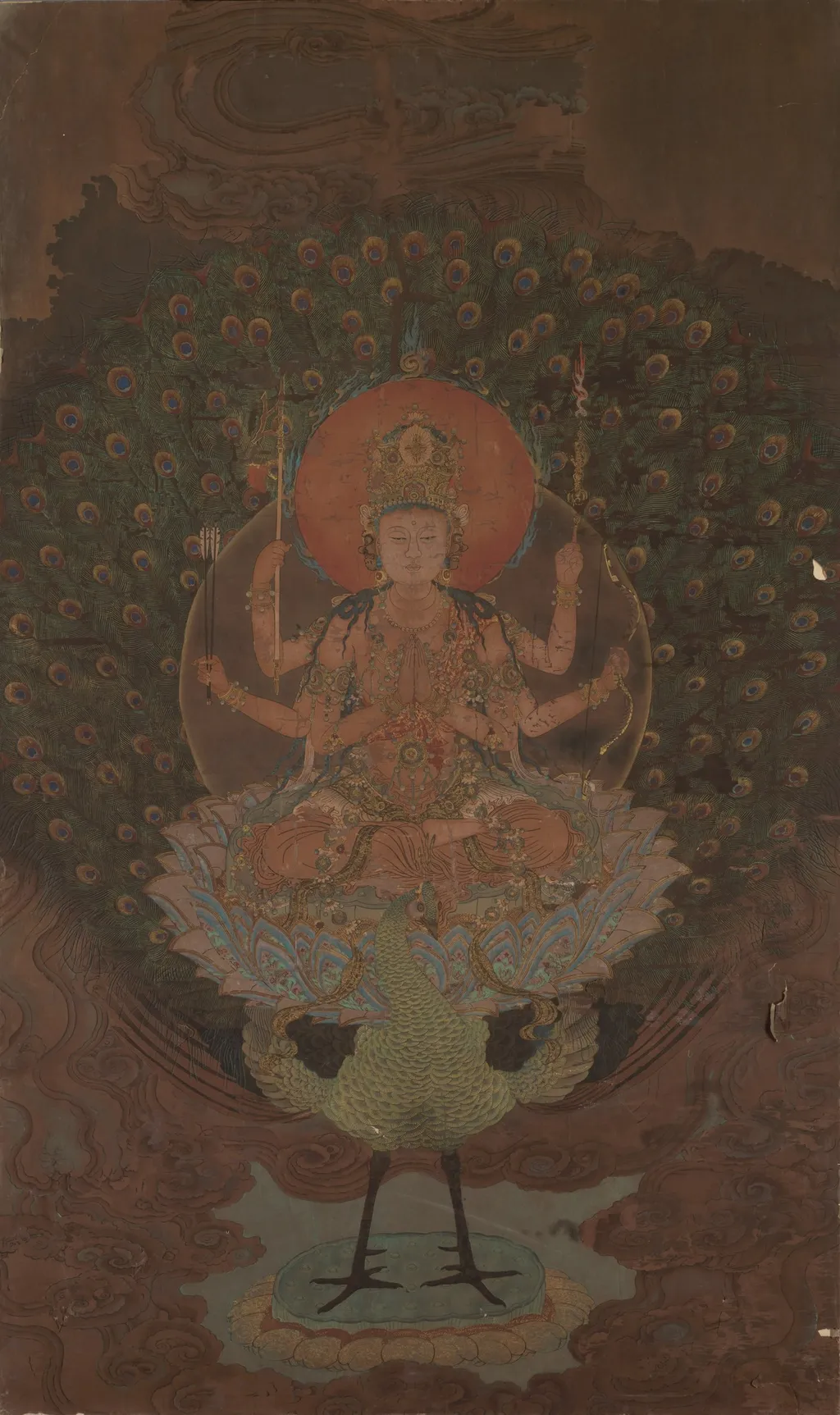
Mahamayuri (Kujaku Myoo) is an unspecified painting. It dates from 1896 and is held in the collection of the Cleveland Museum of Art. The work depicts a divine figure seated upon a lotus, eyes gently closed in a tranquil pose.
About this work
History & Provenance
Its provenance traces to an initial commission or creation in 1890, followed by acquisition by the museum in 1921.
Mahamayuri (Kujaku Myoo) was painted in 1890 and is attributed to an unknown artist. The work entered the collection of the Cleveland Museum of Art, where it remains on view. Its provenance traces to an initial commission or creation in 1890, followed by acquisition by the museum in 1921. The painting is classified as a work on paper within the museum's holdings.
Mahamayuri (Kujaku Myoo) is held by the Cleveland Museum of Art, accessioned under inventory number 1921.103. The work was created in 1890 and remains in the museum's collection, having been exhibited in the museum's galleries as part of its South Asian and Himalayan art holdings.
Overview
The work depicts a divine figure seated upon a lotus, eyes gently closed in a tranquil pose. Multiple arms extend outward, each grasping a distinct object, while the figure is crowned and encrusted with elaborate jewelry. A dark, muted backdrop frames the scene, punctuated by a vivid peacock feather fan that rises behind the deity, adding a splash of color to the composition.
Subject & Meaning
The central figure represents the Buddhist deity Mahāmāyūrī, often associated with protection and the power to subdue harmful forces. The closed eyes suggest inner contemplation, while the lotus seat symbolizes purity emerging from the mundane. The array of objects in the deity’s hands signifies various spiritual attributes, and the peacock feather, traditionally linked to the deity, underscores themes of transformation and vigilance.
Technique & Style
Rendered in a richly detailed manner, the painting employs intricate line work to delineate the deity’s ornate garments and jewelry. The use of a dark, subdued background enhances the luminous colors of the peacock plume, creating a visual contrast that draws the eye to the central figure. Fine brushstrokes articulate the patterns on the clothing, emphasizing a sense of opulence.
Context
Mahamayuri is a figure that appears in East Asian Buddhist iconography, particularly within Japanese and Chinese traditions where the peacock motif is prominent. The depiction aligns with the broader visual language of Buddhist art, where multiple arms and symbolic objects convey the deity’s manifold powers and protective functions.
Legacy
Images of Mahāmāyūrī have persisted in temple murals, thangka paintings, and devotional objects, reflecting the enduring reverence for the deity’s protective qualities. This painting continues that lineage, offering a visual reference for practitioners and scholars interested in the iconographic evolution of Buddhist protective deities.
Artist & collection

 Miroku (Maitreya)
 Red Amida
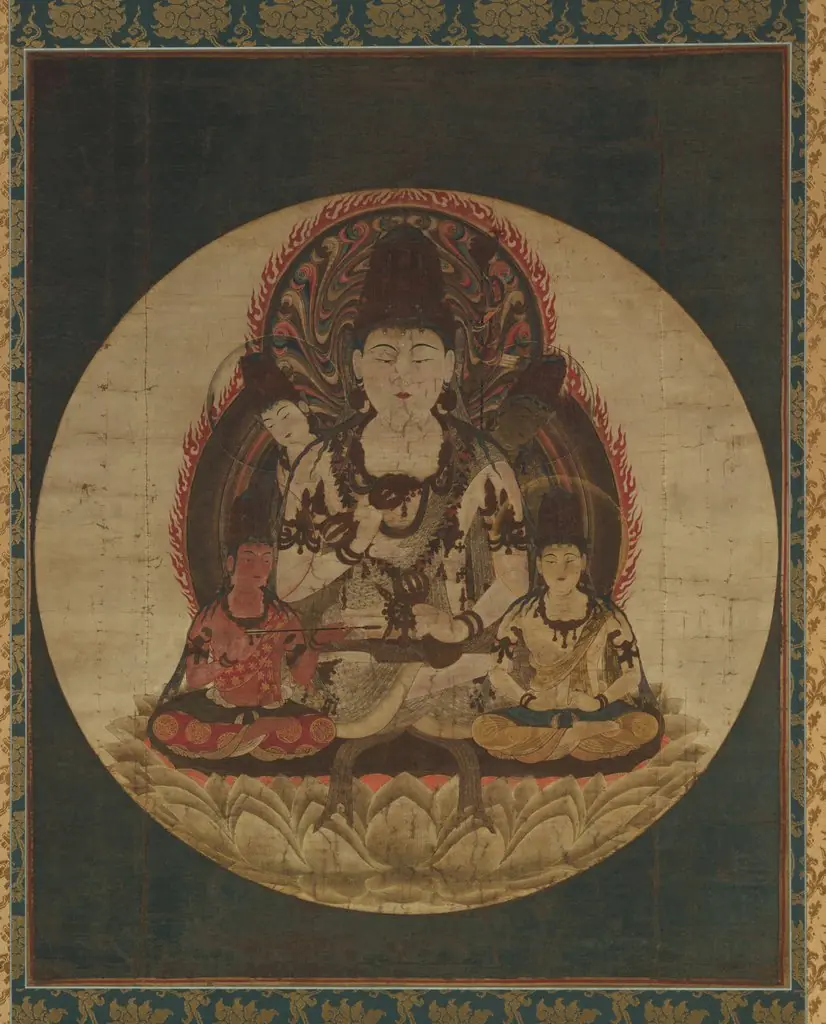 The Secret Five Bodhisattvas (Gohimitsu Bosatsu)
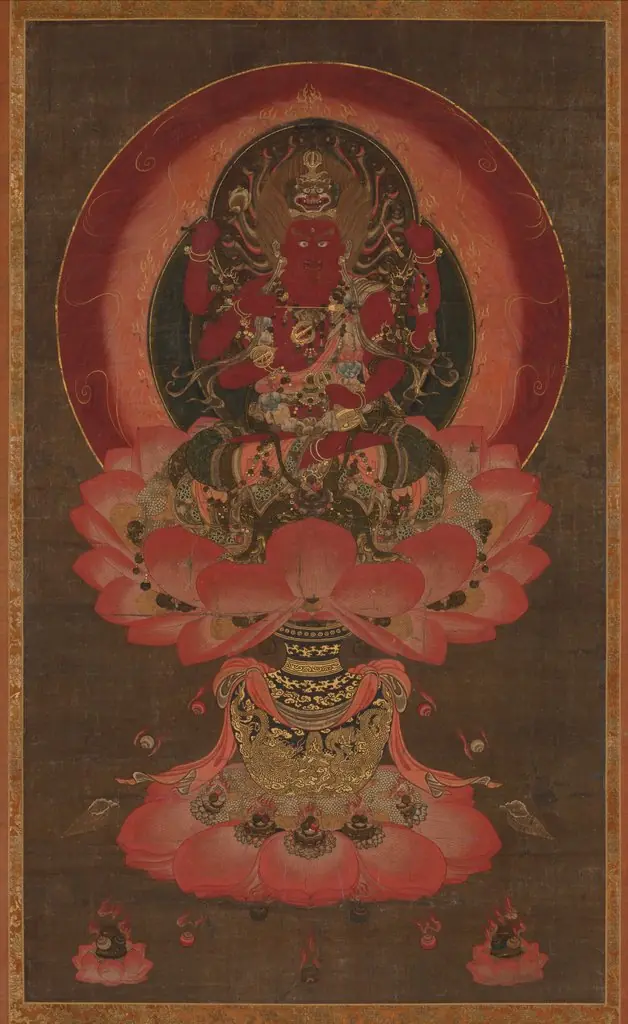 Aizen Myōō
 The Secret Five Bodhisattvas (Gohimitsu Bosatsu)
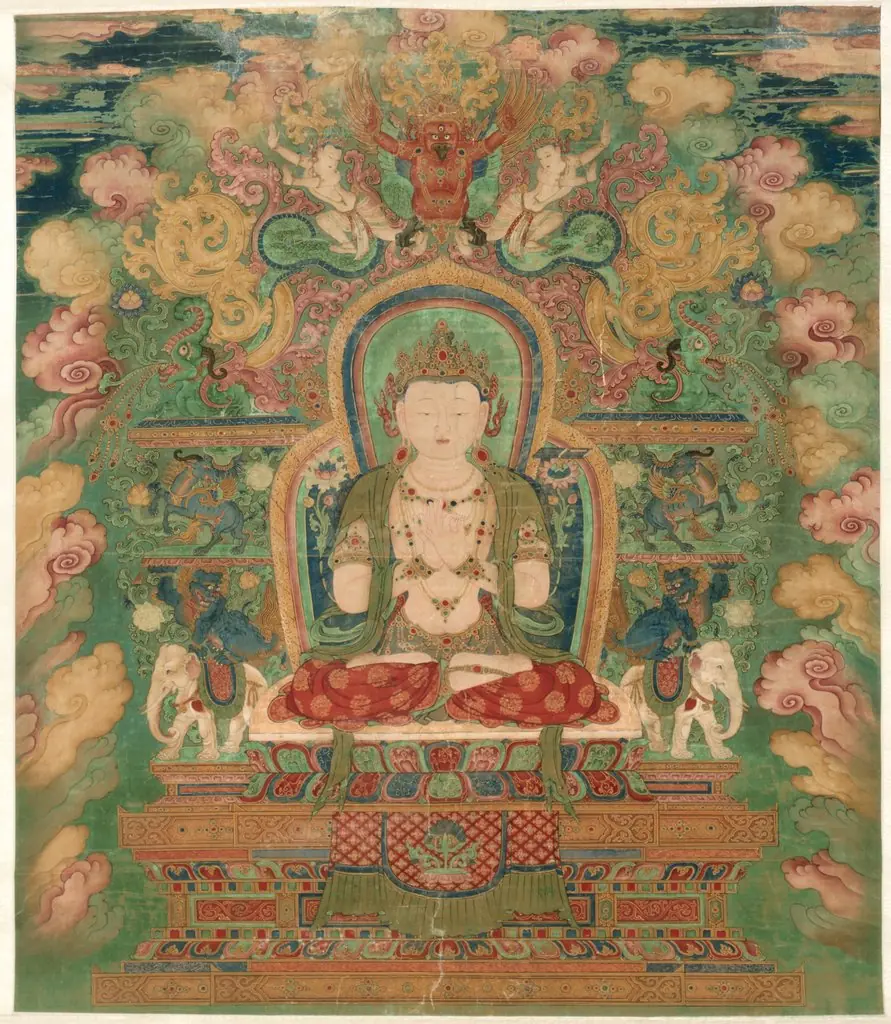 Manjushri
 宋人畫千手千眼觀世音菩薩 軸
 Medicine Master Buddha and the Twelve Divine Generals
 Eleven-Headed, Thousand-Armed Bodhisattva of Compassion (Avalokiteshvara)
 Avalokiteshvara (Guanyin), the Bodhisattva of Compassion