Artwork
Red Amida
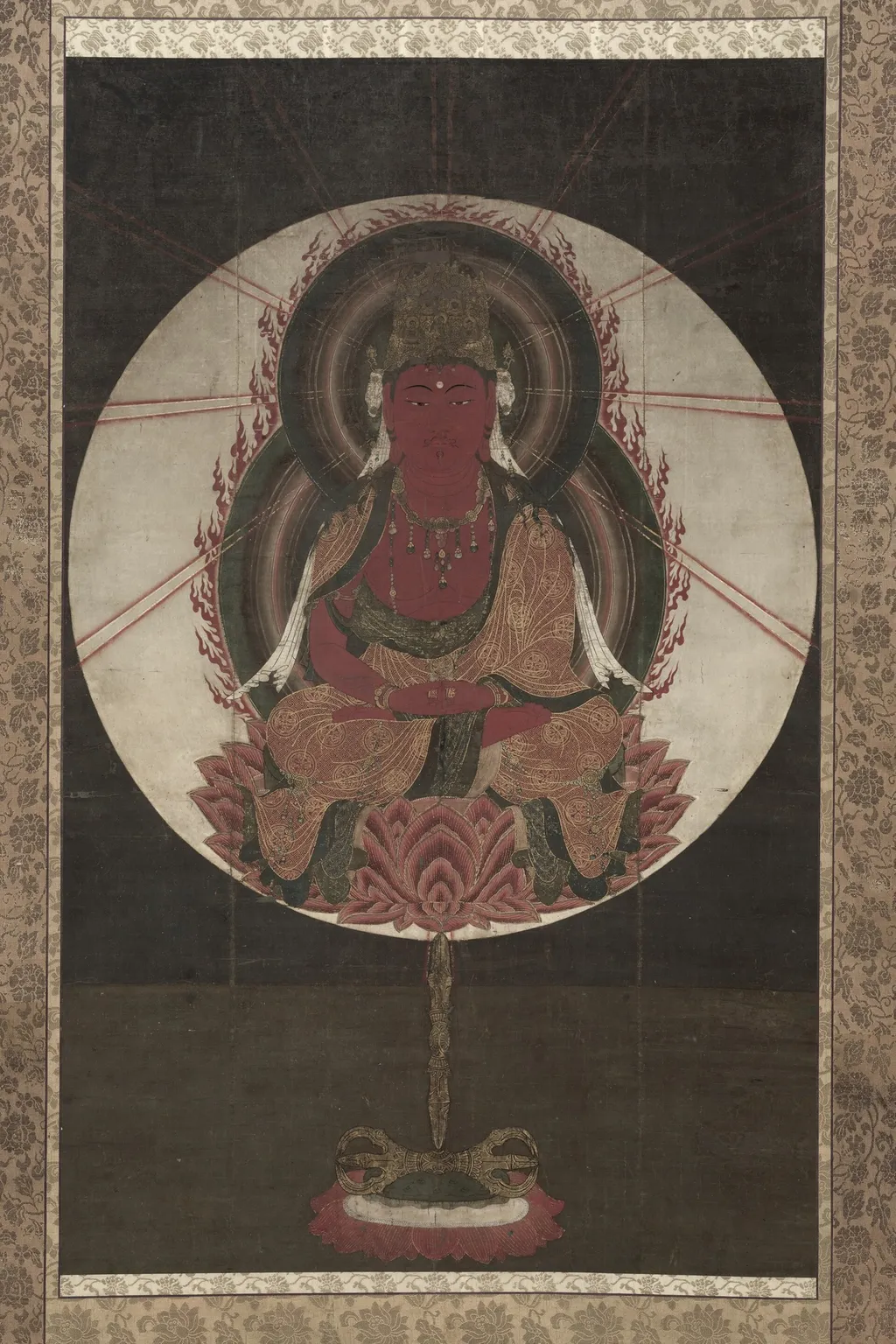
Red Amida is an unspecified painting. It dates from 1316 and is held in the collection of the Cleveland Museum of Art.
About this work
Subject & Meaning
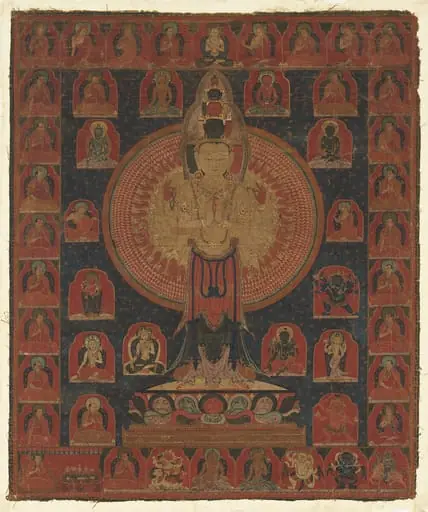
The work titled Red Amida portrays Amida Buddha, the principal figure of Pure Land Buddhism who embodies infinite light and the promise of rebirth in the Western Pure Land. Its red hue emphasizes spiritual radiance and divine presence, while the seated posture and halo-like aura conform to standard iconographic conventions for Amida in Japanese Buddhist art. As a religious painting created in 1316 in Japan, the piece functions as an object of devotion, symbolizing salvation and the aspiration toward enlightenment for adherents of the Pure Land tradition.
History & Provenance
The painting known as Red Amida was created in Japan in 1316 by an unknown artist and is classified as a religious painting. It is held in the collection of the Cleveland Museum of Art under the accession number 1971.164. No earlier ownership or exhibition history is documented in the available sources.
Legacy
Red Amida, a Japanese religious painting dated 1316 depicting Amida Buddha, entered the collection of the Cleveland Museum of Art. Its preservation in a major public museum has made it accessible for the study of medieval Japanese Buddhist painting and iconography, illustrating the visual culture of the Pure Land tradition.
Overview
This work exemplifies a traditional devotional representation, emphasizing the spiritual presence of the deity through color and symbolic elements.
The painting titled Red Amida presents a solitary, crimson-robed figure seated in a meditative posture upon a lotus blossom. This central image is set against a dark, patterned ground, creating a striking visual contrast. The figure's serene expression, adorned with elaborate jewelry, is framed by a radiant halo of light and fire.
This work exemplifies a traditional devotional representation, emphasizing the spiritual presence of the deity through color and symbolic elements.
Technique & Style
The artist employs a strong visual contrast, positioning the intensely red figure and its luminous aura against a deep, somber background, which features a subtle, repetitive pattern. This compositional choice draws immediate attention to the central deity. The intricate details of the figure's jewelry and the delicate rendering of the lotus petals demonstrate careful craftsmanship, while the dynamic flames of the mandorla add a sense of spiritual energy to the otherwise tranquil scene.
Artist & collection

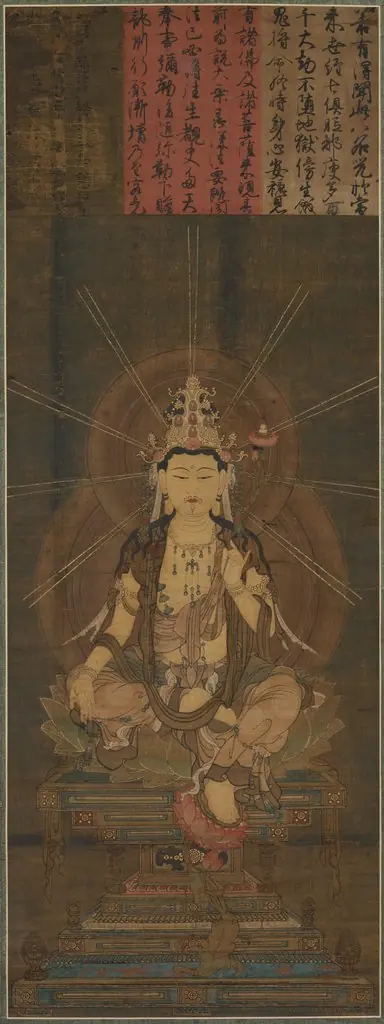 Miroku (Maitreya)
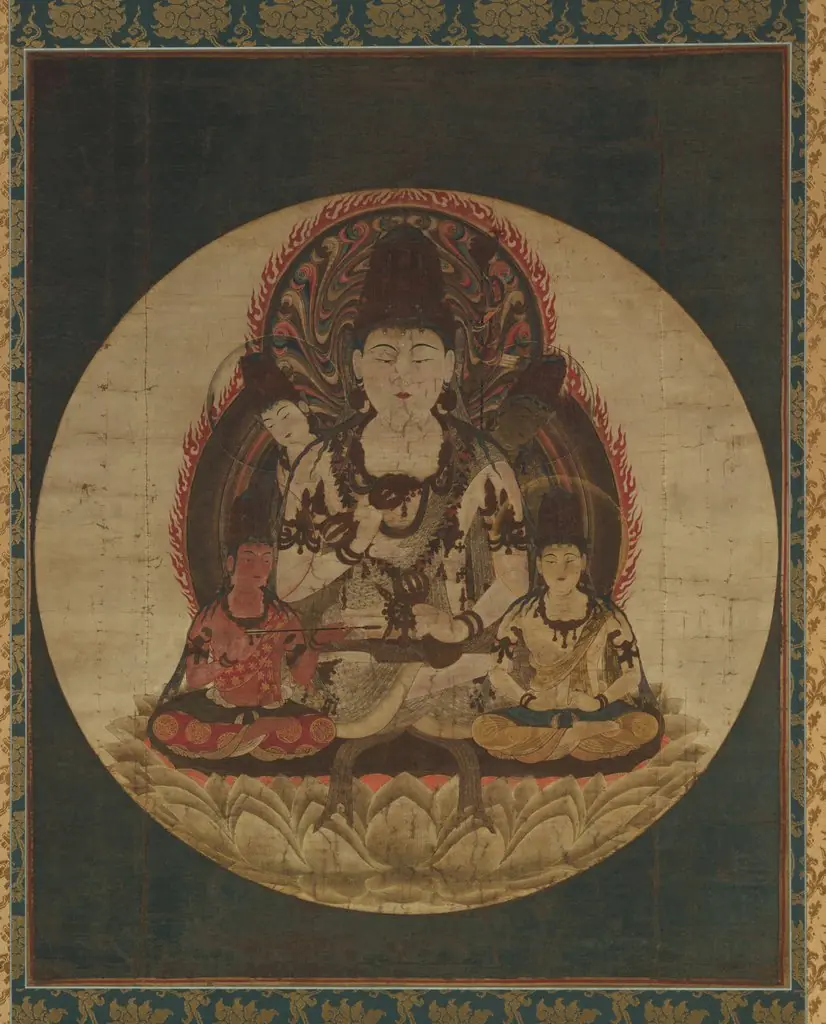 The Secret Five Bodhisattvas (Gohimitsu Bosatsu)
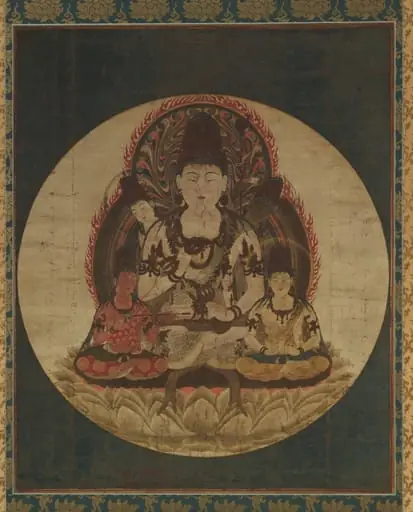 The Secret Five Bodhisattvas (Gohimitsu Bosatsu)
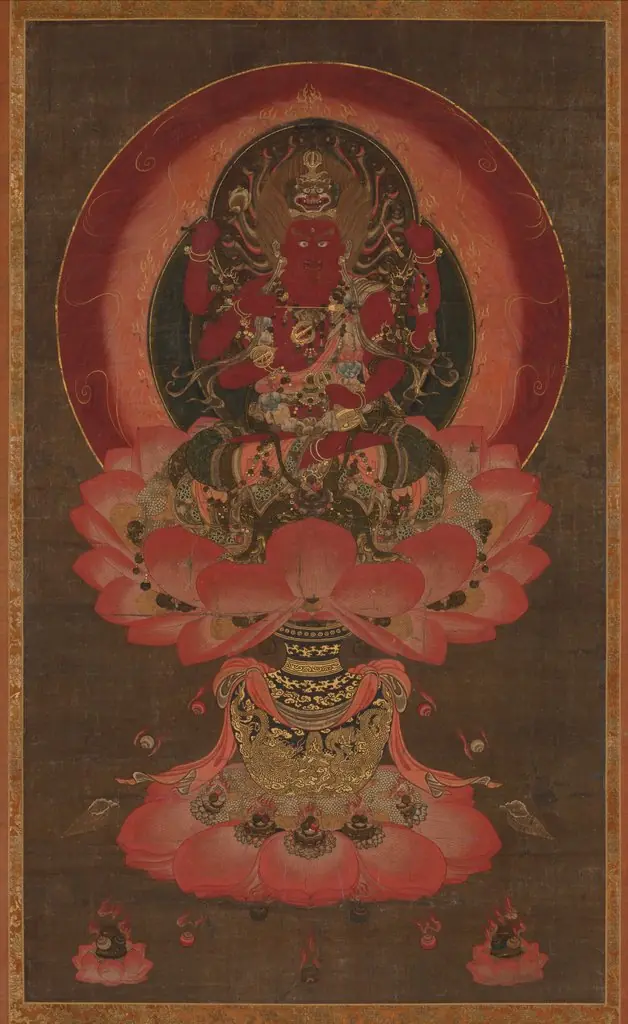 Aizen Myōō
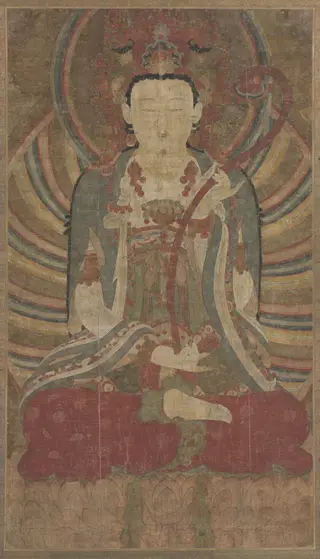 Seated Manjusri
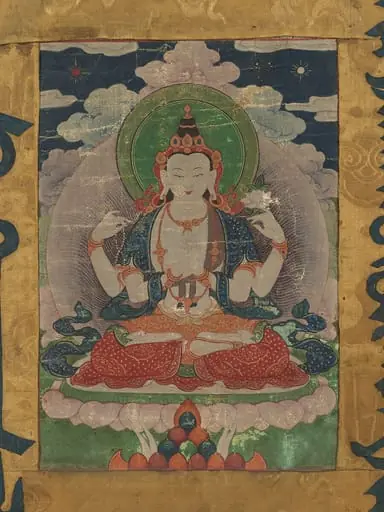 Untitled
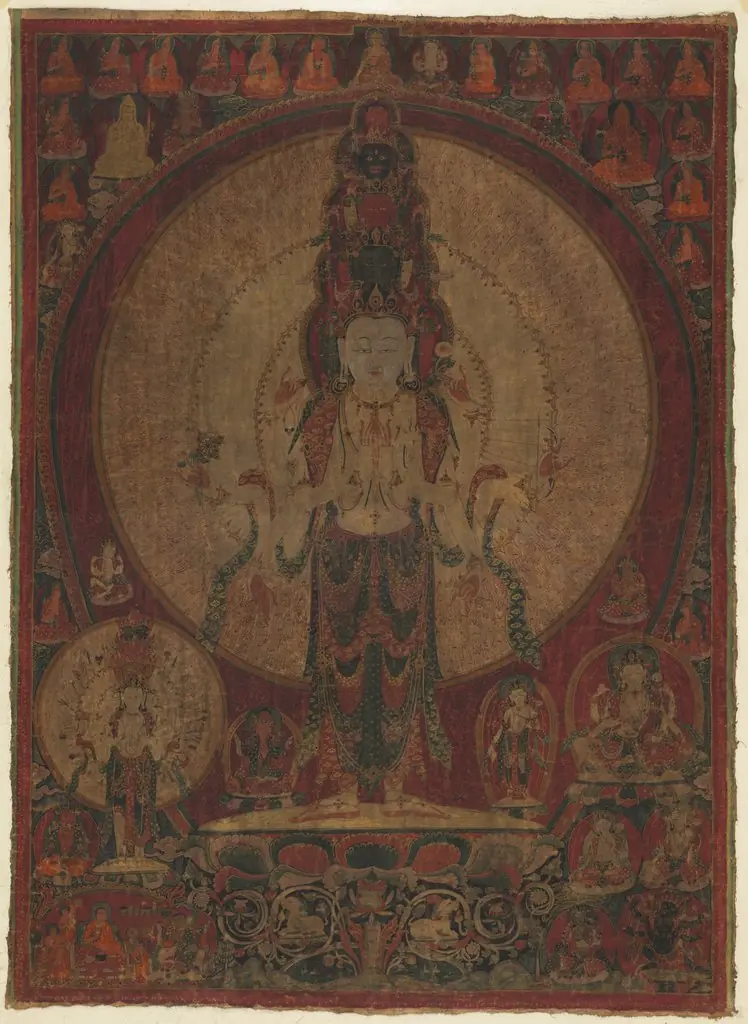 Eleven-Headed, Thousand-Armed Bodhisattva of Compassion (Avalokiteshvara)
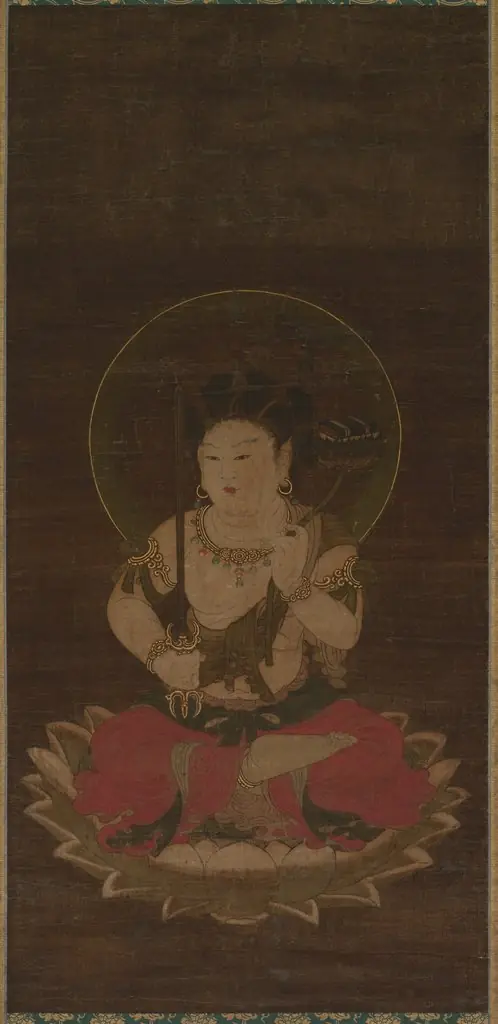 Monju as a Child (Chigo Monju)
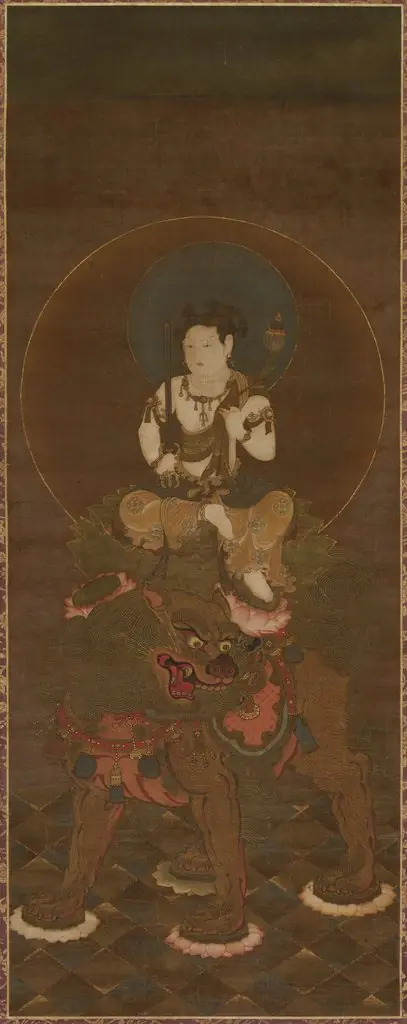 Monju with Five Hair Knots
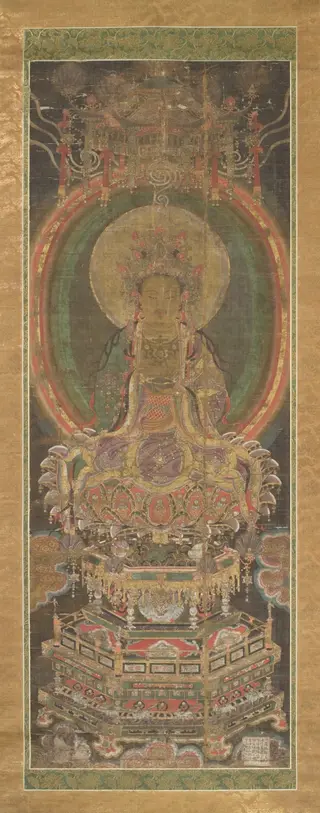 Avalokiteshvara (Guanyin), the Bodhisattva of Compassion
 Untitled
- Red Amida