Artwork
Mahamayuri (Kujaku Myoo)
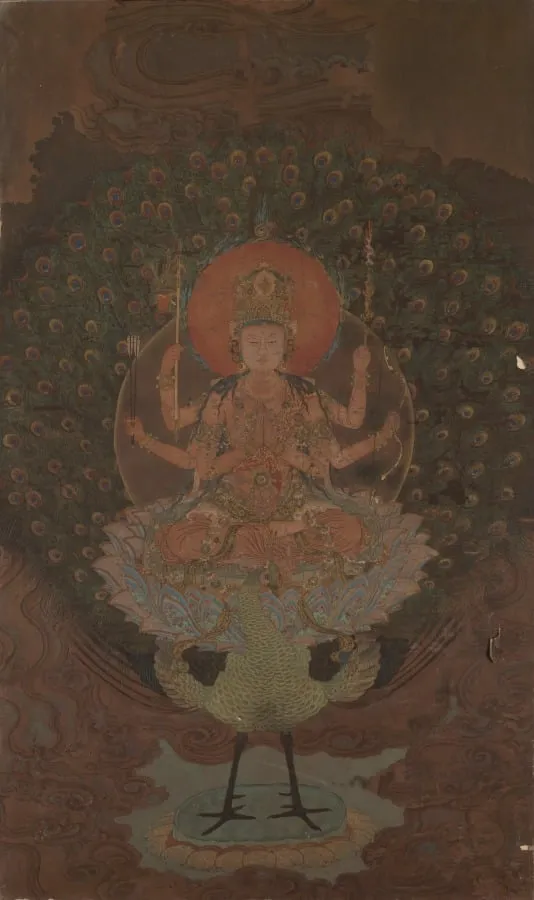
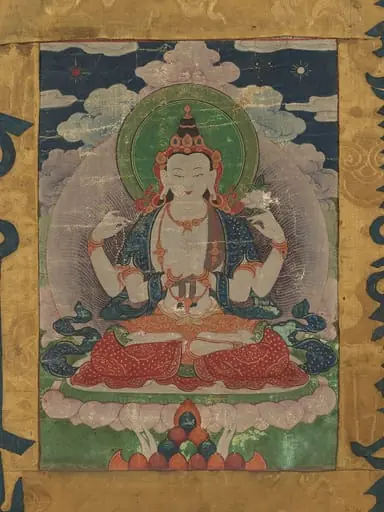
Mahamayuri (Kujaku Myoo) is an unspecified painting by the Impressionist artist Unknown. It dates from 1868 and is held in the collection of the Cleveland Museum of Art. This painting depicts Mahamayuri, a protective Buddhist deity manifesting as a radiant golden peacock with four arms.
- Accession no.
- 1921.103
- Credit line
- Gift of Mrs. Charles W. Mason
About this work
You see a golden bird with four arms, each holding a different object, a sword, a lotus, a peacock feather, and a small vase.
You see a golden bird with four arms, each holding a different object, a sword, a lotus, a peacock feather, and a small vase. Around its head is a halo of flames, and it sits on a lotus flower with its wings spread wide.
This painting shows Mahamayuri, a Buddhist figure meant to protect against poison and danger. The artist used bright colors and careful details to make the bird look both powerful and calm. We don’t know who painted it, but it was made during Japan’s Meiji period, when artists mixed old traditions with new ideas.
To see more art like this, look up japan, meiji period (1868–1912).
Overview
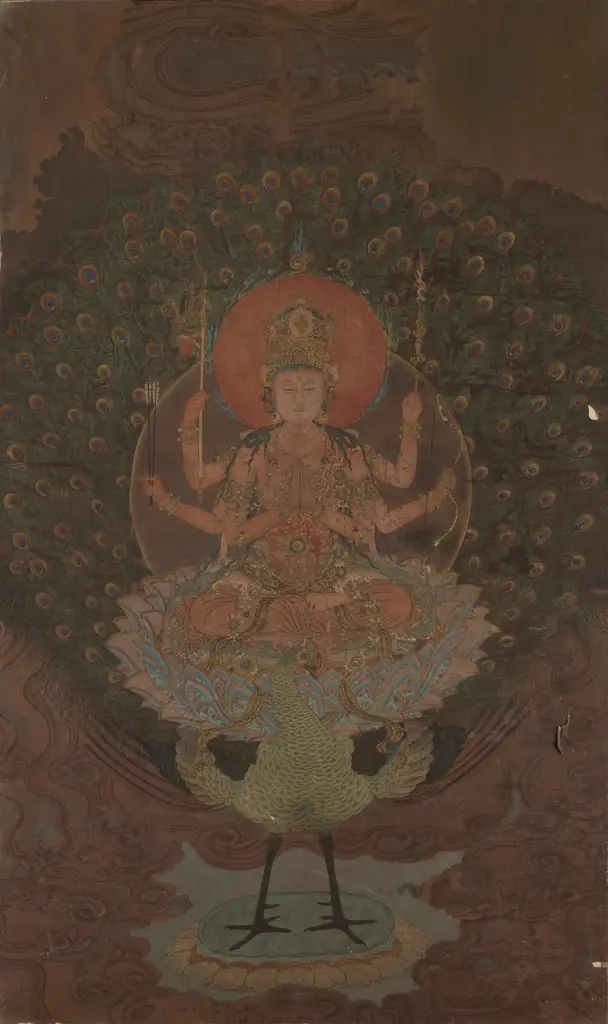
This painting depicts Mahamayuri, a protective Buddhist deity manifesting as a radiant golden peacock with four arms. Each hand holds a symbolic object: a sword, lotus, peacock feather, and small vase. The figure rests on a blooming lotus, surrounded by a halo of flames, conveying both serenity and divine power.
Executed in vivid pigments with meticulous detail, the work reflects Japanese artistic conventions of the Meiji era, blending traditional iconography with evolving aesthetic sensibilities.
Subject & Meaning
Mahamayuri, known in Japanese as Kujaku Myoo, is a deity invoked for protection against poison, disease, and harm. The peacock symbolizes the transformation of danger into peace, as it was believed to consume venom without harm. The four attributes represent spiritual authority, purity, wisdom, and the containment of malevolent forces. The flaming halo signifies divine energy, while the lotus base underscores spiritual transcendence.
Technique & Style
The painting employs mineral pigments and gold leaf to achieve luminous color and texture, typical of Japanese Buddhist art. Fine brushwork defines the intricate plumage and delicate floral elements, while the composition balances symmetry with dynamic wing spread. The use of flat planes and decorative patterning reflects continuity with earlier Nara and Heian traditions, even as Meiji-era artists began to experiment with new materials and perspectives.
History & Provenance
The artist remains unidentified, as was common for religious works produced in temple or studio settings. Created during the Meiji period (1868–1912), the painting emerged amid state-led modernization that both challenged and revitalized traditional Buddhist art. Such works were often commissioned for temple altars or private devotion, preserving ritual functions even as broader cultural shifts redefined artistic patronage.
Context
During the Meiji period, Japan’s government promoted Westernization, leading to the decline of temple funding and Buddhist institutional influence. Yet, many artists continued producing religious imagery, adapting classical styles to contemporary tastes. This painting exemplifies a quiet resilience in Buddhist visual culture, where ancient symbols were maintained not as relics, but as living expressions of spiritual continuity.
Legacy
Works like this contributed to the preservation of esoteric Buddhist iconography during a time of rapid change. Though less prominent in public collections today, they remain vital to understanding how traditional religious art adapted to modern Japan. Scholars study such paintings to trace the persistence of ritual aesthetics amid secularization, revealing how spiritual imagery endured through stylistic evolution rather than institutional support.
Artist & collection









 Avalokiteshvara (Guanyin), the Bodhisattva of Compassion
 The Secret Five Bodhisattvas (Gohimitsu Bosatsu)
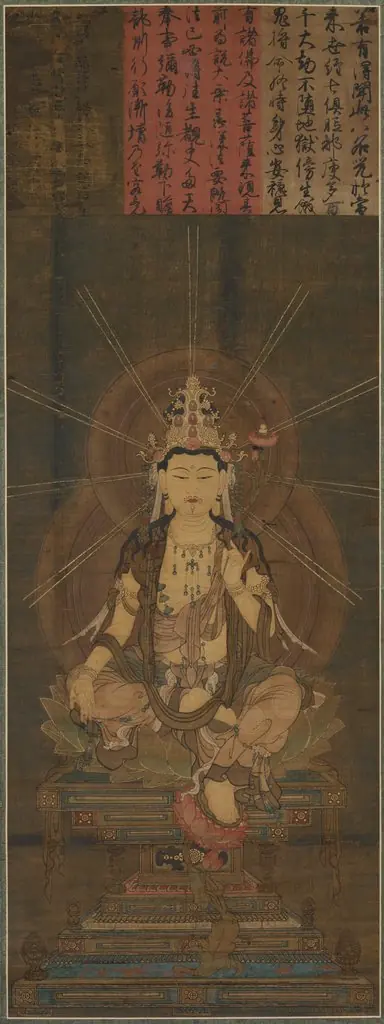 Miroku (Maitreya)
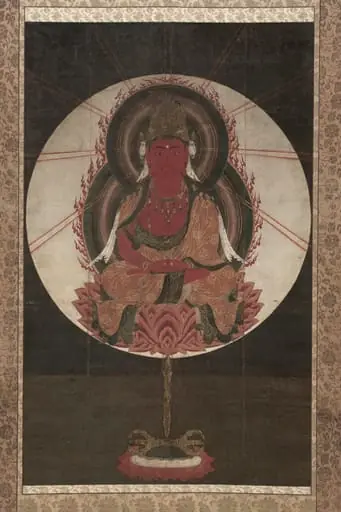 Red Amida
 Miroku (Maitreya)
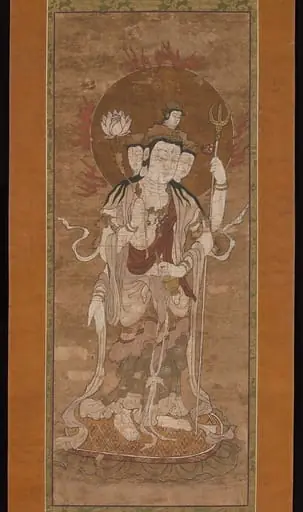 十二天像(梵天)|One of the Twelve Devas: Bonten
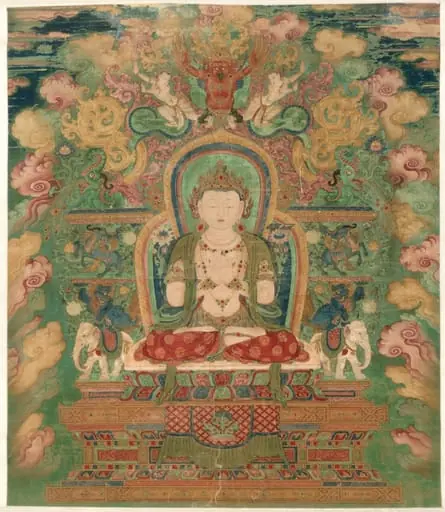 Manjushri
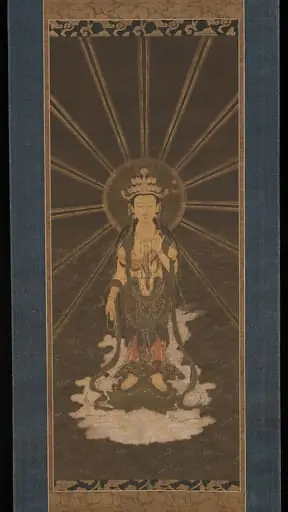 十一面観音来迎図|Descent of Eleven-Headed Kannon
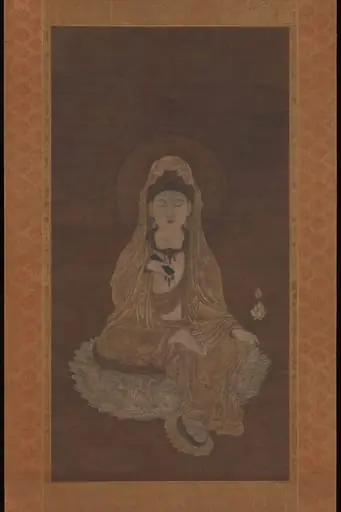 白衣観音図|White-Robed Kannon
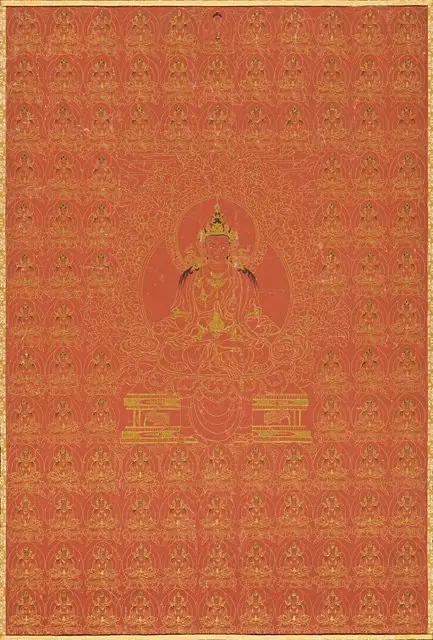 Myriad Amitayus, the Buddha of Eternal Life
 Untitled
- Mahamayuri (Kujaku Myoo)