Artwork
Aizen Myōō
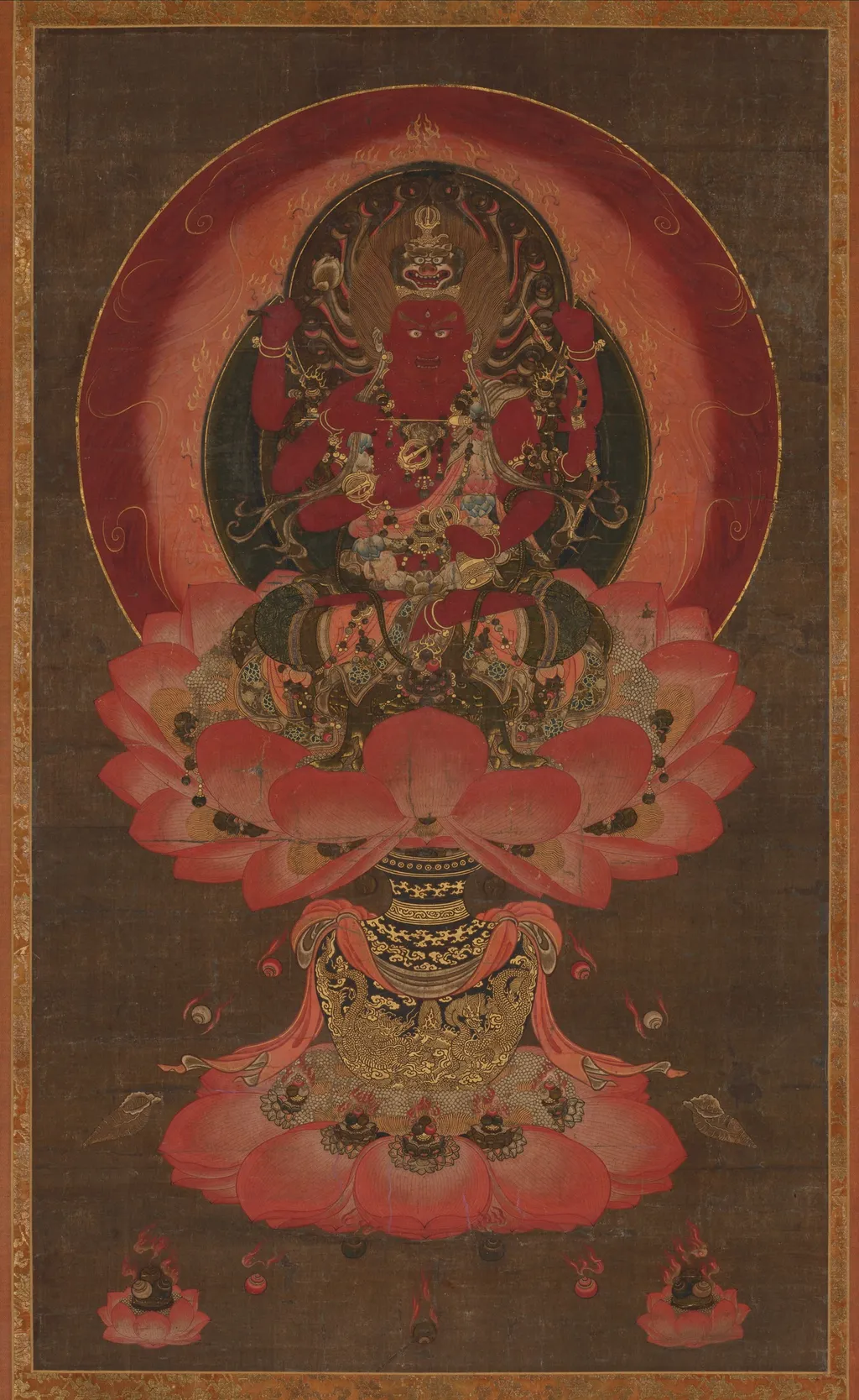
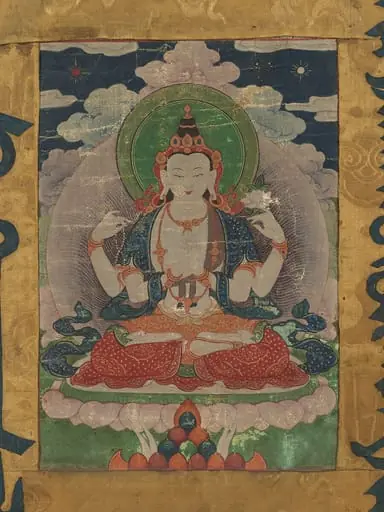
Aizen Myōō is an unspecified painting. It dates from 1349 and is held in the collection of the Cleveland Museum of Art.
About this work
History & Provenance
It currently resides in the collection of the Cleveland Museum of Art, where it is held under the accession number 2017.
This painting, depicting the deity Aizen Myōō, was created in 1349. The work is attributed to an unknown artist, as no specific creator has been identified in historical records. It currently resides in the collection of the Cleveland Museum of Art, where it is held under the accession number 2017.101.
While the exact circumstances of its commission and its ownership history prior to entering the museum's collection are not detailed in available records, the work's inception is firmly dated to the mid-14th century.
Legacy
Aizen Myōō has influenced subsequent depictions of wrathful Buddhist figures in Edo-period scrolls and early modern Japanese prints, often cited in scholarly studies of demonological iconography and temple mural replication. The painting's presence in the Cleveland Museum of Art collection underscores its recognized significance within Western art historical discourse on Asian religious art.
Overview
Aizen Myōō is a painted representation of the Buddhist deity, rendered on a rectangular support with a deep red field accented by gold. The central figure sits in a lotus pose, surrounded by a dark, luminous circle that contains smaller attendant forms and stylized flames. The composition is framed by a modest border in muted earth tones, giving the work a contained, meditative presence.
Subject & Meaning
The central figure, identified as Aizen Myōō, is depicted with three eyes and a fierce expression, symbols of transcendent vision and protective power. The deity clutches a sword, an emblem of cutting through ignorance, while the lotus base signifies purity emerging from the mundane. The surrounding flames and attendant figures suggest the deity’s role in transforming desire into spiritual insight.
Technique & Style
Executed with careful brushwork, the painting combines opaque pigments and gold leaf to achieve a luminous surface. The use of a dark, glowing circle creates a sense of depth, while the rich red background enhances the dramatic contrast. The figure’s three eyes and detailed armor are rendered with fine lines, reflecting a style typical of Japanese esoteric Buddhist iconography.
Artist & collection

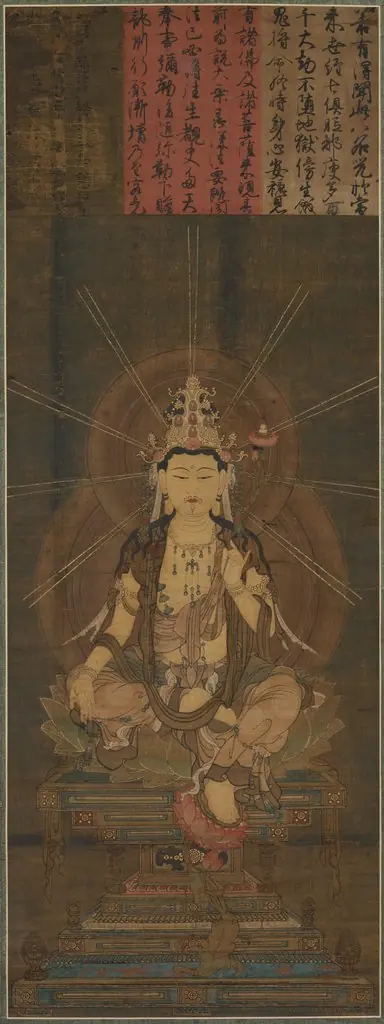 Miroku (Maitreya)
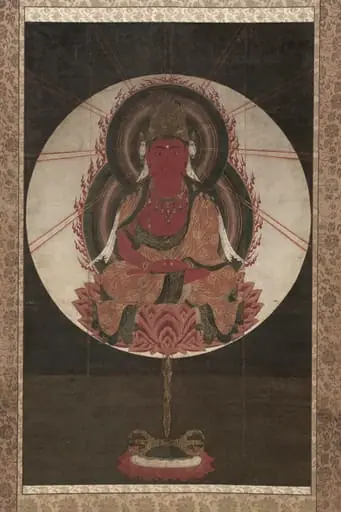
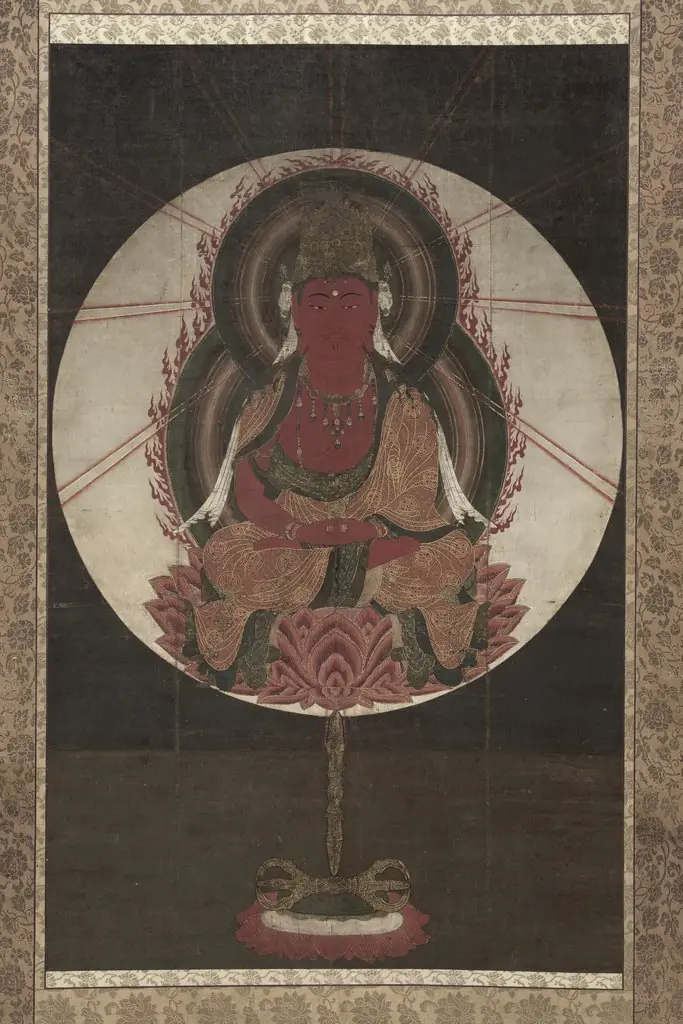 Red Amida
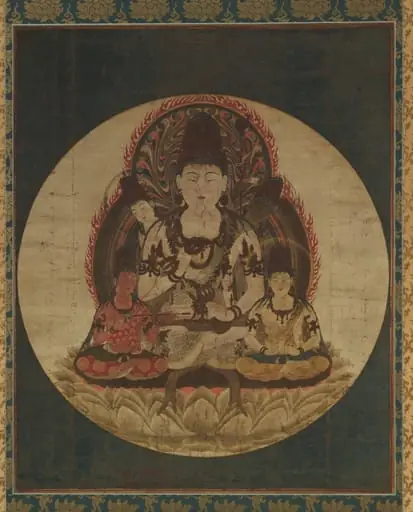
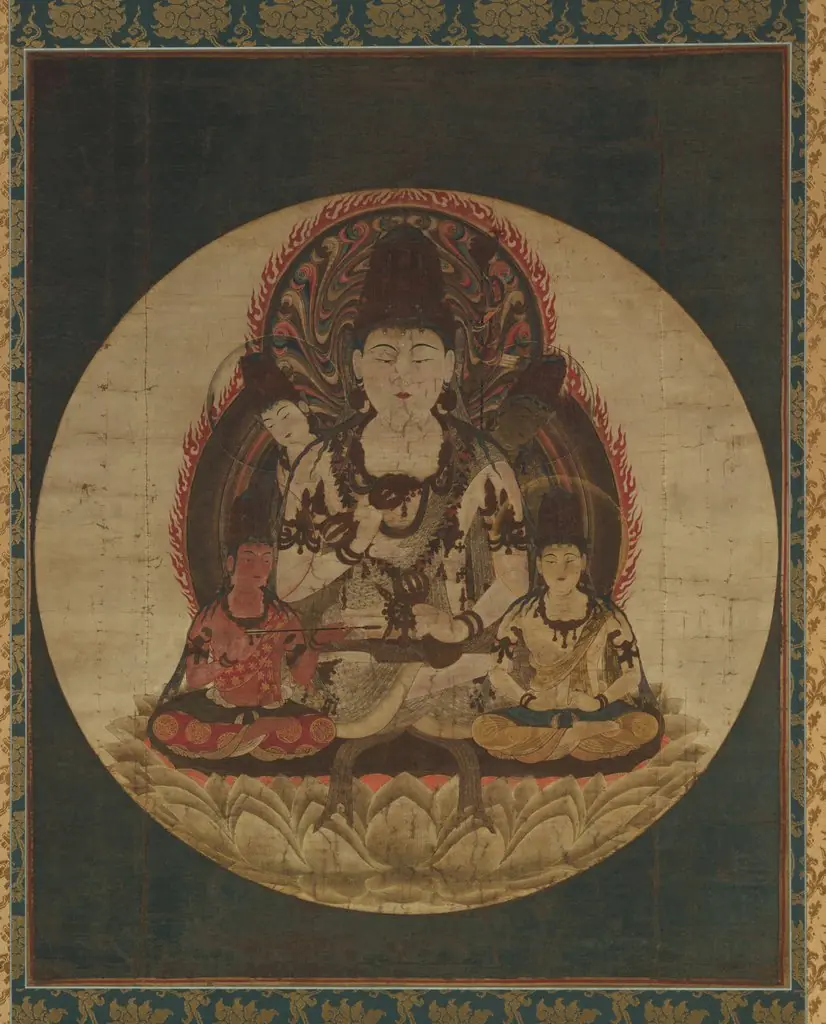 The Secret Five Bodhisattvas (Gohimitsu Bosatsu)
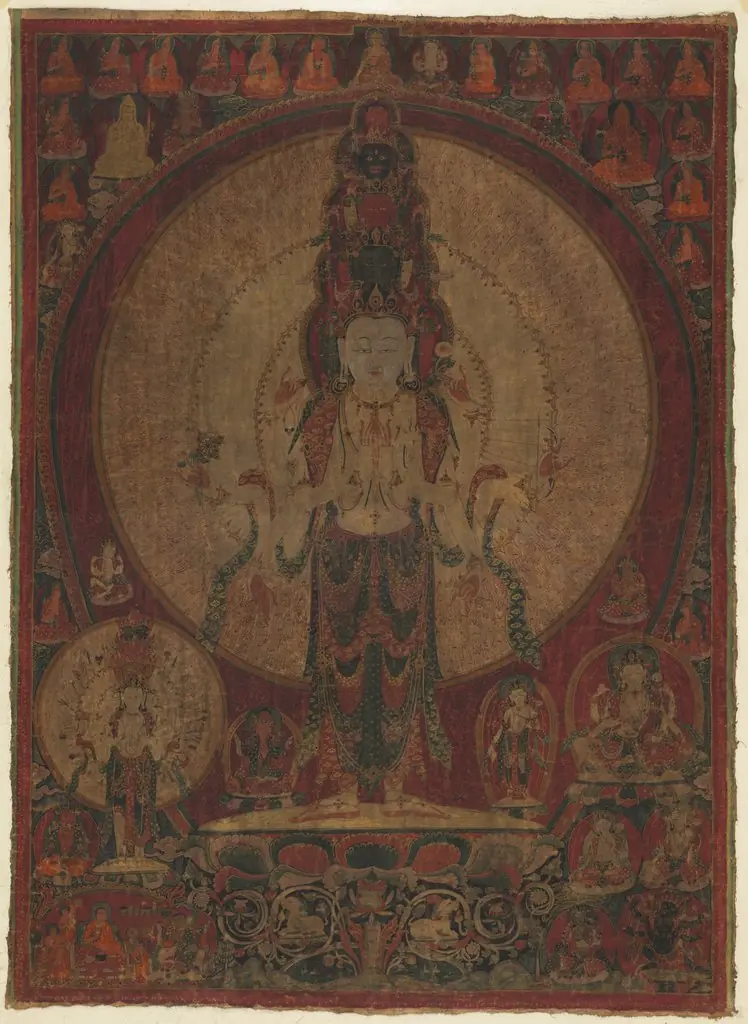 Eleven-Headed, Thousand-Armed Bodhisattva of Compassion (Avalokiteshvara)
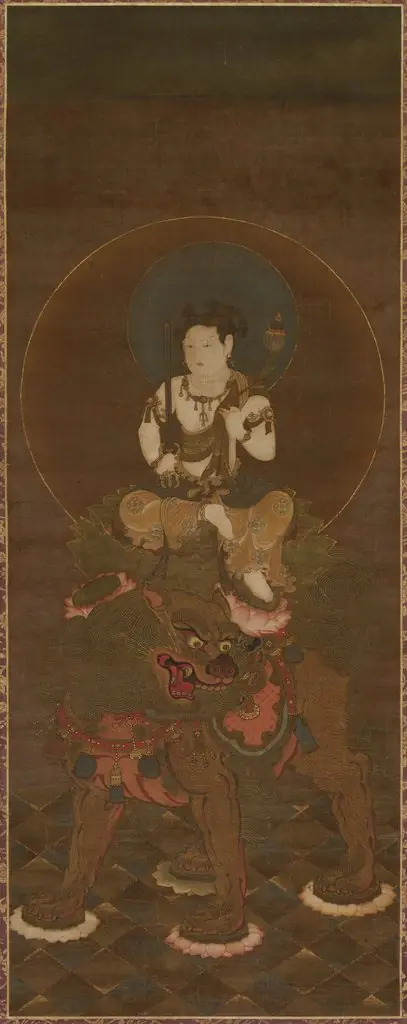 Monju with Five Hair Knots
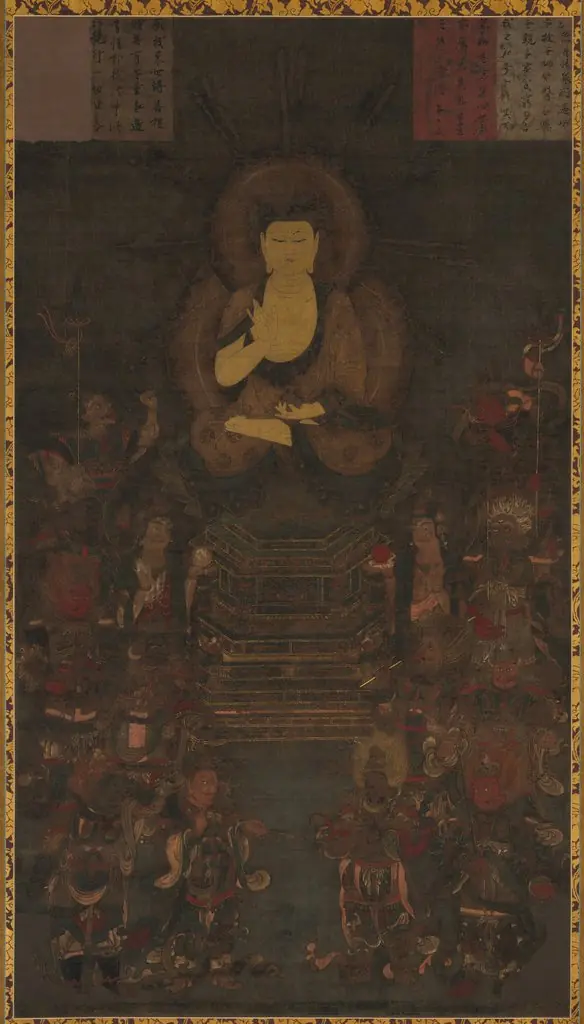 Medicine Master Buddha and the Twelve Divine Generals
 Red Amida
 Seated Manjusri
 The Secret Five Bodhisattvas (Gohimitsu Bosatsu)
 Manjushri
 Untitled
- 愛染明王像|Aizen Myōō