Artwork
Mahrusa kills herself at the tomb of the king of Zabul, and her husband does likewise, from a Tuti-nama (Tales of a Parrot): Thirty-sixth Night
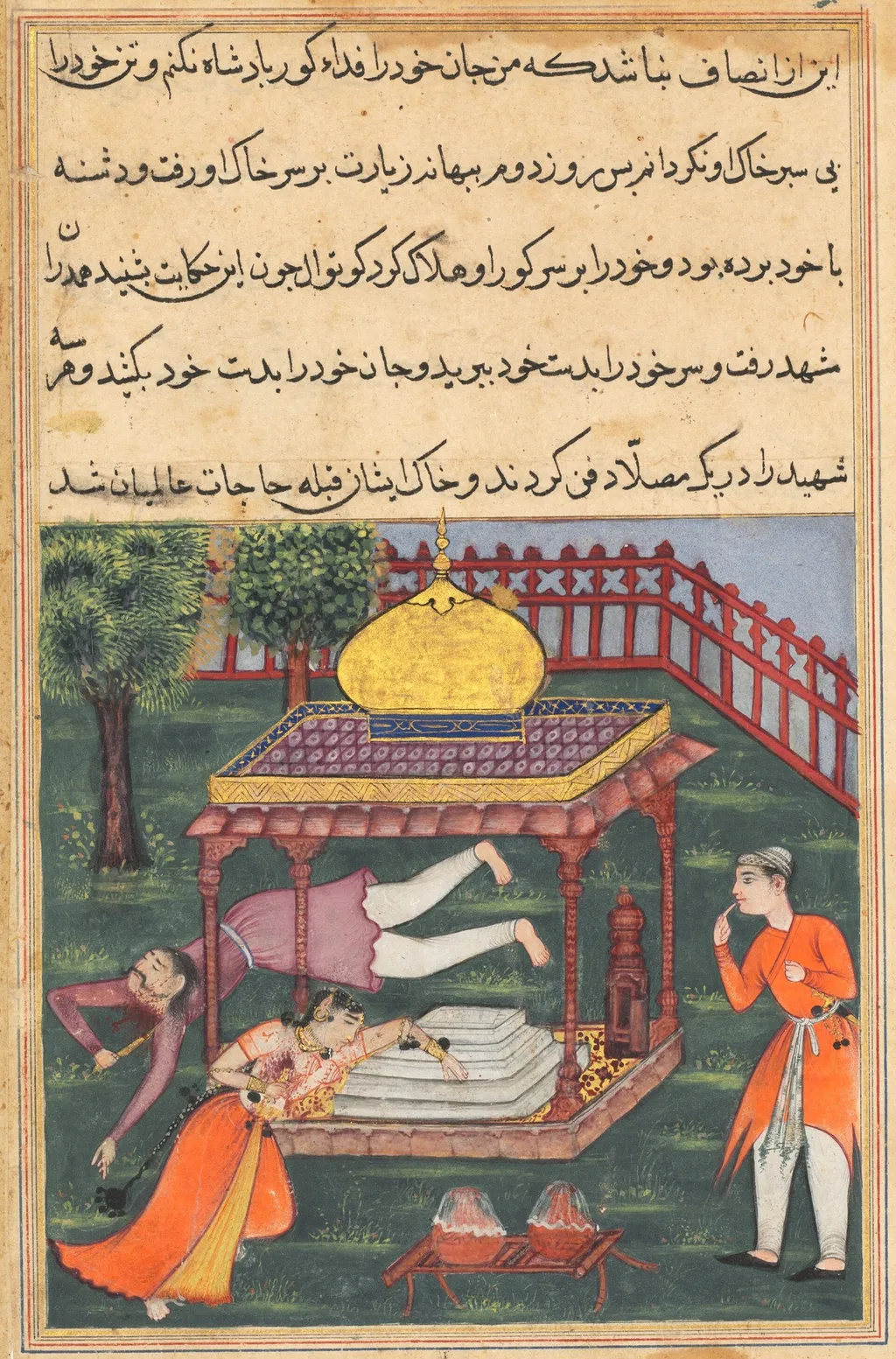
Mahrusa kills herself at the tomb of the king of Zabul, and her husband does likewise, from a Tuti-nama (Tales of a Parrot): Thirty-sixth Night is an unspecified painting. It dates from 1560 and is held in the collection of the Cleveland Museum of Art. The work portrays a tragic tableau set beneath a gilded pavilion with a domed canopy.
About this work
History & Provenance
The work has been displayed in exhibitions at the Cleveland Museum of Art, including a 1975 showcase of Indian miniature paintings.
Created in 1560 within the Mughal Empire, this painting depicts the thirty-sixth night of the Tuti-nama. The work was produced by an unknown artist and is currently held by the Cleveland Museum of Art. The museum acquired the piece in 1962, cataloging it under the accession number 1962.279.242.a.
While the specific commission details and the full chain of ownership prior to the museum's acquisition are not detailed in the provided records, the work's origin is firmly established in the mid-sixteenth-century Mughal artistic tradition.
The miniature comes from a Tuti-nama manuscript dated to 1560. It is part of the Cleveland Museum of Art collection, listed under accession number 1962.279.242.a. The work has been displayed in exhibitions at the Cleveland Museum of Art, including a 1975 showcase of Indian miniature paintings.
Context
Mahrusa kills herself at the tomb of the king of Zabul, and her husband does likewise, from a Tuti-nama (Tales of a Parrot): Thirty-sixth Night portrays a tragic narrative from Persian literature, reflecting themes of love and sacrifice. The miniature is attributed to an unknown artist active in the Mughal Empire circa 1560 and is part of the Cleveland Museum of Art's collection, accessioned under the identifier 1962.279.242.a. It exemplifies early Indian painting styles that blend Persianate storytelling with local visual traditions, marking a significant contribution to the evolution of manuscript illumination in South Asia.
Overview
The work portrays a tragic tableau set beneath a gilded pavilion with a domed canopy. A woman lies sprawled on a bed, arms outstretched, while a man leans over her, head bowed in apparent sorrow. A third figure in an orange robe stands apart, holding a fan and averting his gaze. The composition is framed by a fence, trees, and two vacant red stools on the grass.
Subject & Meaning
The scene illustrates the climax of a tale from the Tuti‑nama, in which the heroine Mahrusa takes her own life at the tomb of the Zabul king, followed by her husband’s suicide. The juxtaposition of the grieving male figure and the detached third observer underscores themes of loss, honor, and the fatal consequences of love in the narrative.
Technique & Style
Executed in vivid pigments, the painting employs a bright palette of gold, orange, and red that contrasts sharply with a verdant background. The figures are rendered with fluid brushwork that emphasizes emotional posture, while the architectural elements of the pavilion are delineated with precise linear detail, reflecting a synthesis of narrative illustration and decorative courtly aesthetics.
Artist & collection

- Mahrusa kills herself at the tomb of the king of Zabul, and her husband does likewise, from a Tuti-nama (Tales of a Parrot): Thirty-sixth Night
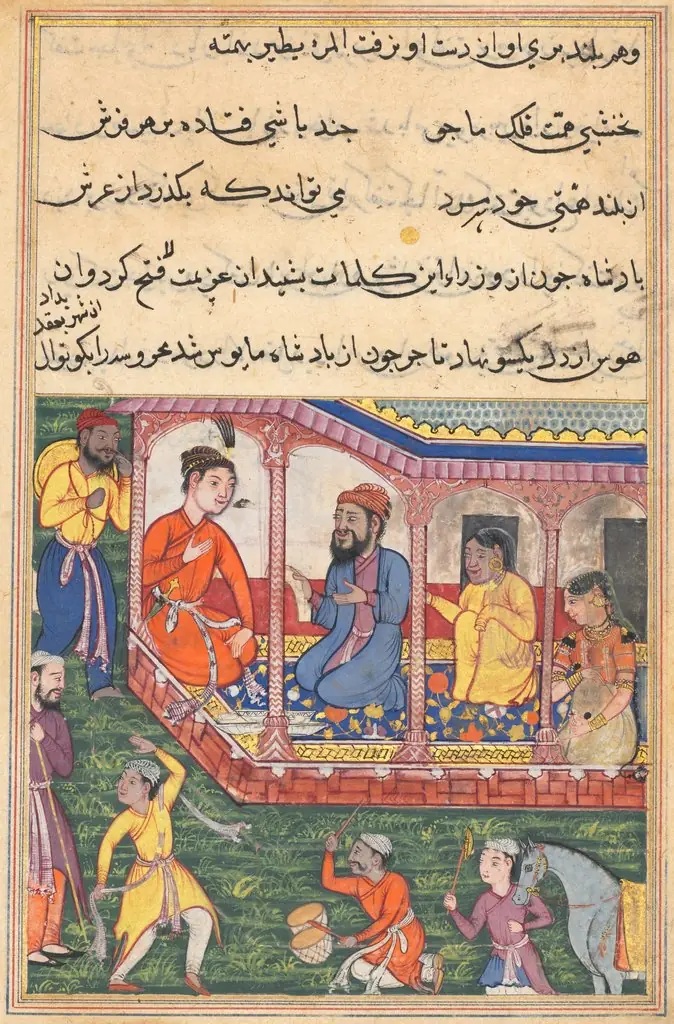 Mahrusa’s marriage to the prefect of the city, from a Tuti-nama (Tales of a Parrot): Thirty-sixth Night
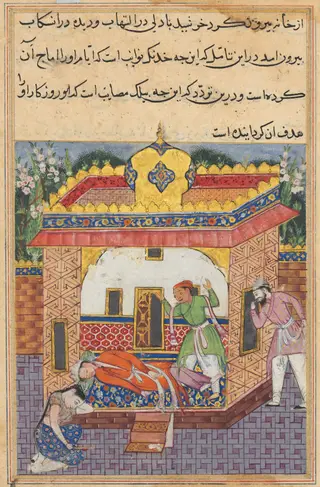 Latif, who has murdered his brother, falsely accuses Khurshid of the deed, from a Tuti-nama (Tales of a Parrot): Thirty-second Night
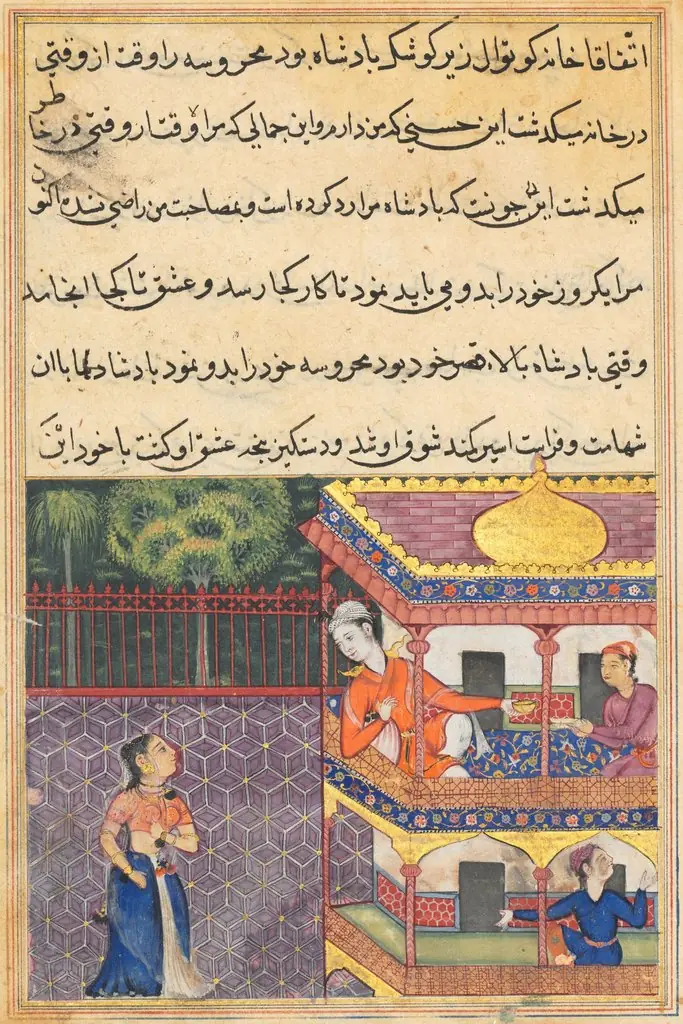 The king of Zabul sees Mahrusa from his palace balcony, from a Tuti-nama (Tales of a Parrot): Thirty-sixth Night
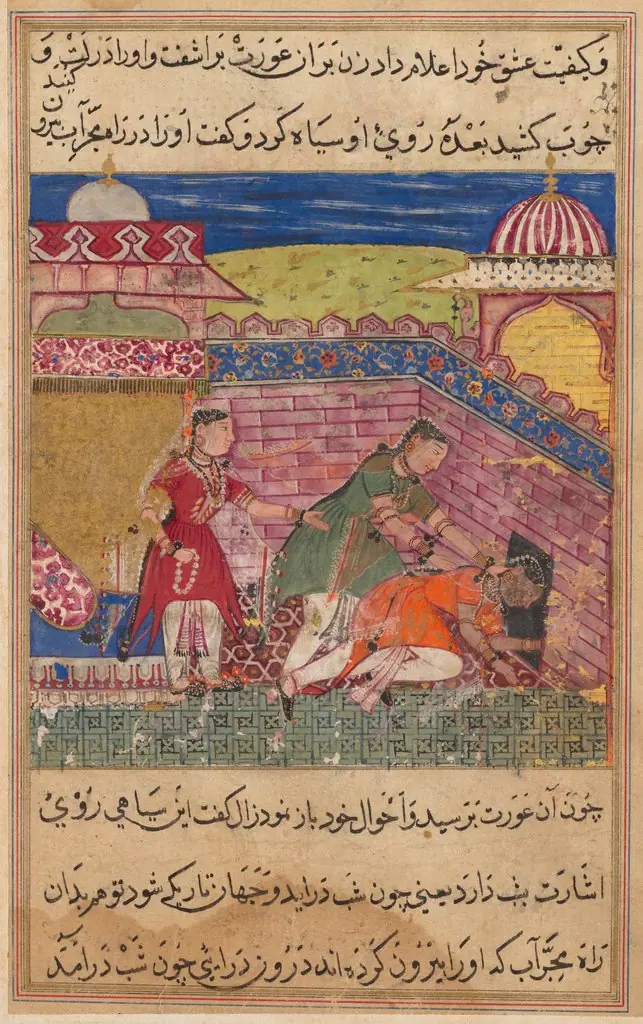 The deceitful wife ejects the procuress after blackening her face, from a Tuti-nama (Tales of a Parrot): Eighth Night
 The king of Zabul sees Mahrusa from his palace balcony, from a Tuti-nama (Tales of a Parrot): Thirty-sixth Night
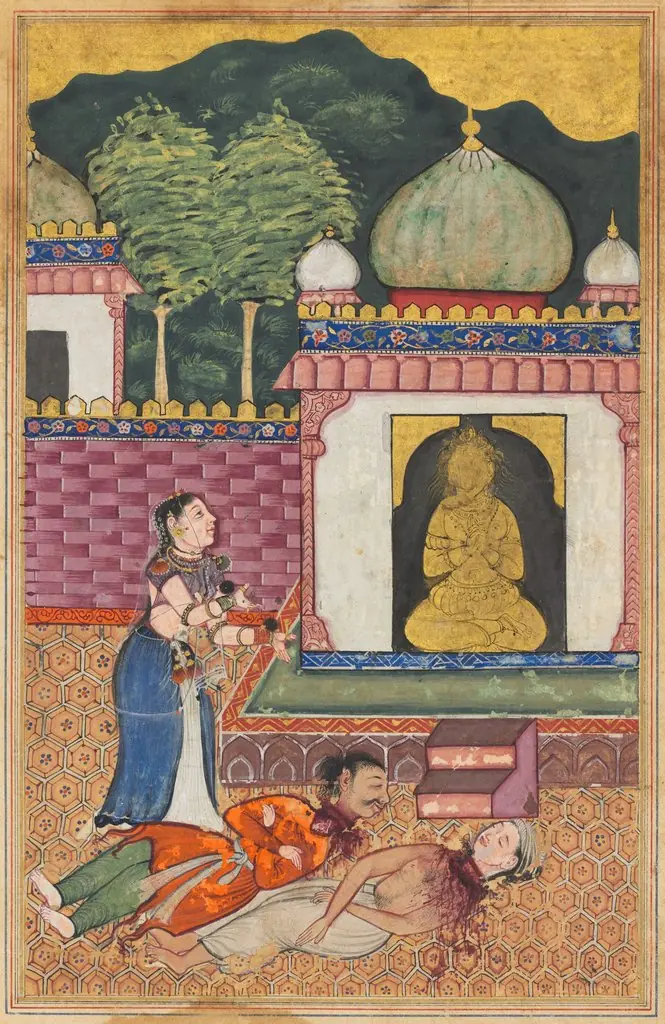 The princess discovers the dead bodies, with heads severed, of her husband and his Brahman friend, from a Tuti-nama (Tales of a Parrot): Thirty-fourth Night
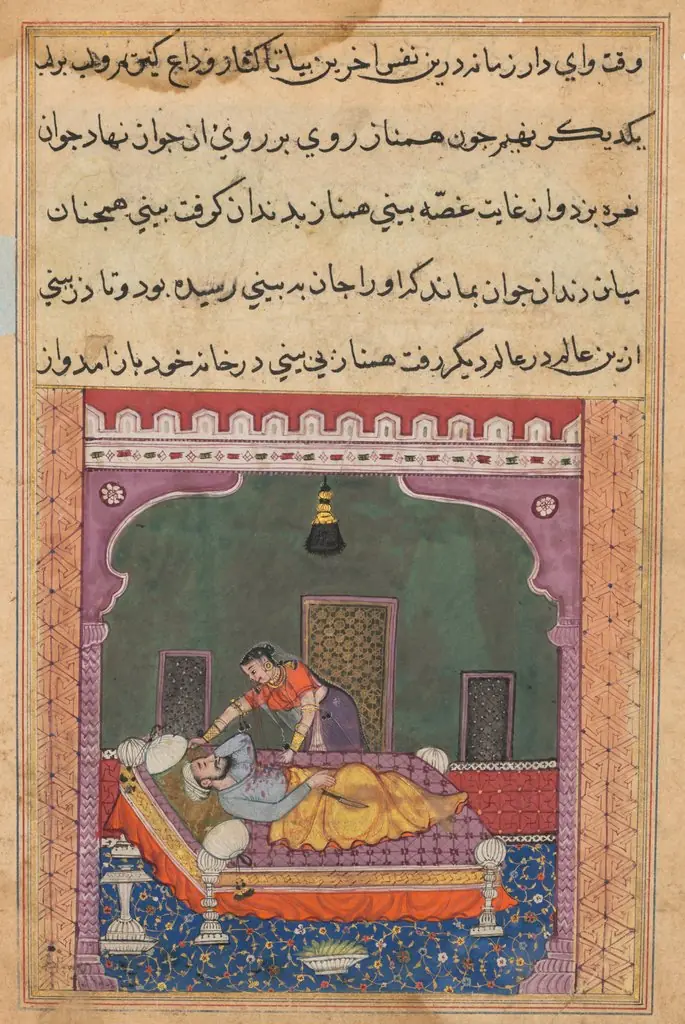 In order to falsely implicate her husband, Hamnaz places a knife by his side and lets the blood dripping from her nose stain his clothes, from a Tuti-nama (Tales of a Parrot): Twenty-fifth Night
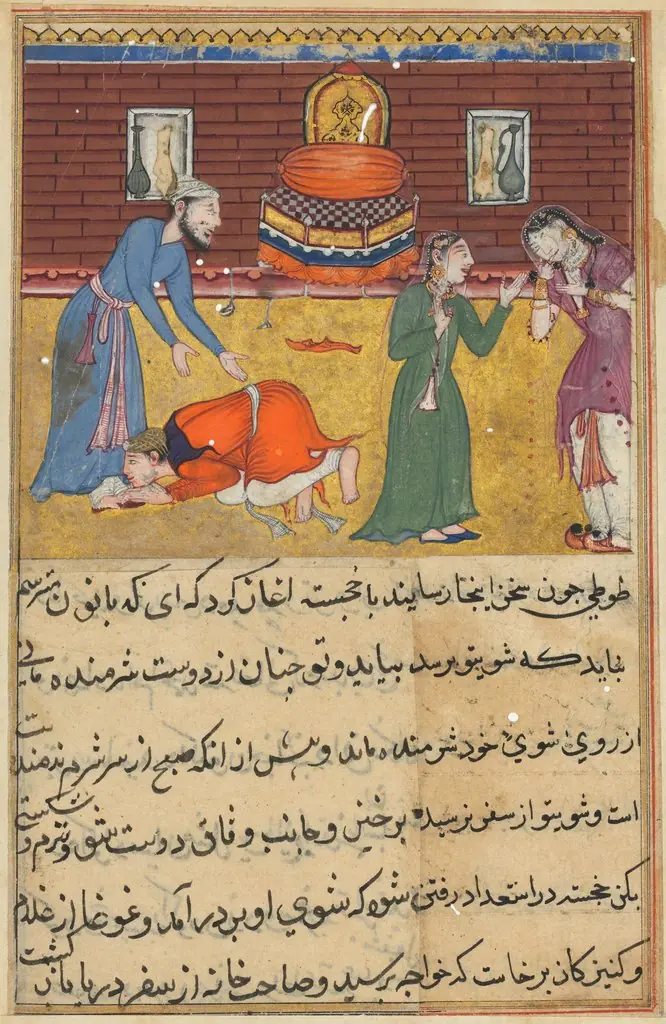 The pious man’s son, now a king, reveals himself to his father; his nurse upbraids his unfaithful mother, from a Tuti-nama (Tales of a Parrot): Fifty-second Night
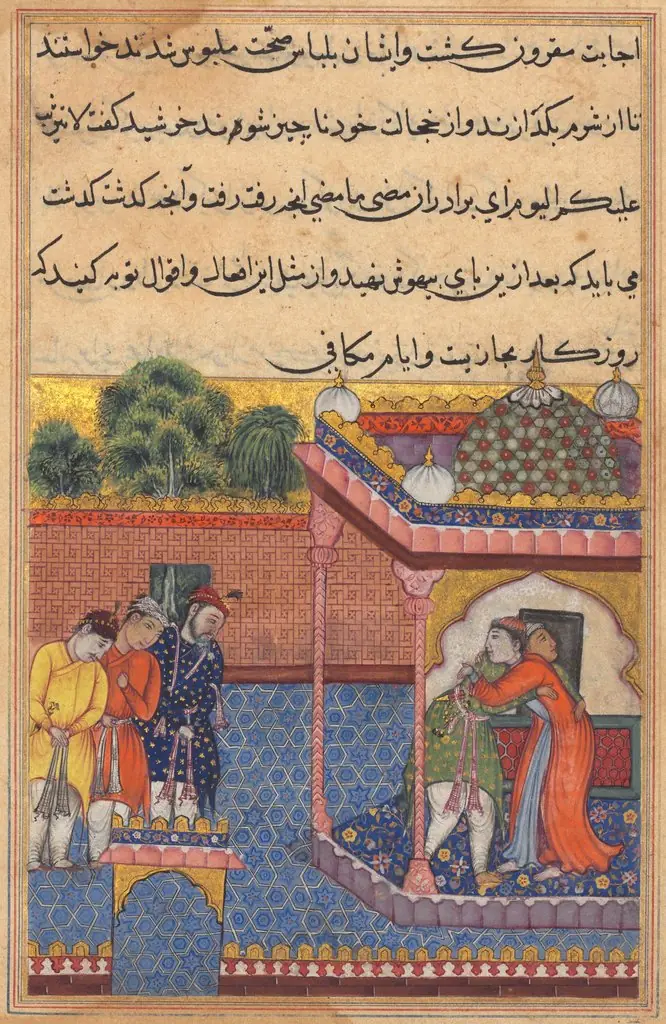 Khurshid reunited with her husband Utarid, from a Tuti-nama (Tales of a Parrot): Thirty-second Night
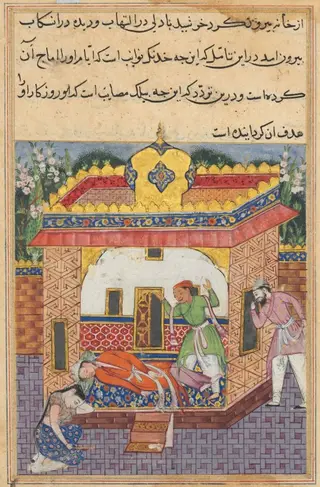 Latif, who has murdered his brother, falsely accuses Khurshid of the deed, from a Tuti-nama (Tales of a Parrot): Thirty-second Night
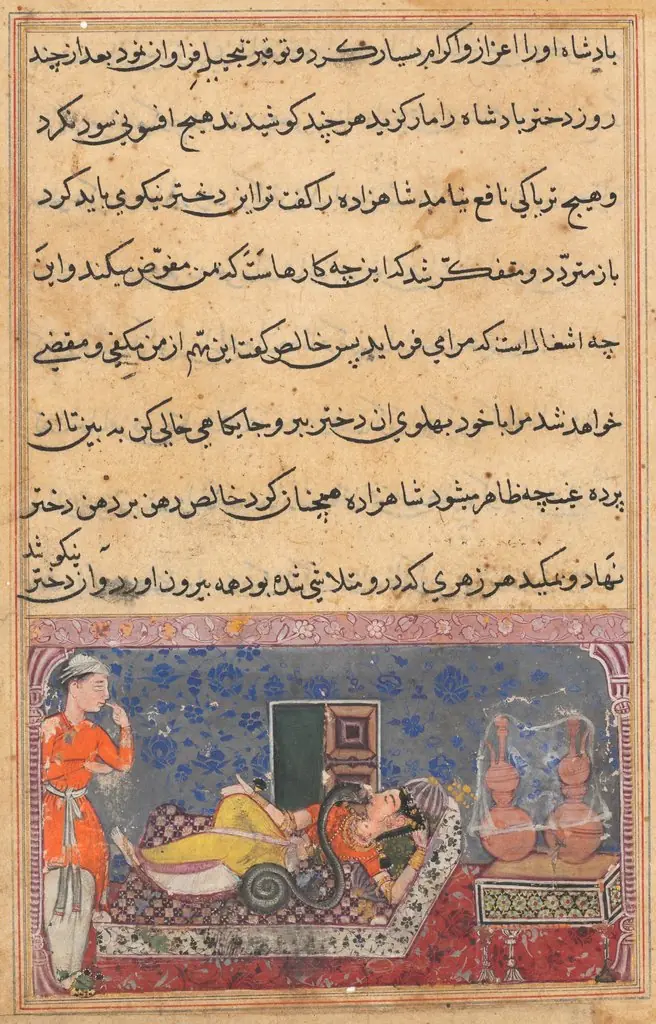 Khalis repays the prince for his kindness by changing into a snake and sucking the poison from the king’s daughter, from a Tuti-nama (Tales of a Parrot): Eighteenth Night
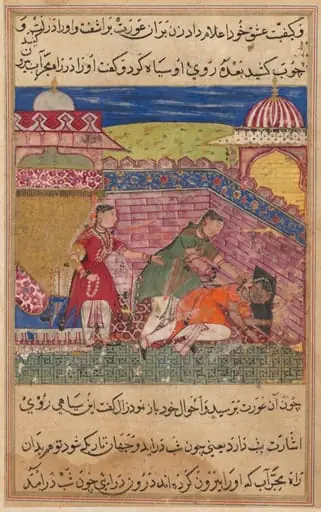 The deceitful wife ejects the procuress after blackening her face, from a Tuti-nama (Tales of a Parrot): Eighth Night
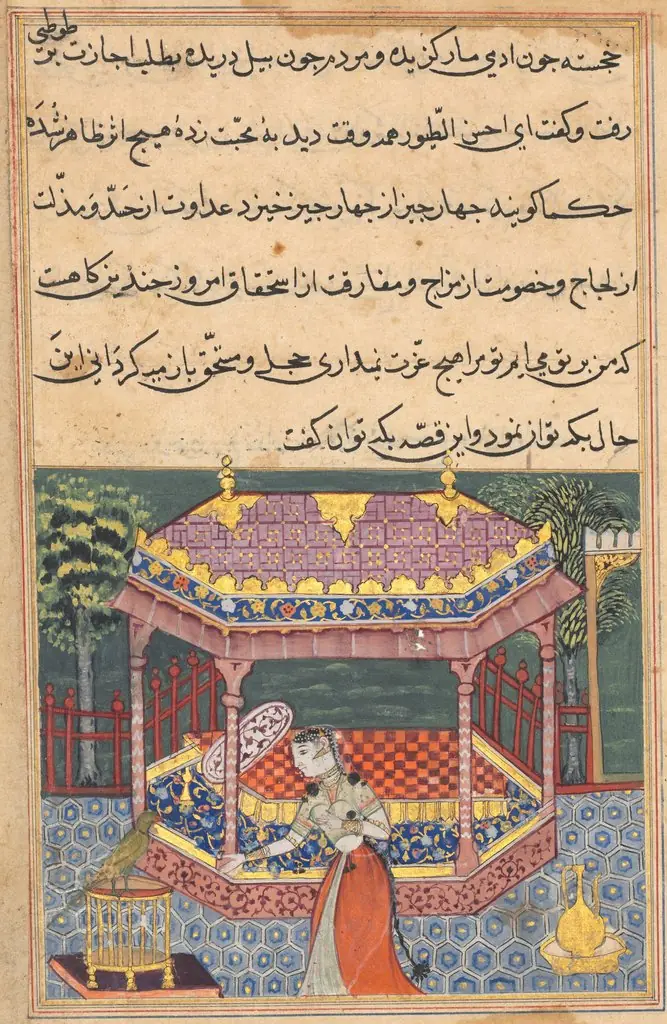 The parrot addresses Khujasta at the beginning of the thirty-seventh night, from a Tuti-nama (Tales of a Parrot)
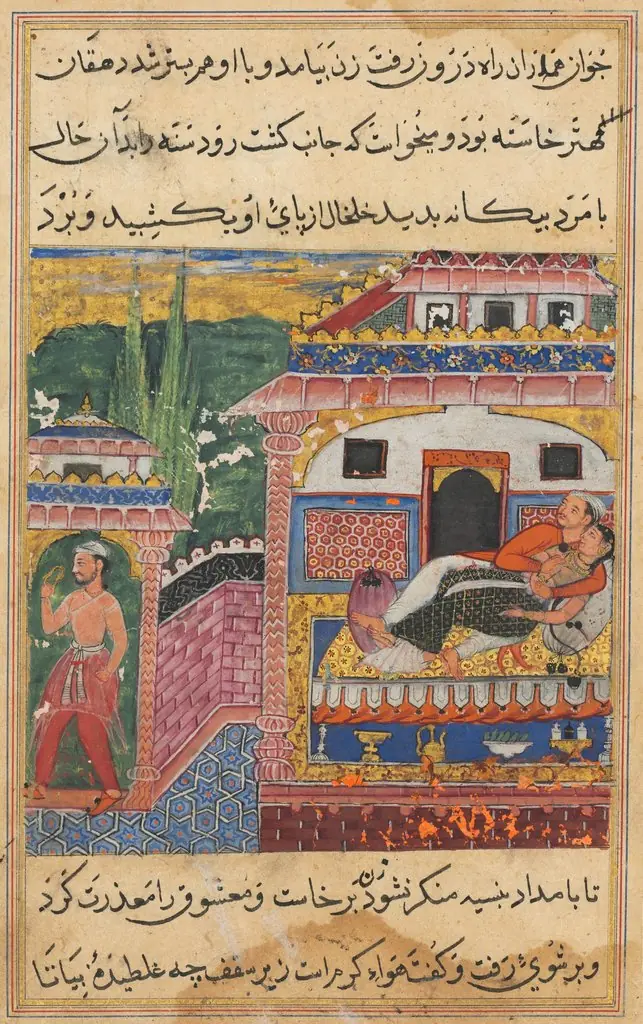 The farmer, father of the son with the deceitful wife, steals away with her anklet while she is in bed with her lover, from a Tuti-nama (Tales of a Parrot): Eighth Night
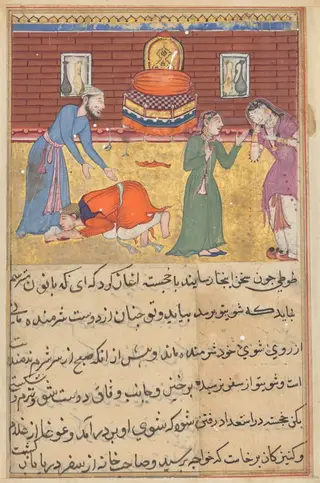 The pious man’s son, now a king, reveals himself to his father; his nurse upbraids his unfaithful mother, from a Tuti-nama (Tales of a Parrot): Fifty-second Night
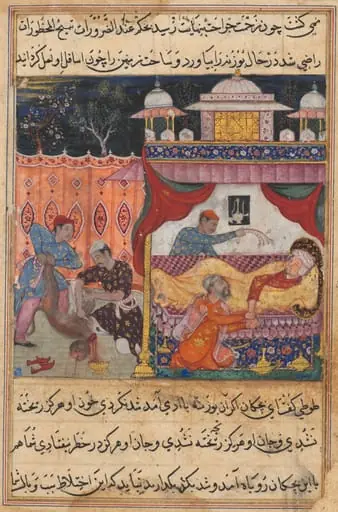 The monkey slain, his blood to be used as medicine for the ailing prince he has bitten, from a Tuti-nama (Tales of a Parrot): Fifth Night
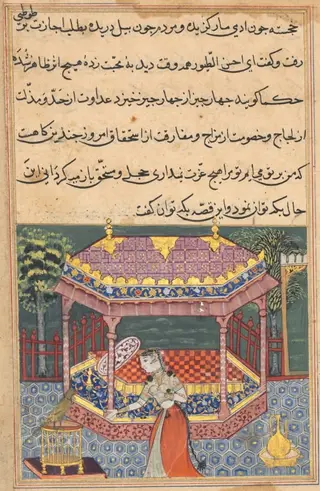 The parrot addresses Khujasta at the beginning of the thirty-seventh night, from a Tuti-nama (Tales of a Parrot)
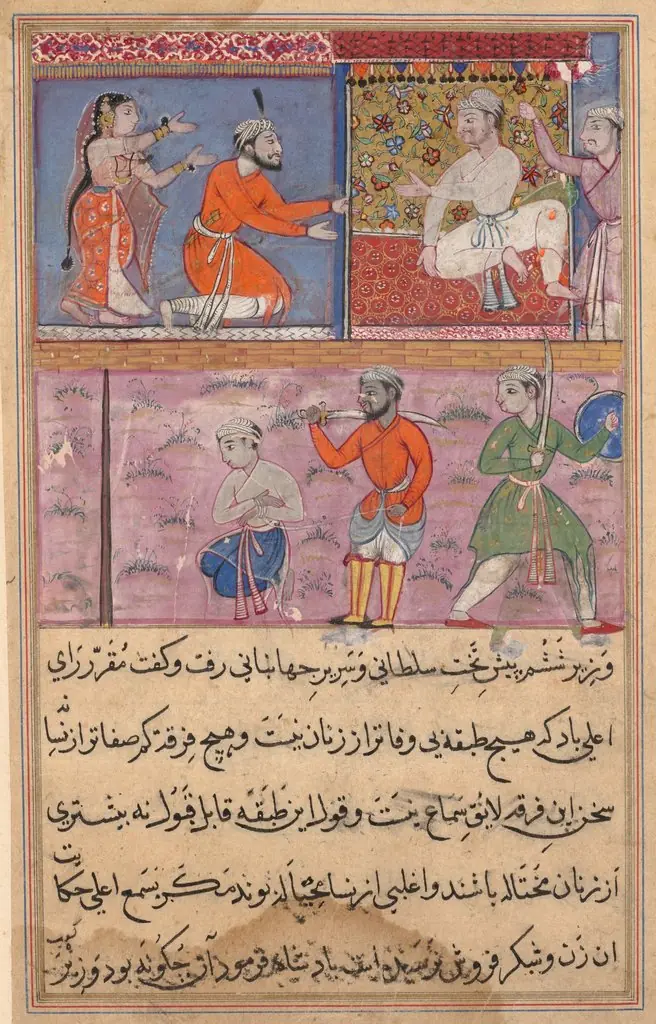 Page from Tales of a Parrot (Tuti-nama): text page