Artwork
In order to falsely implicate her husband, Hamnaz places a knife by his side and lets the blood dripping from her nose stain his clothes, from a Tuti-nama (Tales of a Parrot): Twenty-fifth Night
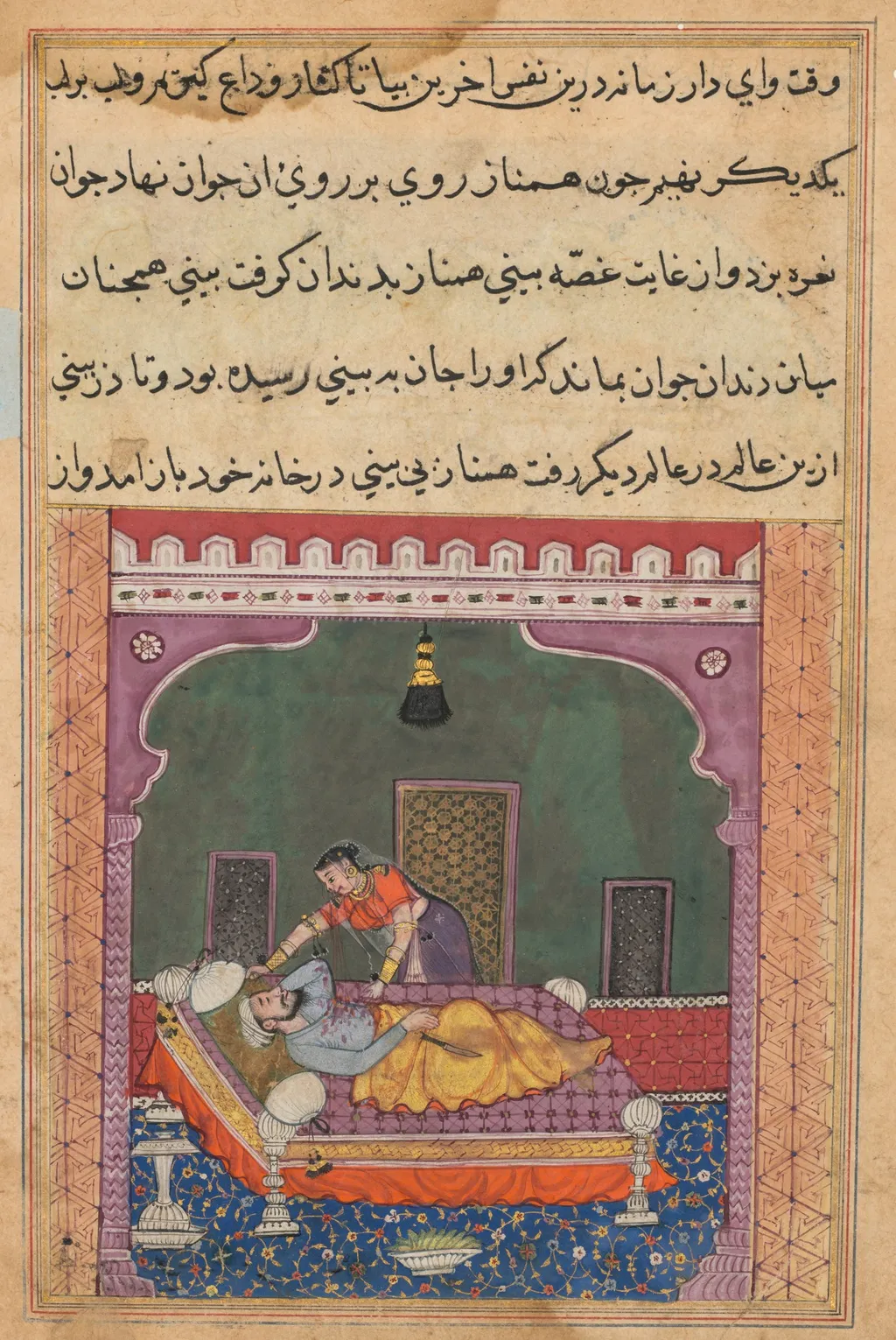
In order to falsely implicate her husband, Hamnaz places a knife by his side and lets the blood dripping from her nose stain his clothes, from a Tuti-nama (Tales of a Parrot): Twenty-fifth Night is an unspecified painting. It dates from 1560 and is held in the collection of the Cleveland Museum of Art. The canvas captures a tense episode from the Persian collection of stories known as the Tuti‑nama.
About this work
Subject & Meaning
The work functions as a story illustration, capturing the precise moment of framing an innocent party through staged violence and self-inflicted injury.
This 1560 Mughal painting illustrates a specific narrative from the twenty-fifth night of the Tuti-nama (Tales of a Parrot). The scene depicts the character Hamnaz engaging in a calculated act of deception to falsely accuse her spouse. Visually, the composition focuses on her placement of a knife beside her sleeping husband while she allows blood dripping from her own nose to stain his garments.
This iconography serves as a visual representation of treachery and the manipulation of physical evidence within the domestic sphere. The work functions as a story illustration, capturing the precise moment of framing an innocent party through staged violence and self-inflicted injury.
Technique & Style
This folio from the Tuti-nama (Tales of a Parrot) exemplifies Mughal manuscript painting of the mid-16th century. Executed on paper, the work employs opaque watercolor (gouache) and gold leaf, characteristic of the period’s imperial ateliers. Fine brushwork defines intricate details, such as textile patterns and facial expressions, while delicate washes create luminous gradations in skin tones and drapery.
Stylistically, the composition adheres to Persianate conventions, flattened spatial recession, hierarchical scale, and rhythmic linear contours, yet incorporates Mughal naturalism in the rendering of figures and textiles. The palette favors muted earth tones punctuated by vivid accents, particularly in the bloodstains and garments. The painting’s condition remains stable within its bound manuscript context, though minor losses or abrasions may affect marginal areas, as typical for folio works of this age.
History & Provenance
The miniature depicting Hamnaz placing a knife beside her husband while blood from her nose stains his garments originates from a Tuti-nama manuscript attributed to an artist linked to the Mughal imperial workshop, painted circa 1560. It entered the collection of the Cleveland Museum of Art, where it remains on view in the Indian and Islamic Art galleries. The work was created during the mid‑sixteenth century in the Mughal Empire, reflecting the courtly narrative tradition of the period.
Overview
The canvas captures a tense episode from the Persian collection of stories known as the Tuti‑nama. A woman in a vivid orange gown leans over a reclining male figure, clutching a knife while blood drips from her nose onto his garments. The setting is an interior with richly patterned furnishings, emphasizing the dramatic narrative moment.
Context
The work belongs to a visual tradition that translates literary episodes from the Tuti‑nama into painted form, a practice common in Persian and South Asian courts where storytelling and visual culture intersected. The composition’s focus on a single, climactic moment mirrors the episodic structure of the source text.
Artist & collection

- In order to falsely implicate her husband, Hamnaz places a knife by his side and lets the blood dripping from her nose stain his clothes, from a Tuti-nama (Tales of a Parrot): Twenty-fifth Night
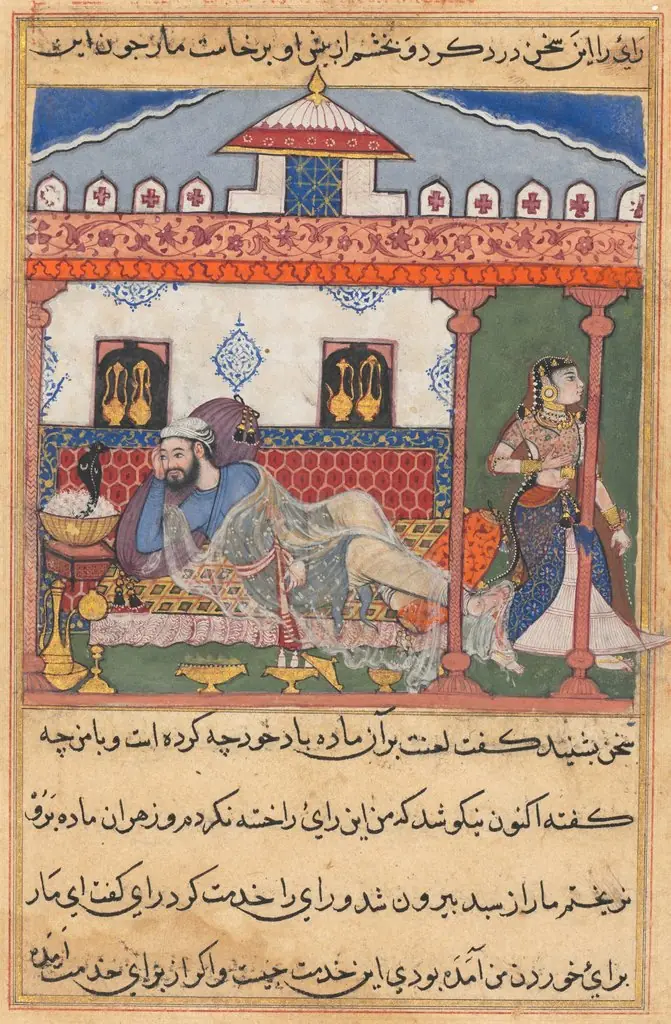 The snake, hidden in a basket of flowers, reveals himself to the Raja who has just sent away his wife, from a Tuti-nama (Tales of a Parrot): Forty-third Night
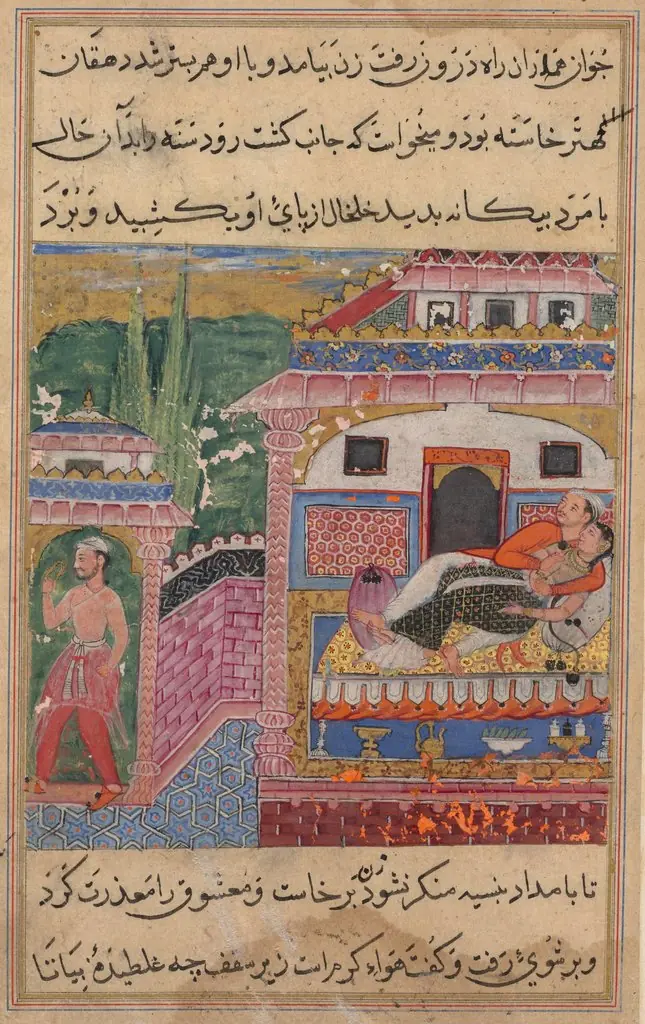 The deceitful wife persuades her husband to sleep in the same place where she had previously slept with her lover, from a Tuti-nama (Tales of a Parrot): Eighth Night
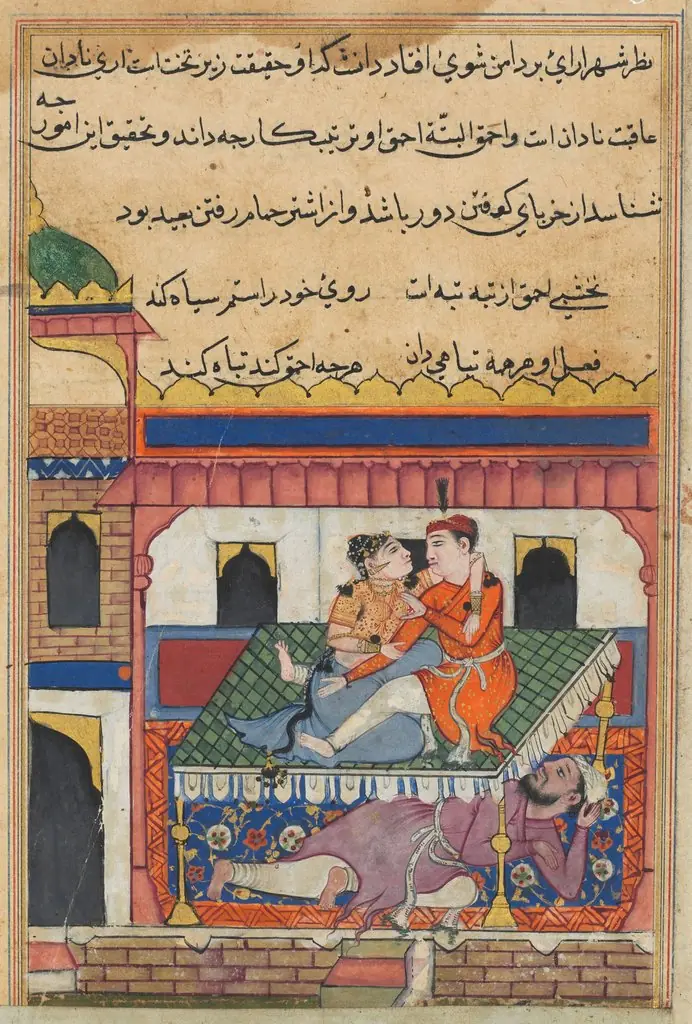 Shahr-Arai and her lover dallying on a bed beneath which is concealed her husband, from a Tuti-nama (Tales of a Parrot): Fortieth Night
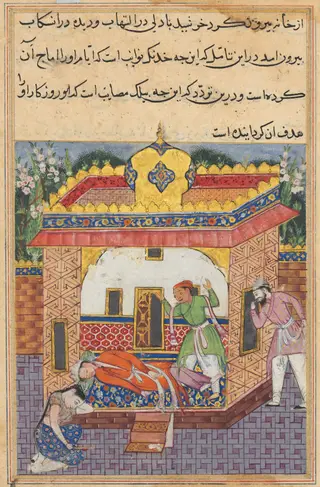 Latif, who has murdered his brother, falsely accuses Khurshid of the deed, from a Tuti-nama (Tales of a Parrot): Thirty-second Night
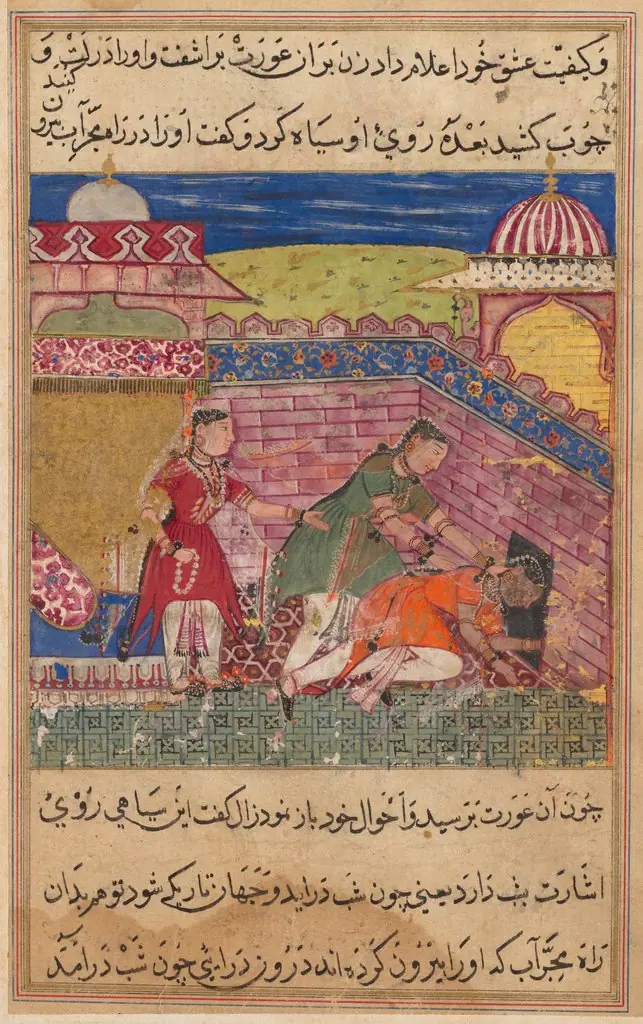 The deceitful wife ejects the procuress after blackening her face, from a Tuti-nama (Tales of a Parrot): Eighth Night
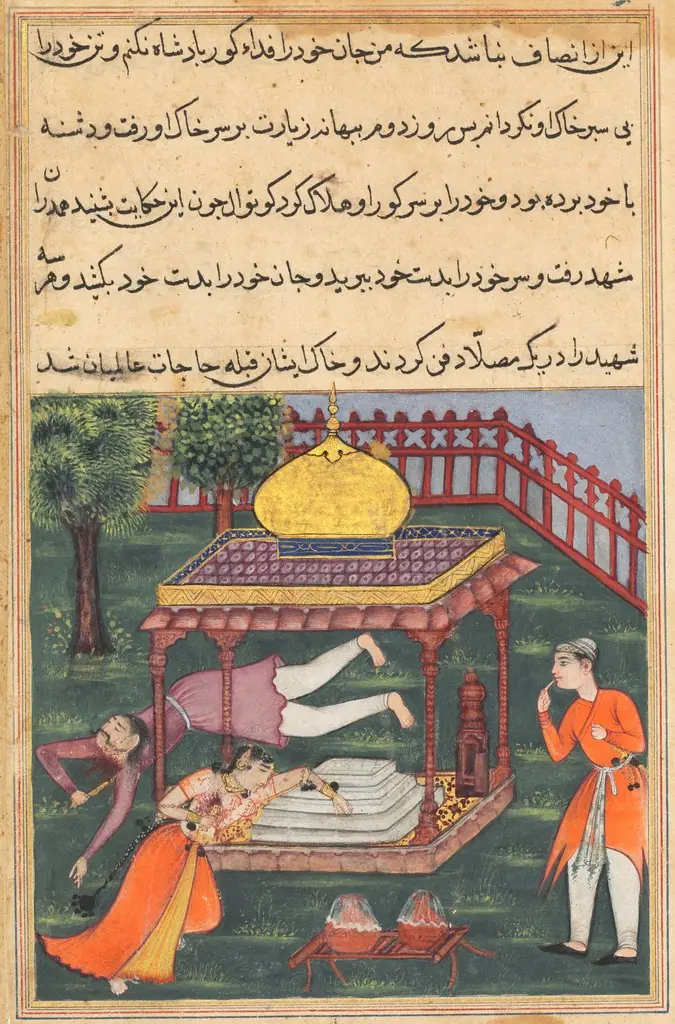 Mahrusa kills herself at the tomb of the king of Zabul, and her husband does likewise, from a Tuti-nama (Tales of a Parrot): Thirty-sixth Night
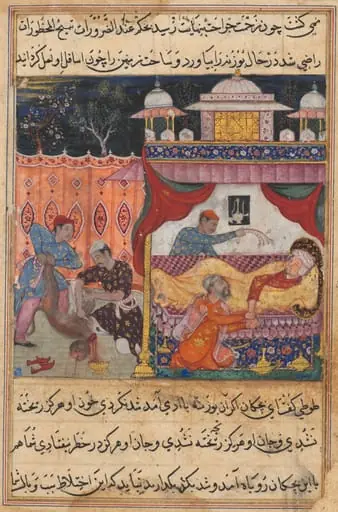 The monkey slain, his blood to be used as medicine for the ailing prince he has bitten, from a Tuti-nama (Tales of a Parrot): Fifth Night
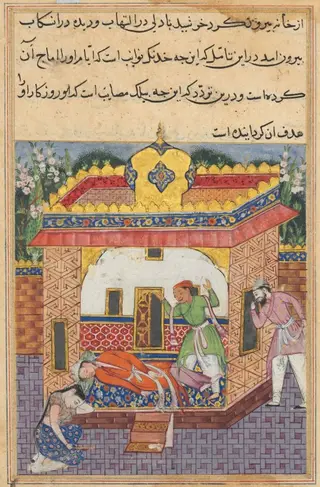 Latif, who has murdered his brother, falsely accuses Khurshid of the deed, from a Tuti-nama (Tales of a Parrot): Thirty-second Night
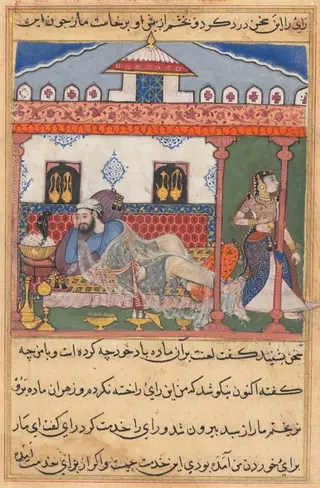 The snake, hidden in a basket of flowers, reveals himself to the Raja who has just sent away his wife, from a Tuti-nama (Tales of a Parrot): Forty-third Night
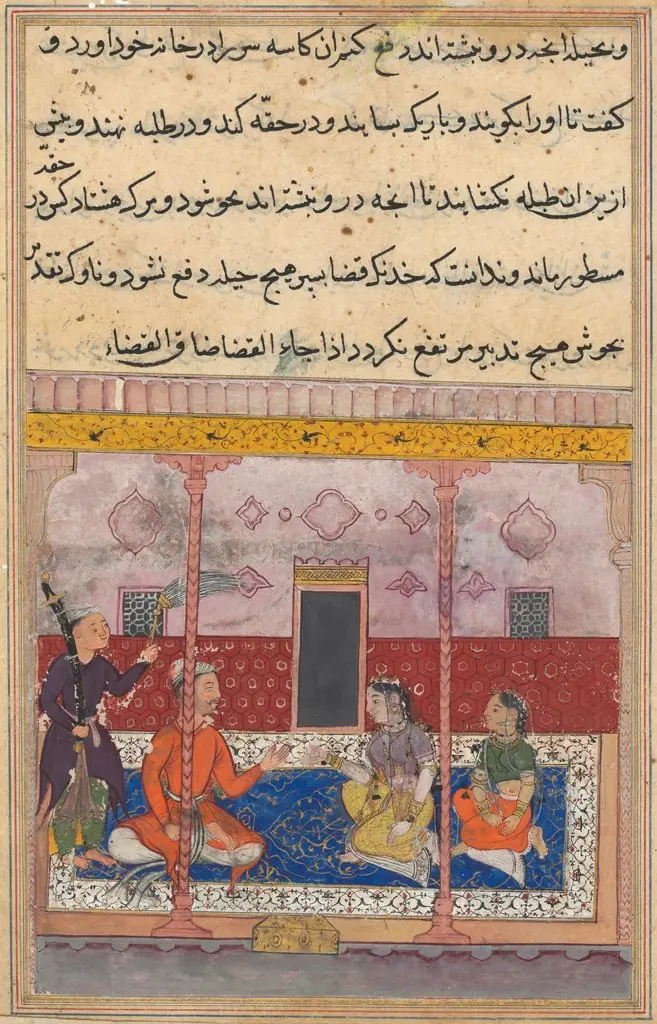 The merchant has the hateful skull ground and put into a box, from a Tuti-nama (Tales of a Parrot): Twenty-third Night
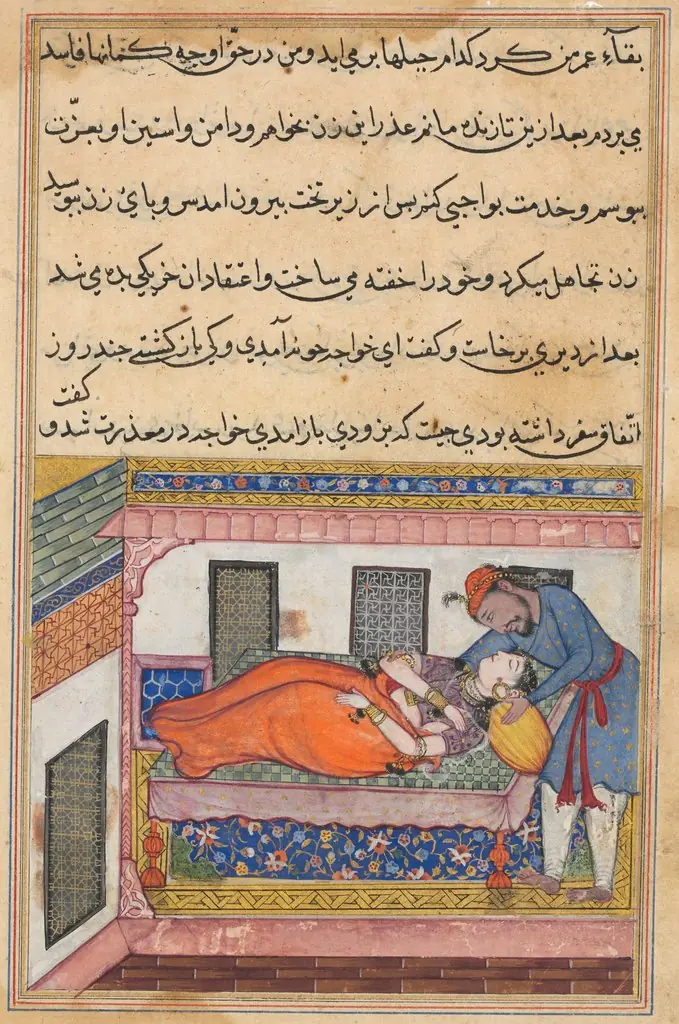 Shahr-Arai’s husband bends to kiss his wife who feigns sleep, from a Tuti-nama (Tales of a Parrot): Fortieth Night
 Shahr-Arai’s husband bends to kiss his wife who feigns sleep, from a Tuti-nama (Tales of a Parrot): Fortieth Night
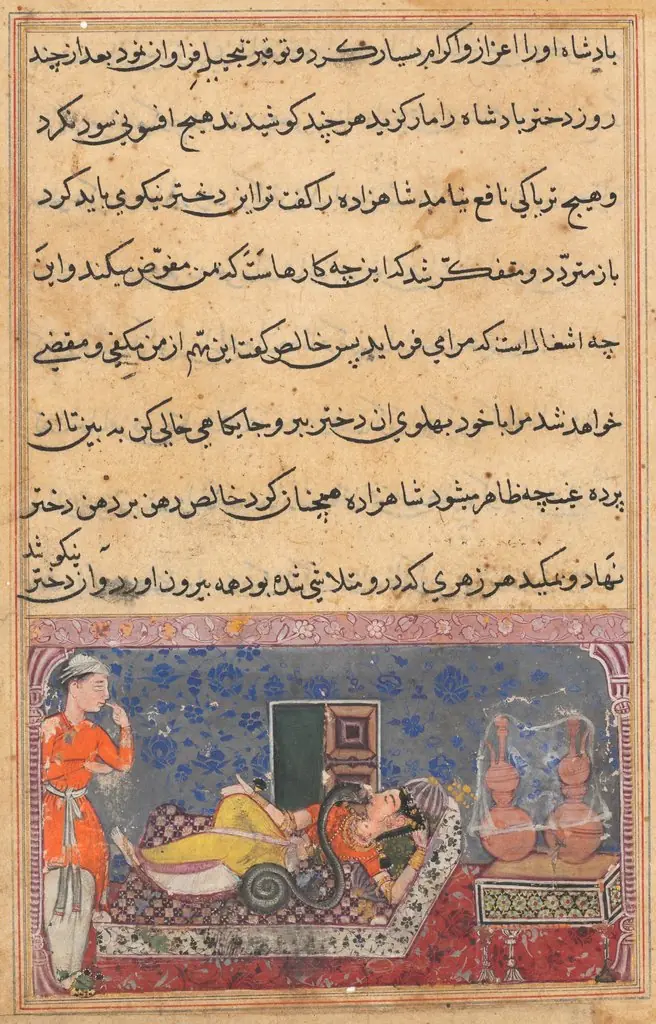 Khalis repays the prince for his kindness by changing into a snake and sucking the poison from the king’s daughter, from a Tuti-nama (Tales of a Parrot): Eighteenth Night
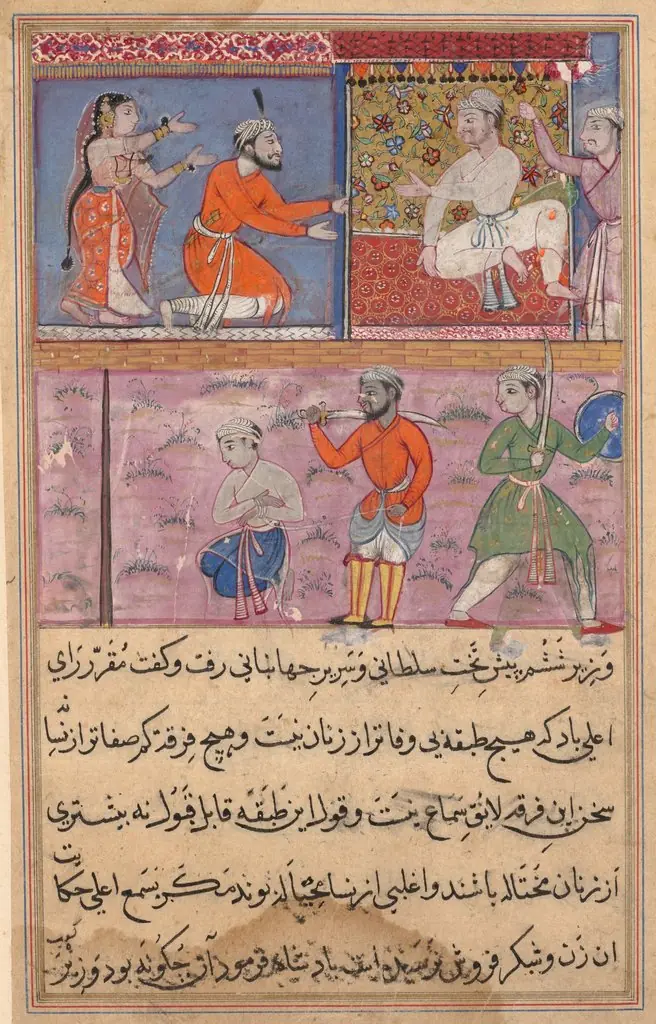 Page from Tales of a Parrot (Tuti-nama): text page
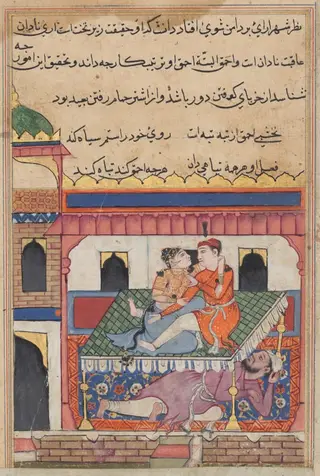 Shahr-Arai and her lover dallying on a bed beneath which is concealed her husband, from a Tuti-nama (Tales of a Parrot): Fortieth Night
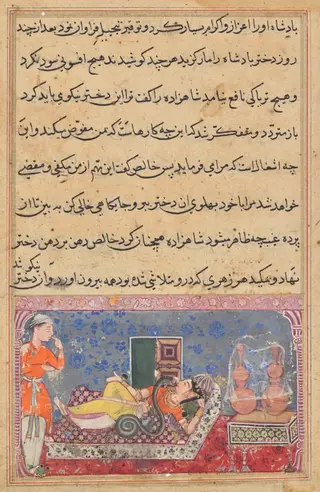 Khalis repays the prince for his kindness by changing into a snake and sucking the poison from the king’s daughter, from a Tuti-nama (Tales of a Parrot): Eighteenth Night
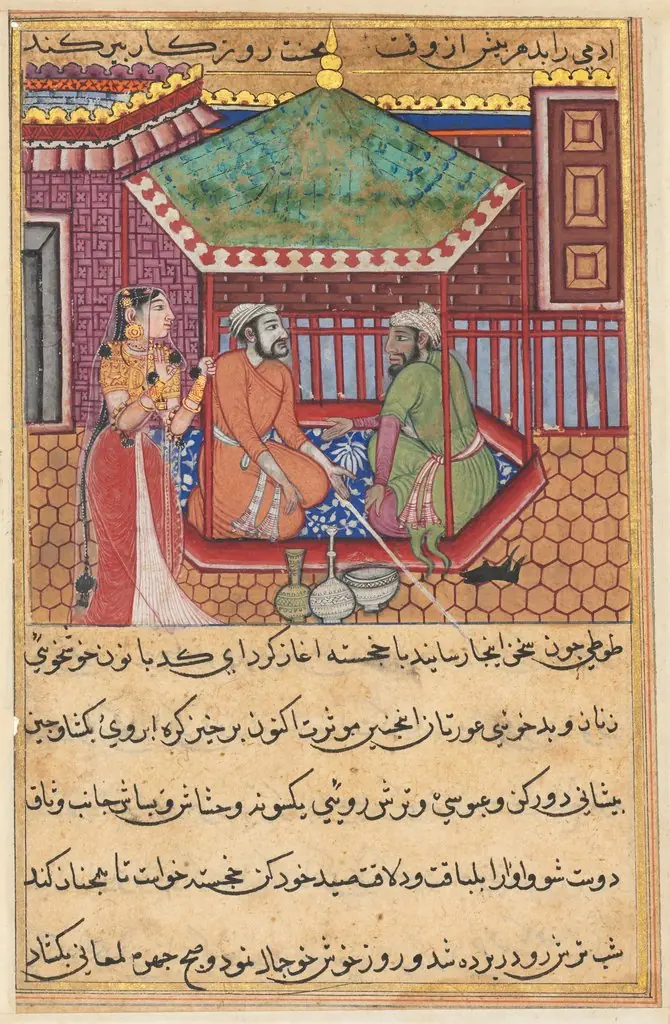 The eldest brother explains the reason for his youthful appearance, from a Tuti-nama (Tales of a Parrot): Forty-ninth Night
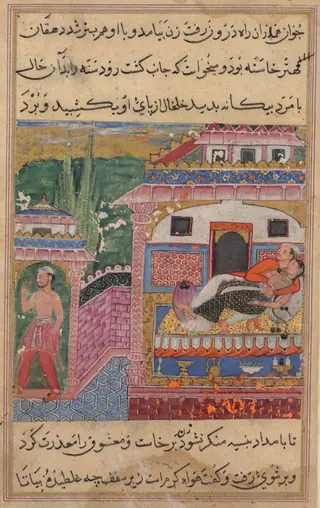 The farmer, father of the son with the deceitful wife, steals away with her anklet while she is in bed with her lover, from a Tuti-nama (Tales of a Parrot): Eighth Night
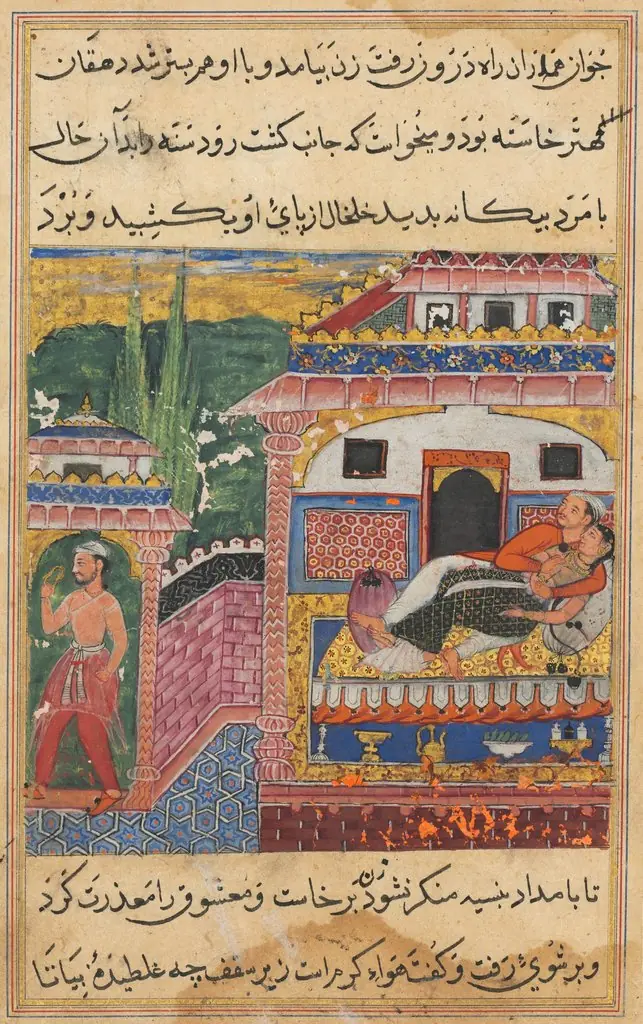 The farmer, father of the son with the deceitful wife, steals away with her anklet while she is in bed with her lover, from a Tuti-nama (Tales of a Parrot): Eighth Night