Artwork
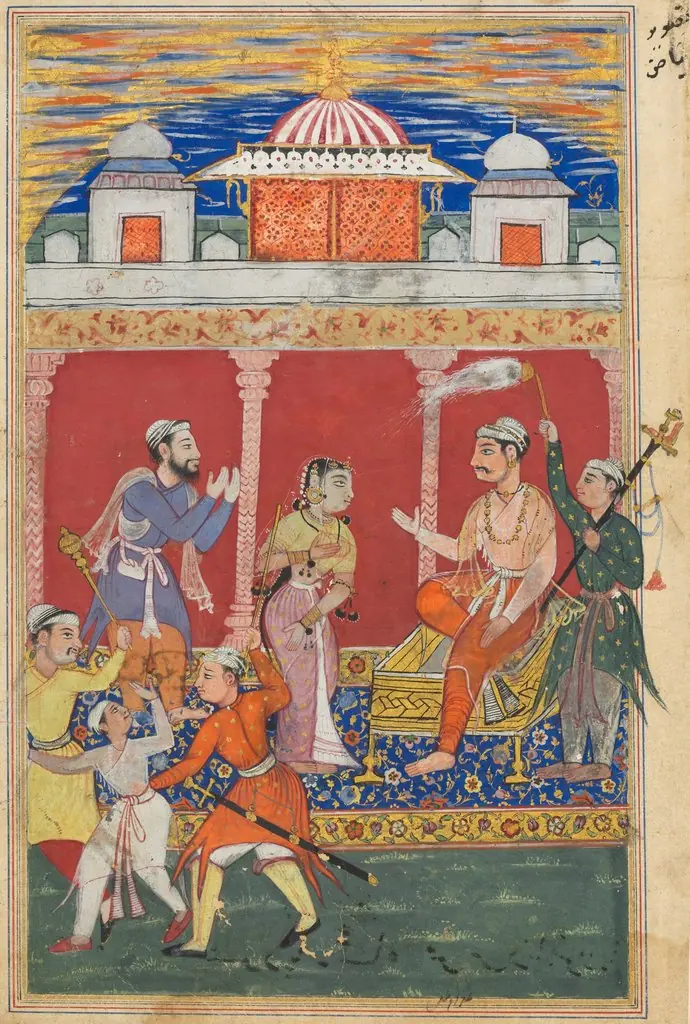
The princess discovers the dead bodies, with heads severed, of her husband and his Brahman friend, from a Tuti-nama (Tales of a Parrot): Thirty-fourth Night
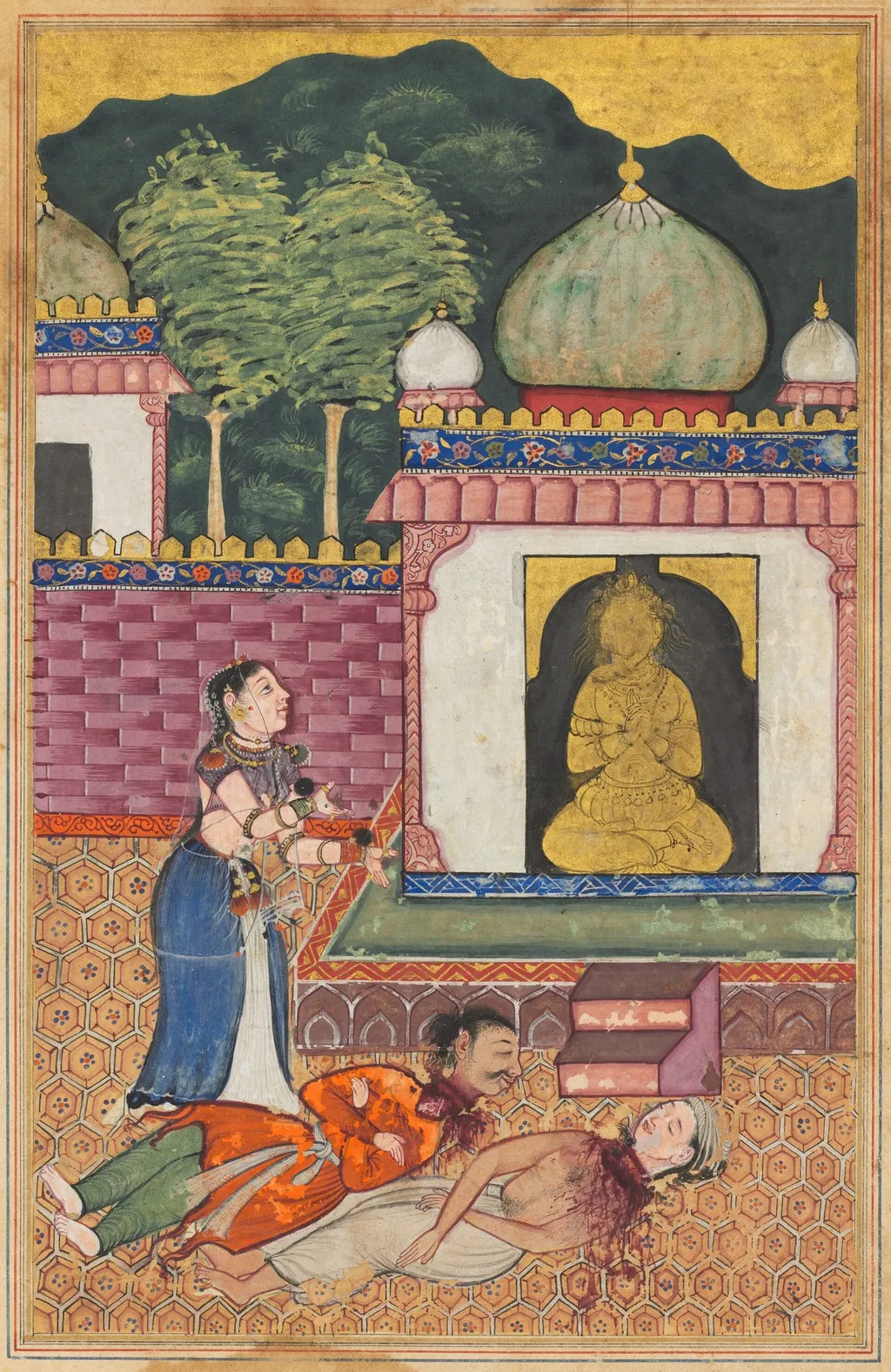
The princess discovers the dead bodies, with heads severed, of her husband and his Brahman friend, from a Tuti-nama (Tales of a Parrot): Thirty-fourth Night is an unspecified painting. It dates from 1560 and is held in the collection of the Cleveland Museum of Art. The work depicts a dramatic episode from a Persian narrative collection, showing a woman in a blue garment confronting a grisly tableau.
About this work
Technique & Style
The work is a manuscript folio painted in opaque watercolor, ink, and gold on paper, created circa 1560 within the Mughal Empire.
The work is a manuscript folio painted in opaque watercolor, ink, and gold on paper, created circa 1560 within the Mughal Empire. The piece demonstrates Mughal miniature techniques with a flattened perspective and intricate narrative detail. The composition depicts the princess discovering the severed heads of her husband and his Brahman friend, rendered through precise line work and the palette characteristic of early Mughal court painting.
History & Provenance
The painting dates to 1560, produced within the Mughal Empire during the early years of that court. It originates as a folio from the Tuti-nama (Tales of a Parrot) manuscript series, illustrating the Thirty-fourth Night, and was created by an artist whose name is not recorded in the available records.
The work entered the Cleveland Museum of Art collection, where it is now held. Its accession number, 1962.279.229.b, indicates it was accessioned by the museum in 1962, though the intermediate ownership history between its sixteenth-century Mughal creation and that acquisition is not documented in the available sources.
Overview
The work depicts a dramatic episode from a Persian narrative collection, showing a woman in a blue garment confronting a grisly tableau. She stands before a red‑walled structure with patterned flooring; through an open window a seated figure cradles a child. On the floor lie two decapitated bodies, their heads removed, creating a stark contrast between the vivid colors and the violent subject matter.
Subject & Meaning
The scene captures the moment a princess discovers the severed corpses of her husband and his Brahman companion, a pivotal point in the tale’s unfolding tragedy. Her expression of shock underscores the sudden revelation of betrayal and loss, while the juxtaposition of domestic interior and brutal aftermath invites reflection on the fragility of royal security within the story’s moral framework.
Artist & collection

- The princess discovers the dead bodies, with heads severed, of her husband and his Brahman friend, from a Tuti-nama (Tales of a Parrot): Thirty-fourth Night
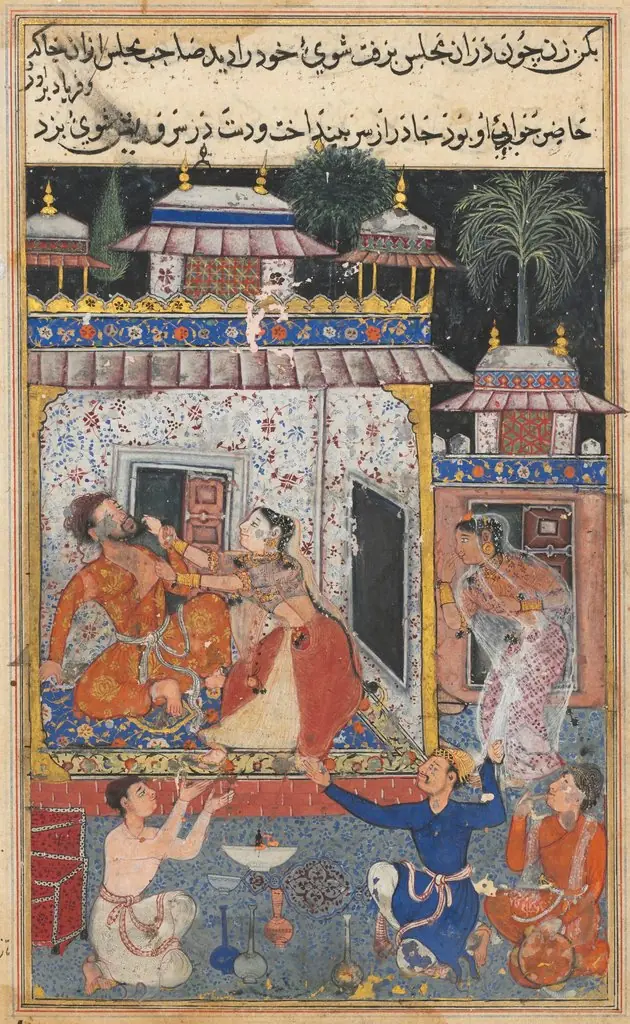 The deceitful wife assaults her erring husband, from a Tuti-nama (Tales of a Parrot): Eighth Night
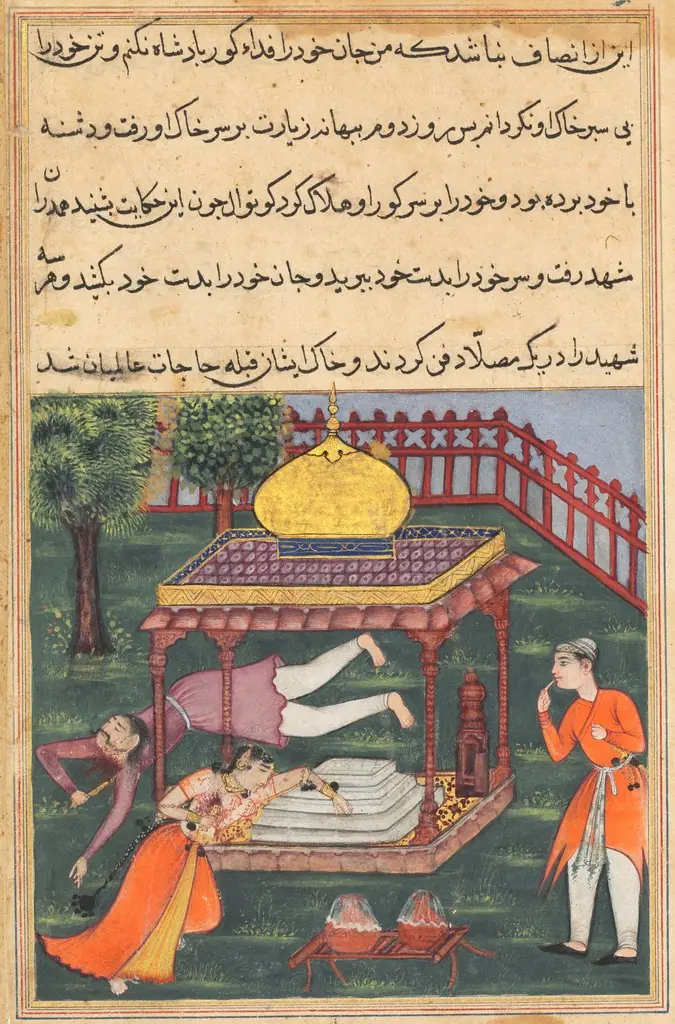 Mahrusa kills herself at the tomb of the king of Zabul, and her husband does likewise, from a Tuti-nama (Tales of a Parrot): Thirty-sixth Night
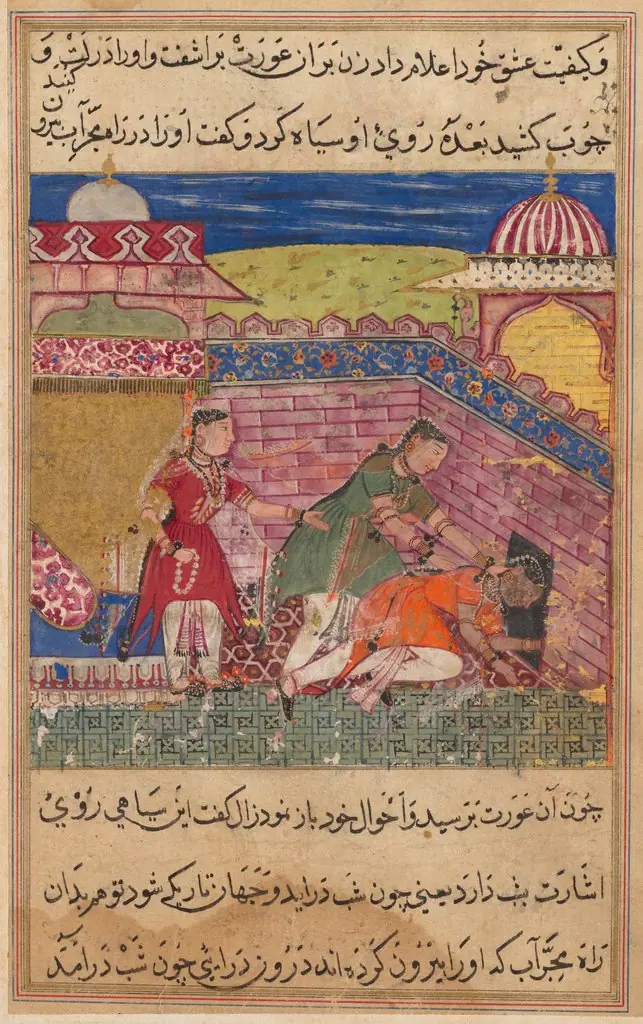 The deceitful wife ejects the procuress after blackening her face, from a Tuti-nama (Tales of a Parrot): Eighth Night
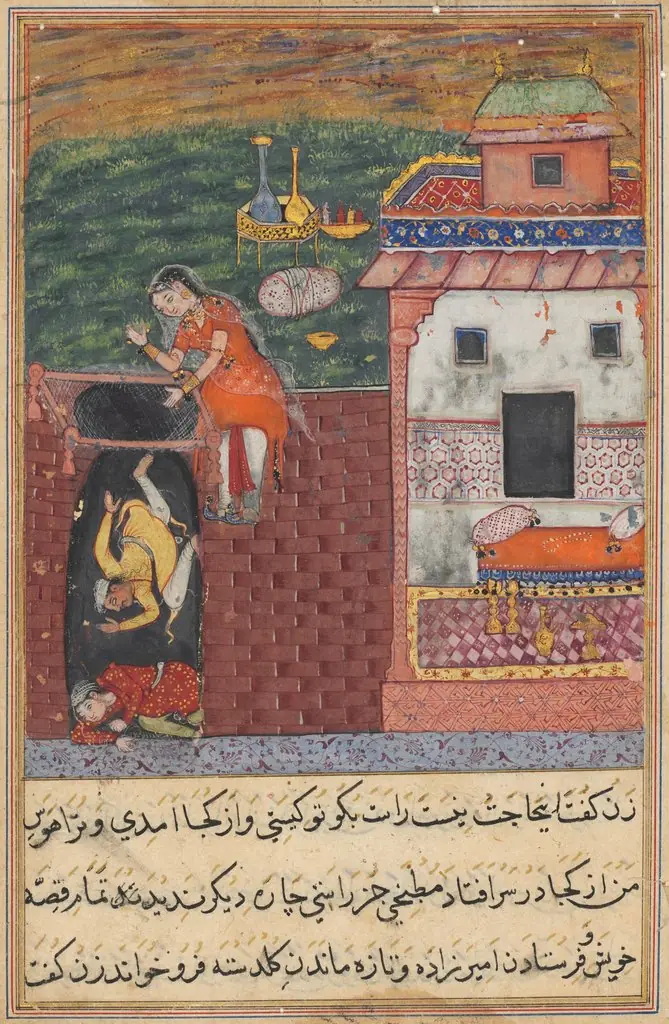 The two cooks, who attempt to seduce the warrior’s loyal wife, are trapped by her in a cellar, from a Tuti-nama (Tales of a Parrot): Fourth Night
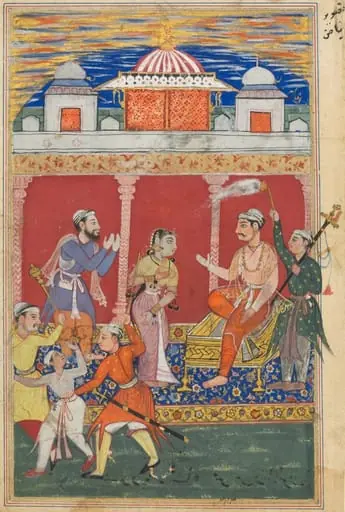 The prince’s ordeal continues, he is ordered away to be executed for the fifth time, from a Tuti-nama (Tales of a Parrot): Eighth Night
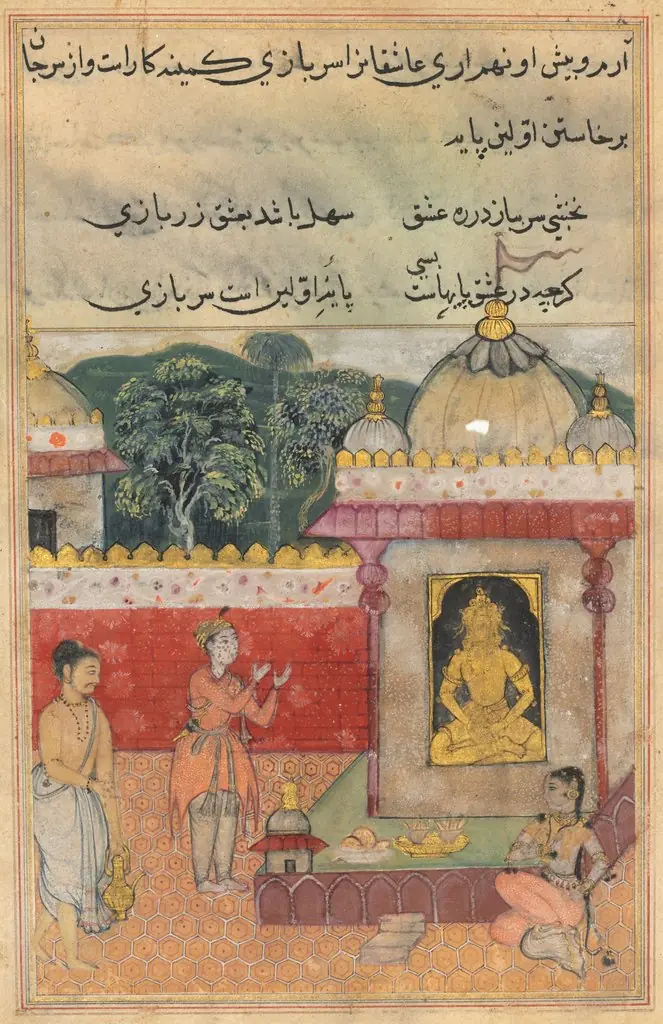 The Raja’s son vows to sever his head and offer it to the image if he is united with the princess he has seen in the temple, from a Tuti-nama (Tales of a Parrot): Thirty-fourth Night
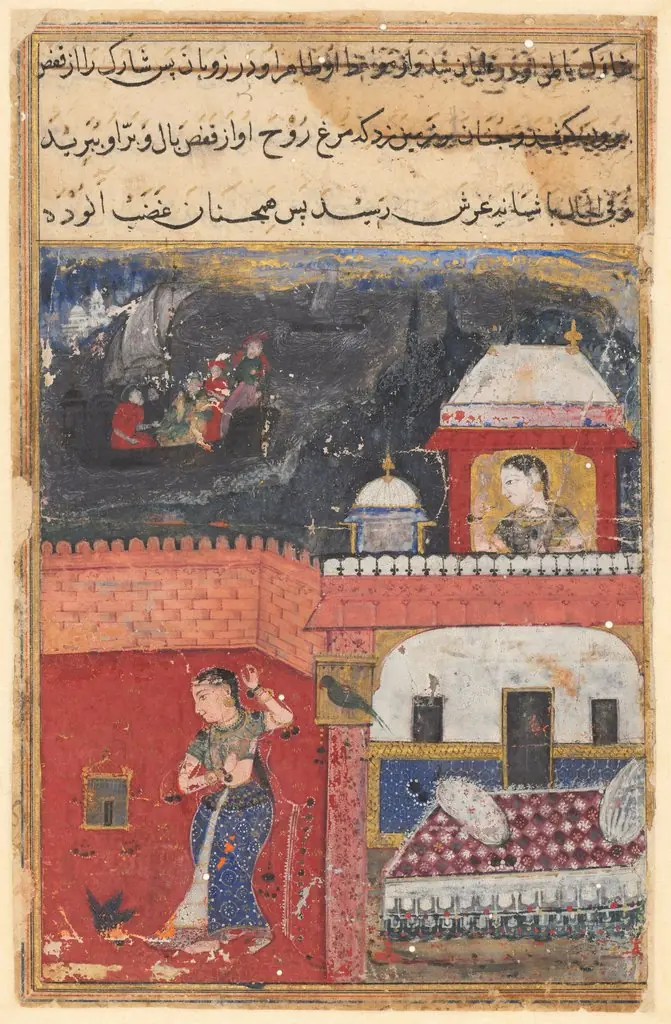 Khujasta kills the pet mynah who advises her not to be unfaithful to Maymun, her husband, from a Tuti-nama (Tales of the Parrot): First Night
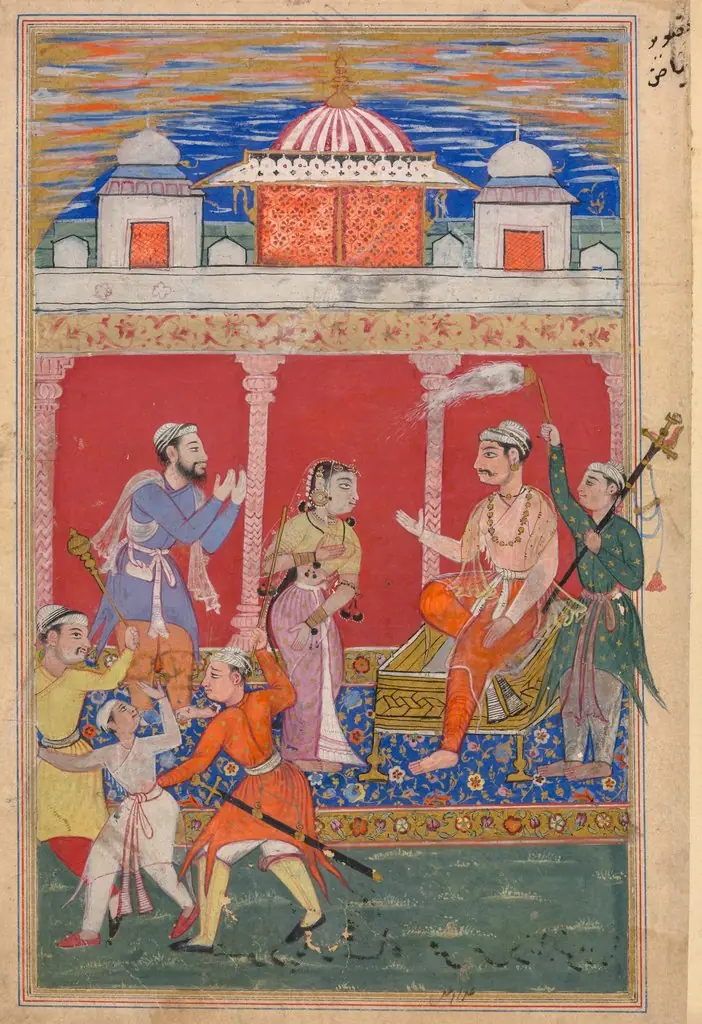 Page from Tales of a Parrot (Tuti-nama): text page
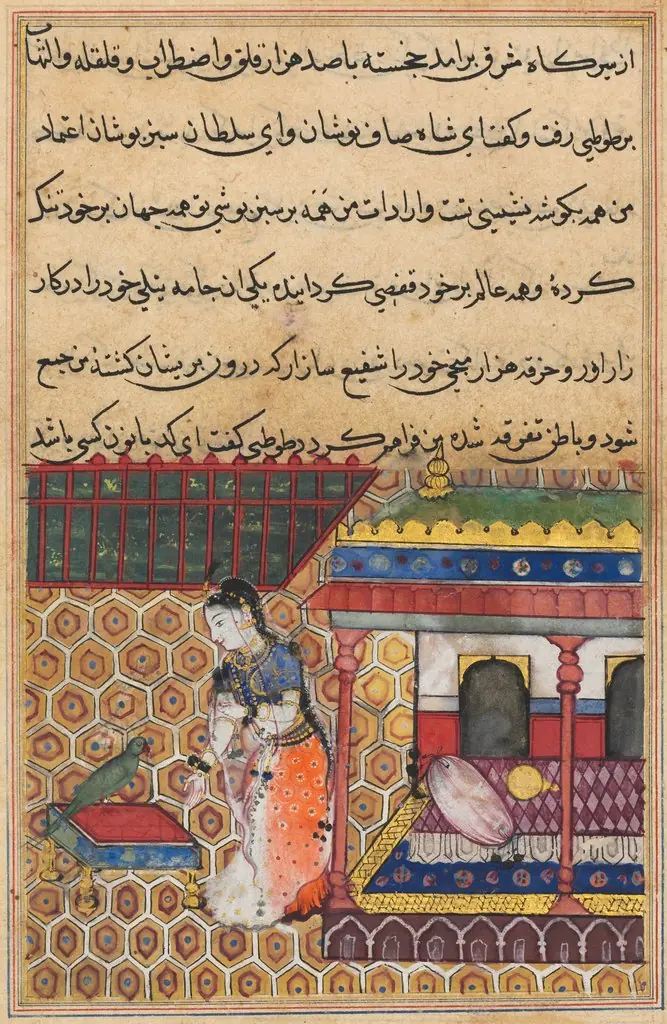 The parrot addresses Khujasta at the beginning of the thirty-eighth night, from a Tuti-nama (Tales of a Parrot)
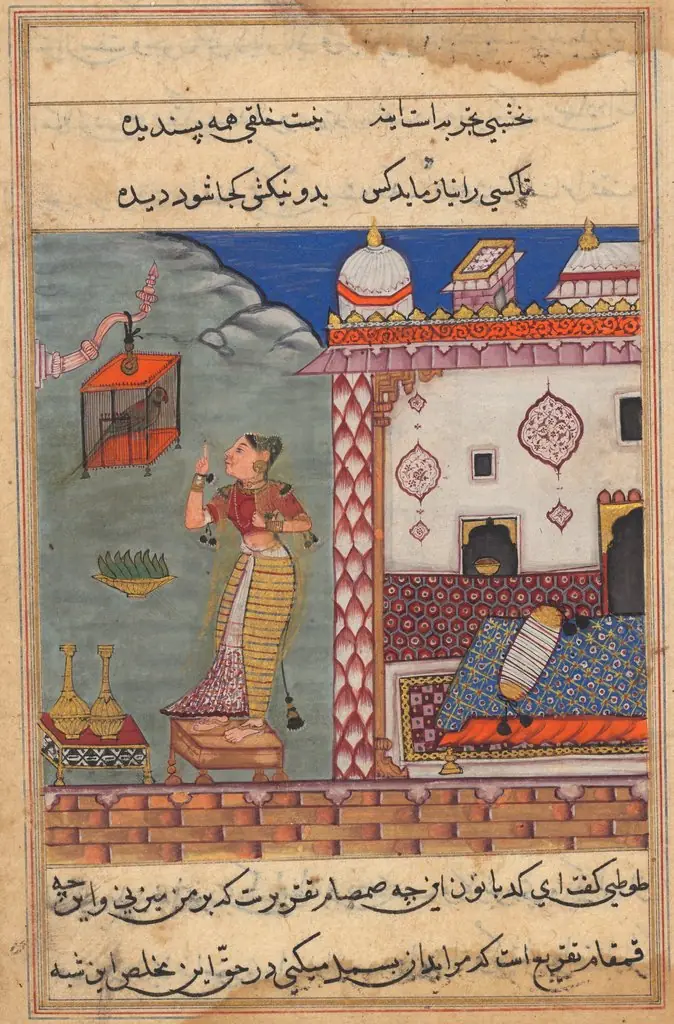 The Parrot Addresses Khujasta at the Beginning of the Twenty-seventh Night, form a Tuti-nama (Tales of a Parrot)
 The prince’s ordeal continues, he is ordered away to be executed for the fifth time, from a Tuti-nama (Tales of a Parrot): Eighth Night