Artwork
Maica Domnului îndurerată
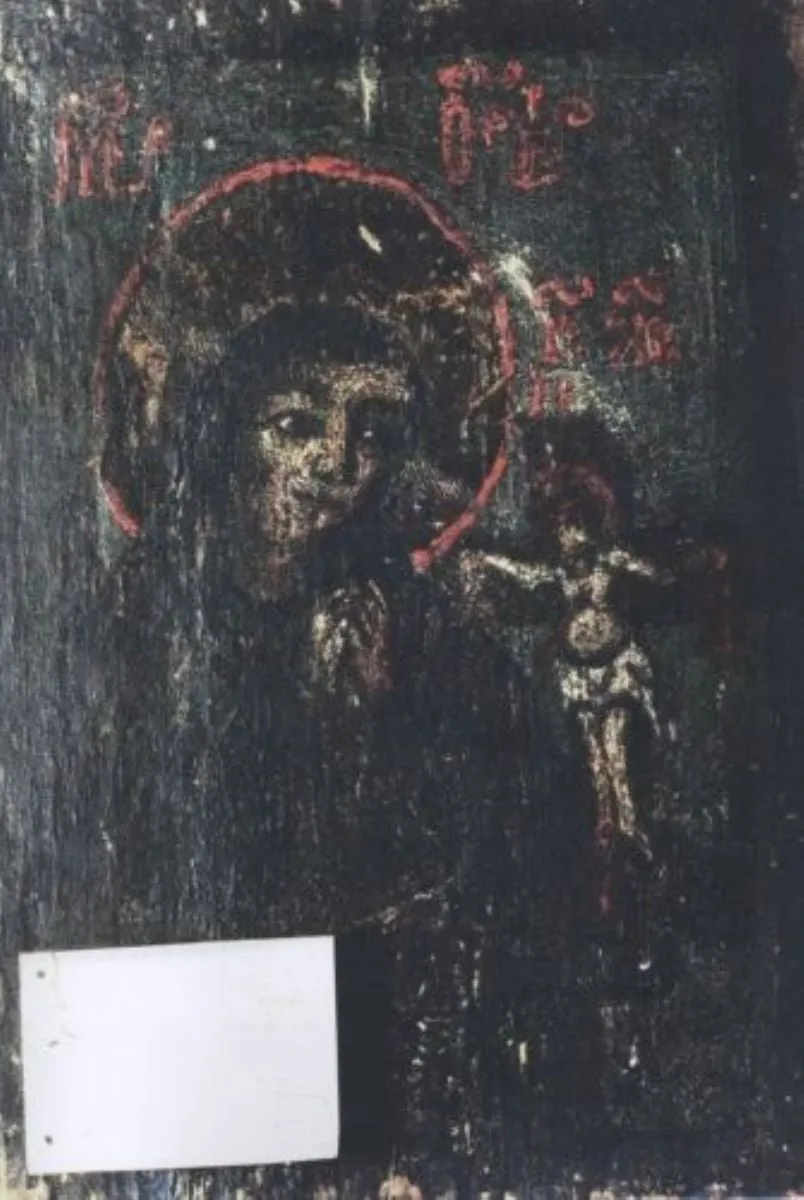
Maica Domnului îndurerată is a drawing by the Romanticist artist Unknown. It dates from 1790 and is held in the collection of the Romanian Peasant Museum. This small, worn sketch depicts a sorrowful female figure with a faint red halo, her eyes lowered and hands clasped in prayer.
About this work
Overview
This small, worn sketch depicts a sorrowful female figure with a faint red halo, her eyes lowered and hands clasped in prayer.
This small, worn sketch depicts a sorrowful female figure with a faint red halo, her eyes lowered and hands clasped in prayer. The dark background is marked by scattered red traces, suggesting emotional intensity or divine presence. The image’s fragile condition implies frequent handling, likely for private devotion. Its simplicity and emotional weight align with devotional imagery common in Eastern Christian traditions.
Subject & Meaning
The figure represents the Virgin Mary in mourning, a common theme in Orthodox iconography known as the Theotokos of the Passion. Her downcast gaze and clasped hands convey quiet grief, not theatrical lament. The red halo, faint yet present, signals sanctity amid suffering. The work invites contemplation of sorrow as a sacred state, emphasizing inner spiritual anguish over external drama.
Technique & Style
Executed in a restrained, almost monochromatic palette, the drawing uses minimal lines to define the face and hands. Red pigment, applied sparingly, outlines the halo and stains the background, creating a sense of lingering emotion. The surface shows signs of wear, suggesting repeated touch. The style is unadorned, prioritizing emotional resonance over decorative detail, typical of folk or monastic devotional sketches.
History & Provenance
The sketch’s condition indicates prolonged use in a domestic or ecclesiastical setting, possibly passed through generations. No documented origin is known, but its form and iconography suggest production within a Romanian or Balkan Orthodox context. Its survival implies it was valued not as art but as a vessel for prayer, preserved through daily ritual rather than institutional care.
Context
This image belongs to a tradition of intimate religious drawings used for personal meditation, especially during Lent or Holy Week. Unlike formal icons, such sketches were often made by laypeople or lesser-known artisans. Their rawness reflects a direct, unmediated connection to the divine, contrasting with the polished aesthetics of church altarpieces while sharing the same spiritual purpose.
Legacy
Though unsigned and undocumented, the sketch contributes to a broader corpus of vernacular religious art that sustained faith in rural and modest communities. Its endurance speaks to the persistence of devotional practices outside official channels. Today, it serves as a quiet testament to how spiritual emotion was rendered in everyday materials, far from the grand narratives of art history.
Artist & collection









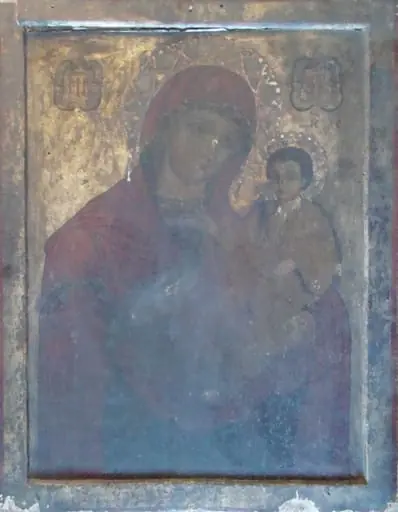
 Maica Domnului cu Pruncul
 Maica Domnului cu Pruncul, floarea neveștejită
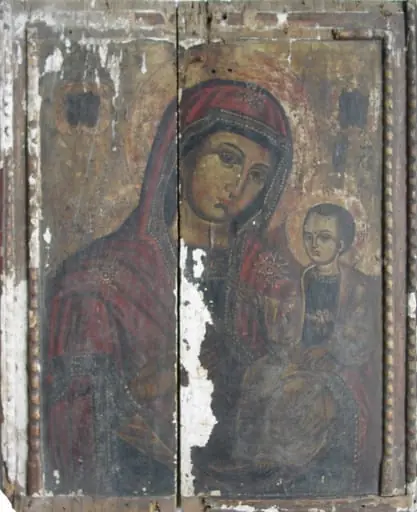
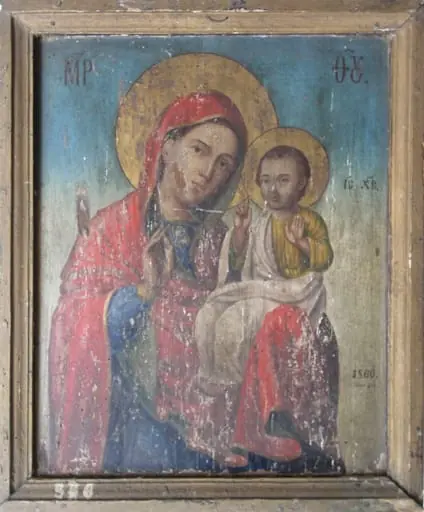
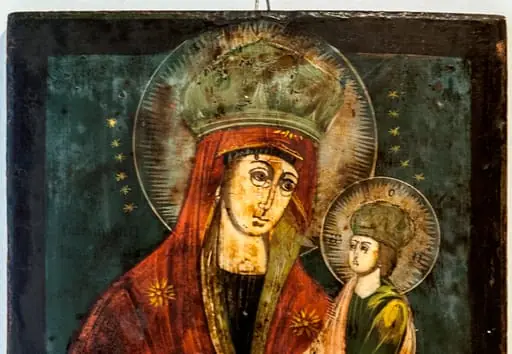 Maica Domnului cu Pruncul, tip derivat din Hodighitria(Călăuzitoarea), stil ce indică o școală rusească. Maria 3/4, ține Pruncul pe mâna stângă. Isus îi ține mâna dreaptă cu ambele mâini. Fecioara privește către Prunc cu cu o expresie de tristețe. Înveșmântată cu stolă albastră, cu blicuri de culoare mai deschisă, și decorațiune delicată la mâneci.Maforion roșu vișiniu, anticipând patimile.Pe margine decorație fină, la mânecă franjuri delicați. Pe frunte și pe umeri poartă stelele întreitei Feciorii, în formă de floare cu petale aciculare. Steaua de pe frunte este parțial acoperită de coroana împărătească de tip rusesc, închisă, mare. Aureola din raze alb galbene dispuse orizontal și încadrate de un cerc trasat cu un instrument. Isus poartă același tip de coroană, înconjurată de aureola cu raze, peste care au fost inscipționate însemnele nimbului cruciger. Chipul matur, sobru, trist, privind către Maica Sa. Fața rotundă, capul și mâinile de proporții mai mici în raport cu corpul.Înveșmântat cu un chiton verde cu blicuri galbene, peste care poartă, petrecut pe umărul drept un himation roșu orange cu blicuri alb aurii.Desculț. Nimburile sunt înconjurate de steluțe mici, aurii, dispuse pe fondul bleu închis la o mică distanță de linia de contur. Lângă umărul drept al Maicii apare o inscripție parțial șterasă, cu majuscule, în slavonă,.(SPOPUȘNIINÎ METȘA?). Chenar lat de culoare neagră, care este depășit de aura Fecioarei în partea de sus.
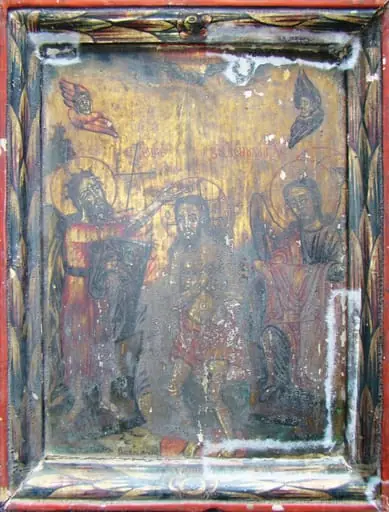 Botezul lui Iisus
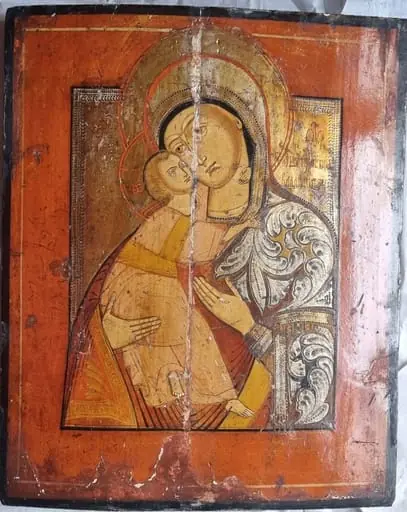 Maica Domnului cu Pruncul „Vladimirskaia” (Eleusa)
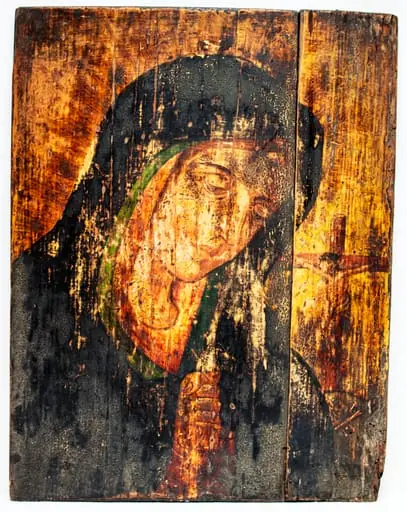 Icoana denumită și "Maica Domnului jalnică" sau îndurerată, o reprezintă pe Maica Domnului în prim plan, în veșmânt mohorât, cu mâinile împreunate, cu privirea interiorizată,concentrată asupra Fiul Ei răstignit pe cruce. Accentul cade pe durerea Mamei generată de răstignirea fiului ei, Iisus redat în planul îndepărtat, pe dealul Golgotei, unde la picioarele crucii este reprezantat craniul lui Adam, oasele strămoșilor ale căror păcate le spală sângele Mântuitorului. Maica este cernită, veșmântul lasă să i se vadă părul, ceea ce nu se întâmplă la alte tipuri de icoane. Mâinile împreunate. Sunt vădite influențele picturii apusene, trăsături renascentiste, buzele mari, cărnoase, nasul lung cu nări fine, pleoapele cu gene lungi, plecate sub sprâncenele arcuite. Tema este foarte frecventă în pictura pe sticlă din Transilvania, ceea ce confirmă filiera apuseană Modul de tratare al aureolei specific picturii occidentale. Fond ușor luminat, difuz.
 Maica Domnului cu Pruncul