Artwork
Matsya, Fish Avatara of Vishnu
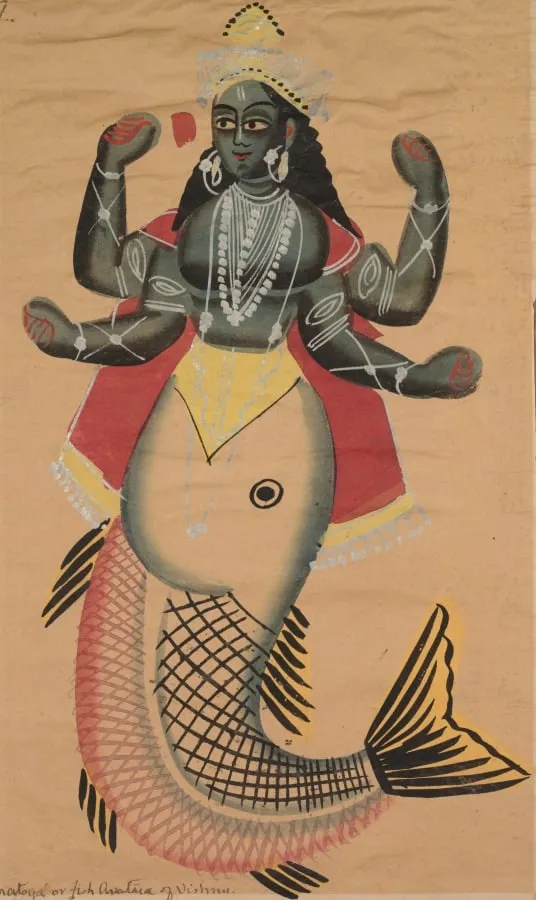
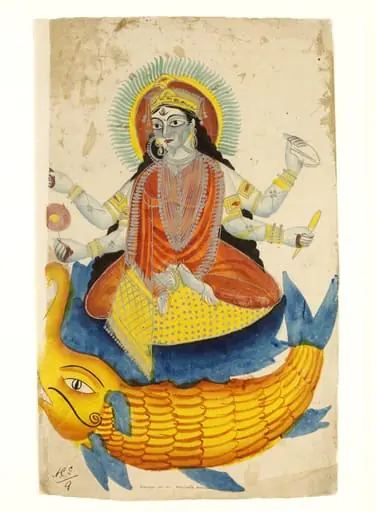
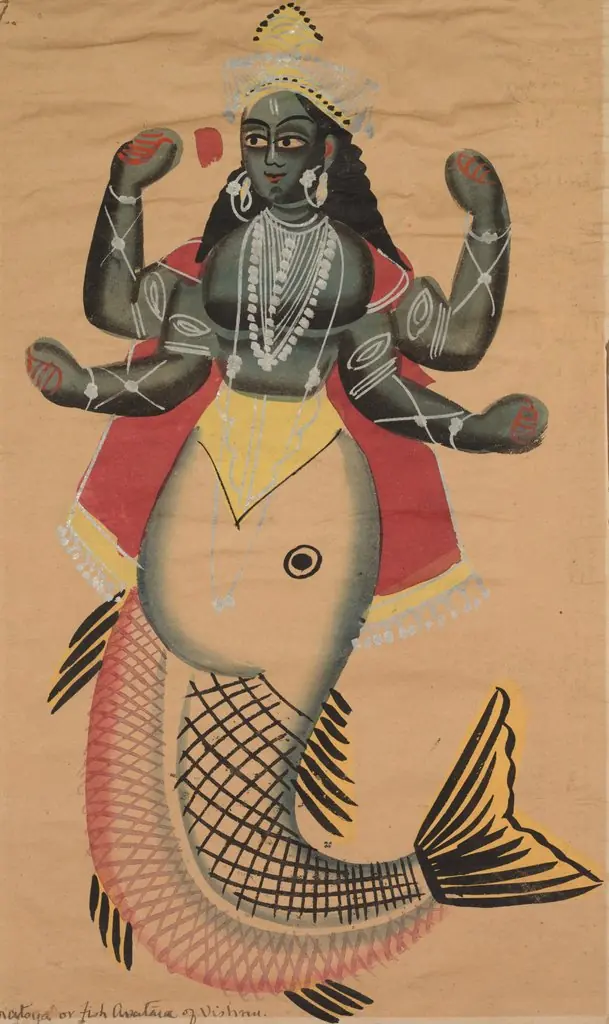
Matsya, Fish Avatara of Vishnu is an unspecified painting by the Bengal School artist Unknown. It dates from 1890 and is held in the collection of the Cleveland Museum of Art. The work portrays a dark‑skinned deity seated atop a stylized fish, rendered in a flat, decorative manner.
- Accession no.
- 2003.102
About this work
Overview
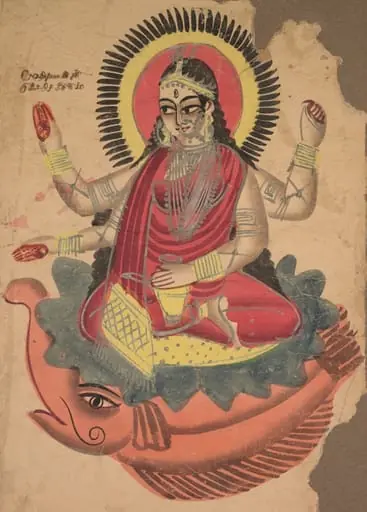
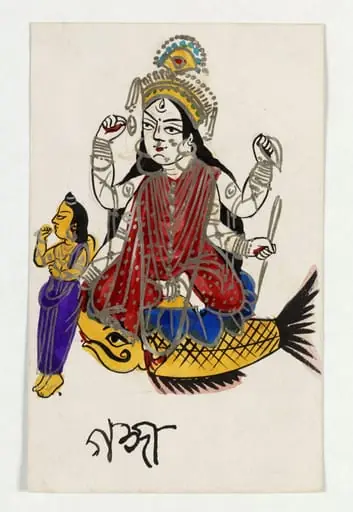
The work portrays a dark‑skinned deity seated atop a stylized fish, rendered in a flat, decorative manner. The figure is depicted with four arms, wearing a red lower garment, a yellow sash, and a distinctive headpiece topped by a fan. The composition is set against a light background, allowing the bold black outlines and vivid reds and yellows to dominate the visual field.
Subject & Meaning
The subject is the Hindu god Vishnu in his Matsya incarnation, the fish avatar that rescued the sacred Vedas from a deluge. The four arms hold symbolic items, a red sphere, a gesture placed on the chest, and two outward‑facing mudras, conveying protection, authority, and blessing. The serene smile and pronounced eyeliner emphasize the deity’s divine composure.
Technique & Style
Executed in the Kalighat school of Bengal painting, the piece employs strong, black contour lines and a limited palette of saturated reds, yellows, and blacks. The fish is rendered with repetitive scale patterns and a fanned tail, while the figure’s facial features are stylized with heavy eyeliner and simplified anatomy, reflecting the folk‑art aesthetic of early 19th‑century Kolkata.
Context
This depiction of Vishnu’s Matsya avatar illustrates how mythological narratives were made accessible to everyday patrons through vivid, approachable imagery.
Kalighat paintings emerged from the bustling riverbank shrines of Kolkata, serving both devotional and commercial purposes. Artists adapted traditional iconography for a rapidly growing urban audience, blending classical motifs with contemporary visual language. This depiction of Vishnu’s Matsya avatar illustrates how mythological narratives were made accessible to everyday patrons through vivid, approachable imagery.
Artist & collection