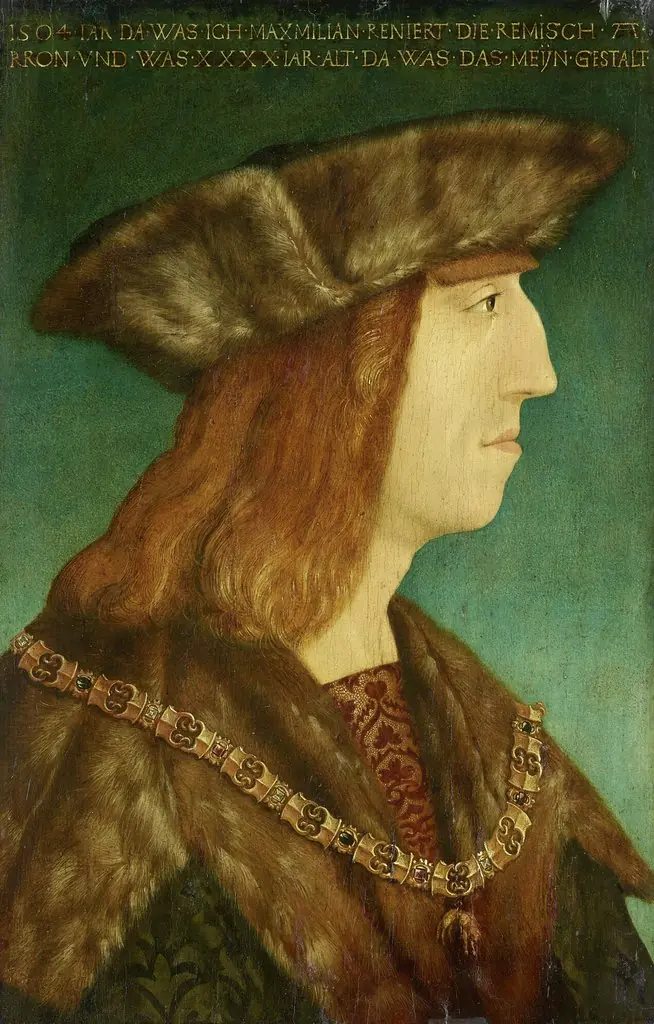
Artwork
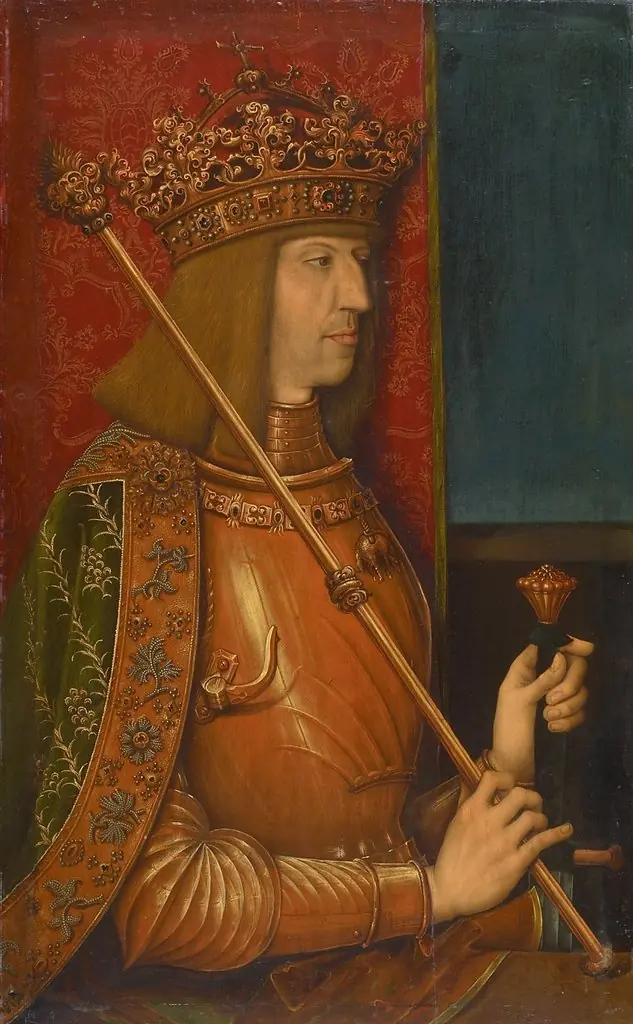
Maximilian I. (1459-1519), Bildnis in halber Figur mit der Martinswand
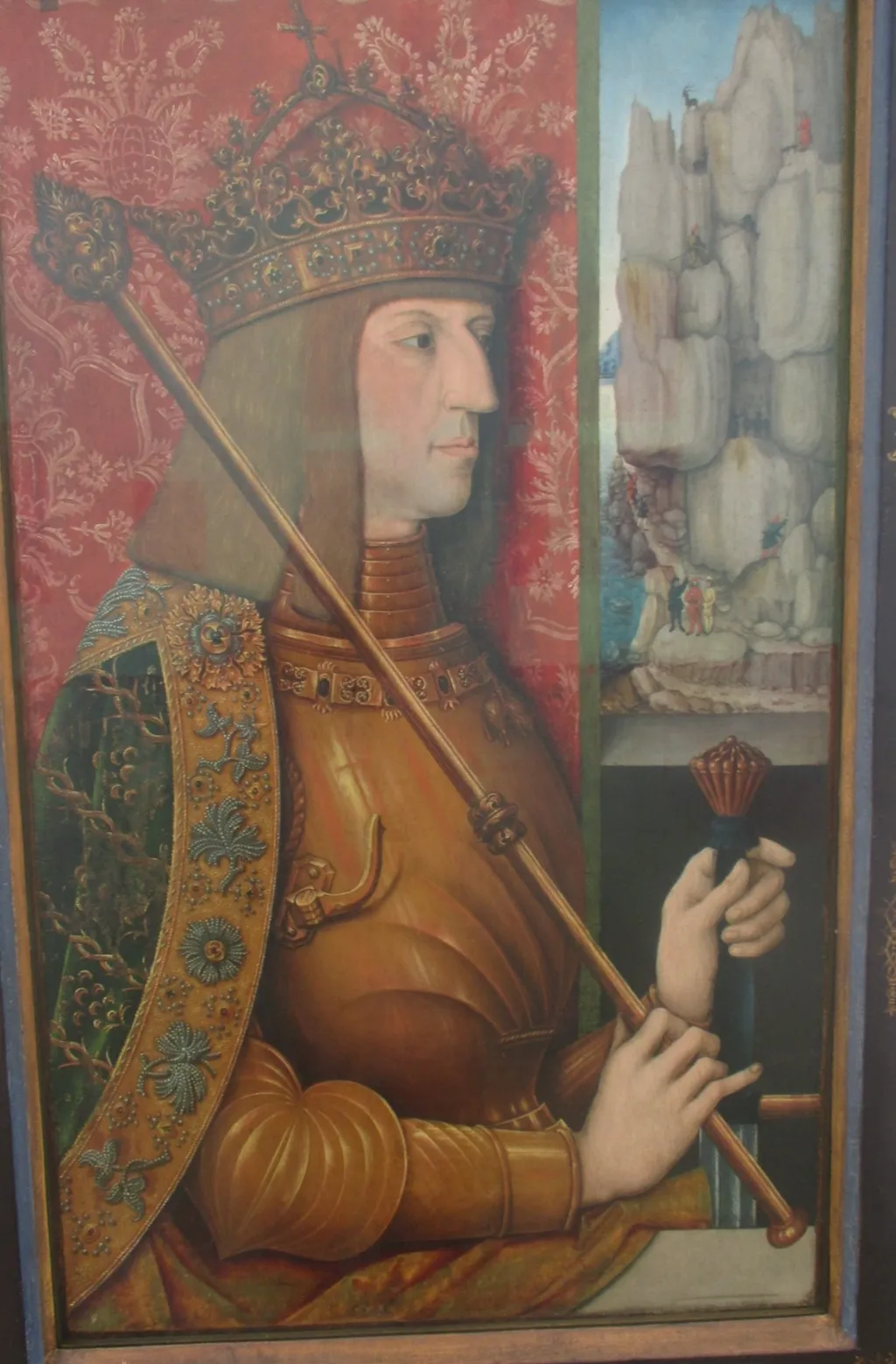
Maximilian I. (1459-1519), Bildnis in halber Figur mit der Martinswand is an oil painting by the Northern Renaissance artist Unknown. It dates from 1507 and is held in the collection of the Kunsthistorisches Museum.
About this work
Technique & Style
Stylistically, it is classified as a portrait created after the manner of Bernhard Strigel.
Executed in 1507, this portrait is an oil painting on a wooden panel support. The work measures 77 cm in height and 45.5 cm in width, presenting a half-figure depiction of Maximilian I. Stylistically, it is classified as a portrait created after the manner of Bernhard Strigel. The handling of the oil medium on the panel facilitates the detailed rendering required for this imperial likeness, consistent with the formal conventions of early 16th-century court portraiture.
History & Provenance
The panel painting was created in 1507, executed in oil paint on panel, and depicts Emperor Maximilian I in half-length against the Martinswand. It is identified as a work produced after Bernhard Strigel rather than directly by his hand.
The painting is held in the collection of the Kunsthistorisches Museum, where it remains located. No further details of an earlier ownership chain, commission, or intermediate provenance are documented in the available sources.
The portrait is held at the Kunsthistorisches Museum in Vienna, where it is catalogued with the accession number GG_1153.
It entered the museum’s collection as part of its holdings of early German and Austrian portraiture. The painting has been exhibited within the museum’s galleries dedicated to late medieval and Renaissance art, including displays focused on Maximilian I’s iconographic legacy.
Context
The portrait of Maximilian I. commissioned by Maximilian I. and painted by Bernhard Strigel around 1507 was regarded in its time as a masterful representation of imperial authority, with contemporaries praising its lifelike rendering and symbolic use of the Martenswand motif. Modern scholarship interprets the work as a key example of early Northern Renaissance portraiture that blends late Gothic traditions with emerging Renaissance naturalism, situating it within the broader context of Maximilian I.'s cultural patronage and the political symbolism of Habsburg imagery. The painting's stylistic analysis highlights the influence of Strigel's workshop and its role in shaping portrait conventions that would impact later European court portraiture, reinforcing its significance within the artist's oeuvre and the evolution of portraiture as a tool of statecraft.
Overview
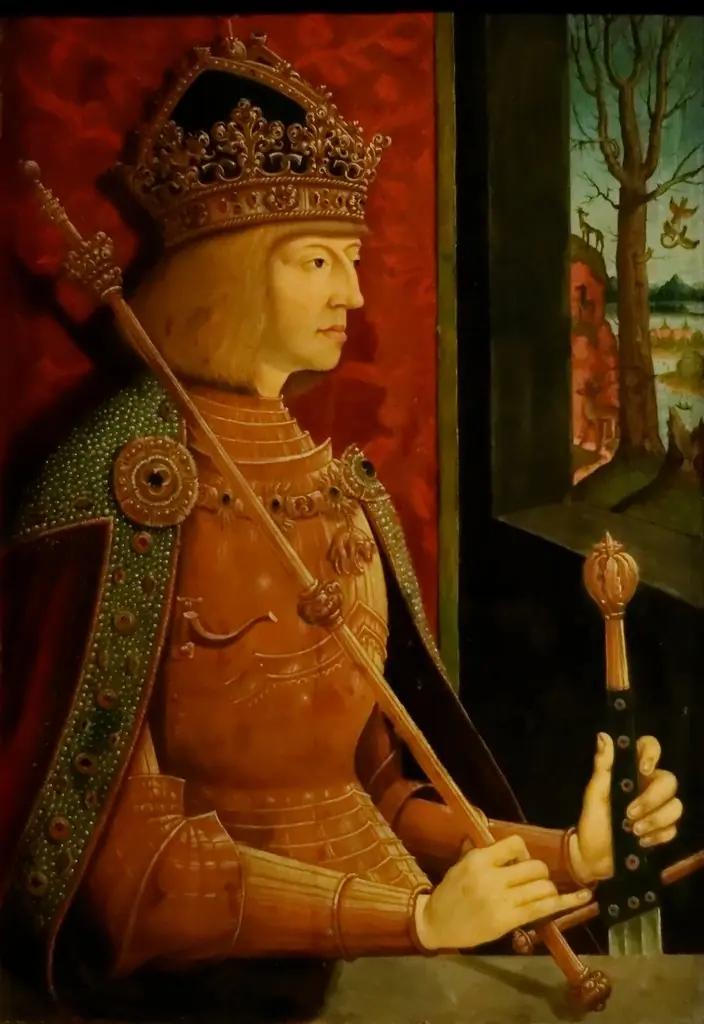
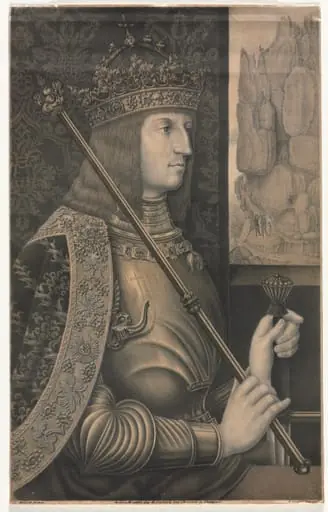
This portrait depicts Maximilian I, Holy Roman Emperor, in half-figure, set against a contrasting background featuring a rocky landscape with figures, known as the Martinswand. The subject is prominently dressed in regal attire.
Subject & Meaning
Maximilian I is portrayed wearing a jewel-encrusted crown, a intricately patterned red robe with gold trim, and golden armor, symbolizing his imperial power and status. He holds a staff, a symbol of authority, and rests his hand on a small, unidentified red object, potentially carrying additional symbolic meaning.
Legacy
As a portrait of a pivotal historical figure, this work contributes to the visual and historical record of Maximilian I's image and legacy, though its broader influence or significance in the art historical canon is not detailed in the provided information.
Artist & collection