Artwork
Moritz, Marie Elisabeth: Workers bending wooden planks for Spreewaldkähne
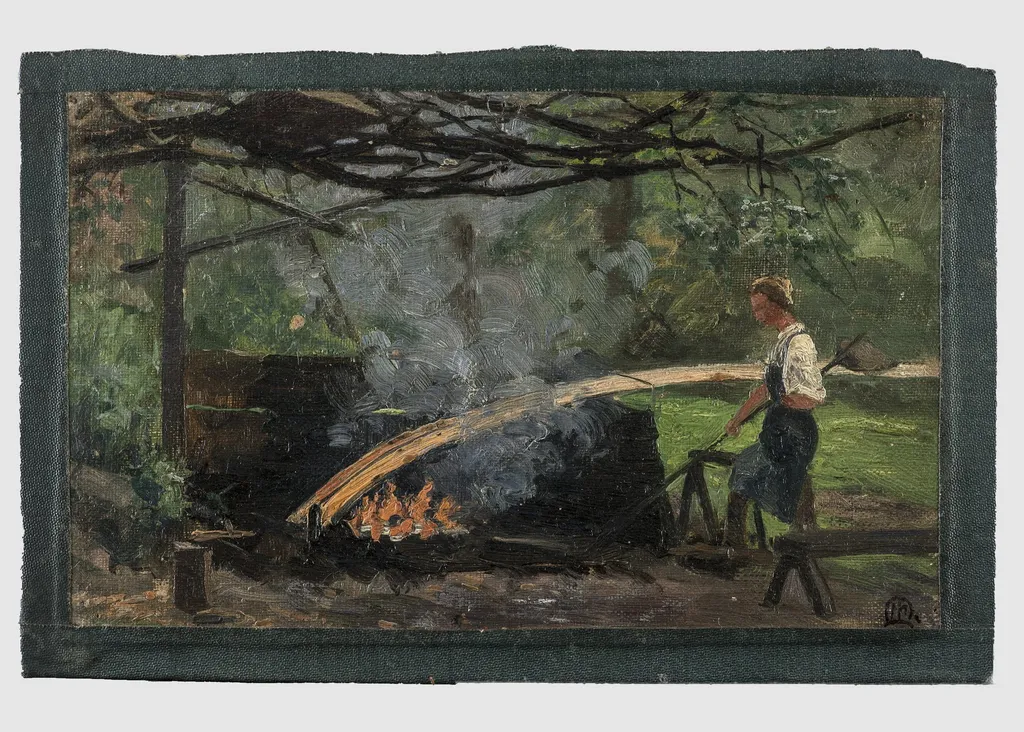
Moritz, Marie Elisabeth: Workers bending wooden planks for Spreewaldkähne is a drawing by Unknown. It dates from 1850 and is held in the collection of the City Museum Berlin.
About this work
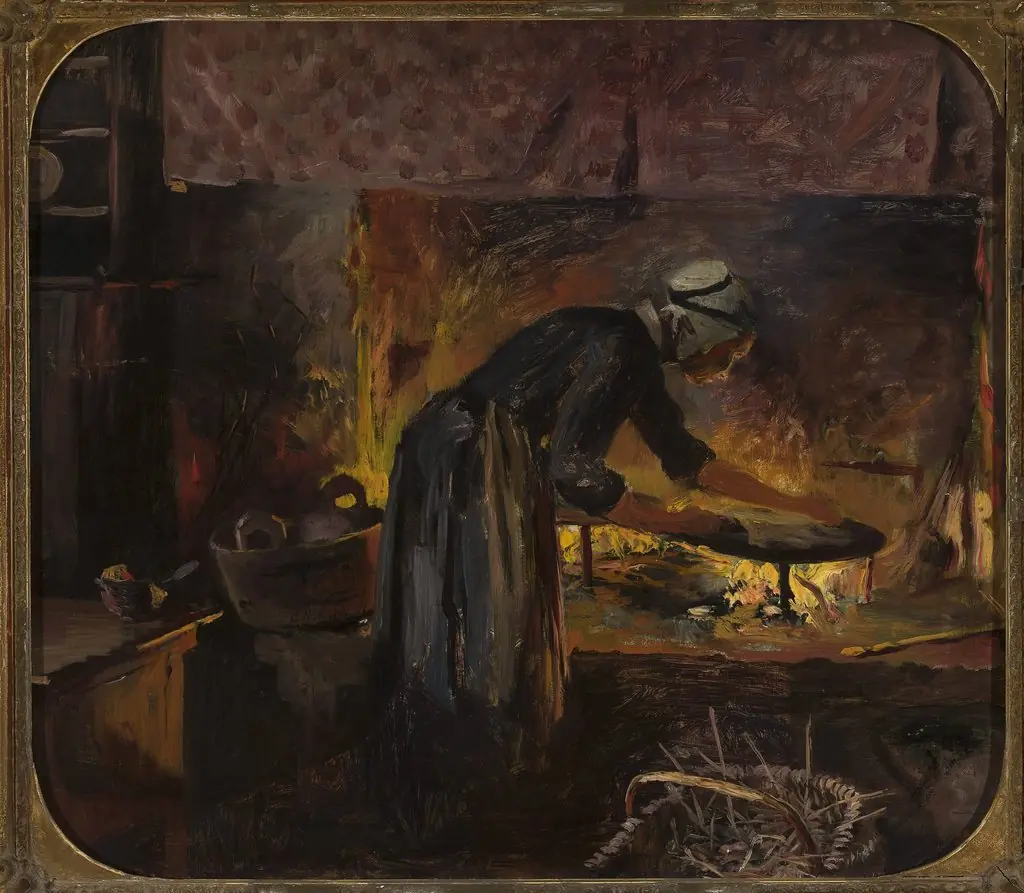
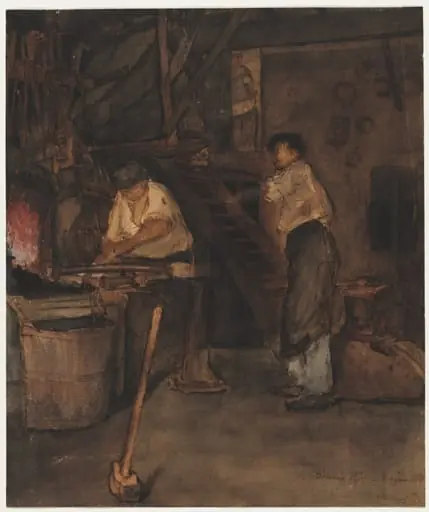
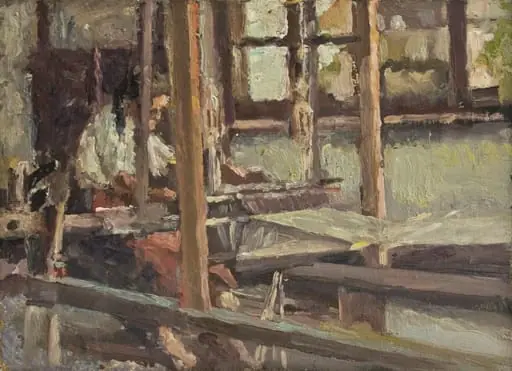
This drawing shows two people bending wooden planks over a simple curved form, probably a boat frame.
This drawing shows two people bending wooden planks over a simple curved form, probably a boat frame. Their hands work carefully, a rare look at how the famous Spreewaldkähne boats were built long ago. The artist paid more attention to light and color than to sharp details.
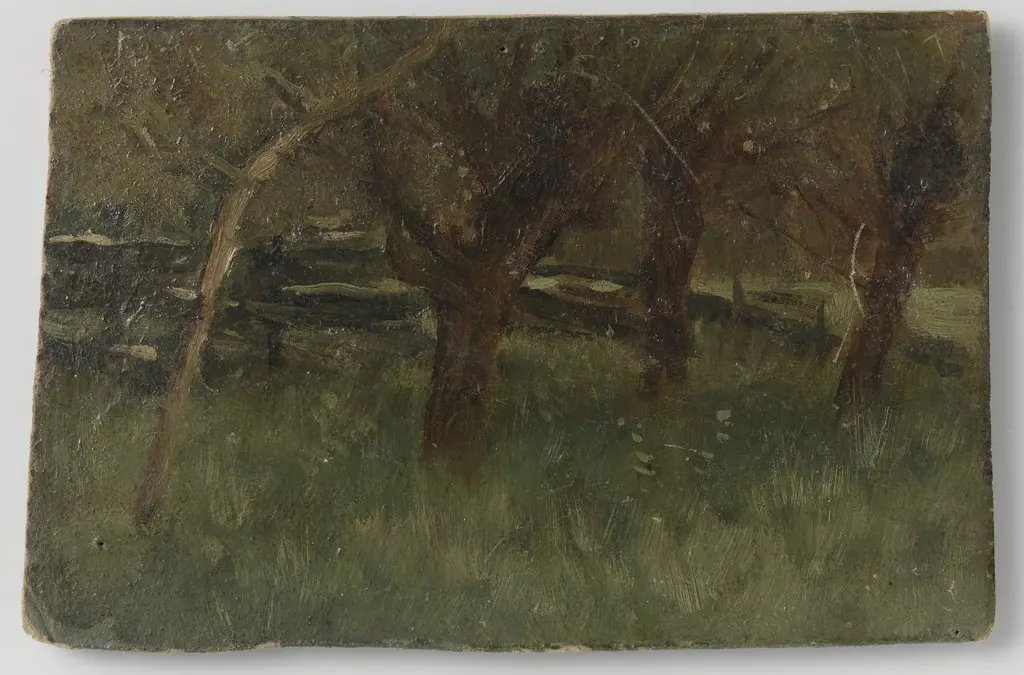
This scene was drawn before 1905, when the artist moved to Berlin. It’s one of the few natural studies she made outside, not in a studio. You can see the wood’s texture and the way shadows fall across the planks.
Try looking up the Museum of Ethnography in Berlin to see more of this artist’s work.
Overview
Workers bending wooden planks for Spreewaldkähne is an undated image by Marie Elisabeth Moritz, created before her 1905 relocation to Berlin. Characterized by expressive use of color and smoke, it captures a preparatory stage in the construction of traditional Spreewald boats.
Subject & Meaning
The artwork depicts two workers carefully bending wooden planks over a curved boat frame, highlighting a rarely illustrated handicraft process crucial to Spreewaldkähne boat-making. The focus on this specific labor underscores the importance of such traditional craftsmanship.
Technique & Style
Moritz prioritized capturing light, color, and texture over detailed rendering, reflecting elements of Art Nouveau. The visible wood grain and shadow play demonstrate her emphasis on natural observation, executed directly from life rather than in a studio setting.
History & Provenance
Acquired by the Märkisches Museum in 1952 from a private owner in Egeln, the work is noted on the reverse as a nature study by 'M. Moritz-Lübben' with the subject description added later. It is cataloged in the Berlin Museum's critical painting catalog (1994).
Context
As one of Moritz's few outdoor natural studies, this piece precedes her Berlin period and lacks the 'Lübben' surname addition seen in later works. Its creation methodology contrasts with her more common studio practices.
Legacy
Given the scarcity of Moritz's drawings and documents, this study holds particular significance. For further context on the artist, the Museum of Ethnography in Berlin is suggested as a resource, though the primary cataloging is through the Märkisches Museum.