Artwork
Mount Sinai - Arabia
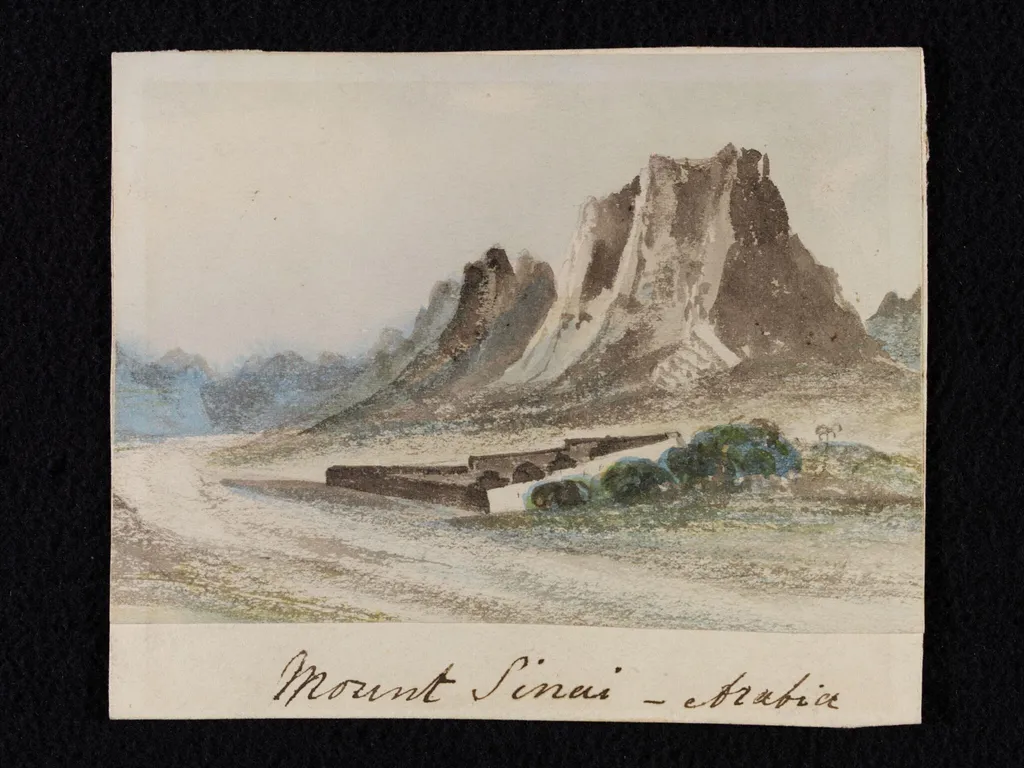
Mount Sinai - Arabia is a watercolor work on paper by the Romanticist artist Unknown. It dates from 1810 and is held in the collection of the Victoria and Albert Museum. This watercolour depicts a rugged mountain landscape identified as Mount Sinai in Arabia.
About this work
Overview
This watercolour depicts a rugged mountain landscape identified as Mount Sinai in Arabia. Rendered in muted earth tones and pale sky, the scene conveys a sense of arid solitude. Loose, rapid brushwork suggests immediacy, as if observed during travel.
A fragment of stone wall and grazing animals in the foreground anchor the composition, reinforcing a quiet, unidealized naturalism.
Subject & Meaning
The subject references the biblical Mount Sinai, traditionally associated with Moses receiving the Ten Commandments. Yet the painting avoids religious symbolism, focusing instead on the physical terrain, rocky, barren, and worn. The ruined wall hints at human presence long past, suggesting time’s erosion over sacred sites without overt narrative.
Technique & Style
Executed in watercolour with swift, unrefined strokes, the work resembles a field sketch rather than a polished studio piece. The palette relies on subdued browns, grays, and washed-out blues, enhancing the arid atmosphere. Minimal detail in the animals and architecture emphasizes spontaneity, reflecting a direct, observational approach.
History & Provenance
The painting is held in the collection of the Victoria and Albert Museum, acquired as part of a broader 19th-century interest in topographical and travel-related art. Its origins trace to a period when British artists documented Middle Eastern landscapes, often as part of scholarly or imperial expeditions, though the artist’s identity remains unconfirmed.
Context
Created during a time when European artists increasingly traveled to the Levant and Arabian Peninsula, this work reflects a growing fascination with biblical geography as a tangible landscape. Unlike grand historical paintings, it presents a modest, unembellished view, aligning with emerging trends in topographical accuracy over romanticized interpretation.
Legacy
The painting contributes to a quiet but significant body of 19th-century watercolours that recorded distant lands with restraint. Its value lies not in spectacle but in its candid record of place, offering insight into how travelers perceived sacred sites not as symbols, but as physical environments shaped by time and climate.
Artist & collection









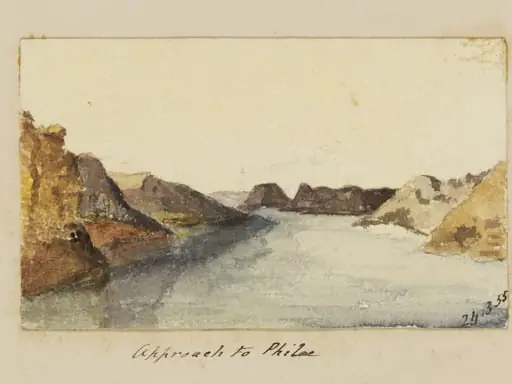 `Approach to Philae'
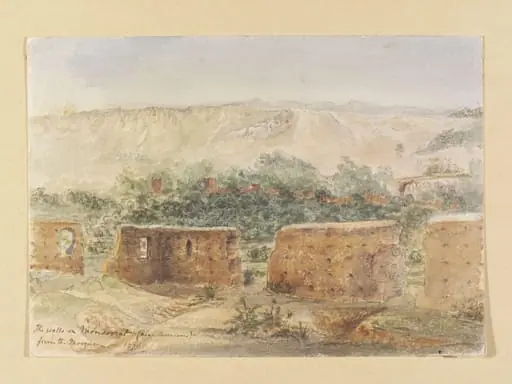 The walls on Monsoorat (near Tlemcen) from the Mosque
 Philadelphia -
 Villa Sevillana on the Road from Bona to Constantine
 Sutherland Album
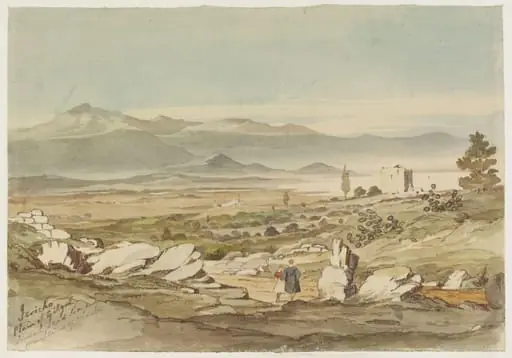 Jericho Plain of Gilgal, Jordan, Dead Sea, and Mountains of Moab
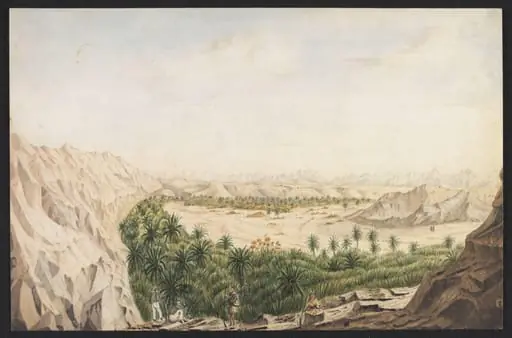 View of the valley of Eynounah. Coast of Arabia in the Red Sea
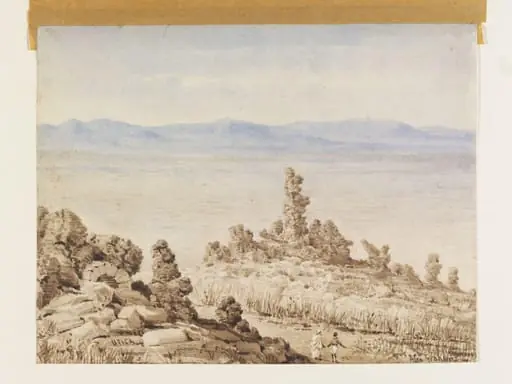 Utica
Utica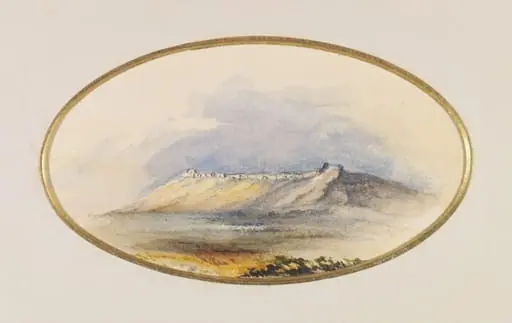 Nineveh -
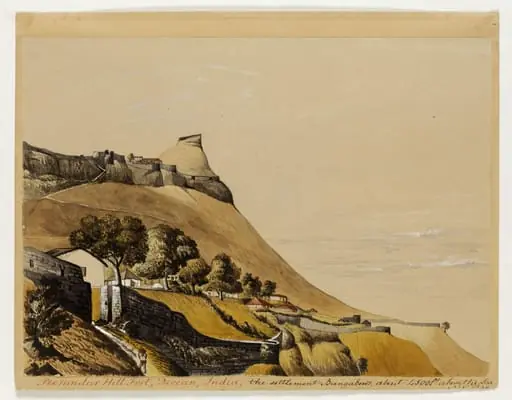 Poorundur Hill Fort