Artwork
Our Lady of Mount Carmel
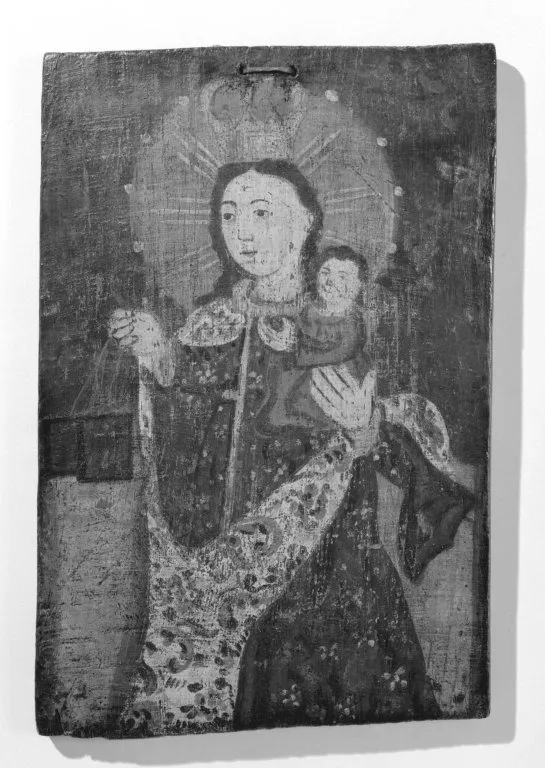
Our Lady of Mount Carmel is an unspecified painting by the Romanesque artist Unknown. It dates from 1799 and is held in the collection of the Brooklyn Museum.
About this work
Overview
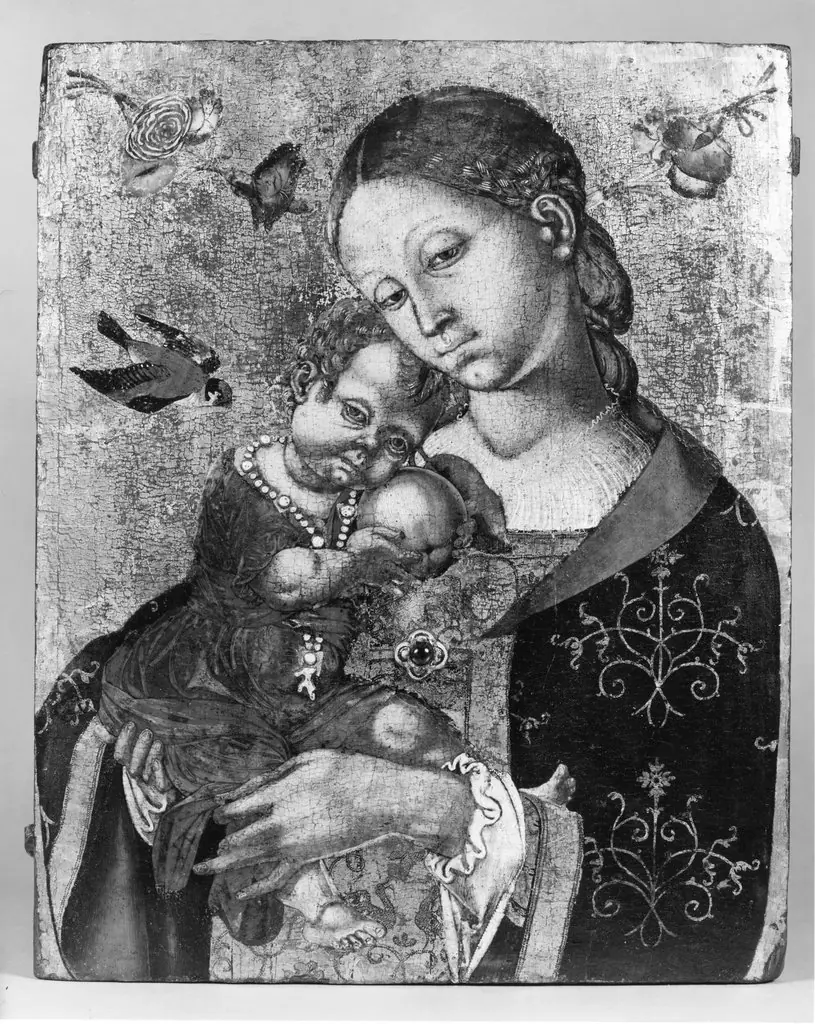
This oil painting depicts the Virgin Mary as Our Lady of Mount Carmel, a devotional title tied to the Carmelite Order. She is shown seated, holding the infant Jesus, both figures rendered with pale complexions and dark hair. The background is deeply shadowed, punctuated by faint luminous areas that suggest divine presence without literal representation.
Subject & Meaning
The image reflects the Carmelite tradition of Mary as protector and intercessor, often associated with the Brown Scapular. Her serene expression and the child’s gentle posture convey spiritual tenderness rather than theatrical drama. The floral-patterned shawl may allude to her role as Queen of Heaven, while the halo affirms her sanctity within Christian iconography.
Technique & Style
The artist employs chiaroscuro to model the figures against a dark ground, emphasizing volume through subtle gradations of light. Facial features are softly rendered, avoiding sharp detail, which enhances the devotional intimacy. The floral motif on the shawl is delicately painted, contrasting with the broader, looser handling of the background.
History & Provenance
The painting likely originated in a Spanish or Italian devotional context during the late Renaissance or early Baroque period, when Marian imagery was widely produced for private chapels and convents. Its survival suggests it was preserved within a religious community, though its specific origin and early ownership remain undocumented.
Context
Our Lady of Mount Carmel was especially venerated in Catholic regions following the 13th-century apparition to Saint Simon Stock. Paintings like this served as aids to personal prayer and were often displayed in homes or monastic cells. The restrained composition reflects a shift from grand altarpieces to more intimate, contemplative imagery favored in Counter-Reformation piety.
Legacy
This work contributes to a broader visual tradition of Marian devotion that persisted across Europe for centuries. While not attributed to a major master, its quiet dignity reflects the enduring appeal of simple, reverent representations of the Virgin and Child, valued for their spiritual clarity rather than artistic novelty.
Artist & collection









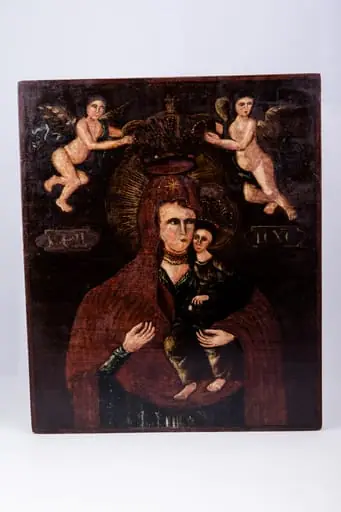 Maica Domnului ține în brațe Pruncul Iisus Hristos, care arată cu mâna dreaptă înspre Maica Domnului, prezentându-ne-o. Maica Domnului este înveșmântată în mantie cu maforion roșu-stacojiu, cu interiorul negru. Maica Domnului are aureola în raze luminoase de soare. Pruncul Iisus Hristos este înveșmântat cu sacos și omofor brun spre negru, cu coroană și aureolă pe cap. Fondul icoanei este negru întunecat, în contrast fiind cu lumina chipurilor și cromatica veșmintelor. În registrul superior sunt doi îngeri îndreptați spre coroana stilizată a Maicii Domnului, făcând gestul Încoronării. Îngerii sunt pictați asemenea unor putti, din pictura barocă. Cromatică este armonioasă: roșu stacojiu, brun, acajou, brun-ocru, brun, bej, alb, verde-olive, negru. Inscripția din româno-chirilică se traduce MP IC XC Maica Domnului Iisus Hristos. Icoana este pictată în manieră barocă și are atmosfera catolică.
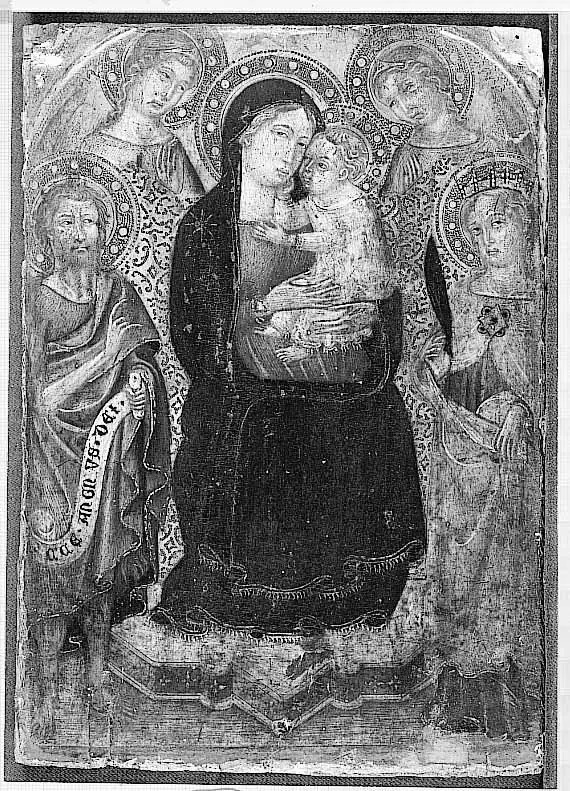 The Virgin and Child with two Saints and two Angels
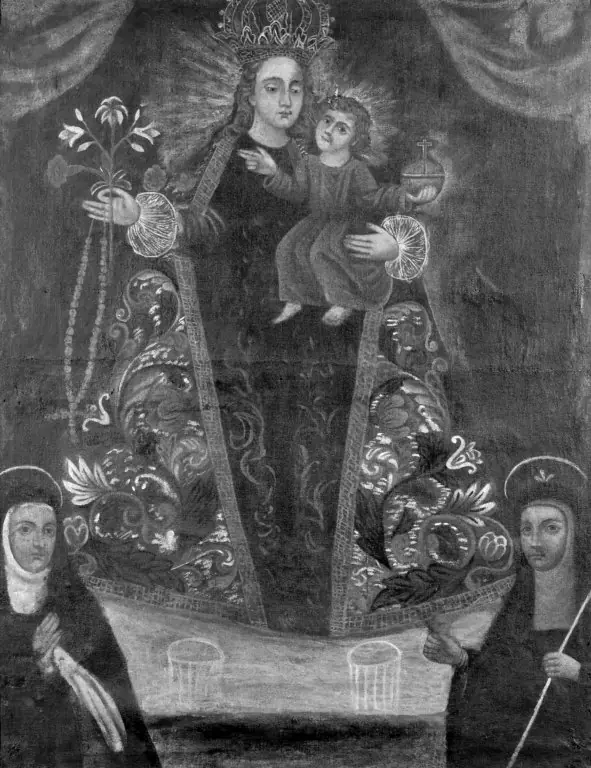 Virgin of the Rosary with Worshipers
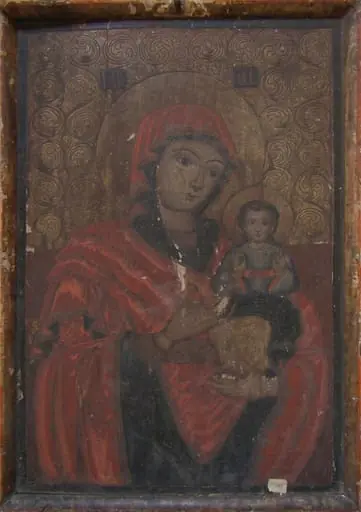 Maica Domnului cu Pruncul
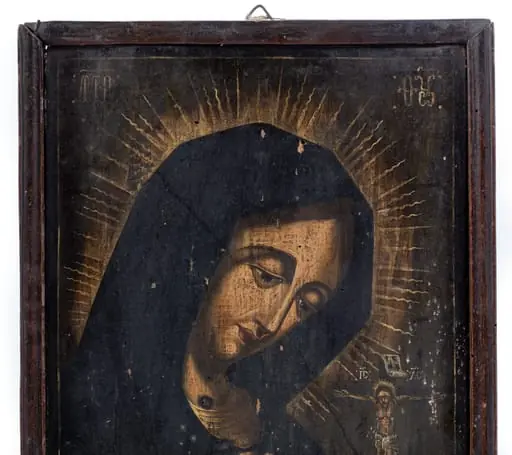 Maica Domnului Îndurerată
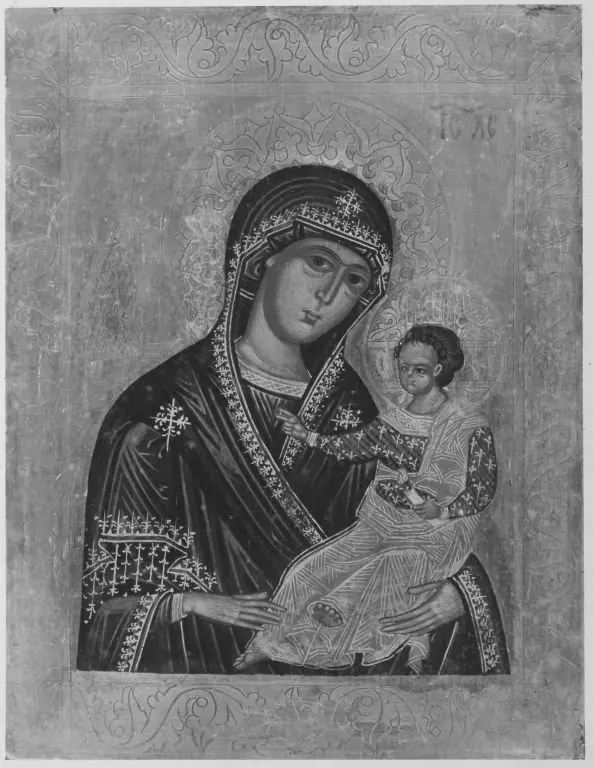 Mary with Christ-child (epitaphe of Oswald von Straubing)
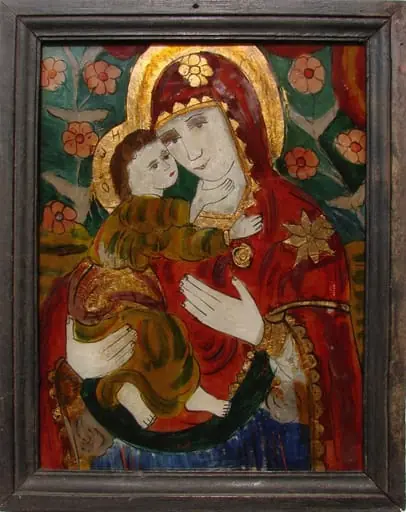 Maica Domnului cu Pruncul
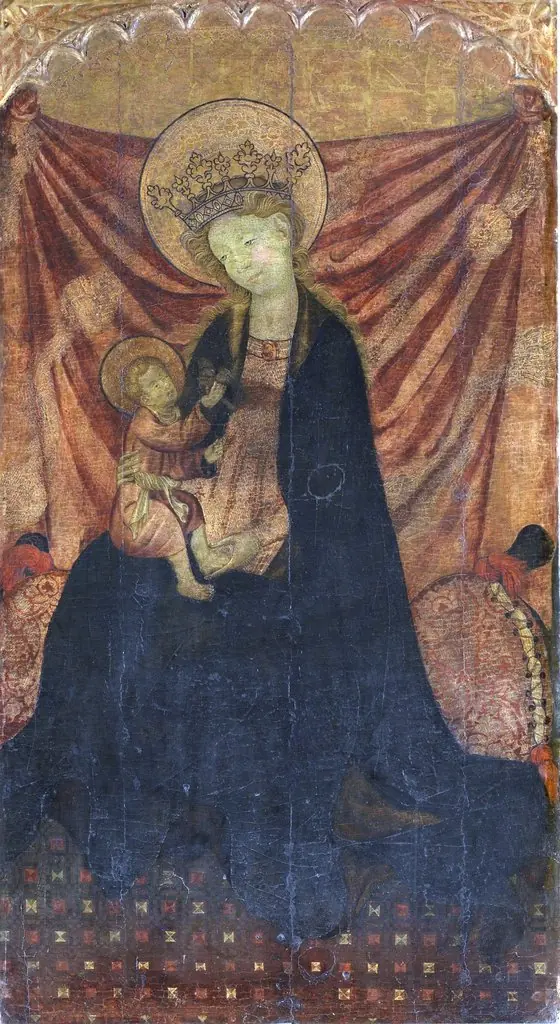 The Virgin and Child
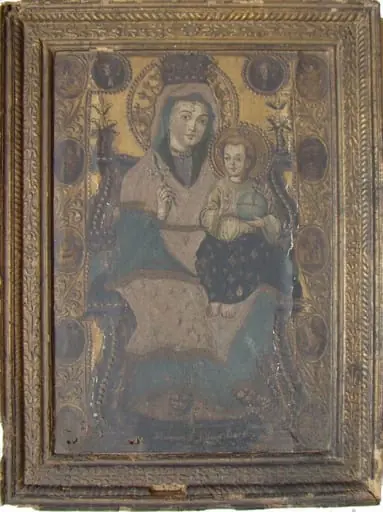 Maica Domnului cu Pruncul, floarea neveștejită
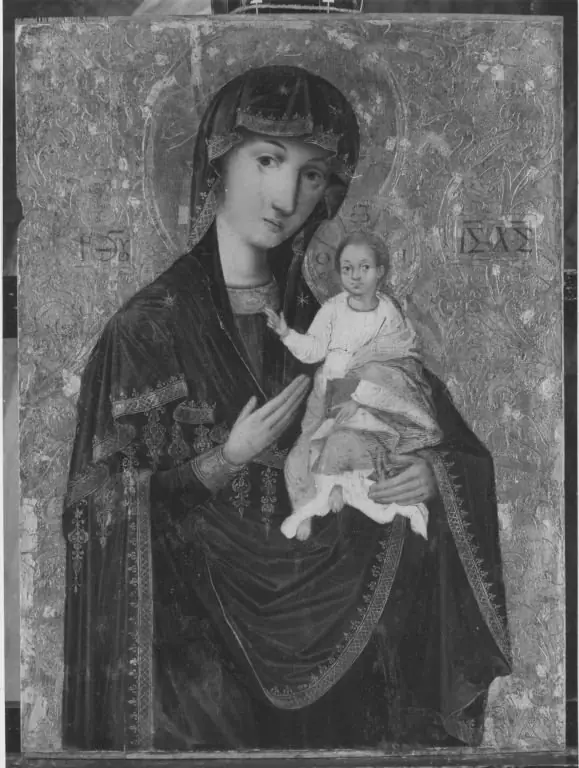 Ikone: Maria mit Kind
 Madonna and Child
- Nuestra Señora de los Desamparados (Our Lady of the Forsaken)