Artwork
Nuestra Señora de los Desamparados (Our Lady of the Forsaken)
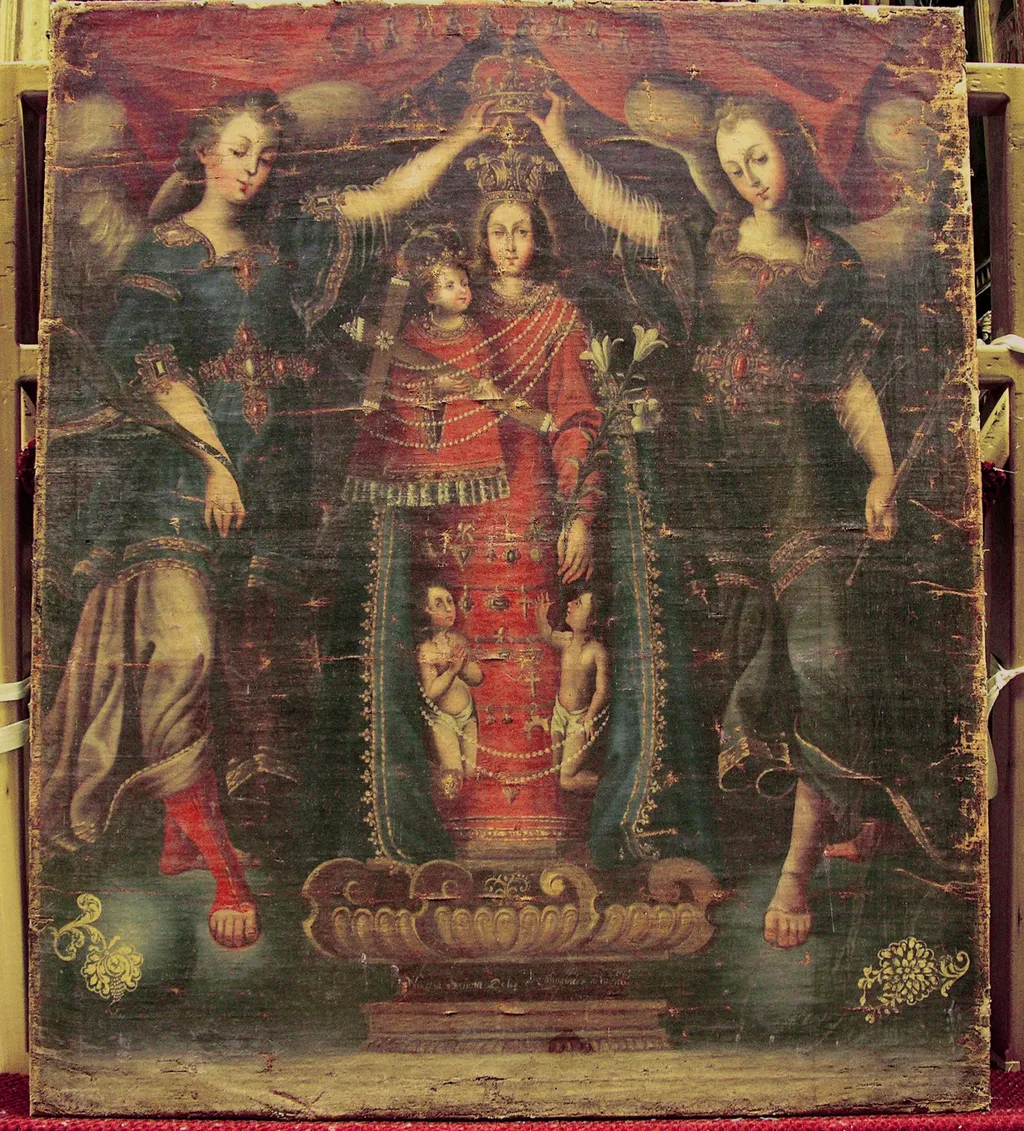
Nuestra Señora de los Desamparados (Our Lady of the Forsaken) is an unspecified painting. It dates from 1749 and is held in the collection of the Metropolitan Museum of Art.
About this work
Subject & Meaning
The inclusion of an angel suggests a scene of divine protection or celestial witness, reinforcing the sacred nature of the figures.
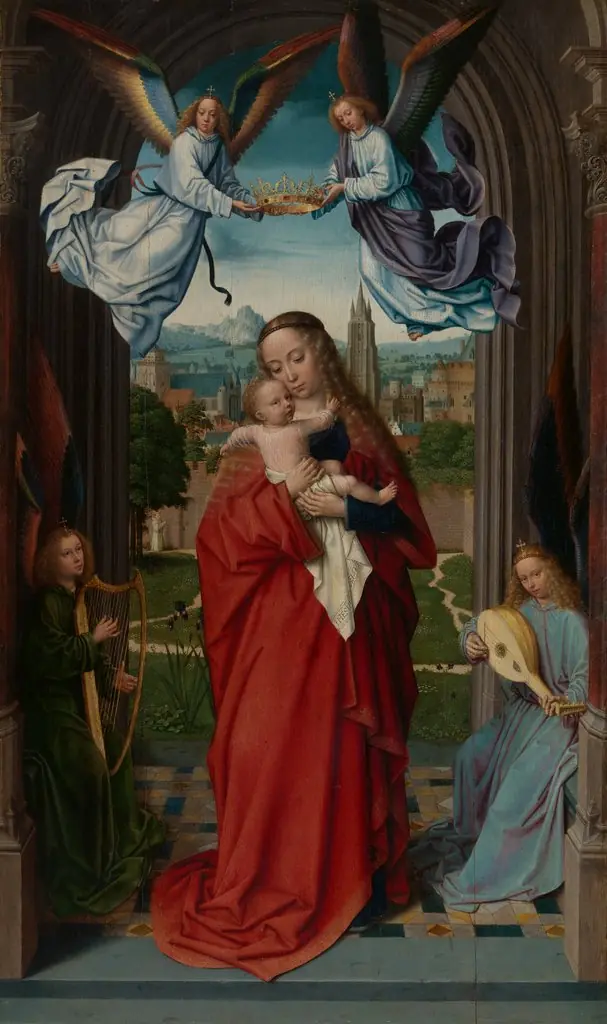
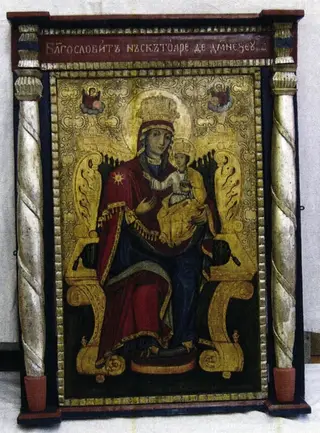
The artwork depicts the religious subject of the Madonna and Child, accompanied by an angel. Created in 1749, this Spanish painting falls within the genre of religious art. While the specific title references the "Our Lady of the Forsaken," the visual representation centers on the Virgin Mary holding the infant Jesus, a standard iconographic pairing in Christian tradition.
The inclusion of an angel suggests a scene of divine protection or celestial witness, reinforcing the sacred nature of the figures. As a work attributed to an unknown Spanish painter, the piece serves as a devotional image, embodying themes of maternal care and heavenly intervention typical of its period and classification.
History & Provenance
The painting Nuestra Señora de los Desamparados is dated to 1749 and is attributed to an unknown Spanish artist. The work is currently held in the collection of the Metropolitan Museum of Art, where it is cataloged as a religious painting depicting the Madonna and Child with an angel. No earlier ownership, commission details, or provenance history are provided in the available references.
Overview
The painting titled Nuestra Señora de los Desamparados, or Our Lady of the Forsaken, presents a central female figure, identified as the Virgin Mary, cradling the Christ Child. She is attended by surrounding figures, suggesting a scene of devotion or protection. The artwork employs a rich, yet subdued, palette dominated by deep reds and dark tones, with subtle gold accents that contribute to its reverent and solemn atmosphere.
Technique & Style
The artist employed a predominantly dark color scheme, which establishes a contemplative and serious mood. A deep red background unifies the composition, while the central figure's red gown provides a focal point. Gold accents, strategically placed on elements such as the crown and scepter, introduce luminosity and highlight the sacred importance of the figures within the painting's overall subdued lighting.
Artist & collection

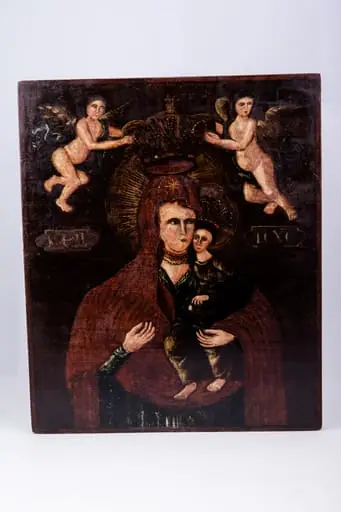 Maica Domnului ține în brațe Pruncul Iisus Hristos, care arată cu mâna dreaptă înspre Maica Domnului, prezentându-ne-o. Maica Domnului este înveșmântată în mantie cu maforion roșu-stacojiu, cu interiorul negru. Maica Domnului are aureola în raze luminoase de soare. Pruncul Iisus Hristos este înveșmântat cu sacos și omofor brun spre negru, cu coroană și aureolă pe cap. Fondul icoanei este negru întunecat, în contrast fiind cu lumina chipurilor și cromatica veșmintelor. În registrul superior sunt doi îngeri îndreptați spre coroana stilizată a Maicii Domnului, făcând gestul Încoronării. Îngerii sunt pictați asemenea unor putti, din pictura barocă. Cromatică este armonioasă: roșu stacojiu, brun, acajou, brun-ocru, brun, bej, alb, verde-olive, negru. Inscripția din româno-chirilică se traduce MP IC XC Maica Domnului Iisus Hristos. Icoana este pictată în manieră barocă și are atmosfera catolică.
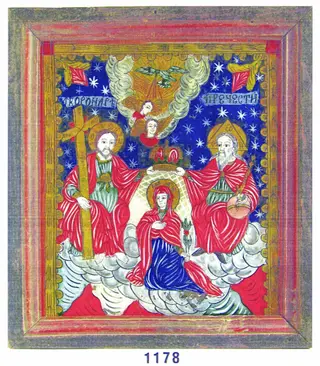 Încoronarea Maicii Domnului
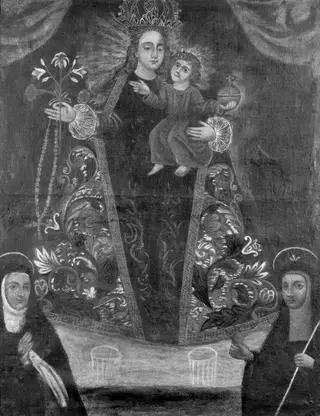 Virgin of the Rosary with Worshipers
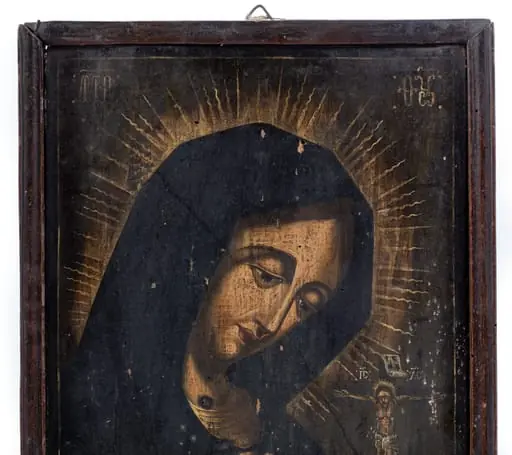 Maica Domnului Îndurerată
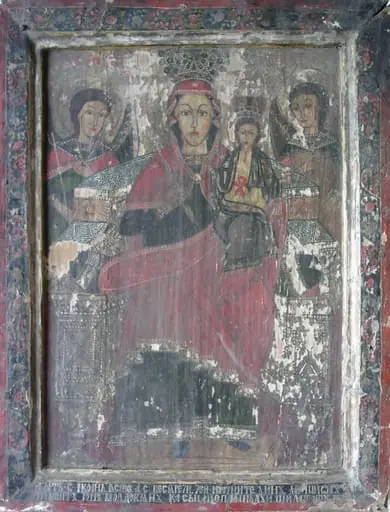 Maica Domnului cu Pruncul
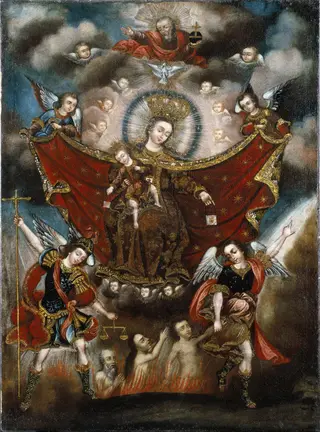 Virgin of Carmel Saving Souls in Purgatory
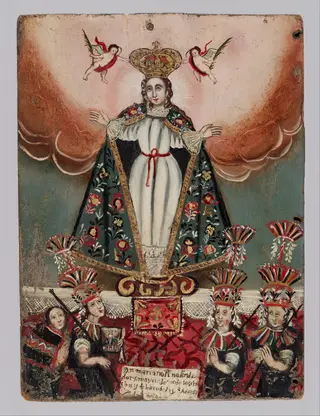 The Virgin Mary with Indigenous (Aymara) Donors
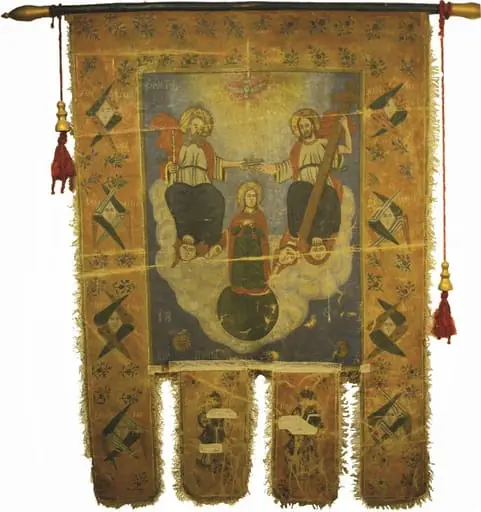 Încoronarea Fecioarei/Apostolii Petru și Pavel
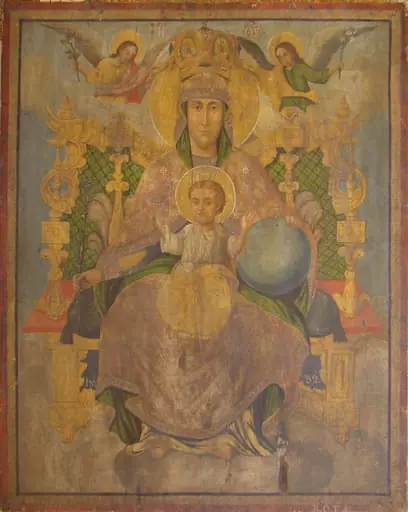 Maica Domnului cu Pruncul
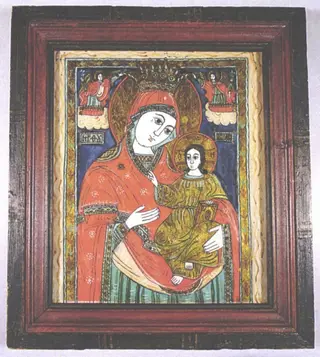 Maica Domnului cu Pruncul Hodighitria
 Maica Domnului cu Pruncul
- Our Lady of Mount Carmel