Artwork
Page from Tales of a Parrot (Tuti-nama): text page
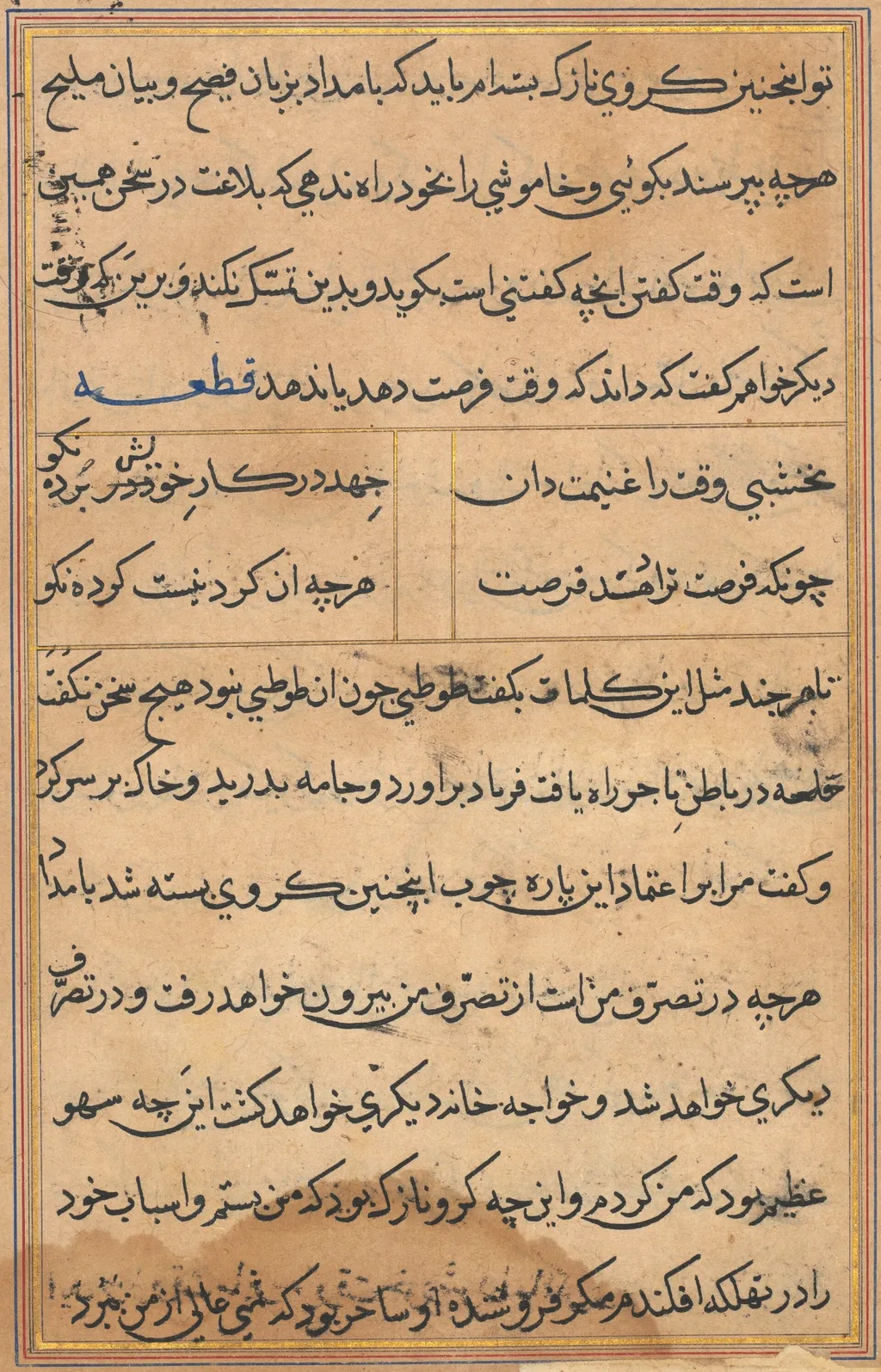
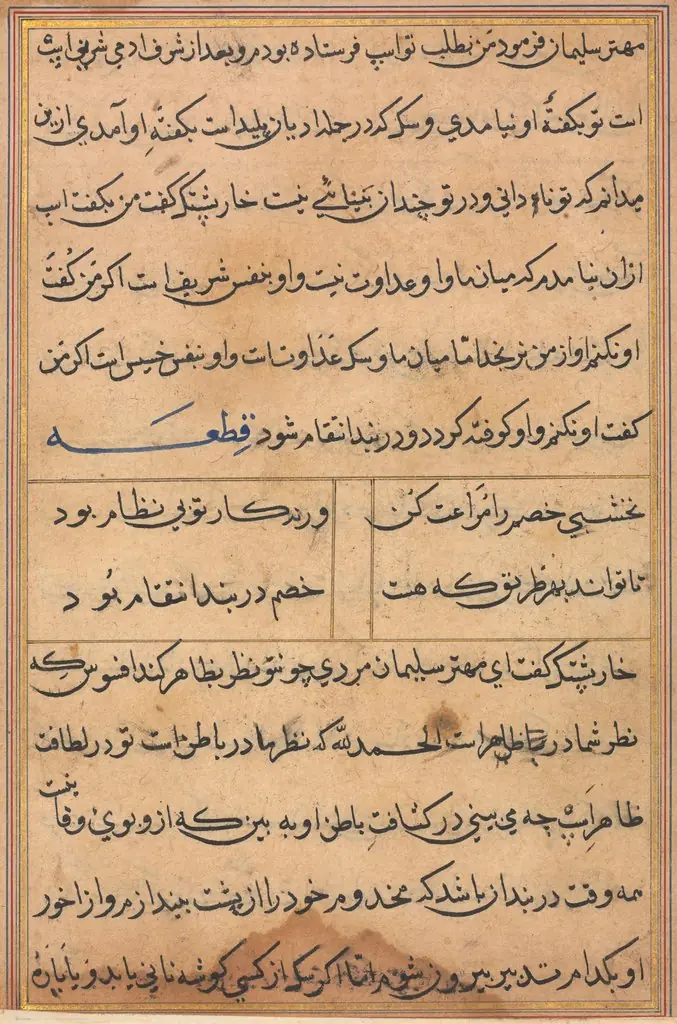
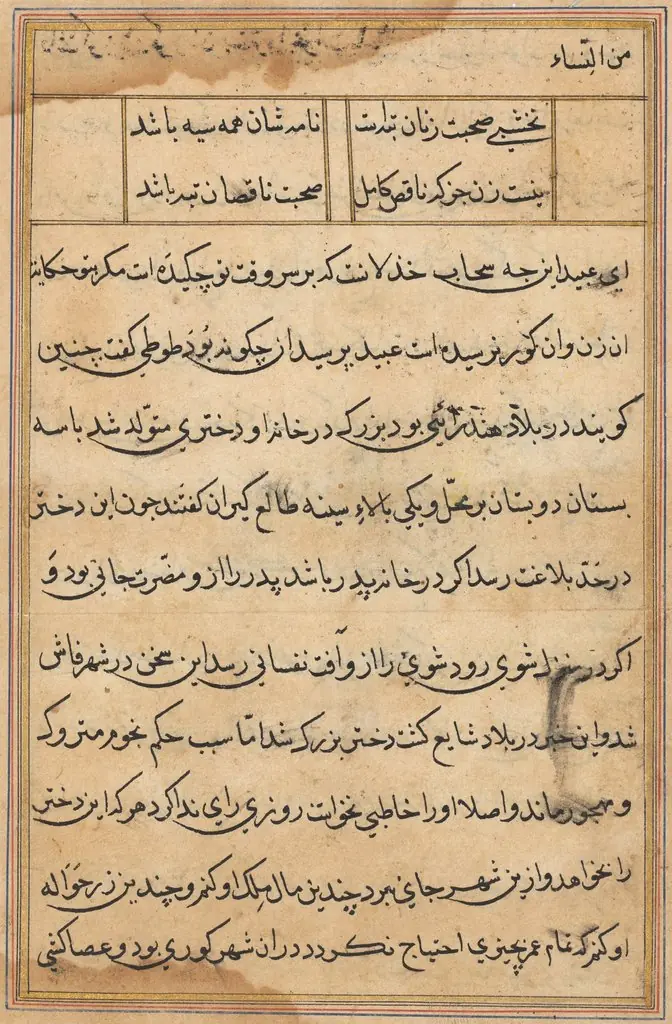
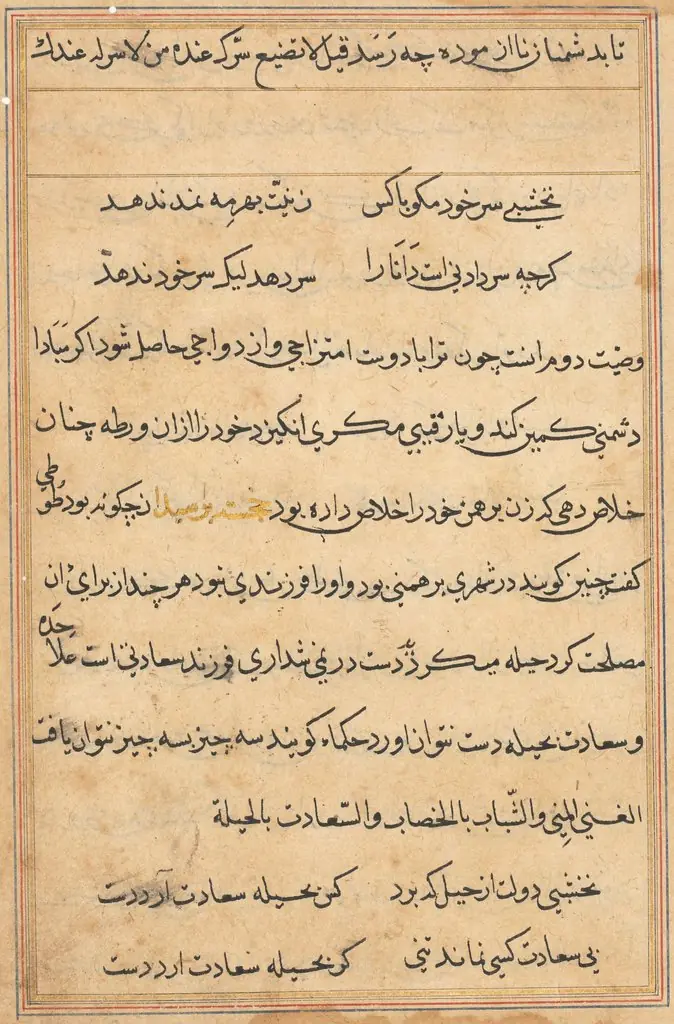
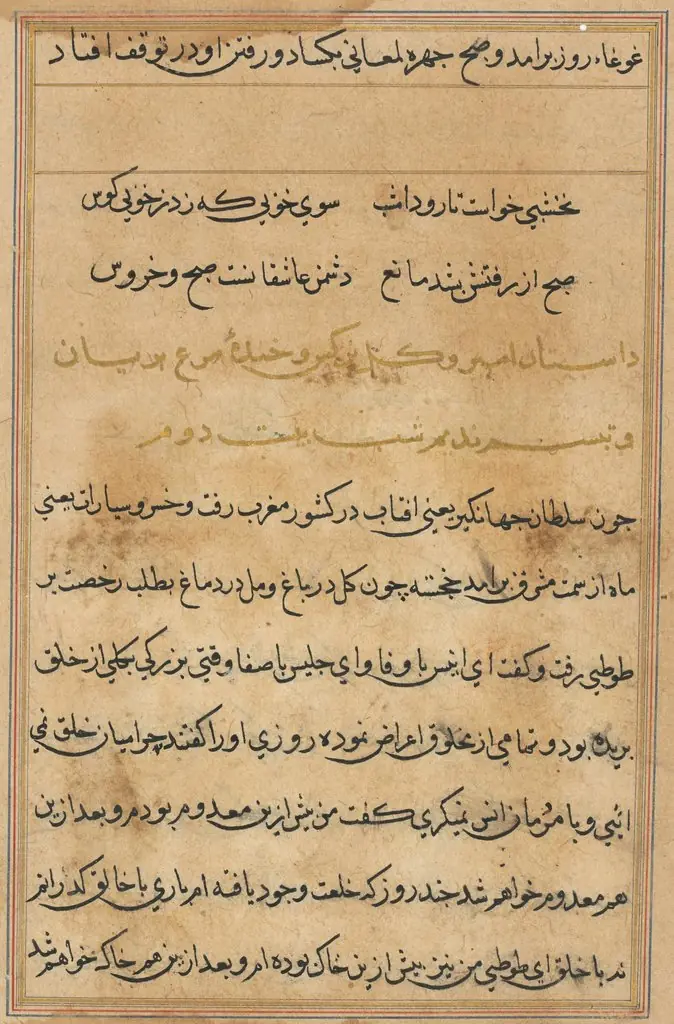
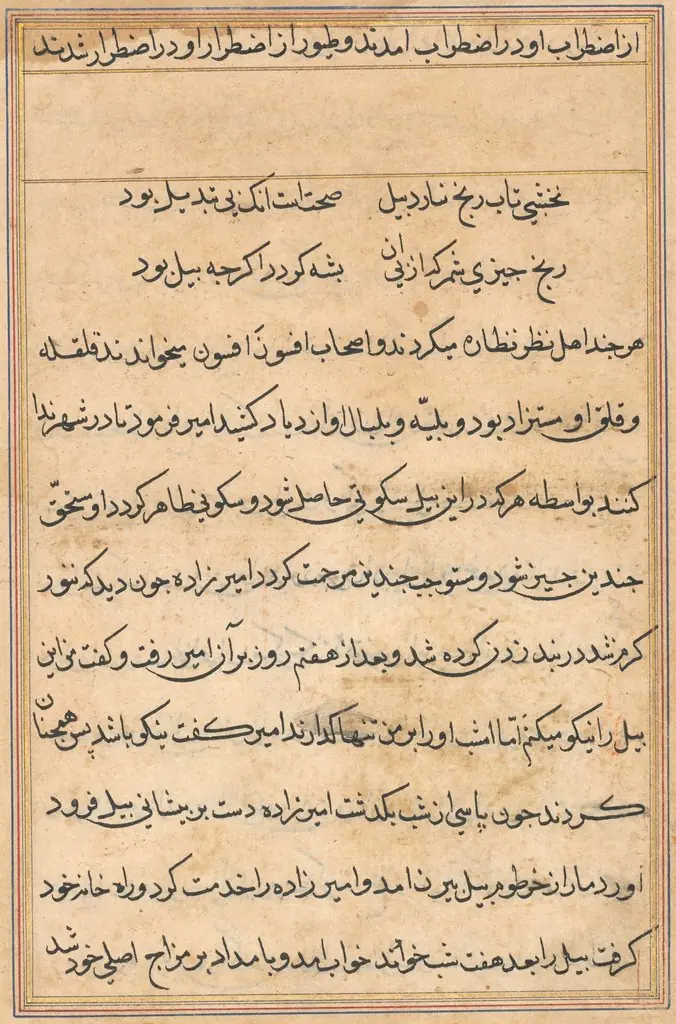
Page from Tales of a Parrot (Tuti-nama): text page is an unspecified painting. It dates from 1560 and is held in the collection of the Cleveland Museum of Art. The object is a single page from the Persian manuscript known as the Tuti‑nama (Tales of a Parrot).
About this work
History & Provenance
The text page comes from a dispersed copy of the Tuti-nama (Tales of a Parrot), a Mughal manuscript produced in the mid-16th century, with its inception recorded as 1560. It was made in the Mughal Empire and later entered the Cleveland Museum of Art, where it is held under accession number 1962.279.82.b. Specific exhibition records are not detailed in the available sources.
Context
The Tuti-nama gathers moral tales recounted by a parrot, a Persianate literary cycle adapted for the Mughal court in 16th-century India.
As part of the imperial Tuti-nama, this page belongs to one of the earliest major manuscript projects of Mughal painting, undertaken under Akbar's patronage and blending Persian narrative tradition with Indian artistic practice. The Tuti-nama gathers moral tales recounted by a parrot, a Persianate literary cycle adapted for the Mughal court in 16th-century India. As a text page rather than an illustrated folio, it carries the manuscript's calligraphy.
Its presence in the Cleveland Museum of Art reflects the wide dispersal of the manuscript's leaves among Western collections.
Overview
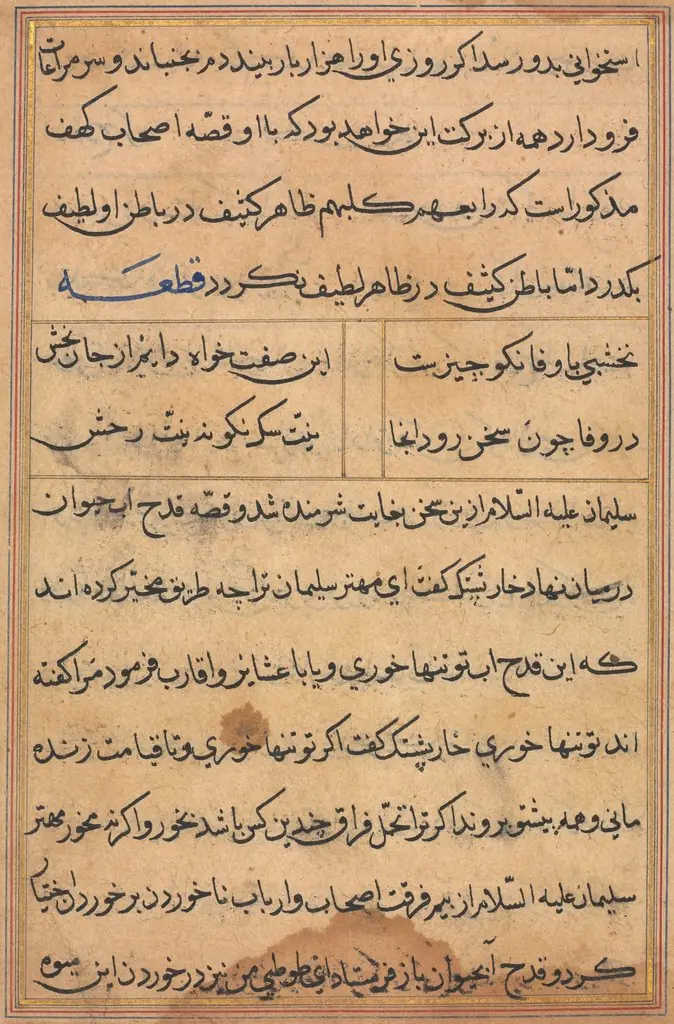
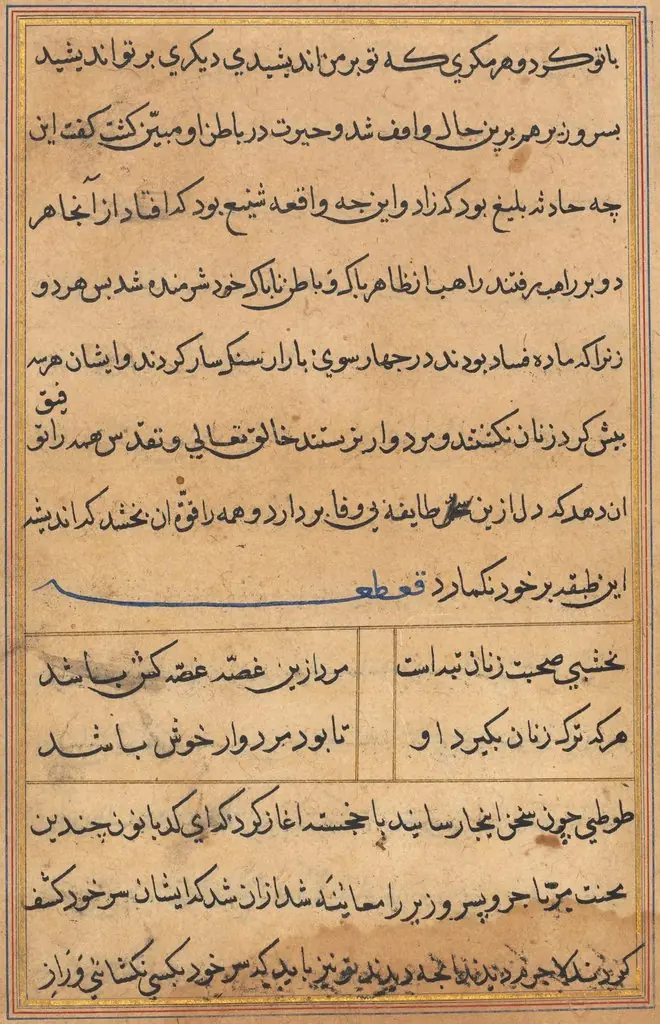
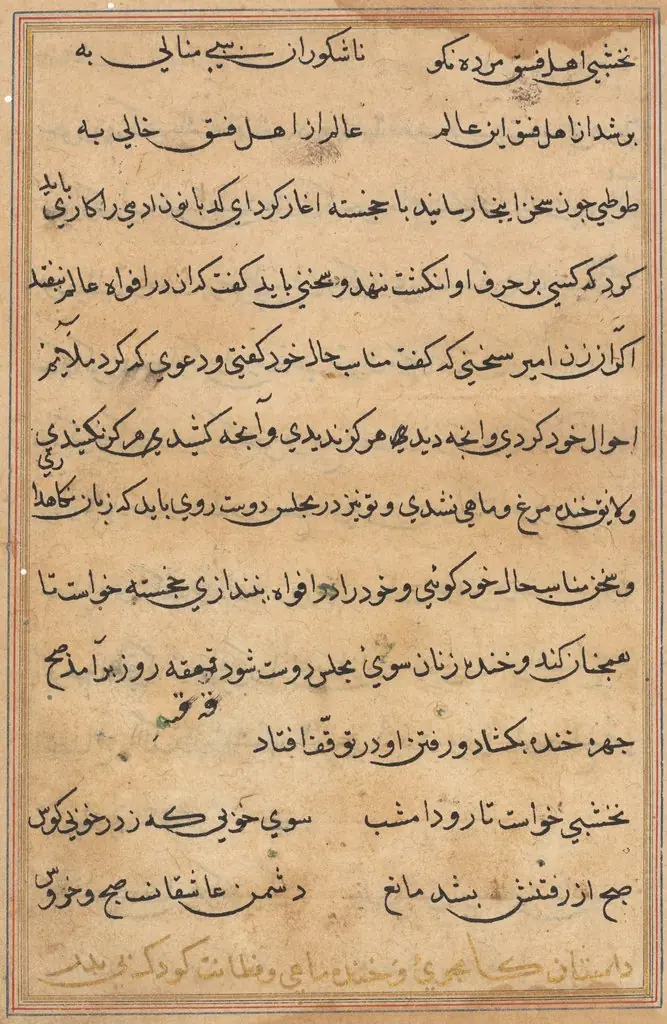
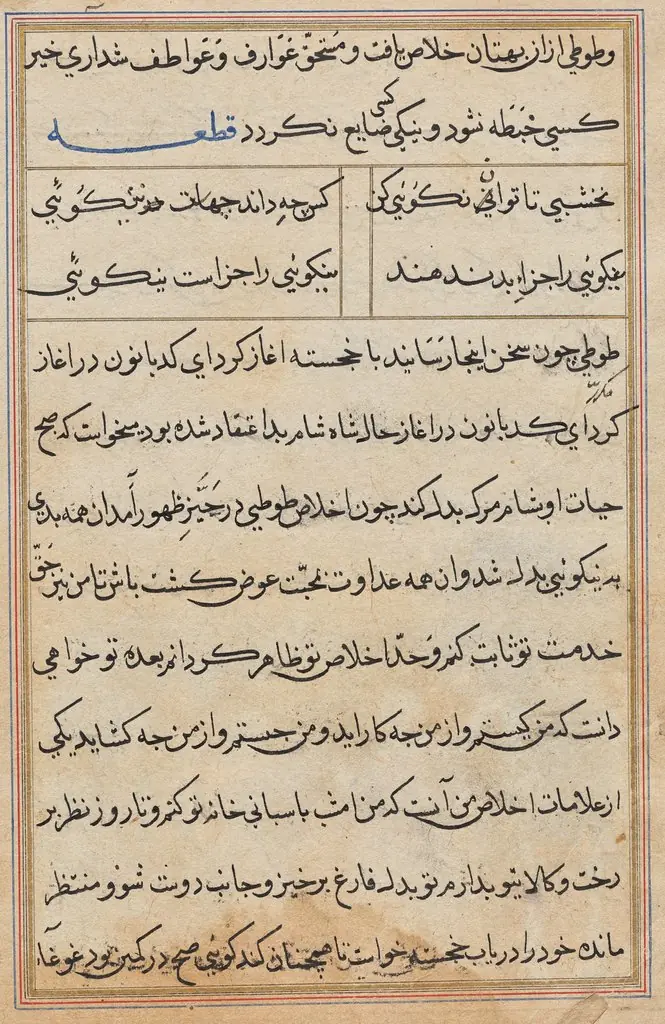
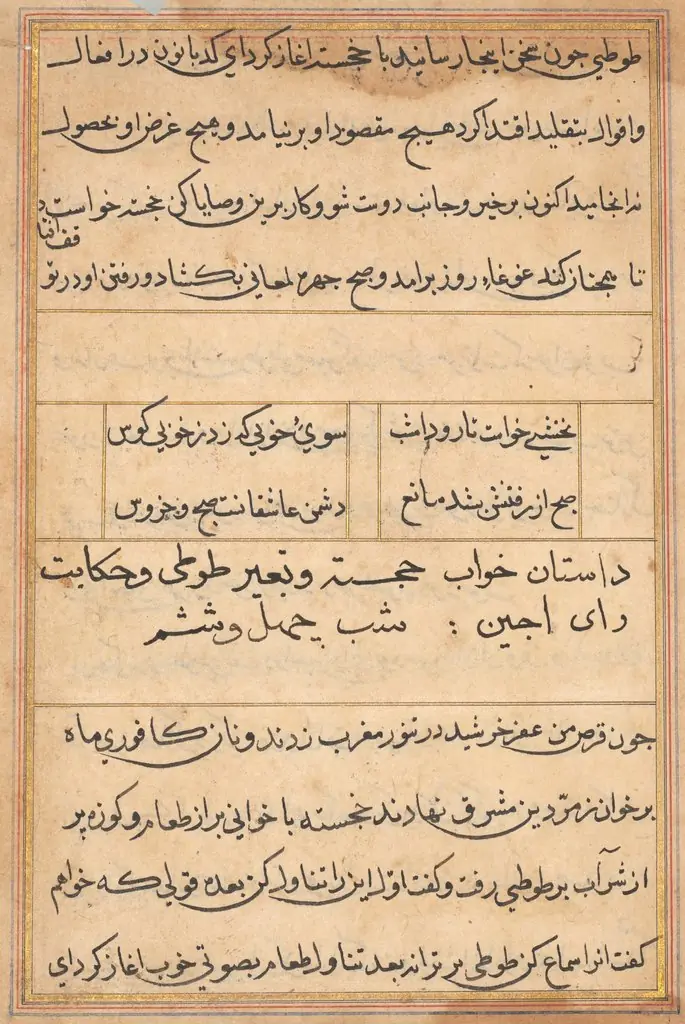
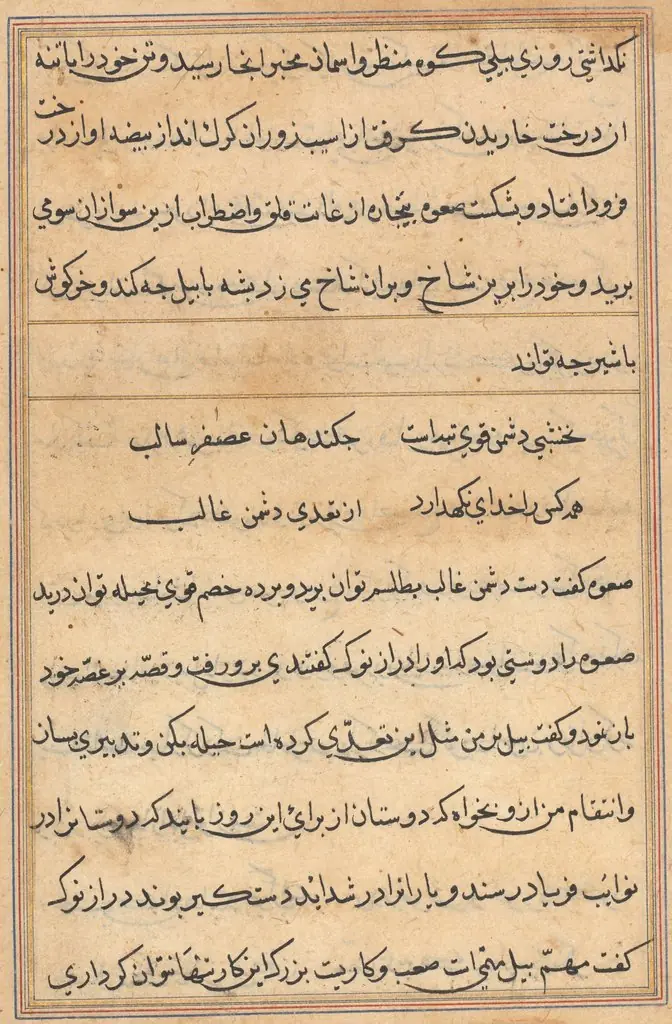
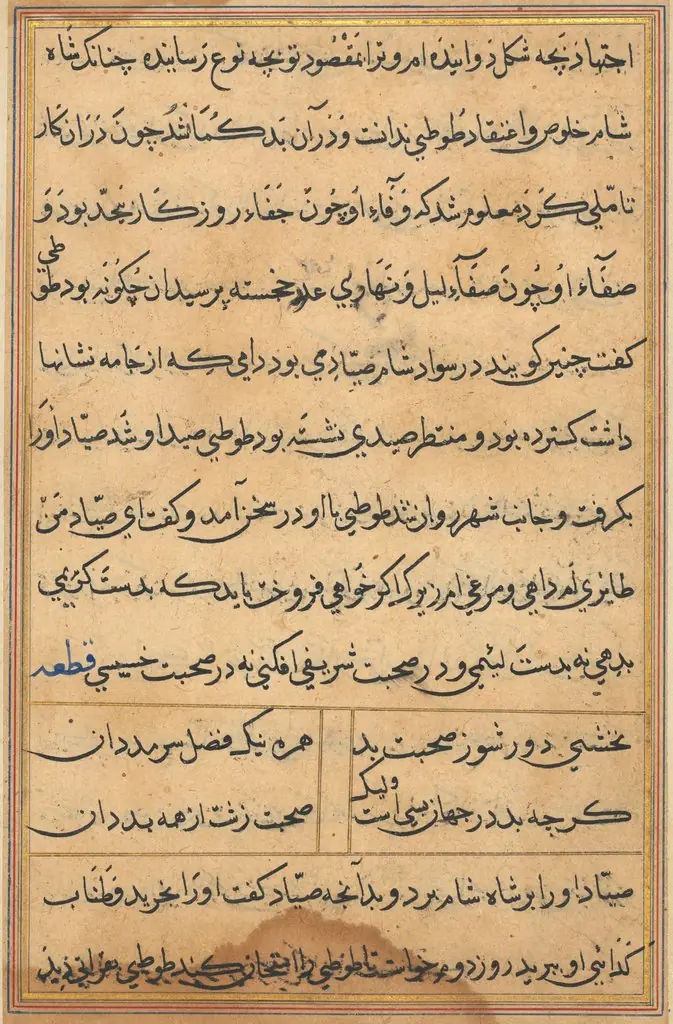
The object is a single page from the Persian manuscript known as the Tuti‑nama (Tales of a Parrot). Rendered as a painted sheet, it features continuous black calligraphic text framed by a narrow red border, with occasional lines rendered in blue ink. Small blemishes and stains are visible, suggesting the page’s age and handling.
Subject & Meaning
The script presents a narrative excerpt, typical of the Tuti‑nama tradition in which a parrot recounts moral stories and fables. Such texts were intended for private reading and instruction, conveying ethical lessons through allegorical animal characters, a common motif in medieval Persian literature.
Technique & Style
The calligraphy is executed in a refined, flowing hand, with letters that curve and interlink in a manner characteristic of Persian bookhands of the late medieval period. The red border, applied in a thin painted line, and the occasional blue ink highlights reflect a modest decorative scheme, emphasizing readability over elaborate illumination.
Artist & collection

- Page from Tales of a Parrot (Tuti-nama): text page
 Page from Tales of a Parrot (Tuti-nama): text page
 Page from Tales of a Parrot (Tuti-nama): text page
 Page from Tales of a Parrot (Tuti-nama): text page
 Page from Tales of a Parrot (Tuti-nama): text page
 Page from Tales of a Parrot (Tuti-nama): text page
 Page from Tales of a Parrot (Tuti-nama): text page
 Page from Tales of a Parrot (Tuti-nama): text page