Artwork
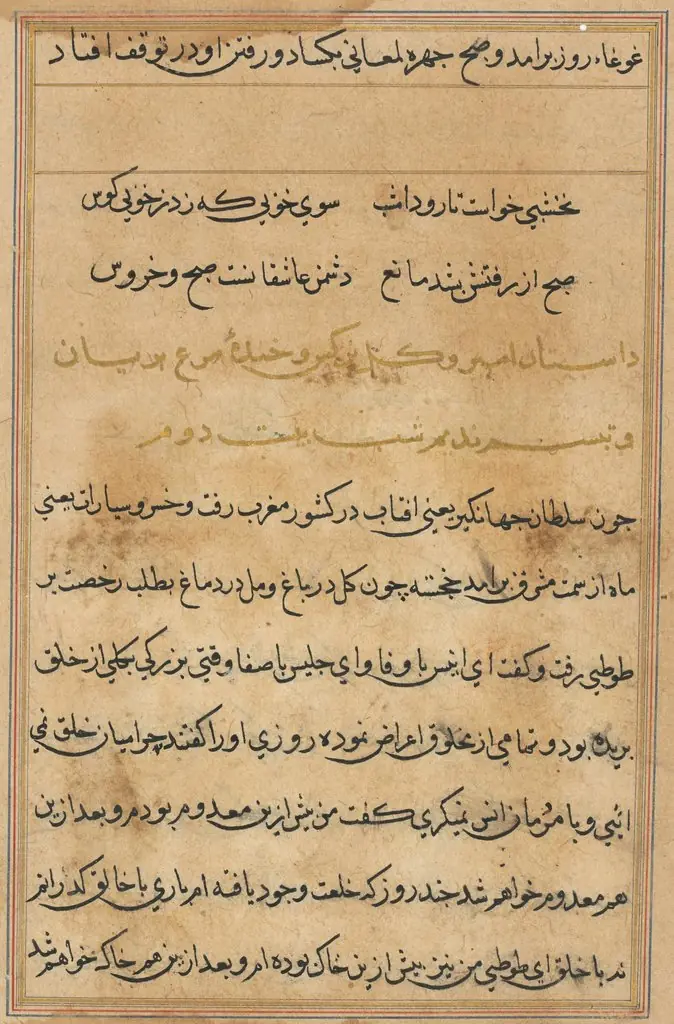
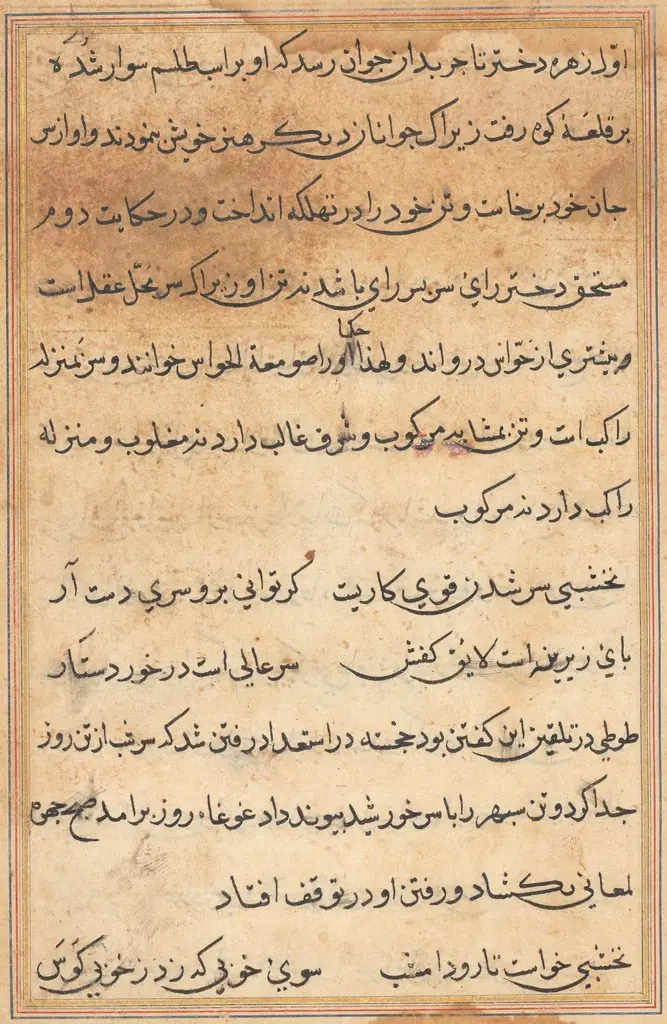
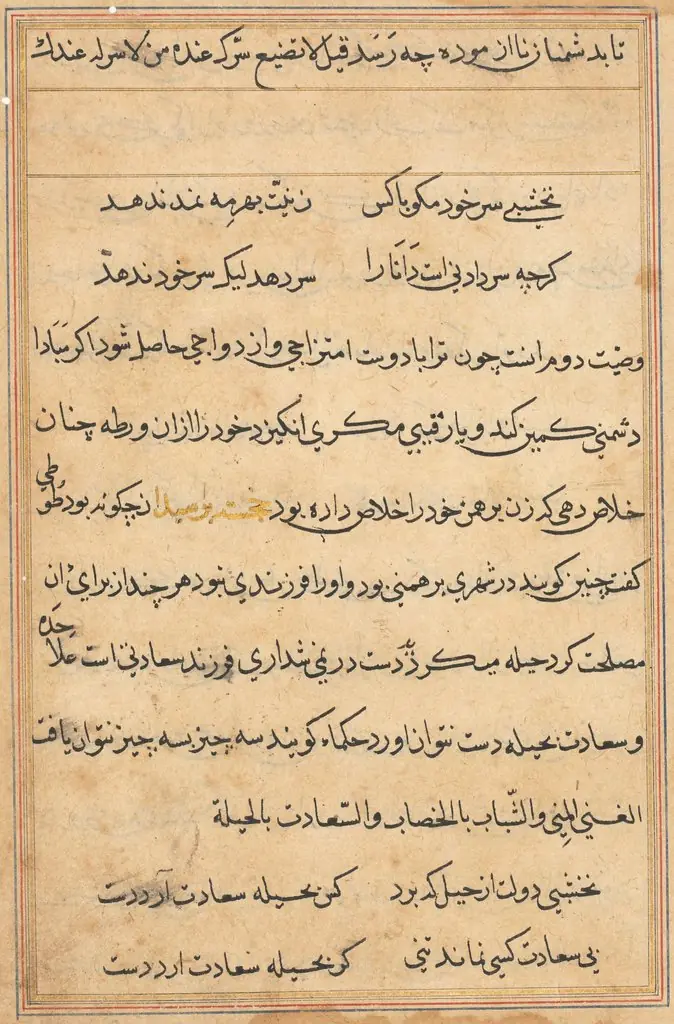
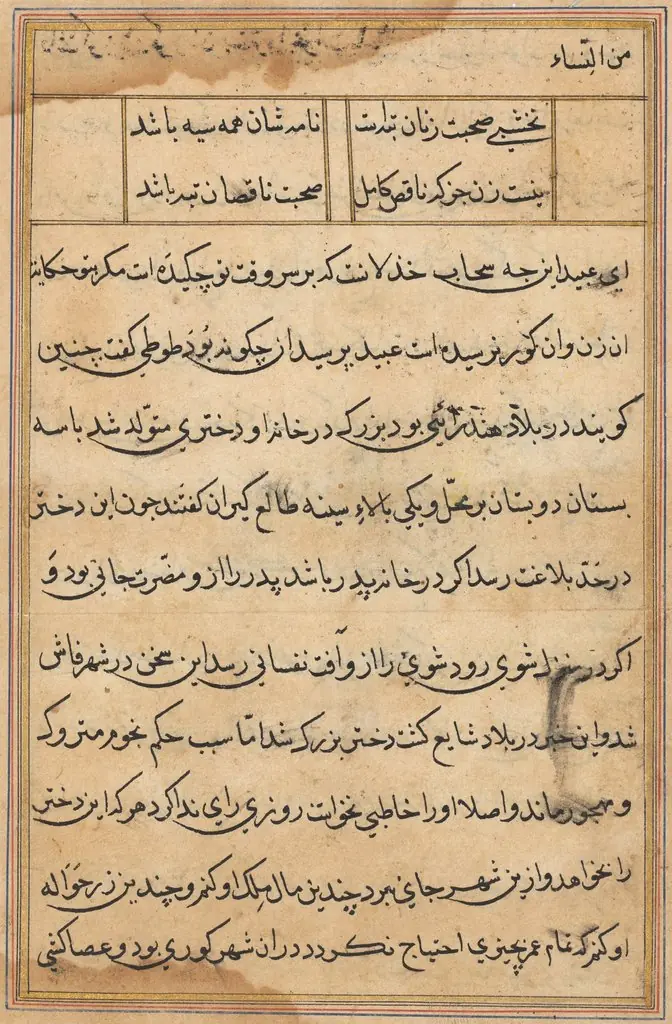
Page from Tales of a Parrot (Tuti-nama): text page
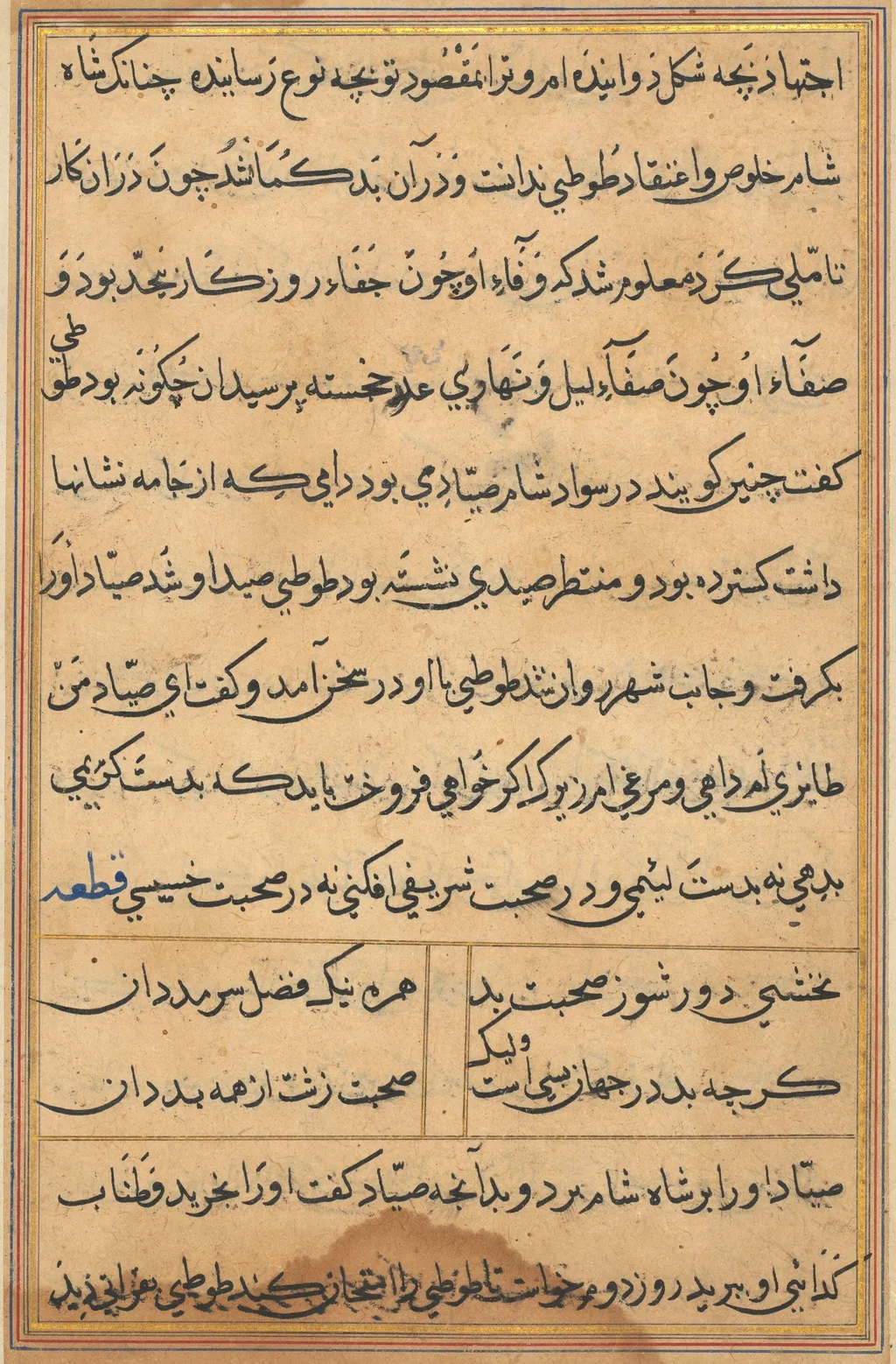
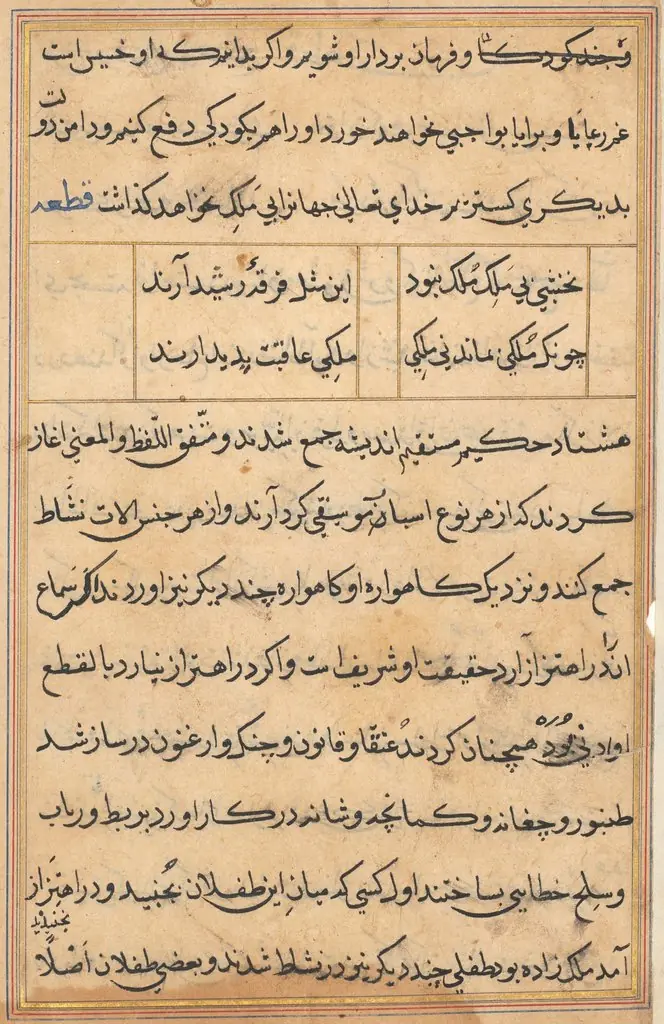
Page from Tales of a Parrot (Tuti-nama): text page is an unspecified painting. It dates from 1560 and is held in the collection of the Cleveland Museum of Art. The work is a single page from the illustrated manuscript known as Tales of a Parrot (Tuti‑nama).
About this work
History & Provenance
The specific commissioning details and the full chain of ownership prior to its arrival at the museum are not detailed in the available records.
This text page from the Tales of a Parrot (Tuti-nama) was created in 1560 within the Mughal Empire. The work is attributed to an unknown artist and is classified as a painting. It is currently held in the collection of the Cleveland Museum of Art, where it is cataloged under the accession number 1962.279.74.b. The specific commissioning details and the full chain of ownership prior to its arrival at the museum are not detailed in the available records.
The text page from the Tales of a Parrot (Tuti-nama) is held in the collection of the Cleveland Museum of Art. The institution identifies the work with the accession number 1962.279.74.b. Created in 1560 within the Mughal Empire, this painting forms part of the museum's holdings attributed to an unknown artist.
Context
This page from the Tuti-nama, a Persian illustrated manuscript produced in 16th-century Mughal India, exemplifies the synthesis of Persian narrative tradition and Indian artistic sensibilities. The work reflects the cultural patronage of Mughal courts where illustrated manuscripts served as vehicles for Sufi moral instruction through animal fables. Its presence in the Cleveland Museum of Art collection underscores ongoing scholarly interest in cross-cultural artistic exchanges during the early modern period, though attribution remains to an unknown artist working within this distinctive regional school.
Overview
The work is a single page from the illustrated manuscript known as Tales of a Parrot (Tuti‑nama). Executed as a painted page, it presents a continuous block of black ink set against a light‑brown ground, the text arranged in a flowing, curved hand that fills the surface in an orderly fashion.
Subject & Meaning
The page contains narrative text, likely a segment of the moral or romantic story that the Tuti‑nama conveys. The script’s smooth, winding lines suggest a literary focus rather than a decorative illustration, emphasizing the tale’s verbal content.
Technique & Style
The calligraphic composition is rendered in black ink whose line weight varies subtly, imparting a sense of movement and liveliness to the letters. A delicate border frames the page, composed of thin strips in red, yellow and blue, providing a modest decorative accent without overwhelming the text.
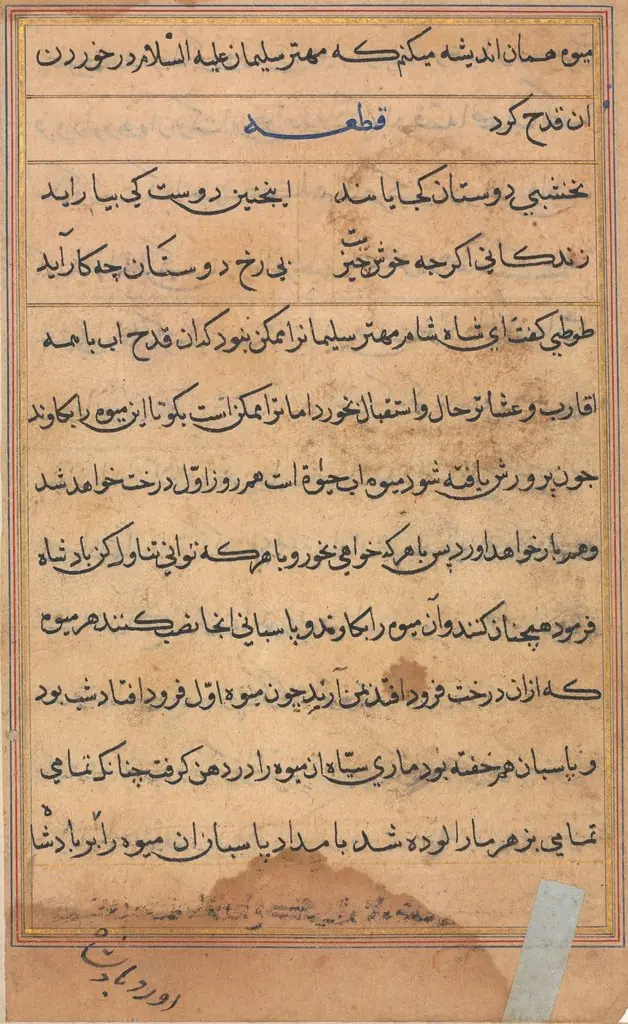
Artist & collection

- Page from Tales of a Parrot (Tuti-nama): text page
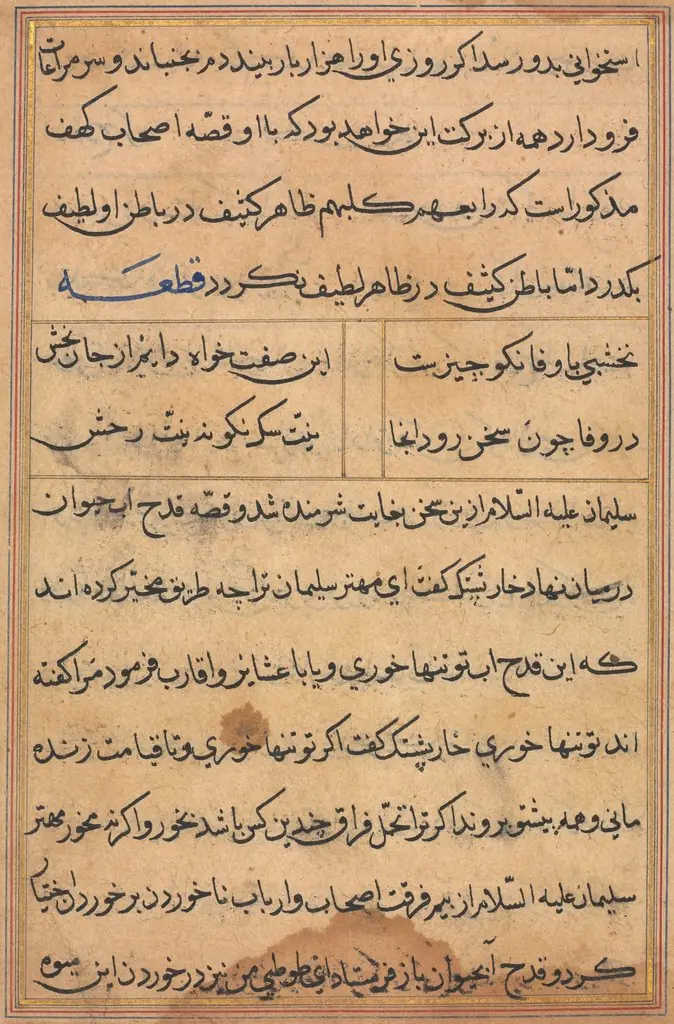 Page from Tales of a Parrot (Tuti-nama): text page
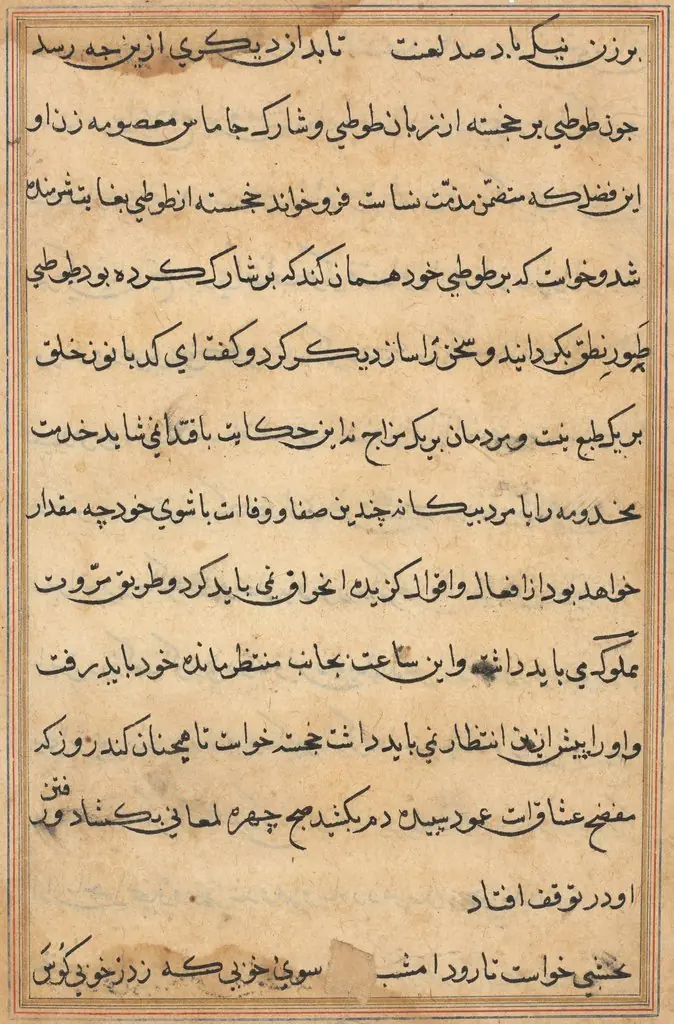 Page from Tales of a Parrot (Tuti-nama): text page
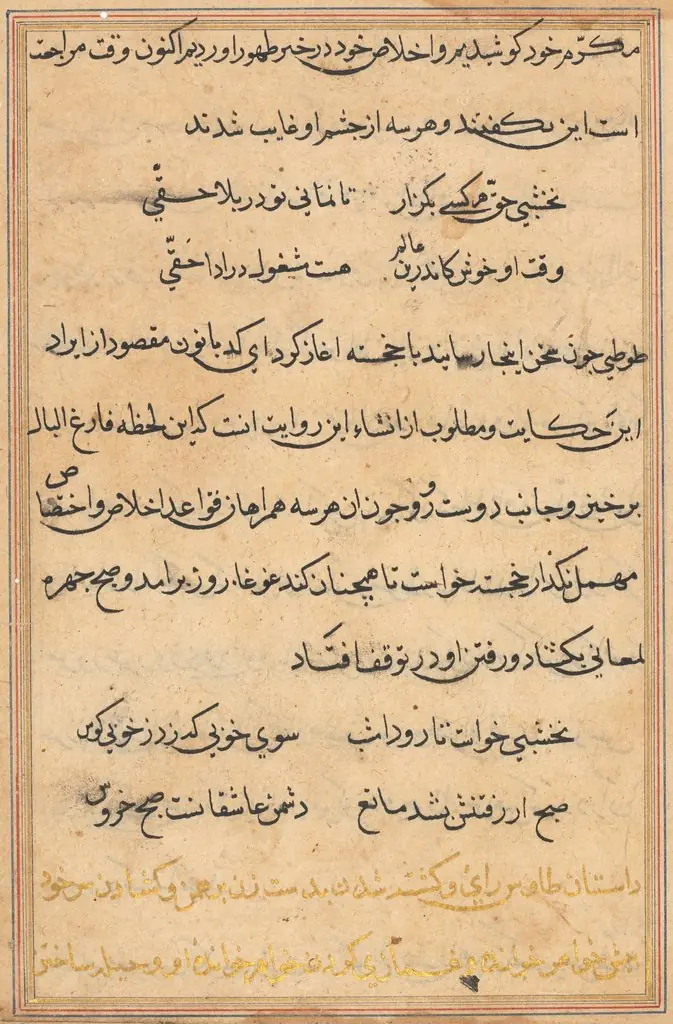 Page from Tales of a Parrot (Tuti-nama): text page
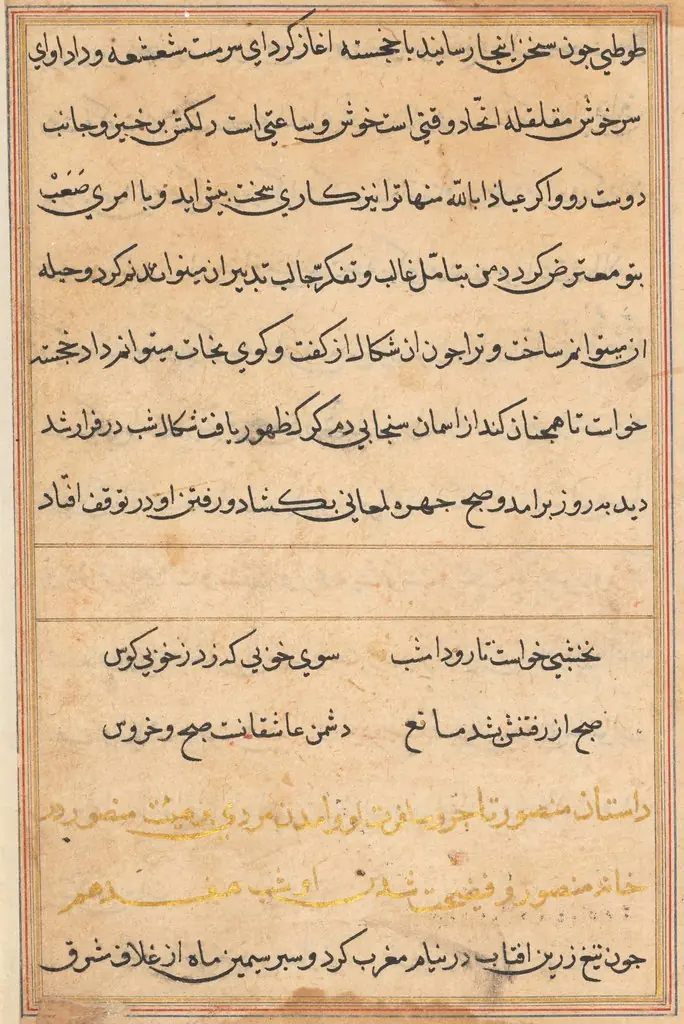 Page from Tales of a Parrot (Tuti-nama): text page
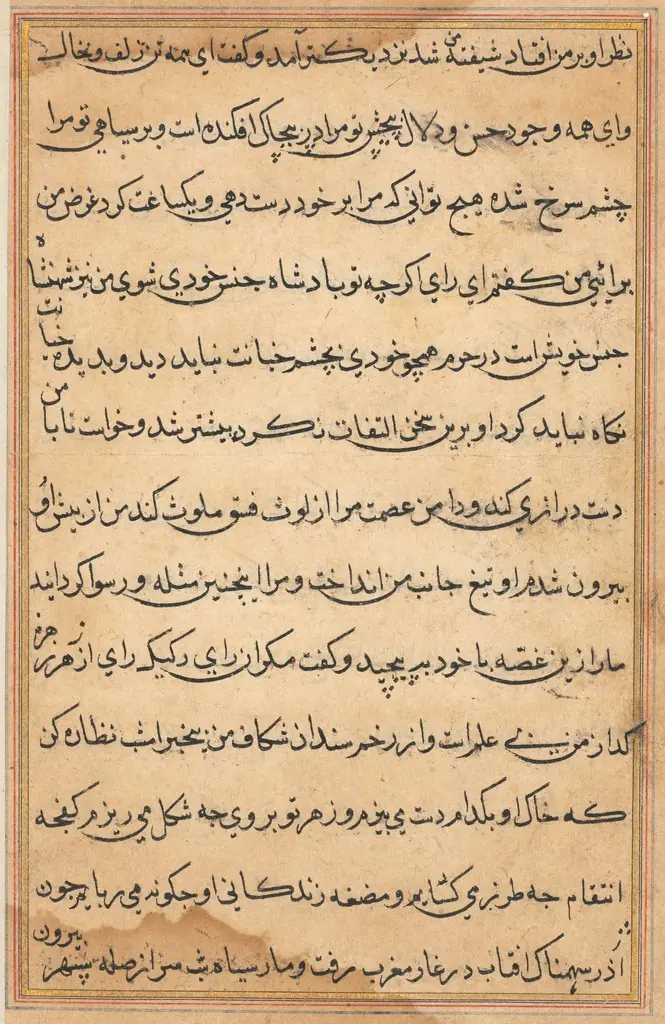 Page from Tales of a Parrot (Tuti-nama): text page
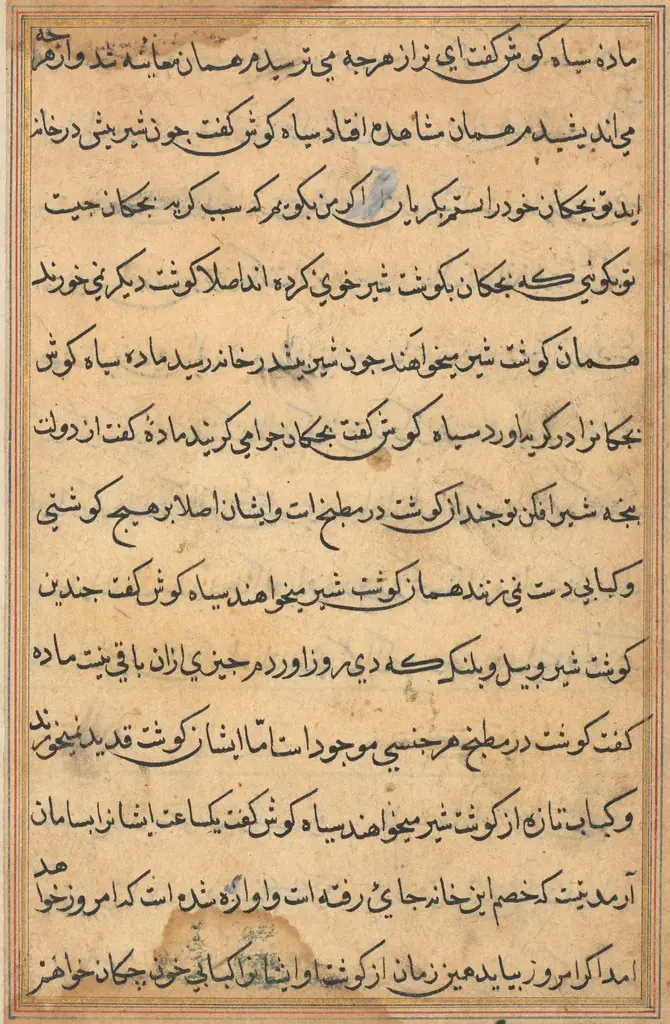 Page from Tales of a Parrot (Tuti-nama): text page
 Page from Tales of a Parrot (Tuti-nama): text page