Artwork
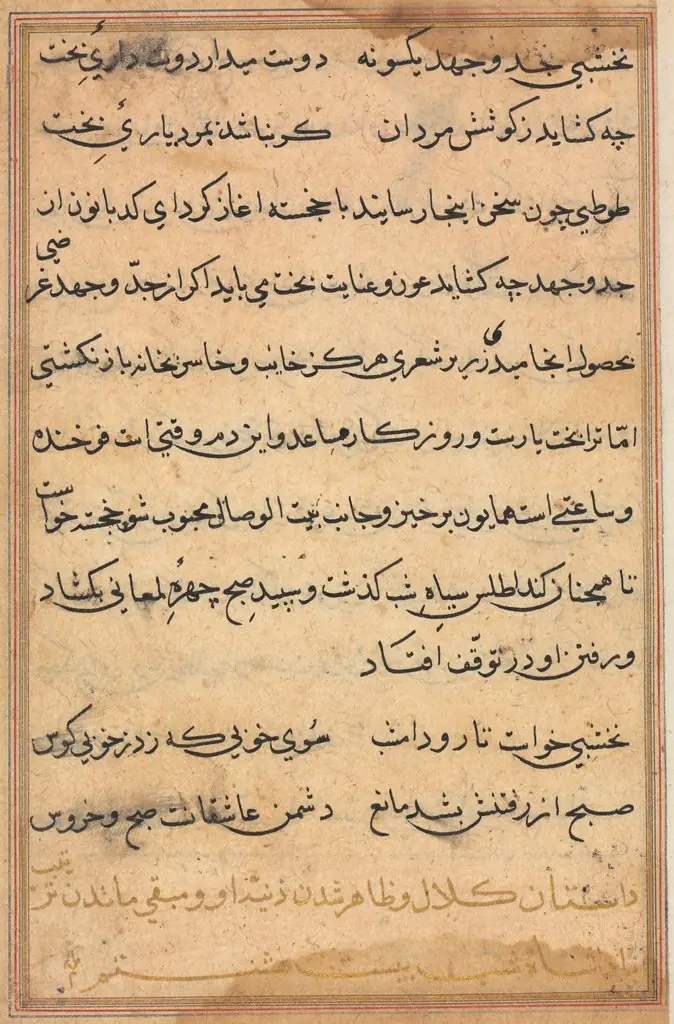
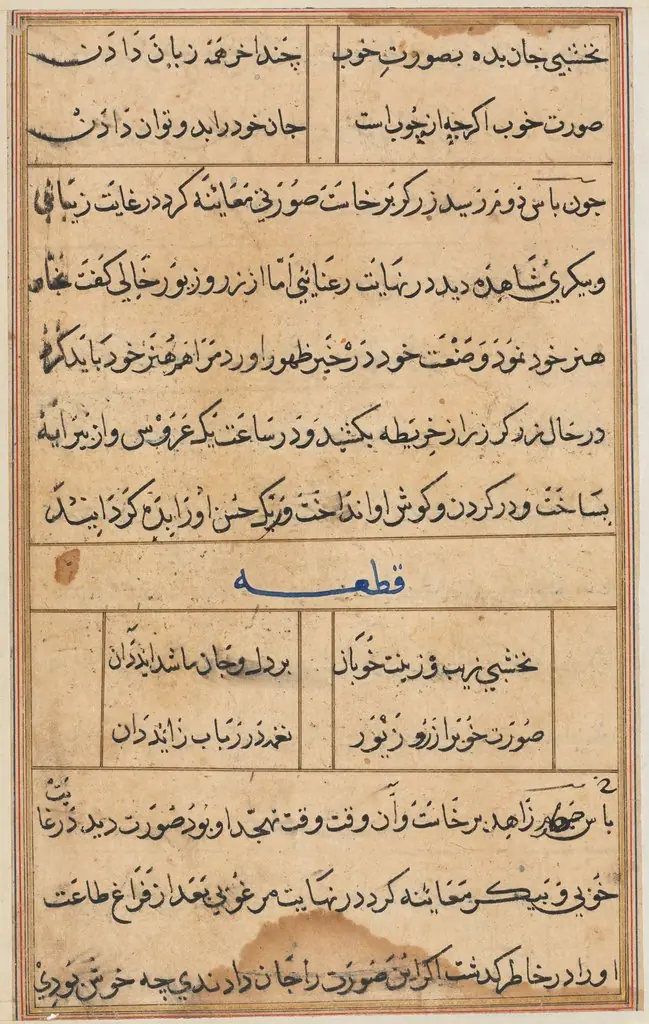
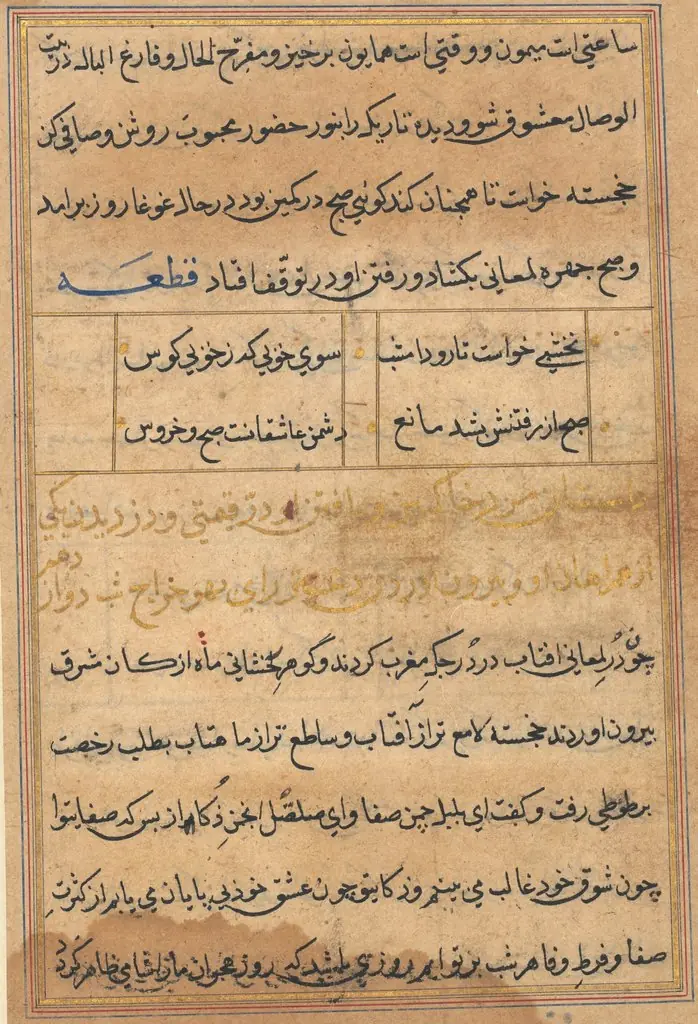
Page from Tales of a Parrot (Tuti-nama): text page
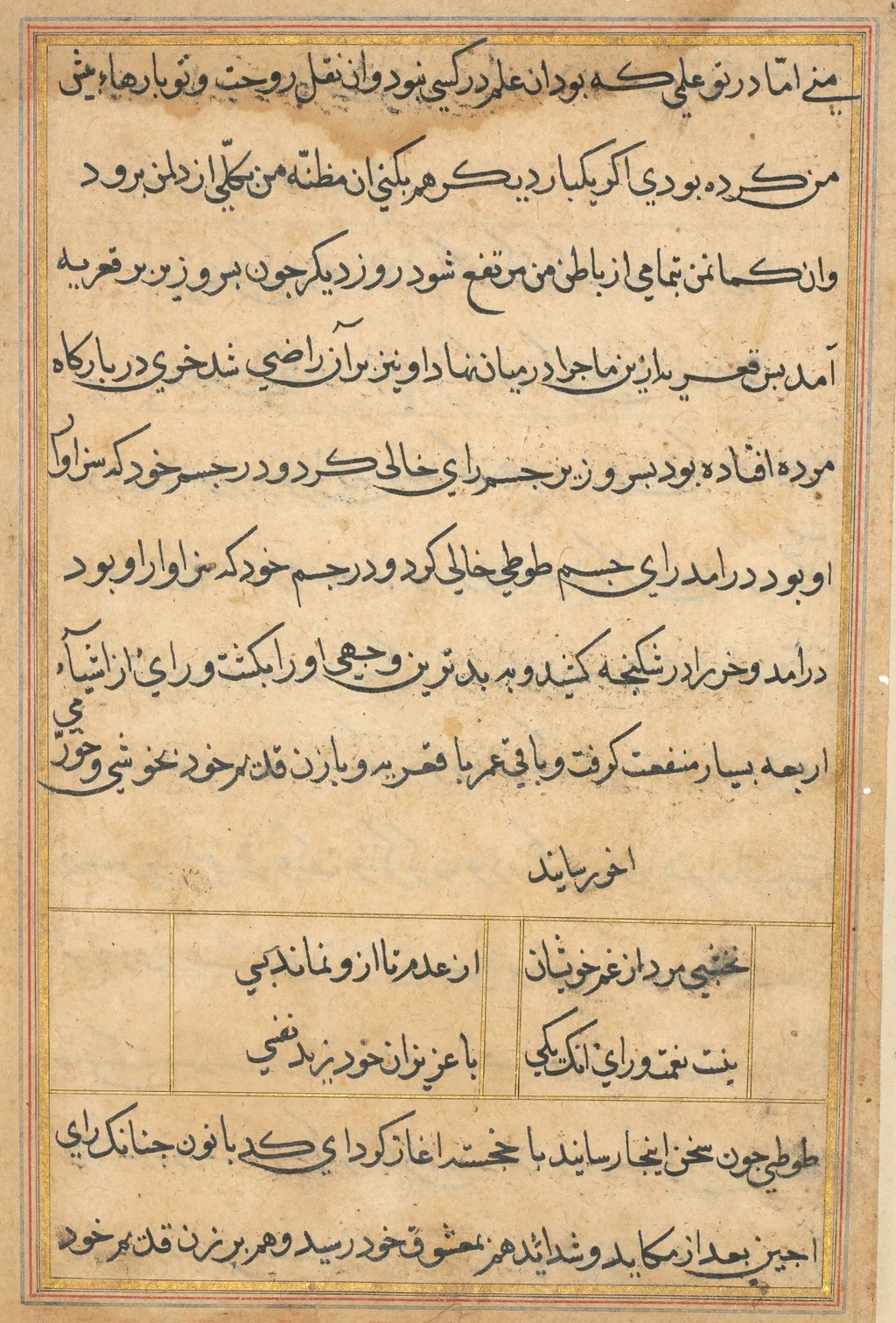
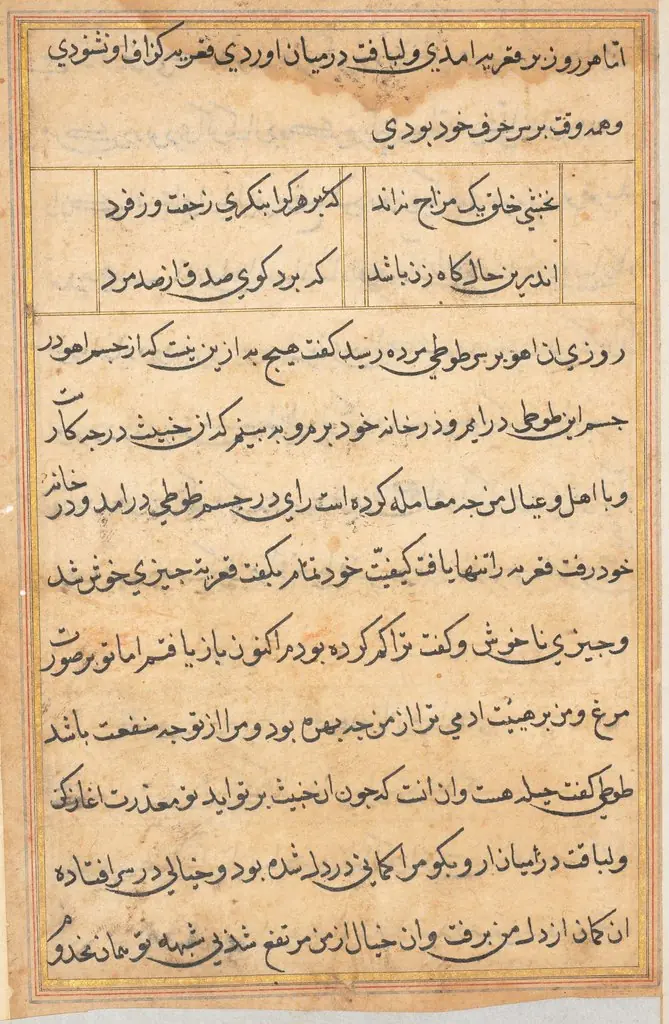
Page from Tales of a Parrot (Tuti-nama): text page is an unspecified painting. It dates from 1560 and is held in the collection of the Cleveland Museum of Art. The object is a painted page from the Persian manuscript known as the Tales of a Parrot (Tuti‑nama).
About this work
History & Provenance
No earlier owners, patrons, or intermediate custodians are documented in the available sources, and the artist responsible for the page is not identified.
The page dates to 1560 and was produced within the Mughal Empire, a period when illustrated manuscripts of the Tuti-nama were actively commissioned at the imperial court. The work subsequently entered the Cleveland Museum of Art, where it is recorded under the accession number 1962.279.299.b. No earlier owners, patrons, or intermediate custodians are documented in the available sources, and the artist responsible for the page is not identified.
This text page from the Tuti-nama (Tales of a Parrot) is held in the collection of the Cleveland Museum of Art. The institution identifies the work with the accession number 1962.279.299.b. Created in 1560 within the Mughal Empire, the painting is attributed to an unknown artist. The provided records confirm its location and inventory details but do not list specific past exhibitions or a detailed provenance history prior to its accession.
Context
The manuscript page belongs to a 1560 painting from the Mughal Empire, part of the Cleveland Museum of Art's collection. It is a text page from the Tales of a Parrot (Tuti-nama), reflecting the artistic milieu of its time.
Legacy
The miniature painting from the Tuti-nama manuscript exerted lasting influence on Mughal artistic practice, shaping later courtly narrative illustration through its distinctive composition and subtle coloration. Cleveland Museum of Art records its provenance as part of the Indian subcontinent collection, highlighting its significance within the broader tradition of Persianate book arts that spread across South and Central Asia. Its stylistic motifs can be traced in subsequent works that adapted the same visual grammar for storytelling in elite circles.
Overview
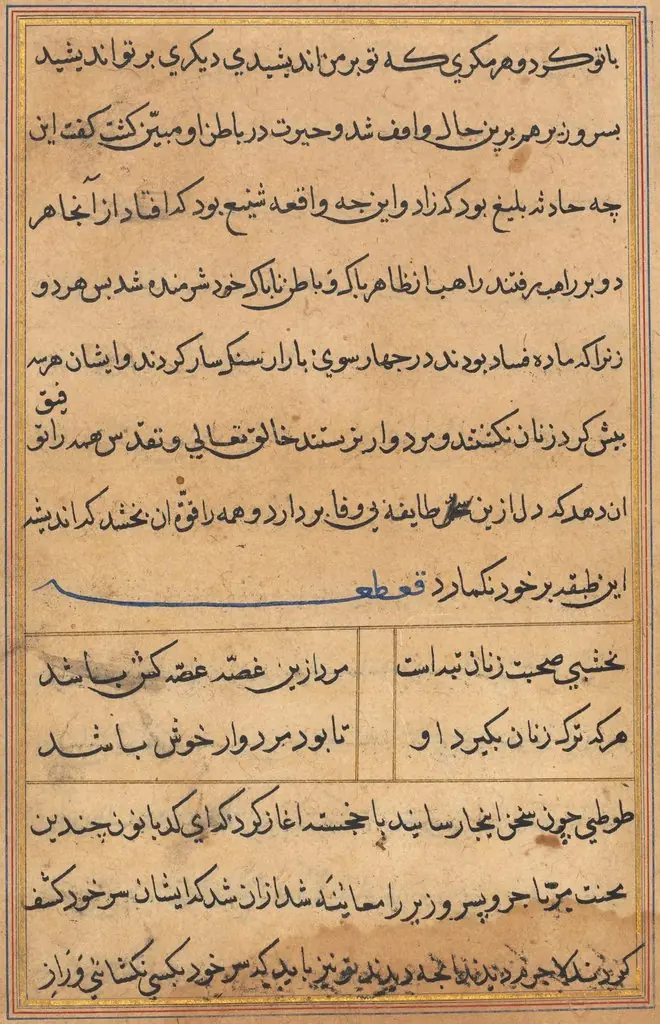
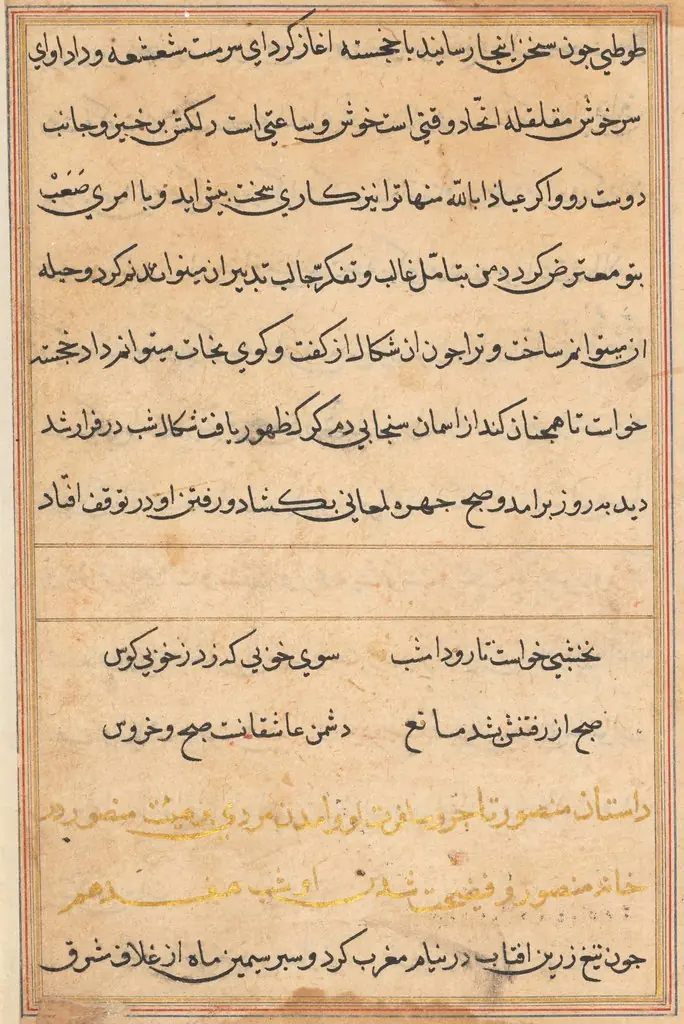
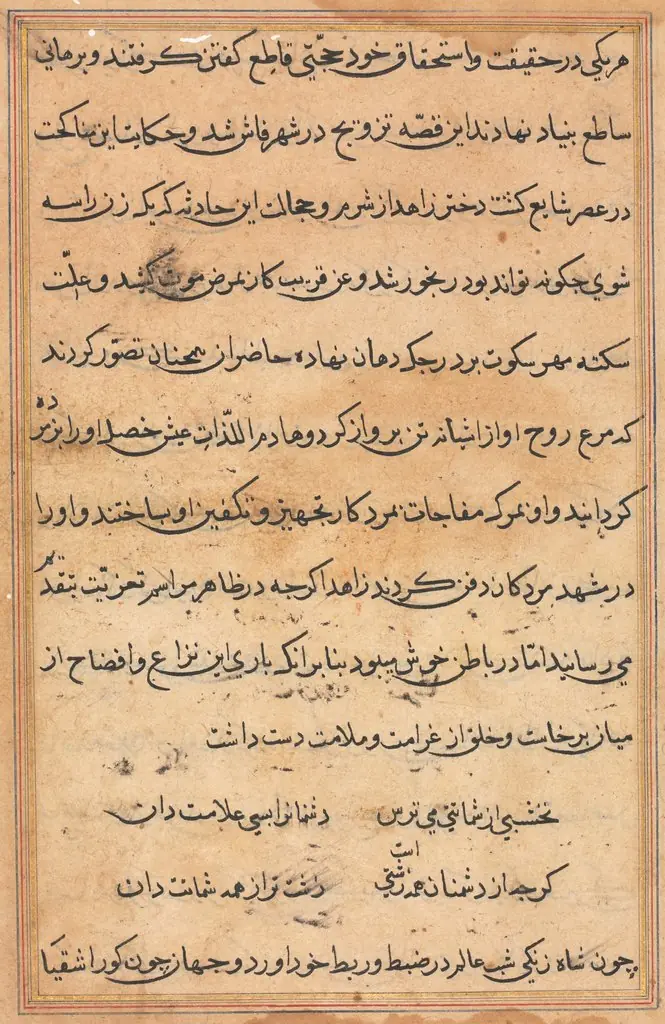
The object is a painted page from the Persian manuscript known as the Tales of a Parrot (Tuti‑nama). It consists of a single sheet with a beige ground, a narrow red and gold ornamental border, and black calligraphic text rendered in an elegant cursive hand. Certain words are emphasized with gold highlighting, indicating a special status within the passage.
Subject & Meaning
The page contains a segment of narrative or poetic prose, though the specific language remains unidentified. The selective use of gold to underline or accentuate portions of the text suggests that the highlighted lines may hold particular moral, religious, or literary significance within the larger story.
Technique & Style
The work employs watercolor or gouache on paper, typical of Persian miniature illumination. The border’s thin red and gold filigree reflects conventional decorative motifs, while the black ink is applied in a flowing, cursive script that demonstrates the calligrapher’s skill in line variation and rhythm.
Artist & collection

- Page from Tales of a Parrot (Tuti-nama): text page
 Page from Tales of a Parrot (Tuti-nama): text page
 Page from Tales of a Parrot (Tuti-nama): text page
 Page from Tales of a Parrot (Tuti-nama): text page
 Page from Tales of a Parrot (Tuti-nama): text page
 Page from Tales of a Parrot (Tuti-nama): text page
 Tuti-Nama (Tales of a Parrot)
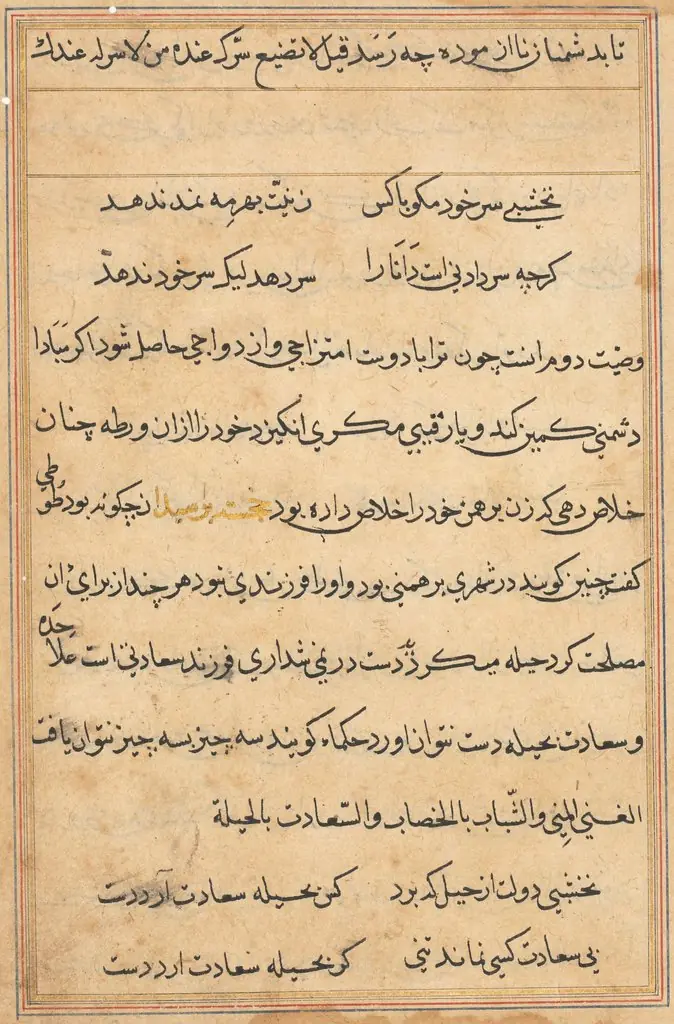 Page from Tales of a Parrot (Tuti-nama): text page
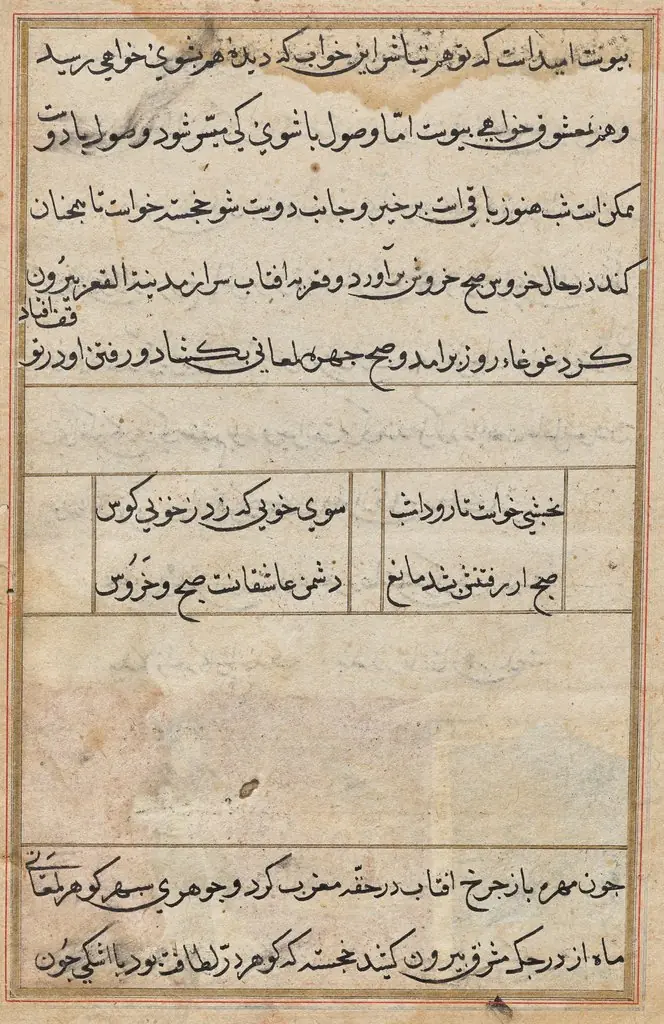 Page from Tales of a Parrot (Tuti-nama): text page
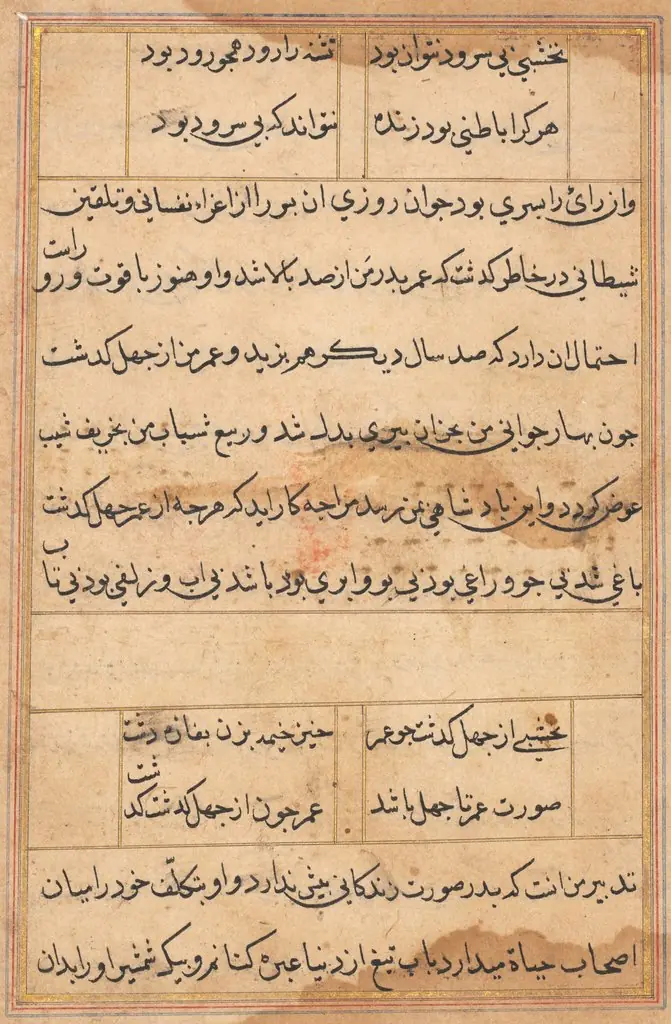 Page from Tales of a Parrot (Tuti-nama): text page
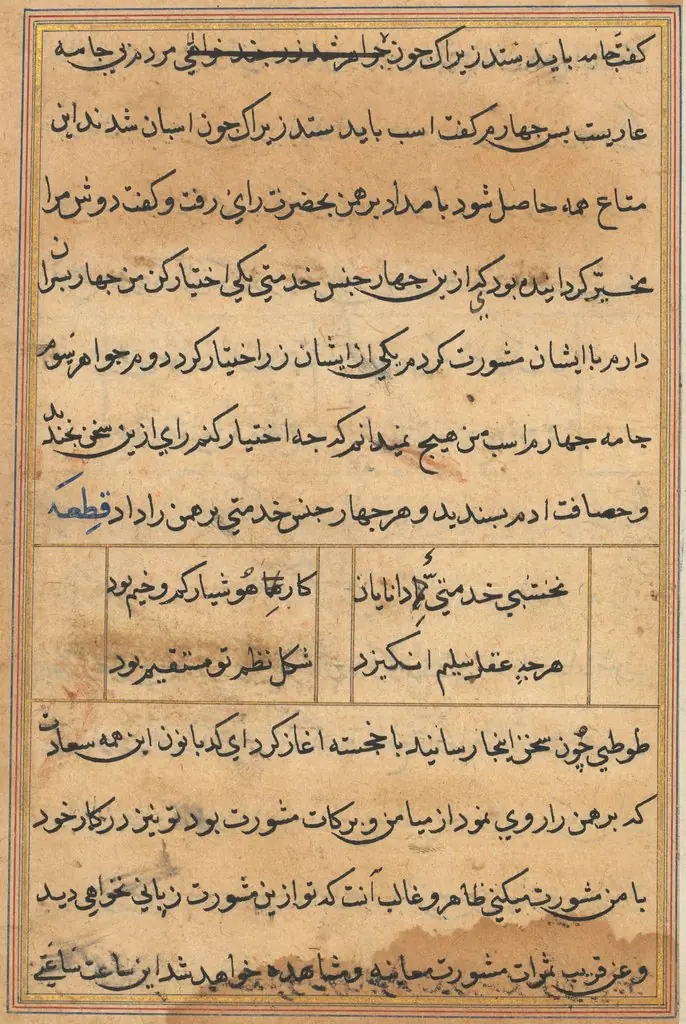 Tuti-Nama (Tales of a Parrot)
 Page from Tales of a Parrot (Tuti-nama): text page