Artwork
Page from Tales of a Parrot (Tuti-nama): text page
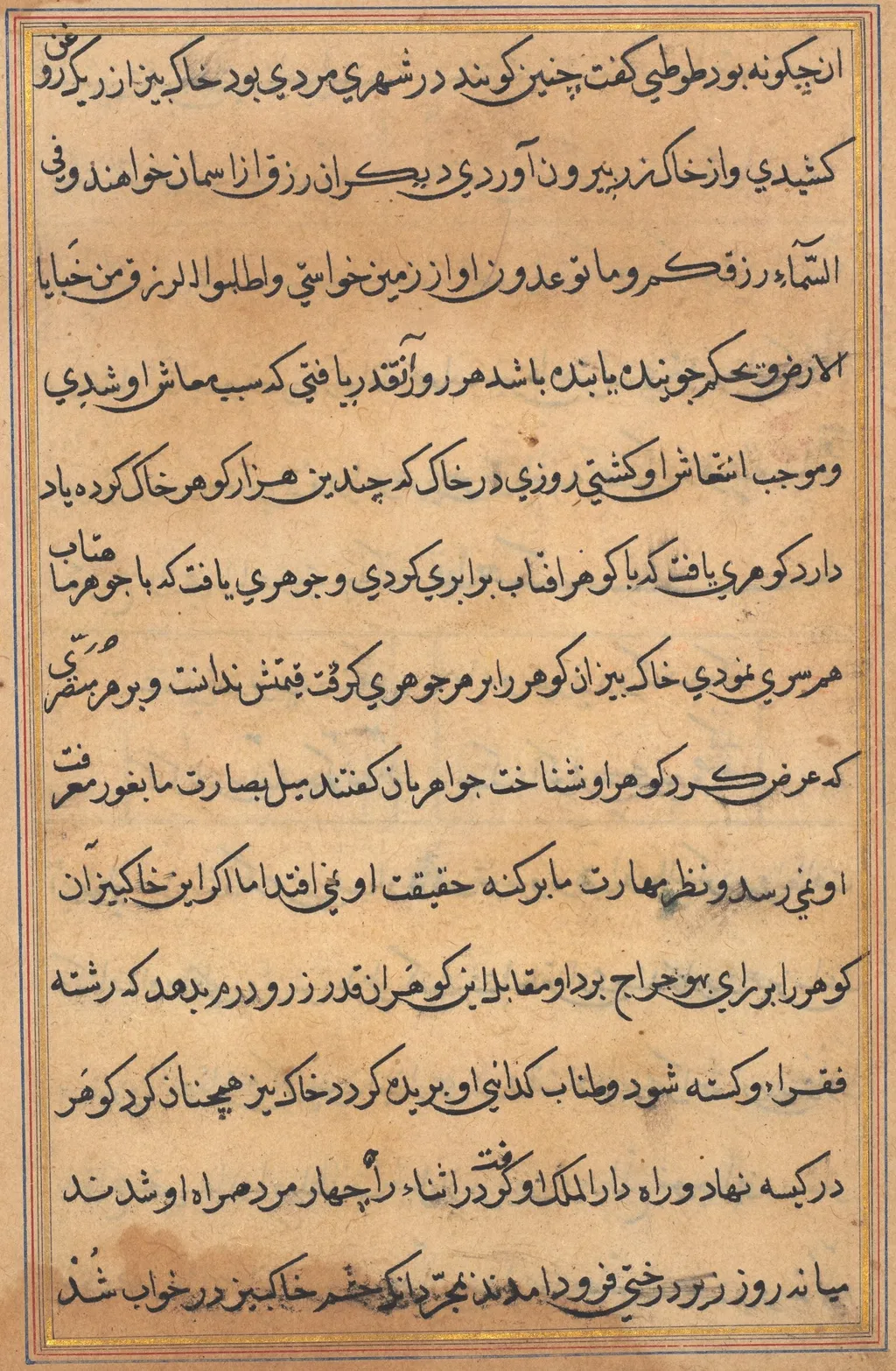
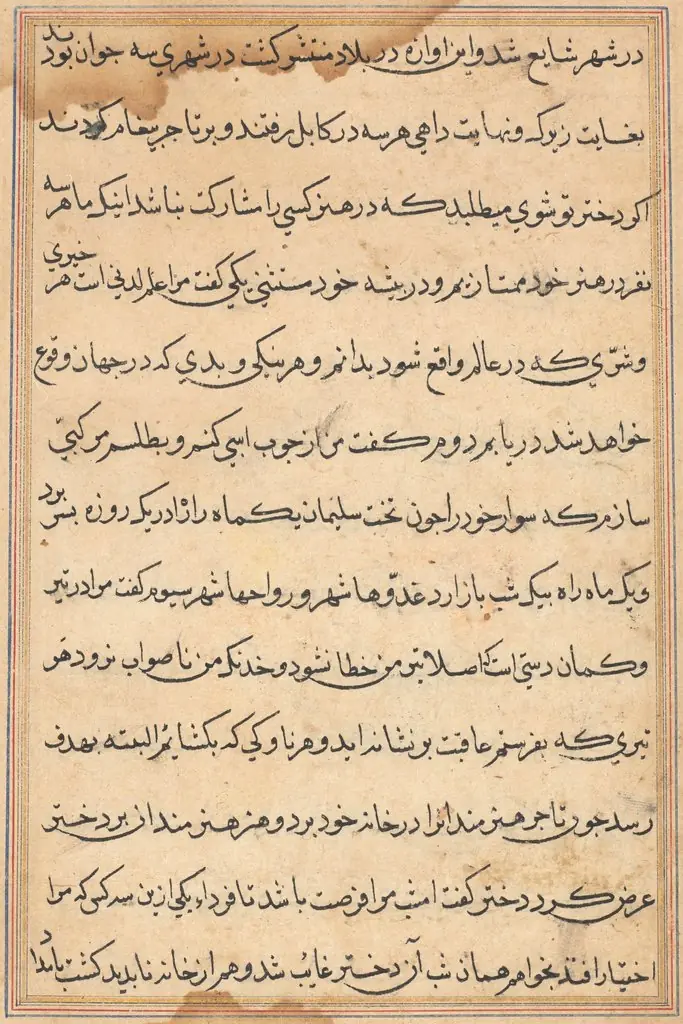
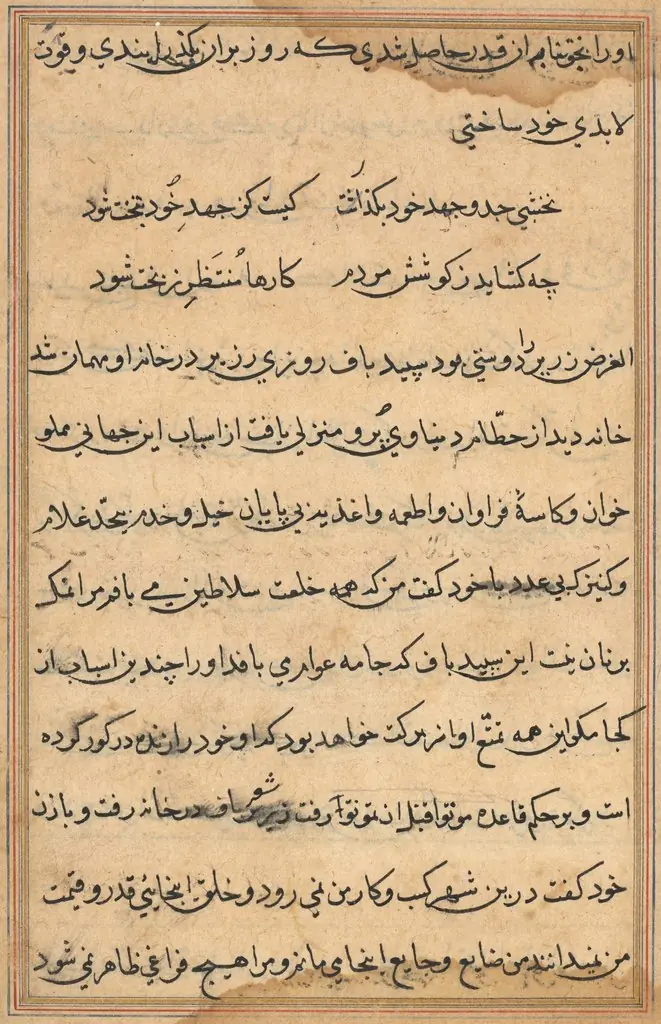
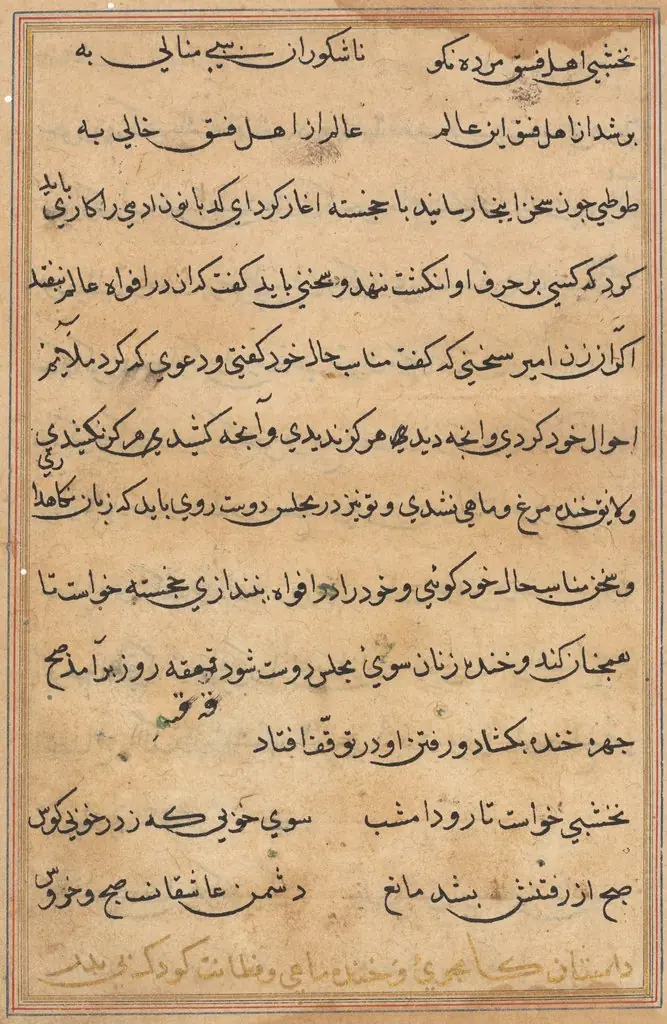
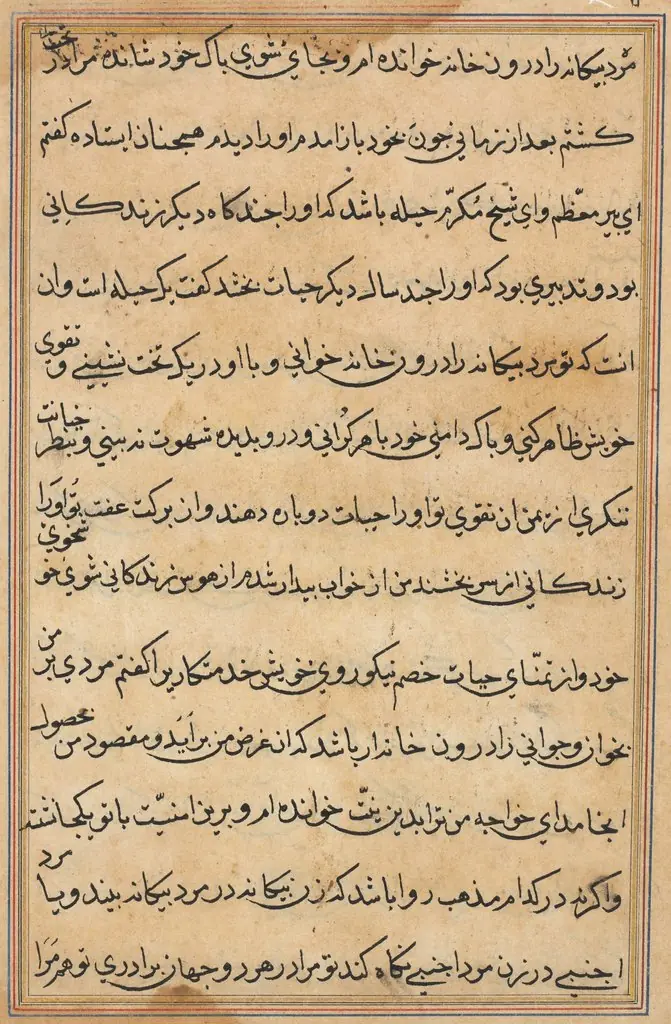
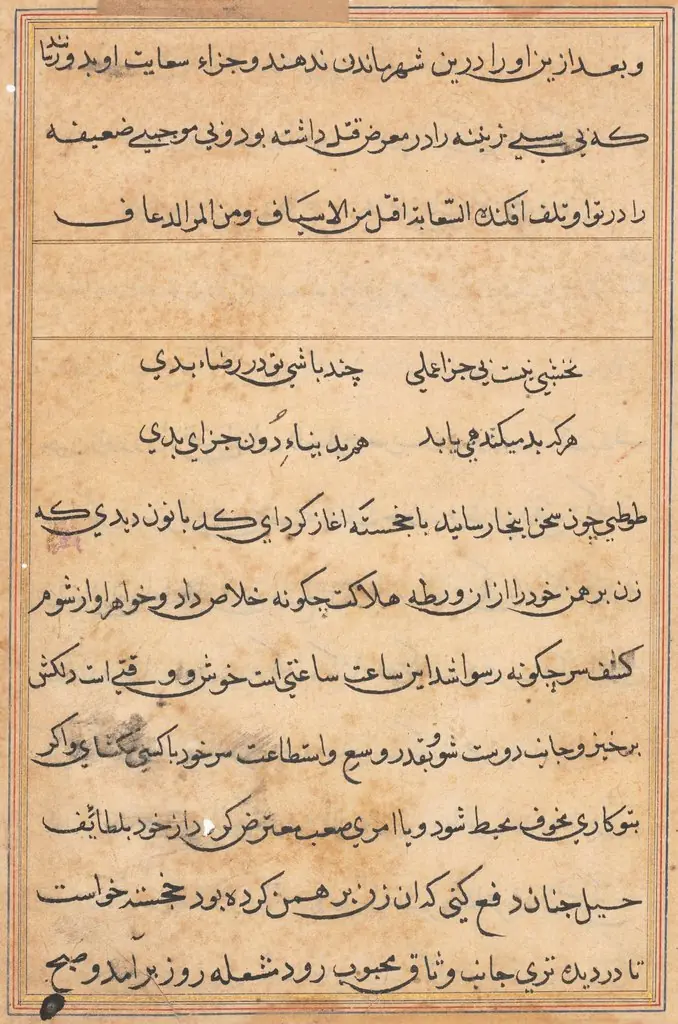
Page from Tales of a Parrot (Tuti-nama): text page is an unspecified painting. It dates from 1560 and is held in the collection of the Cleveland Museum of Art. This illuminated page belongs to the Persian manuscript known as the Tales of a Parrot (Tuti‑nama).
About this work
Subject & Meaning
As a folio in an illustrated manuscript, it exemplifies a tradition in which text pages and painted folios together served literary and didactic functions.
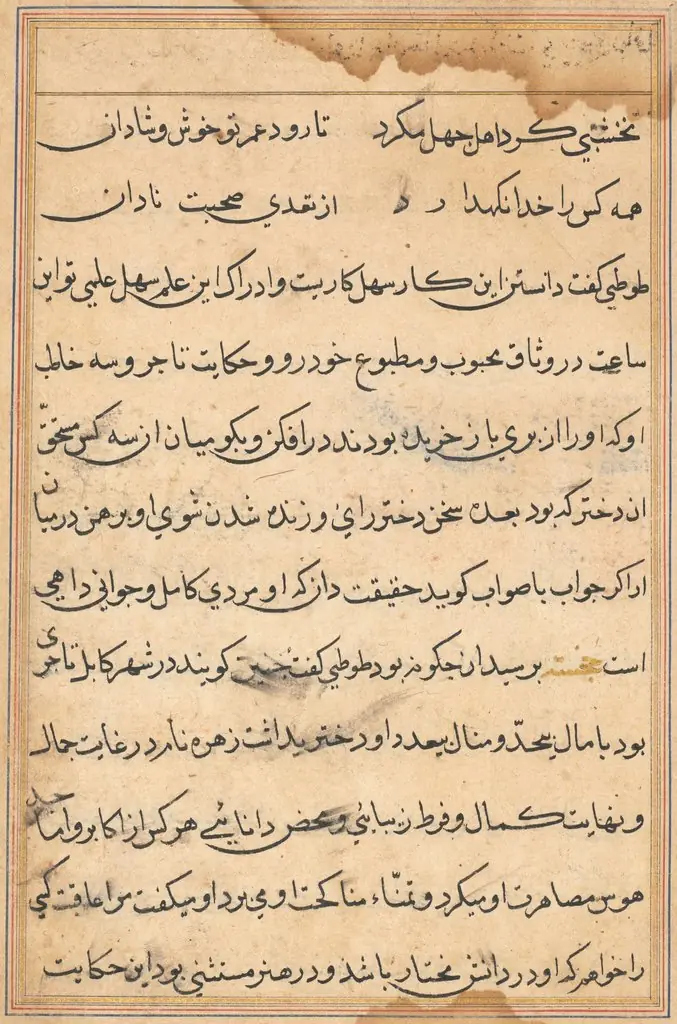
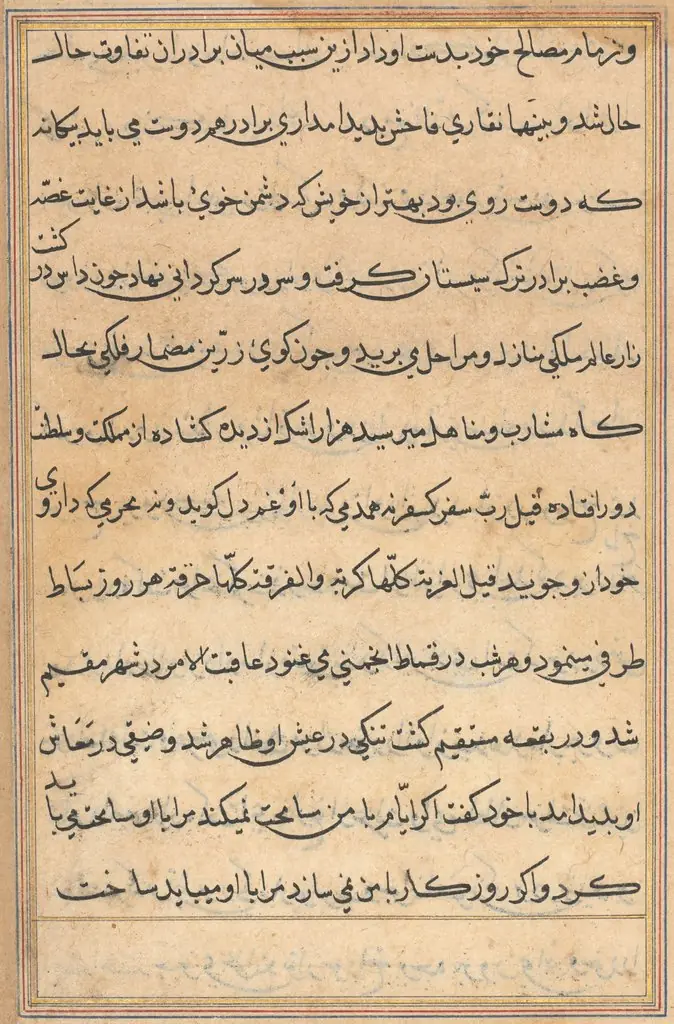
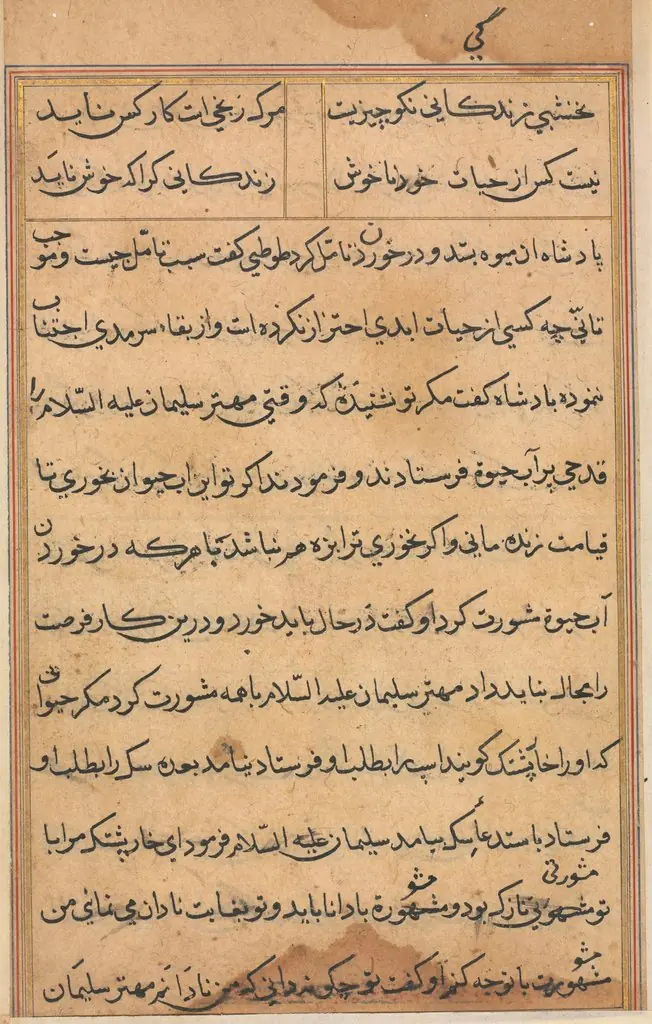
The page presents text from the Tuti-nama (Tales of a Parrot), a collection of Persian-derived tales recast in Mughal India. The Tuti-nama frames a series of cautionary, didactic stories told by a parrot, a motif associated with wisdom and moral instruction. The work reflects the cross-cultural transmission of literature and visual storytelling in Mughal India, where Persianate themes were adapted into local literary and artistic forms.
As a folio in an illustrated manuscript, it exemplifies a tradition in which text pages and painted folios together served literary and didactic functions. This page belongs to a manuscript dated to 1560 in the collection of the Cleveland Museum of Art.
History & Provenance
This text page from the Tuti-nama (Tales of a Parrot) was created in 1560 and is attributed to an unknown artist. It is held in the collection of the Cleveland Museum of Art under accession number 1962.279.96.b.
Overview
This illuminated page belongs to the Persian manuscript known as the Tales of a Parrot (Tuti‑nama). Executed as a painted sheet, it measures roughly the size of a small folio and is presently held in the collection of the Cleveland Museum of Art. The composition is dominated by dense black ink set against a light brown ground, framed by a narrow blue margin.
Technique & Style
The artist employed a single‑brush approach, varying line thickness to convey emphasis and rhythm within the calligraphic flow. The background’s muted ochre tone provides a subtle contrast that enhances legibility while the thin blue border delineates the page’s limits, giving the work a restrained yet deliberate framing device.
Context
The Tales of a Parrot is part of a broader tradition of illustrated Persian literature that combined poetic storytelling with elaborate calligraphy. Such manuscripts were often produced for elite patrons, serving both as objects of aesthetic appreciation and as carriers of moral or didactic content within the cultural milieu of the Persianate world.
Artist & collection

- Page from Tales of a Parrot (Tuti-nama): text page
 Page from Tales of a Parrot (Tuti-nama): text page
 Page from Tales of a Parrot (Tuti-nama): text page
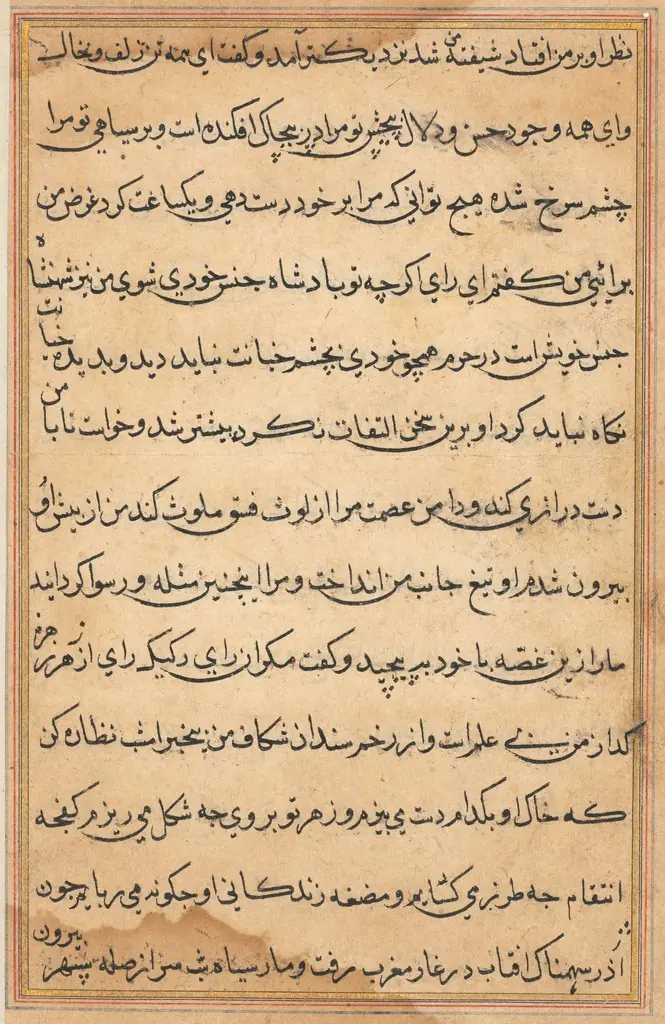 Page from Tales of a Parrot (Tuti-nama): text page
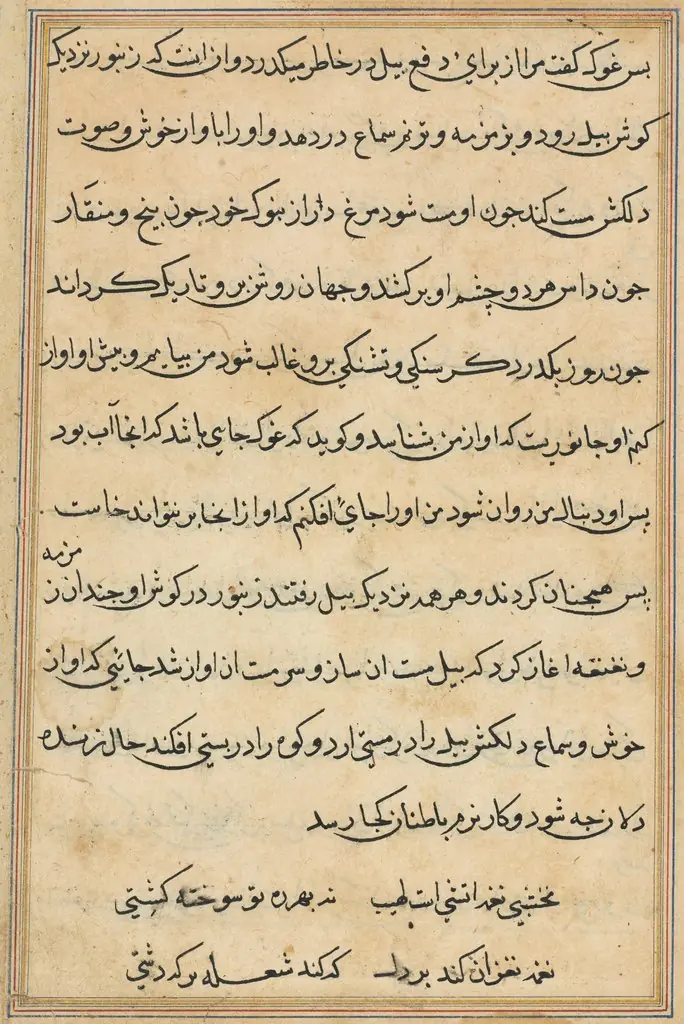 Page from Tales of a Parrot (Tuti-nama): text page
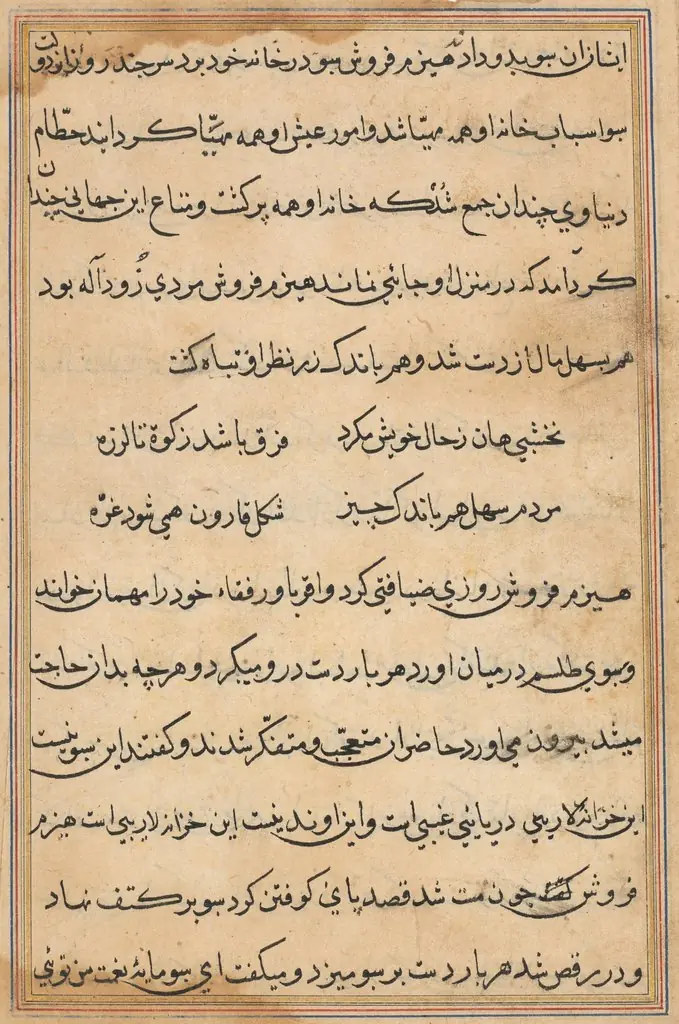 Page from Tales of a Parrot (Tuti-nama): text page
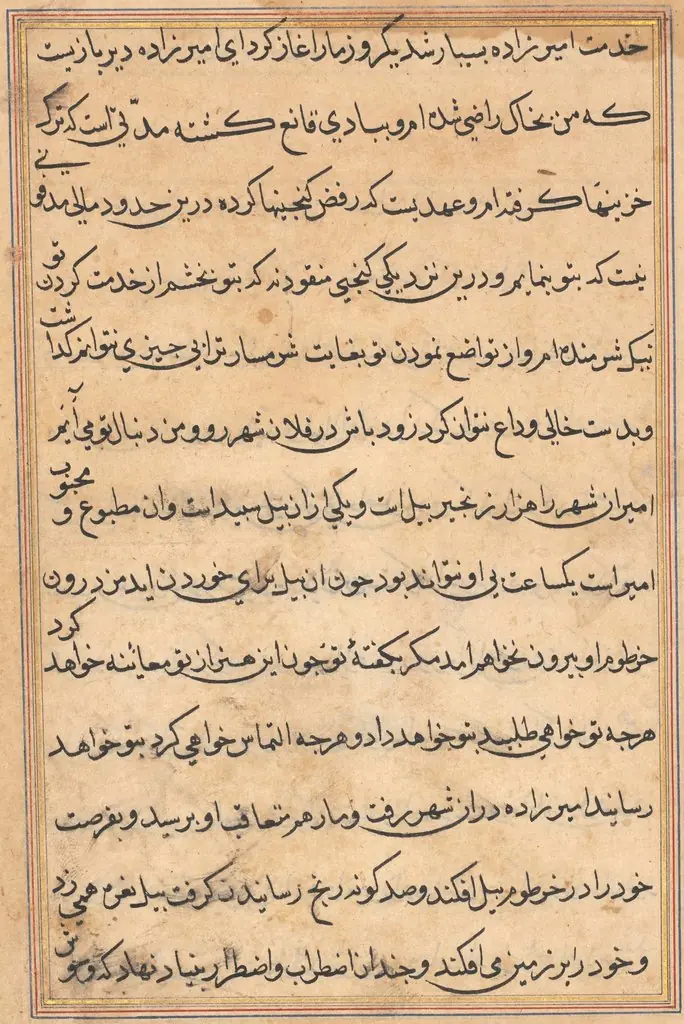 Page from Tales of a Parrot (Tuti-nama): text page
 Page from Tales of a Parrot (Tuti-nama): text page
 Page from Tales of a Parrot (Tuti-nama): text page
 Page from Tales of a Parrot (Tuti-nama): text page
 Page from Tales of a Parrot (Tuti-nama): text page
 Page from Tales of a Parrot (Tuti-nama): text page