Artwork
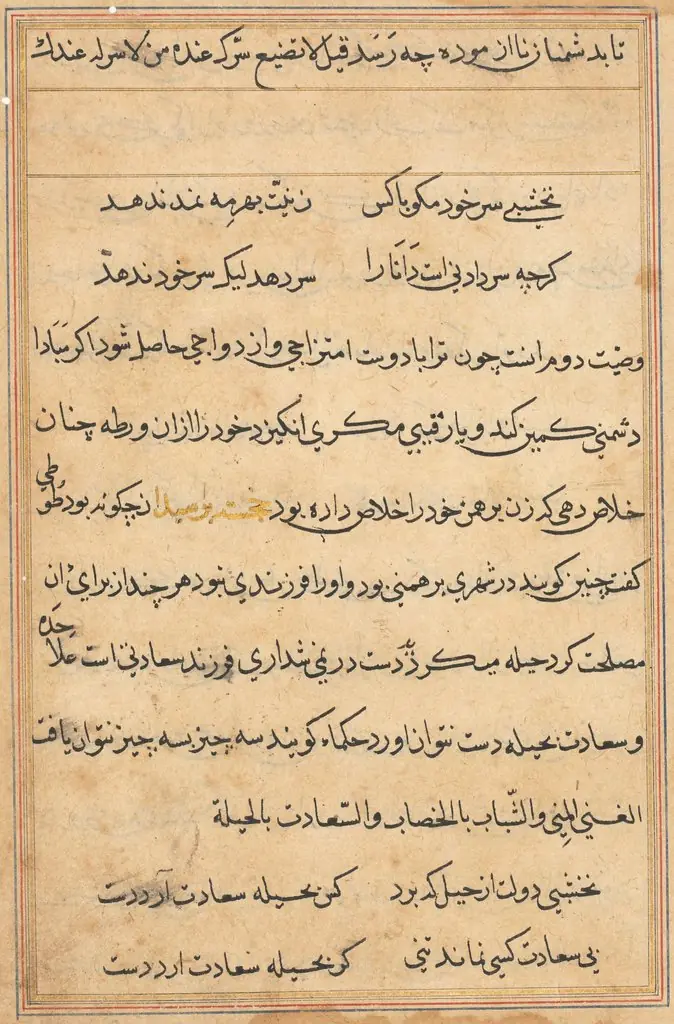
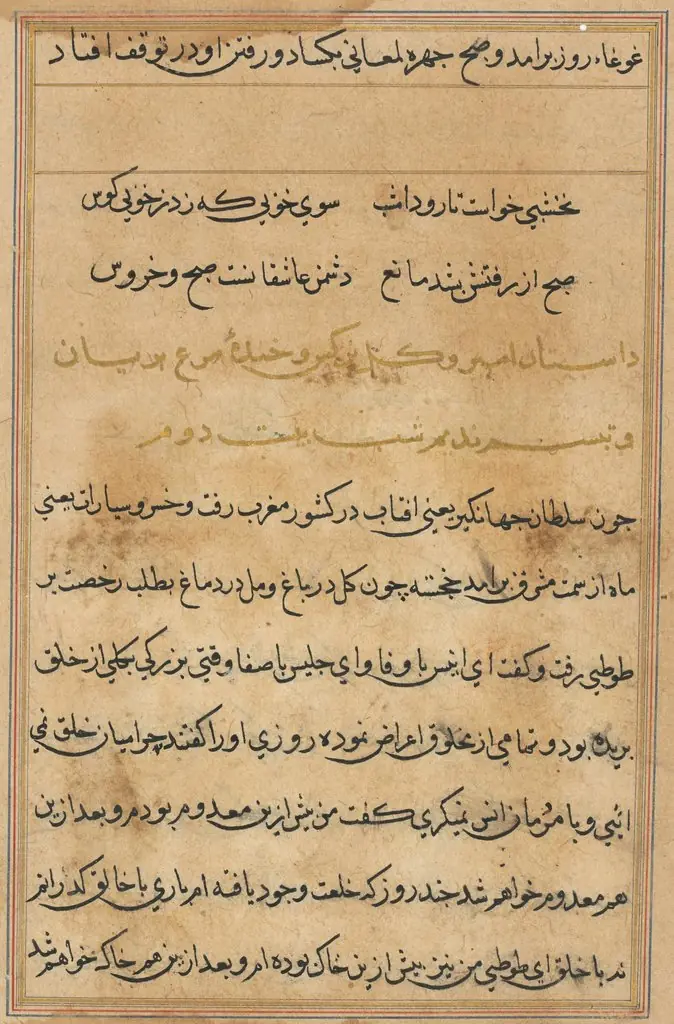
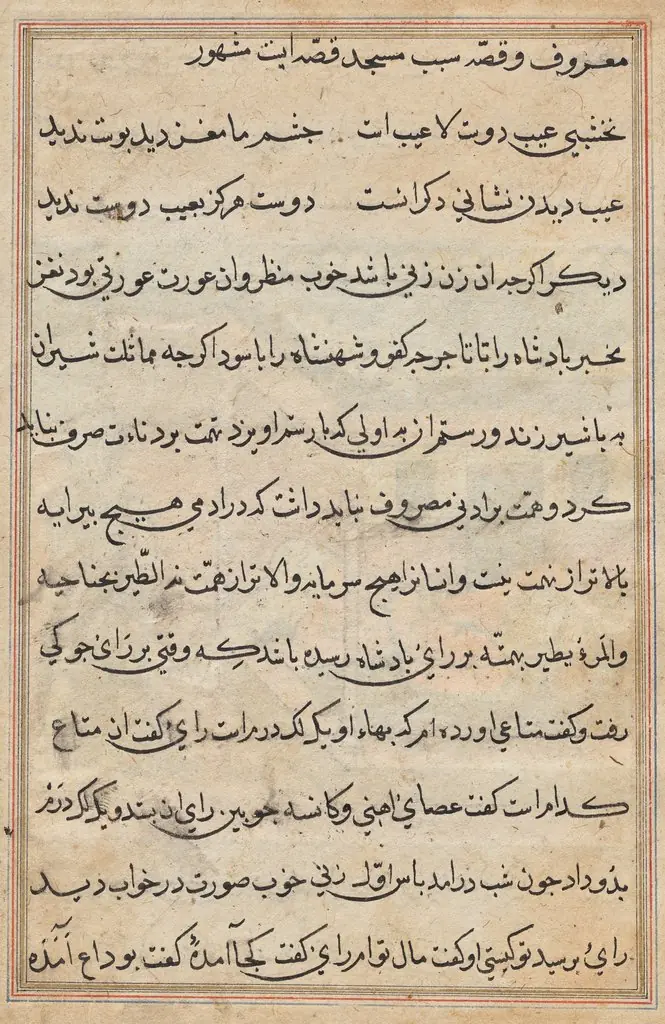
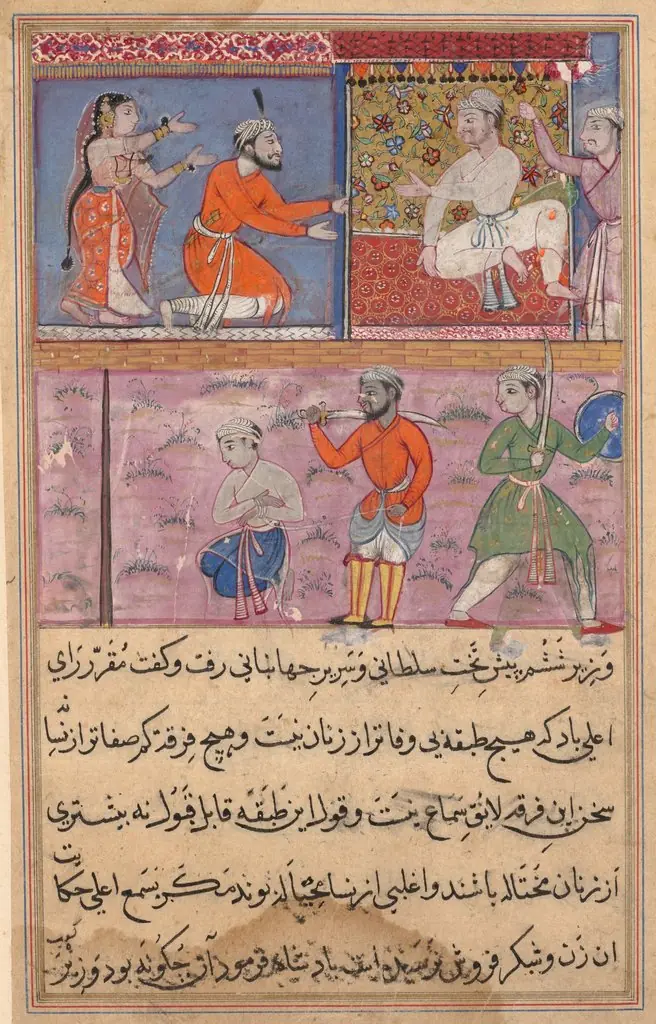
Page from Tales of a Parrot (Tuti-nama): text page
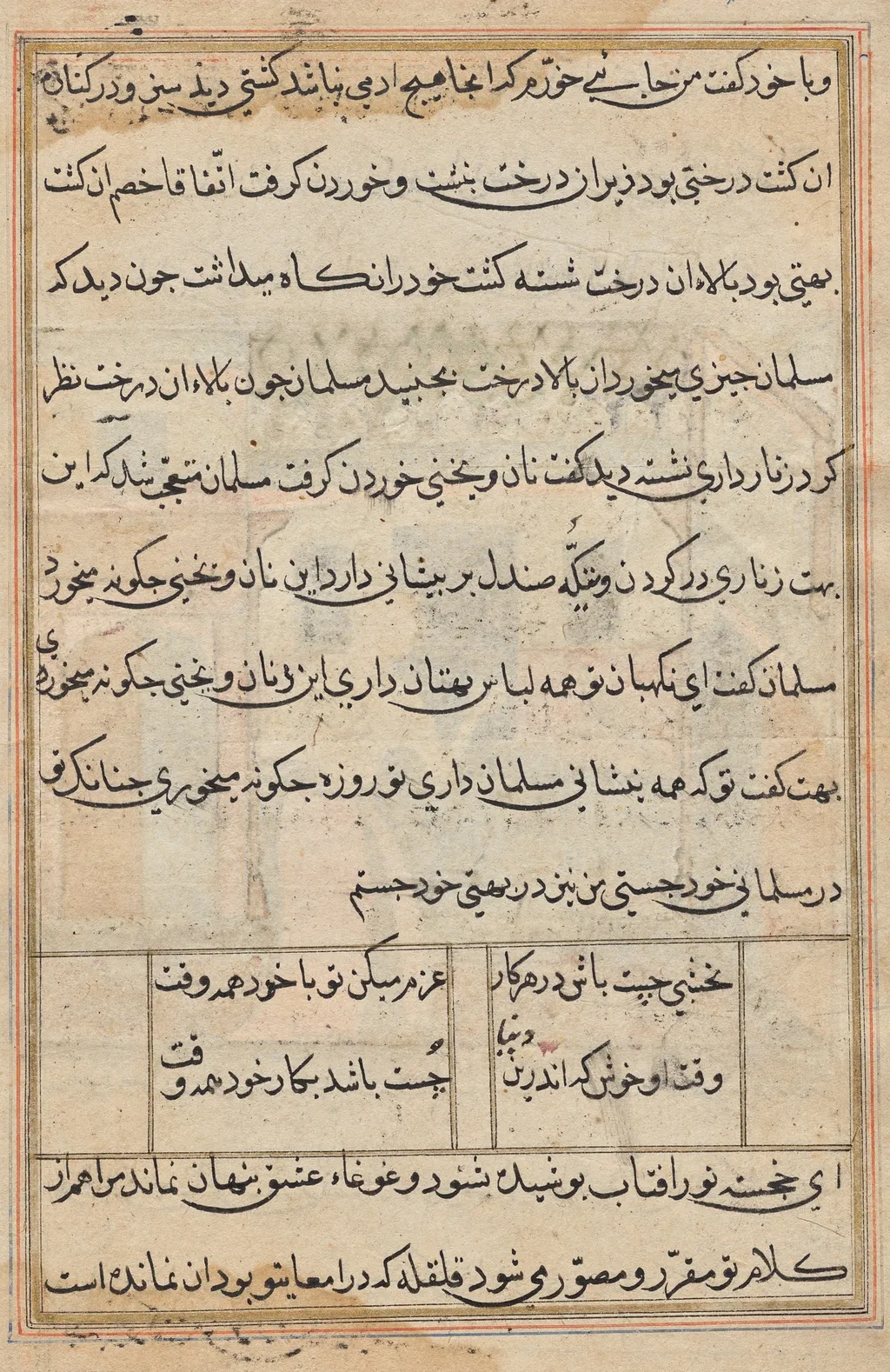
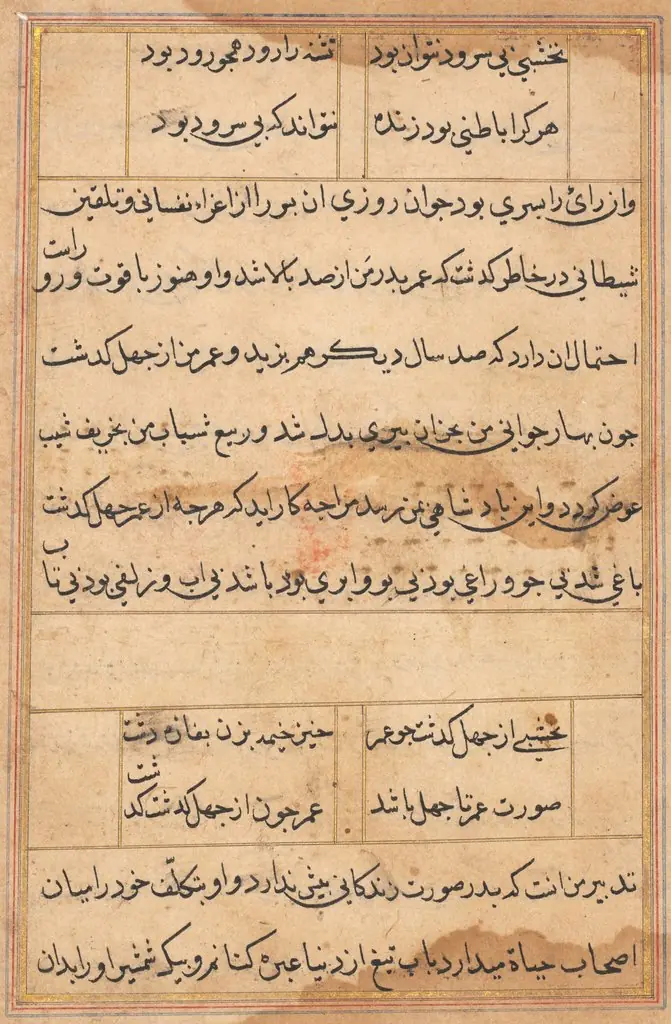
Page from Tales of a Parrot (Tuti-nama): text page is an unspecified painting. It dates from 1560 and is held in the collection of the Cleveland Museum of Art. This object is a single folio from the illustrated manuscript known as Tales of a Parrot (Tuti‑nama).
About this work
Technique & Style
Pigment application suggests tempera washes over a ruled text field, while the drawing was handled as a separate sheet within a bound manuscript.
The page is an ink drawing on paper, likely executed in the Persian miniature tradition of the 16th century. Pigment application suggests tempera washes over a ruled text field, while the drawing was handled as a separate sheet within a bound manuscript. Its condition shows minor foxing along the edges, and stylistically it features delicate line work, flattened perspective, and a restrained palette of ochre, indigo, and vermilion that typifies Mughal book arts of the 1560s.
History & Provenance
Created in 1560 within the Mughal Empire, this text page from the Tuti-nama (Tales of a Parrot) was produced by an artist whose specific identity remains unrecorded. The work entered the collection of the Cleveland Museum of Art, where it is cataloged under the accession number 1962.279.276.b. While the exact circumstances of its original commission and the intermediate steps of its ownership history prior to museum acquisition are not detailed in the available records, its inception is firmly established in the mid-sixteenth century.
The painting is part of the Cleveland Museum of Art collection and is cataloged under the accession number 1962.279.276.b. It has been exhibited in the museum’s galleries as part of displays focusing on Indian miniature painting and Mughal artistic production.
Legacy
The page's survival and presence in a major museum collection have contributed to renewed scholarly interest in Mughal manuscript production, particularly in how illustrated texts circulated across cultures. Its inclusion in exhibitions at the Cleveland Museum of Art has introduced the work to broader audiences, reinforcing its status as an important textual and visual artifact from the 16th century. The manuscript page continues to be referenced in studies of cross-cultural storytelling, influencing modern interpretations of Eastern narrative traditions.
Overview
This object is a single folio from the illustrated manuscript known as Tales of a Parrot (Tuti‑nama). Rendered entirely in black ink on a light, slightly yellowed sheet, the page is filled with text arranged in orderly rows, punctuated by a few enlarged, ornamented passages near the bottom.
Subject & Meaning
The written material comprises a narrative from the Tuti‑nama, a collection of moral stories traditionally used for instruction. The presence of decorative emphasis on certain lines suggests highlights of particular moral or didactic importance within the tale.
Context
Tuti‑nama manuscripts were popular in the Persianate world as vehicles for moral education, often commissioned by elite patrons who valued both literary content and artistic presentation. This page exemplifies the convergence of literary and visual refinement typical of such commissions.
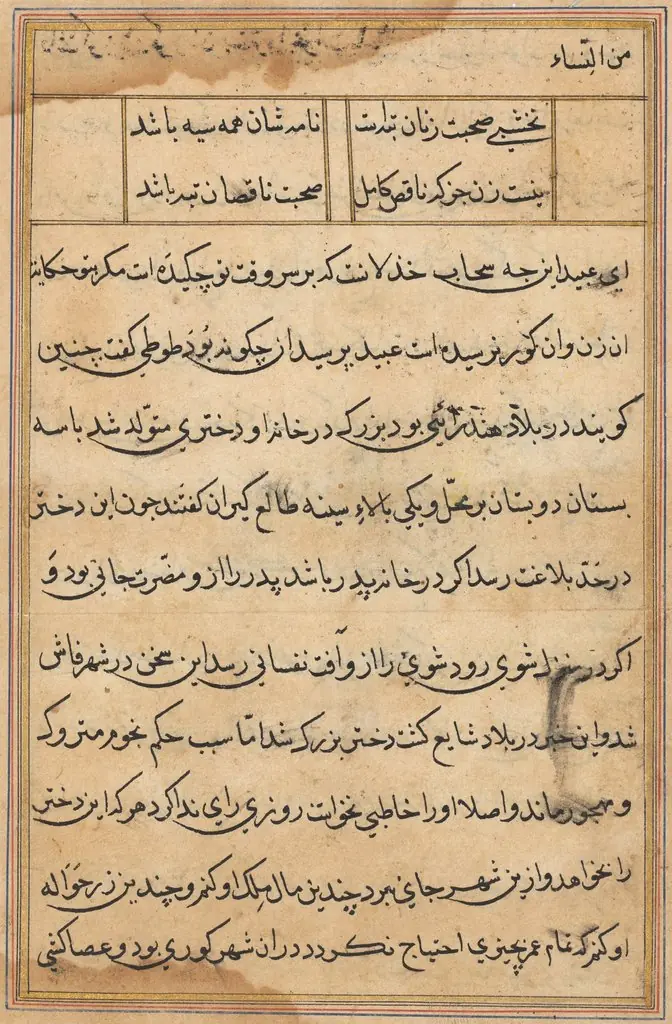
Artist & collection

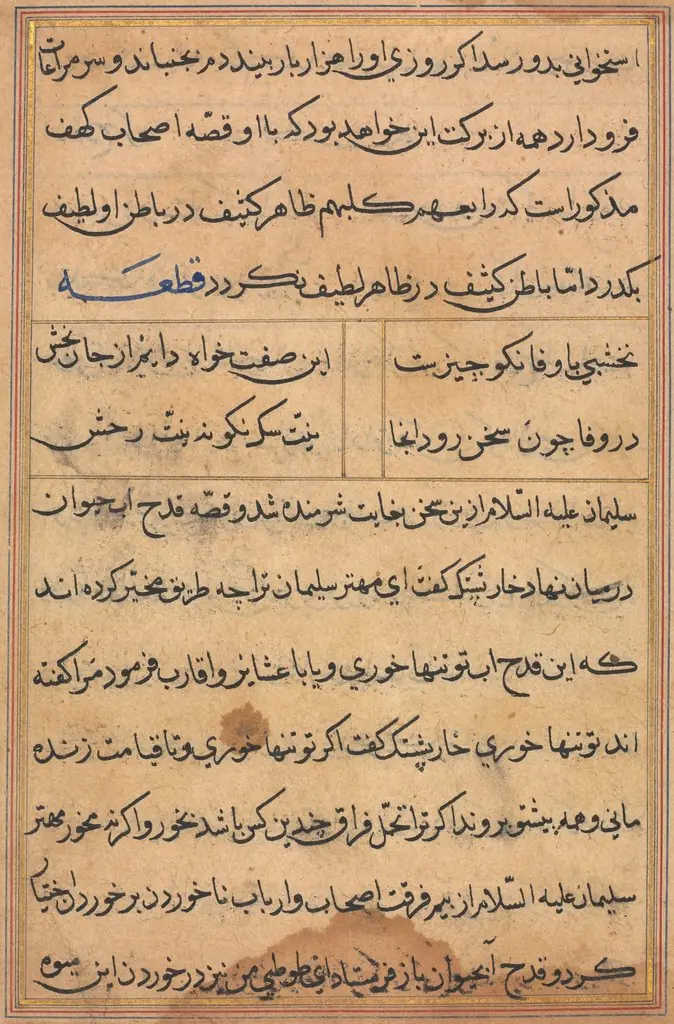 Page from Tales of a Parrot (Tuti-nama): text page
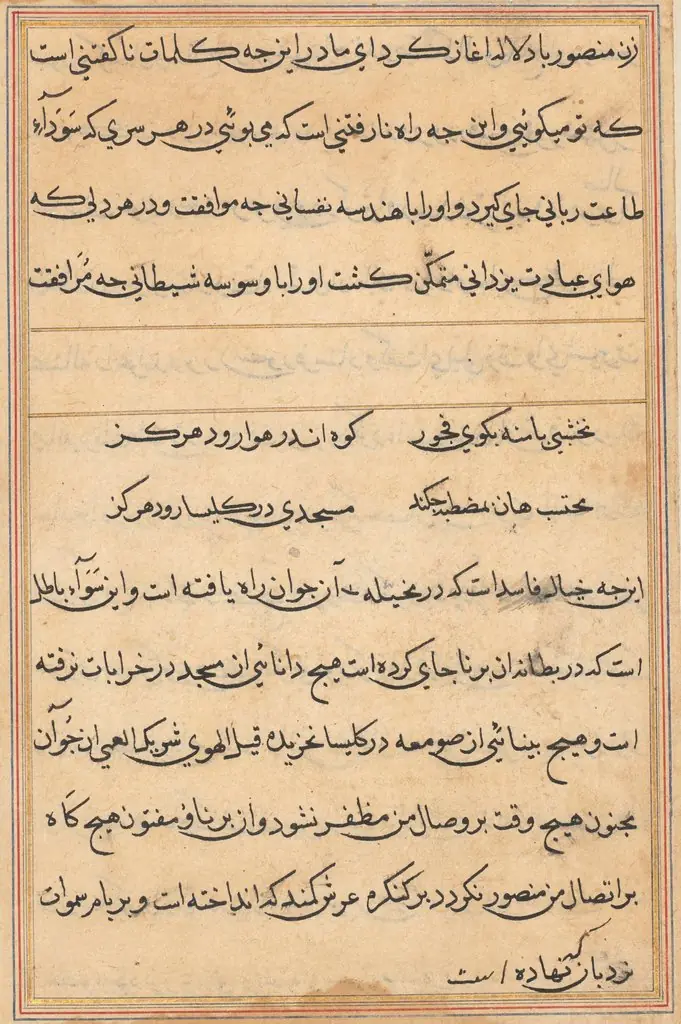 Page from Tales of a Parrot (Tuti-nama): text page
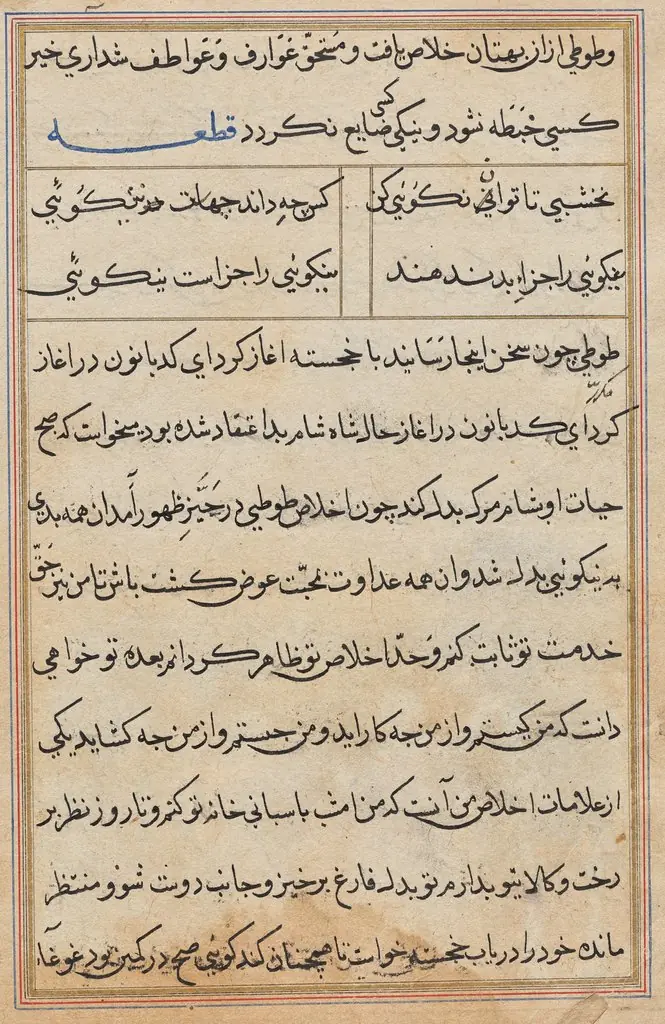 Page from Tales of a Parrot (Tuti-nama): text page
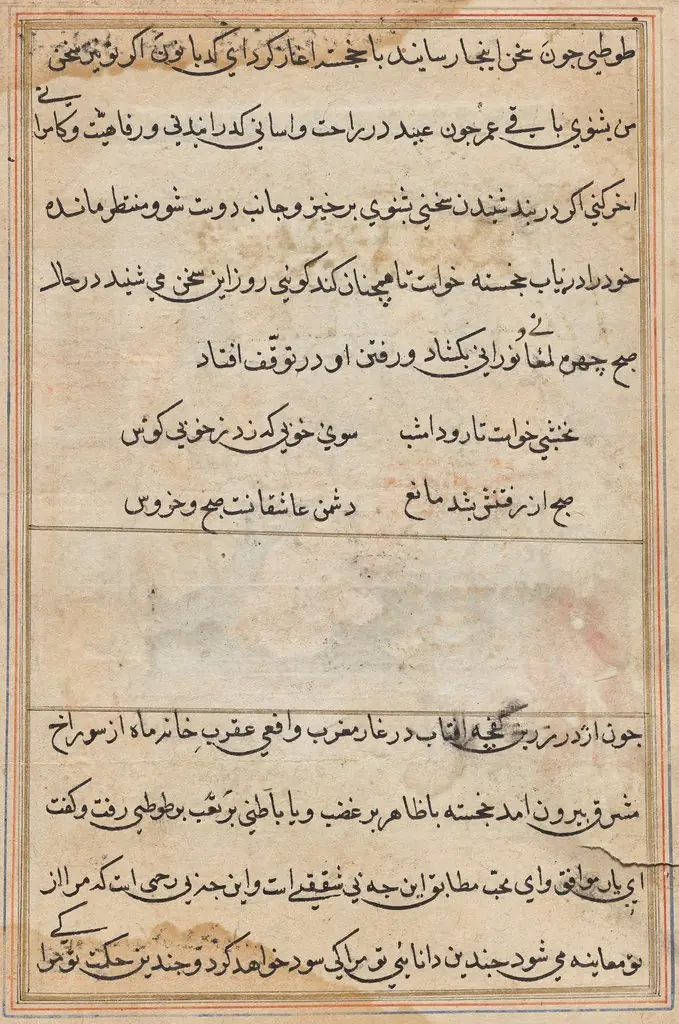 Page from Tales of a Parrot (Tuti-nama): text page
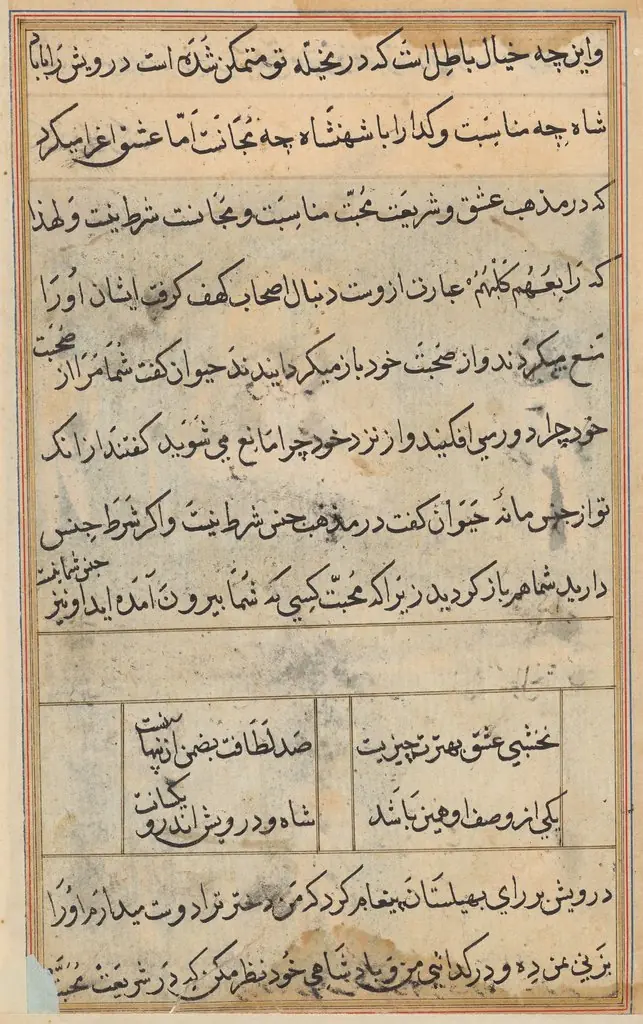 Page from Tales of a Parrot (Tuti-nama): text page
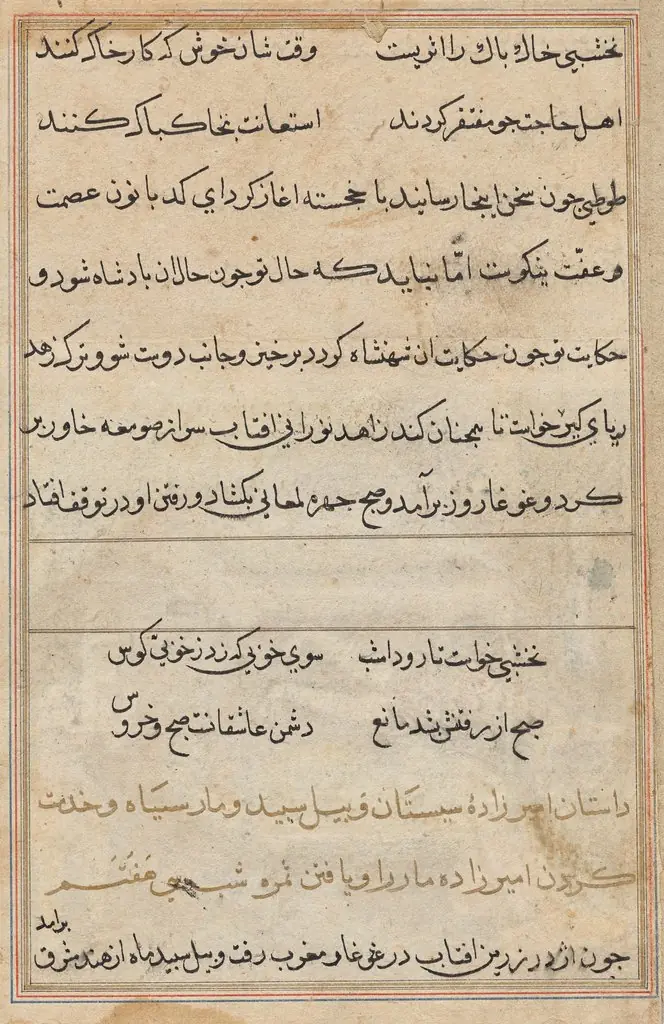 Page from Tales of a Parrot (Tuti-nama): text page
 Page from Tales of a Parrot (Tuti-nama): text page