Artwork
Page from Tales of a Parrot (Tuti-nama): text page
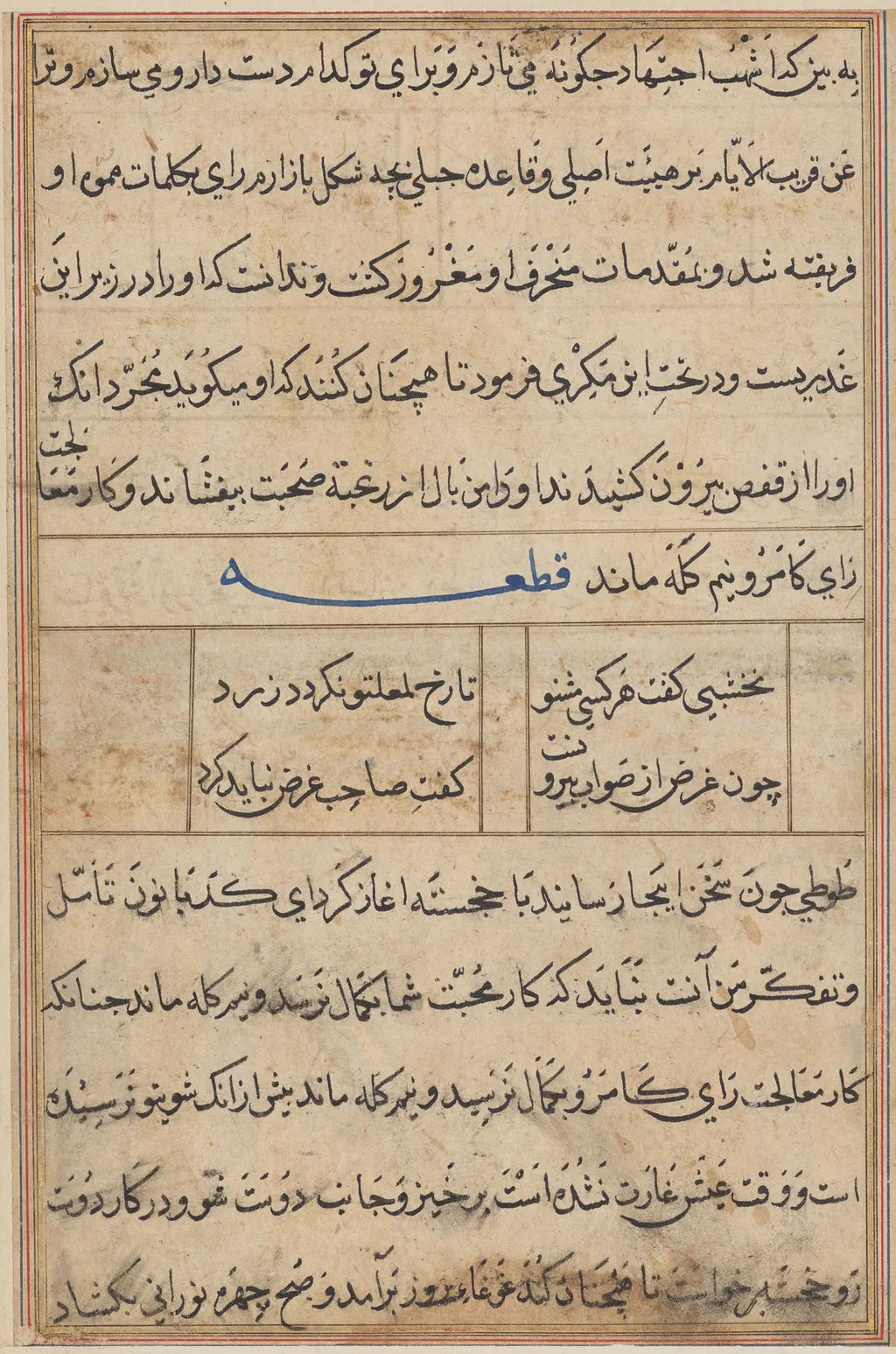
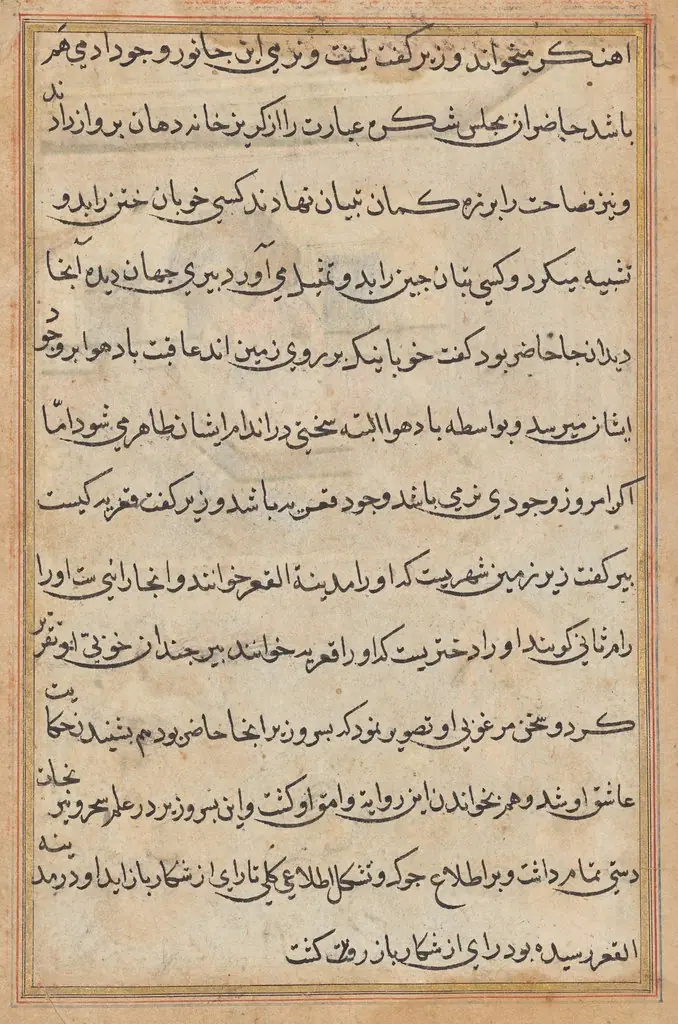
Page from Tales of a Parrot (Tuti-nama): text page is an unspecified painting. It dates from 1560 and is held in the collection of the Cleveland Museum of Art. The work is a painted page from the illustrated manuscript known as Tales of a Parrot (Tuti‑nama).
About this work
The page is divided into sections by thin lines, and there are some small illustrations or decorations throughout the text.
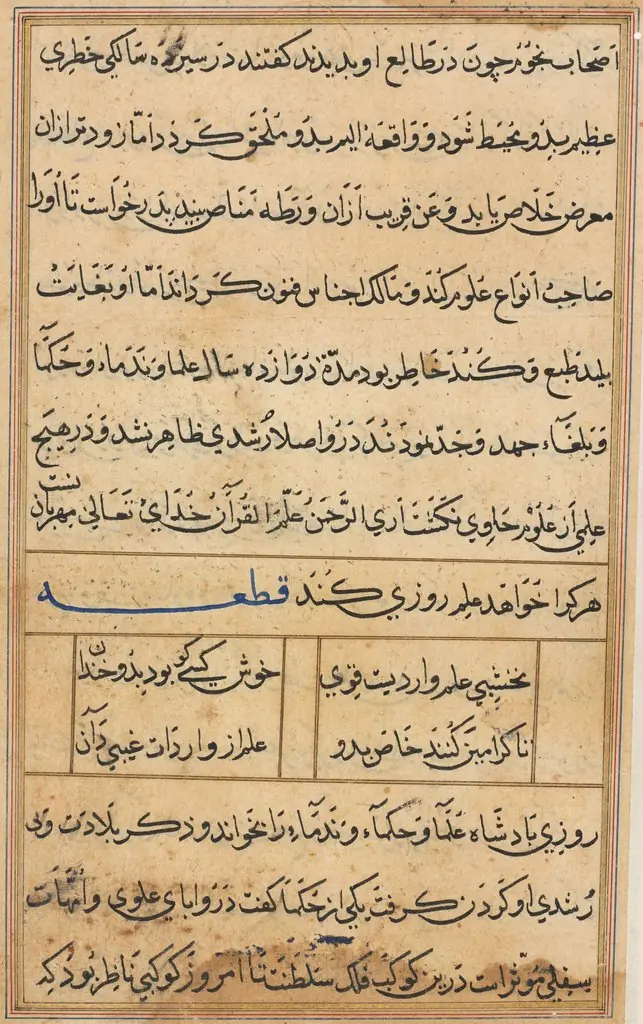
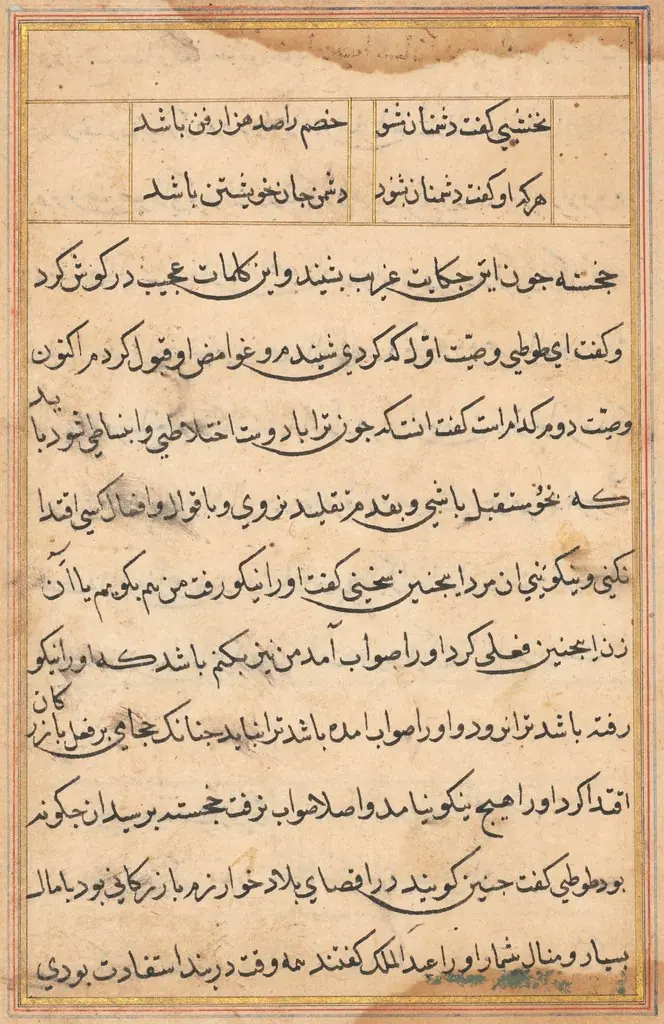
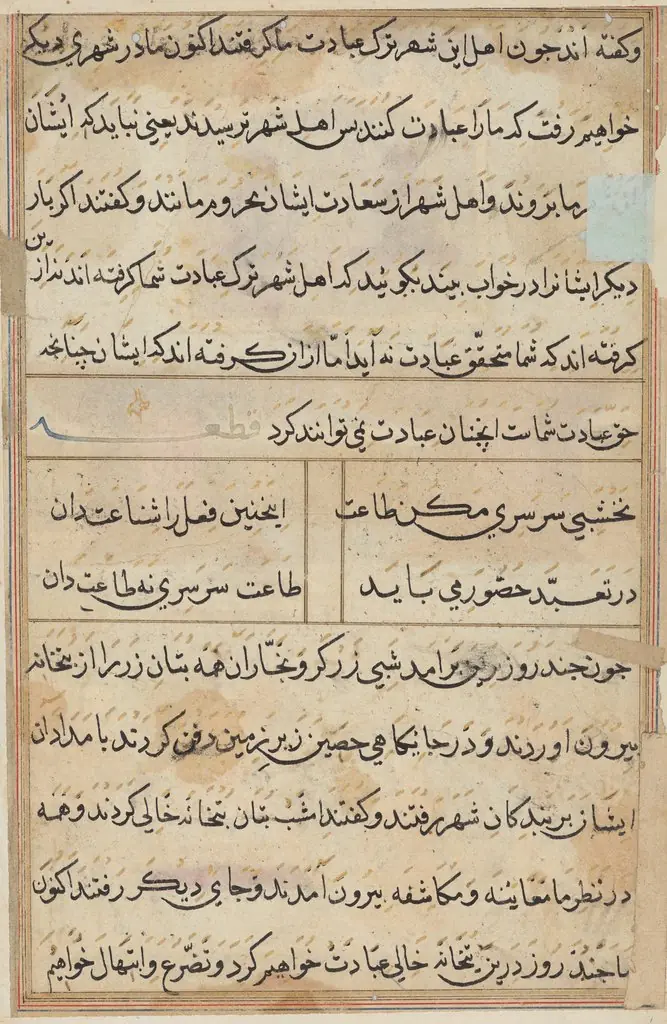
This painting shows a page filled with writing in a language that looks like Arabic or Persian. The text is written in black ink on a beige background, with some words highlighted in blue. The page is divided into sections by thin lines, and there are some small illustrations or decorations throughout the text.
The writing is very detailed and intricate, with many flourishes and embellishments. The overall effect is one of great beauty and craftsmanship. The page appears to be from an old book or manuscript, and the writing style suggests that it may be from the 16th century.
Subject & Meaning
The page depicts a narrative from the Tuti-nama, a Persian collection of tales composed in the fourteenth century but copied and illustrated in India during the sixteenth century. The illustrated text page reflects themes of wisdom and moral instruction common in the source literature, drawing on Mughal artistic conventions that blended Persian narrative tradition with Indian court aesthetics.
The iconography centers on the parrot as a symbol of eloquent speech and storytelling, often associated with royal patronage and moral counsel. The subject reflects didactic storytelling, where animals convey lessons, reinforcing ethical behavior through allegory.
These visual elements represent the cultural synthesis of the Mughal era, where Persian literary themes were adapted into miniature painting styles prevalent in imperial workshops. The page thus embodies the transmission of narratives within the artistic traditions of South Asia.
History & Provenance
Created in 1560 within the Mughal Empire, this text page from the Tales of a Parrot (Tuti-nama) was produced by an unknown artist. The work is part of a manuscript series rather than a standalone commission, reflecting the manuscript tradition of the period. It entered the collection of the Cleveland Museum of Art in 1962, where it is catalogued under the accession number 1962.279.37.a. The available records do not document its ownership history prior to acquisition.
Context
The page from the Tuti-nama manuscript, produced circa 1560 in the Mughal Empire, exemplifies the synthesis of Persian narrative tradition and emerging Mughal visual language. Its compositional clarity and subtle modeling of figures reflect the influence of Safavid Persian painting while introducing a more naturalistic spatial arrangement characteristic of early Akbar-era workshops. This work is situated within the broader trajectory of Indian subcontinental manuscript illumination, where text and image merged to convey didactic literature, as seen in comparative holdings at the Cleveland Museum of Art and other institutions documenting Mughal artistic production.
Overview
The work is a painted page from the illustrated manuscript known as Tales of a Parrot (Tuti‑nama). Executed as a miniature painting, it reproduces a single leaf of text rather than a full illustration, presenting the page as an object of visual art.
Technique & Style
Rendered with black ink on a light‑tan ground, the calligraphy is interlaced with delicate flourishes and occasional blue accents that highlight key words. Thin ruled lines separate the text into columns, while miniature decorative motifs, such as vegetal vines and tiny figurative sketches, punctuate the margins, demonstrating the meticulous hand of a courtly scribe‑artist.
Legacy
As a representative example of Persian miniature book art, the page illustrates the enduring influence of calligraphic decoration on later artistic traditions, informing modern understandings of manuscript illumination and the visual rhetoric of textual presentation.
Artist & collection

- Page from Tales of a Parrot (Tuti-nama): text page
 Page from Tales of a Parrot (Tuti-nama): text page
 Page from Tales of a Parrot (Tuti-nama): text page
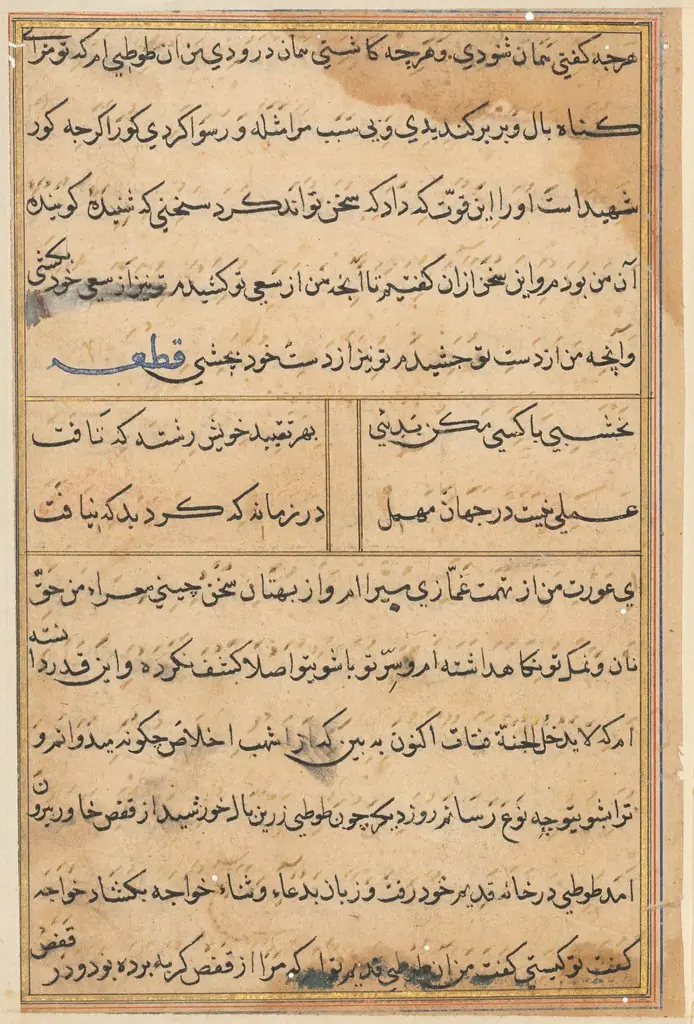 Page from Tales of a Parrot (Tuti-nama): text page
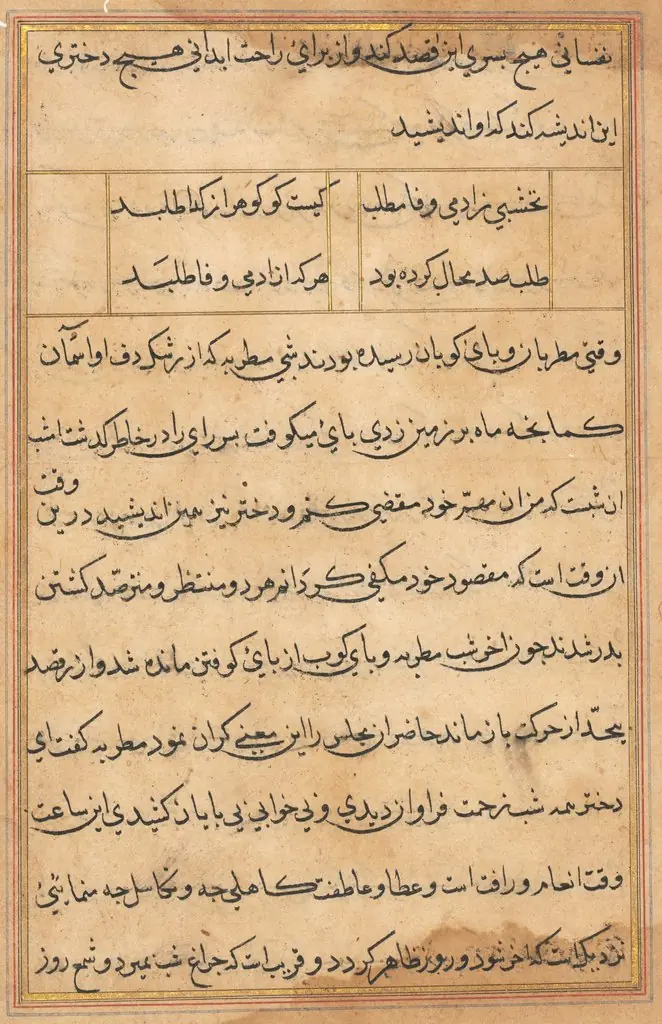 Page from Tales of a Parrot (Tuti-nama): text page
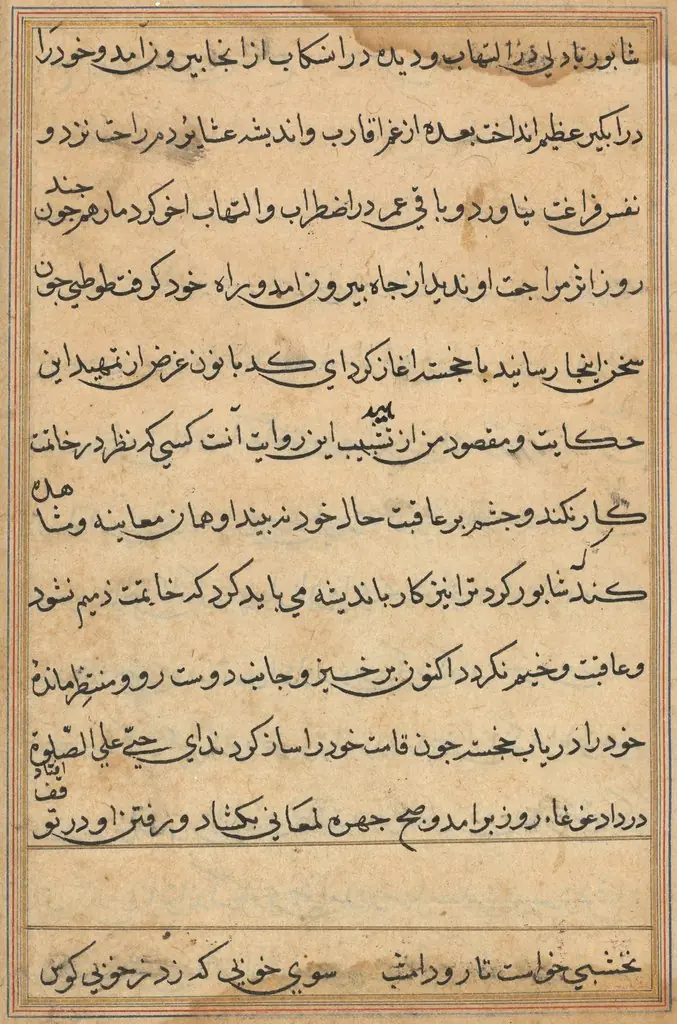 Page from Tales of a Parrot (Tuti-nama): text page
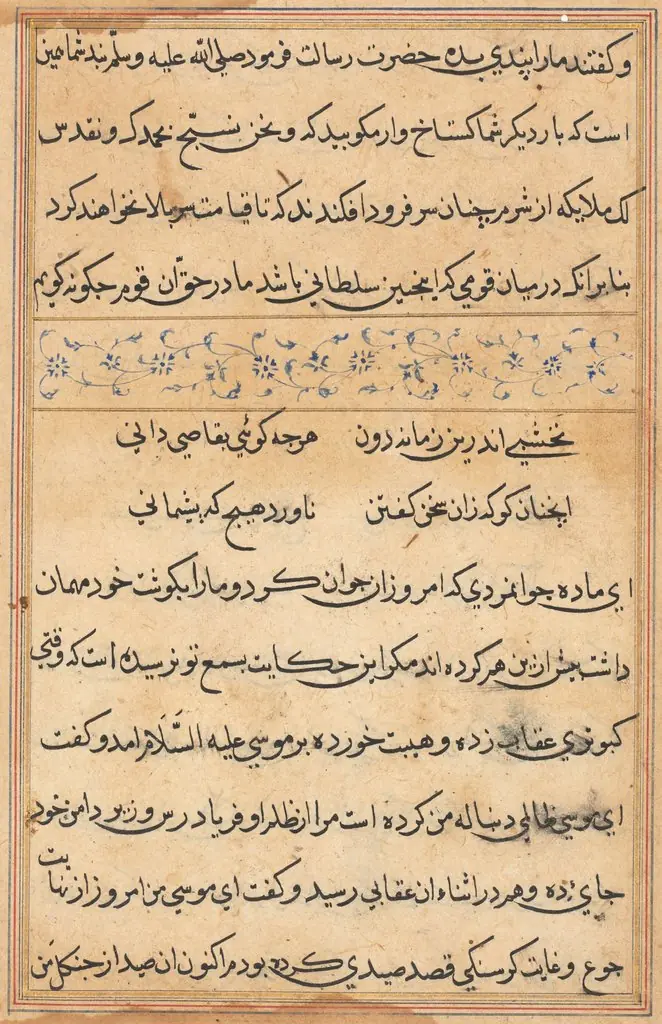 Page from Tales of a Parrot (Tuti-nama): text page
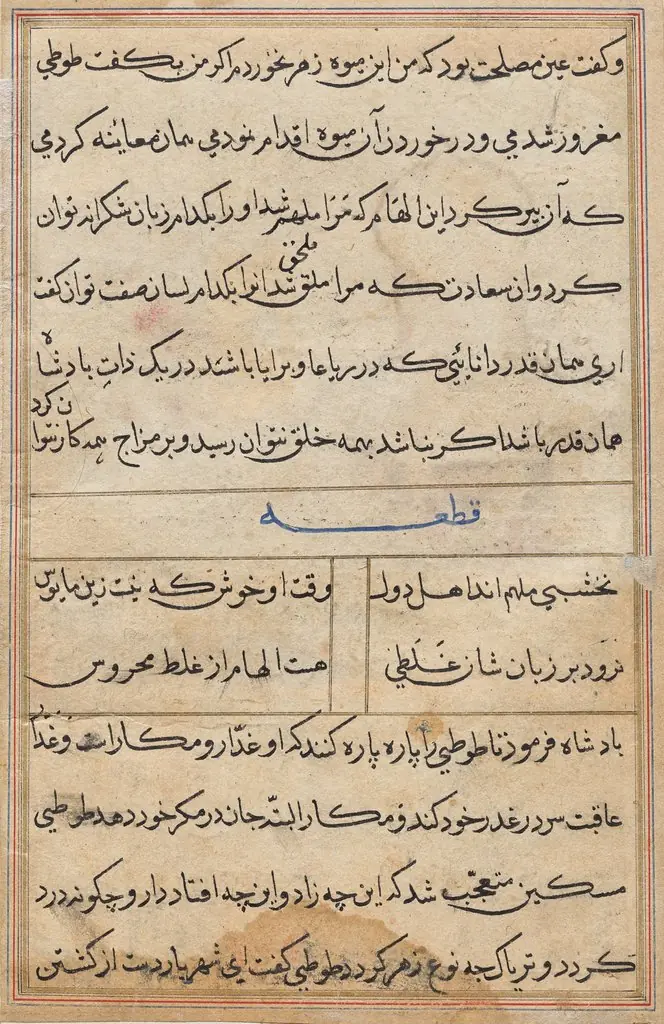 Page from Tales of a Parrot (Tuti-nama): text page
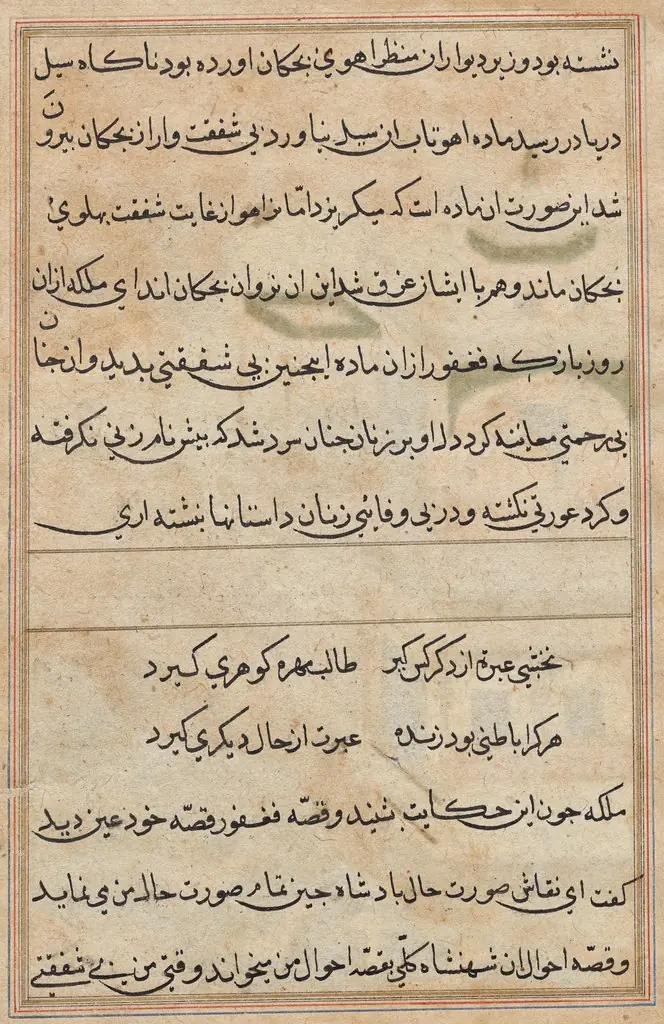 Page from Tales of a Parrot (Tuti-nama): text page
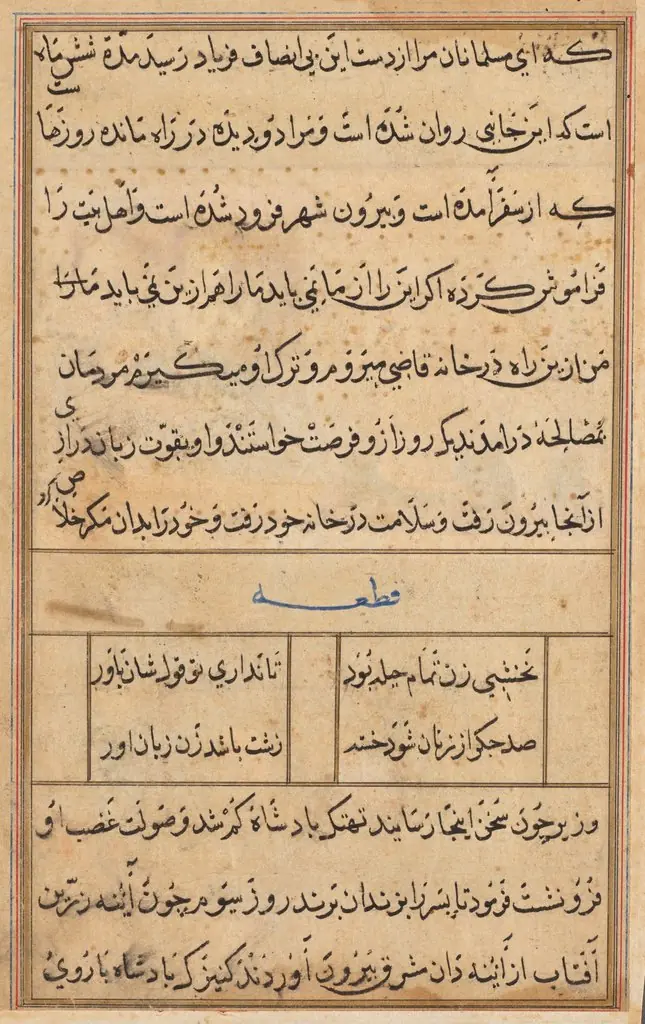 Page from Tales of a Parrot (Tuti-nama): text page
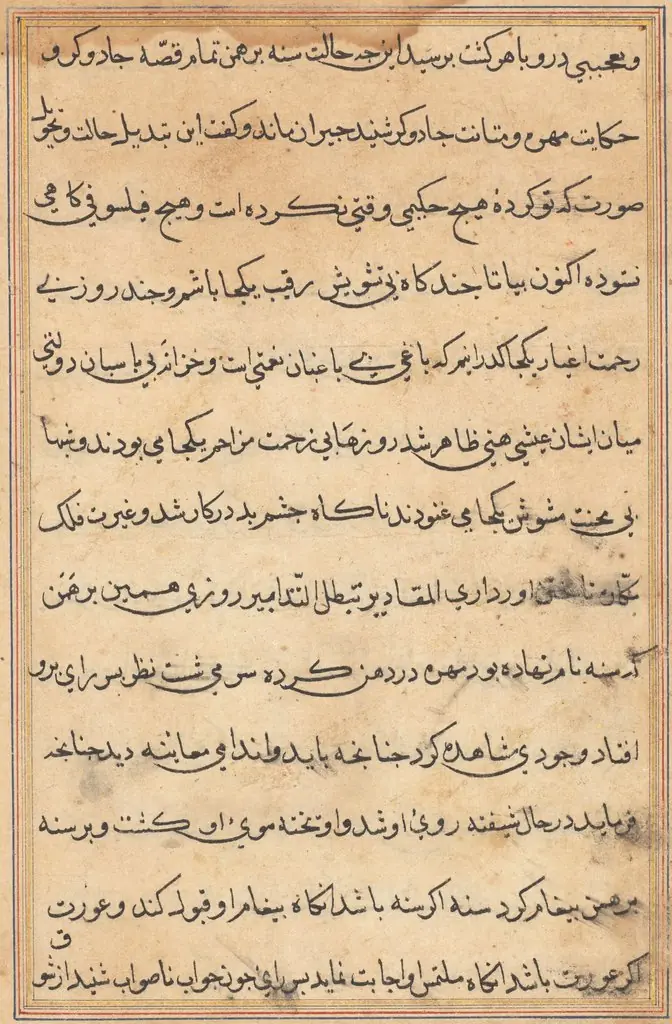 Page from Tales of a Parrot (Tuti-nama): text page
 Page from Tales of a Parrot (Tuti-nama): text page