Artwork
Page from Tales of a Parrot (Tuti-nama): text page
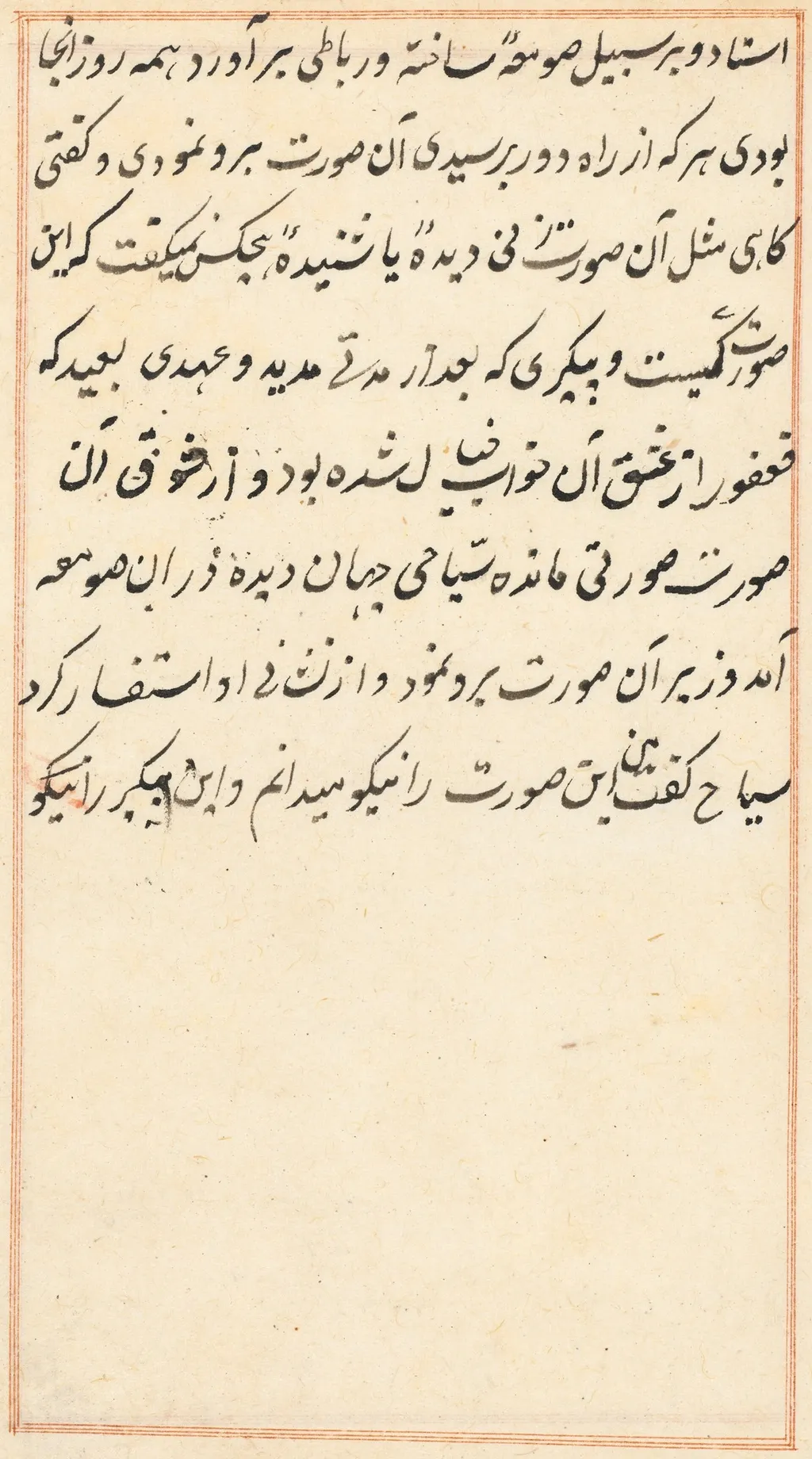
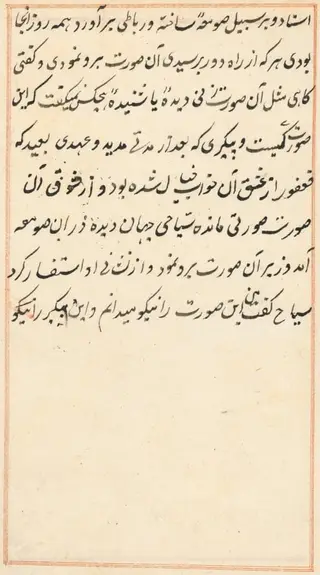
Page from Tales of a Parrot (Tuti-nama): text page is an unspecified painting. It dates from 1517 and is held in the collection of the Cleveland Museum of Art. The object is a single leaf from a manuscript titled Tales of a Parrot (Tuti‑nama).
About this work
Subject & Meaning
The work reflects the cultural emphasis on didactic storytelling and the transmission of ethical teachings through animal allegory.
The page depicts a scene from the Tuti-nama, a Persian narrative about a parrot recounting moral tales to its owner. The figure of the parrot symbolizes wisdom and moral instruction, while the surrounding text illustrates a courtly setting typical of Mughal manuscript painting. The work reflects the cultural emphasis on didactic storytelling and the transmission of ethical teachings through animal allegory.
History & Provenance
This text page from the Tales of a Parrot (Tuti-nama) was created in 1517 within the Mughal Empire. Although the specific artist remains unidentified, the work is classified as a painting from this early period of Mughal art. The manuscript page eventually entered the collection of the Cleveland Museum of Art, where it is held under the accession number 1962.279.253.a.
The institution's records confirm the inception date as January 1, 1517, aligning with the broader historical attribution of the Tuti-nama series to the mid-16th century, though this specific folio is dated precisely to 1517.
Overview
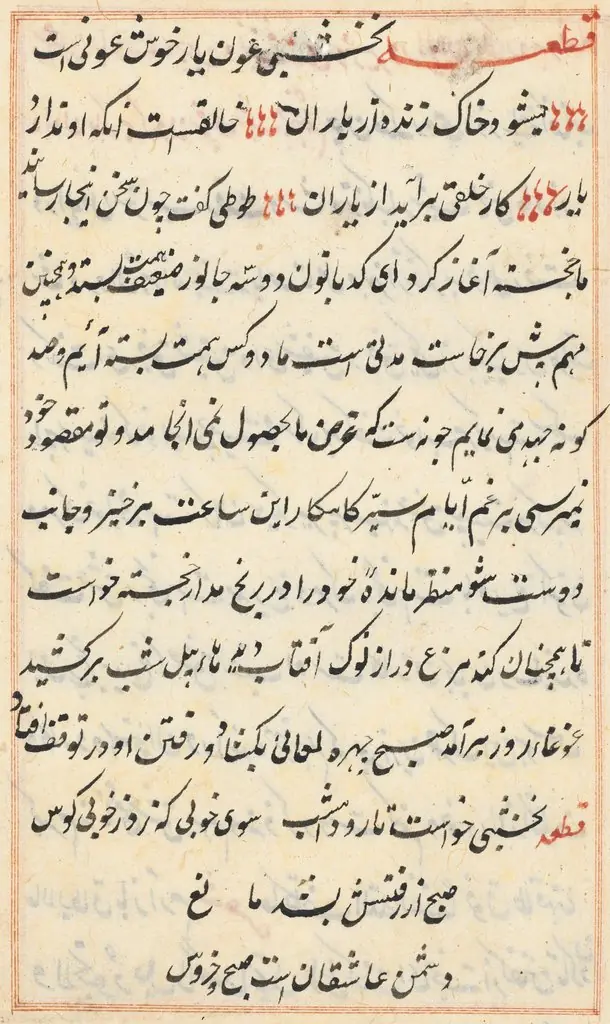
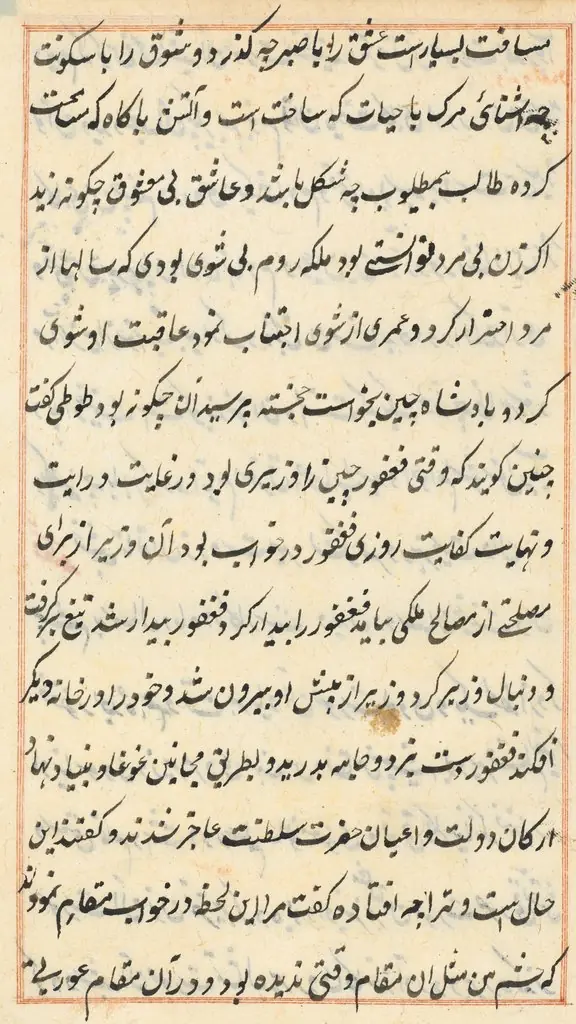
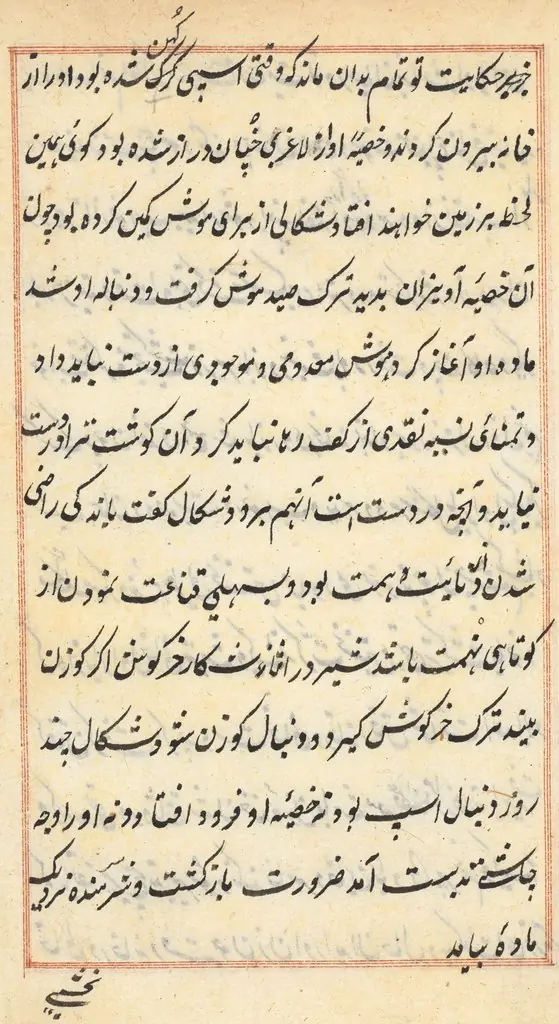
The object is a single leaf from a manuscript titled Tales of a Parrot (Tuti‑nama). It consists of a rectangular page with a beige parchment background, framed by a narrow red border. The text is rendered in black ink using a flowing hand, with occasional words underlined or highlighted in red for emphasis.
Technique & Style
The manuscript employs traditional calligraphic techniques: black iron‑gall ink for the main script and vermilion pigment for decorative accents. The script is cursive, allowing for smooth, continuous strokes, while the red border frames the text, providing visual balance and a subtle ornamental touch.
Context
Animal fable collections such as Tuti‑nama were commonly used for moral instruction and entertainment in courtly and scholarly circles. The inclusion of a parrot, a symbol of eloquence and mimicry, reflects the cultural value placed on storytelling and the transmission of ethical lessons through animal characters.
Artist & collection

- Page from Tales of a Parrot (Tuti-nama): text page
 Page from Tales of a Parrot (Tuti-nama): text page
 Page from Tales of a Parrot (Tuti-nama): text page
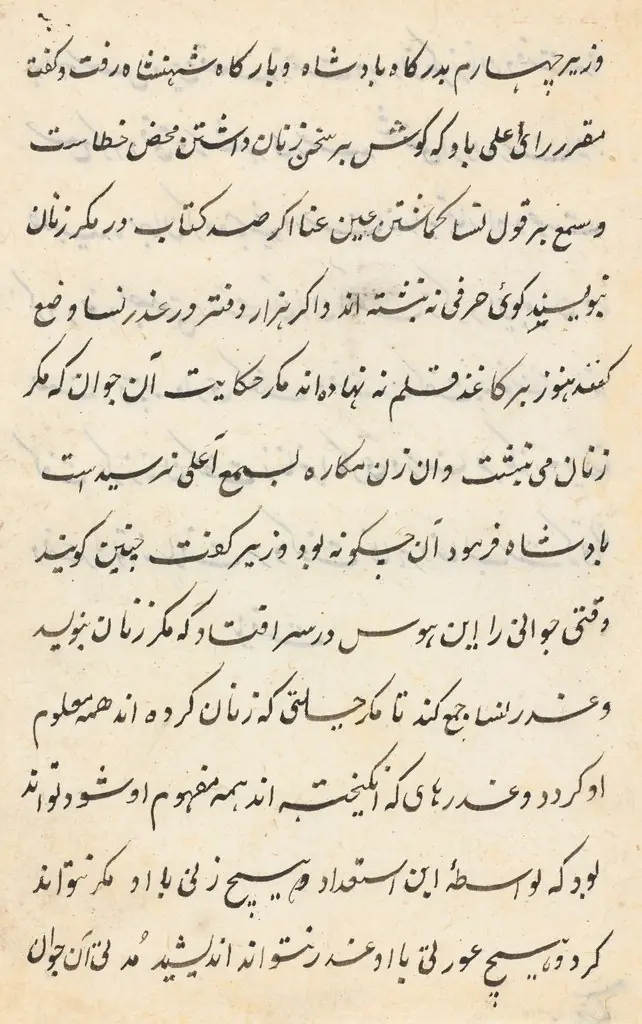 Page from Tales of a Parrot (Tuti-nama): text page
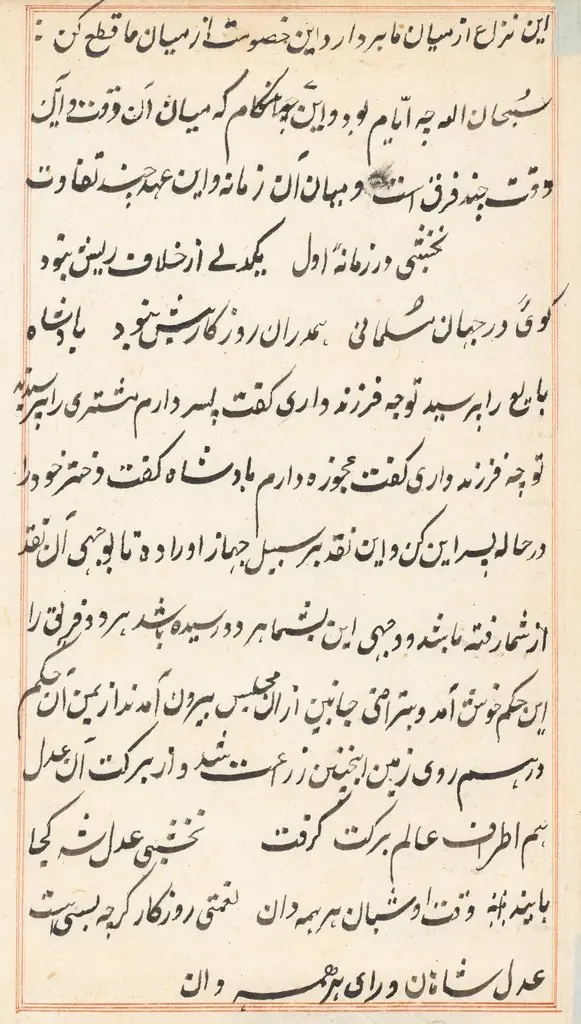 Page from Tales of a Parrot (Tuti-nama): text page
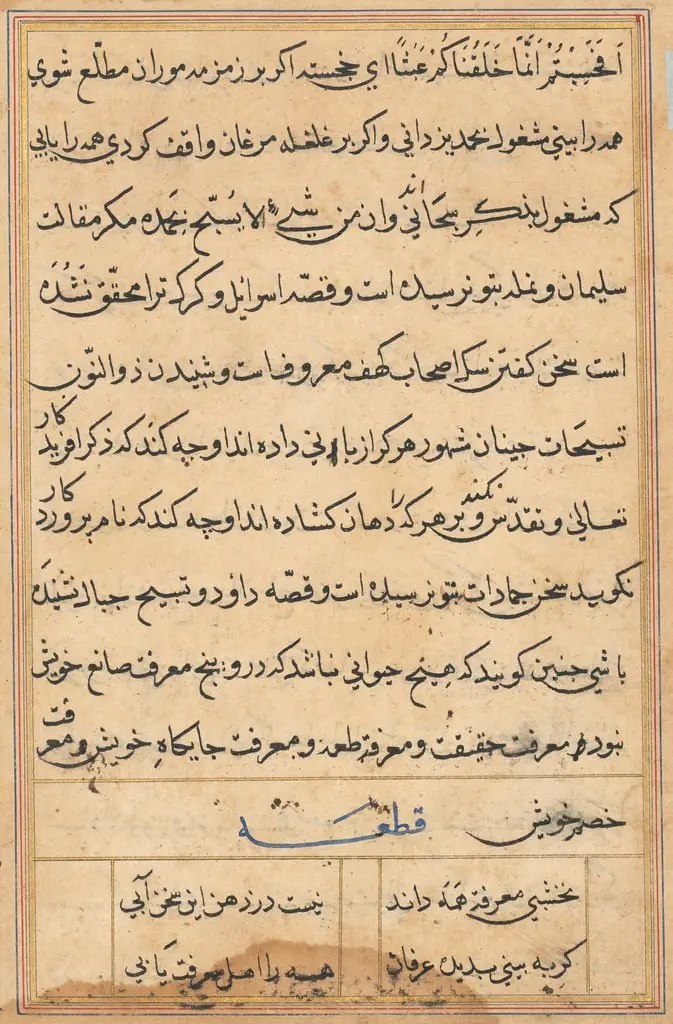 Page from Tales of a Parrot (Tuti-nama): text page
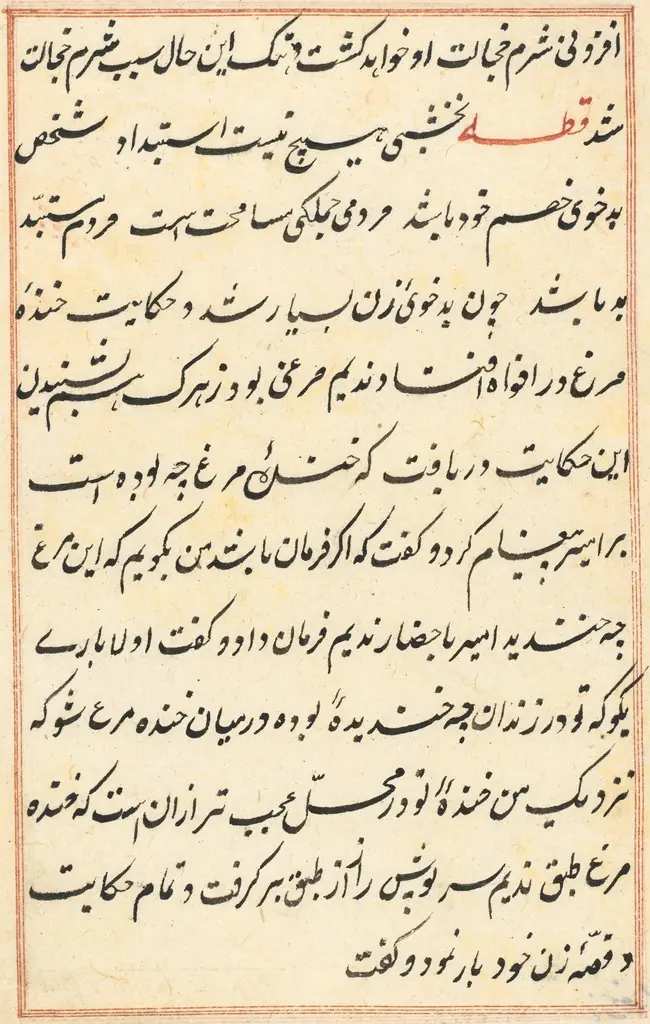 Page from Tales of a Parrot (Tuti-nama): text page
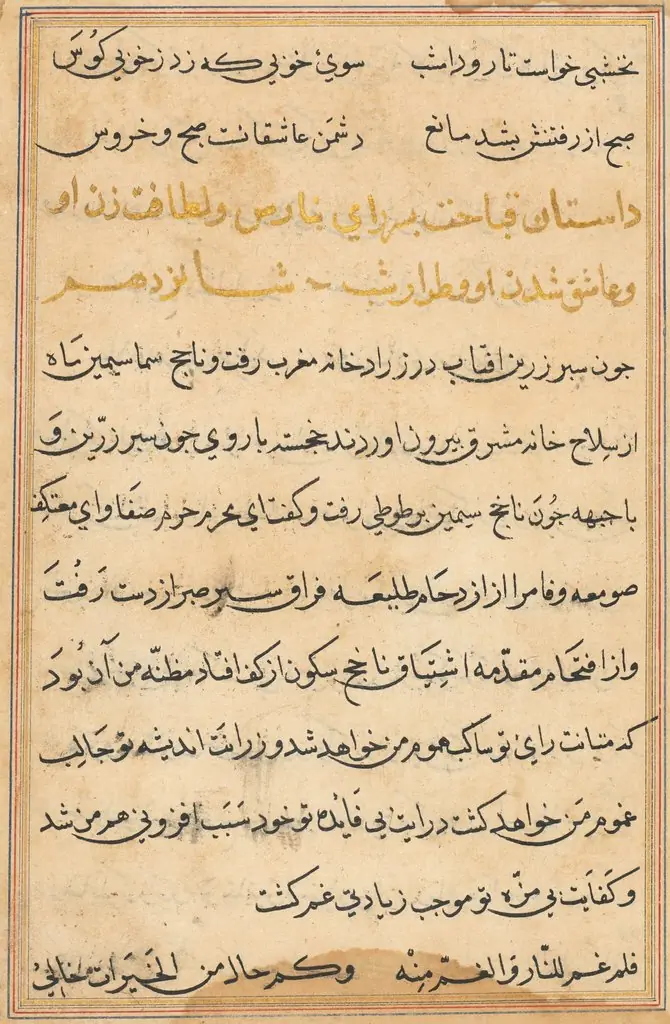 Page from Tales of a Parrot (Tuti-nama): text page
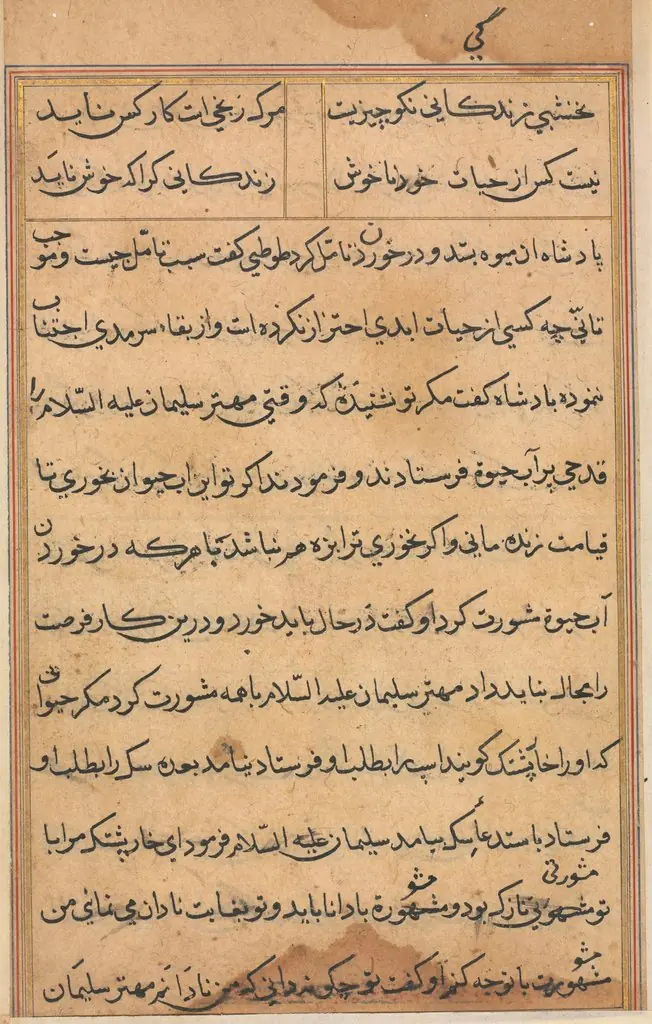 Page from Tales of a Parrot (Tuti-nama): text page
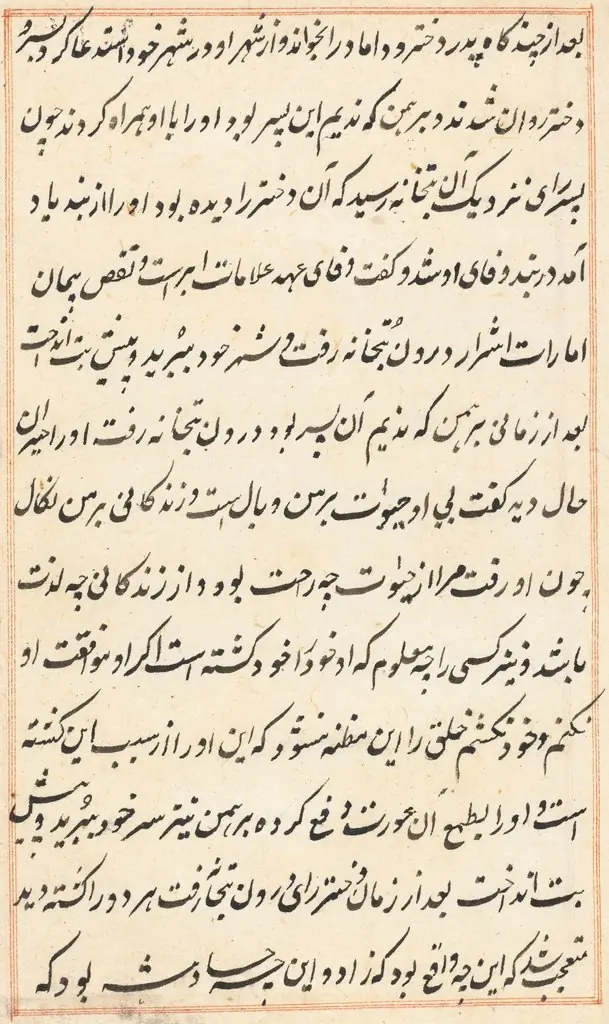 Page from Tales of a Parrot (Tuti-nama): text page
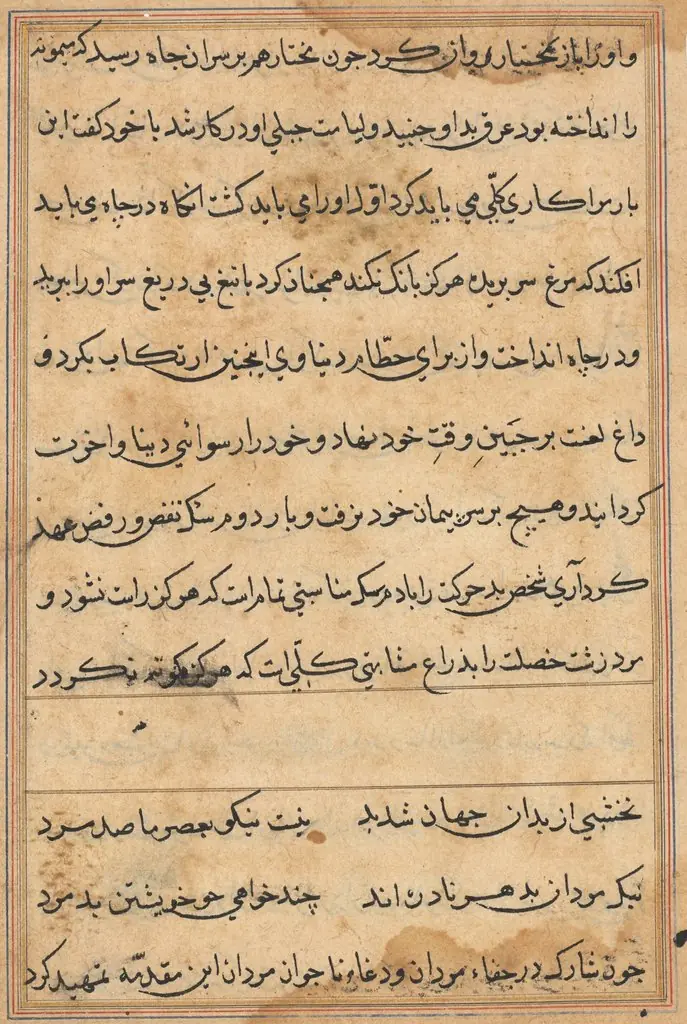 Page from Tales of a Parrot (Tuti-nama): text page
 Page from Tales of a Parrot (Tuti-nama): text page