Artwork
Page from Tales of a Parrot (Tuti-nama): text page
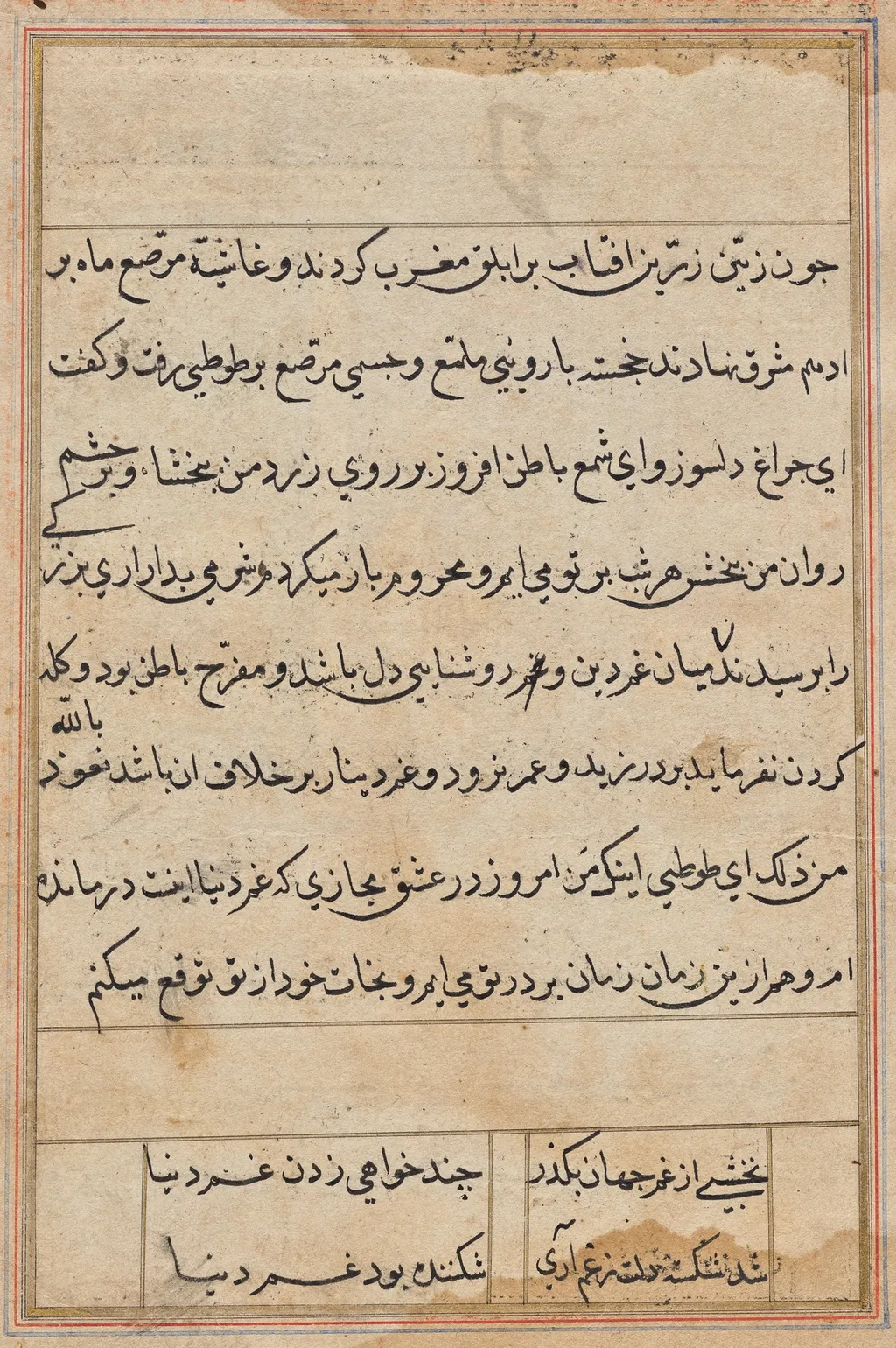
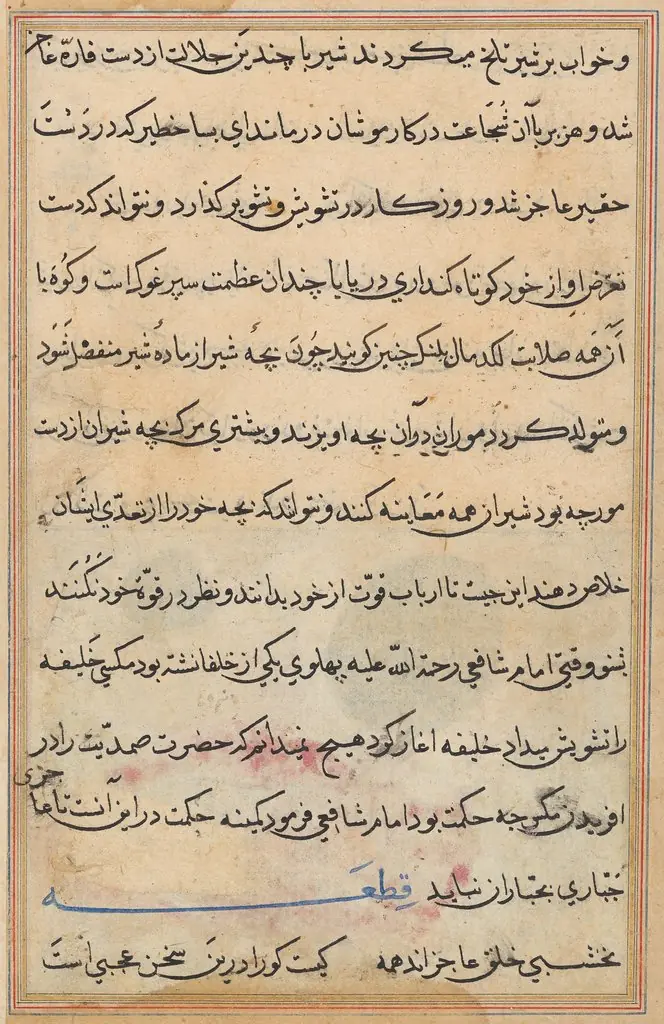
Page from Tales of a Parrot (Tuti-nama): text page is an unspecified painting. It dates from 1560 and is held in the collection of the Cleveland Museum of Art. The object is a single illustrated page from the Mughal manuscript known as the Tales of a Parrot (Tuti‑nama).
About this work
History & Provenance
The page entered the collection of the Cleveland Museum of Art, where it is catalogued under accession number 1962.
This folio comes from a manuscript of the Tuti-nama (Tales of a Parrot) produced in Mughal India around 1560. As its title indicates, it is a text page from the manuscript rather than an illustrated leaf. The Tuti-nama is a Persian collection of tales told by a parrot, compiled in the fourteenth century from older Indian sources; the Mughal copy reflects the court's patronage of Persian literary and artistic traditions under Akbar.
The page entered the collection of the Cleveland Museum of Art, where it is catalogued under accession number 1962.279.282.a. The museum acquired the folio in 1962 as part of its holdings of South Asian manuscript material. No exhibition history is documented in the available records.
Context
Dated about 1560, this text page from a Tuti-nama (Tales of a Parrot) manuscript belongs to one of the earliest illustrated literary projects of the Mughal court under Akbar. The manuscript pairs Persianate literary tradition with the emerging Mughal painting style, and the Cleveland copy is recognised as a key early example of that synthesis. The Tuti-nama transmits a cycle of tales drawn from Persian and older Indian sources, and its production at the imperial atelier reflects the role of illustrated manuscripts in early Mughal court culture.
The Cleveland Museum of Art's acquisition of the manuscript in 1962 underscores its significance for the Western study of South Asian art. The available sources do not document a detailed critical or exhibition history for this individual folio.
Overview
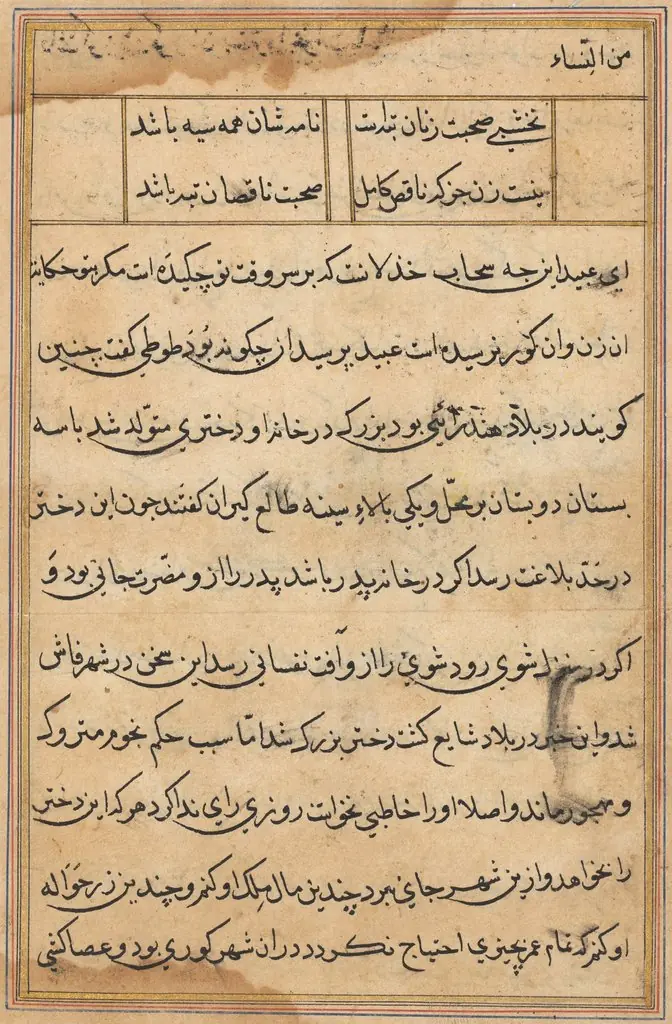
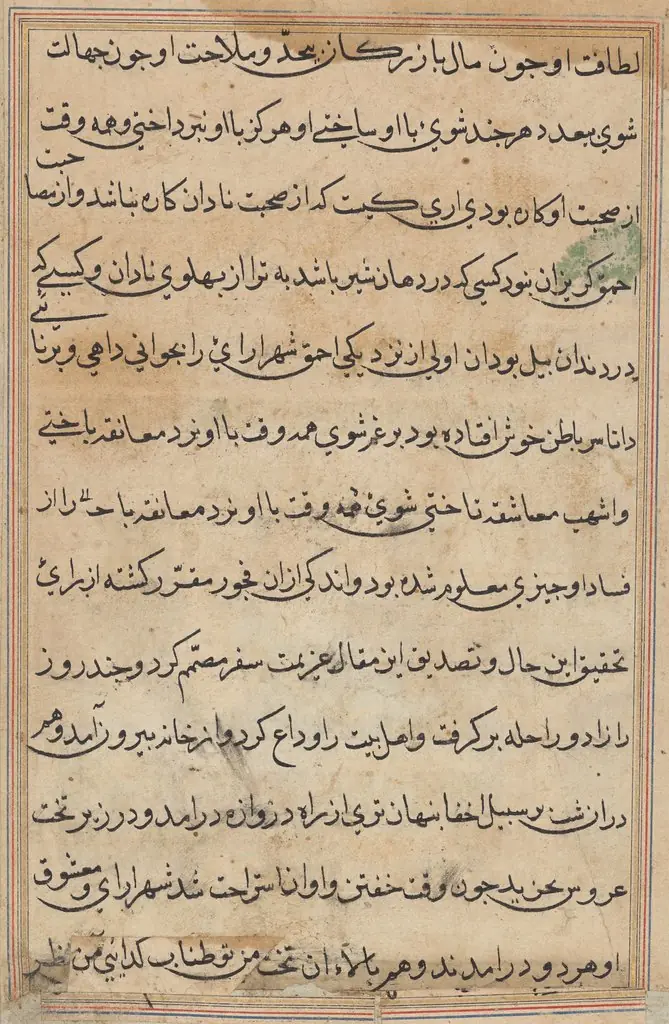
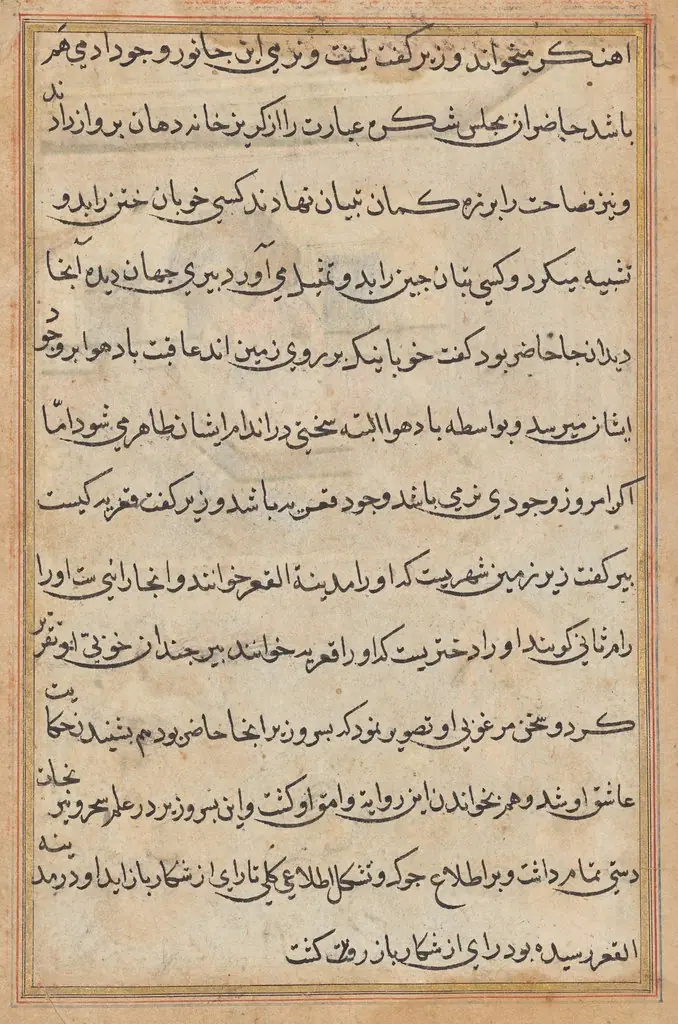
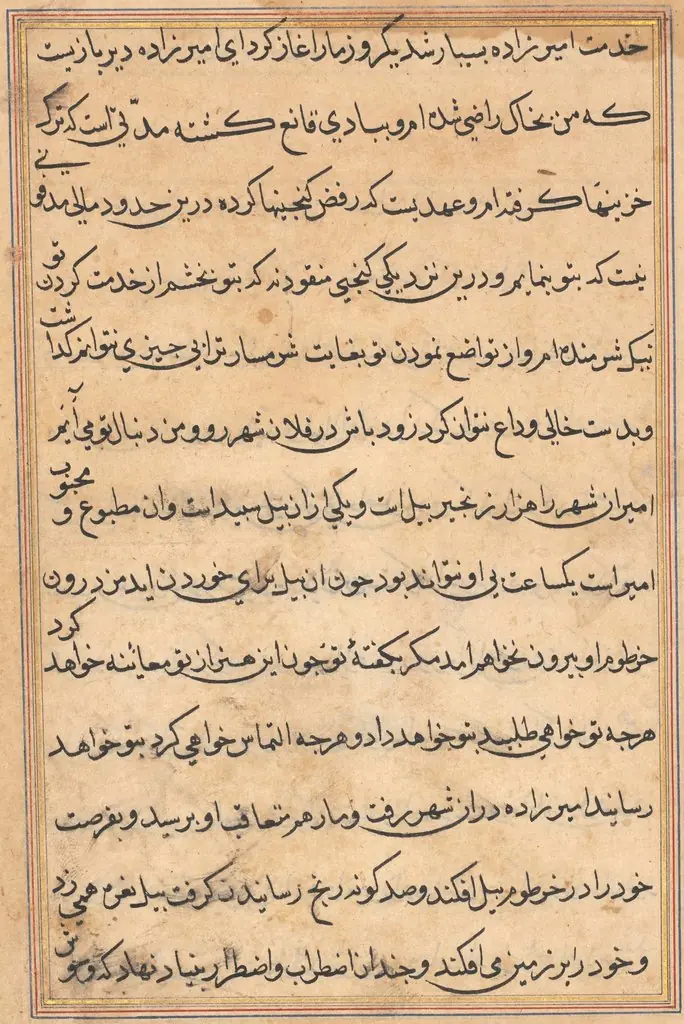
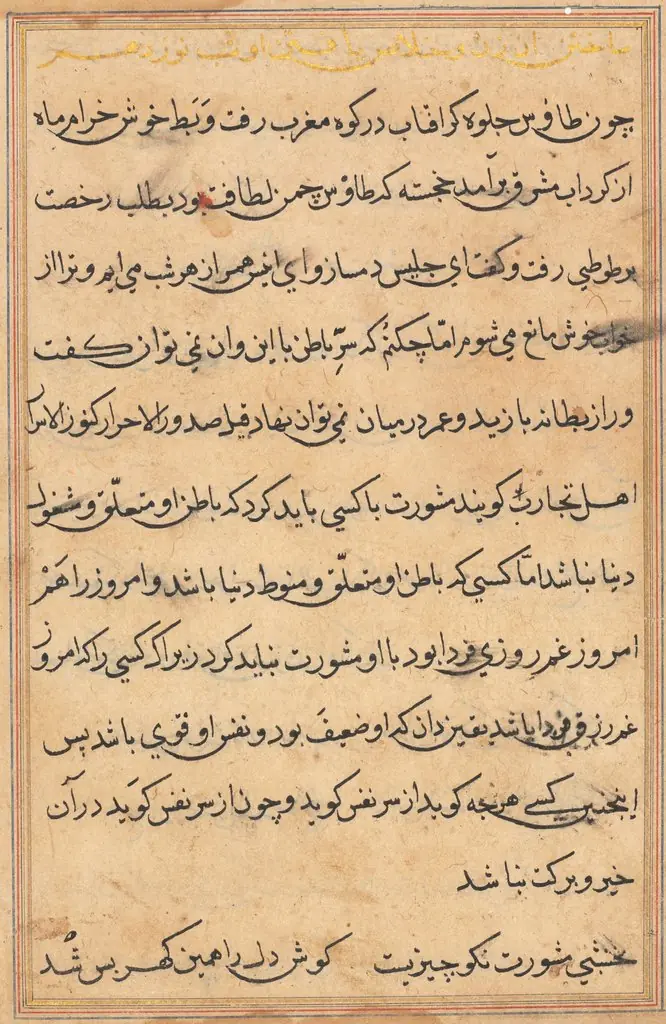
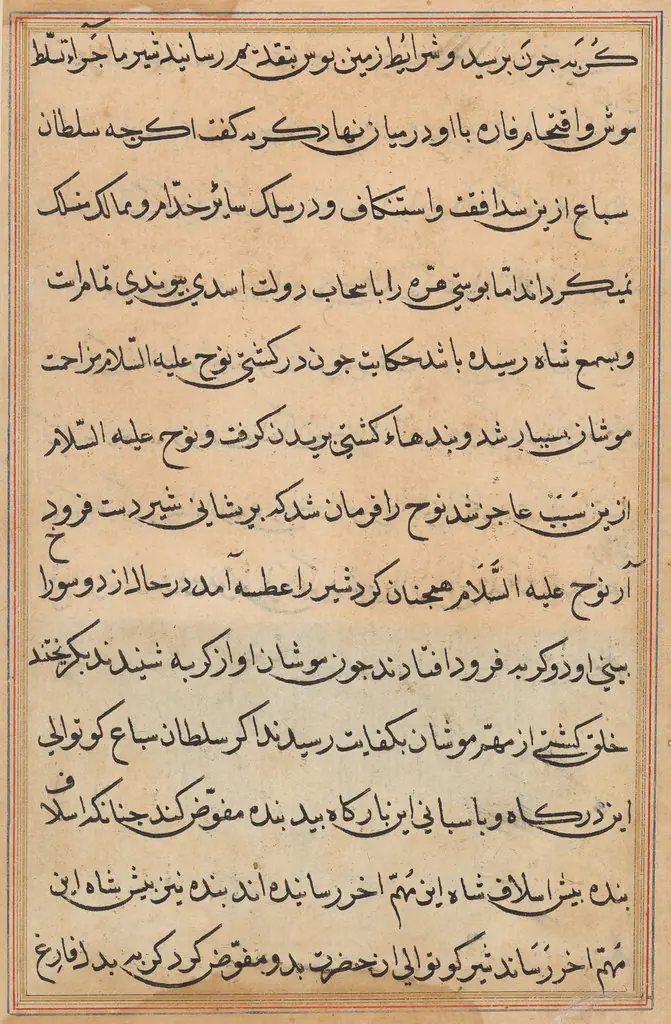
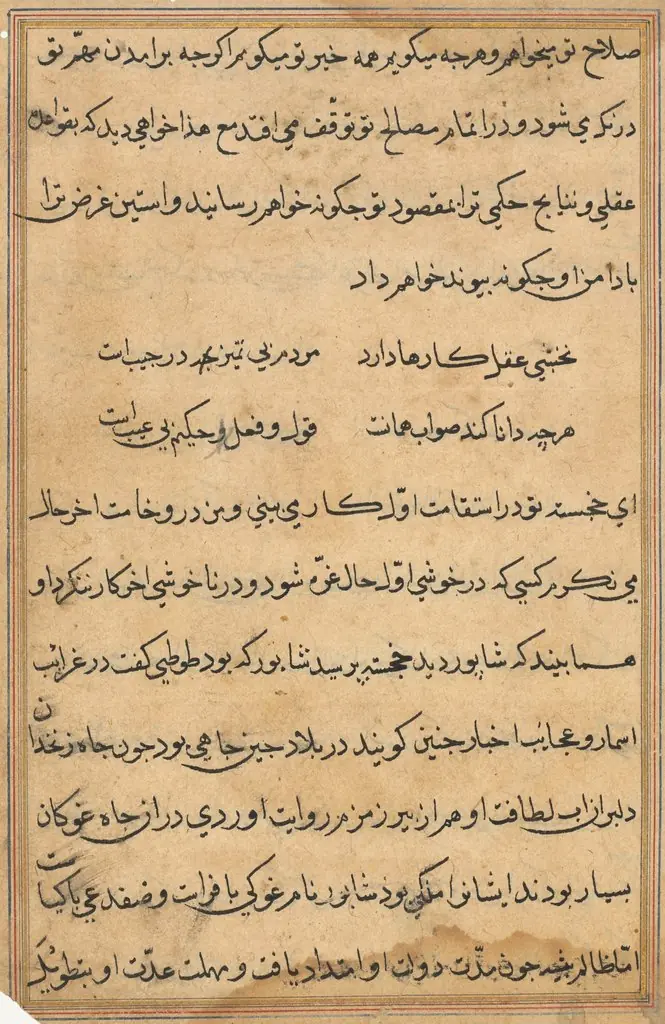
The object is a single illustrated page from the Mughal manuscript known as the Tales of a Parrot (Tuti‑nama). Executed as a painted sheet of paper, it features dense black calligraphy arranged in orderly columns, framed by a faint red‑blue decorative border that shows signs of age and wear.
Subject & Meaning
The page contains narrative text from the moralistic collection of stories that the Tuti‑nama presents, a work intended to convey ethical lessons through animal fables. Its purpose was educational as well as ornamental, reflecting the courtly interest in didactic literature.
Technique & Style
Calligraphic script is rendered in fine black ink, each character carefully formed to emphasize the manuscript’s prestige. The paper, slightly discoloured and textured, bears marginal boxes that hold supplemental annotations, a common feature in Mughal book production for clarifying or expanding the main text.
Artist & collection

- Page from Tales of a Parrot (Tuti-nama): text page
 Page from Tales of a Parrot (Tuti-nama): text page
 Page from Tales of a Parrot (Tuti-nama): text page
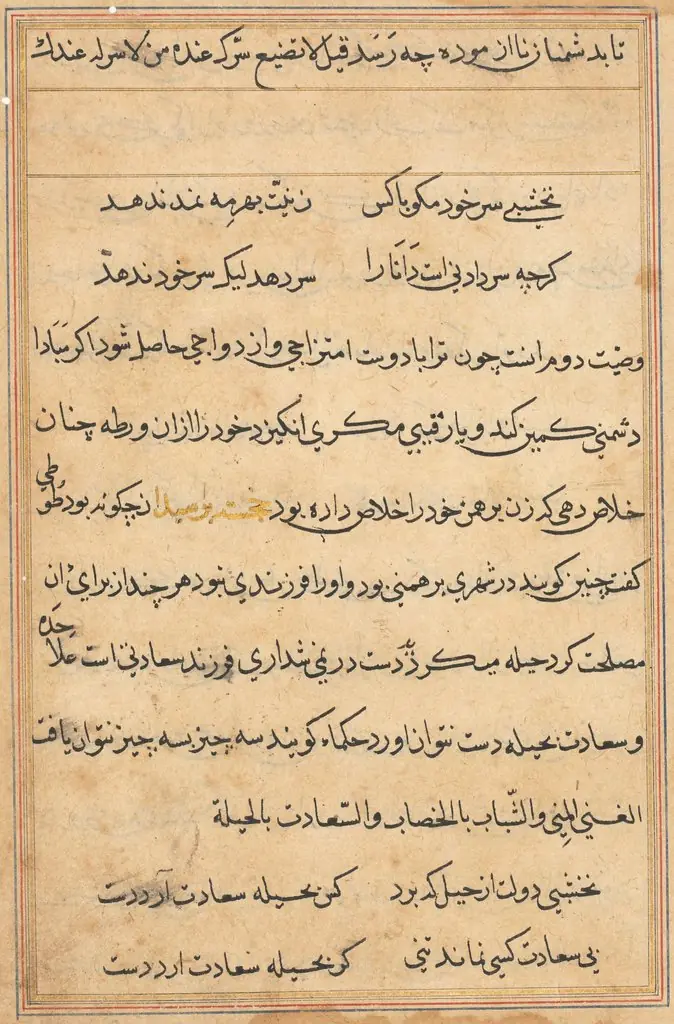 Page from Tales of a Parrot (Tuti-nama): text page
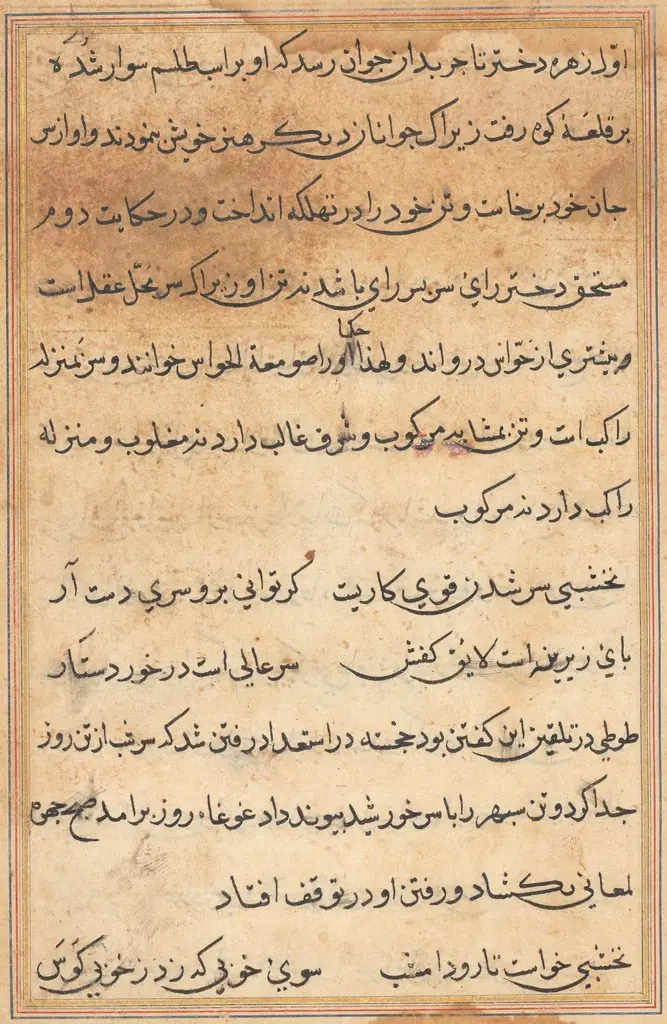 Page from Tales of a Parrot (Tuti-nama): text page
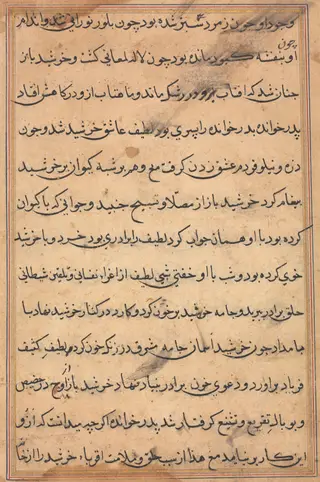 Page from Tales of a Parrot (Tuti-nama): text page
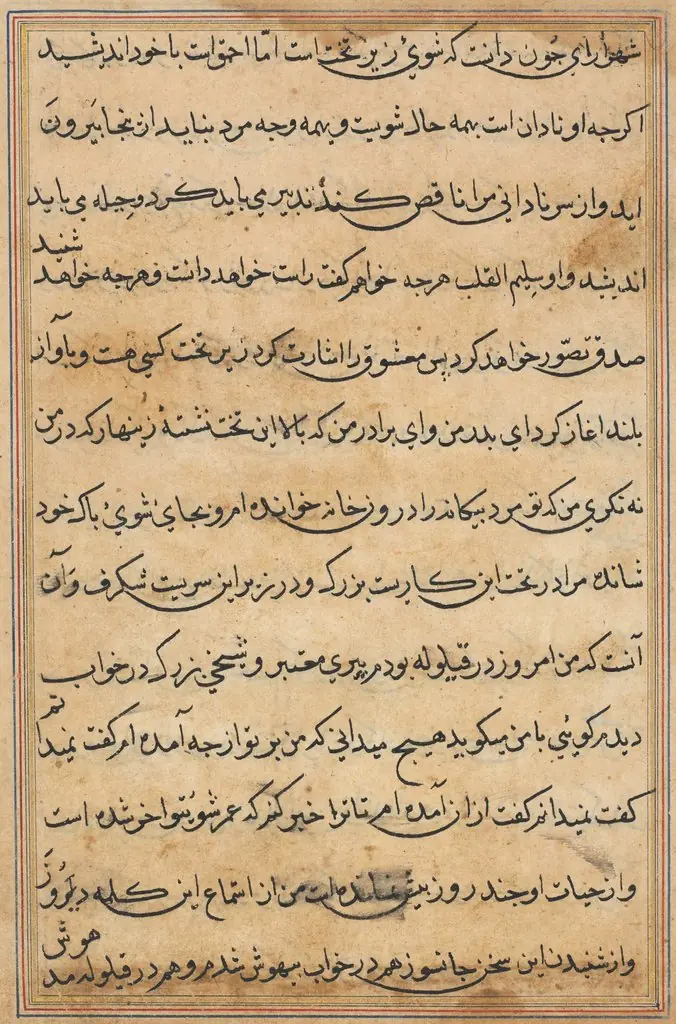 Page from Tales of a Parrot (Tuti-nama): text page
 Page from Tales of a Parrot (Tuti-nama): text page
 Page from Tales of a Parrot (Tuti-nama): text page
 Page from Tales of a Parrot (Tuti-nama): text page
 Page from Tales of a Parrot (Tuti-nama): text page
 Page from Tales of a Parrot (Tuti-nama): text page