Artwork
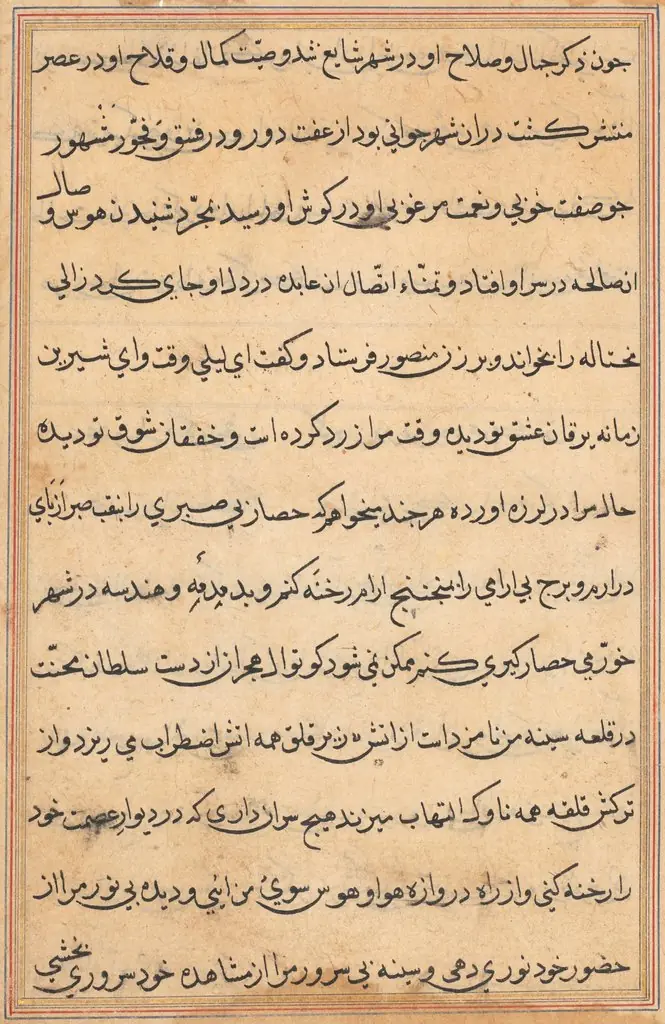
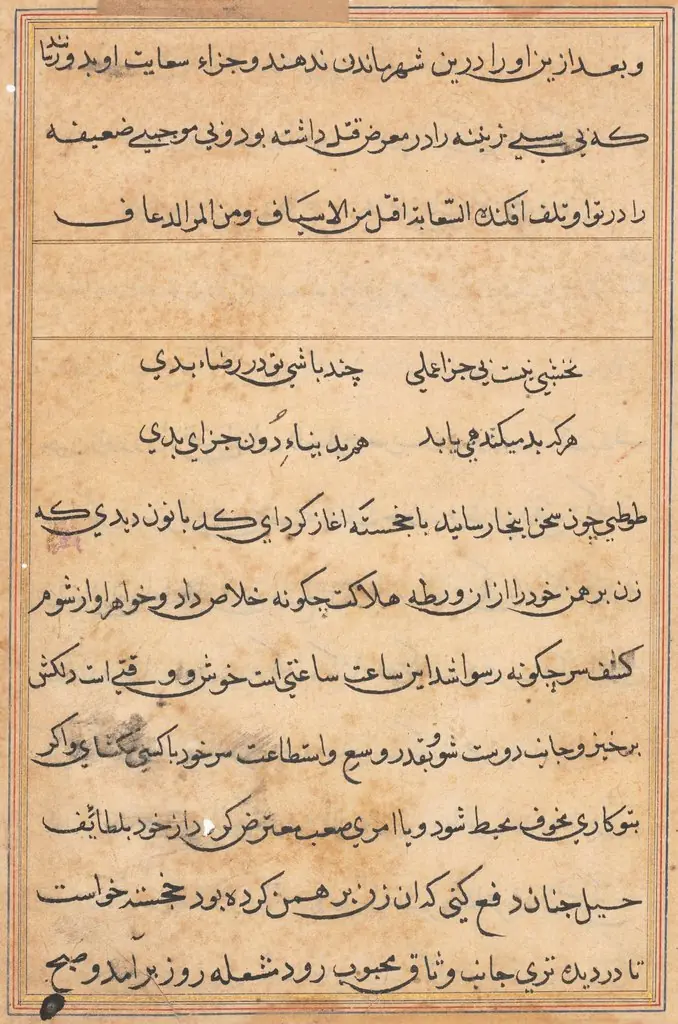
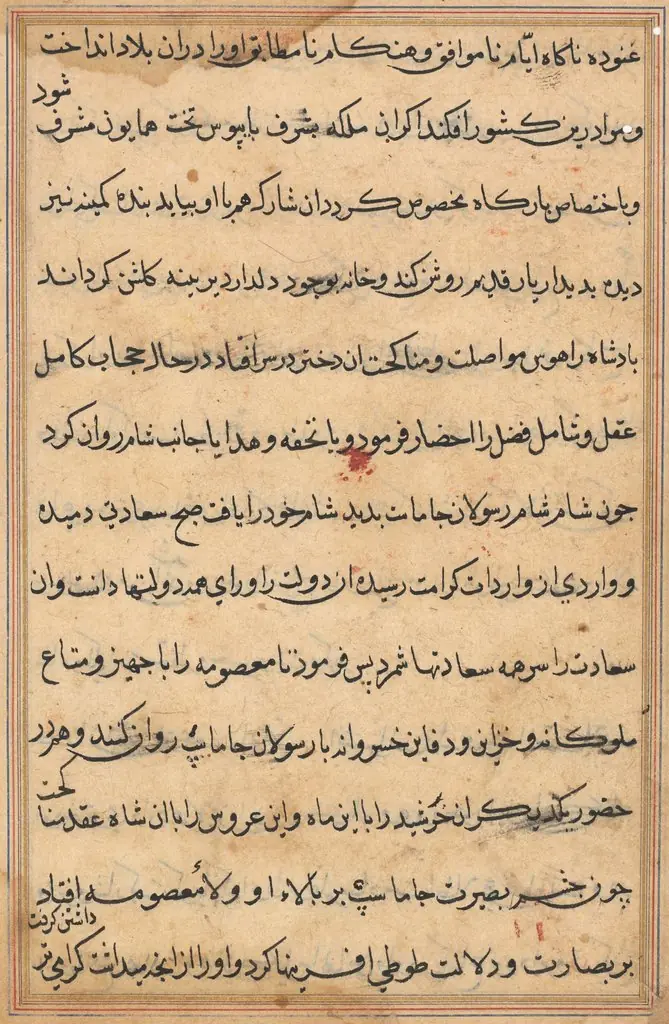
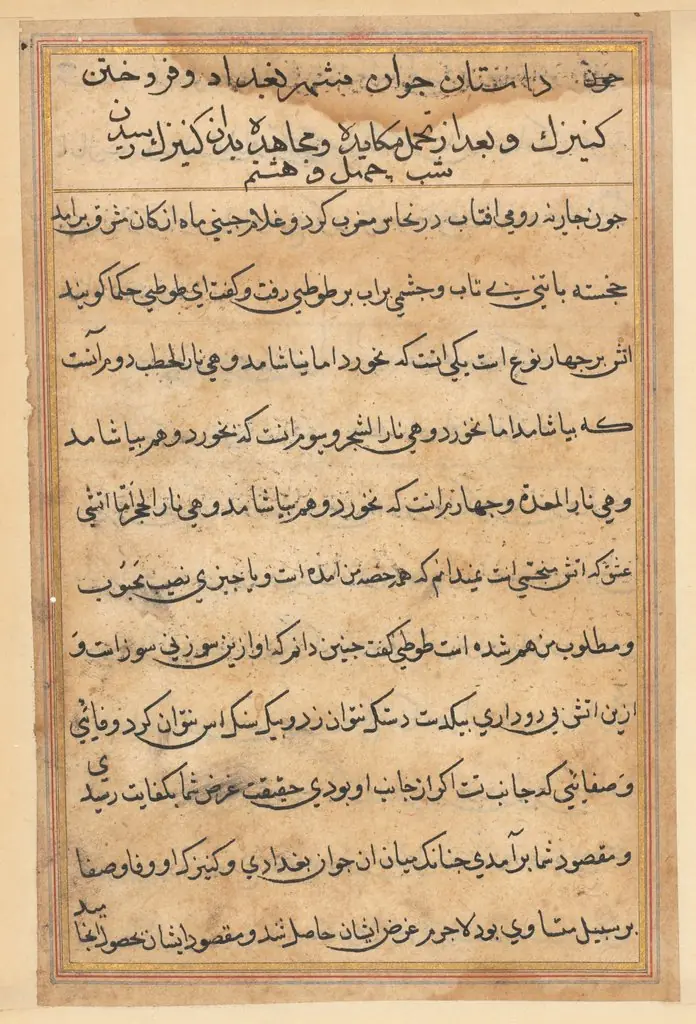
Page from Tales of a Parrot (Tuti-nama): text page
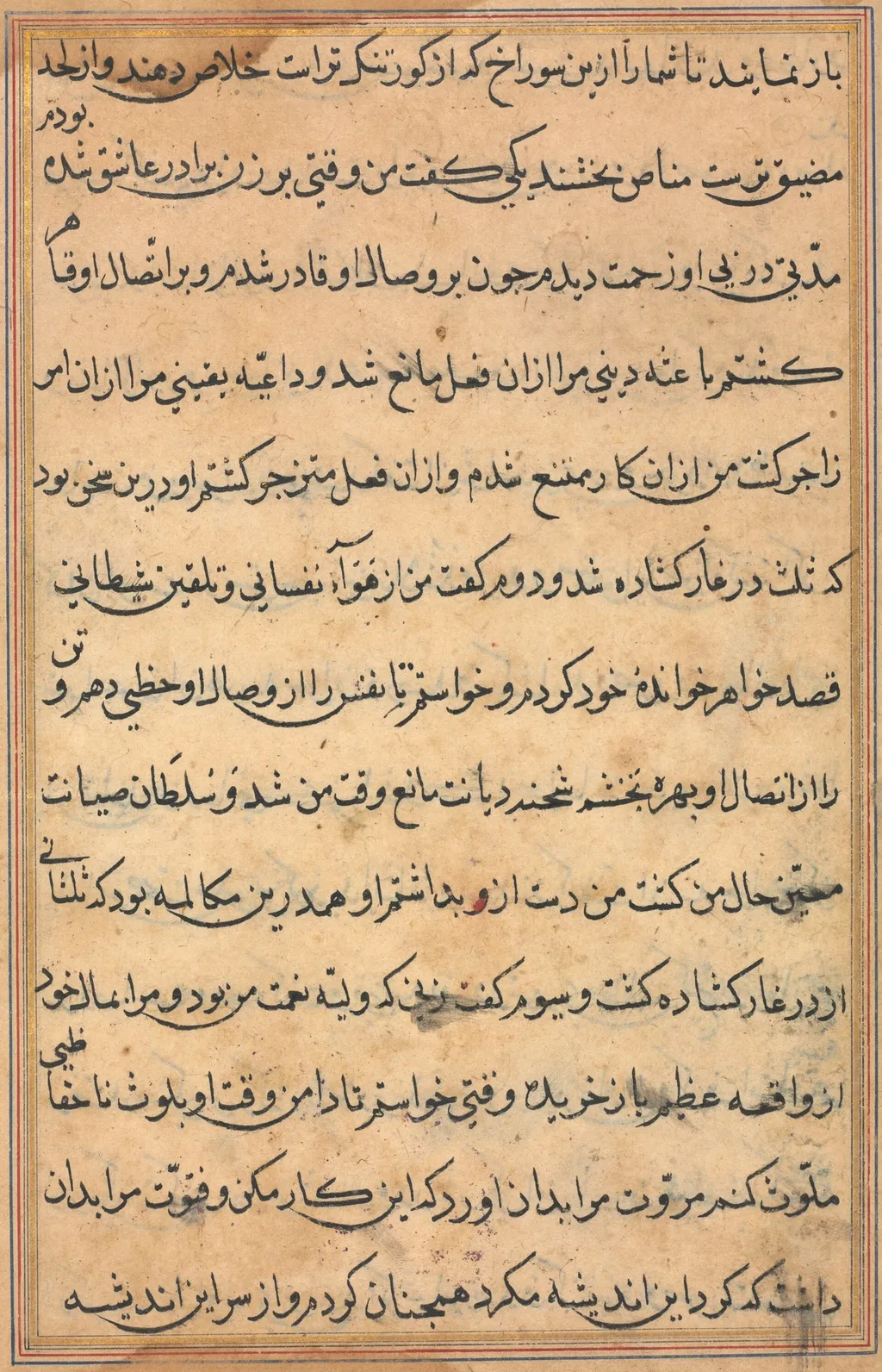
Page from Tales of a Parrot (Tuti-nama): text page is an unspecified painting. It dates from 1560 and is held in the collection of the Cleveland Museum of Art. This object is a single folio from the illustrated manuscript Tales of a Parrot (Tuti‑nama).
About this work
History & Provenance
The work entered the Cleveland Museum of Art in 1962 as part of a larger acquisition (accession number 1962.
This text page from the Tales of a Parrot (Tuti-nama) was produced in the Mughal Empire around 1560, aligning with the manuscript’s documented production period under the patronage of the emperor Akbar. The work entered the Cleveland Museum of Art in 1962 as part of a larger acquisition (accession number 1962.279.214.b), where it remains in the museum’s permanent collection. Its origins trace to the imperial atelier in the Mughal court, where illustrated manuscripts such as the Tuti-nama were commissioned as part of Akbar’s cultural and artistic initiatives during the mid-16th century.
Legacy
The text page from the 1560 manuscript of the Tuti-nama, a Persian illustrated story collection produced during the Mughal period, has influenced later manuscript traditions through its compositional clarity and narrative sequencing. Its presence in the Cleveland Museum of Art collection has ensured scholarly access and comparative study of Mughal book arts.
The folio's stylistic features have been cited in analyses of Mughal painting's role in cross-cultural storytelling, reinforcing its reputation as an exemplar of 16th-century Persianate manuscript production.
Overview
This object is a single folio from the illustrated manuscript Tales of a Parrot (Tuti‑nama). The page consists of light‑brown paper on which a dense block of Arabic calligraphy is rendered in black ink. The sheet is framed by a thin red margin, and each corner bears a small blue square, indicating a decorative finishing treatment.
Subject & Meaning
The text on the page forms part of a narrative composed for a young nobleman named Prince Salim. The story, centered on a talking parrot, was intended to entertain and instruct, and the careful, ornamental script reflects the dual aim of visual elegance and literary content.
Technique & Style
The calligrapher employed a flowing, connected hand characteristic of Arabic manuscript tradition, using black ink to produce tightly spaced letters that fill the surface. The surrounding red border and blue corner marks are applied with a fine brush, adding a subtle chromatic accent that frames the script without detracting from its legibility.
Artist & collection

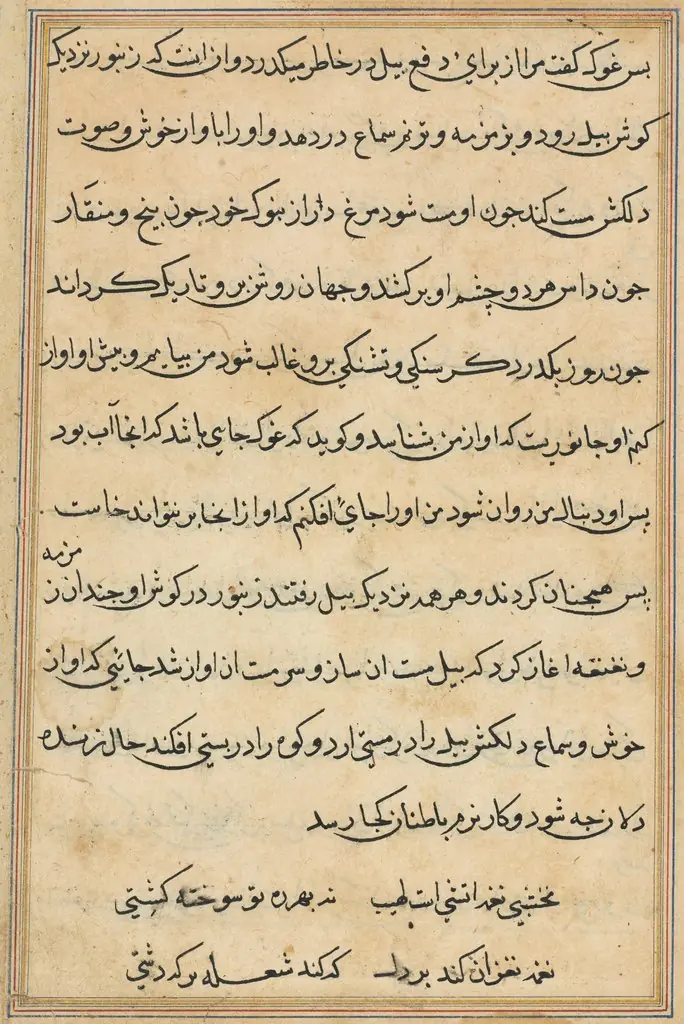 Page from Tales of a Parrot (Tuti-nama): text page
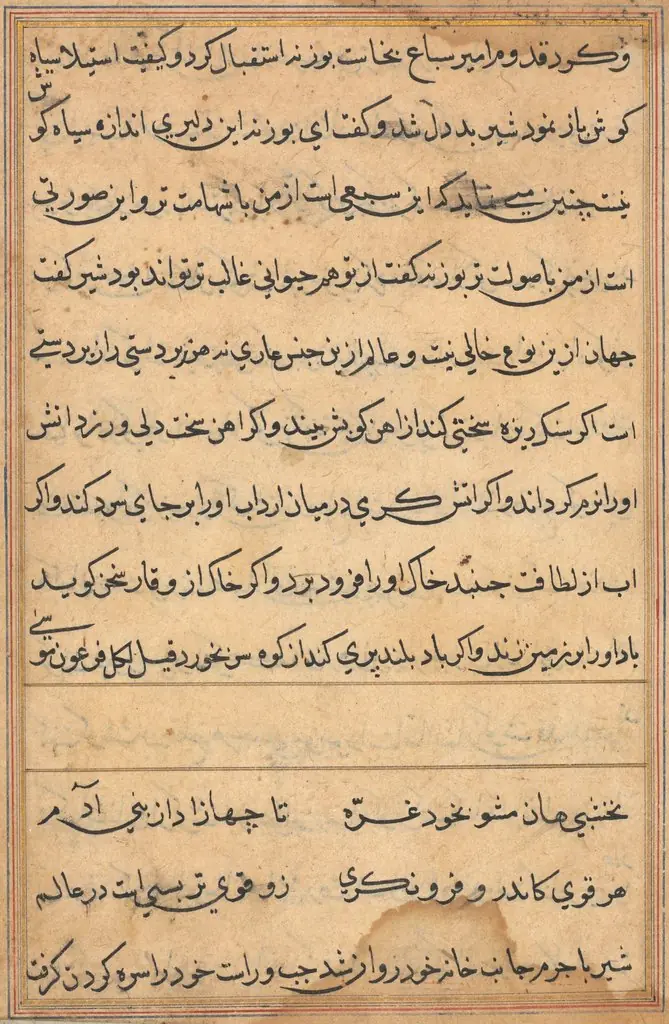 Page from Tales of a Parrot (Tuti-nama): text page
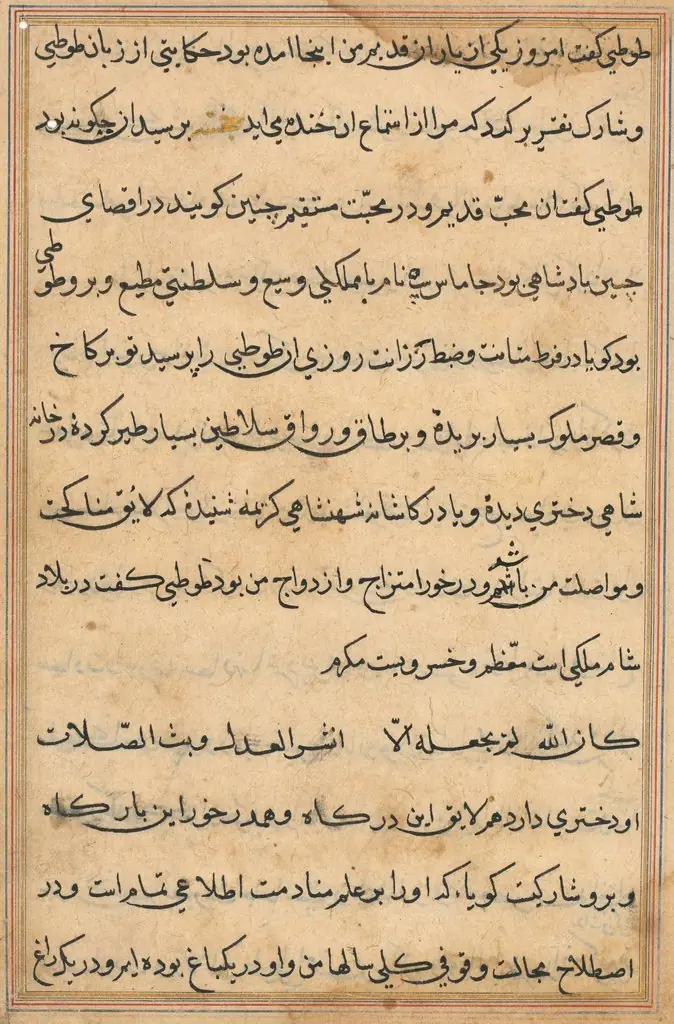 Page from Tales of a Parrot (Tuti-nama): text page
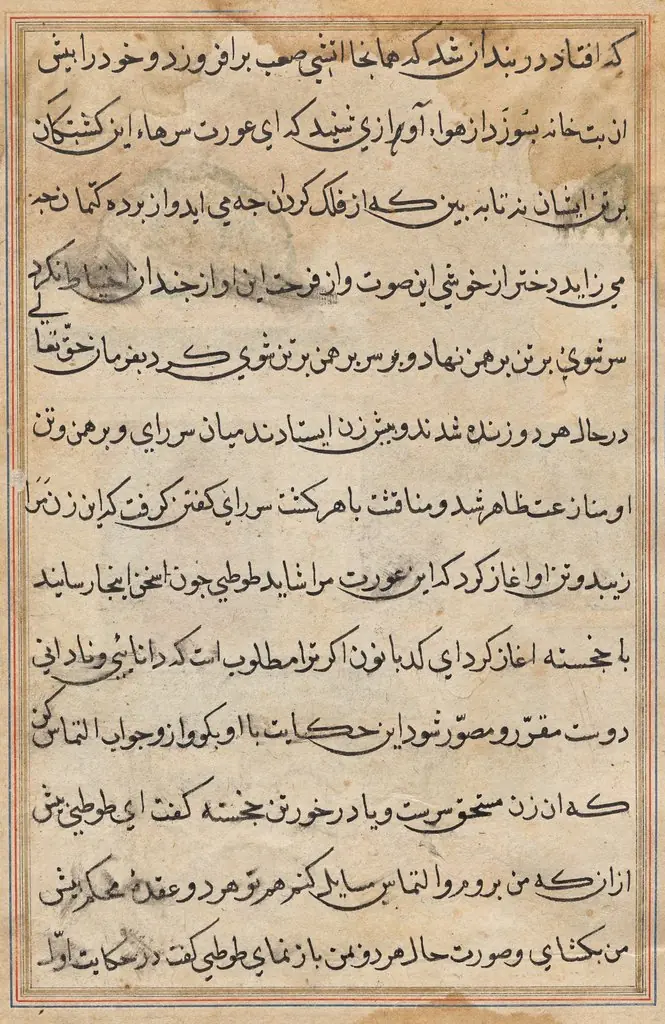 Page from Tales of a Parrot (Tuti-nama): text page
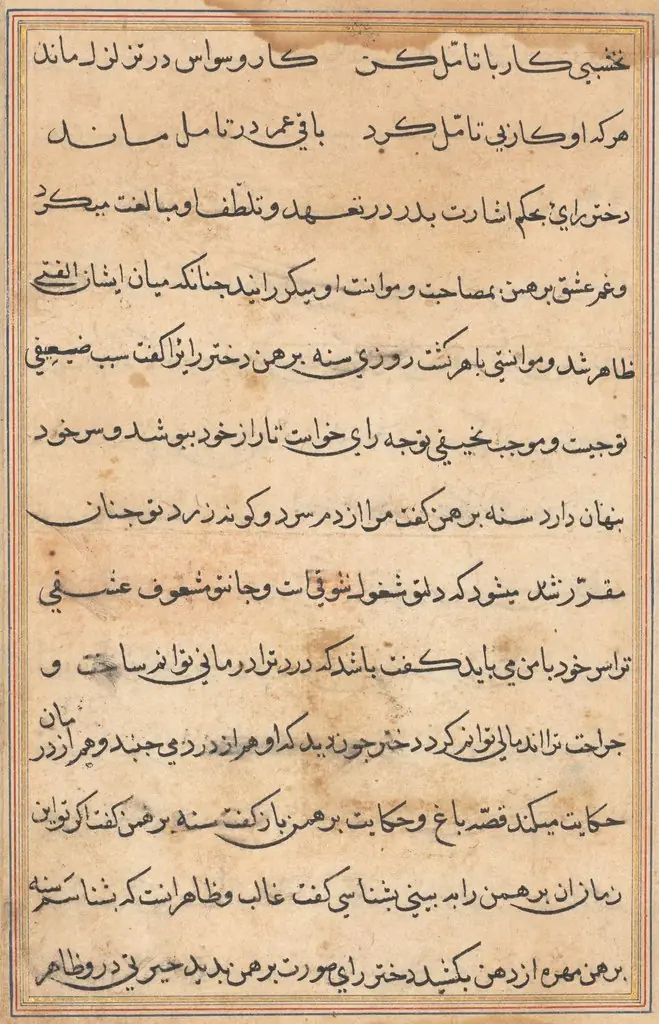 Page from Tales of a Parrot (Tuti-nama): text page
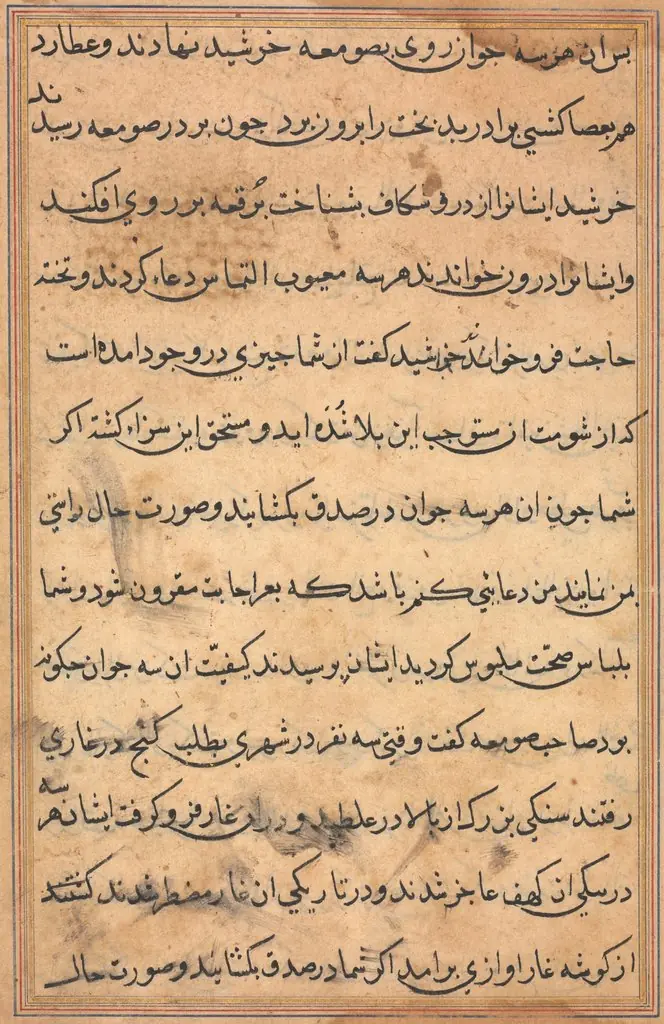 Page from Tales of a Parrot (Tuti-nama): text page
 Page from Tales of a Parrot (Tuti-nama): text page
 Page from Tales of a Parrot (Tuti-nama): text page
 Page from Tales of a Parrot (Tuti-nama): text page
 Page from Tales of a Parrot (Tuti-nama): text page