Artwork
Page from Tales of a Parrot (Tuti-nama): text page
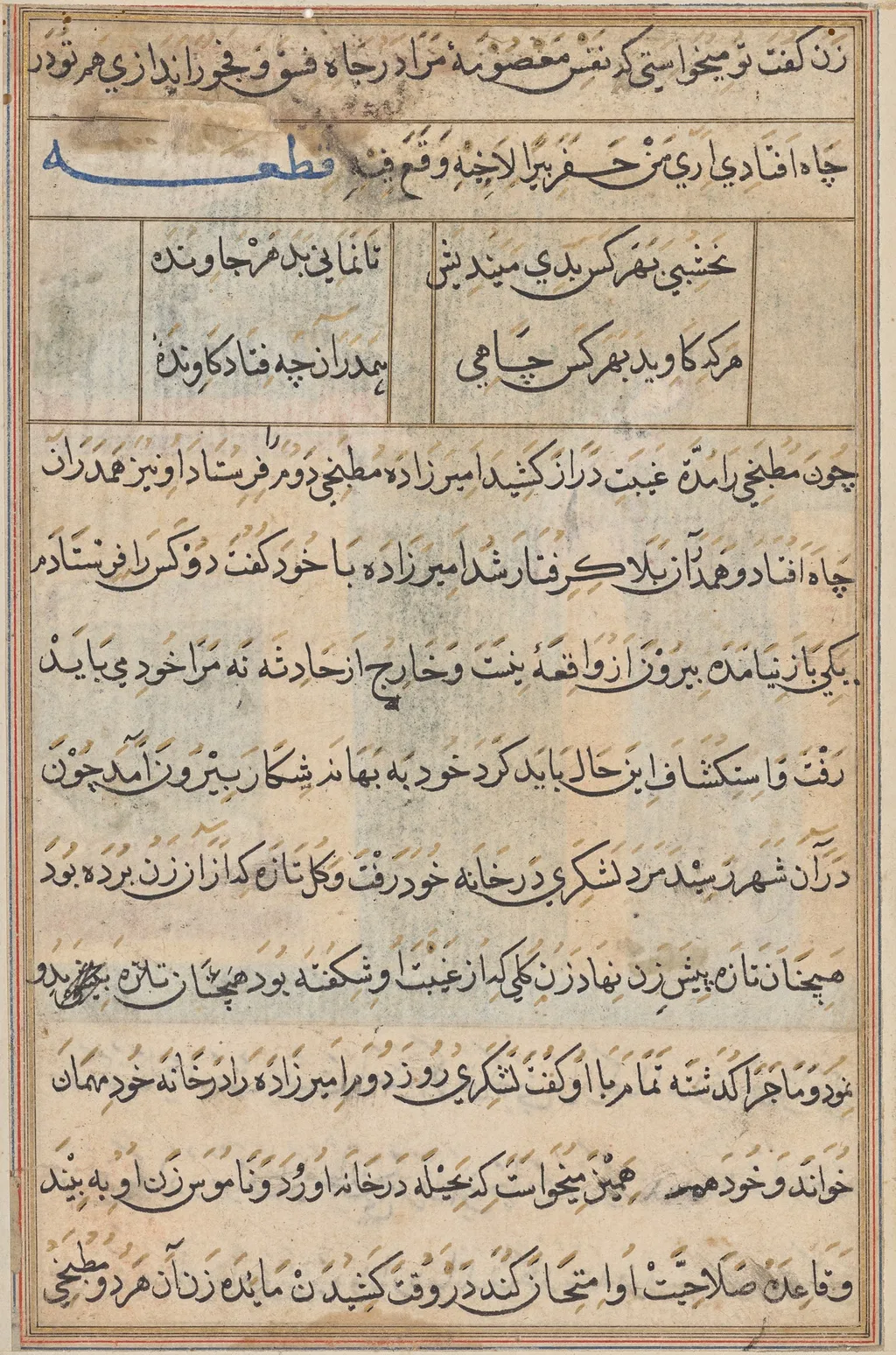
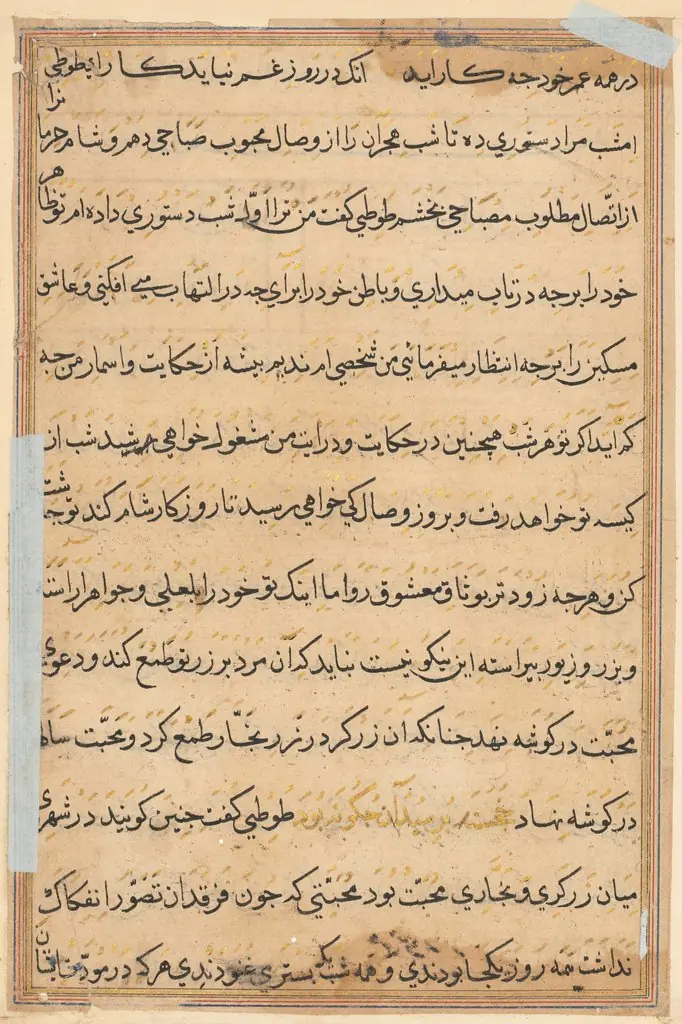
Page from Tales of a Parrot (Tuti-nama): text page is an unspecified painting. It dates from 1560 and is held in the collection of the Cleveland Museum of Art. The work is a painted page from the medieval manuscript known as Tales of a Parrot (Tuti‑nama).
About this work
History & Provenance
Its inclusion in the museum’s permanent collection indicates its recognized significance within the broader corpus of Mughal miniature painting.
The text page from the Tales of a Parrot (Tuti-nama) was created around 1560, during the reign of the Mughal Empire in South Asia. The work is attributed to an unknown artist, reflecting the collaborative nature of Mughal manuscript production where individual creators often remained unnamed. The Cleveland Museum of Art acquired the page in 1962 as part of its holdings, where it remains in the museum’s collection.
Its inclusion in the museum’s permanent collection indicates its recognized significance within the broader corpus of Mughal miniature painting.
The text page from the Tales of a Parrot (Tuti-nama), created in 1560, is held in the collection of the Cleveland Museum of Art in Cleveland. The artwork is cataloged under the accession number 1962.279.29.b. While the piece originates from the Mughal Empire, its documented history within the provided sources concludes with its presence in this specific museum collection.
Overview
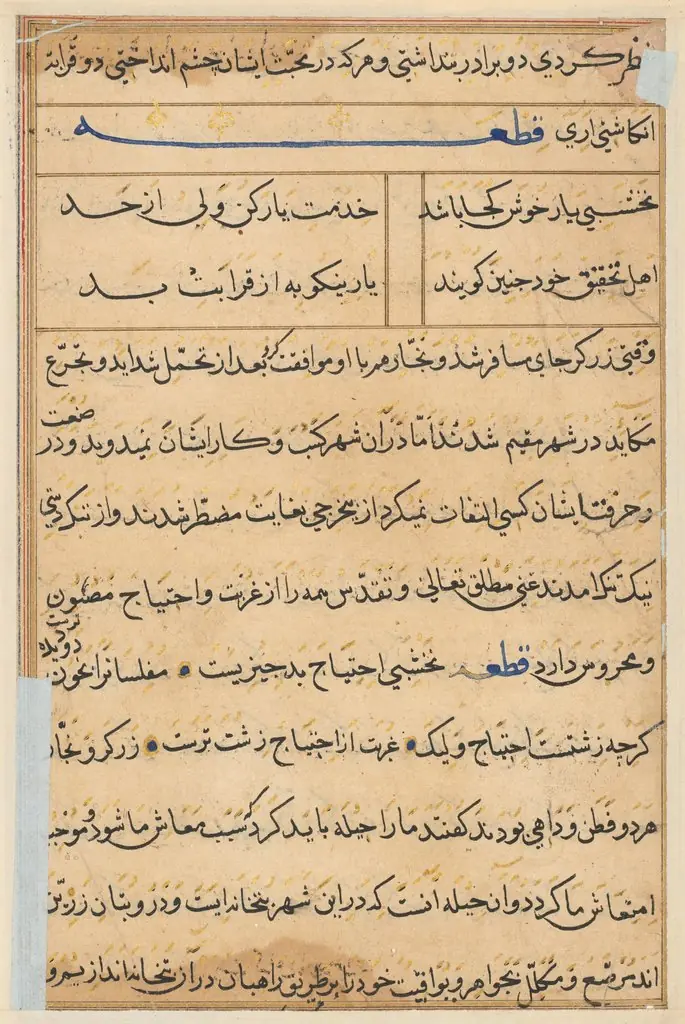
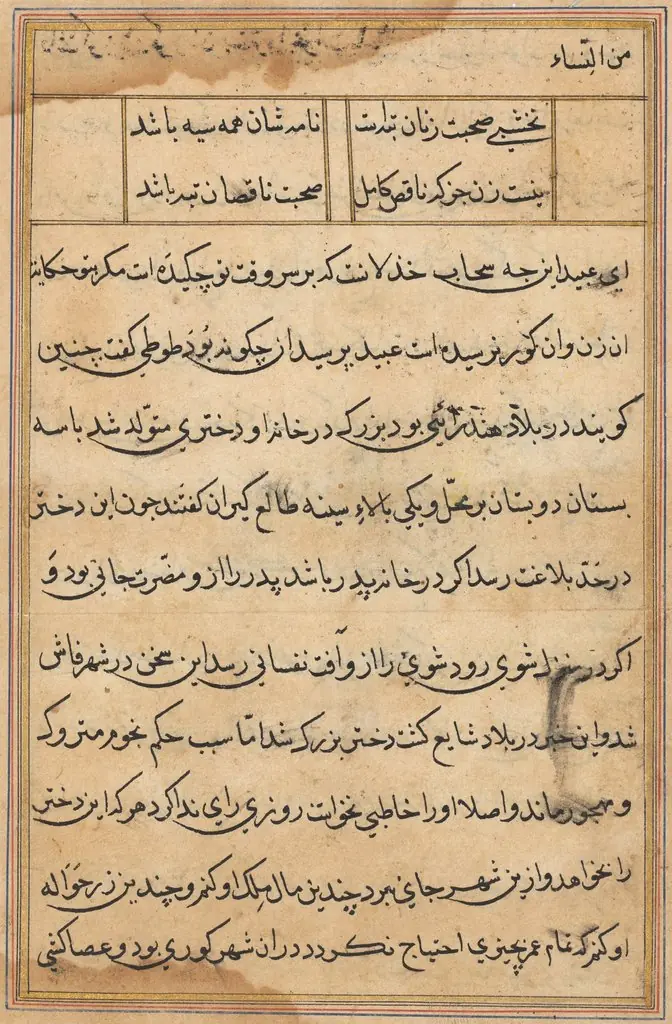
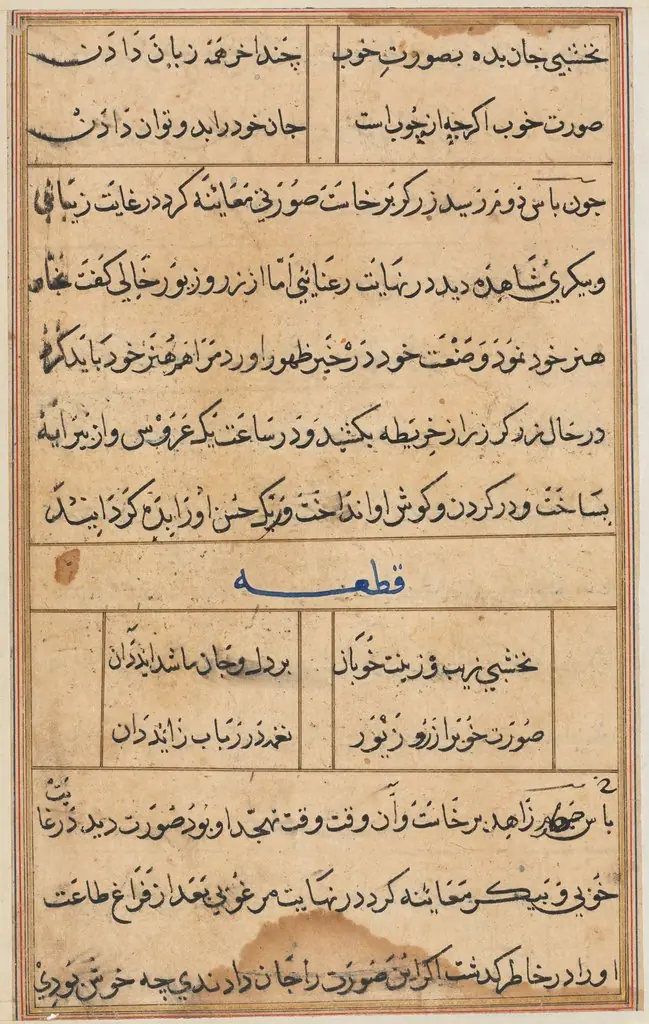
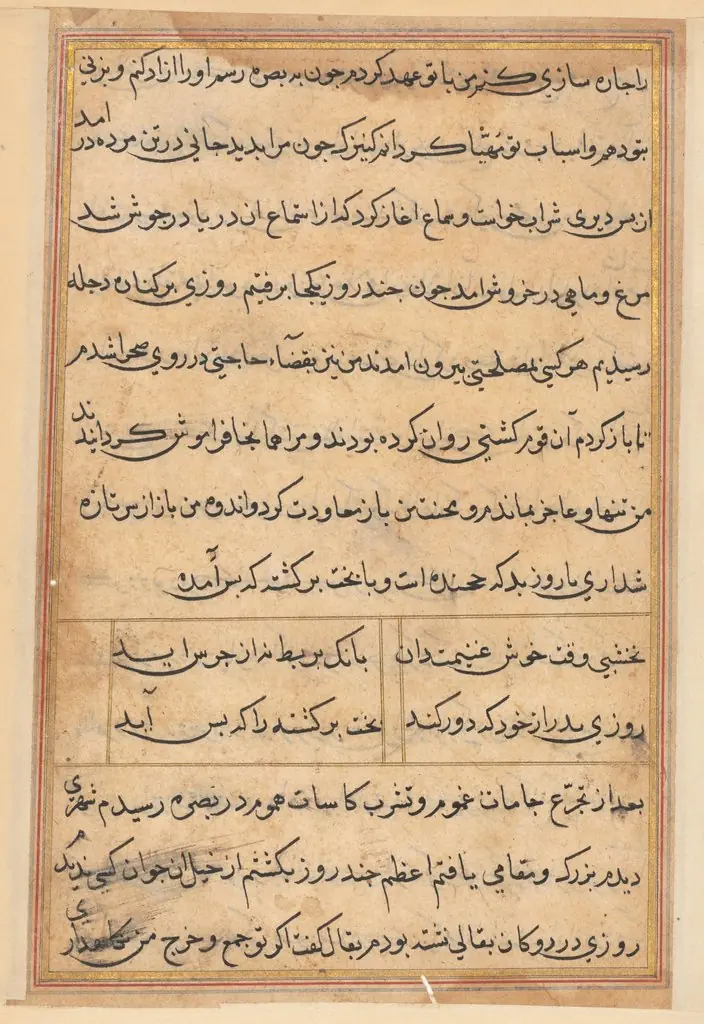
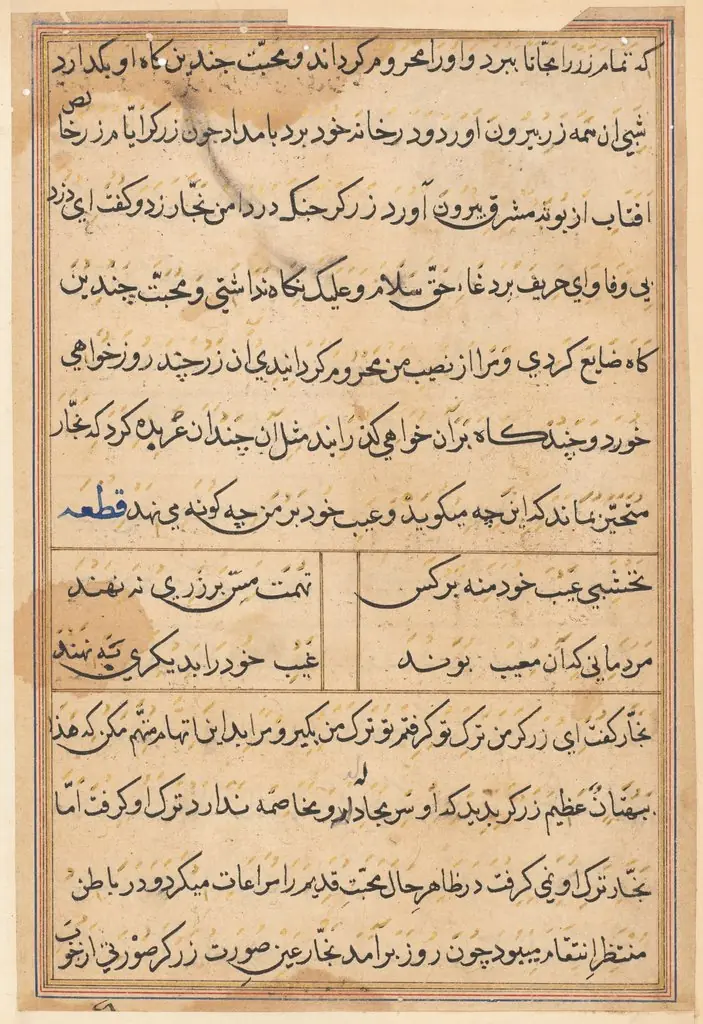
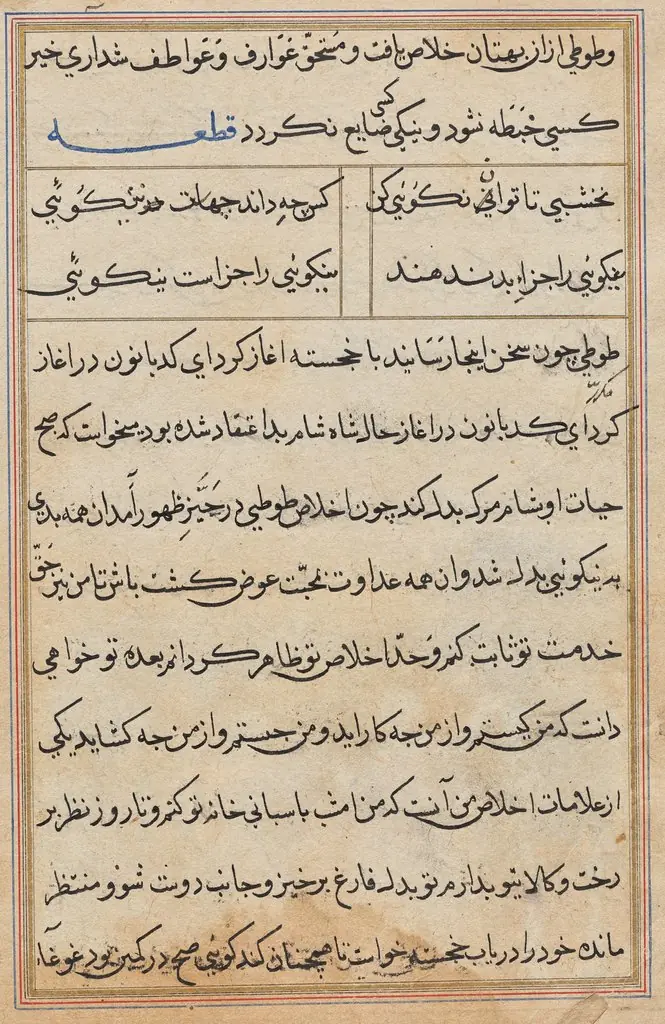
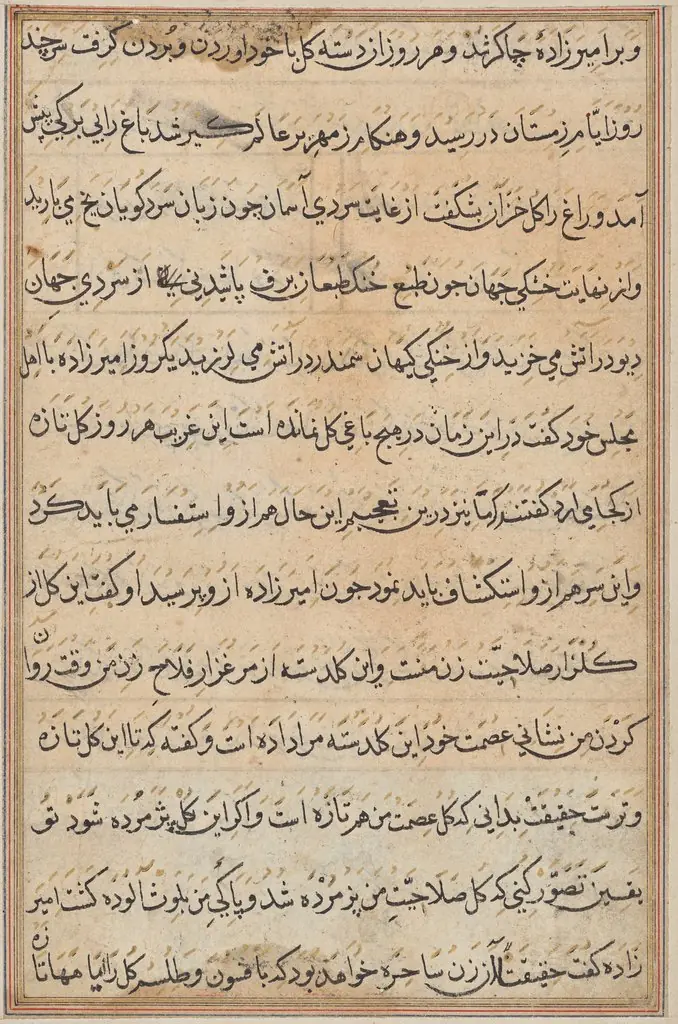
The work is a painted page from the medieval manuscript known as Tales of a Parrot (Tuti‑nama). Executed on aged paper, the surface is dominated by dense black calligraphy arranged in tight, orderly rows, with occasional variations in line weight that give certain characters a bolder appearance.
Subject & Meaning
The script appears to form a continuous narrative, suggesting the page was intended for careful, sequential reading. The presence of a blue line at the beginning of a new section indicates a structural division within the text, guiding the reader through the story.
Technique & Style
Ink is applied in both thick and thin strokes, creating visual contrast within the calligraphic field. Tiny gold flecks are scattered across the background, catching light and adding a subtle decorative element. A thin red border frames the page, emphasizing its preservation as a valued object.
Artist & collection

- Page from Tales of a Parrot (Tuti-nama): text page
 Page from Tales of a Parrot (Tuti-nama): text page
 Page from Tales of a Parrot (Tuti-nama): text page
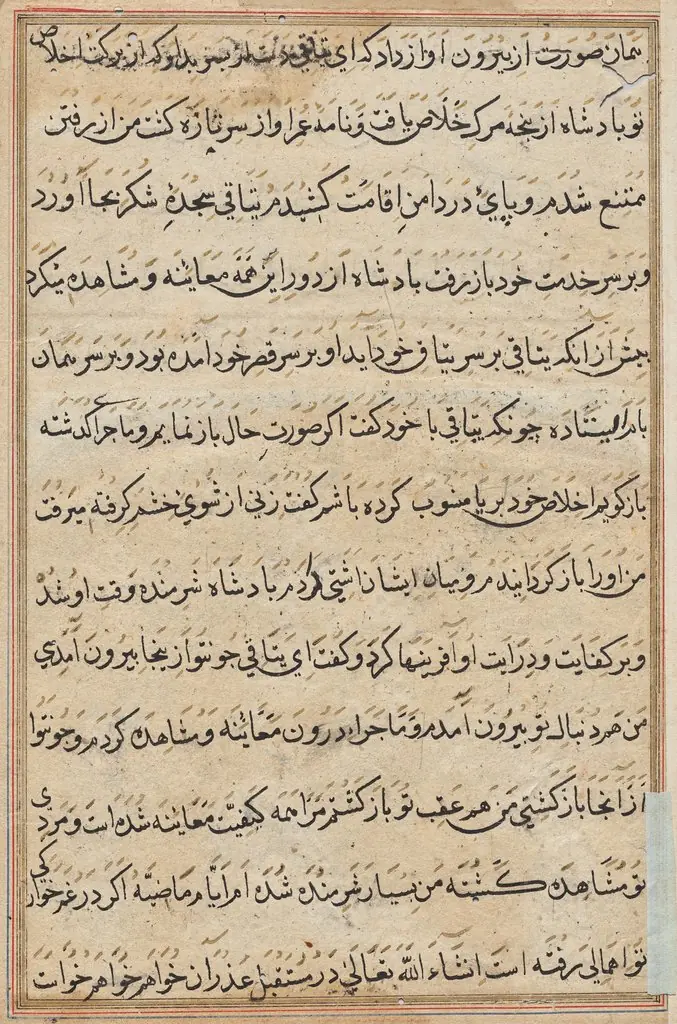 Page from Tales of a Parrot (Tuti-nama): text page
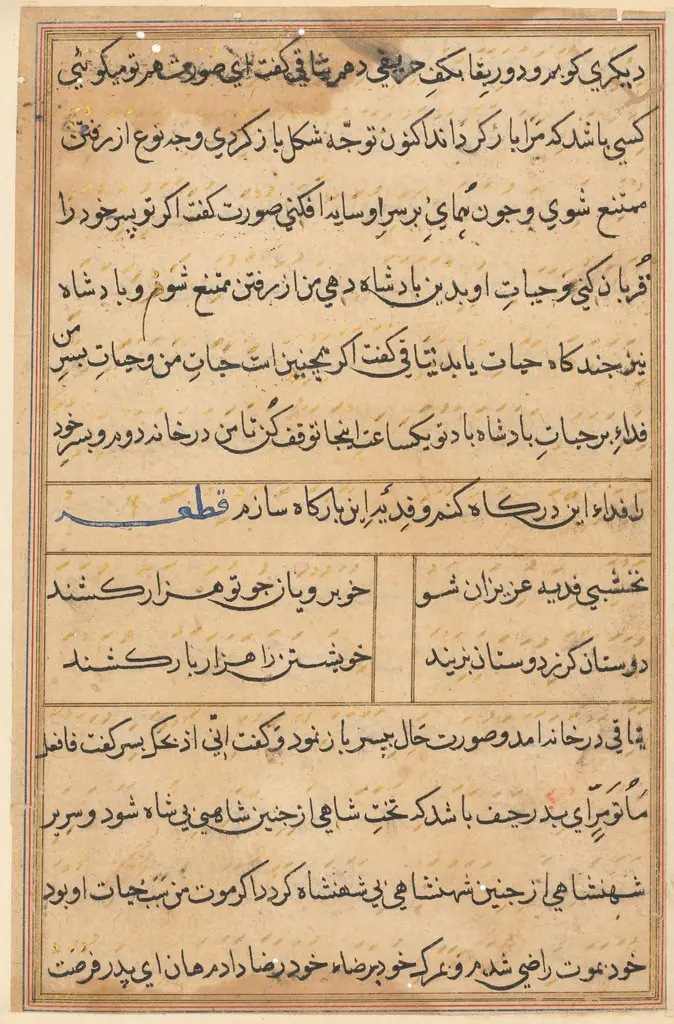 Page from Tales of a Parrot (Tuti-nama): text page
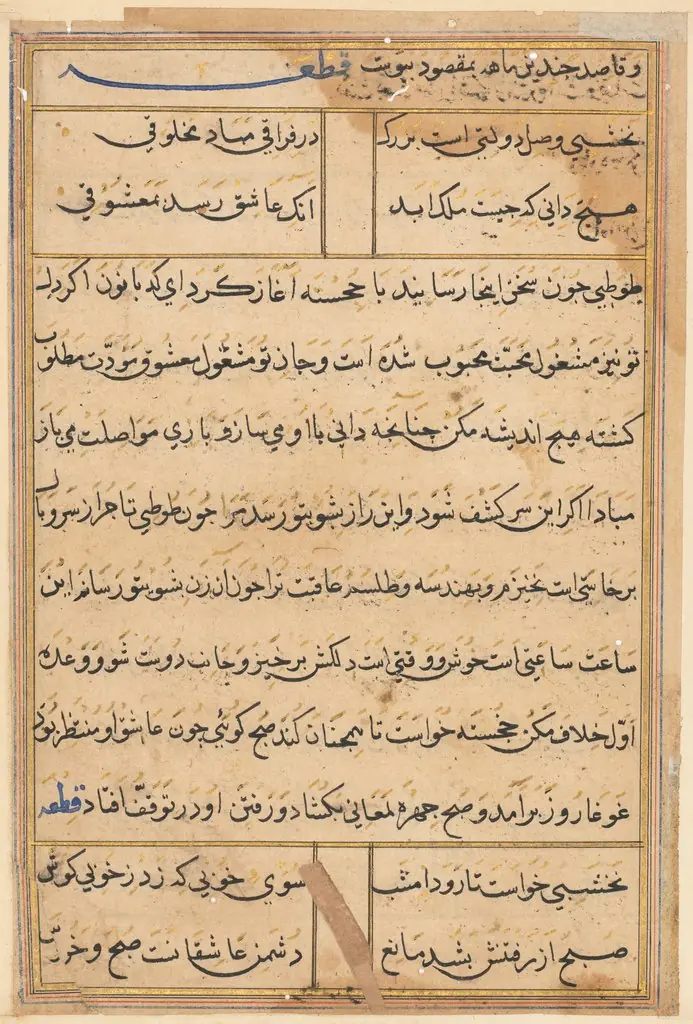 Page from Tales of a Parrot (Tuti-nama): text page
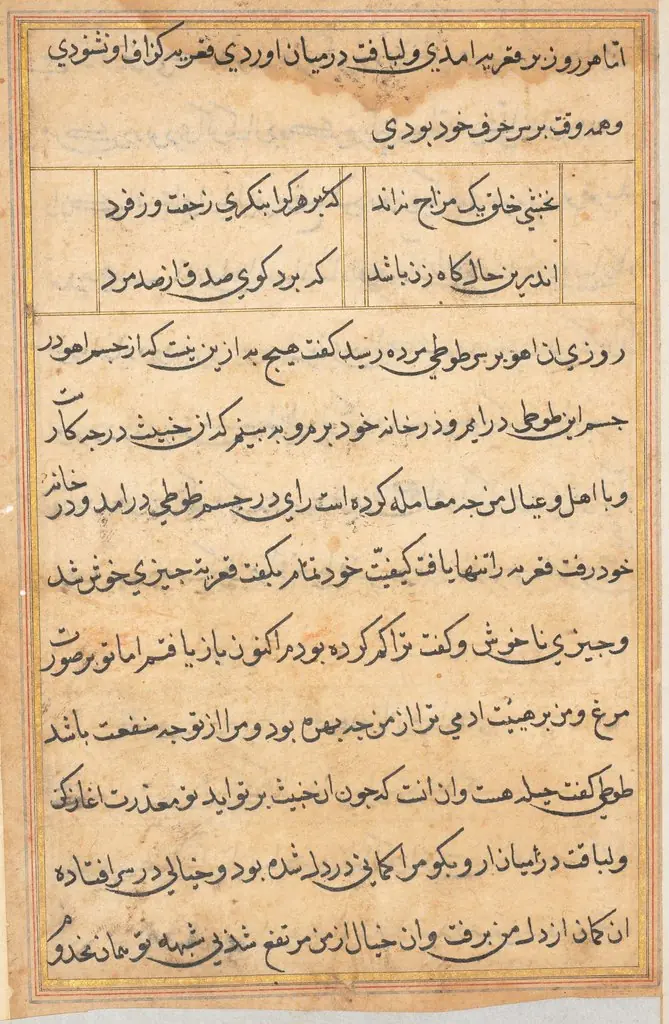 Page from Tales of a Parrot (Tuti-nama): text page
 Page from Tales of a Parrot (Tuti-nama): text page