Artwork
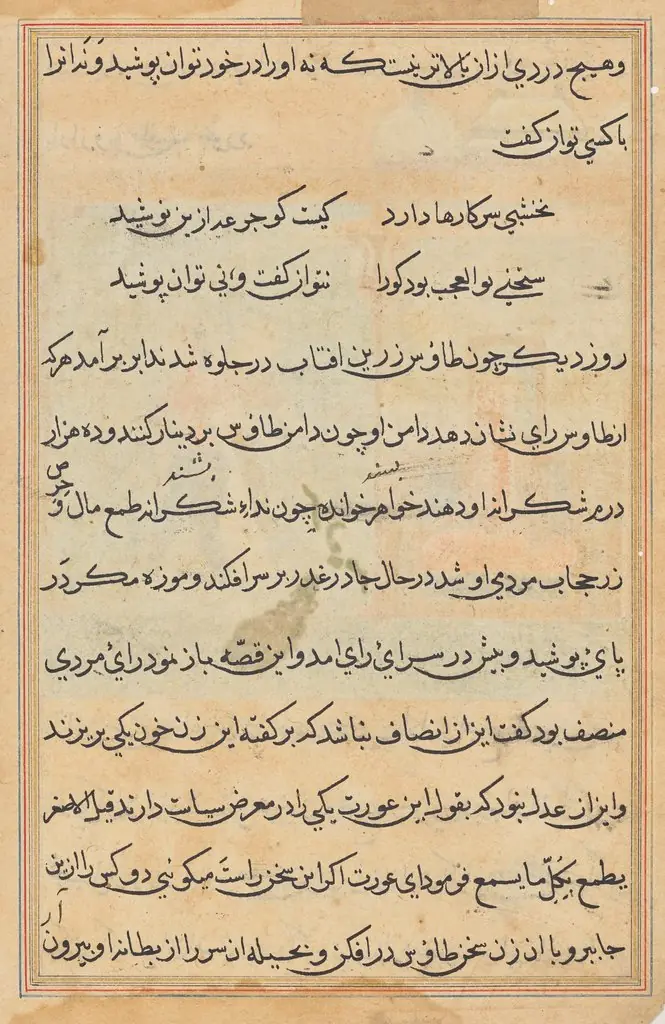
Text page from a Tuti-nama (Tales of a Parrot)
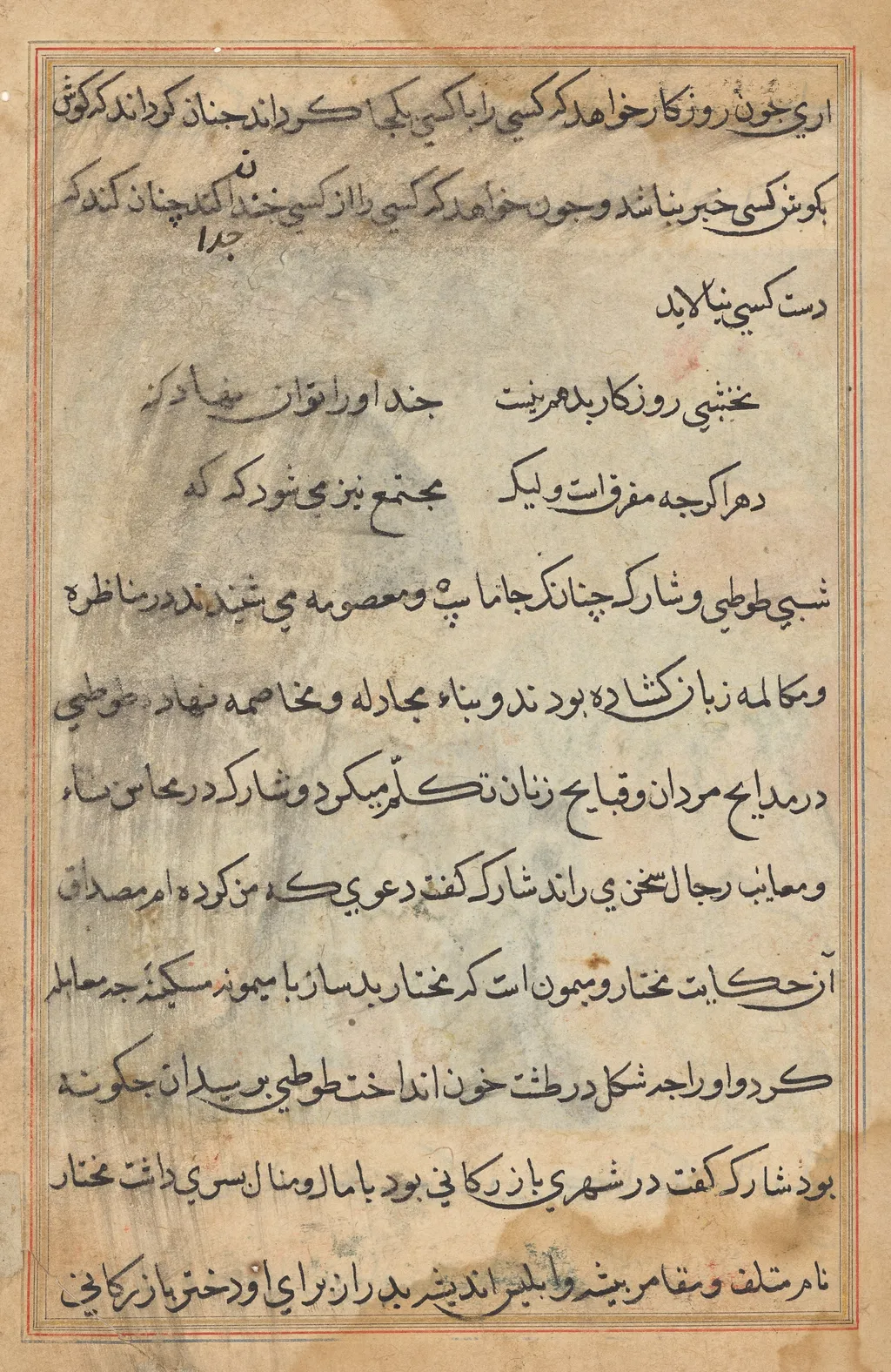
Text page from a Tuti-nama (Tales of a Parrot) is an unspecified painting. It dates from 1560 and is held in the collection of the Cleveland Museum of Art. The object is a single folio from a Persian manuscript titled Tuti-nama ("Tales of a Parrot").
About this work
History & Provenance
The piece represents a significant example of mid-16th-century Mughal painting, reflecting the artistic developments of that specific era.
Created in 1560 within the Mughal Empire, this text page from a Tuti-nama (Tales of a Parrot) is attributed to an unknown artist. The work was originally produced as part of a manuscript commission, though the specific patron or detailed commissioning circumstances are not recorded in the available historical data. It is currently held by the Cleveland Museum of Art, where it entered the collection as accession number 1962.279.174.a.
The piece represents a significant example of mid-16th-century Mughal painting, reflecting the artistic developments of that specific era.
The text page from the Tuti-nama is held in the collection of the Cleveland Museum of Art in Cleveland. The work was accessioned under the inventory number 1962.279.174.a. While the painting dates to 1560 and originates from the Mughal Empire, the provided sources do not list any specific exhibitions where this particular folio has been displayed.
Context
Dated to 1560, this folio from a Tuti-nama manuscript exemplifies Mughal painting's synthesis of Persian narrative traditions with Indian sensibilities, depicting a parrot storytelling scene with delicate brushwork and vibrant mineral pigments. Its presence in the Cleveland Museum of Art collection (acquired via accession 1962.279.174.a) has positioned it within scholarly discussions of cross-cultural manuscript production in 16th-century India, where its naturalistic flora and subtle emotional cues reflect evolving artistic experimentation during the reign of Akbar.
Research on this work highlights its significance as part of a broader corpus of illustrated Persianate texts commissioned by Mughal courts, with its compositional choices influencing later Rajput and Deccan painting schools while remaining anchored in the imperial workshop's stylistic conventions.
Overview
The object is a single folio from a Persian manuscript titled Tuti-nama ("Tales of a Parrot"). The page is composed entirely of black calligraphic script arranged in tight, orderly rows, bordered by thin red lines that frame the text. The paper exhibits the patina of age, with a warm yellowish hue and occasional ink spots where the pigment has faded or bled.
Subject & Meaning
Tuti-nama is a narrative work that recounts moral and allegorical stories featuring a parrot as a storyteller. The text on this leaf forms part of that larger literary tradition, intended to convey ethical lessons through the parrot’s dialogues and anecdotes, a common motif in Persian didactic literature.
Technique & Style
The calligraphy follows a classic Persian script, likely Nastaʿlīq, noted for its fluid, curving strokes that create a rhythmic visual flow. The red marginal lines were added by the scribe to delineate the text block, a decorative convention that also aids readability. The manuscript’s paper, handmade and slightly yellowed, reflects the material standards of Persian book production in the early modern period.
Artist & collection

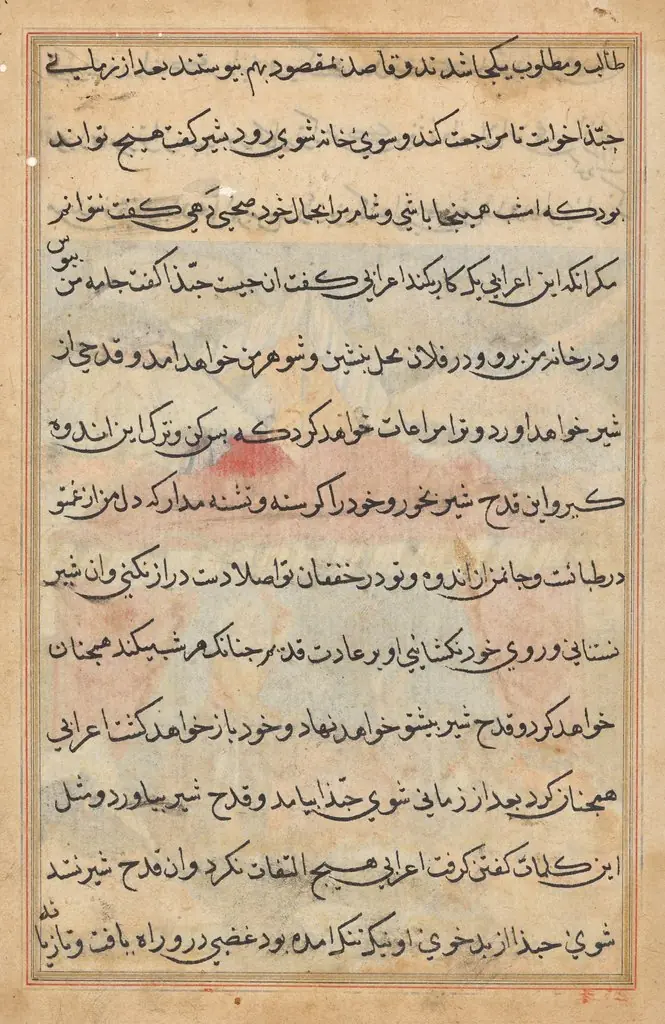 Page from Tales of a Parrot (Tuti-nama): text page
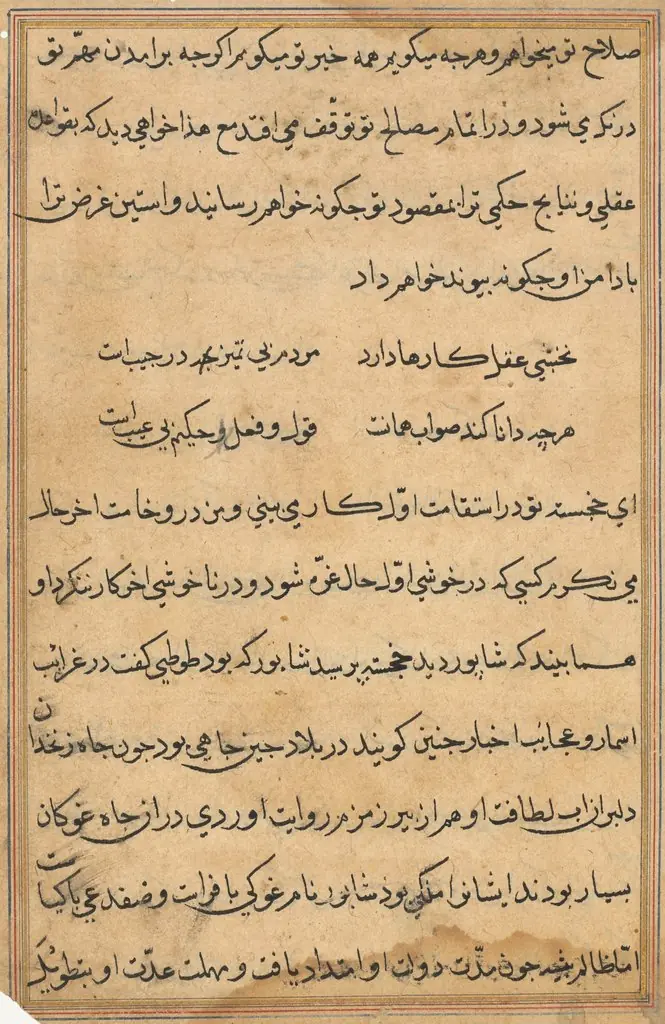 Page from Tales of a Parrot (Tuti-nama): text page
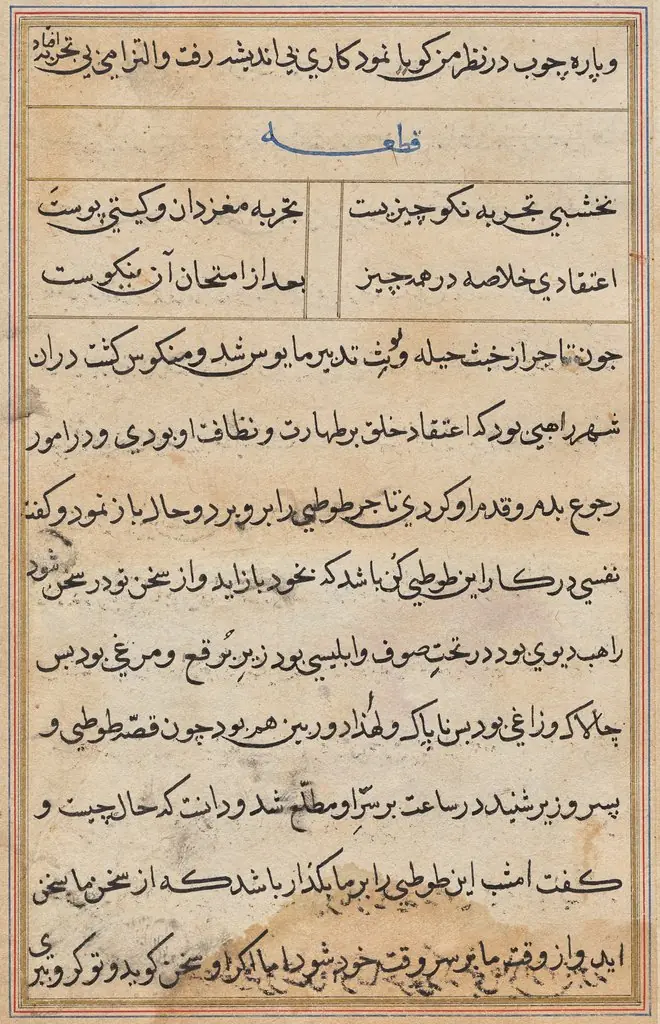 Page from Tales of a Parrot (Tuti-nama): text page
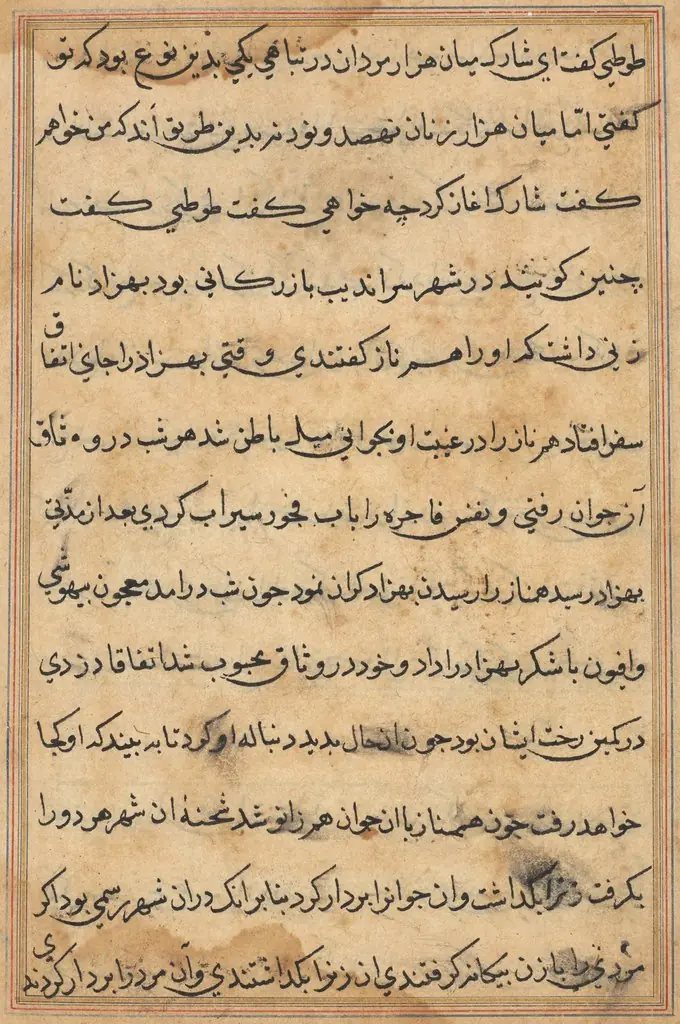 Page from Tales of a Parrot (Tuti-nama): text page
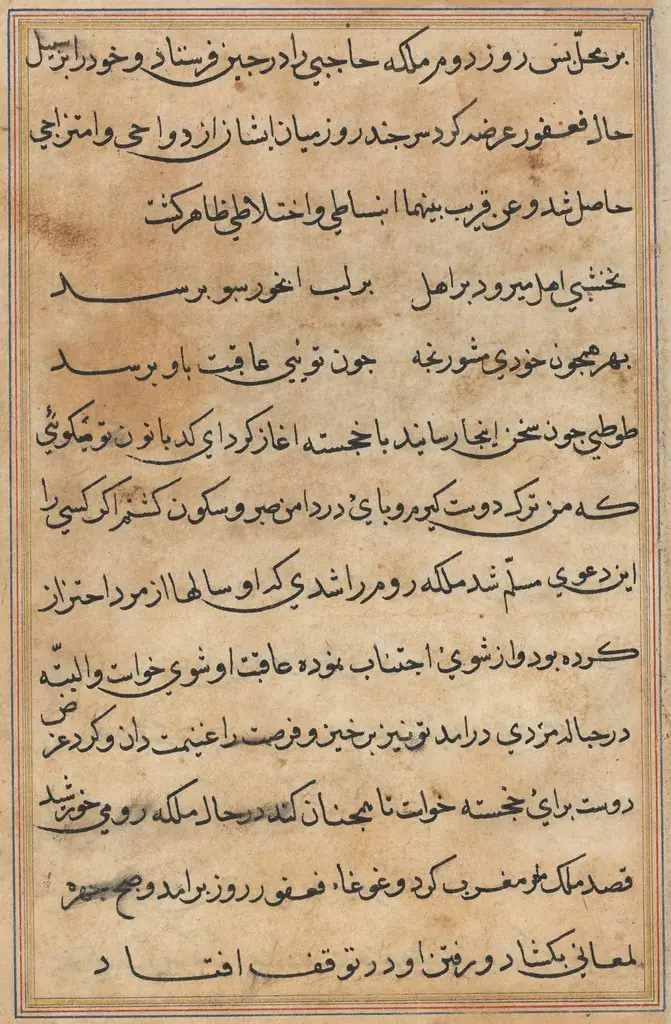 Page from Tales of a Parrot (Tuti-nama): text page
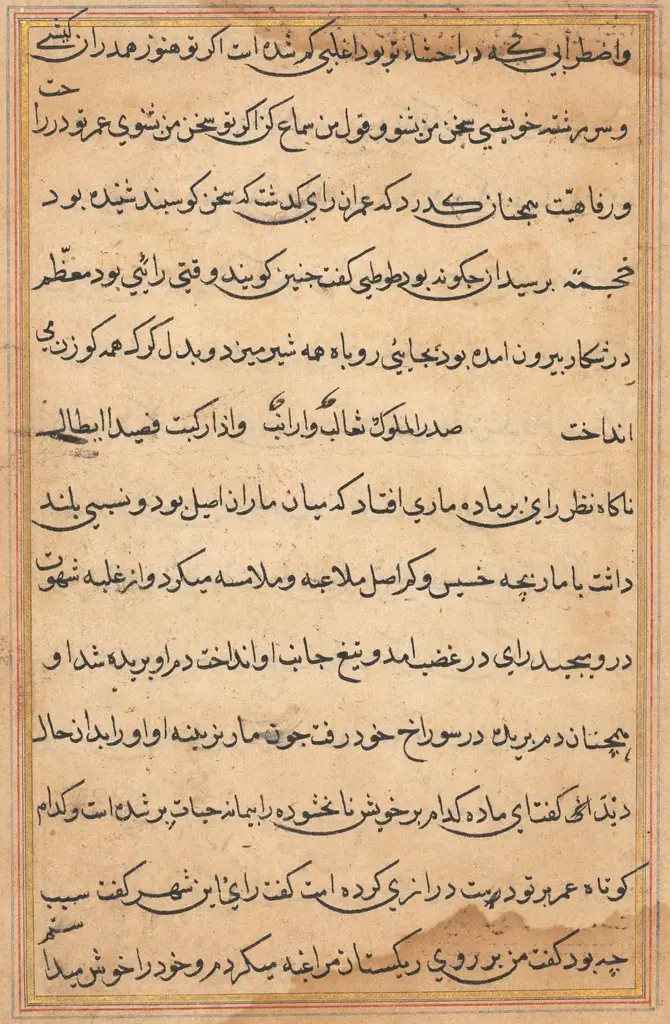 Page from Tales of a Parrot (Tuti-nama): text page
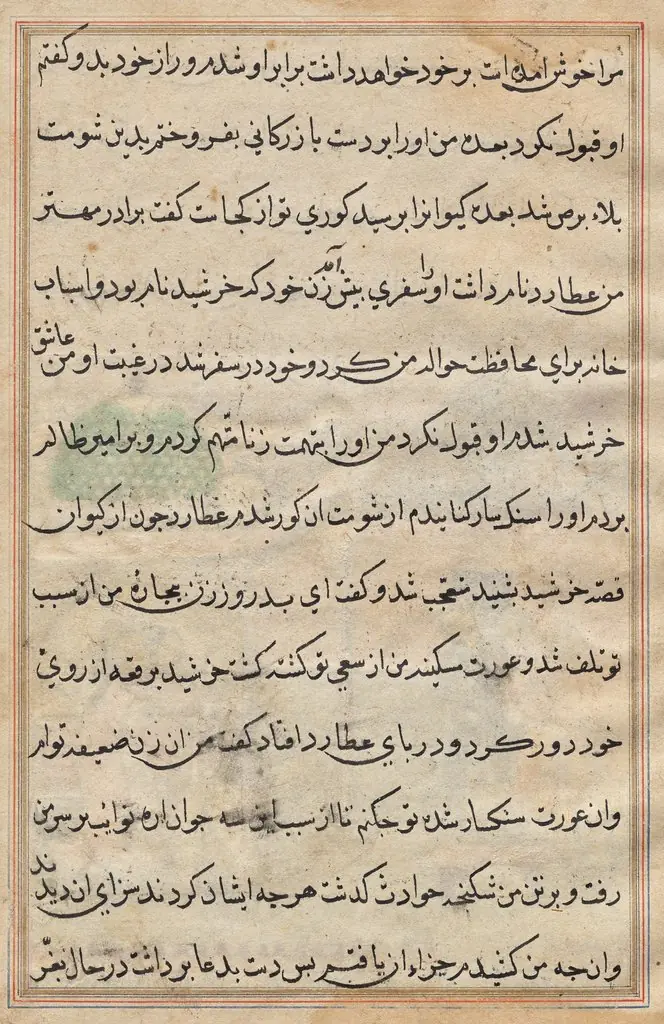 Page from Tales of a Parrot (Tuti-nama): text page
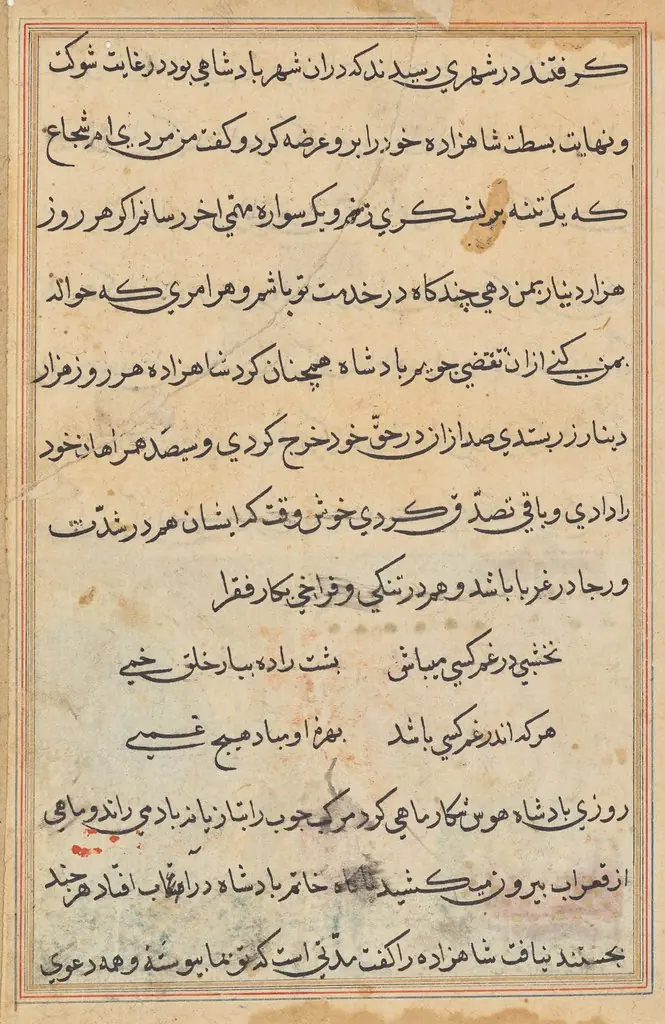 Page from Tales of a Parrot (Tuti-nama): text page
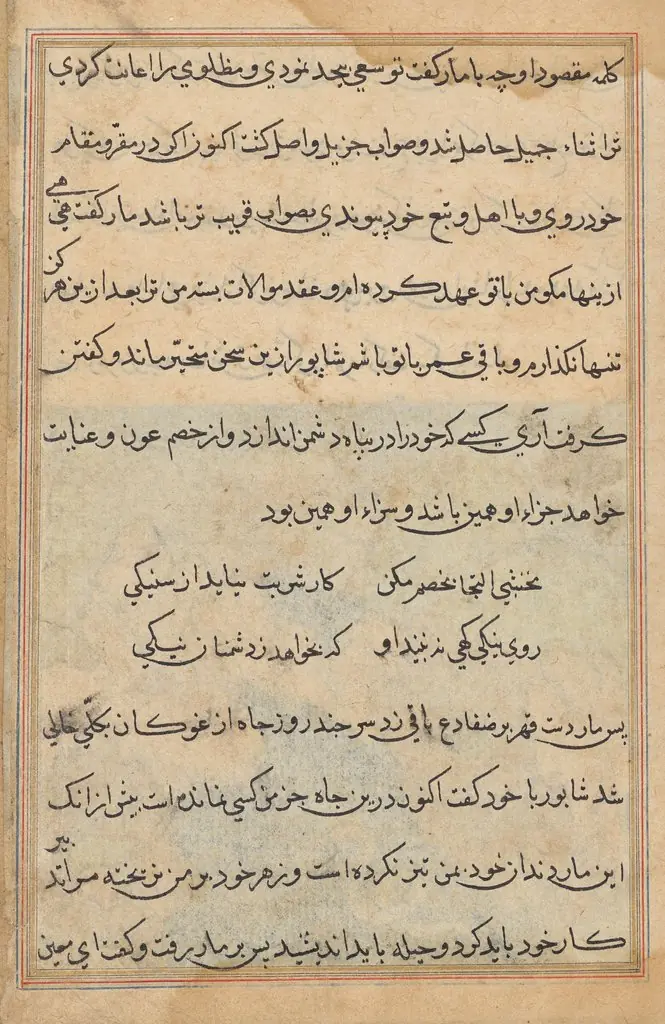 Page from Tales of a Parrot (Tuti-nama): text page
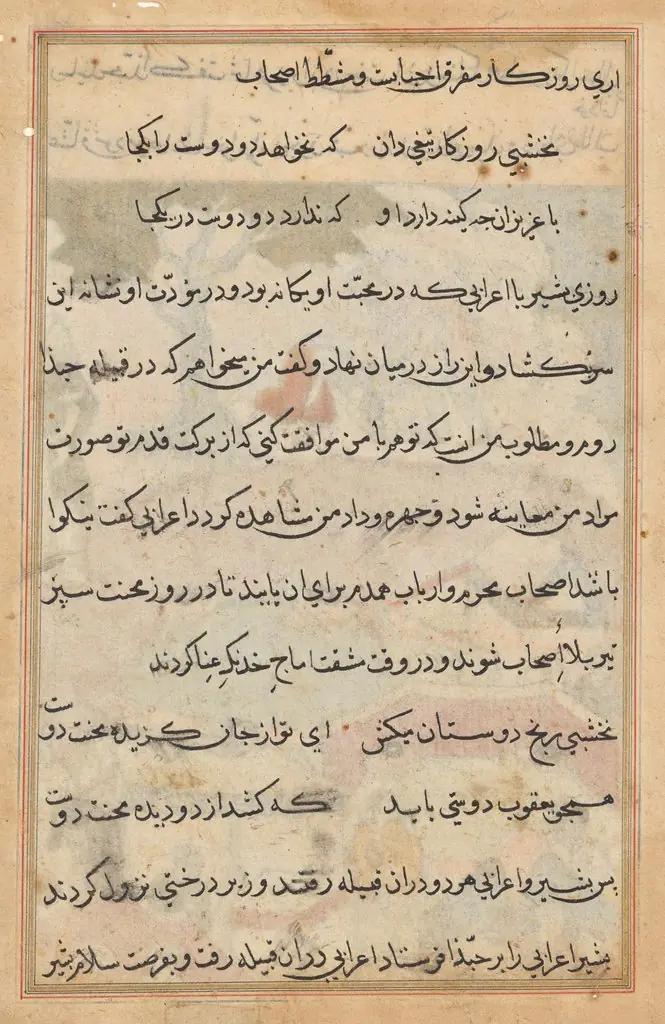 Page from Tales of a Parrot (Tuti-nama): text page
 Page from Tales of a Parrot (Tuti-nama): text page
- Text page from a Tuti-nama (Tales of a Parrot)