Artwork
Painted Banner (Thangka) from a Set of Seven Honoring Gayadhara, a Sakya Pandit from India
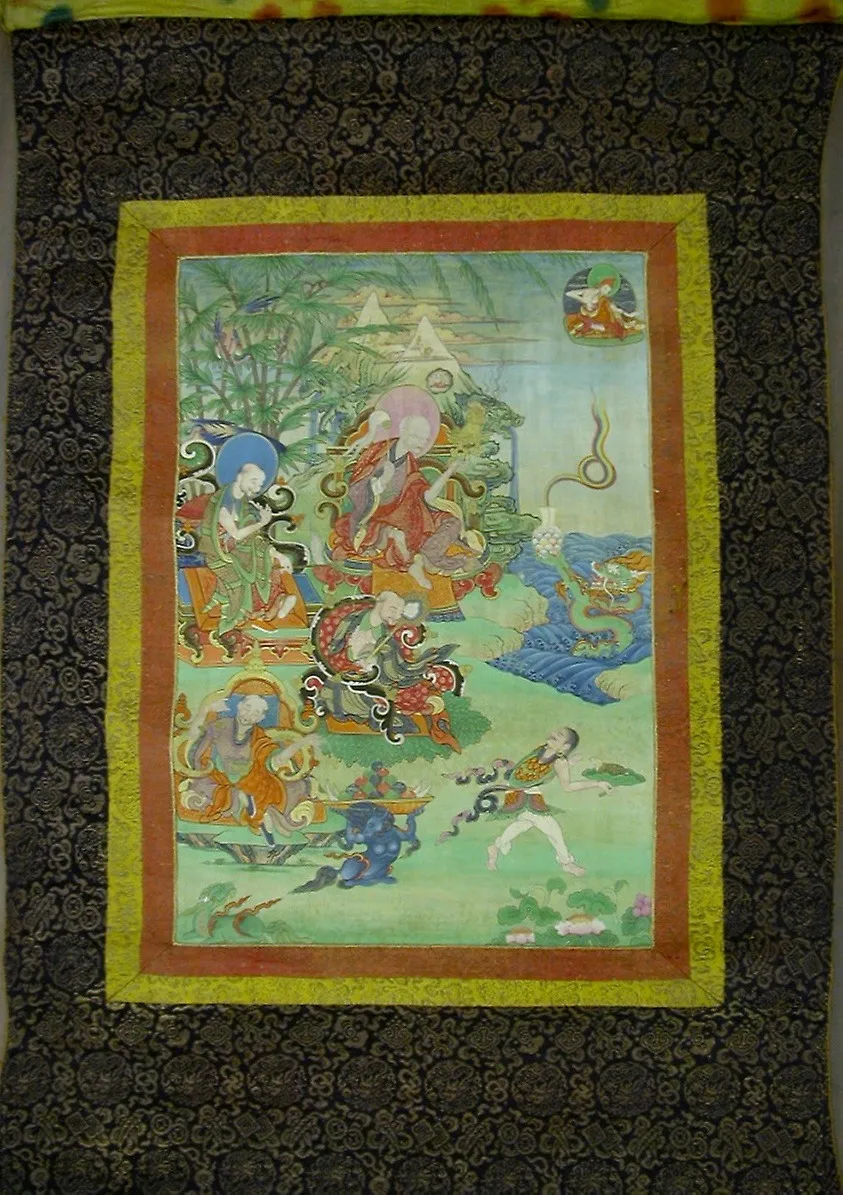
Painted Banner (Thangka) from a Set of Seven Honoring Gayadhara, a Sakya Pandit from India is an unspecified painting by the Yōga artist Unknown. It dates from 1850 and is held in the collection of the Art Institute of Chicago.
About this work
Overview
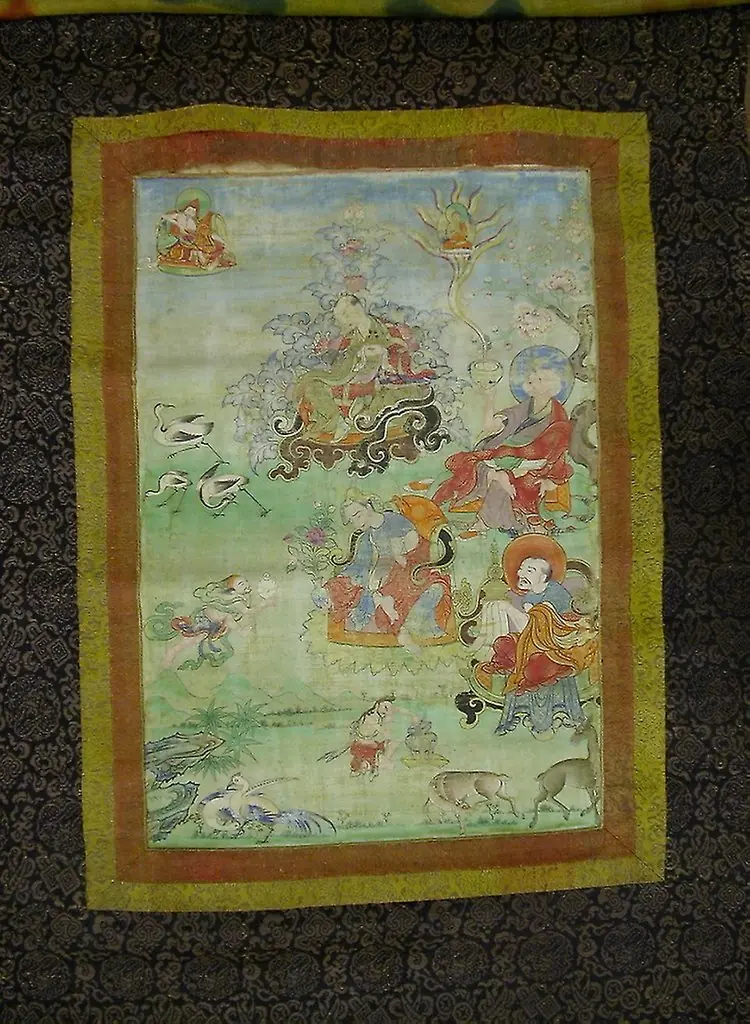
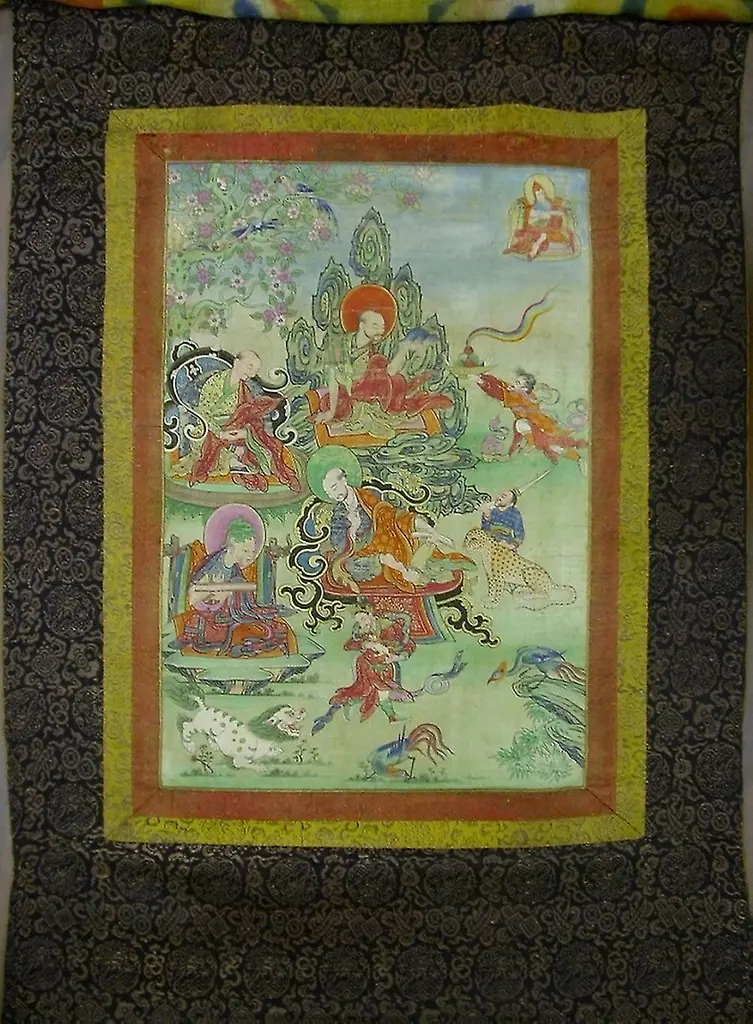
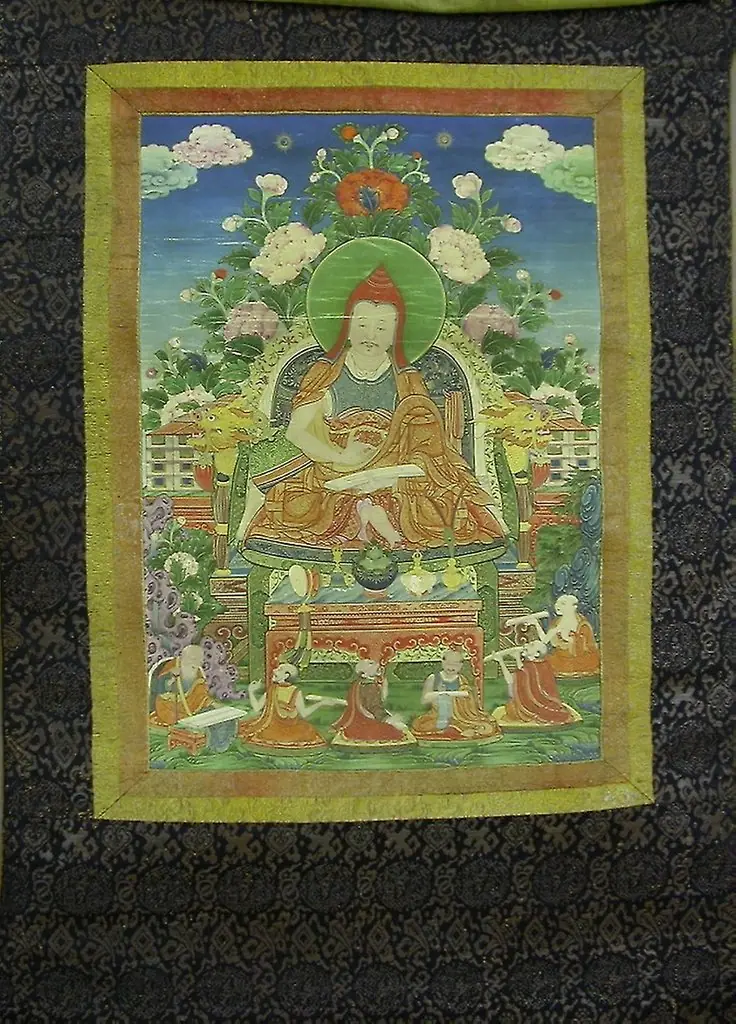
The work is a thangka, a painted banner that formed part of a seven‑panel series created to honor Gayadhara, a distinguished Sakya scholar originating from India. Executed as a devotional object, the banner would have been displayed in a ritual setting, its visual program contributing to a collective veneration of the teacher.
Subject & Meaning
Central to the composition is the figure of Gayadhara, depicted in traditional monastic attire and surrounded by symbolic motifs that reference his scholarly authority within the Sakya tradition. The imagery underscores the reverence accorded to learned lineage holders, linking the viewer’s devotion to the transmission of Buddhist doctrine.
Technique & Style
Painted on a cotton or silk support with mineral pigments, the thangka employs precise line work and layered coloration typical of Tibetan Buddhist art. Gold leaf accents highlight sacred elements, while the flat, iconic rendering of figures reflects the didactic purpose of the piece, facilitating contemplation rather than naturalistic representation.
History & Provenance
The banner originates from a period when Indian scholars were integrated into the Sakya school, likely dating to the 13th–14th centuries. It entered the museum collection through acquisition from a private collector of Himalayan art, documented in the early 20th century, and has since been conserved as part of the institute’s Asian holdings.
Context
Within the broader religious practice of the Sakya sect, such thangkas functioned as visual aids during liturgical ceremonies, often arranged sequentially to narrate a teacher’s life or teachings. The seven‑panel format suggests a structured program, possibly aligned with specific festivals or rites honoring the lineage.
Legacy
The banner exemplifies the cross‑cultural exchange between Indian Buddhist scholarship and Tibetan artistic conventions, illustrating how doctrinal reverence was materialized in visual form. Its preservation offers scholars insight into the devotional aesthetics and pedagogical strategies of medieval Sakya monastic communities.
Artist & collection









- Painted Banner (Thangka) from a Set of Seven Honoring Gayadhara, a Sakya Pandit from India
 Painted Banner (Thangka) from a Set of Seven Honoring Gayadhara, a Sakya Pandit from India
 Painted Banner (Thangka) from a Set of Seven Honoring Gayadhara, a Sakya Pandit from India
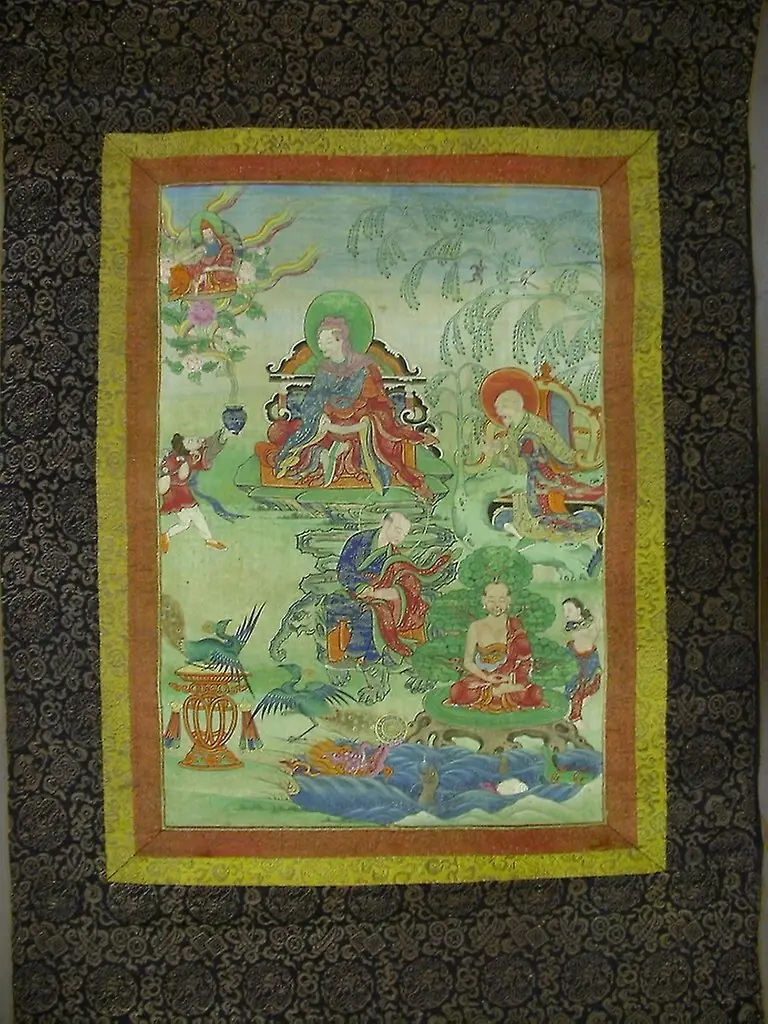 Painted Banner (Thangka) from a Set of Seven Honoring Gayadhara, a Sakya Pandit from India
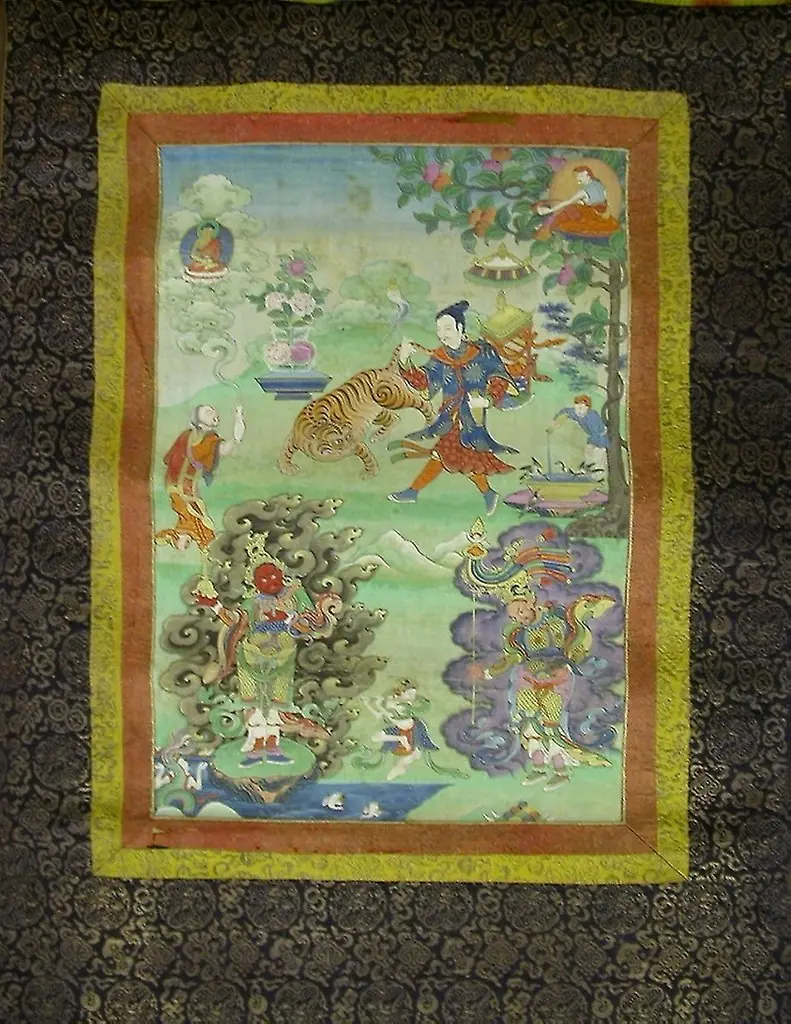 Painted Banner (Thangka) from a Set of Seven Honoring Gayadhara, a Sakya Pandit from India
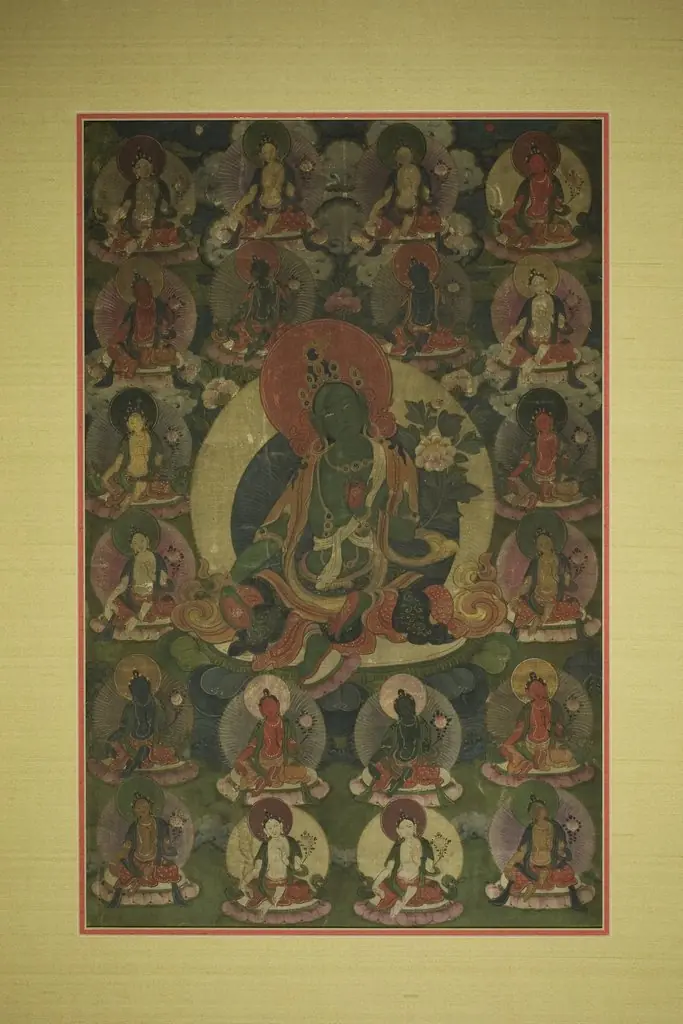 Painted Banner (Thangka) of Green Tara Surrounded by Twenty Manifestations
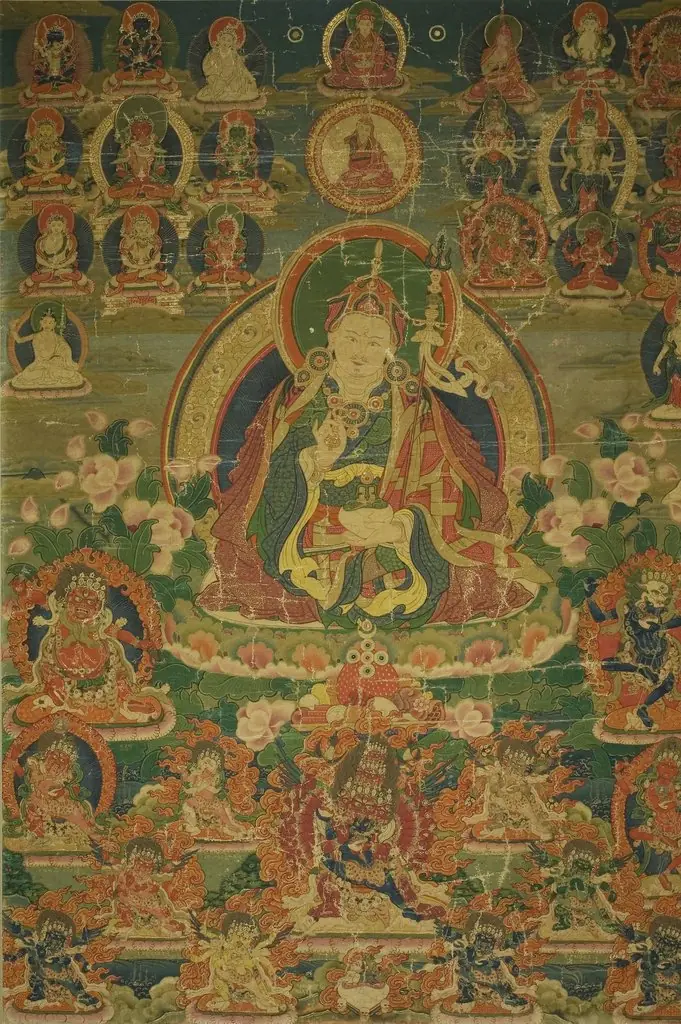 Painted Banner (Thangka) of Sage Guru Padmasambhava Seated Holding a Thunderbolt (Vajra) and Skull Cup (Kapala)
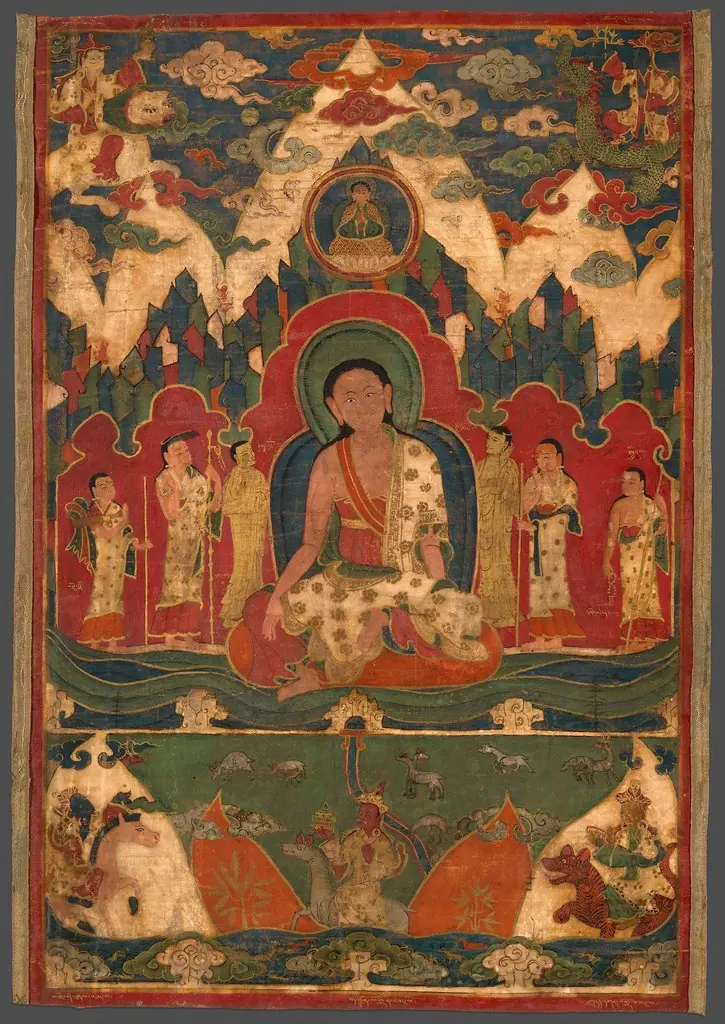 Painted Banner (Thangka) of Milarepa on Mount Kailasha
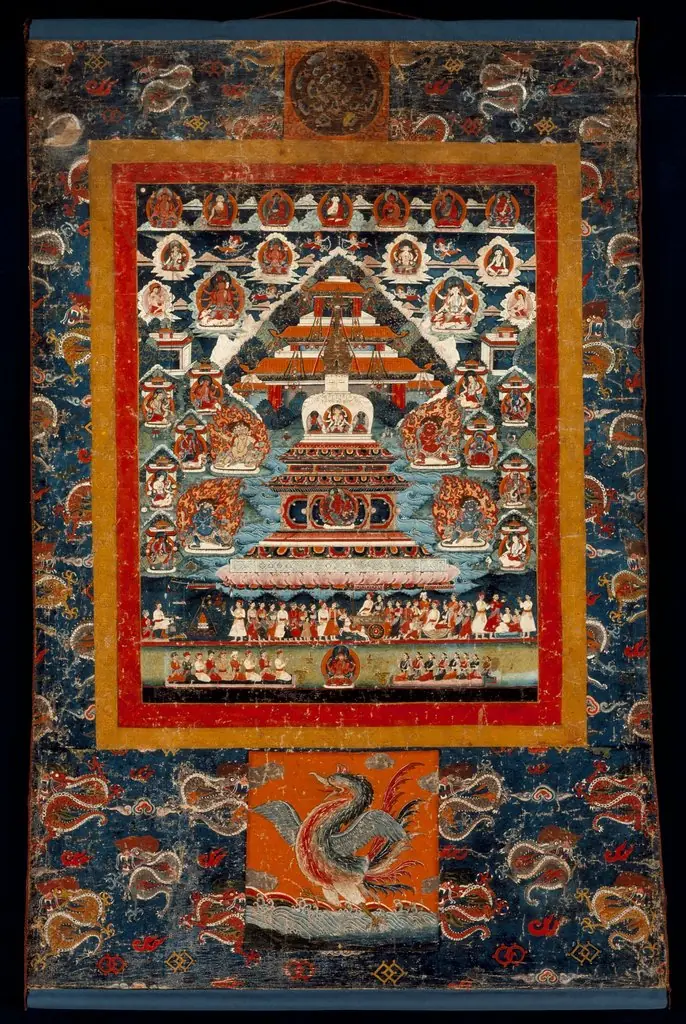 Commemoration Thangka for Bhimaratha Rite
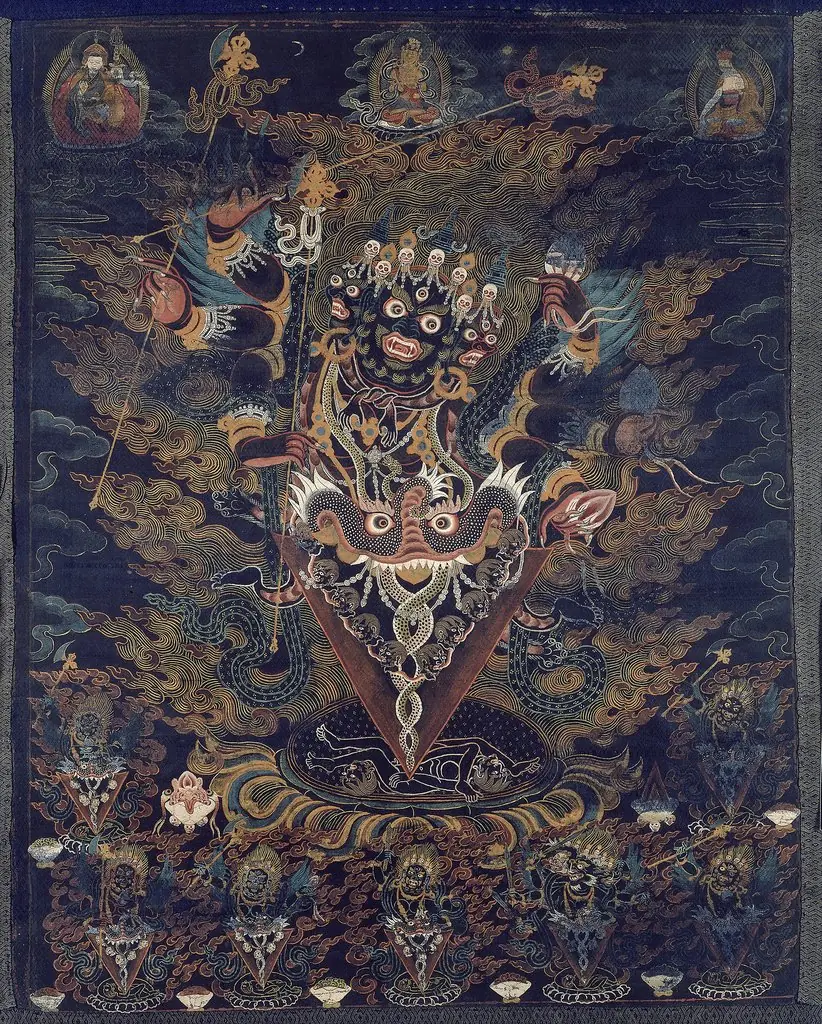 Painted Banner (Thangka) with Guru Dragpur or Vajrakila, a Wrathful Form of Guru Padmasambhava
 Painted Banner (Thangka) with Guru Dragpur, a Wrathful Form of Padmasambhava