Artwork
Painted Banner (Thangka) from a Set of Seven Honoring Gayadhara, a Sakya Pandit from India
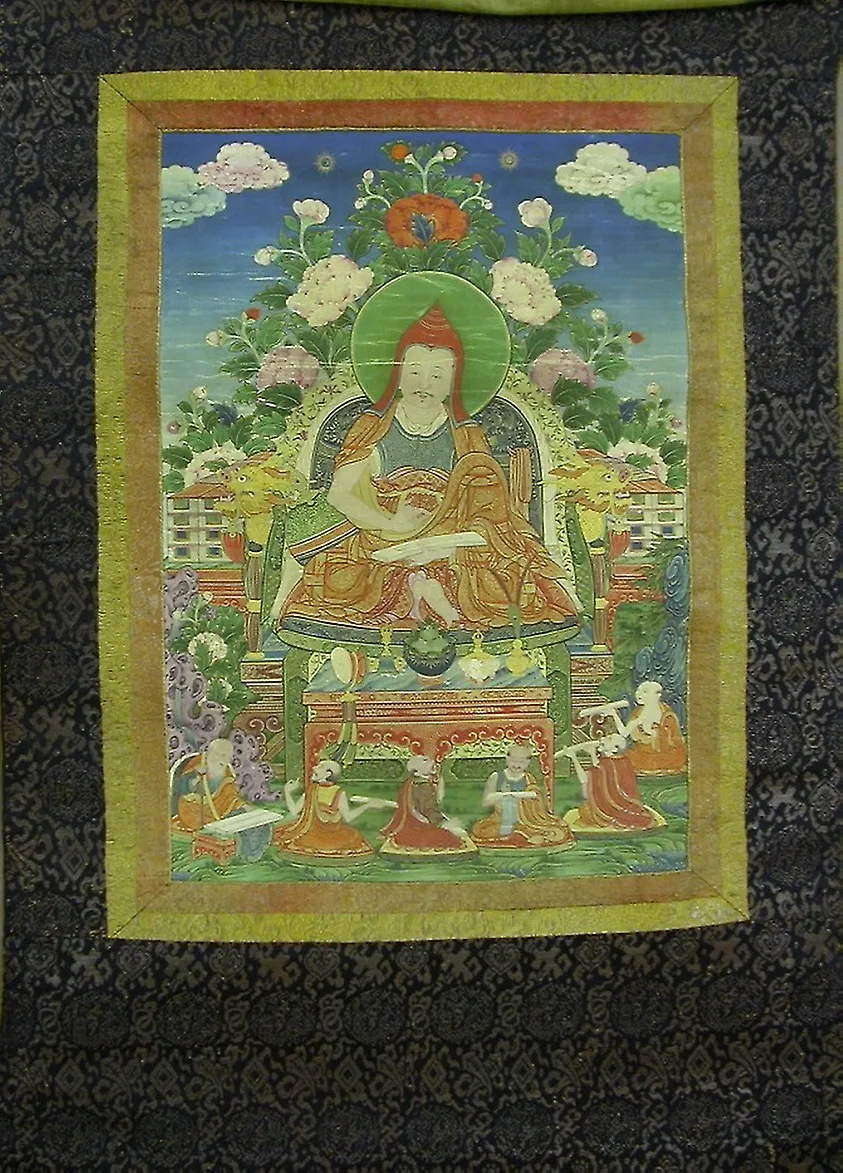
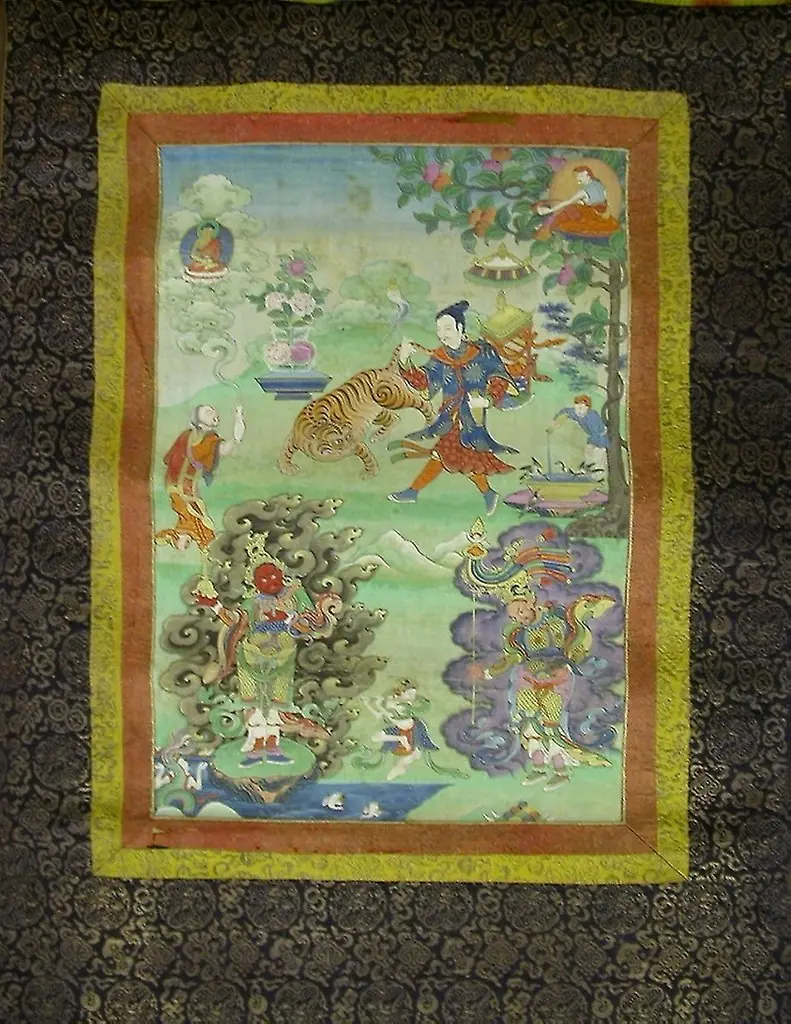
Painted Banner (Thangka) from a Set of Seven Honoring Gayadhara, a Sakya Pandit from India is an unspecified painting by the Yōga artist Unknown. It dates from 1850 and is held in the collection of the Art Institute of Chicago. This painted banner, part of a seven-piece set, honors Gayadhara, an Indian scholar and teacher of the Sakya tradition.
About this work
Overview
This painted banner, part of a seven-piece set, honors Gayadhara, an Indian scholar and teacher of the Sakya tradition. Created as a devotional object, it depicts him seated in meditation, surrounded by symbolic flora and a celestial blue backdrop. The composition centers the figure with stillness, using color and form to convey spiritual presence rather than narrative action.
Subject & Meaning
Gayadhara, a key transmitter of tantric teachings to Tibet, is portrayed in meditative posture with hands clasped, signifying inner focus and transmission of wisdom. The red hat and orange robe denote his monastic rank and lineage affiliation. The surrounding flora and clouds suggest an enlightened realm, reinforcing his role as a bridge between Indian Buddhist scholarship and Tibetan practice.
Technique & Style
Gold accents likely outline details, enhancing luminosity without naturalistic shading, adhering to iconographic conventions rather than perspective.
Executed in mineral pigments on cotton, the banner employs precise line work and flat, saturated colors typical of Tibetan thangka painting. The deep blue background contrasts with the figure’s warm robes and the vivid greenery, creating visual harmony. Gold accents likely outline details, enhancing luminosity without naturalistic shading, adhering to iconographic conventions rather than perspective.
History & Provenance
The banner originates from a set commissioned to honor Gayadhara’s legacy within the Sakya school, likely produced in Tibet during the 13th to 15th centuries. Such sets were used in monastic rituals and teaching contexts. Its survival suggests careful preservation, possibly within a Sakya monastery, though its specific journey from creation to current collection remains undocumented.
Context
These banners were part of a broader tradition of visualizing spiritual lineages in Tibetan Buddhism. Created for ritual use, they served as aids in meditation and as reminders of doctrinal transmission. Gayadhara’s inclusion reflects the Sakya school’s emphasis on Indian origins, reinforcing legitimacy through visual connection to its foreign teachers.
Legacy
Though one of seven, this banner contributes to the enduring visual language of Tibetan Buddhist portraiture. Its adherence to iconographic norms helped standardize representations of lineage holders across centuries. Today, it remains a tangible link to the transmission of esoteric teachings and the artistic discipline that sustained their memory.
Artist & collection









- Painted Banner (Thangka) from a Set of Seven Honoring Gayadhara, a Sakya Pandit from India
 Painted Banner (Thangka) from a Set of Seven Honoring Gayadhara, a Sakya Pandit from India
 Painted Banner (Thangka) from a Set of Seven Honoring Gayadhara, a Sakya Pandit from India
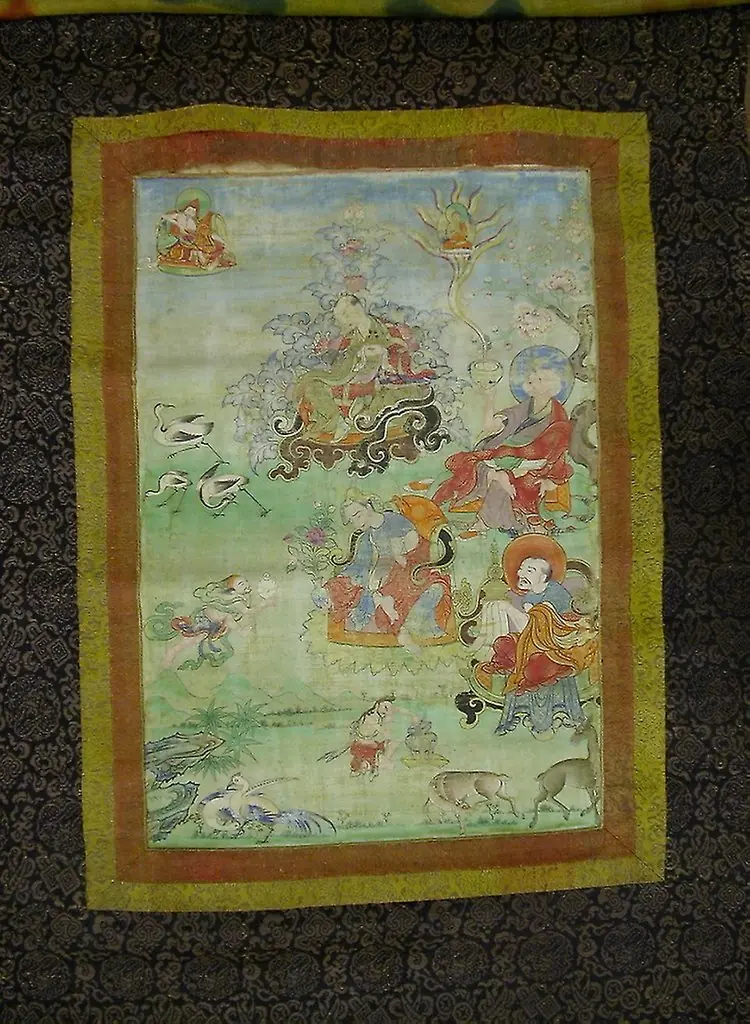 Painted Banner (Thangka) from a Set of Seven Honoring Gayadhara, a Sakya Pandit from India
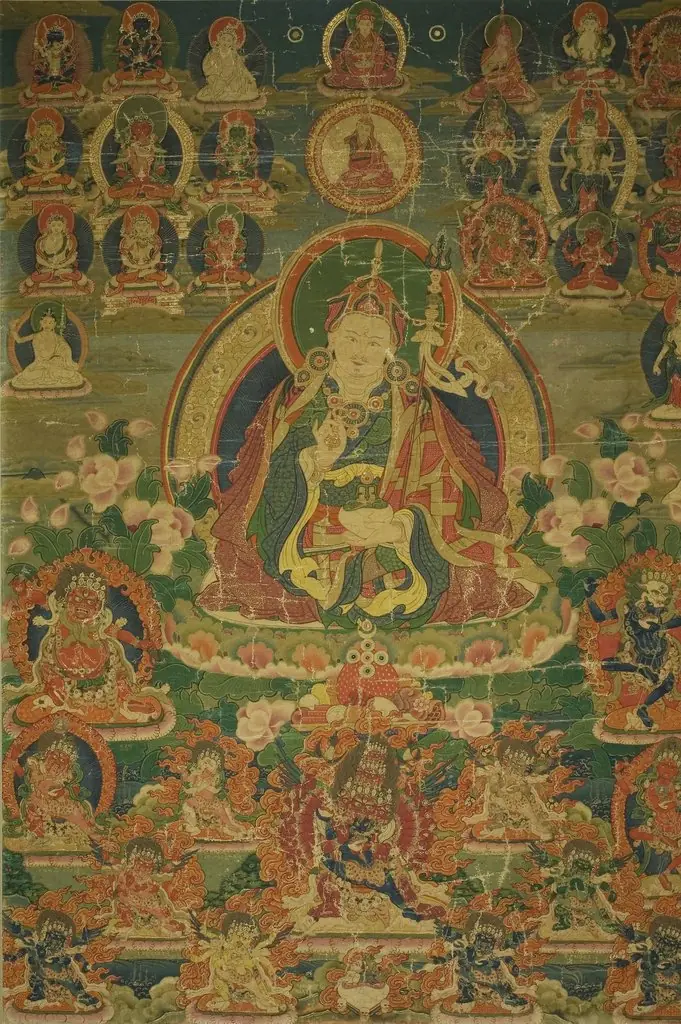 Painted Banner (Thangka) of Sage Guru Padmasambhava Seated Holding a Thunderbolt (Vajra) and Skull Cup (Kapala)
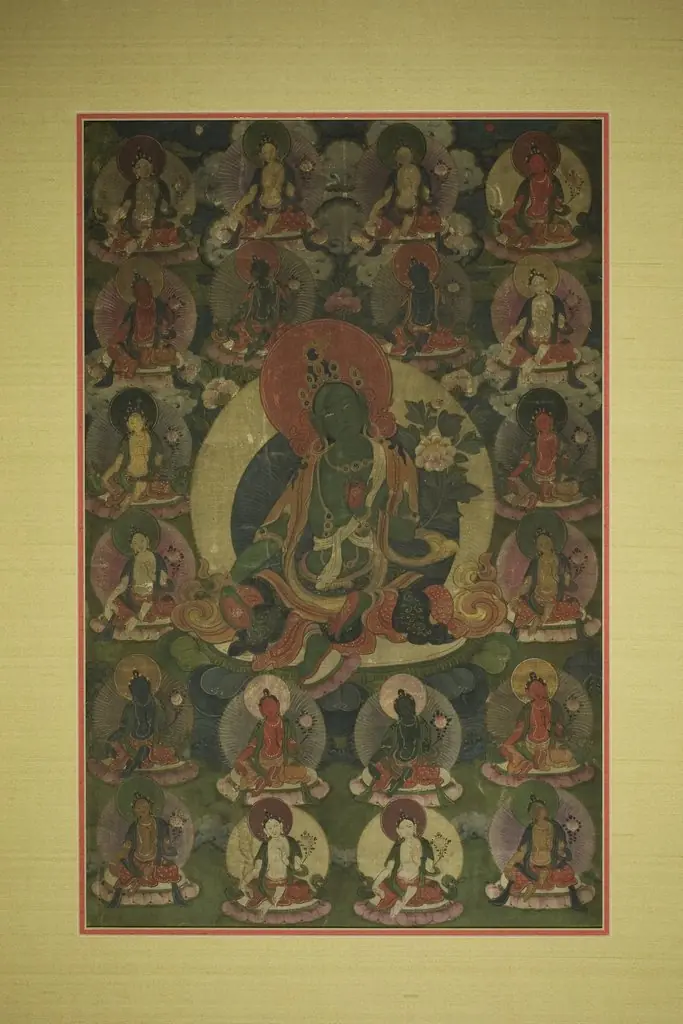 Painted Banner (Thangka) of Green Tara Surrounded by Twenty Manifestations
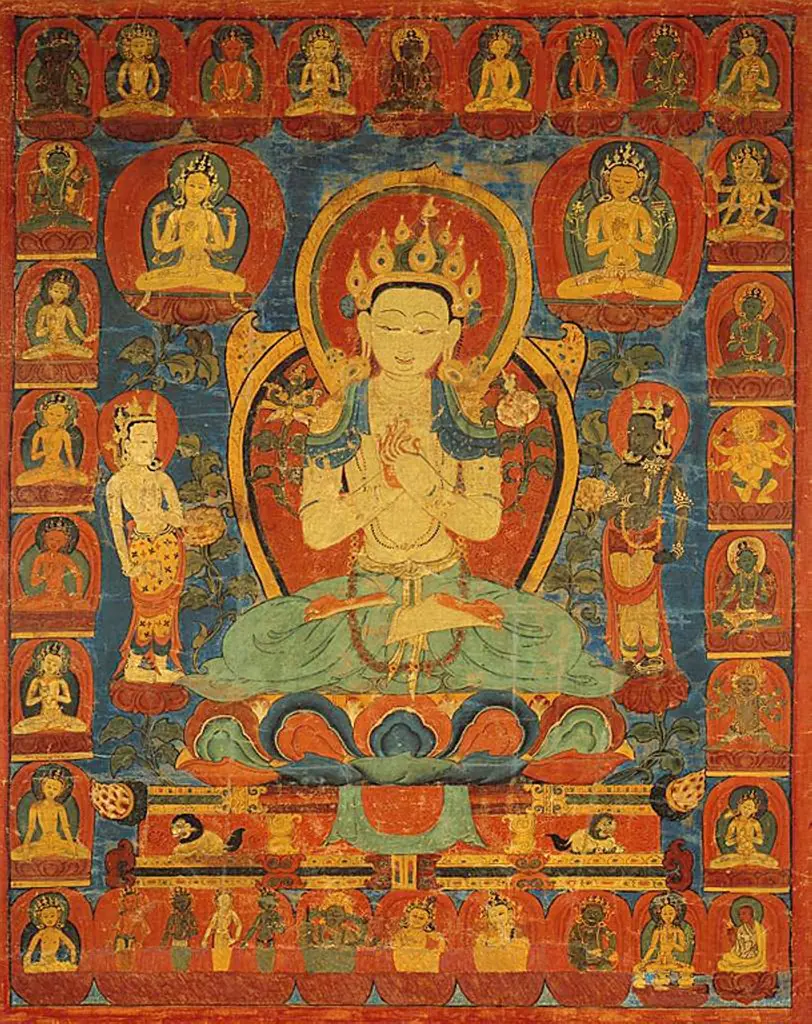 Painted Banner (Thangka) of Bodhisattva Maitreya Surrounded by his Retinue
 Painted Banner (Thangka) from a Set of Seven Honoring Gayadhara, a Sakya Pandit from India
 Painted Banner (Thangka) of Milarepa on Mount Kailasha