Artwork
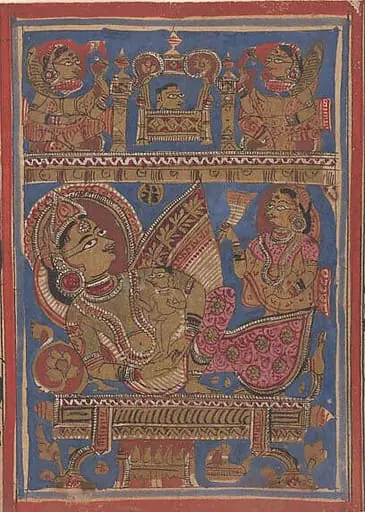
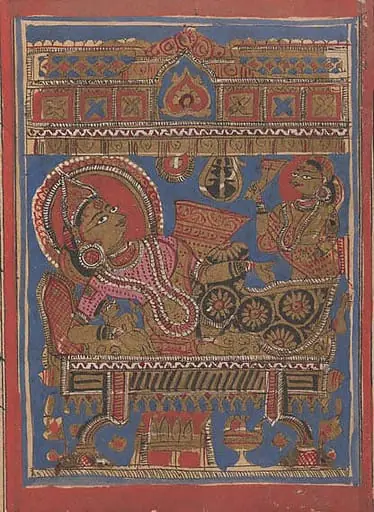
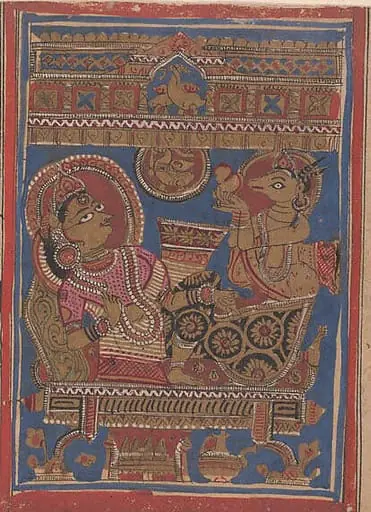
Painting from a Kalpa-sutra: Queen Trishala Reclining
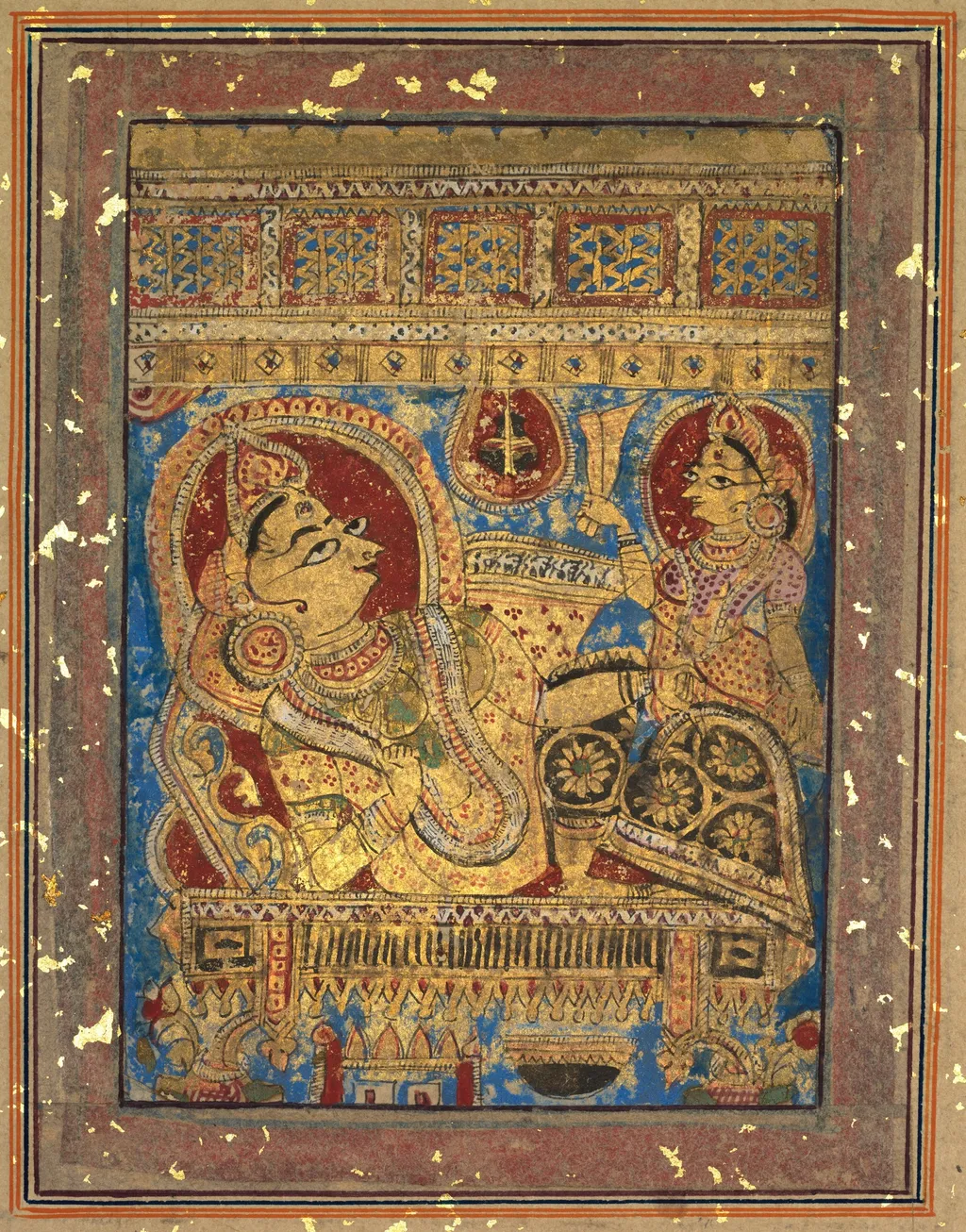
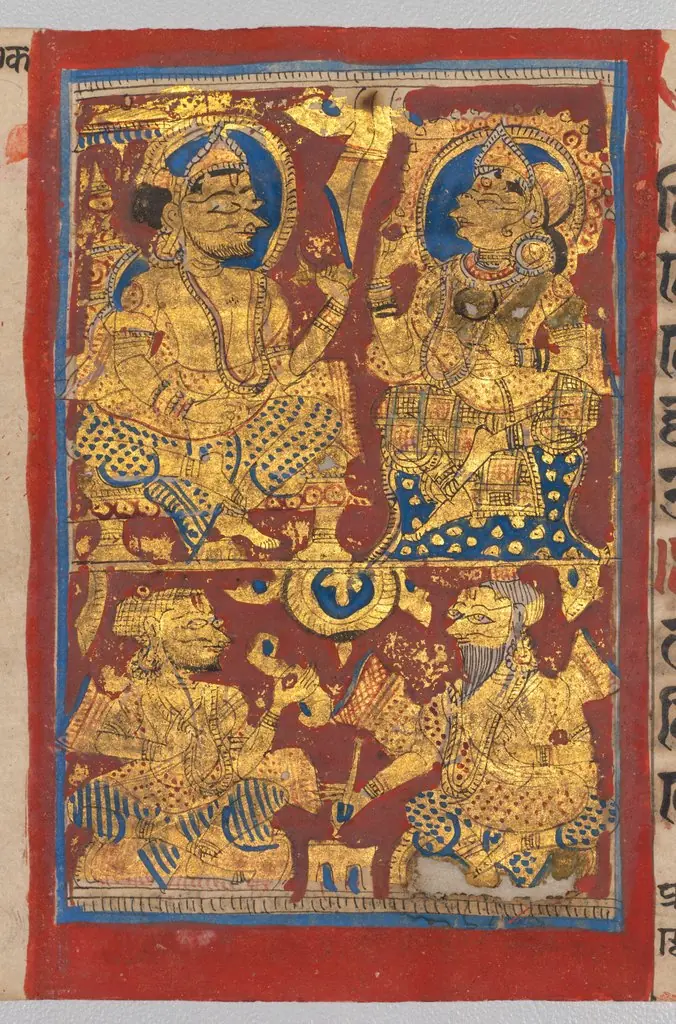
Painting from a Kalpa-sutra: Queen Trishala Reclining is an unspecified painting. It dates from 1524 and is held in the collection of the Cleveland Museum of Art. This painting, titled Queen Trishala Reclining, originates from a Kalpa-sutra manuscript.
About this work
Subject & Meaning
The work portrays Queen Trishala in a reclining position, a scene drawn from the Kalpa‑sutra that narrates the early life of the Jain Tirthankara Mahavira.
The work portrays Queen Trishala in a reclining position, a scene drawn from the Kalpa‑sutra that narrates the early life of the Jain Tirthankara Mahavira. Executed in 1524, the painting is classified as a religious work and is part of the Cleveland Museum of Art’s collection. Iconographically the figure is identified by her royal context and the narrative setting of the Kalpa‑sutra, emphasizing her role as the mother of the enlightened teacher. Symbolically the composition underscores the divine circumstances surrounding Mahavira’s birth within Jain cosmology.
History & Provenance
Created in 1524, this religious painting depicts Queen Trishala reclining and originates from a Kalpa-sutra manuscript. The work was produced by an artist whose identity remains unknown. By 1925, the painting had entered the collection of the Cleveland Museum of Art, where it is cataloged under the accession number 1925.1340. It continues to be held by this institution in Cleveland.
Overview
This painting, titled Queen Trishala Reclining, originates from a Kalpa-sutra manuscript. It depicts two female figures within a highly ornamental setting. The artwork is characterized by its vibrant palette, dominated by blues, reds, and prominent gold accents, which contribute to its intricate and decorative aesthetic.
The scene's rich details and specific subject matter are integral to its narrative context within Jain religious texts.
Technique & Style
The painting exhibits a dense compositional style, with the background filled entirely with elaborate patterns. These include geometric motifs, floral designs, and diminutive figures, all rendered in a vivid array of blues, reds, and particularly striking gold. The figures themselves are adorned with substantial jewelry, and the couch they occupy features carved embellishments, emphasizing the luxurious and detailed nature of the artistic execution.
Context
Bearing the marks of its age, the painting displays a historical patina. Some areas show a loss of pigment, with flakes of color missing from the surface. Despite these signs of wear, the artwork's original intricate details and bold color scheme remain largely discernible, offering insight into its historical production and aesthetic qualities.
Artist & collection

 Untitled
 Untitled
 Untitled
 Untitled
 Untitled
 Untitled
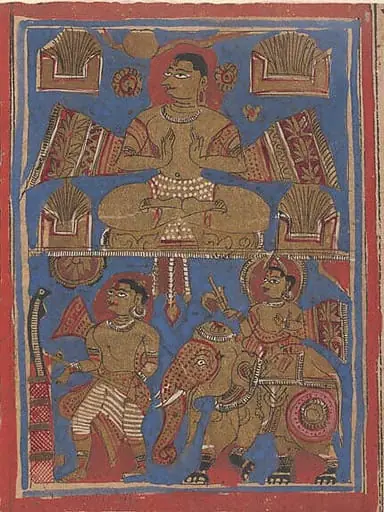 Untitled
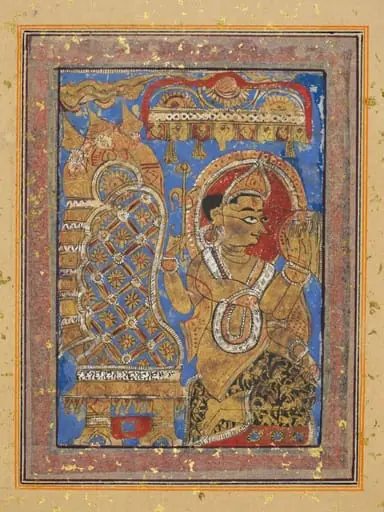 Painting from a Kalpa-sutra: Indra Praises the Embryo of Mahavira in the Womb of the Brahman Woman Devananda
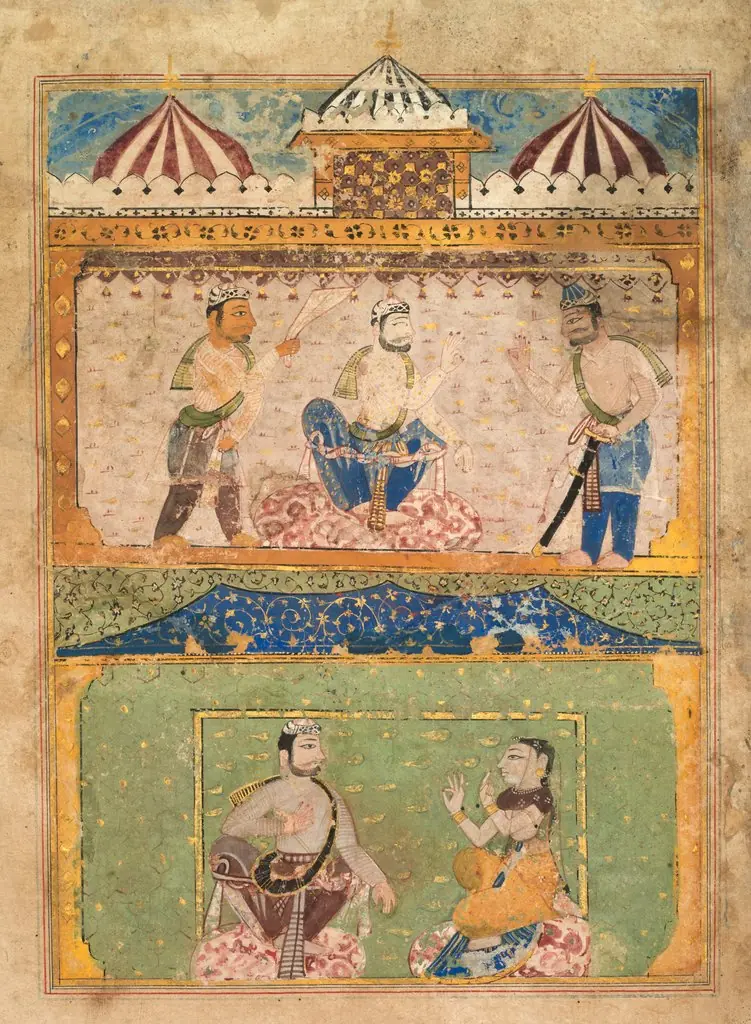 A Traveler Persuades Lorik to Return Home (top); Chanda Objects (bottom), from a Chandayana (Story of Chanda)
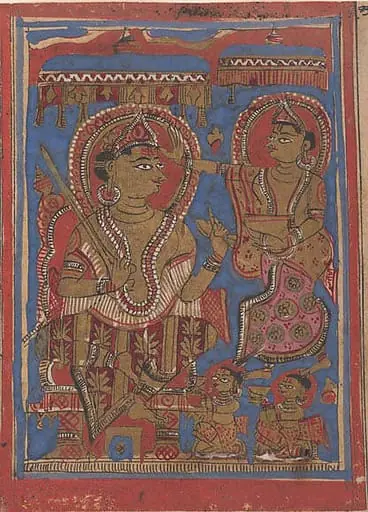
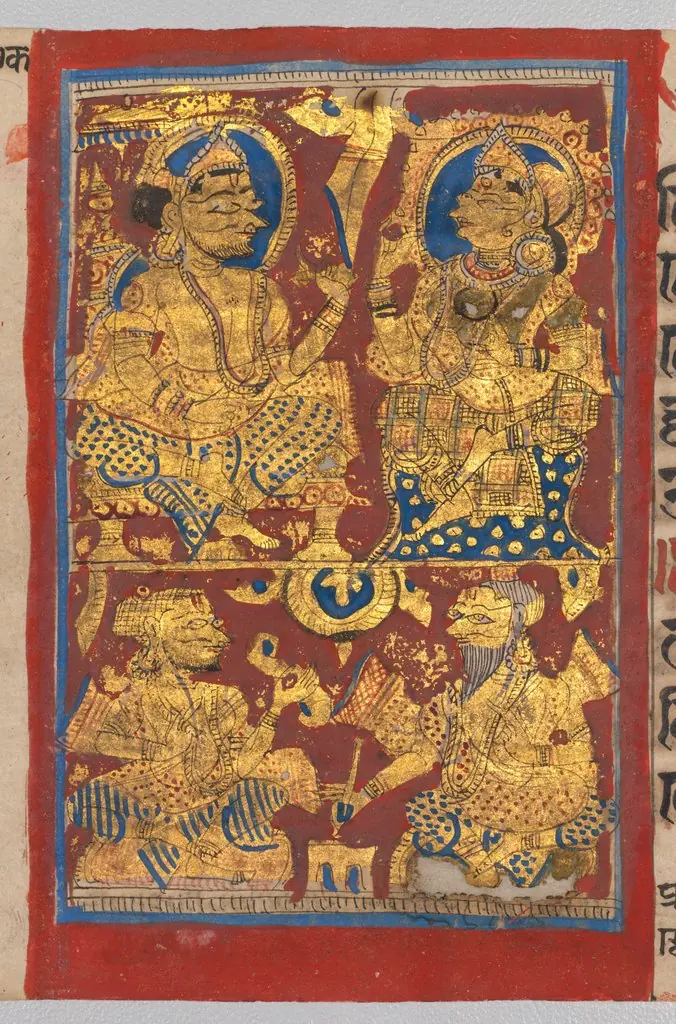 King Siddhartha and Queen Trishala with the Dream Diviners, from a Kalpa-sutra
 Kalpa-sutra manuscript with 24 illuminations
- Painting from a Kalpa-sutra: Queen Trishala Reclining