Artwork
A Traveler Persuades Lorik to Return Home (top); Chanda Objects (bottom), from a Chandayana (Story of Chanda)
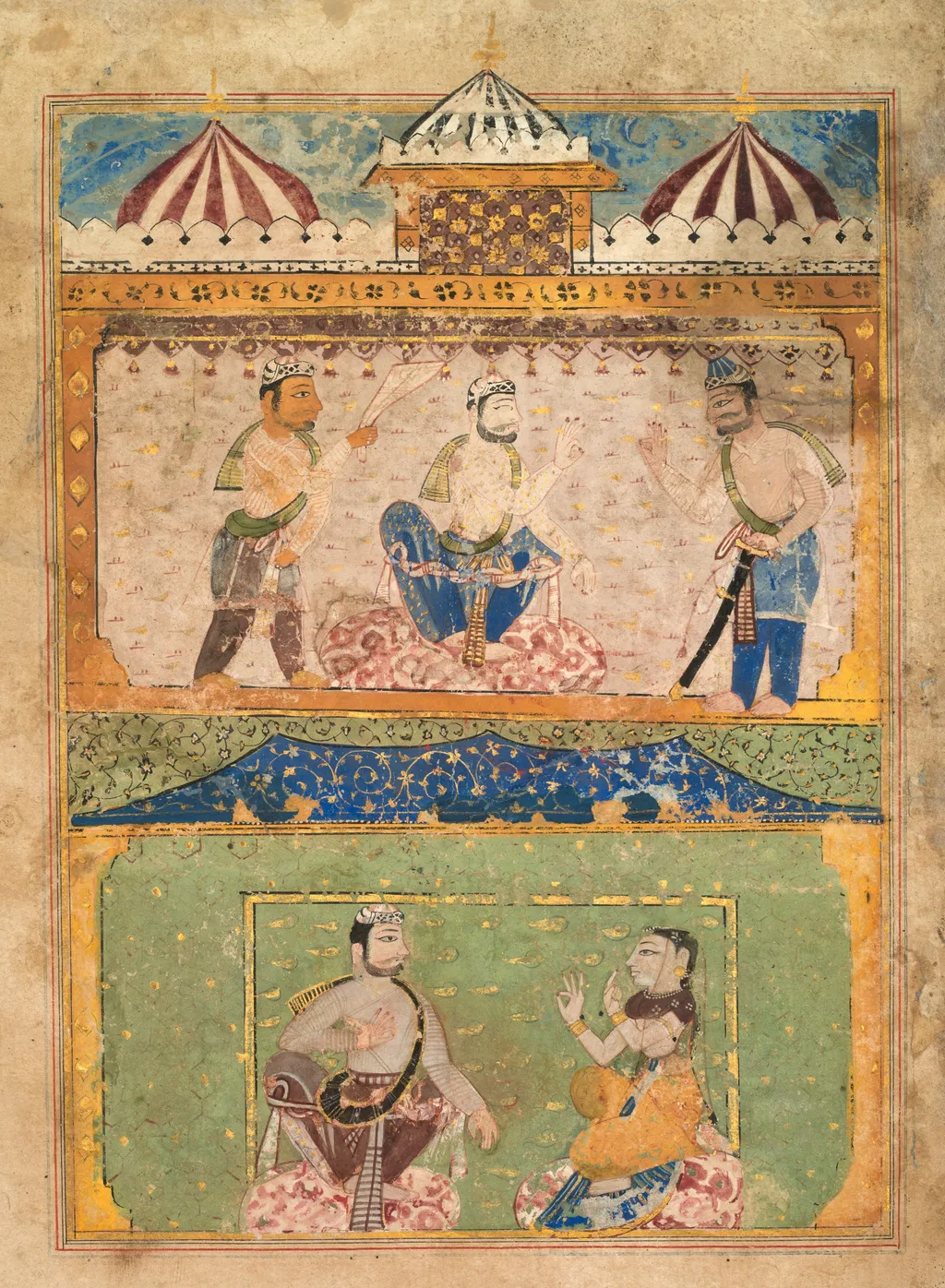
A Traveler Persuades Lorik to Return Home (top); Chanda Objects (bottom), from a Chandayana (Story of Chanda) is an unspecified painting. It dates from 1535 and is held in the collection of the Cleveland Museum of Art.
About this work
History & Provenance
It is held in the collection of the Cleveland Museum of Art, where it is accessioned under the inventory number 1981.
Created in 1535, this painting is attributed to an unknown artist and illustrates a scene from the Chandayana (Story of Chanda), with a traveler persuading Lorik to return home in the upper register and Chanda objects below. It is held in the collection of the Cleveland Museum of Art, where it is accessioned under the inventory number 1981.55. The specific circumstances of its original commission and its ownership chain prior to the museum's acquisition are not recorded in the available documentation, and no exhibition history is noted.
Overview
The work, titled A Traveler Persuades Lorik to Return Home (top); Chanda Objects (bottom), from a Chandayana (Story of Chanda), is a painted panel that presents two narrative episodes side by side. Each episode is framed as if it were a separate page in a manuscript, allowing the viewer to follow distinct moments from the same legend.
Subject & Meaning
In the upper register, three figures gather before a throne that resembles a cloud, suggesting a divine or royal setting. One figure sits elevated, while the others stand, one holding a staff and the other a longer rod, implying a council deliberating a traveler’s return. The lower register shifts to a more intimate scene: a armored man seated while another kneels, presenting fruit and gesturing, indicating a plea or offering within the same narrative cycle.
Technique & Style
The painter employs a flat, compartmentalized composition typical of narrative panels, using clear outlines and bold coloration to separate the two scenes. Architectural elements such as striped tents and a pointed‑roofed palace appear in the background, rendered with simplified perspective, while the figures are stylized with exaggerated postures that convey their roles within the story.
Context
The Chandayana narrative was a popular subject for visual storytelling in manuscript and panel formats, often used to convey moral lessons about duty, hospitality, and the consequences of travel. By juxtaposing a public council scene with a private supplication, the artist highlights the interplay between communal decision‑making and personal persuasion within the legend.
Artist & collection

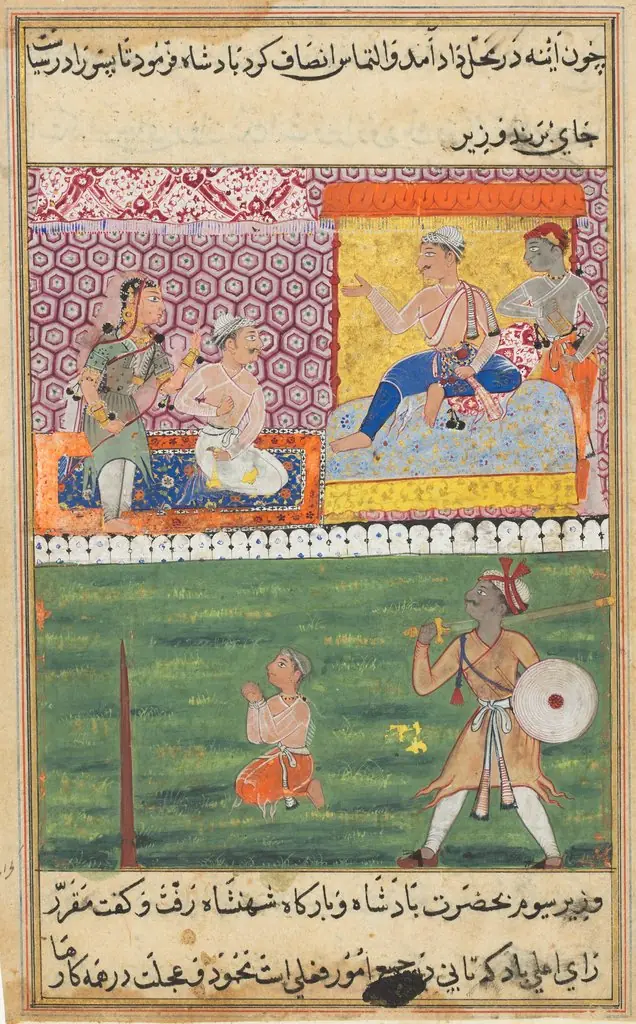 The handmaiden again appeals for justice and the prince is led to the place of execution for the third time, from a Tuti-nama (Tales of a Parrot): Eighth Night
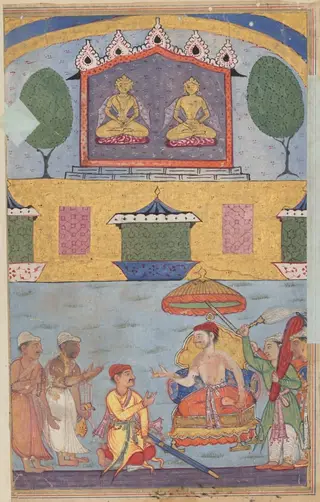 The goldsmith and the carpenter inform the king of a dream in which the golden images plan to desert the city for lack of worshippers, from a Tuti-nama (Tales of a Parrot): Third Night
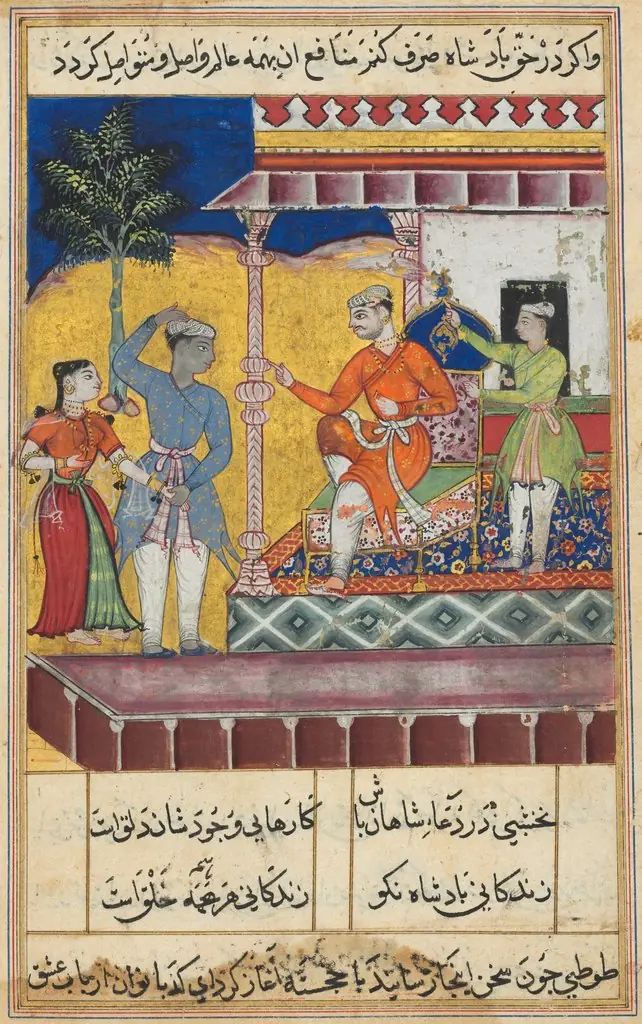 The rejuvenated old man and the daughter of the king of the jinns take leave of the King of Kings, from a Tuti-nama (Tales of a Parrot): Seventh Night
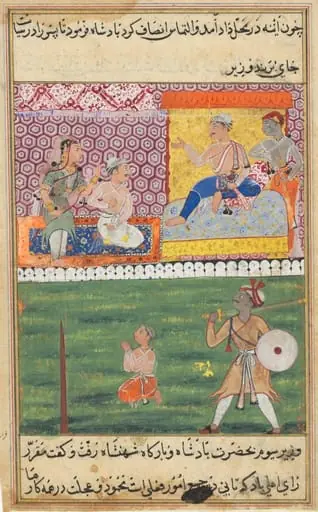 The handmaiden again appeals for justice and the prince is led to the place of execution for the third time, from a Tuti-nama (Tales of a Parrot): Eighth Night
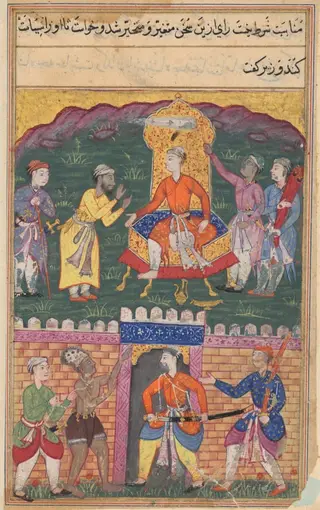 The vizier dissuades the king of Bahilistan from executing the dervish who asks for his daughter’s hand in marriage, from a Tuti-nama (Tales of a Parrot): Seventh Night
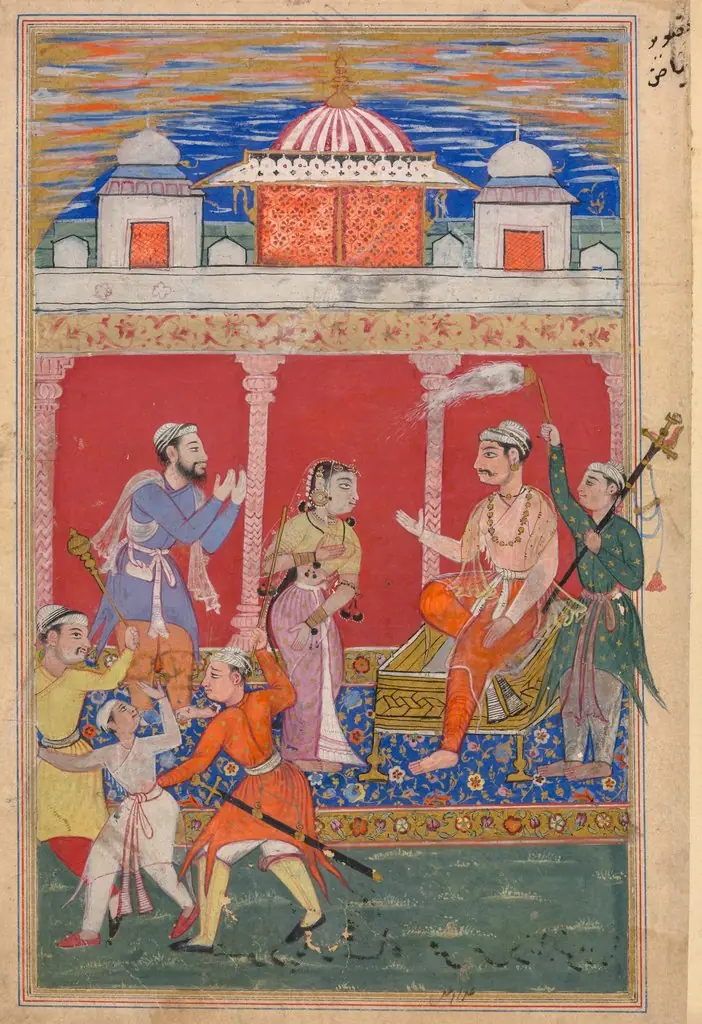 Page from Tales of a Parrot (Tuti-nama): text page
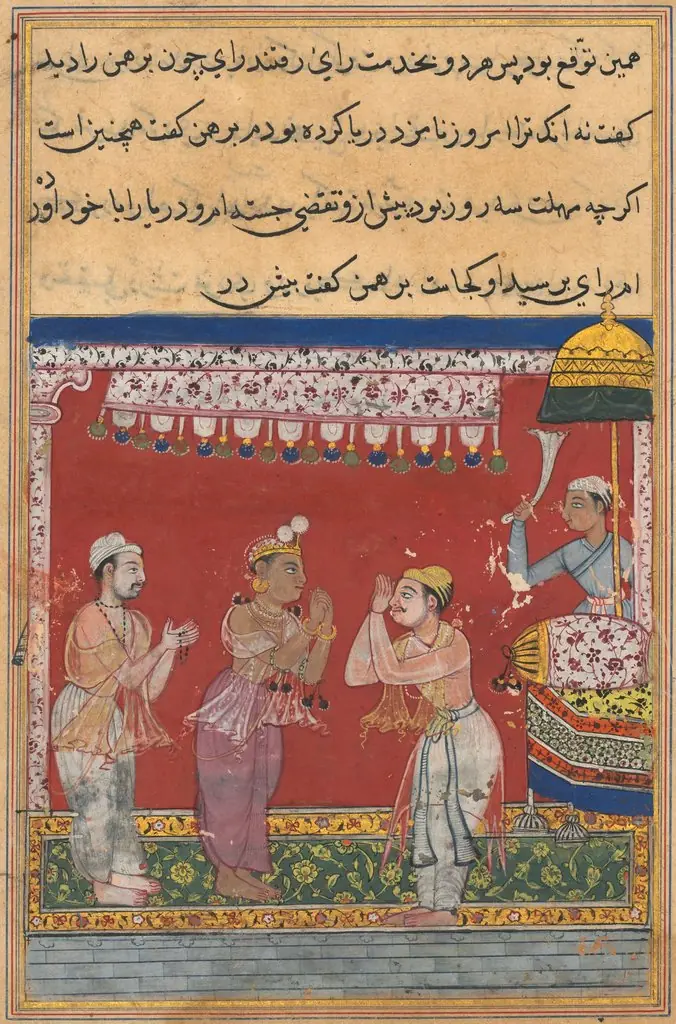 The king of the Ocean, having assumed human form, arrives at the court of the Raja, from a Tuti-nama (Tales of a Parrot): Eleventh Night
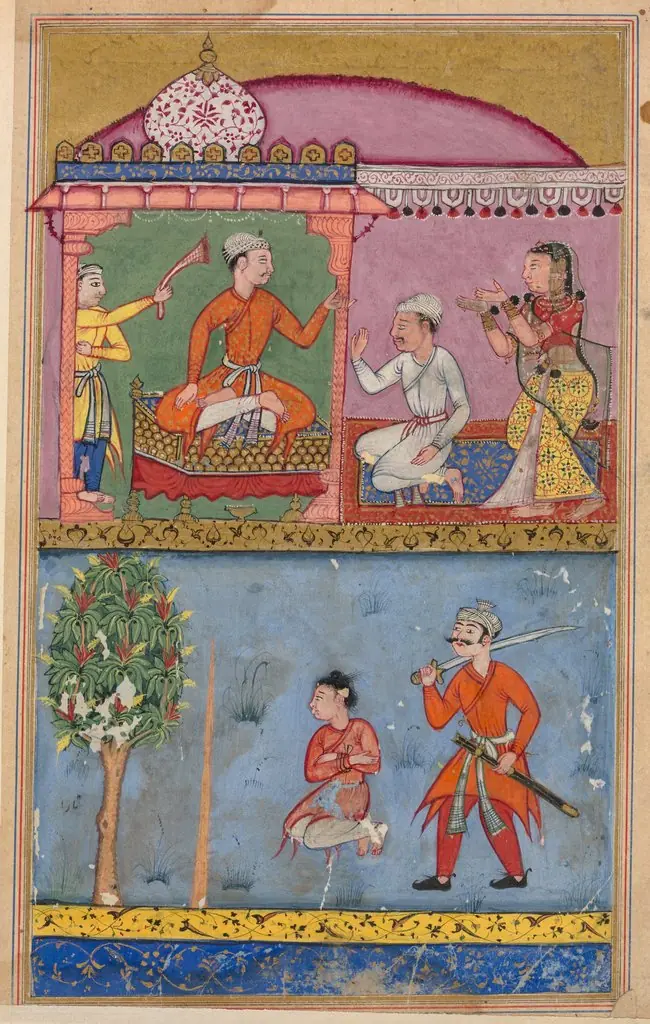 Page from Tales of a Parrot (Tuti-nama): text page
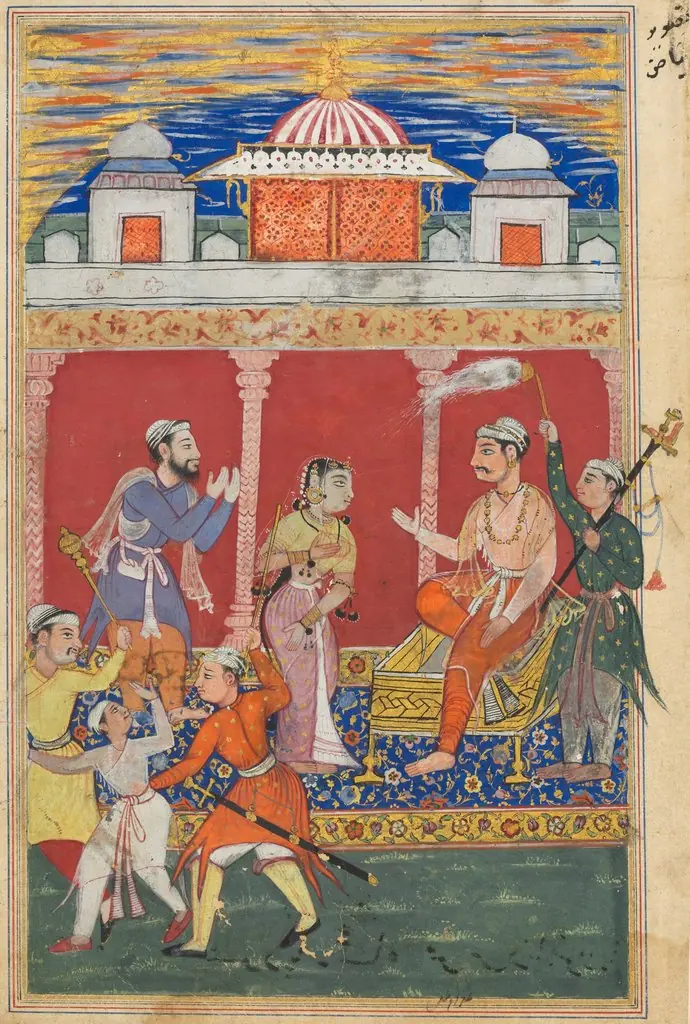 The prince’s ordeal continues, he is ordered away to be executed for the fifth time, from a Tuti-nama (Tales of a Parrot): Eighth Night
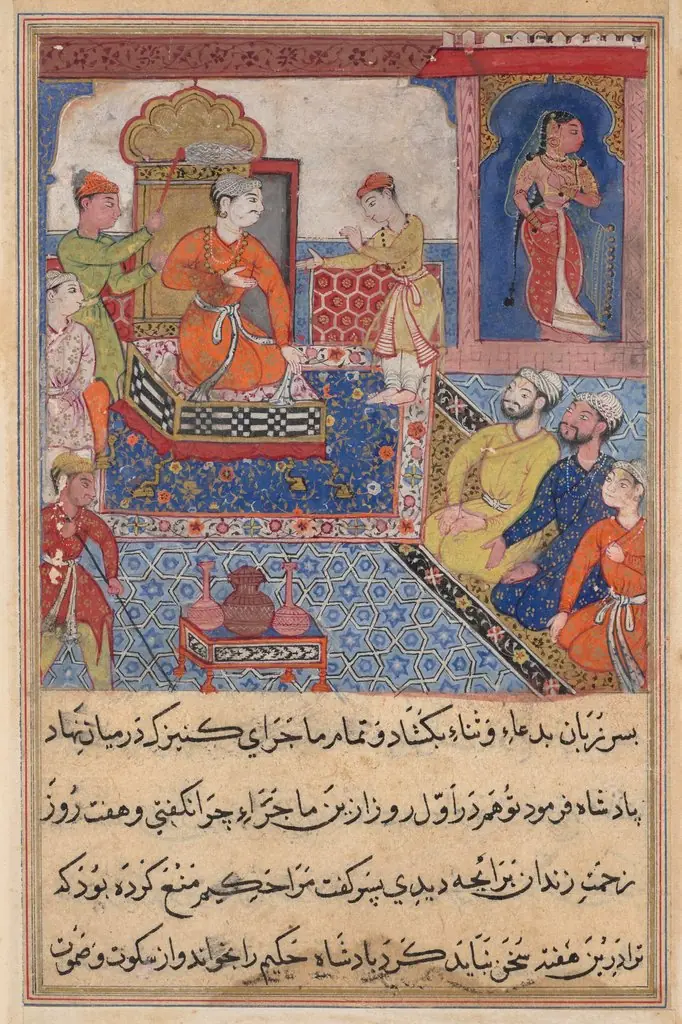 Page from Tales of a Parrot (Tuti-nama): text page