Artwork
Untitled
Untitled is a watercolor painting. It dates from 1449 and is held in the collection of the Metropolitan Museum of Art.
About this work
Subject & Meaning
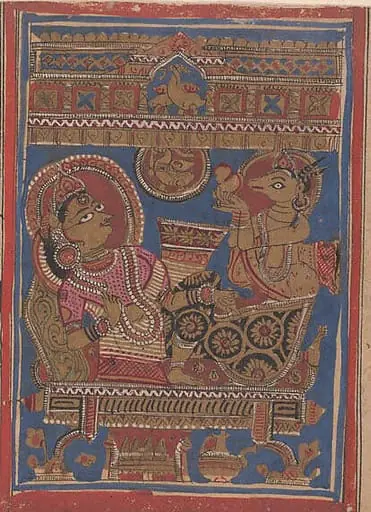
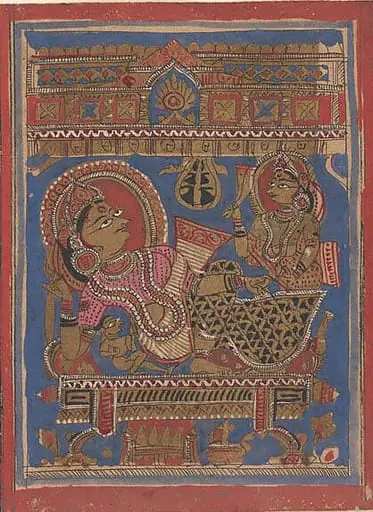
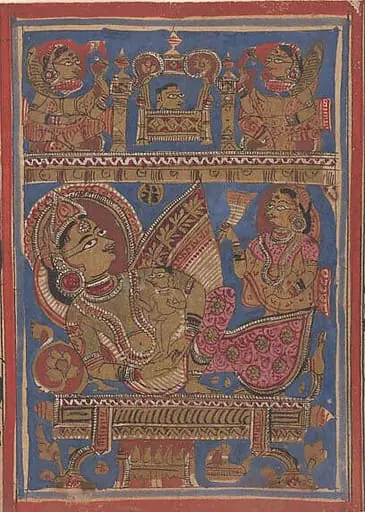
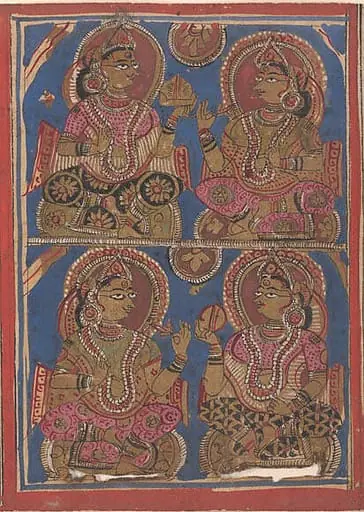
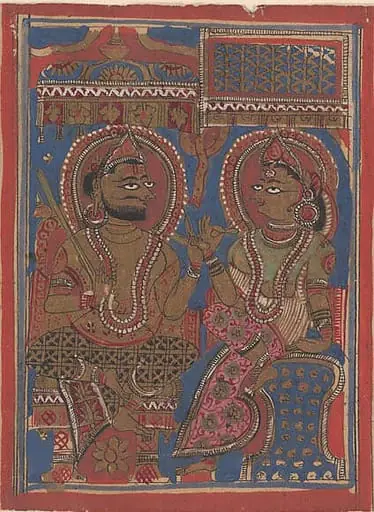
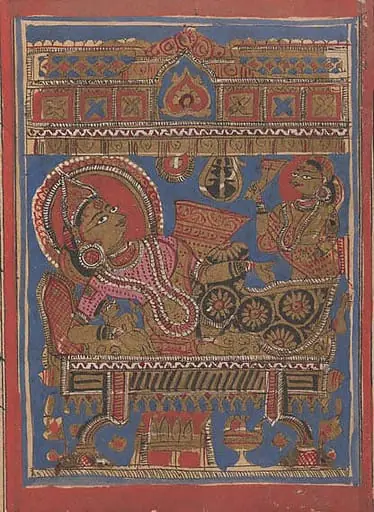
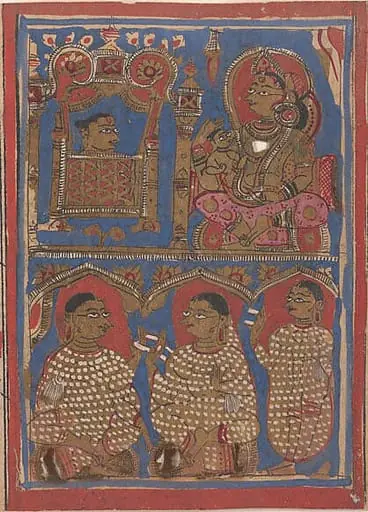
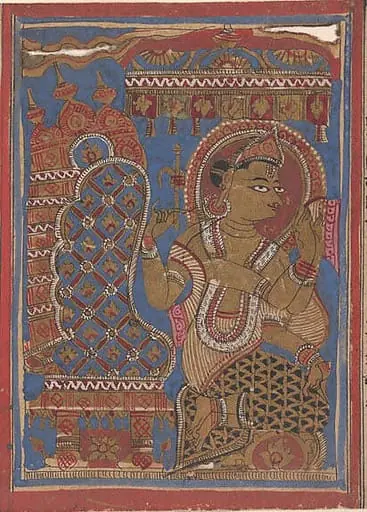
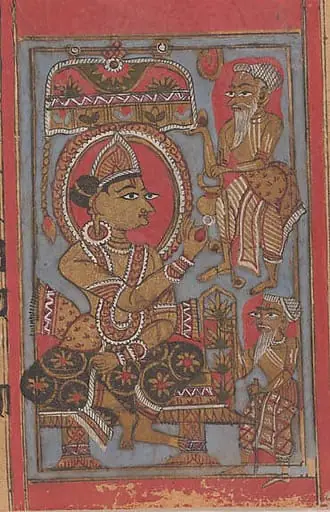
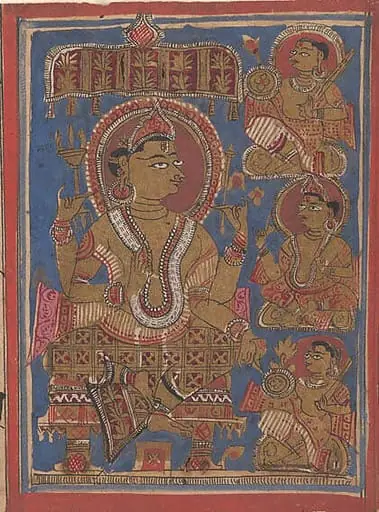
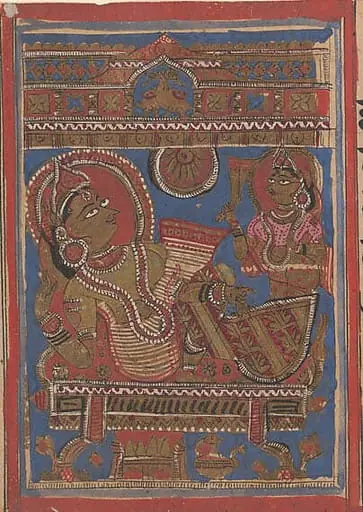
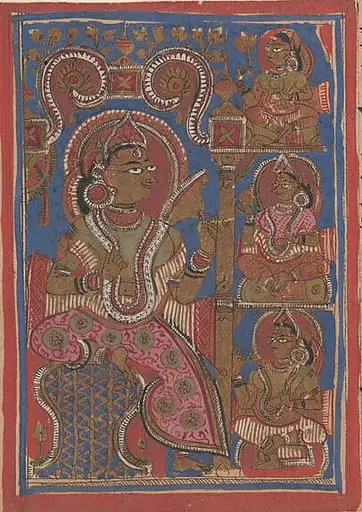
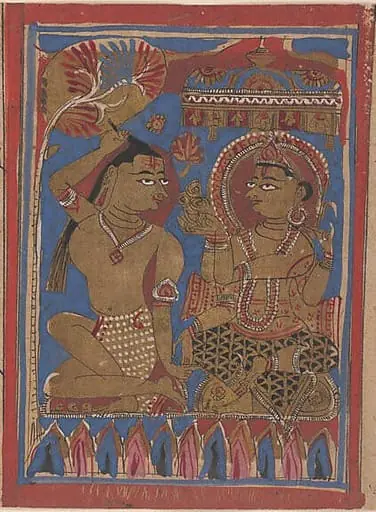
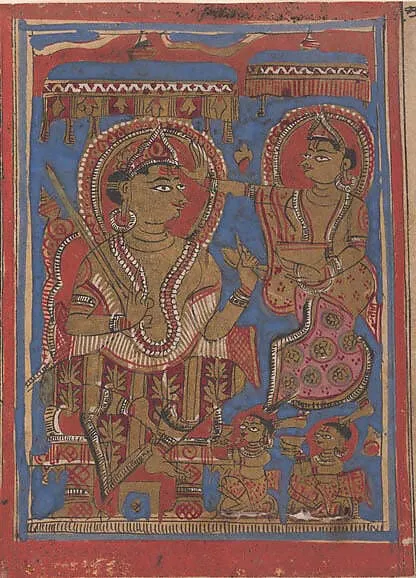
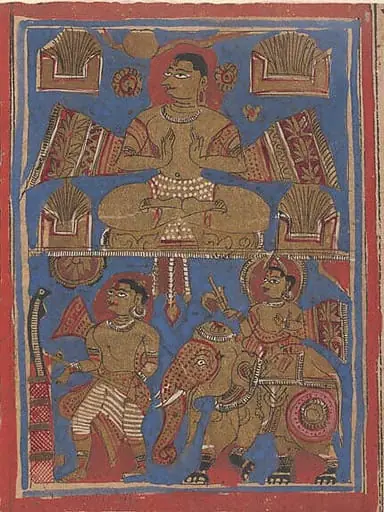
The painting, dated 1449, portrays a king together with a man and a woman within a Jain narrative context. Its iconography situates these characters in a religious scene, suggesting a didactic function typical of Jain artistic traditions. The work belongs to the genre of religious art, and the inclusion of Jain subjects underscores its ritual or moral significance.
Technique & Style
The work is an Indian religious painting from 1449, executed on paper using ink, opaque watercolor, and gold applied as pigment.
The work is an Indian religious painting from 1449, executed on paper using ink, opaque watercolor, and gold applied as pigment. The support is a sheet of paper measuring approximately 11.1 cm in height by 27 cm in width, as recorded in the Metropolitan Museum of Art catalogue. The surface bears fine ink lines filled with opaque watercolor washes, with areas of gold highlighting that accentuate the figures of a king, a man, and a woman within a Jain narrative. The style reflects traditional Jain artistic conventions, employing flat decorative patterning to convey spiritual narrative.
History & Provenance
The untitled Jain painting is an anonymous work dated to 1449, created in India using ink, opaque watercolor, and gold on paper. Its religious subject depicts a king, man, and woman within a Jain context. It is presently part of the Metropolitan Museum of Art's collection. No specific accession number, commission details, or exhibition history are documented in the available sources.
Overview
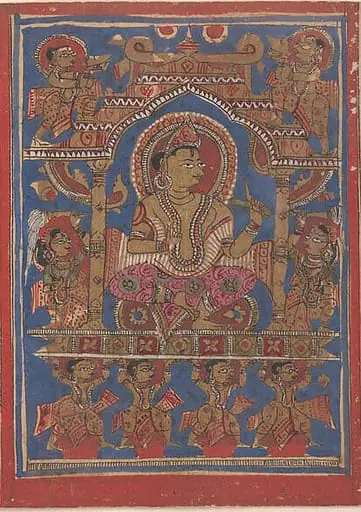
This untitled painting, created in Gujarat, India during the 1400s, employs ink, opaque watercolor, and gold on paper. It depicts a regal figure enthroned beneath a golden sky, encircled by attendants in vibrant attire. The composition is framed by small trees and blossoms, evoking a garden setting.
Context
This painting exemplifies the artistic traditions supported by Jainism in medieval India. Jain patrons frequently commissioned richly detailed manuscripts and paintings, often incorporating precious materials like gold. Such works served both devotional and aesthetic purposes, reflecting the community's cultural values and spiritual devotion.
Artist & collection