Artwork
Panels from the High Altar of the Charterhouse of Saint-Honoré, Thuison-les-Abbeville: Virgin and Child
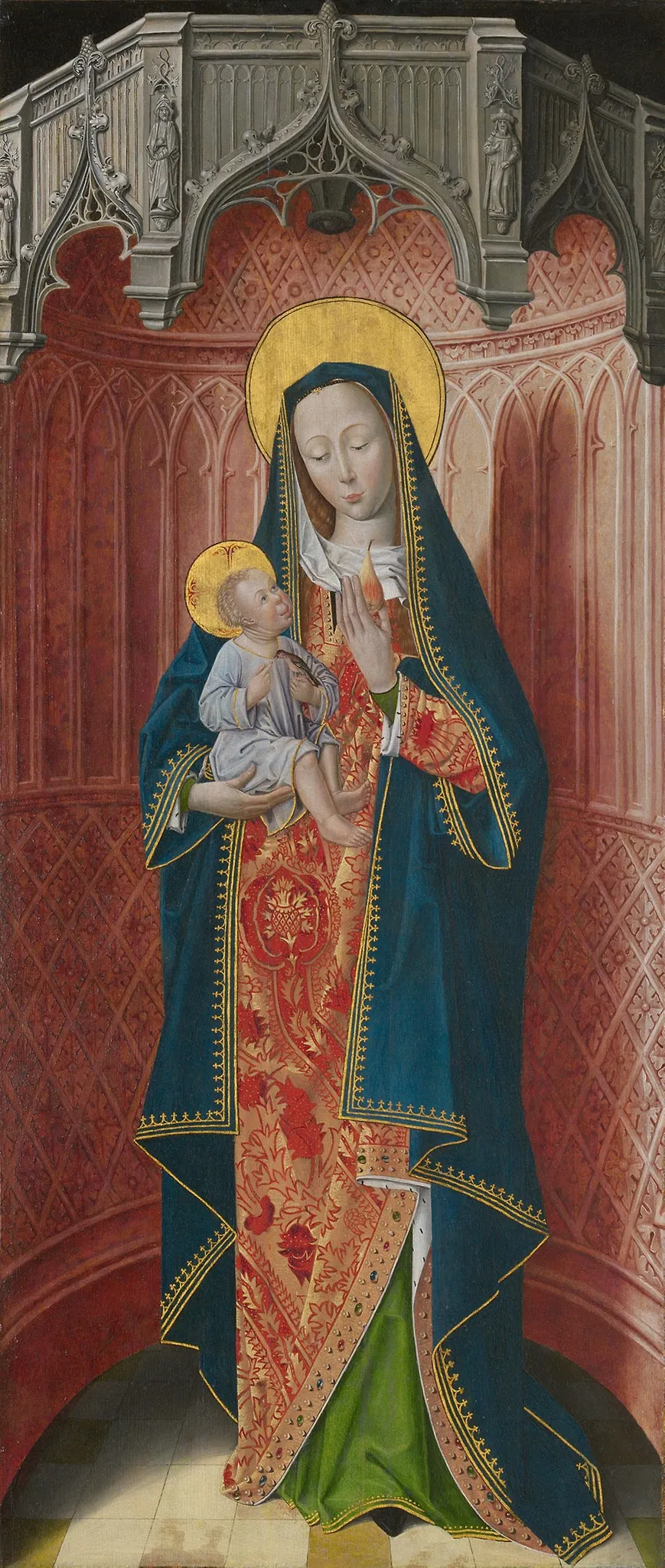
Panels from the High Altar of the Charterhouse of Saint-Honoré, Thuison-les-Abbeville: Virgin and Child is an unspecified painting by the Northern Renaissance artist Unknown. It dates from 1496 and is held in the collection of the Art Institute of Chicago.
About this work
Subject & Meaning
The religious genre classification reflects its role as sacred imagery intended for liturgical and devotional use within the charterhouse church.
The panel depicts the Virgin Mary holding the Christ Child, a devotional image central to late medieval Christian worship. As a fragment from the high altar of the Charterhouse of Saint-Honoré at Thuison-les-Abbeville, the work would have served a Carthusian community for whom Marian devotion held particular importance, with the Virgin and Child functioning as a focus for contemplative prayer and a visual reminder of the Incarnation. The religious genre classification reflects its role as sacred imagery intended for liturgical and devotional use within the charterhouse church.
The pairing of mother and son carries traditional iconographic weight: Mary represents the human vessel chosen to bear the Savior, while the Christ Child signifies the divine nature made flesh. Placed on a high altar, the panel would have framed the celebration of the Mass, drawing the monastic congregation's attention toward the mystery of Christ's sacrifice and Mary's intercessory role.
History & Provenance
The Virgin and Child panel from the high altar of the Charterhouse of Saint-Honoré in Thuison-les-Abbeville is dated to circa 1490, aligning with the late fifteenth-century commissioning context of the charterhouse’s ensemble.
By the early twentieth century the panel had entered the collection of the Art Institute of Chicago, where it remains. It was exhibited in 1923 as part of the Exposition des primitifs français, also described as a Loan Exhibition of French Primitives and Objects of Art held at the institute.
The panels depicting the Virgin and Child from the High Altar of the Charterhouse of Saint-Honoré are currently held in the collection of the Art Institute of Chicago. The work was created in 1490 and is classified as a French religious painting from the Picardy region. Its exhibition history includes participation in the Exposition des primitifs français, also known as the Loan Exhibition of French Primitives and Objects of Art.
Context
The altarpiece panels were created in 1490 in Picardy, France, and depict the Virgin and Child in a religious composition typical of late 15th-century devotional art. They were displayed in an exhibition of French primitives in Paris, contributing to early scholarly attention to early Netherlandish-influenced French painting. The work is part of the collection of the Art Institute of Chicago, where it has been studied within the broader context of French Gothic and early Renaissance art.
Overview
The panel depicts a seated Virgin Mary in a vivid blue mantle adorned with red and gold motifs, holding the infant Christ who reaches toward her face. Both figures are crowned with golden halos, set against a richly patterned red backdrop that suggests an ornate ecclesiastical interior.
Technique & Style
Executed in tempera on panel, the work employs bright, saturated pigments and intricate decorative patterns typical of the period’s religious art. The handling of light creates subtle modeling of forms, while the detailed carving-like background evokes the architecture of a Gothic church.
Artist & collection









- The Virgin and Child
 Madonna and Child
 Madonna and Child with Bird
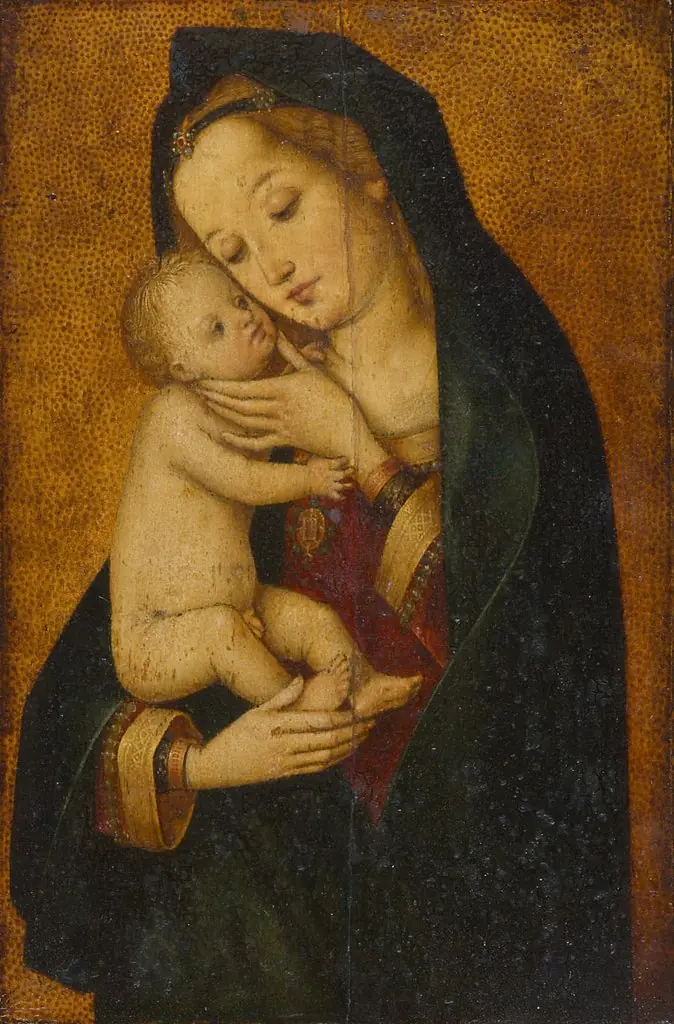 Maria, das Kind liebkosend
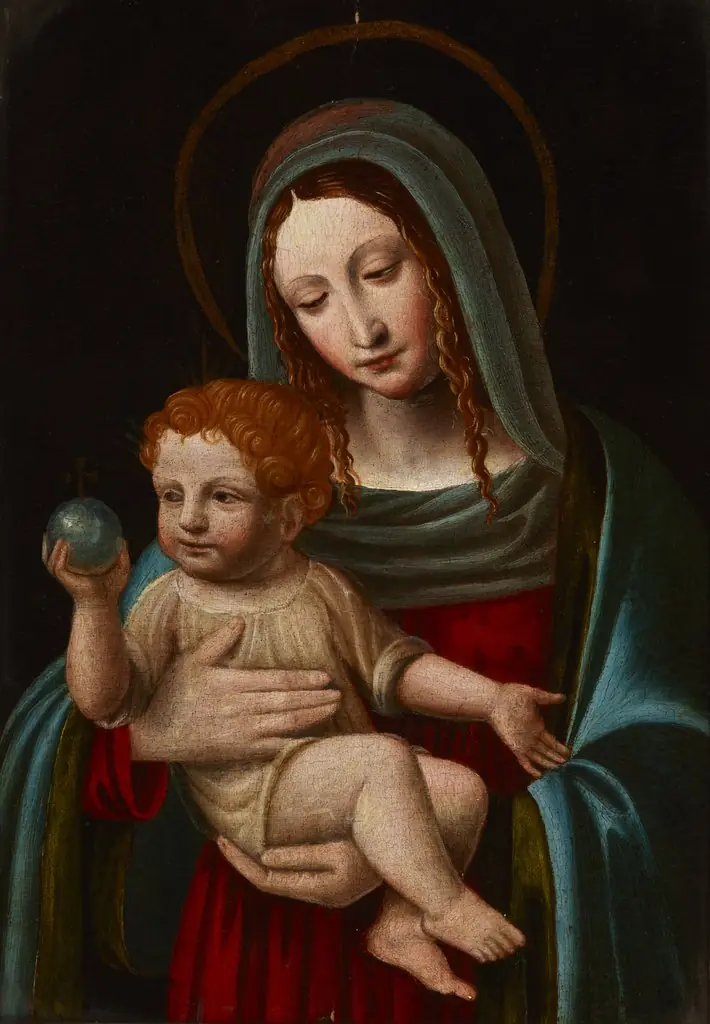 Madonna and Child
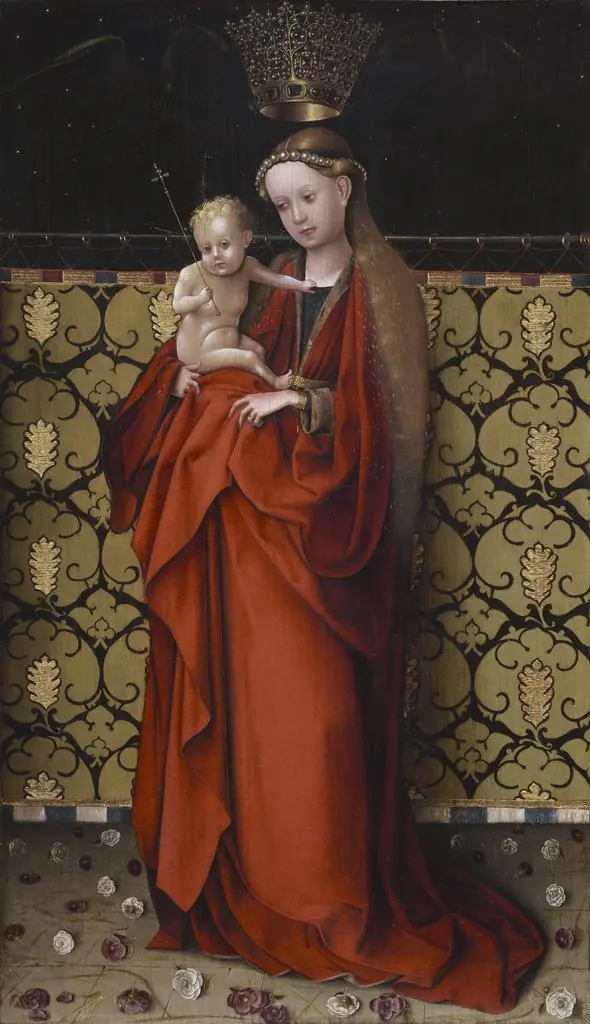 The Virgin Crowned by Angels
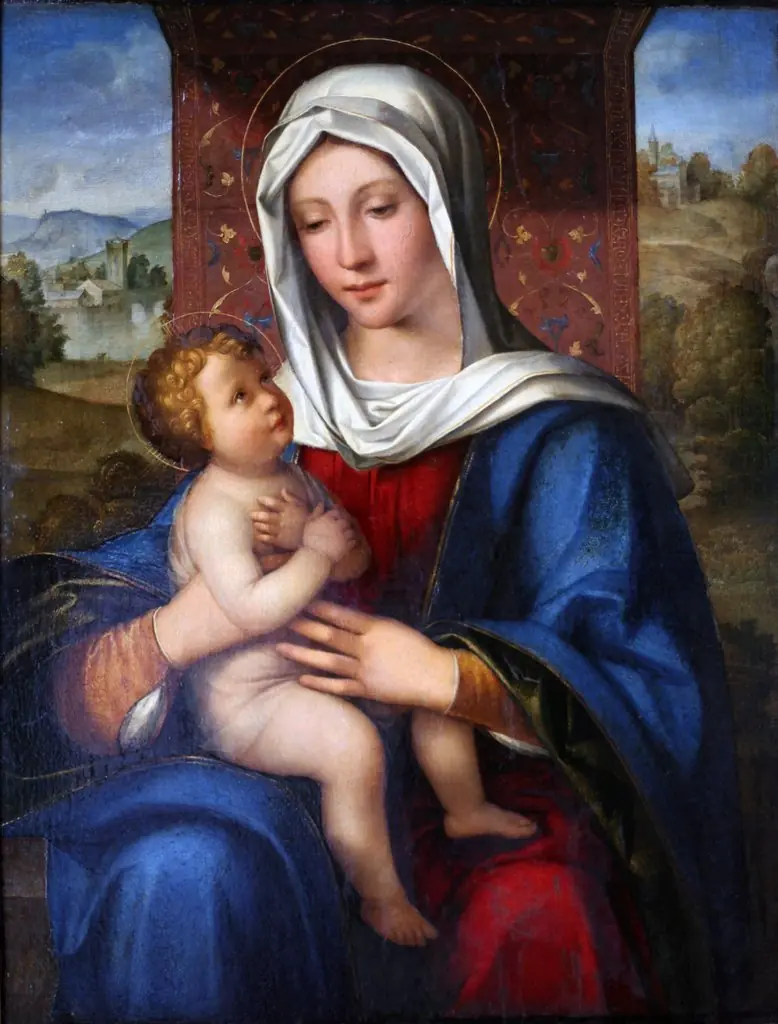 Virgin and Child
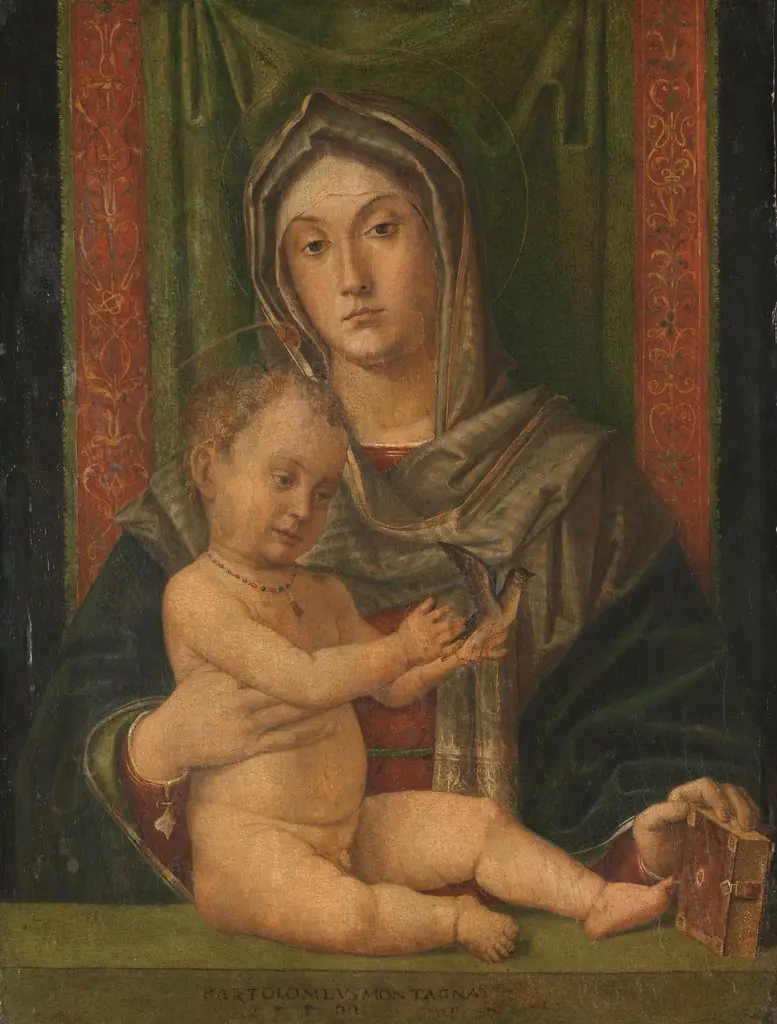 Virgin and Child
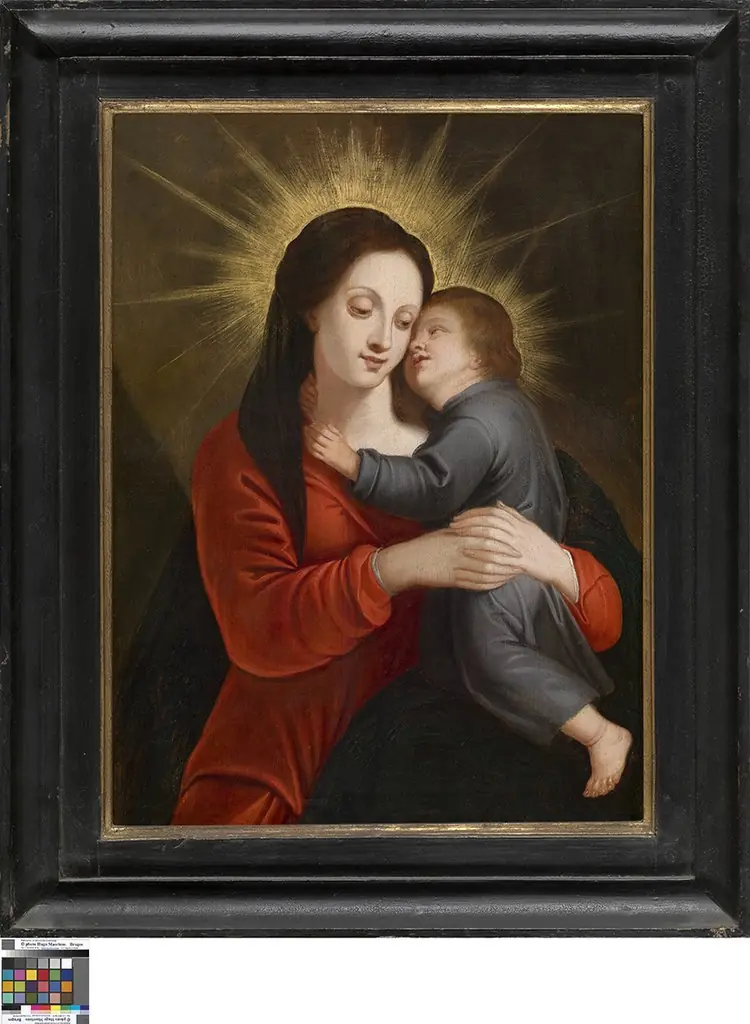 Madonna and Child
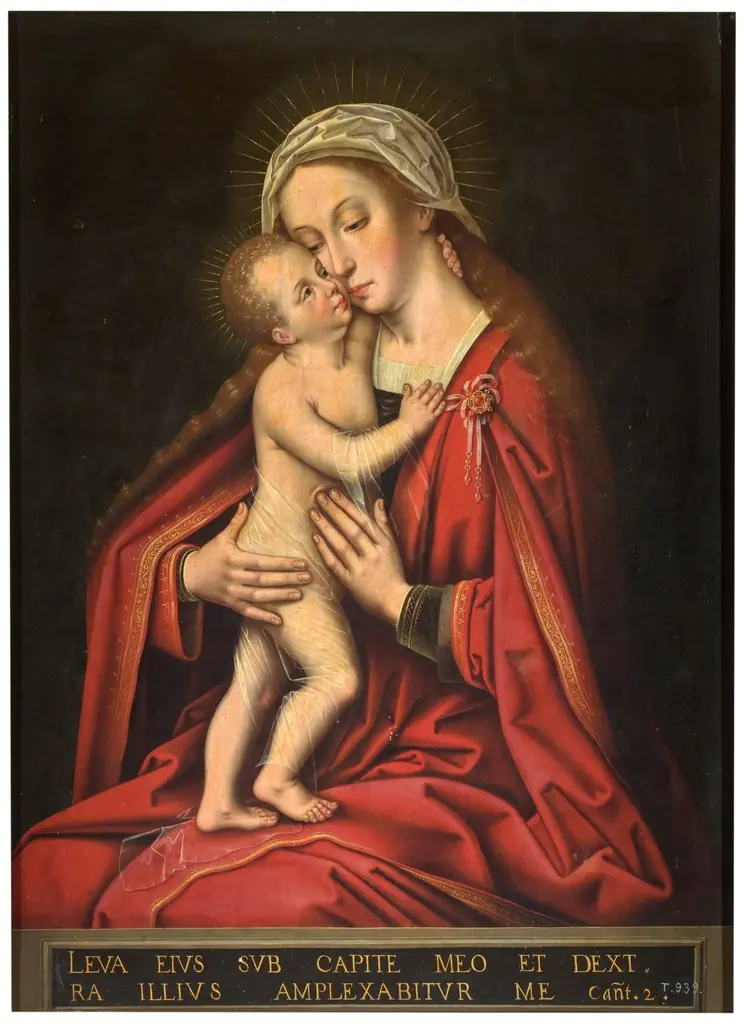 Madonna and Child
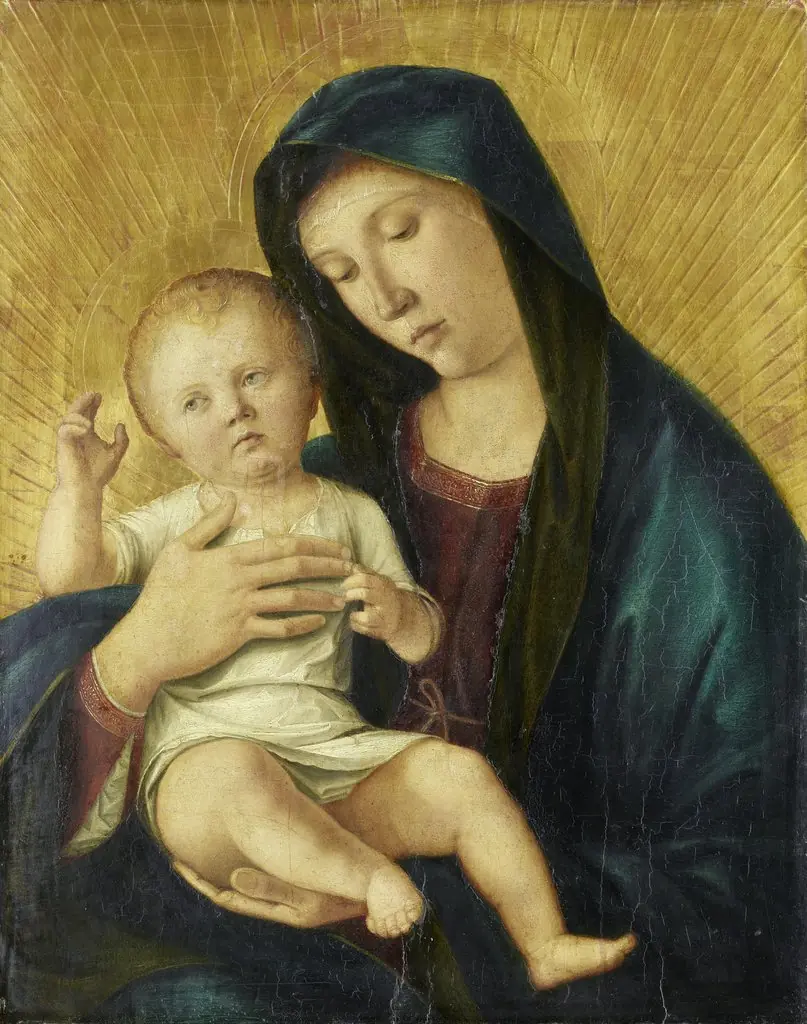 The Virgin with the Blessing Child
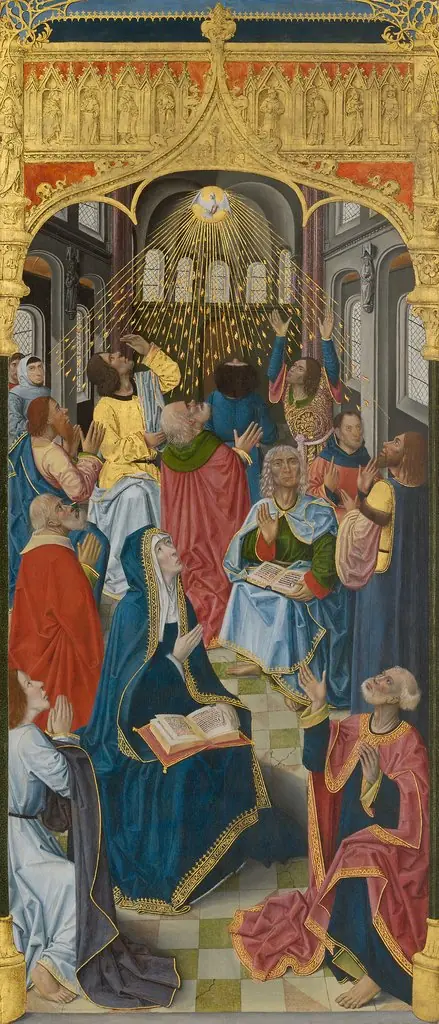 Panels from the High Altar of the Charterhouse of Saint-Honoré, Thuison-les-Abbeville: Pentecost