Artwork
Portrait of a man
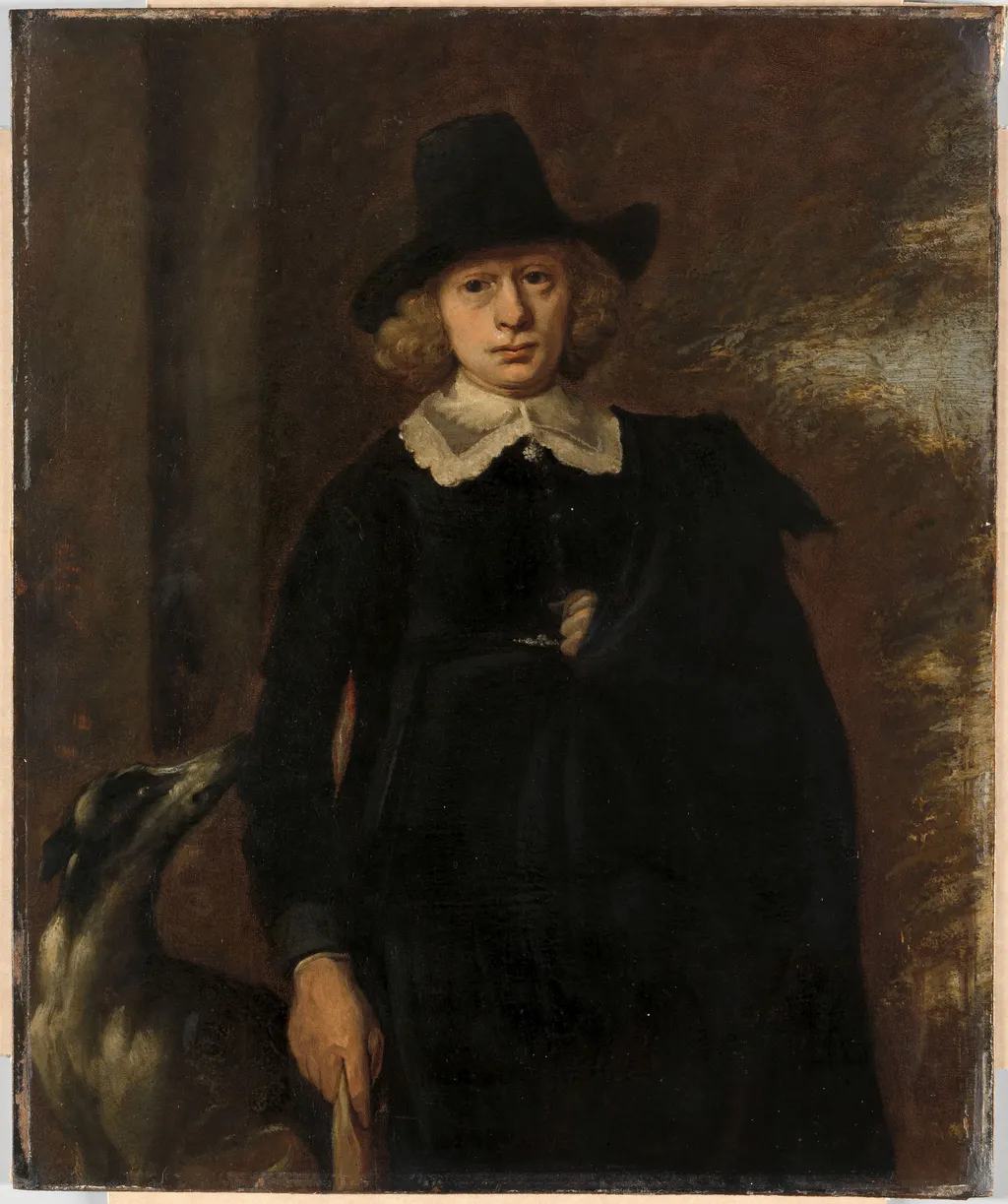
Portrait of a man is an oil painting. It dates from 1650 and is held in the collection of the Rijksmuseum. The work is a painted portrait executed on a copper support, depicting a solitary male figure.
About this work
Technique & Style
Created in 1650 within the Northern Low Countries, this portrait is executed in oil paint on a copper support.
Created in 1650 within the Northern Low Countries, this portrait is executed in oil paint on a copper support. The work measures 29.5 cm in height and 24.6 cm in width. As a painted depiction of a male subject, the piece utilizes the smooth, non-absorbent surface characteristic of copper panel paintings, a medium often favored in the region during the mid-seventeenth century for its ability to support fine detail and luminous color. The artwork is currently held in the collection of the Rijksmuseum in Amsterdam.
History & Provenance
The painting is dated to 1650, as indicated by its inception year in both sources. It was created in the Northern Low Countries on a copper support, using oil paint, and remains anonymous. The work is currently part of the Rijksmuseum collection in Amsterdam (inventory SK‑A‑3493).
While the sources confirm its present location and medium, they do not provide details about any earlier owners, commissions, or the chain of provenance prior to its entry into the museum.
Portrait of a man is an oil-on-copper painting created in 1650 in the Northern Low Countries. It measures 29.5 cm in height and 24.6 cm in width. The work is part of the Rijksmuseum collection in Amsterdam, listed under inventory number SK-A-3493.
It has been exhibited at the Rijksmuseum Amsterdam under the same accession number. The painting has been on public display since its acquisition.
Context
The work is classified as a 17th-century Dutch portrait painted on copper, reflecting the Northern Low Countries' artistic practices of the mid-1600s. Its depiction of an unidentified sitter aligns with contemporary genre conventions while demonstrating technical experimentation with oil on metal support. The painting's attribution to the anonymous school of Amsterdam is contextualized by its presence in a major institutional collection, reinforcing scholarly discussions of regional workshop traditions and the material innovations of the period.
Overview
The work is a painted portrait executed on a copper support, depicting a solitary male figure. He is dressed in a dark coat and a wide-brimmed hat, his white, lace-trimmed collar contrasting sharply with the surrounding darkness. In his left hand he grasps a small, unidentified object, while the background recedes into an almost black space with a faint suggestion of a curtain or wall on the right.
Subject & Meaning
The sitter’s attire, formal coat, hat, and lace collar, indicates a person of some social standing, possibly a merchant or gentleman of the period. The small object he holds may be a token of his profession or a personal emblem, though its exact nature remains unclear. The stark isolation of the figure against a dark backdrop invites contemplation of identity and status, emphasizing the individual’s presence over any narrative setting.
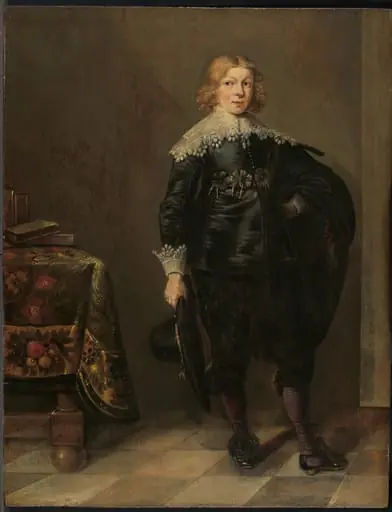
Artist & collection

- Portrait of a Boy
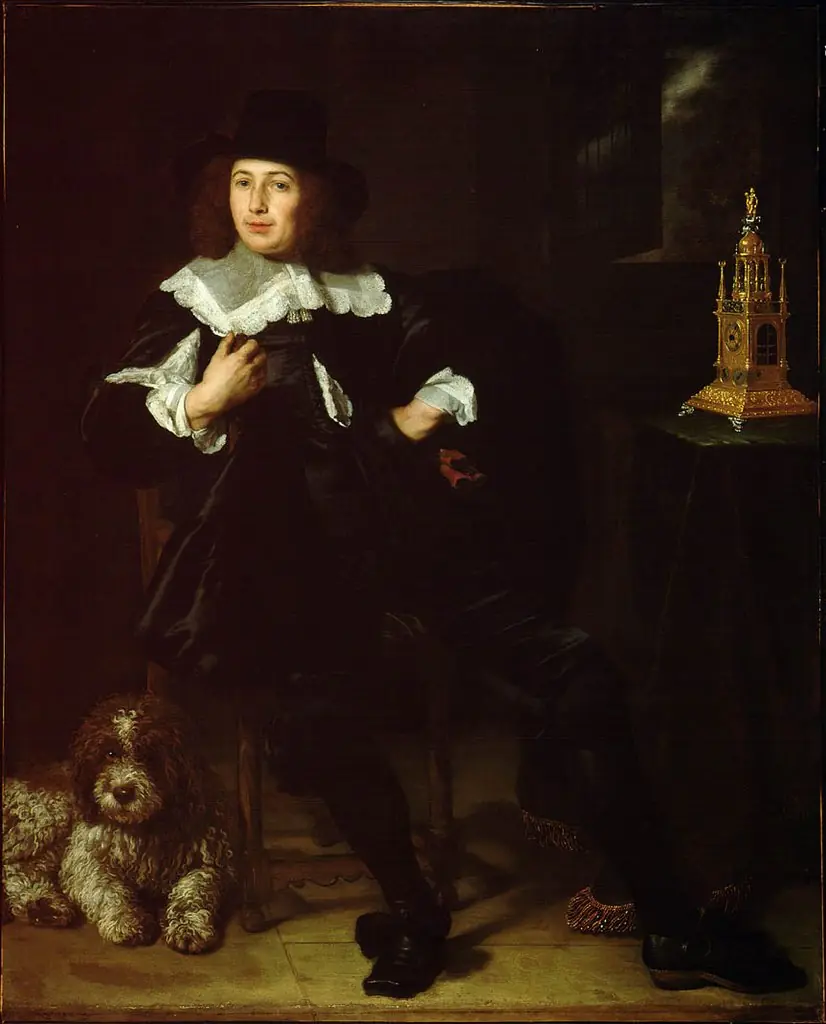 Portrait of a man, possibly Joan Hulft (1610-1677), with a dog, seated at a table with a clock
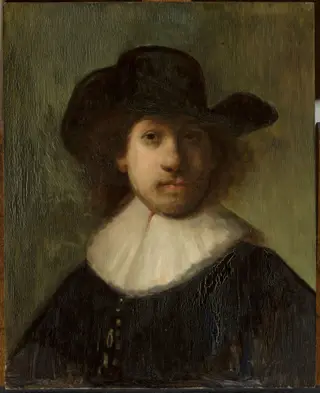 Self-portrait of Rembrandt
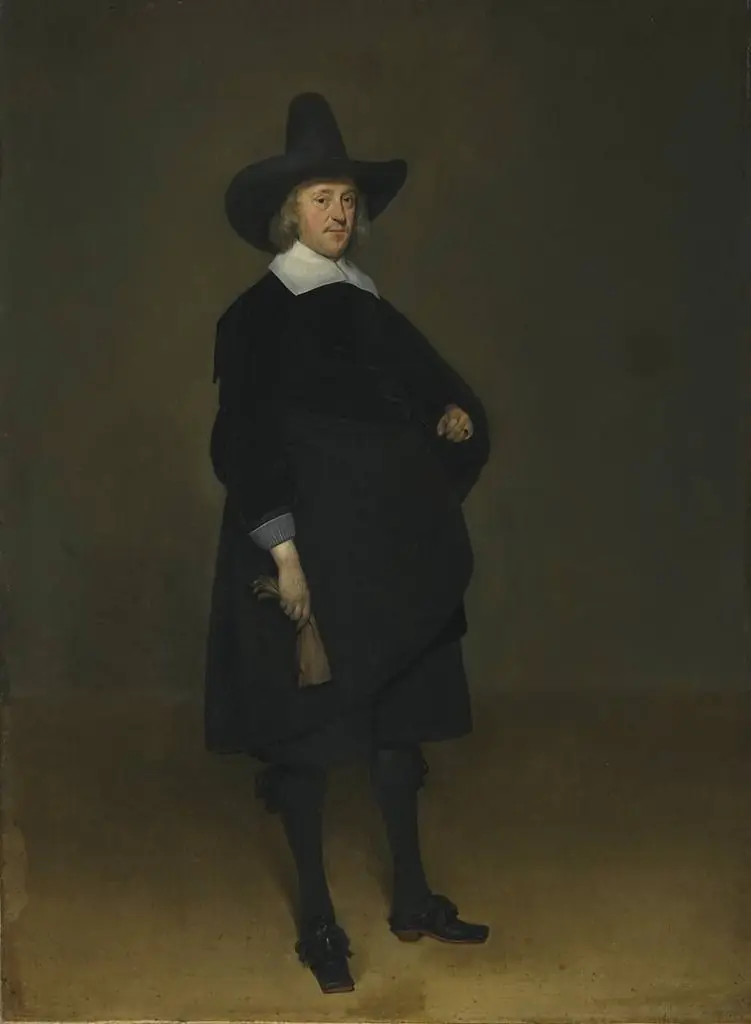 Portrait of a Man
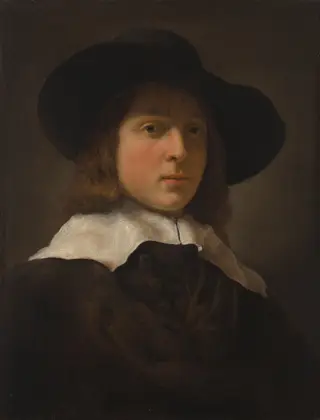 Head of a Young Man
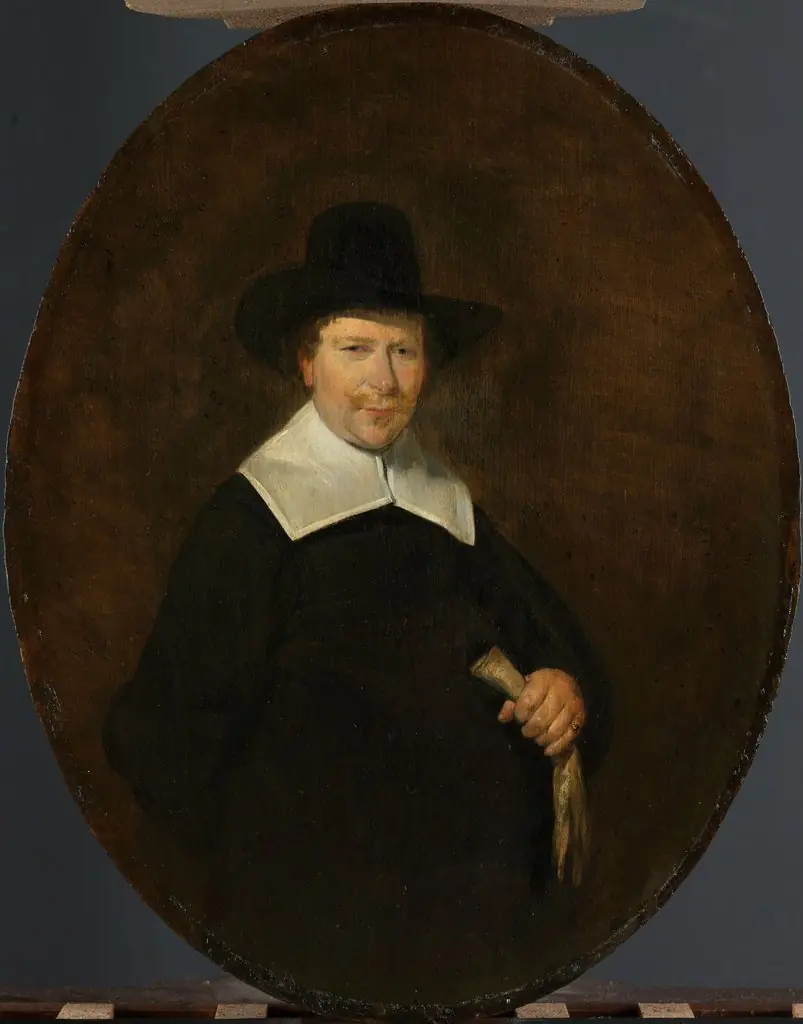 Portrait of Gerard Abrahamsz van der Schalcke (1609-67), Haarlem cloth merchant
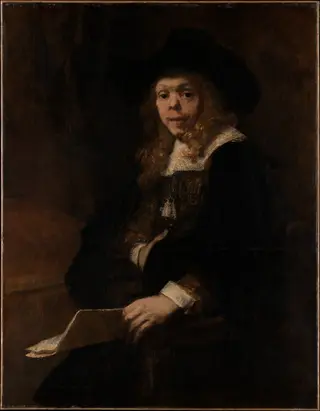 Portrait of Gerard de Lairesse
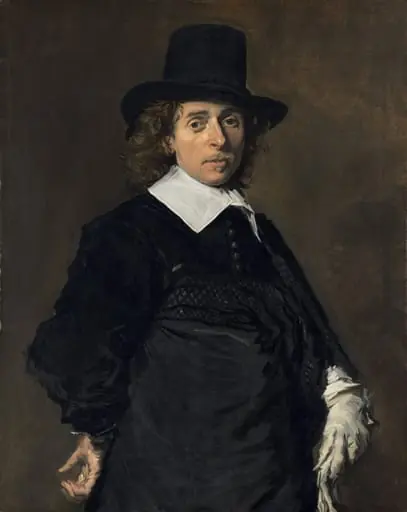 Adriaen van Ostade
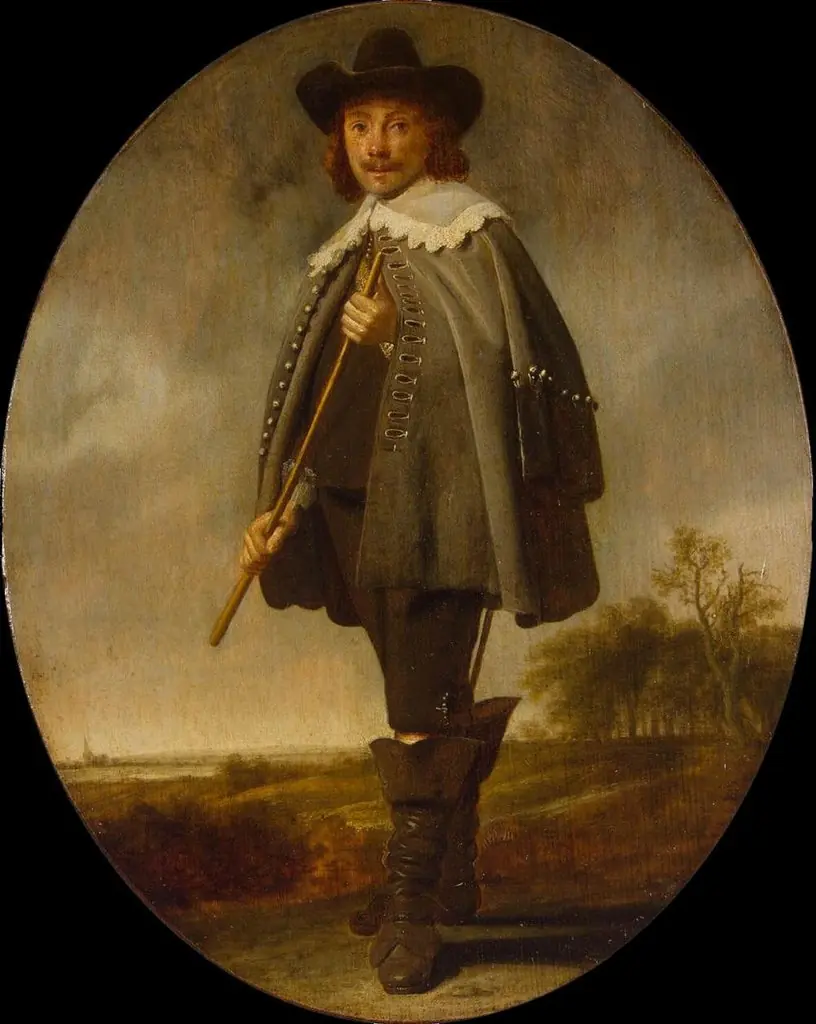 Officer in the Landscape (Portrait of a Man)
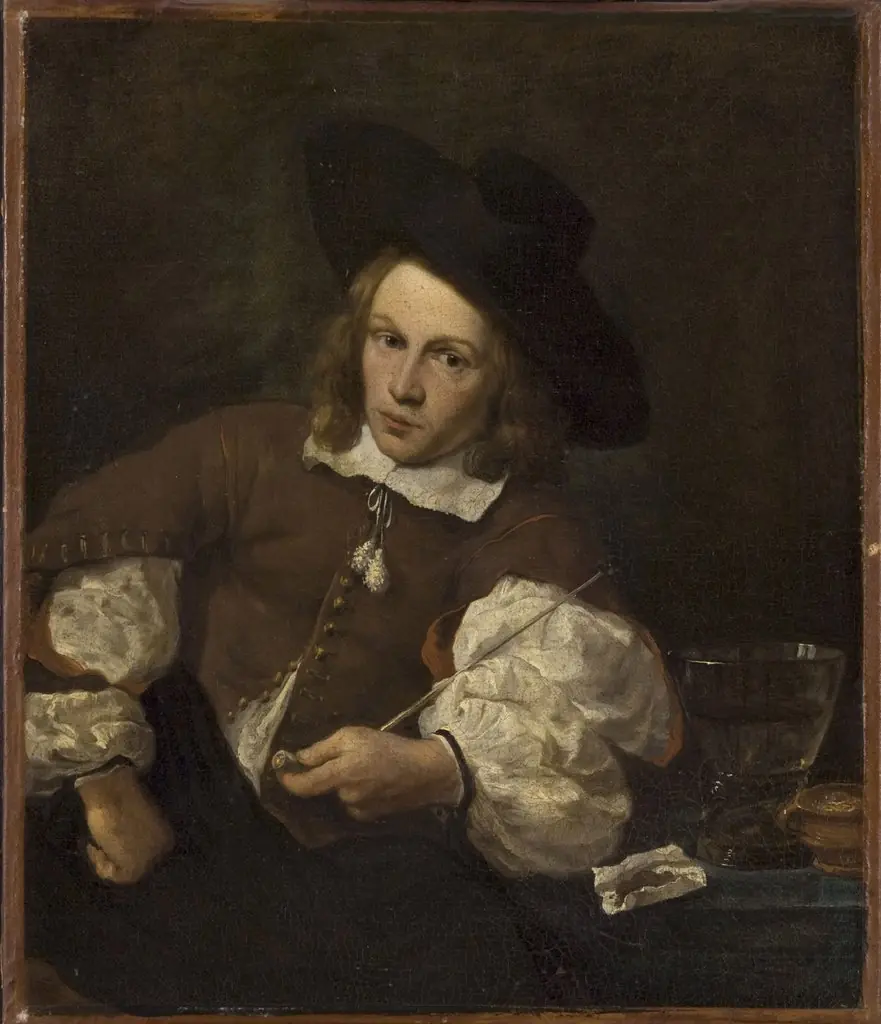 Portrait of a Young Man Seated Smoking
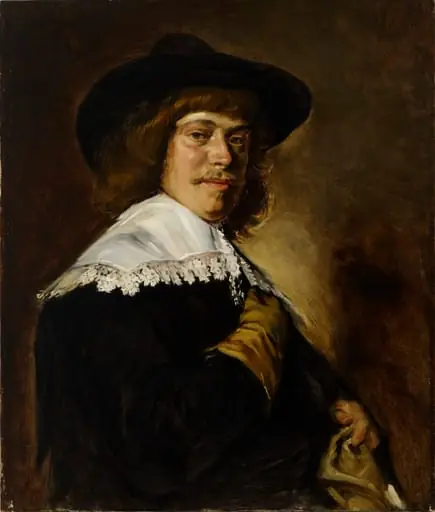 Nuoren miehen muotokuva käsine kädessään, kopio Frans Halsin mukaan
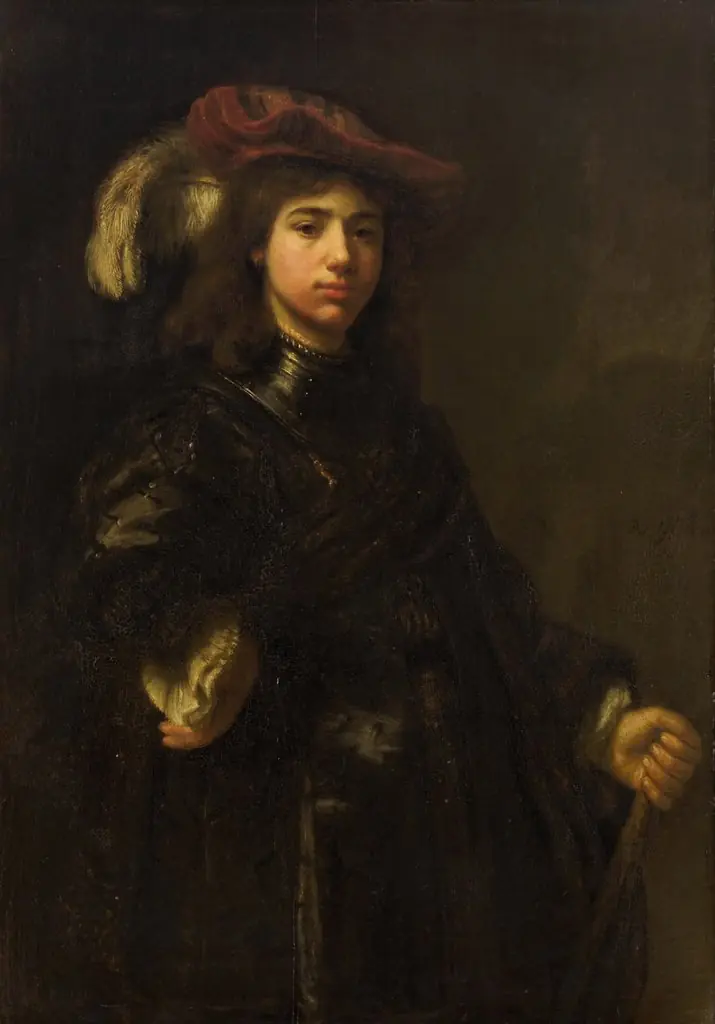 Young man with a plumed cap and a gorget