Artwork
Portrait of Gerard de Lairesse
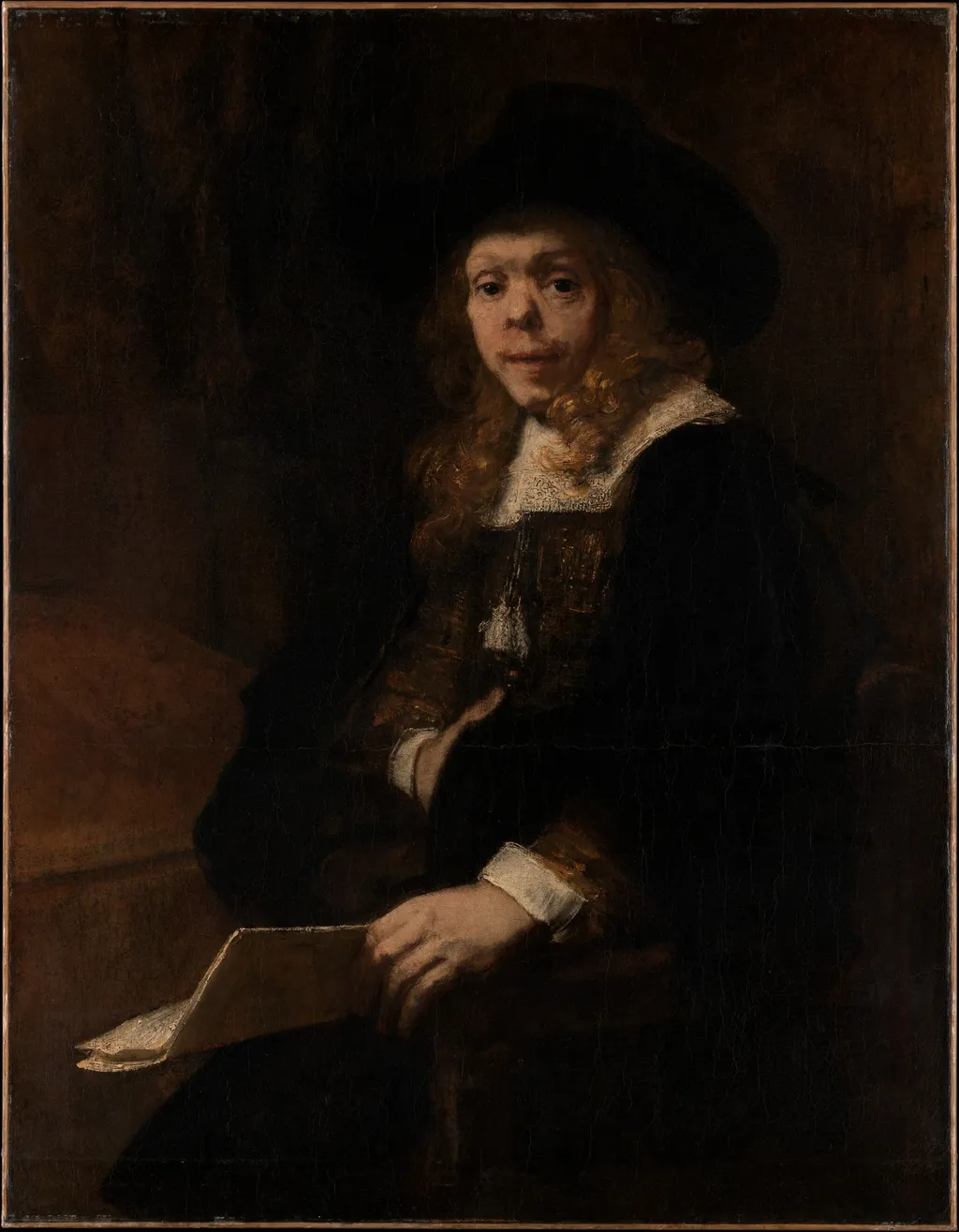
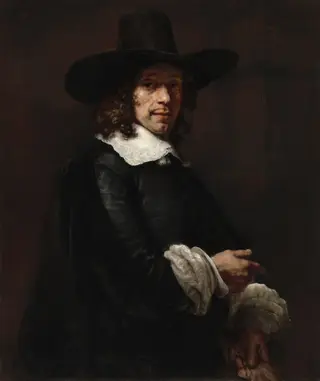
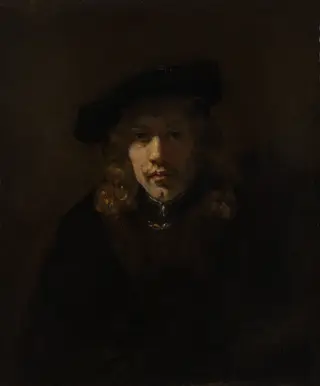
Portrait of Gerard de Lairesse is an oil painting by the Dutch Golden Age artist Rembrandt van Rijn. It dates from 1665 and is held in the collection of the Metropolitan Museum of Art.
About this work
The painting shows the painter Gerard de Lairese holding a paper, giving a glimpse of his scholarly side.
Portrait of Gerard de Lairesse is a work by Rembrandt, painted around 1665. It’s an oil-on-canvas piece that belongs to the museum’s collection.
The painting shows the painter Gerard de Lairese holding a paper, giving a glimpse of his scholarly side. It’s a quiet, thoughtful portrait that reflects the artist’s skill with light and texture.
If you liked this, you might want to explore more about the museum: The Metropolitan Museum of Art.
Subject & Meaning
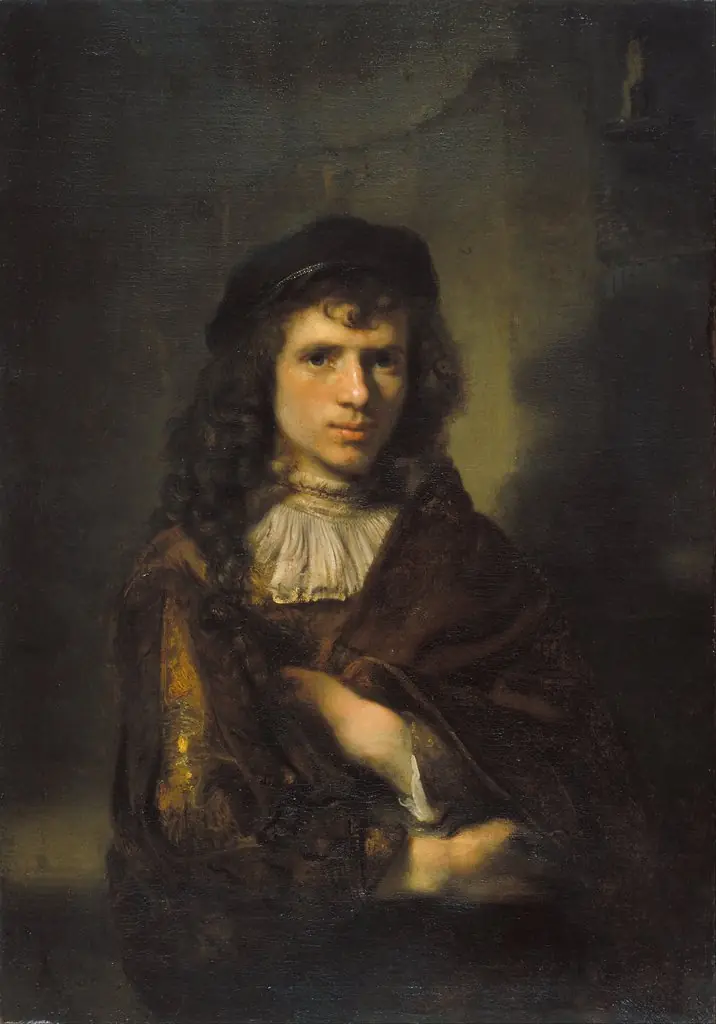
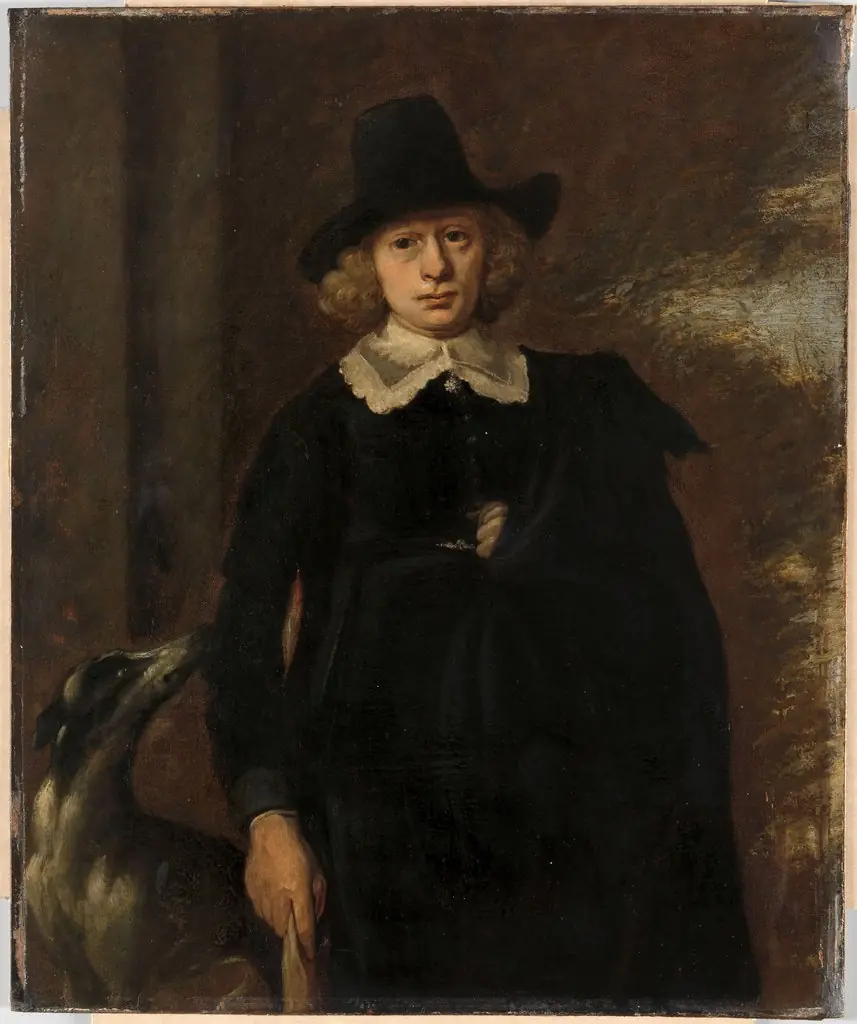
The sitter is the Dutch painter Gerard de Lairesse (1640–1711), depicted in three-quarter view seated in an armchair, holding a sheet of paper in his left hand and with his right hand inserted into his coat at his breast. His attire includes a dark coat, a black cloak, a broad-brimmed felt hat, and a white collar with tassels, while his facial features prominently display the syphilitic saddle nose noted by Hofstede de Groot in 1914. The paper he holds may signify professional identity or a specific commission, while the inward gesture of the right hand contributes to an introspective bearing. The portrait’s realism and restrained palette emphasize the subject’s status and character rather than idealization.
Technique & Style
Executed in oil on canvas in 1665, the portrait employs a three-quarter-length format to depict Gerard de Lairesse seated in an armchair, his left hand holding a sheet of paper and his right hand tucked into his coat. Rembrandt’s handling emphasizes tactile surfaces: the sitter’s white lace collar with tassels is rendered with delicate impasto, while the dark coat and broad-brimmed felt hat are described in broader, modulated glazes. The figure’s pronounced facial features, including a syphilitic saddle nose, are sharply defined against a subdued, neutral background, focusing attention on physiognomy and psychological presence. The painting’s condition has been stable, with no major structural issues reported in modern surveys.
History & Provenance
Created between 1665 and 1667, this oil-on-canvas portrait by Rembrandt depicts Gerard de Lairesse. Early documentation by Hofstede de Groot noted a signature reading "Rembrandt f. 1663" or 1665.
The work first appeared in an Amsterdam sale on June 16, 1802, and later a London auction in 1907. By the early 20th century, it was held by dealers Lewis and Simmons before entering the collection of Leopold Koppel in Berlin. Koppel retained ownership until 1935, when he was compelled to divest assets due to Nazi Aryanization policies.
Albert L. Koppel consigned the painting to M. Knoedler and Co. in New York on October 1, 1943. The gallery purchased it on April 27, 1945, and it was subsequently acquired by Robert Lehman. The work entered the Metropolitan Museum of Art following Lehman's bequest.
The Portrait of Gerard de Lairesse is held in the Metropolitan Museum of Art in New York, where it forms part of the Robert Lehman Collection. It entered the museum through the Lehman bequest, having previously been owned by Leopold Koppel in Berlin and, after forced divestment under Nazi Aryanization, consigned to M. Knoedler & Co. in New York in October 1943 before being acquired by Robert Lehman in April 1945. Its exhibition record includes a showing in Berlin in 1909 (catalogue no. 110).
Context
The Portrait of Gerard de Lairesse has attracted scholarly attention since the early twentieth century, being catalogued by Hofstede de Groot in 1914 and referenced by Bode and Schmidt Degener in the same period. It was exhibited in Berlin in 1909 and appeared in auction records from Amsterdam (1802) and London (1807, 1908). The work entered the Metropolitan Museum of Art through the Robert Lehman bequest after passing through the collections of Leopold Koppel and Albert L. Koppel, whose forced divestment under Nazi Aryanization policies is noted in its provenance.
Its depiction of the artist‑sitter, including the visible syphilitic saddle nose, has been discussed in relation to other portraits of Lairesse, situating the painting within Rembrandt’s portraiture of contemporaries and the broader discourse on artist identity in Dutch Golden Age art.
Legacy
The portrait of Gerard de Lairesse, painted by Rembrandt in 1665–1667, came to the Metropolitan Museum of Art through the Robert Lehman bequest and was previously owned by Leopold Koppel, whose collection was dispersed under Nazi persecution; its earlier ownership is documented in sales records from 1802 and 1807 and in a 1909 Berlin exhibition. Detailed description by Hofstede de Groot in 1914 highlighted the sitter’s syphilitic saddle nose, a feature that has shaped scholarly interpretations of Lairesse’s appearance. The work’s provenance, exhibition history, and inclusion in major collections have reinforced both Rembrandt’s reputation as a portraitist and Lairesse’s legacy as a painter whose physical characteristics are closely linked to his artistic representation.
Overview
Painted in 1665, Rembrandt's Portrait of Gerard de Lairesse depicts the Dutch painter and art theorist Gerard de Lairesse at a moment of intellectual engagement. The half-length composition presents the sitter against a dark, neutral background, a hallmark of Rembrandt's late style, which directs full attention to the subject's face and hands. Lairesse is shown holding a sheet of paper, likely a drawing or text, signaling his dual identity as both practitioner and scholar of the arts.
The lighting, characteristic of Rembrandt's mature period, models the sitter's features with a soft, diffused glow that highlights the texture of his skin and the fabric of his clothing while leaving other areas in deep shadow. Executed in oil on canvas, the work demonstrates the artist's loose, expressive brushwork and his ability to convey psychological depth. Created when Rembrandt was nearing the end of his life, the portrait reflects a mature, contemplative approach to portraiture that prioritizes the inner character of the sitter over mere physical likeness.
This work stands as a significant example of Rembrandt's late portraiture, capturing a contemporary intellectual figure with dignity and introspection.
Own this work as a print
Artist & collection

Artist
Rembrandt Harmenszoon van Rijn, known mononymously as Rembrandt, was a Dutch Golden Age painter, printmaker, and draughtsman.