Artwork
Portrait of a Sculptor, perhaps Johannes Antonius van der Ven
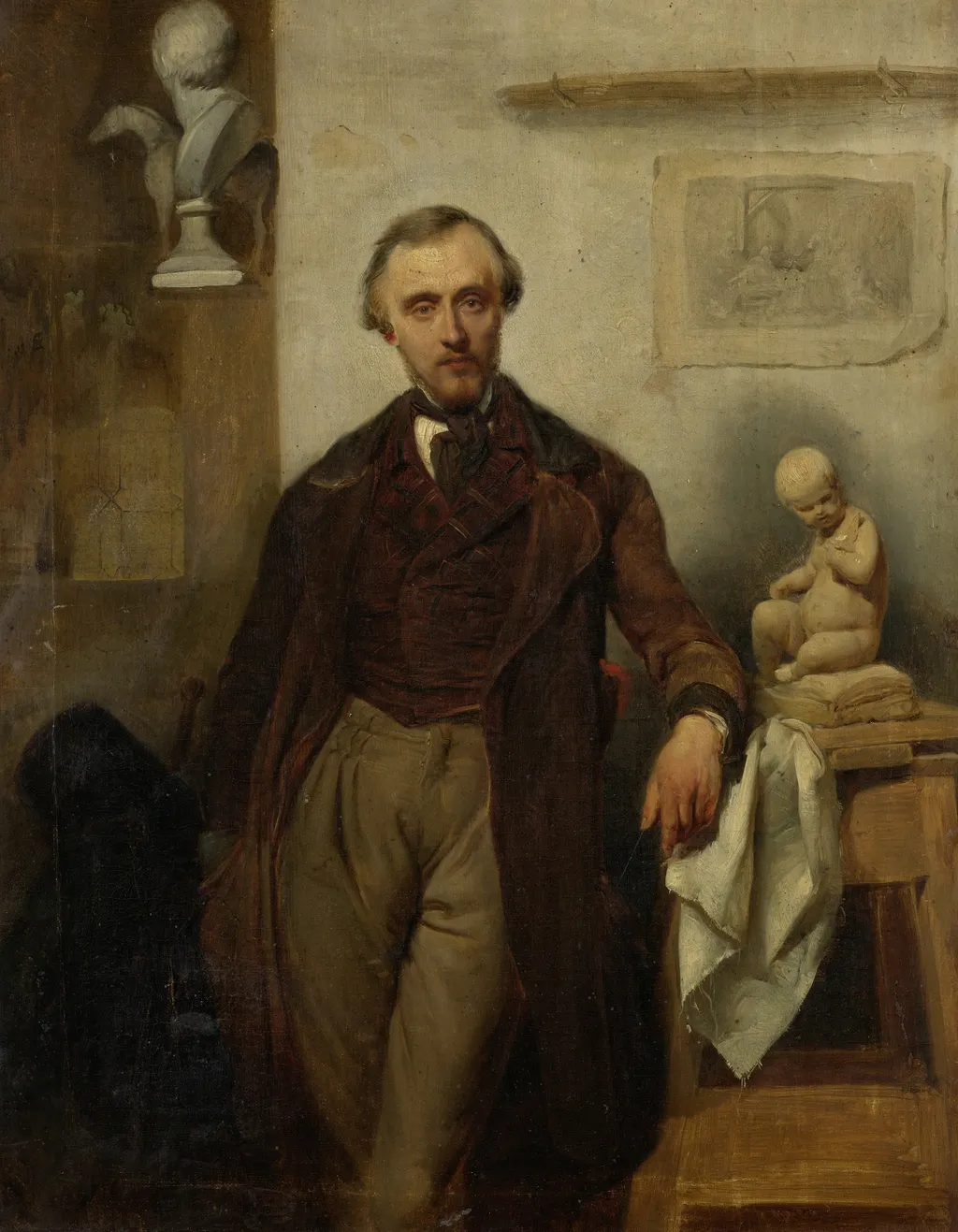
Portrait of a Sculptor, perhaps Johannes Antonius van der Ven is an oil painting by the Realist artist Unknown. It dates from 1845 and is held in the collection of the Rijksmuseum. The oil painting shows a solitary figure standing within an interior space filled with sculptural works.
About this work
Technique & Style
Executed in 1845, this portrait is an oil painting on canvas. The work measures 58 cm in height and 44 cm in width. Classified as a portrait, the piece utilizes oil paint as its primary medium applied to a fabric support.
The composition focuses on the depiction of a sculptor, potentially identifying the subject as Johannes Antonius van der Ven, though the artist remains anonymous.
History & Provenance
According to the Wikidata record, the work is catalogued with a height of 58 cm and a width of 44 cm, executed in oil paint on canvas and dated to 1845.
The painting was created in 1845, executed in oil paint on canvas, and entered the collection of the Rijksmuseum, where it is currently held. No information is available regarding a commission, an earlier ownership chain, or a specific creation history prior to its acquisition by the museum.
The work's date of inception is recorded as 1845, and its physical dimensions are 58 cm in height by 44 cm in width. The attribution to a specific artist remains anonymous, and the sitter is only tentatively identified as the sculptor Johannes Antonius van der Ven.
The painting is held by the Rijksmuseum in Amsterdam, where it forms part of the national collection. According to the Wikidata record, the work is catalogued with a height of 58 cm and a width of 44 cm, executed in oil paint on canvas and dated to 1845. No specific inventory or accession number is recorded in the available sources, and no exhibition history is documented.
Context
Scholarship on Portrait of a Sculptor, perhaps Johannes Antonius van der Ven has positioned the work within mid-nineteenth-century Dutch portraiture, reflecting the era’s growing interest in individualized professional identities. The painting’s anonymous attribution situates it among works produced by artists operating outside major academic circles, yet its technical precision, evident in the rendering of textures and physiognomy, aligns with contemporary standards for commissioned portraits. The Rijksmuseum’s inclusion of the work underscores its significance as a document of social history, capturing the cultural visibility of sculptors in the Netherlands during the 1840s.
While the sitter’s tentative identification as Johannes Antonius van der Ven remains unverified, the portrait’s focus on a sculptor’s craft distinguishes it from more conventional bourgeois likenesses of the period. Its modest dimensions and restrained palette reflect the pragmatic demands of private patronage, yet the work’s survival in a national collection highlights its value as a representative example of mid-century Dutch genre portraiture.
Overview
The oil painting shows a solitary figure standing within an interior space filled with sculptural works. He is positioned beside a table that holds a small marble baby, his left hand resting lightly on its surface. The surrounding walls display additional statues, creating a setting that emphasizes the presence of three‑dimensional art.
Subject & Meaning
The central figure, dressed in a dark coat over a red vest and tan trousers, appears to be engaged in quiet contemplation of the infant sculpture. His posture and gaze suggest a reflective relationship between the maker or collector and the objects of his craft, highlighting a moment of artistic introspection.
Legacy
While the painting is not widely cited in major art historical surveys, it contributes to the visual record of artists’ self‑representation and offers insight into the material culture of sculpture workshops during its period.
Artist & collection









- Self-Portrait
 Portrait of the Painter Fritz Melbye (1826-69)
 Portrait of the Painter Fritz Melbye (1826-69)
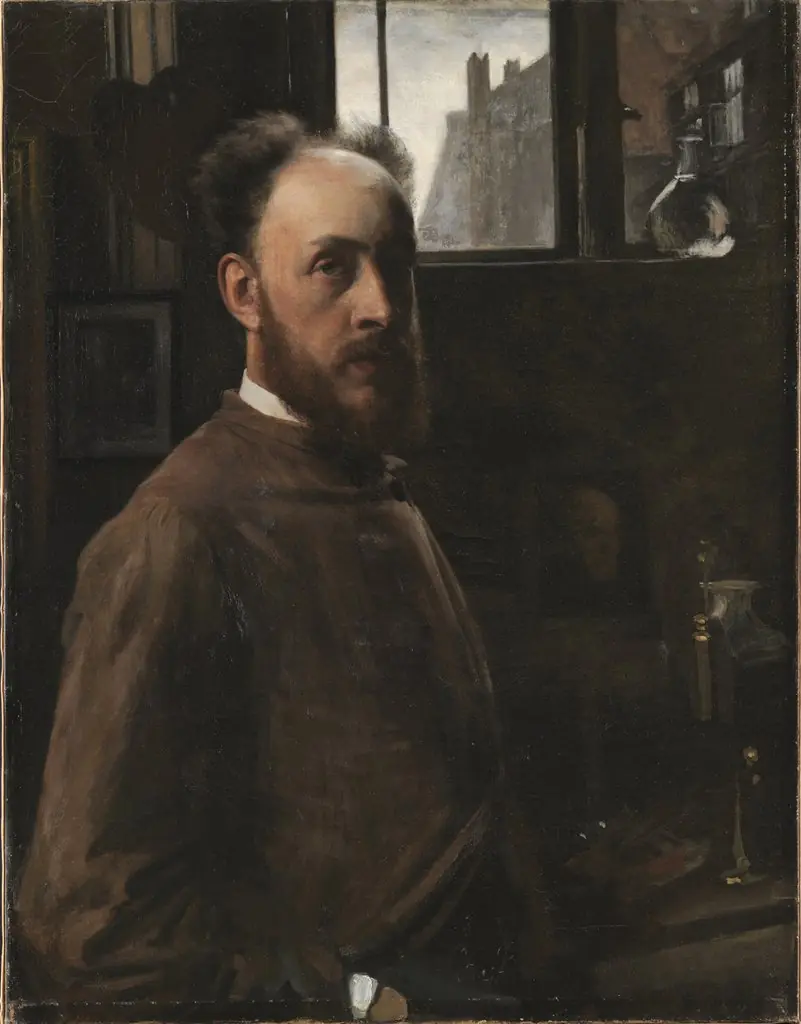 Self-Portrait
 Portrait of the Marine Painter
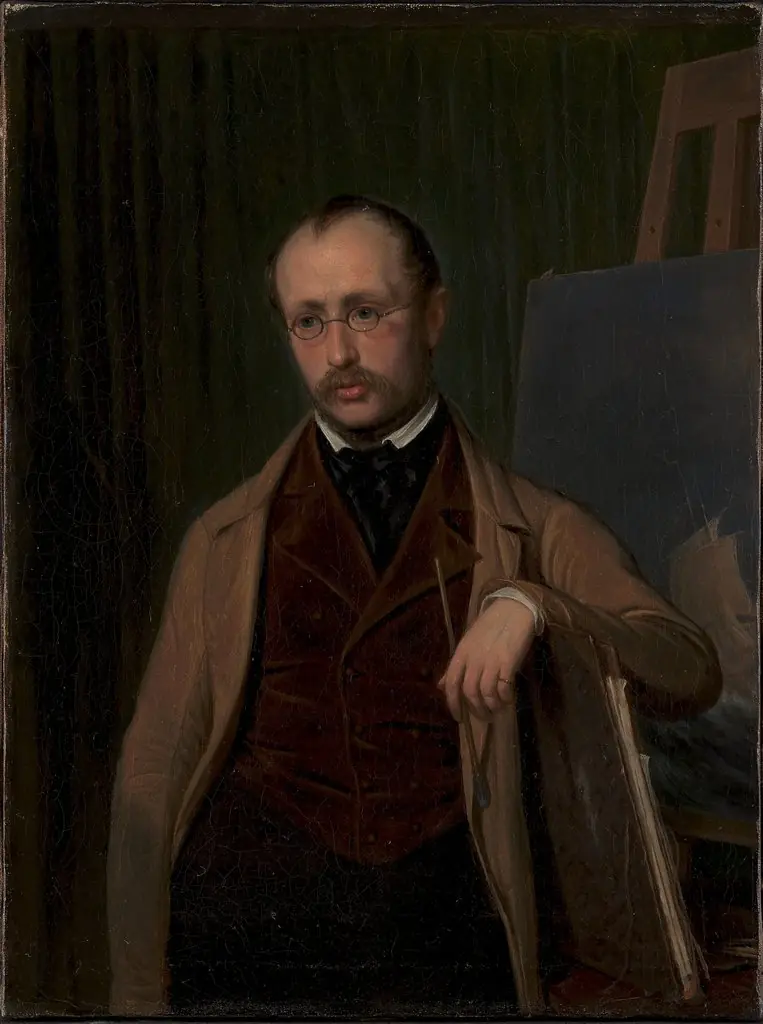 Portrait of the Marine Painter
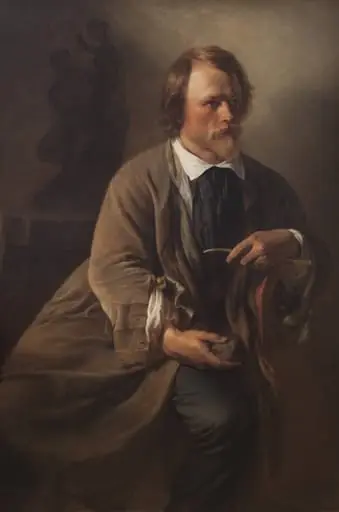 The Sculptor Jens Adolf Jerichau, the Artist's Husband
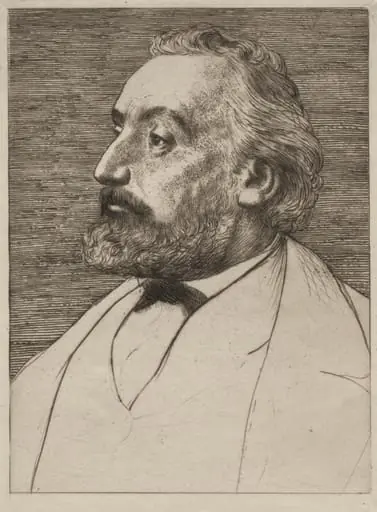 Léon Gambetta
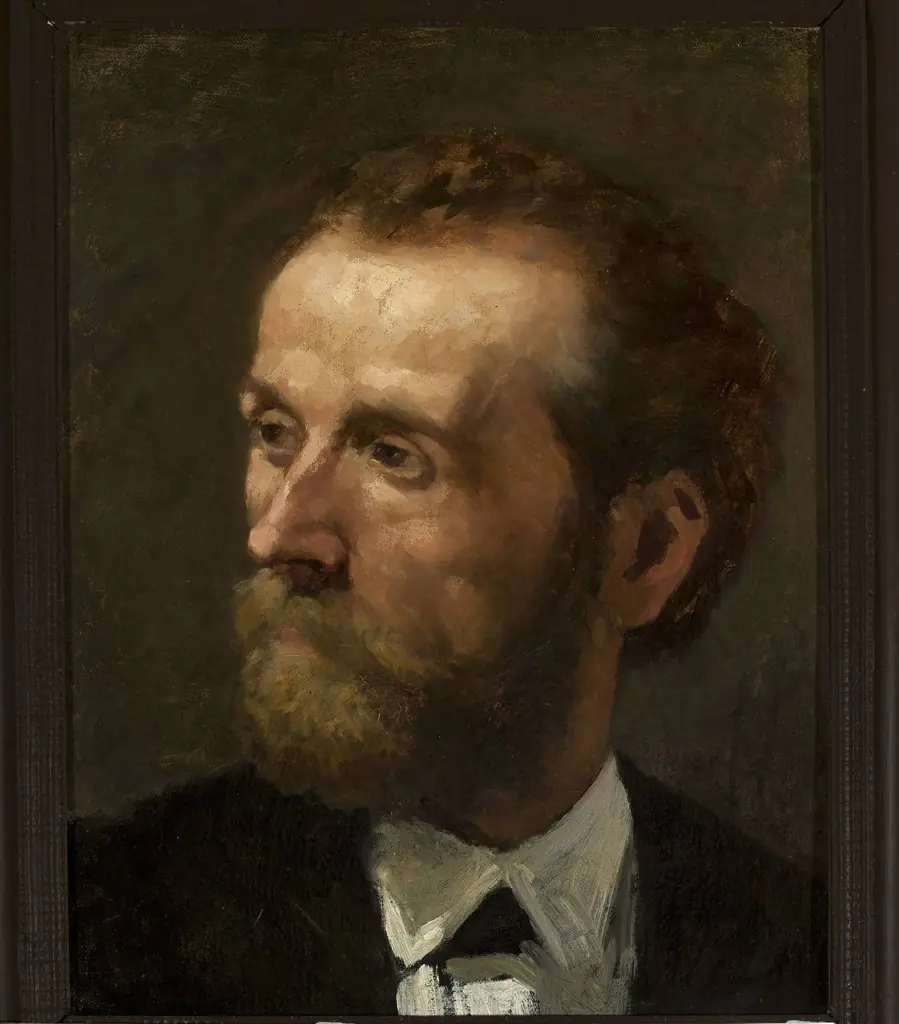 Portrait of Kazimierz Alchimowicz, painter
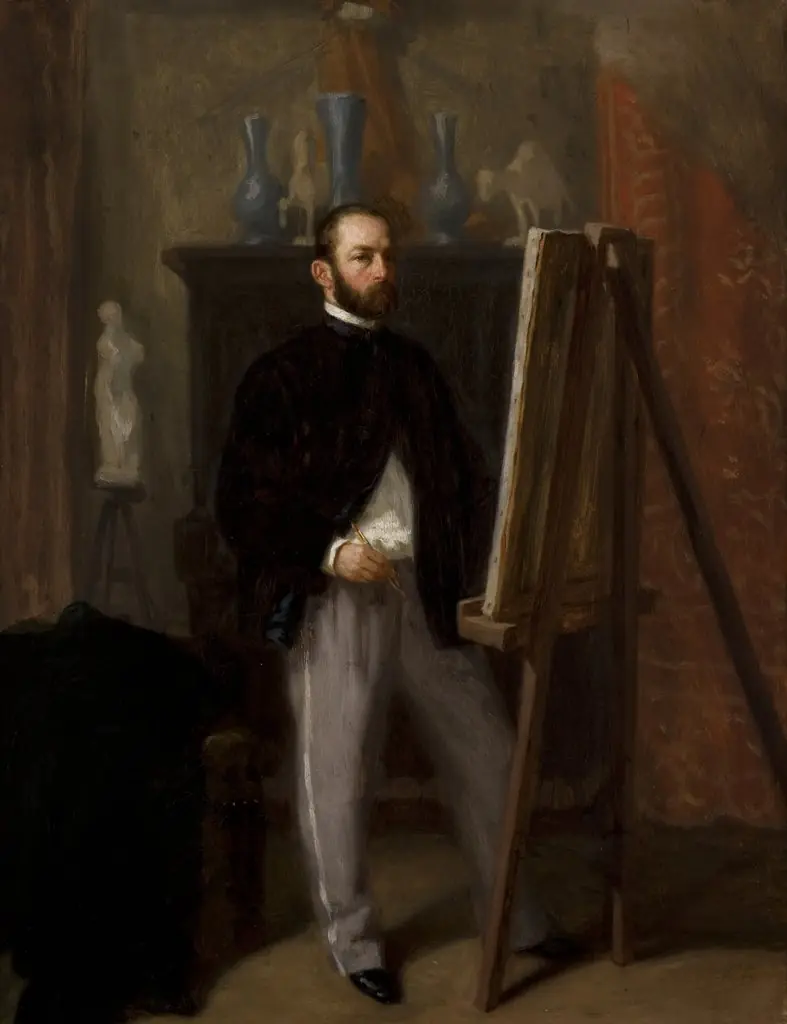 Self-Portrait at the Easel
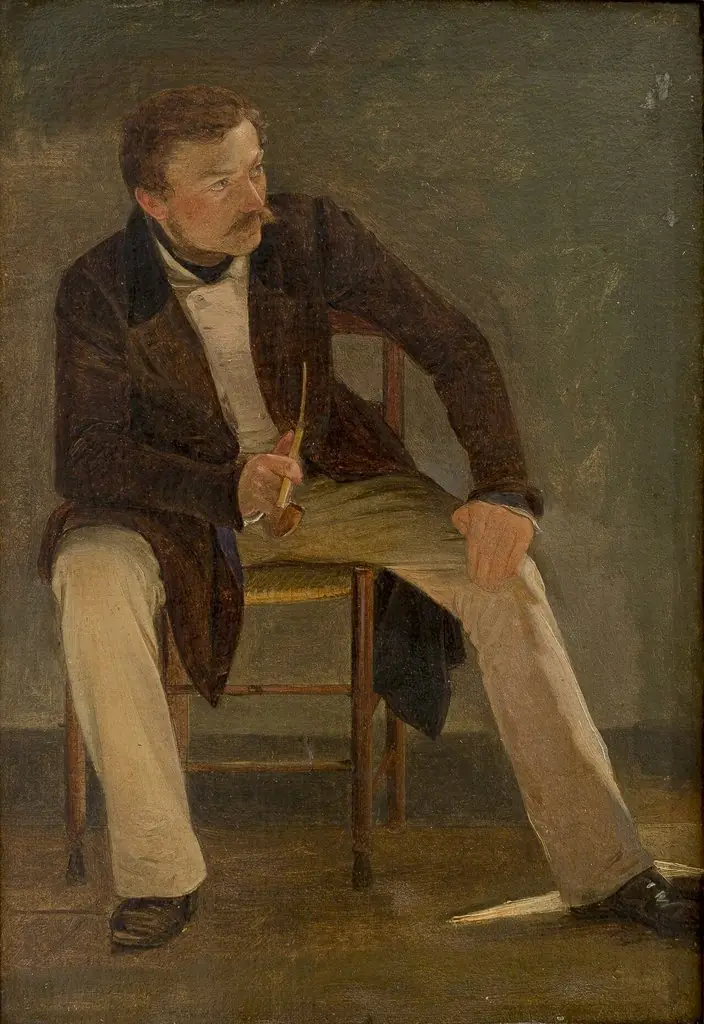 The Painter Constantin Hansen
 Self-portrait