Artwork
Portrait of an Architect
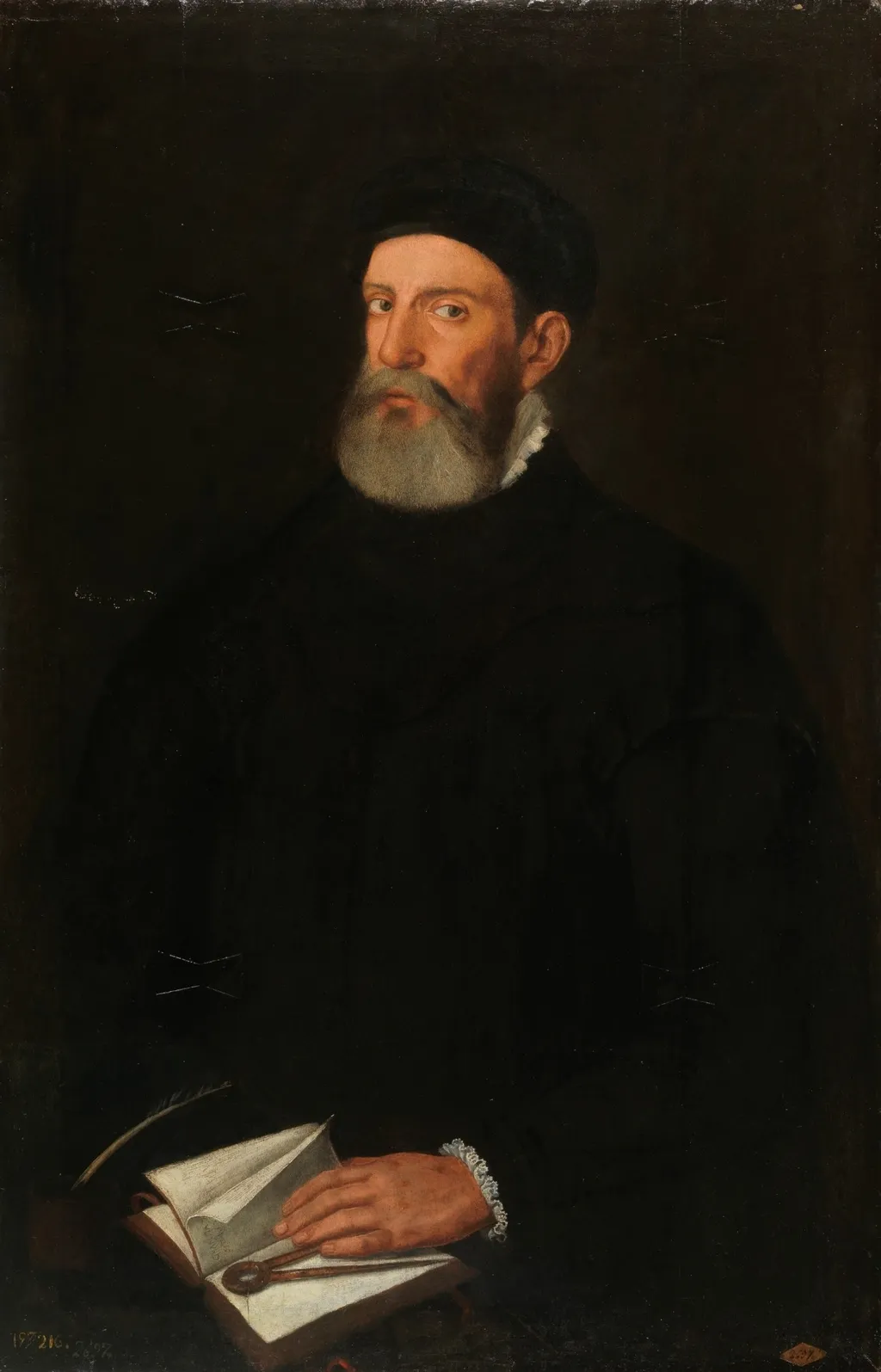
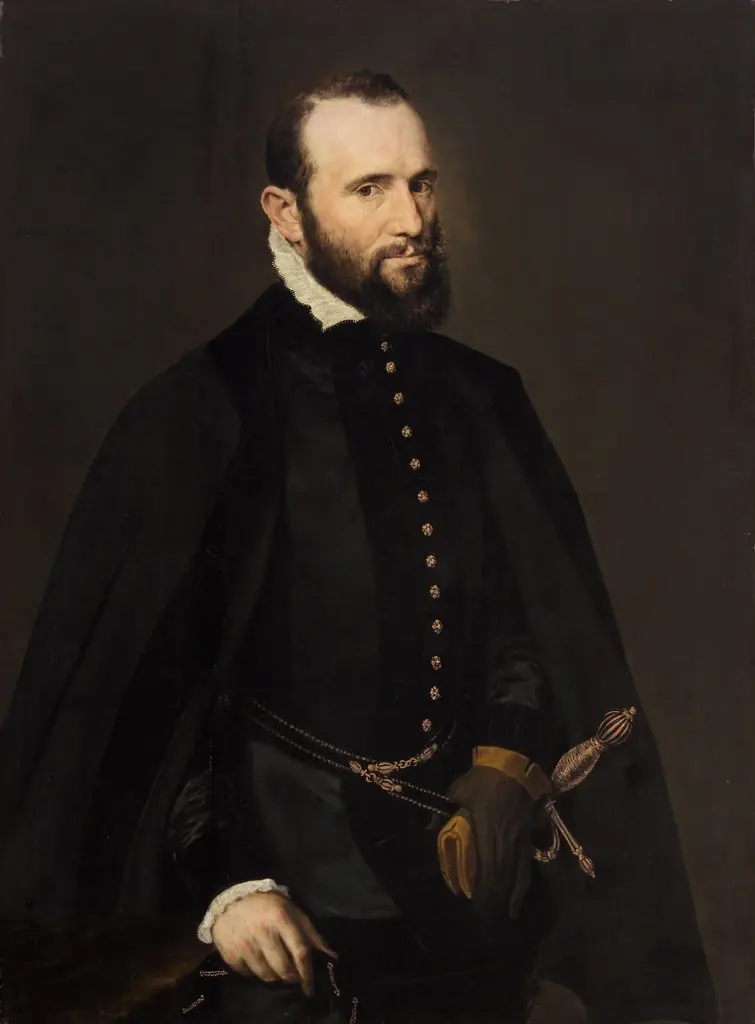
Portrait of an Architect is an oil painting. It dates from 1501. The work is an oil painting that depicts a bearded man dressed in a black costume with a white ruff collar.
About this work
Subject & Meaning
Central to the painting's iconography is a compass, an instrument directly associated with the practices of design, geometry, and construction.
The work portrays an unidentified man, traditionally characterized as an architect due to the specific attributes he holds. Central to the painting's iconography is a compass, an instrument directly associated with the practices of design, geometry, and construction. The subject is also depicted with a book, which likely signifies the theoretical knowledge or scholarly foundations essential to the architectural profession during the early sixteenth century.
Together, these elements function as symbolic identifiers that define the sitter's role and intellectual status. Rather than relying on facial recognition or inscriptions, the representation communicates the figure's identity through the tools of his trade, emphasizing the union of practical skill and learned theory inherent to the architect's vocation.
Technique & Style
Executed in 1501, this portrait is an oil painting created on a panel support. The work measures 116 cm in height and 75 cm in width. Visually, the composition depicts an unidentified male figure accompanied by a book and a compass, objects that signify the subject's architectural profession.
The piece is classified as a portrait and is currently held in the collection associated with the Technical University of Madrid, having also been linked to the Museo del Prado.
Overview
The work is an oil painting that depicts a bearded man dressed in a black costume with a white ruff collar. He rests his chin on an open book, holding it with one hand, and gazes intently. The composition is dominated by a dark background that isolates the figure, creating a stark contrast between light and shadow.
Context
Although specific details about the painting’s creation are not provided, the use of a black outfit with a white ruff and the chiaroscuro treatment align it with European portrait traditions of the 16th and 17th centuries, when such visual strategies were common for depicting learned individuals.
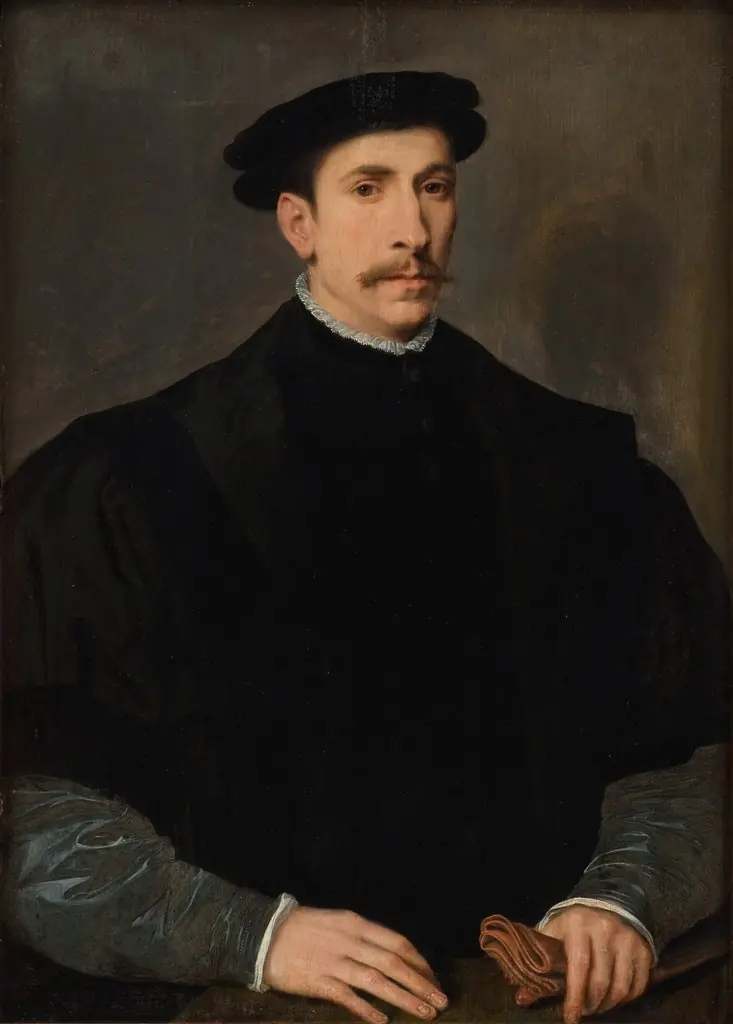
- Portrait of a Man
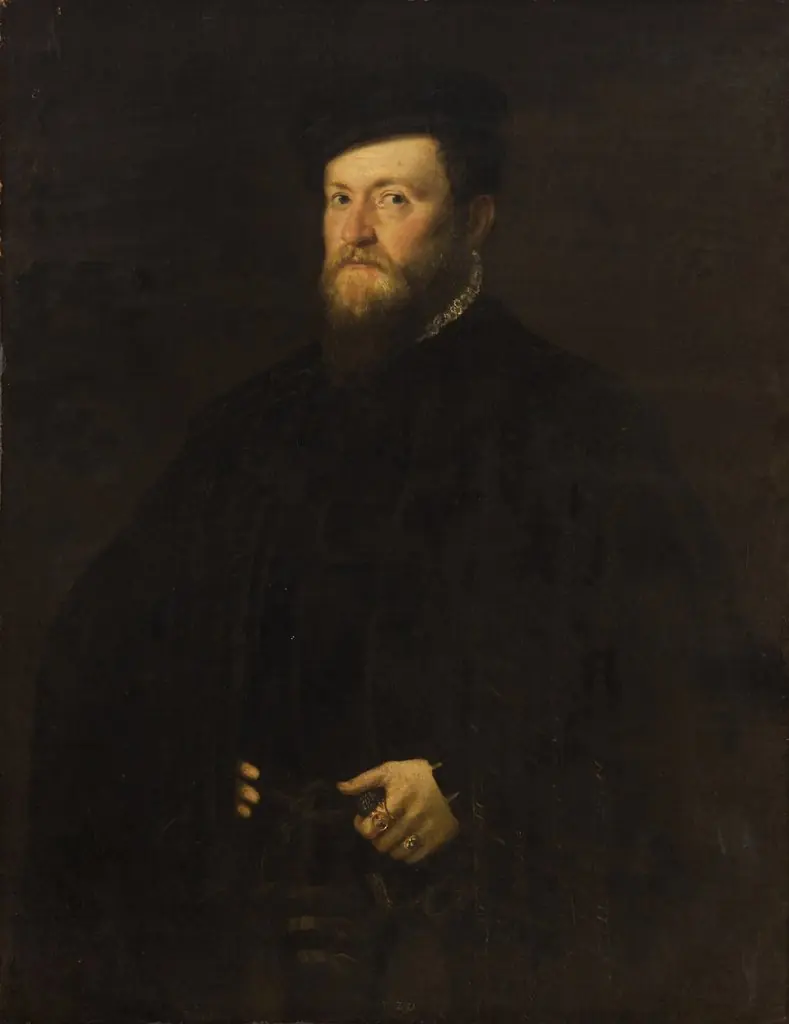 Portrait of a Man in a Cape
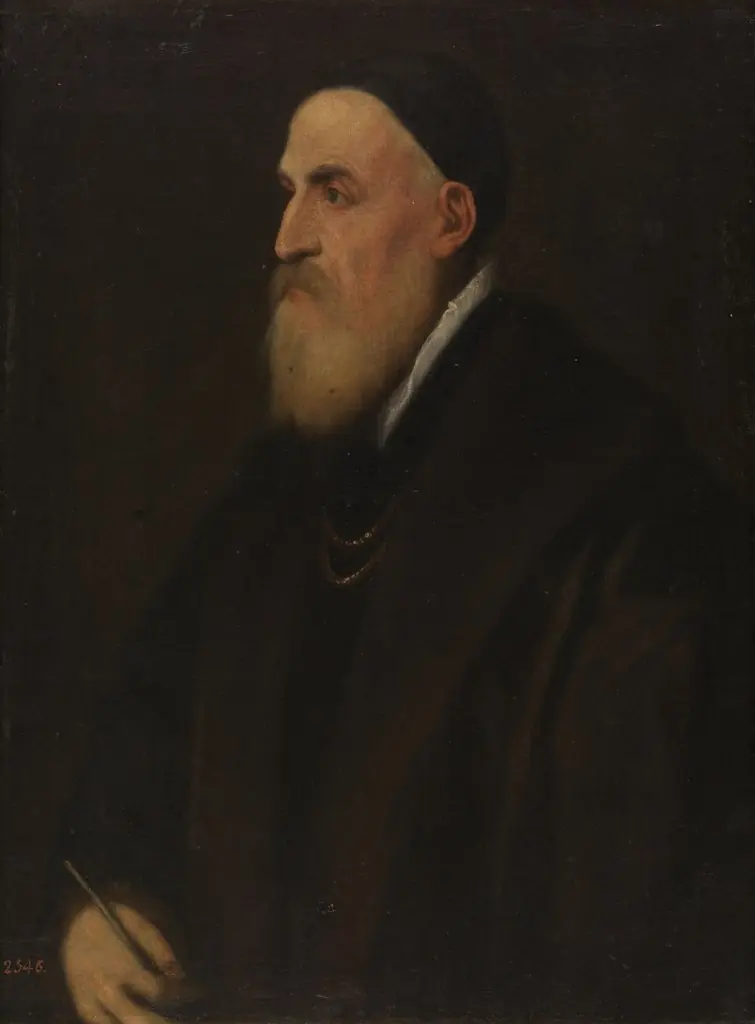 Self-portrait of Titian
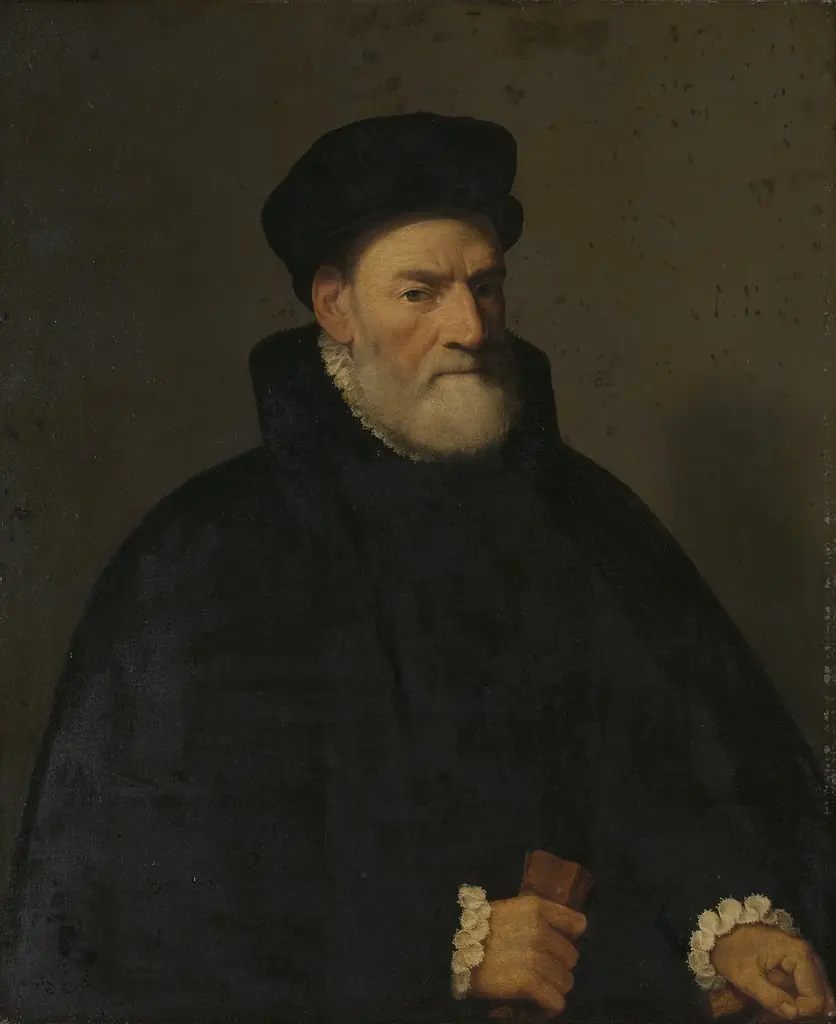 Portrait of an Old Man, probably Vercellino Olivazzi, Senator from Bergamo
 Portrait of a Man
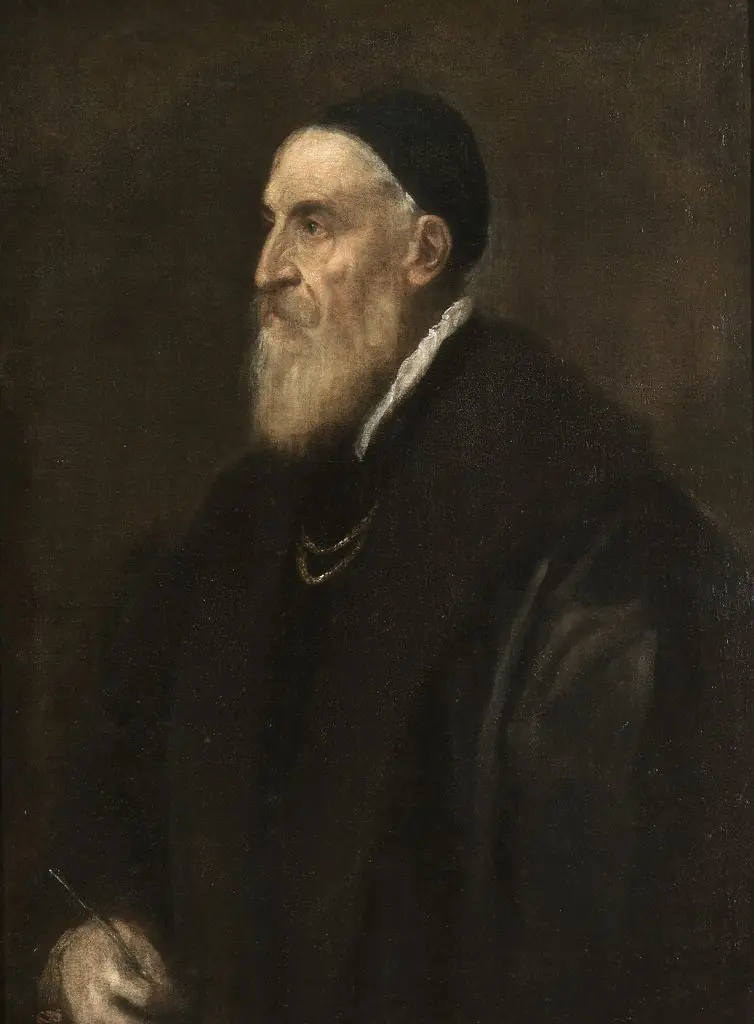 Self-Portrait
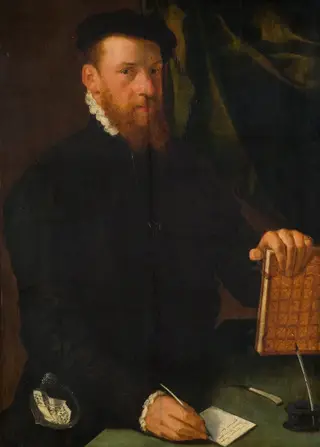 Männliches Bildnis
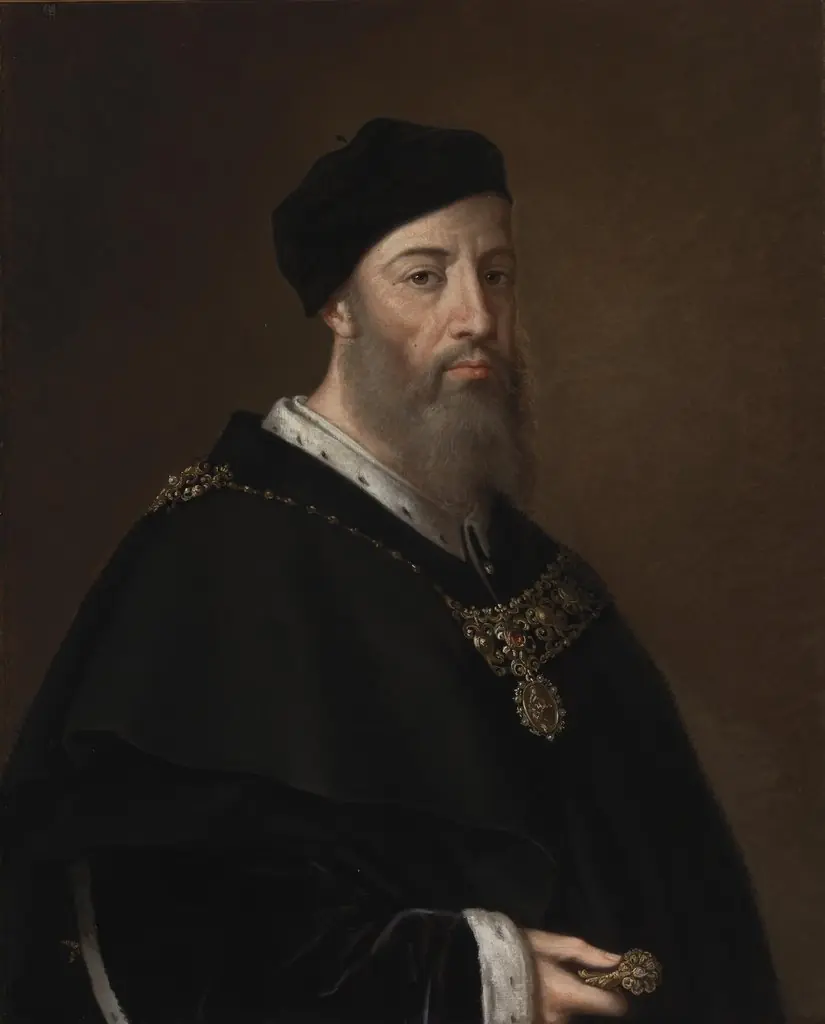 Alonso Felipe de Gurrea Aragón (copia)
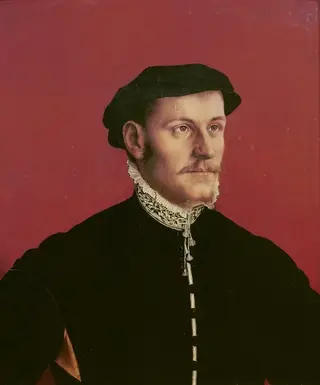 Portrait of an Unknown Gentleman
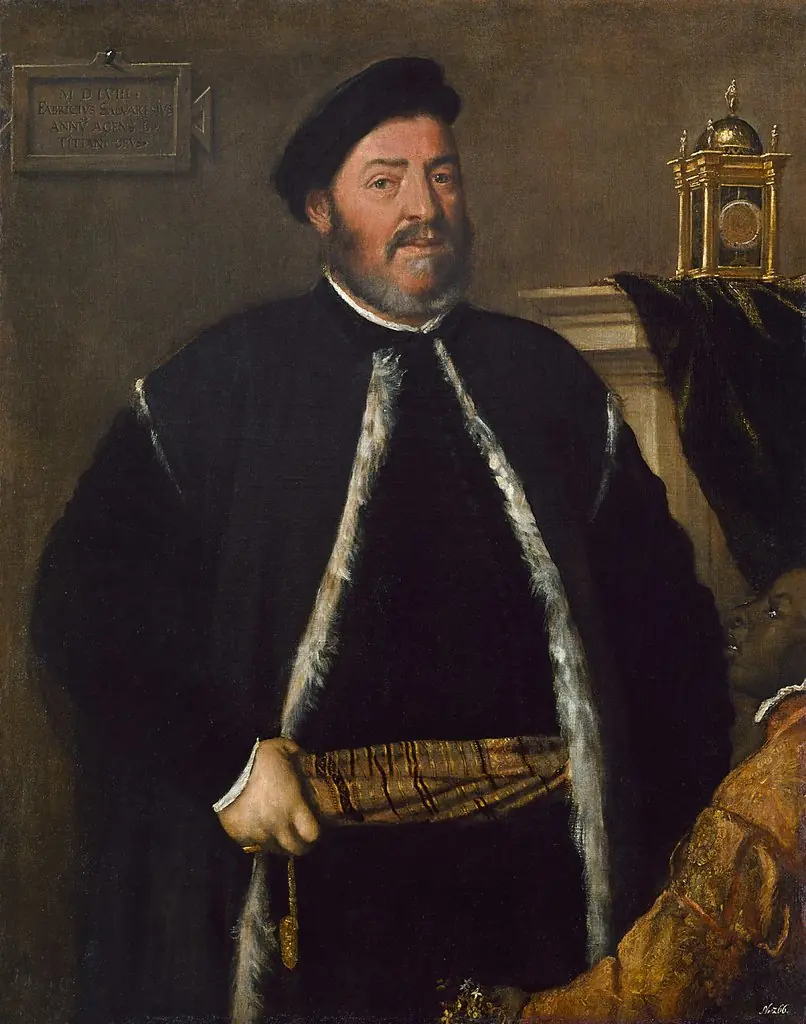 Portrait of Fabrizio Salvaresio
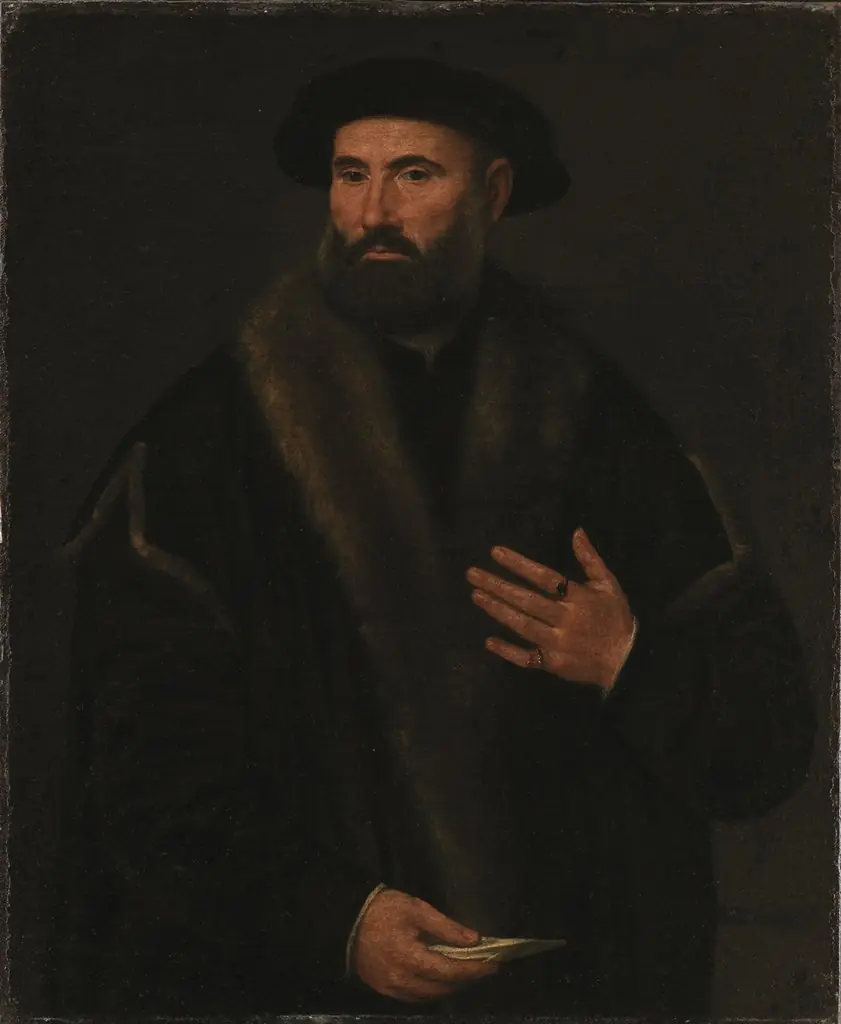 Portrait of a Man
 Portrait of a man