Artwork
Portrait of Anton P. Velikopolsky (1770-1830)
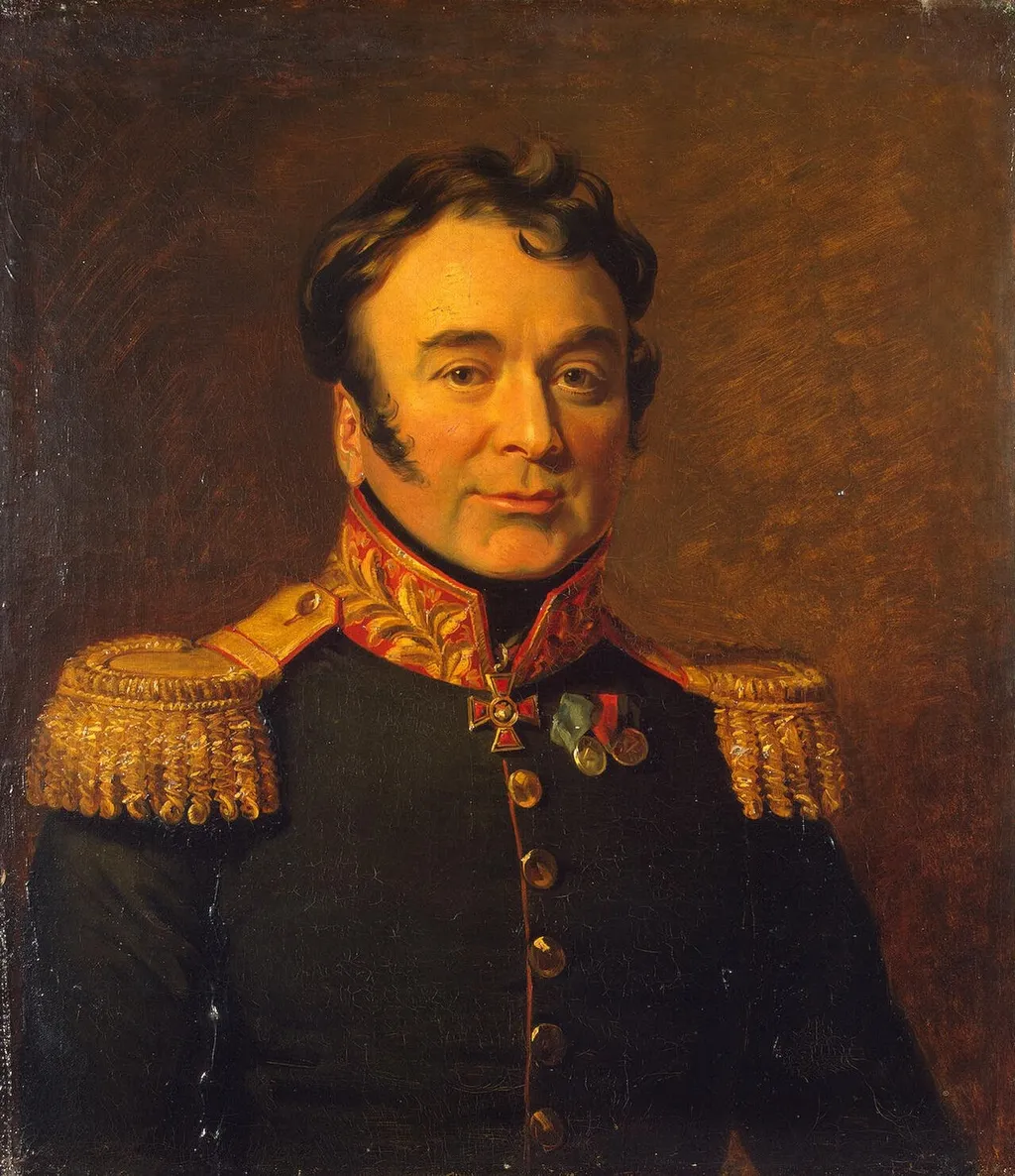
Portrait of Anton P. Velikopolsky (1770-1830) is an oil painting by the Realist artist Unknown. It dates from 1822 and is held in the collection of the Hermitage Museum. The work is an oil painting that depicts a male figure dressed in a dark military uniform.
About this work
Overview
The work is attributed to the workshop of the British painter George Dawe and dated to 1822, though some sources suggest a broader range of 1820-1825.
The Portrait of Anton P. Velikopolsky (1770-1830) is an oil on canvas painting measuring 70 by 62.5 cm, held in the collection of the State Hermitage Museum in St. Petersburg under accession number GE-7972. The work is attributed to the workshop of the British painter George Dawe and dated to 1822, though some sources suggest a broader range of 1820-1825. It depicts a Russian general who served during the Napoleonic Wars, presented in the half-length format typical of the portraits commissioned for the Military Gallery of the Winter Palace. The painting occupies a significant place in Russian art history as part of one of the most important commemorative projects of the early nineteenth century, the large-scale series of portraits honoring the commanders of the Patriotic War of 1812.
Subject & Meaning
The subject, Anton Petrovich Velikopolsky (1770-1830), was a Russian general whose military career culminated in service during the decisive campaigns against Napoleon. The portrait adheres to the conventions of military portraiture developed for the Winter Palace series, emphasizing rank and honor through carefully chosen insignia. Velikopolsky is shown in a dark military coat with a high collar adorned with red and gold embroidery, heavy gold epaulettes with fringed detailing on both shoulders, and a row of round brass buttons. At his chest appear several medals and decorations, including a cross-shaped badge and two circular medallions on ribbons, which record his distinguished service and awards. The forward-facing pose with head turned slightly to the left, set against a plain dark brown background, directs attention to the face and regalia while avoiding distraction. The even lighting on the face and upper chest, with deeper shadow at the edges and lower portion, creates a dignified, monumental presence appropriate to a commemorative portrait intended for permanent public display in an imperial gallery.
Technique & Style
The painting is executed in oil on canvas, the standard medium for Dawe's workshop productions. The handling reveals the collaborative practices of a busy atelier: the brushwork is smooth and blended on the face, achieving a polished, lifelike finish, while more textured handling appears in the gold elements and background. The background is painted with visible brushstrokes in varying shades of brown, left plain and unadorned to focus attention on the sitter. The paint surface shows fine craquelure throughout, particularly noticeable in the darker areas of the coat, consistent with its age and the materials employed. The overall approach combines British portrait conventions, particularly the directness and clarity associated with Thomas Lawrence and his followers, with the specific requirements of Russian imperial patronage. The relatively modest dimensions, 70 by 62.5 cm, conform to the standardized format established for the Military Gallery, allowing uniform hanging in the specially designed space.
History & Provenance
The portrait was created as part of the commission for the Military Gallery of the Winter Palace, a project initiated by Tsar Alexander I to commemorate the heroes of the Patriotic War of 1812. George Dawe, who had arrived in St. Petersburg in 1819, received the commission to paint the gallery and eventually produced over 300 portraits with the assistance of his workshop. The specific dating of Velikopolsky's portrait to 1822 places it in the most intensive period of production, though the broader range of 1820-1825 given in some sources reflects the workshop's sustained output. The painting has remained in the collection of the State Hermitage Museum since its creation, forming part of the permanent installation in the Winter Palace. Its museum number GE-7972 identifies it within the Hermitage's systematic catalog. The work has been exhibited continuously as part of the Military Gallery, one of the most visited sequences of rooms in the museum, though specific loan exhibition history is not recorded in the available sources.
Context
The portrait belongs to one of the largest and most significant portrait commissions of the nineteenth century. George Dawe (1781-1829), son of the London mezzotint engraver Philip Dawe, had established a reputation as a painter of military and literary subjects before receiving the imperial invitation to Russia. The workshop system he developed in St. Petersburg allowed for the efficient production of portraits at the scale demanded by the commission, with assistants handling backgrounds, uniforms, and other elements while Dawe himself typically executed the faces of the most senior commanders. The attribution to Dawe's workshop rather than to the master himself indicates that Velikopolsky's portrait was likely produced with substantial assistance, a common practice for the numerous portraits of less prominent generals. The Military Gallery itself, opened in 1826, represented a new form of state commemoration, transforming the Winter Palace into a monument to national defense and collective sacrifice. Critical reception of the series has generally emphasized its documentary value and the impressive organizational achievement, while noting variations in artistic quality across the workshop's output.
Legacy
As a constituent of the Military Gallery, the portrait of Velikopolsky participates in the enduring cultural significance of that ensemble, which remains one of the Hermitage's principal attractions and a defining image of Russian national identity. The gallery's portraits have shaped popular and scholarly understanding of the 1812 war commanders, providing visual anchors for historical memory. The specific afterlife of Velikopolsky's image has been largely subsumed within the collective reputation of the series, though its reproduction on the museum's digital platform and in commercial image libraries testifies to continued interest. The work also exemplifies the broader phenomenon of British artistic influence in early nineteenth-century Russia, a moment of significant cultural exchange that Dawe's enterprise both depended upon and promoted. The attribution debates surrounding individual portraits, oscillating between Dawe himself and his workshop, reflect ongoing scholarly attention to the production circumstances and quality distinctions within this major commission. For historians of Russian art, the portrait offers evidence of the standardized yet individually differentiated approach that made the Military Gallery project possible, balancing the demands of imperial commemoration with the specific recognition of individual service.
Artist & collection









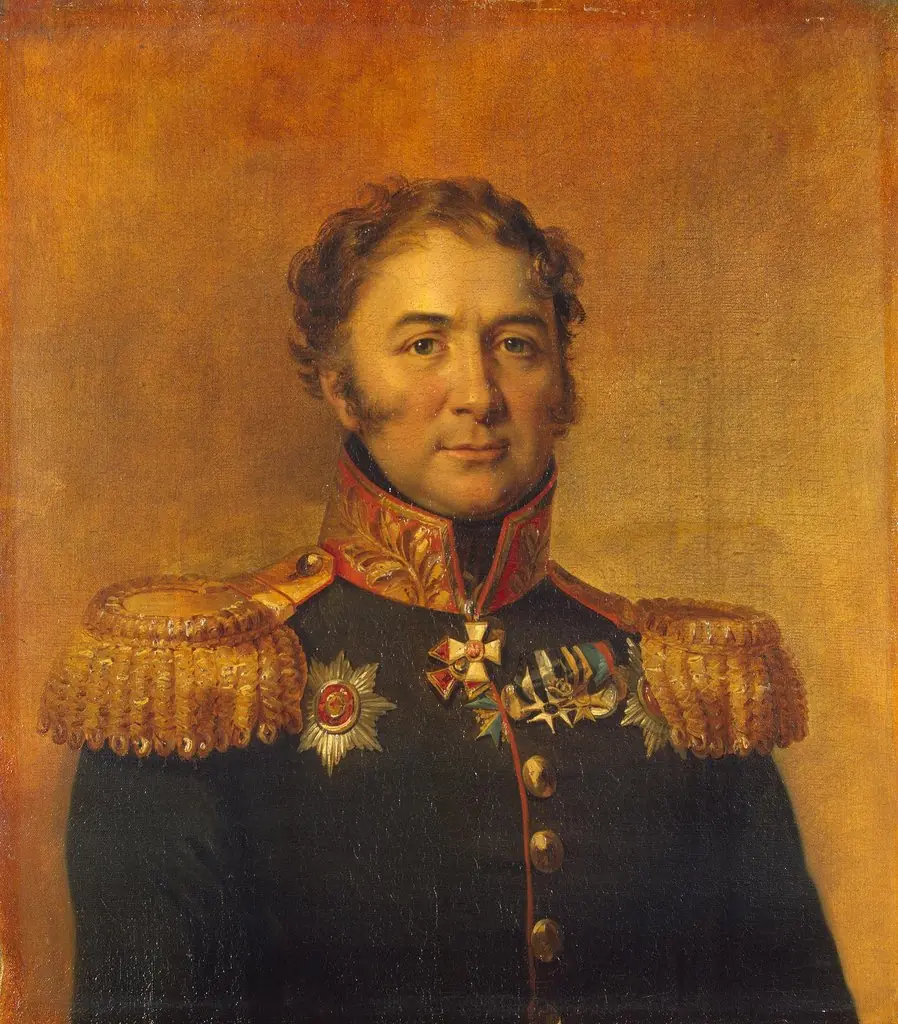
- Portrait of Nikolai V. Dekhteryov (1775-1831)
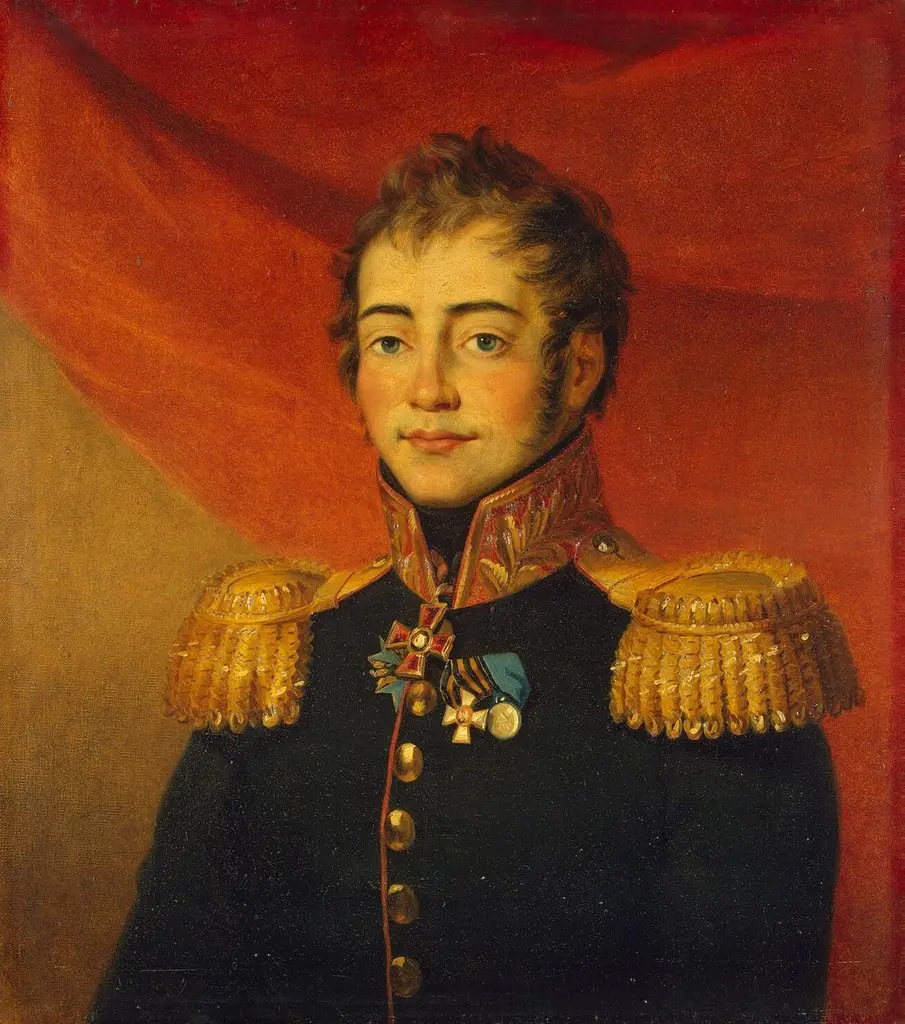 Portrait of Dmitry P. Lyapunov (1775-1821)
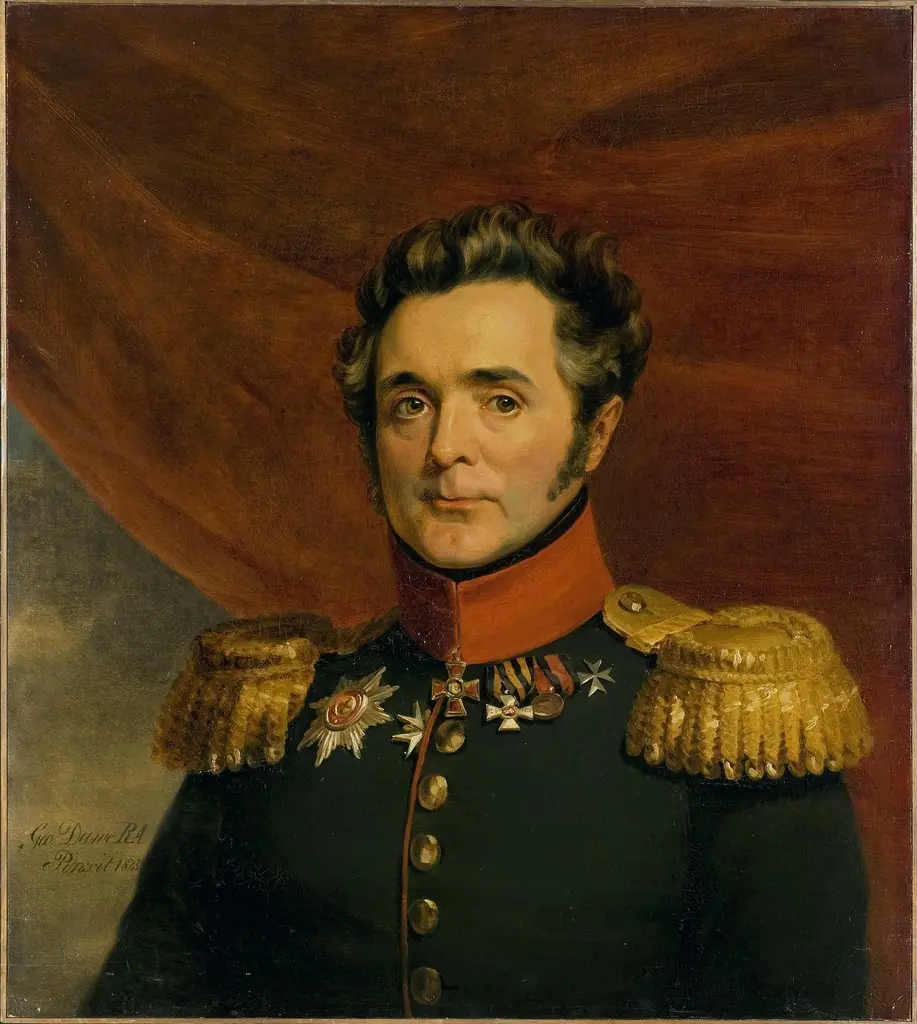 Portrait of Alexander P. Aledinsky (1775-1841)
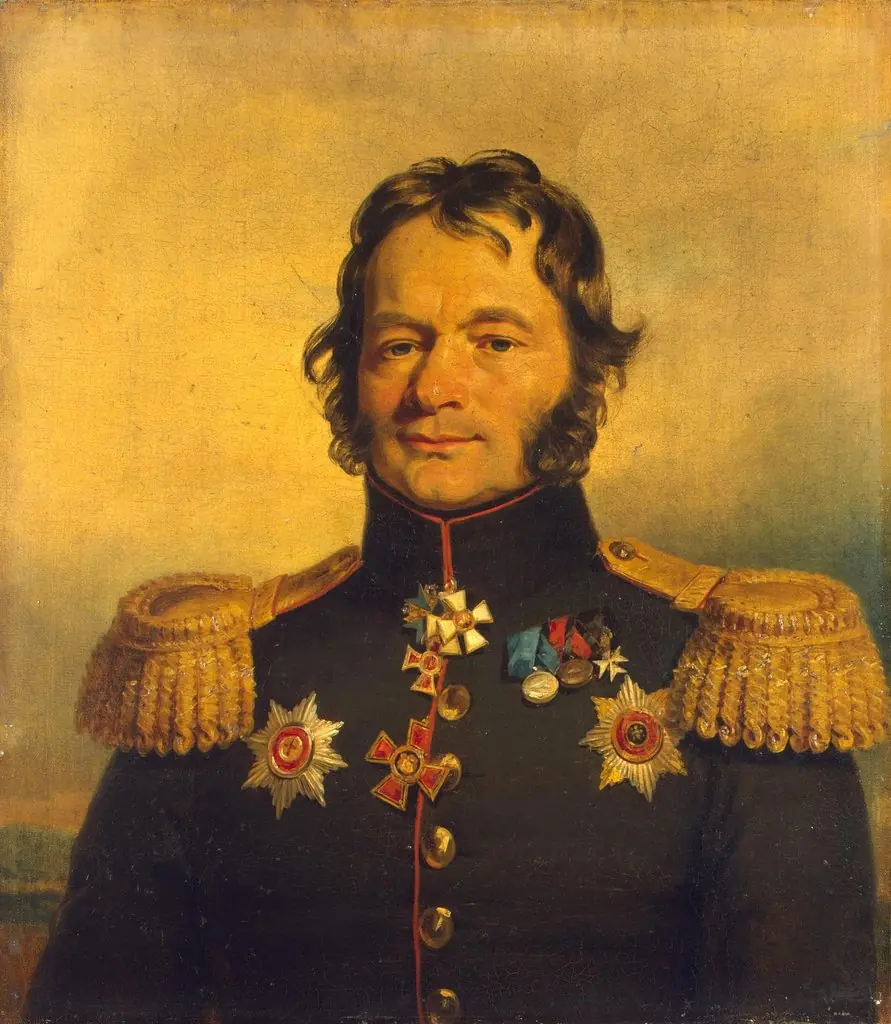 Portrait of Vasily G. Kostenetsky (1769-1831)
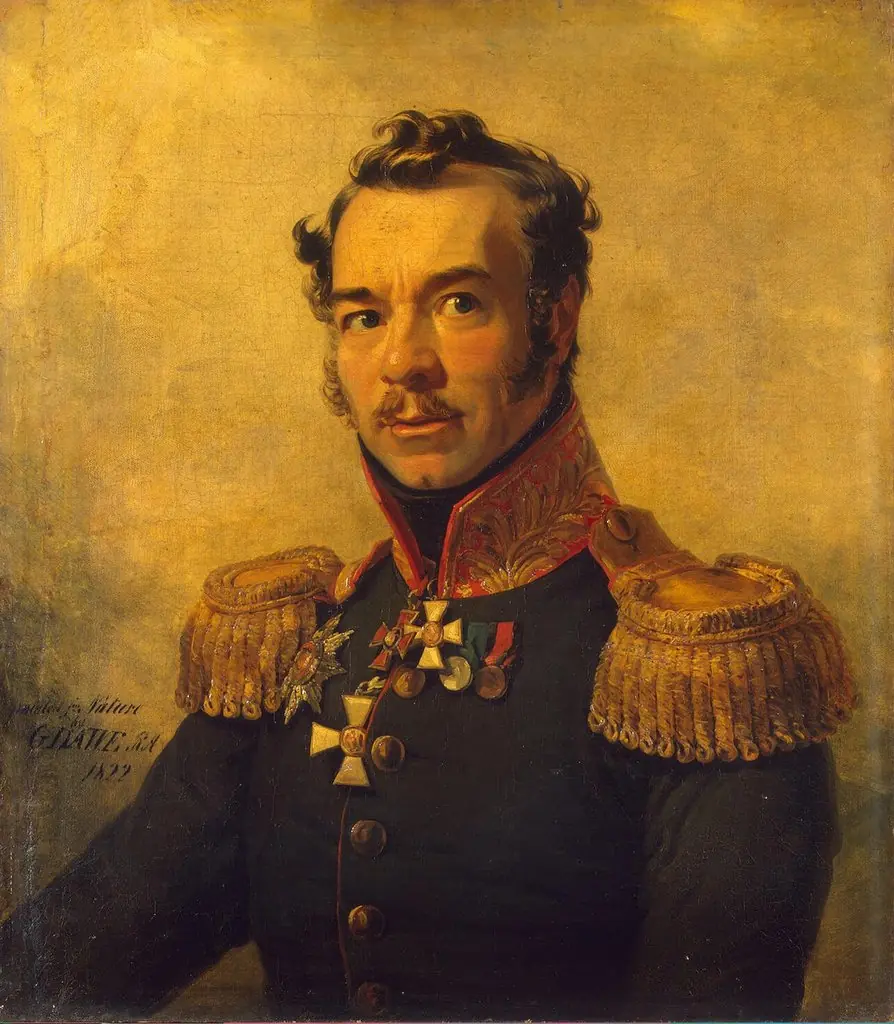 Portrait of Dmitry M. Yuzefovich (1777-1821)
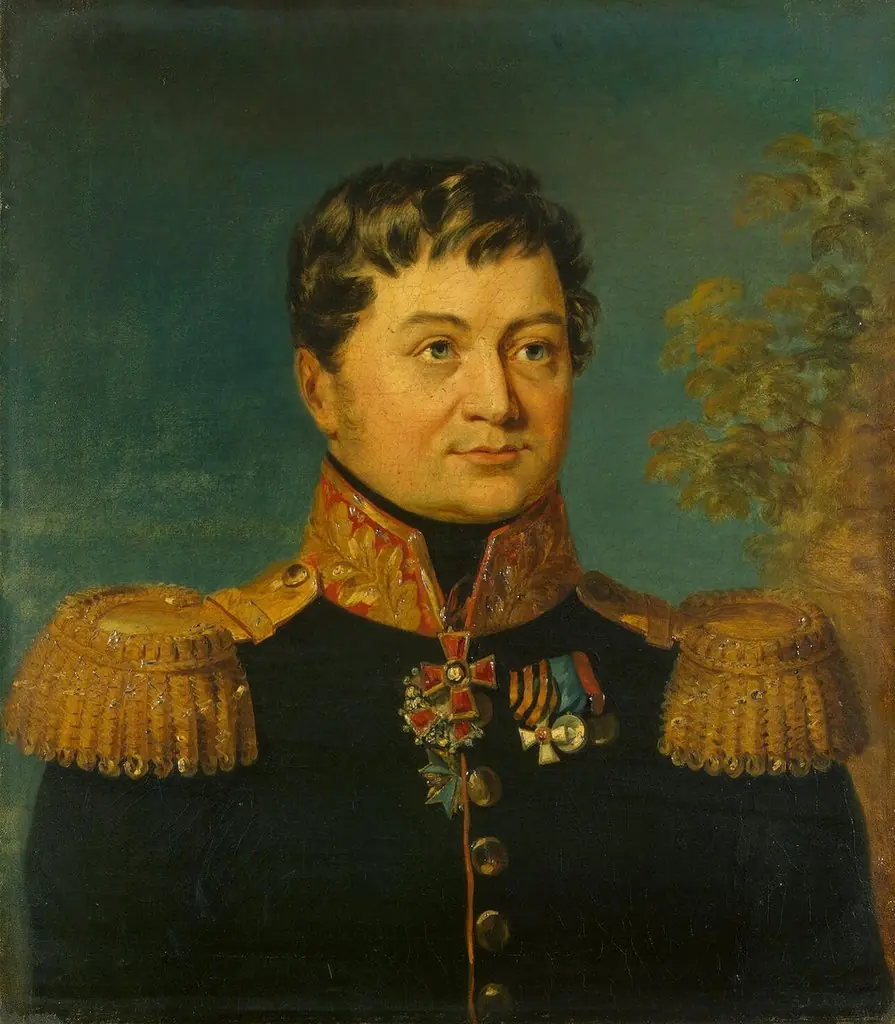 Portrait of Andrey P. Turchaninov (1779 -1830) (2nd)
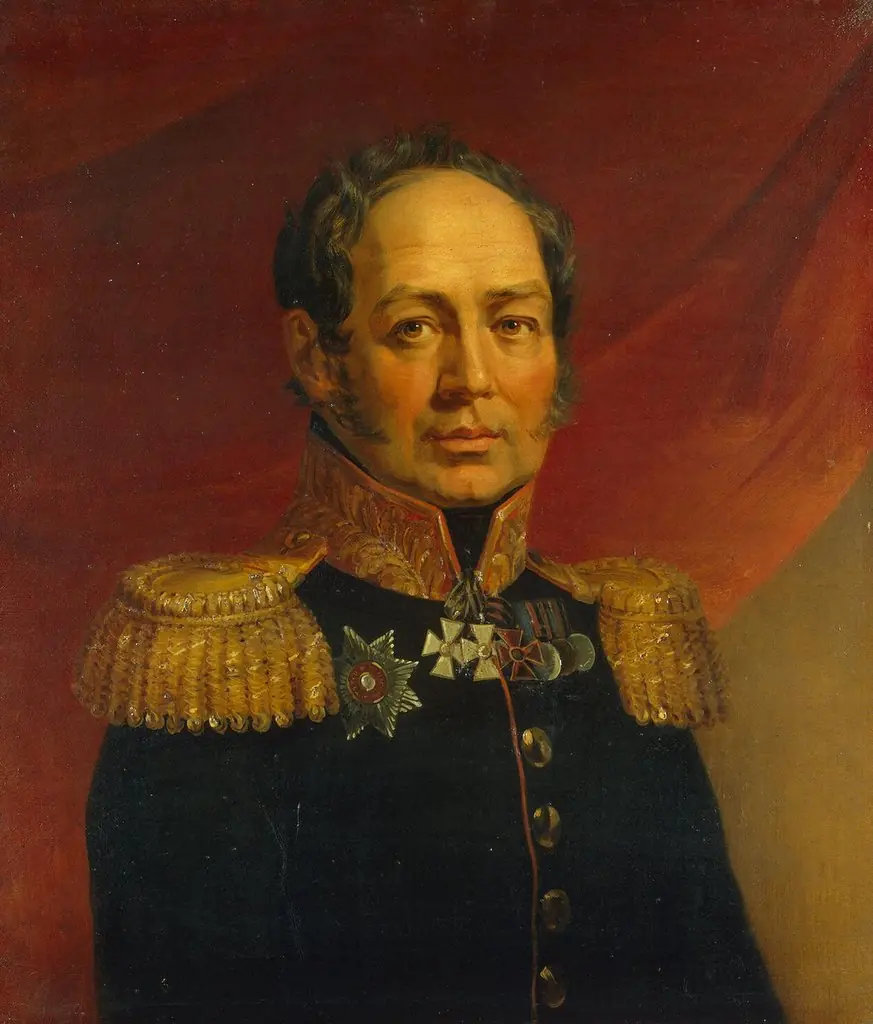 Portrait of Dmitry V. Lyalin (1772-1847/48)
 Portrait of Mikhail F. Vlodek (1780-1849)
 Portrait of Platon I. Kablukov (1781-1835) (1st)
 Portrait of Nikolai N. Khovansky (1777-1837)