Artwork
Portrait of Cornelis Aerentsz van der Dussen (1481-1556)
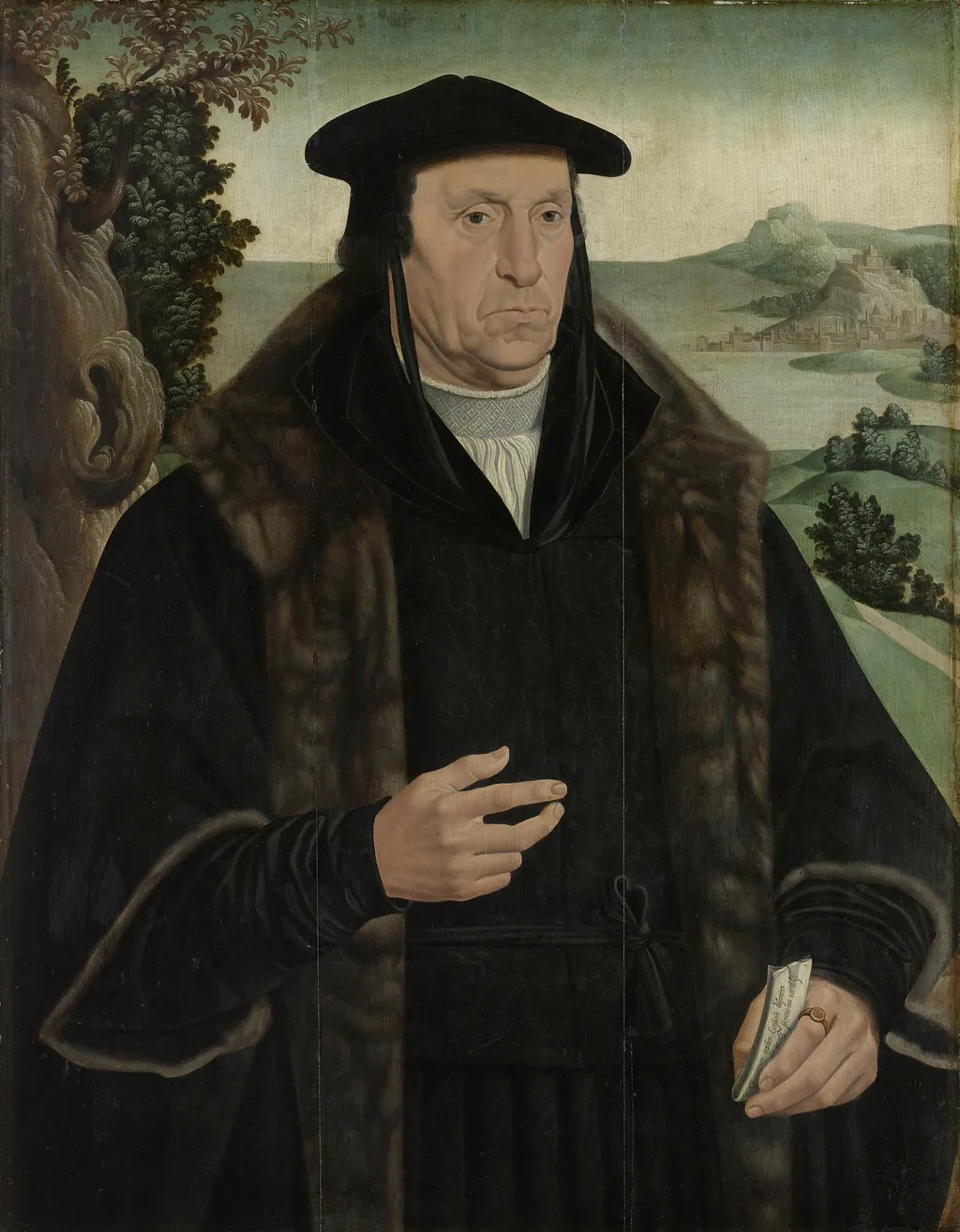
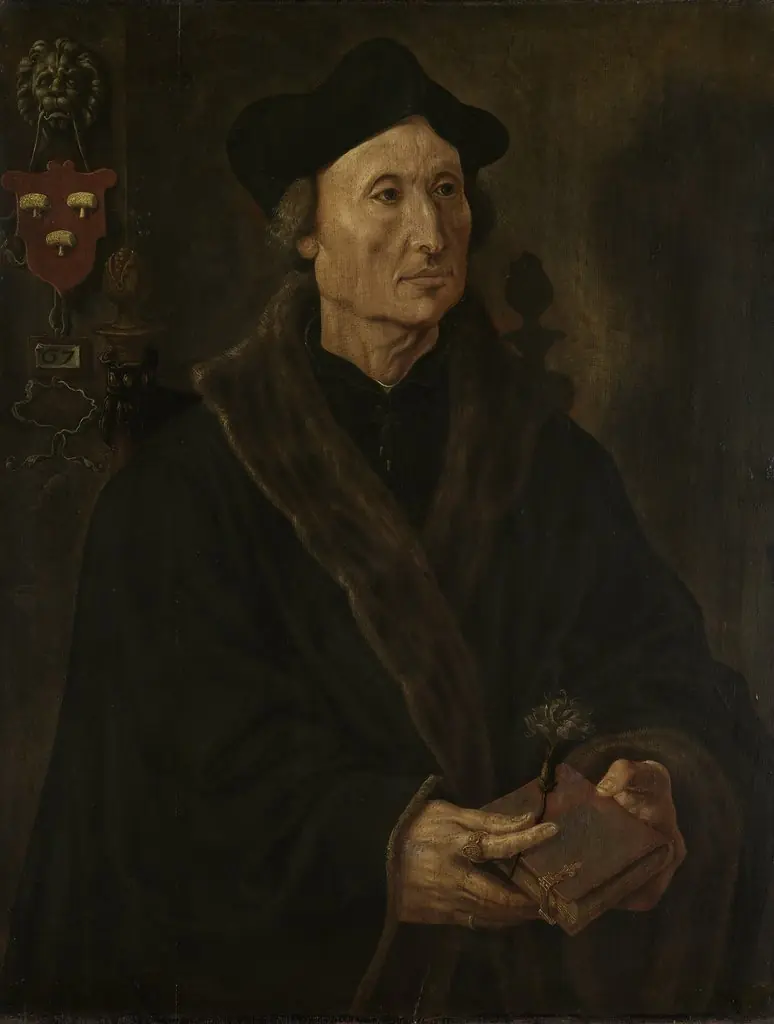
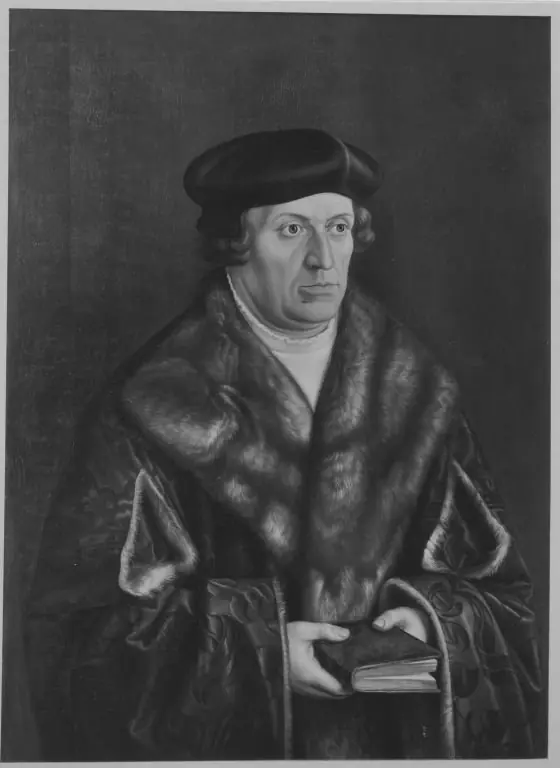
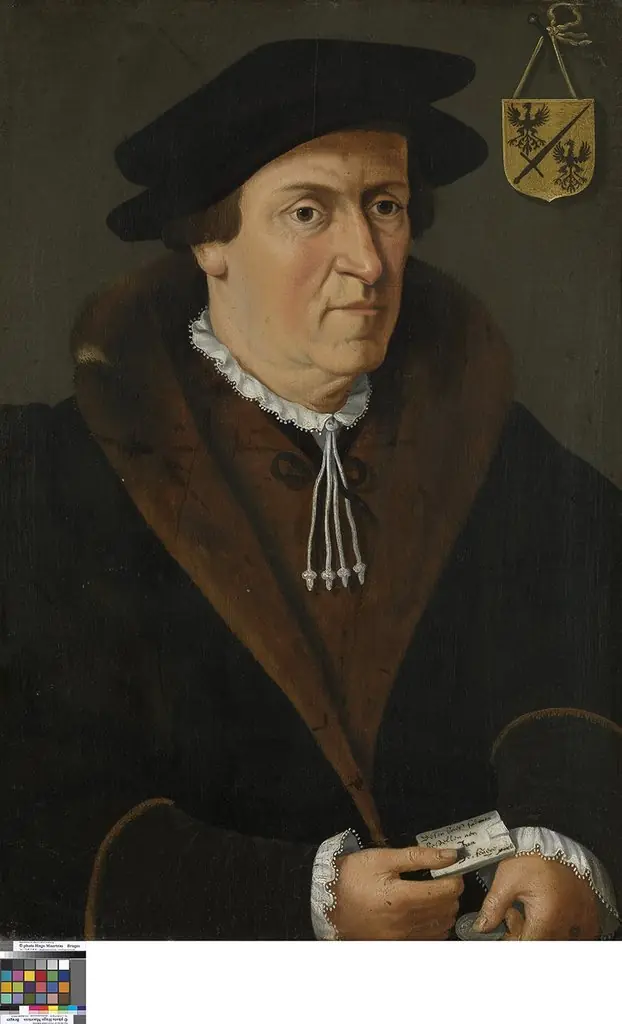
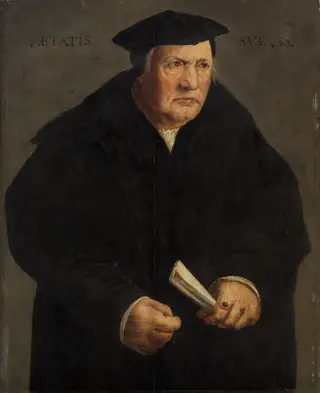
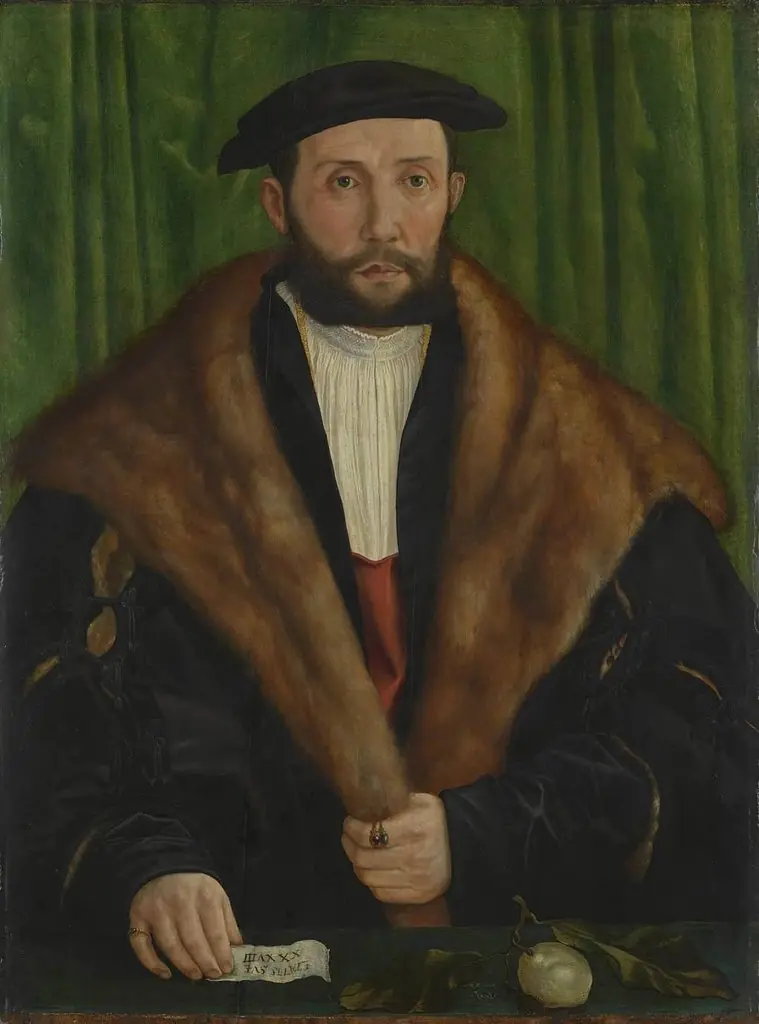
Portrait of Cornelis Aerentsz van der Dussen (1481-1556) is an oil painting. It dates from 1562 and is held in the collection of the Rijksmuseum. The work is an oil painting portraying a solemn figure dressed in a black hat and a dark fur-lined coat.
About this work
Technique & Style
Its handling shows careful modeling of the sitter’s features with subtle transitions between light and shadow, consistent with Jan van Scorel’s influence.
The painting is executed in oil on a wooden panel support, following the Northern Renaissance tradition of portraiture. Its handling shows careful modeling of the sitter’s features with subtle transitions between light and shadow, consistent with Jan van Scorel’s influence. The figure’s sober black attire and white ruff contrast with the restrained palette, emphasizing dignity rather than ostentation.
The composition is frontal and symmetrical, framing the sitter between a dark background and a neutral parapet. No evidence of later overpainting or significant damage is recorded, suggesting the work has retained its original condition since its creation in 1562.
History & Provenance
The portrait is dated to 1562, placing its creation in the Northern Renaissance period. It is painted in oil on panel and depicts Cornelis Aerentsz van der Dussen, a historical figure who lived from 1481 to 1556. The work is identified as a later painting after a lost original by Jan van Scorel, indicating it was created posthumously based on an earlier composition.
The painting entered the collection of the Rijksmuseum in Amsterdam, where it is currently held, with dimensions recorded as 99.2 cm in height and 76.4 cm in width.
Overview
The work is an oil painting portraying a solemn figure dressed in a black hat and a dark fur-lined coat. He holds a small folded paper in his right hand, while his left hand rests on his chest. Behind him stretches a tranquil landscape of trees, a river and distant structures, rendered in muted tones that recede into the distance.
Subject & Meaning
The sitter, identified as Cornelis Aerentsz van der Dussen (1481‑1556), is presented with a dignified bearing. The folded paper may allude to a document or personal testament, suggesting his status or a specific role. The composed pose and direct lighting emphasize his individuality and seriousness, reflecting the period’s interest in personal portraiture as a record of identity.
Context
Created during a period of growing mercantile prosperity in the Low Countries, the painting reflects the emerging middle‑class desire for personal representation. Its realistic treatment aligns with contemporary developments in Netherlandish art, where artists increasingly focused on capturing the materiality of clothing and the psychological presence of the sitter.
Artist & collection