Artwork
Portrait of Count Piotr Palen
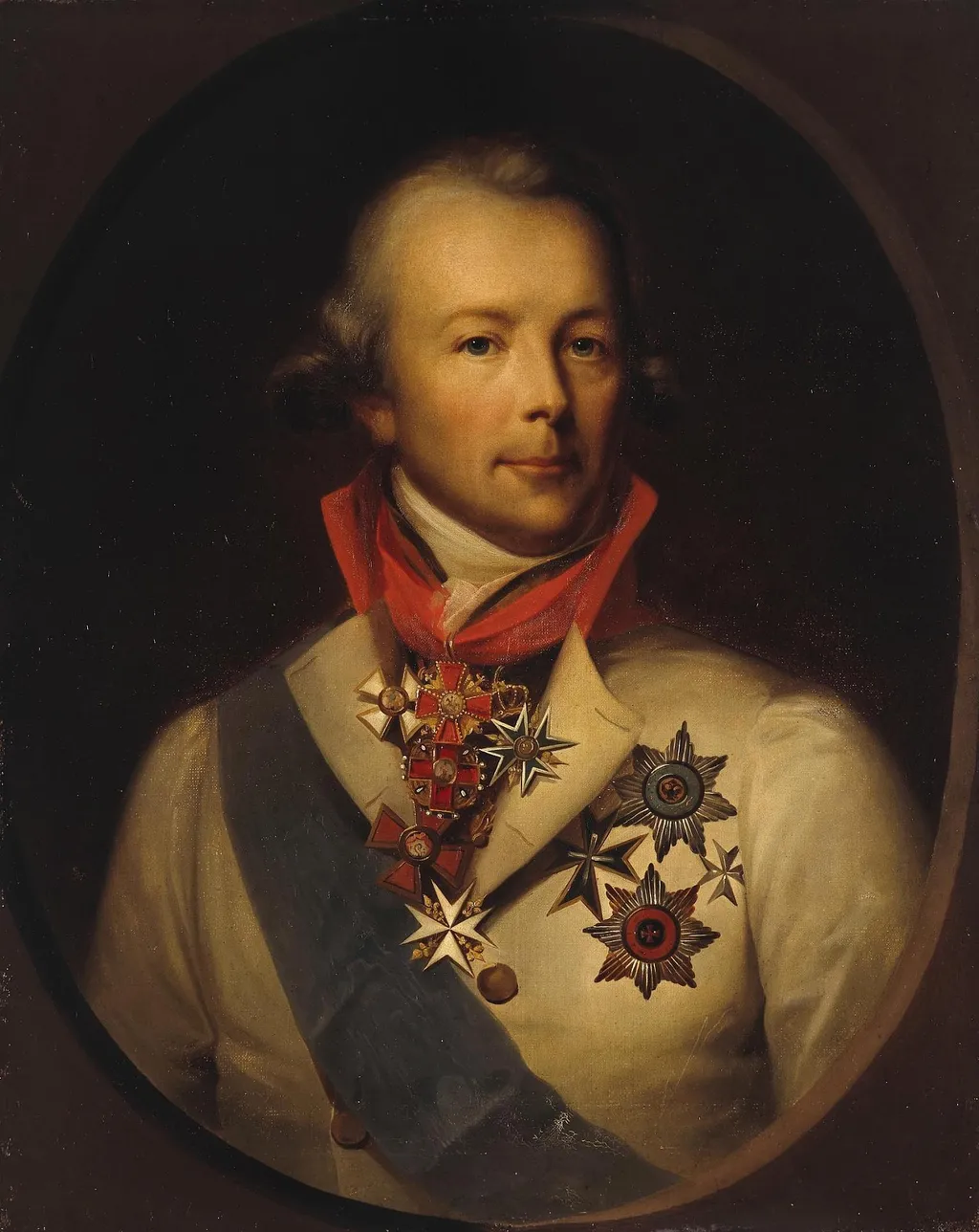
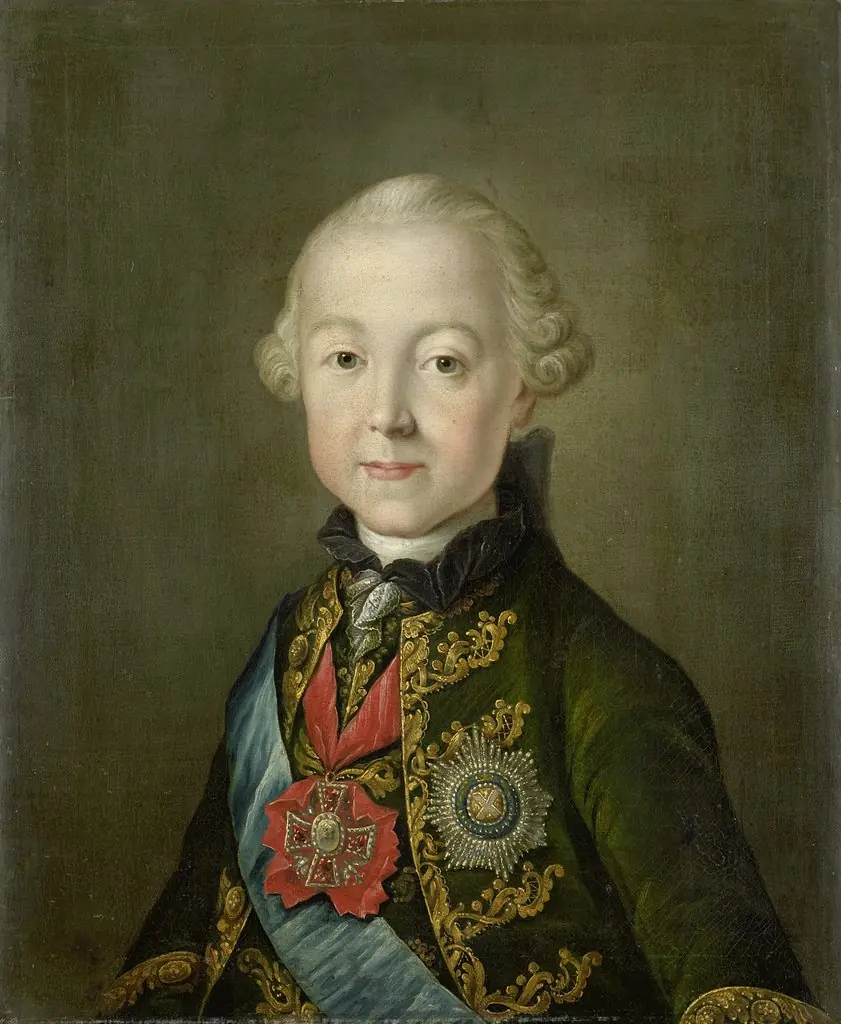
Portrait of Count Piotr Palen is an oil painting by the Neoclassicist artist Unknown. It dates from 1798 and is held in the collection of the Hermitage Museum. This oil painting portrays Count Piotr Palen, a figure of evident high social standing, distinguished by his attire and decorations.
About this work
Overview
5 centimeters, the work is held in the collection of the State Hermitage Museum in Saint Petersburg, where it is catalogued under accession number 126714.
The Portrait of Count Piotr Palen is an oil-on-canvas painting dating to 1795, depicting the Baltic German general and statesman Peter Ludwig von der Pahlen (1745-1826). Measuring 70.7 by 56.5 centimeters, the work is held in the collection of the State Hermitage Museum in Saint Petersburg, where it is catalogued under accession number 126714. Though long attributed to an anonymous painter, the portrait is now understood to be a copy after an original composition by the German portraitist Gerhard von Kügelgen (1772-1820). The painting occupies a modest but informative place in late eighteenth-century Russian portraiture, documenting the appearance and status of one of the era's significant military figures at a pivotal moment in his career.
Subject & Meaning
The subject, Peter Ludwig von der Pahlen, was a Baltic German general whose career spanned one of the most turbulent periods of Russian history. The portrait presents him from the chest up, centered within an oval frame against a dark, undefined background that focuses attention entirely on the figure and his insignia of rank. His attire and decorations constitute the primary iconographic program: a cream-colored coat with a high bright red collar, a white cravat, and a broad blue sash crossing diagonally from his right shoulder to left hip. Most significantly, his chest is covered with numerous ornate decorations, including star-shaped badges, cross-shaped medals, and jeweled orders in silver, gold, red, and white, some suspended from red ribbons around his neck. These elements serve not merely as personal adornment but as a visual record of military achievement and imperial favor. The composed expression and direct, slightly right-facing pose project the dignity and authority appropriate to a senior military commander of the Russian Empire. The absence of any landscape or architectural setting strips away contextual specificity in favor of a timeless, formal presentation of status.
Technique & Style
The painting is executed in oil on canvas, with a polished surface finish characteristic of late eighteenth-century academic portraiture. The handling reveals two distinct technical registers: smooth, controlled brushwork in the flesh tones, where light falls evenly across the face to model features with soft blending, and precise, fine detail in the medals and fabric textures. The palette is dominated by warm ivory and cream tones of the coat, vivid red accents in the collar and ribbons, the deep blue of the sash, and a dark brown-black background that creates strong tonal contrast. The metallic gleam of the decorations is rendered with particular care, suggesting the artist's attention to the symbolic value of these status markers. The oval format, a conventional choice for formal portraiture of the period, focuses the viewer's attention on the figure while eliminating peripheral distraction. The even lighting and frontal orientation follow established conventions of European court portraiture, though the execution lacks the distinctive personal touch that would identify a major master's hand, consistent with its identification as a copy rather than an original composition.
History & Provenance
The painting was created in Russia in 1795, a date that places it during Pahlen's active military service. The work entered the Hermitage collection in 1946, transferred from the Museum of Ethnography of the Peoples of the USSR, a provenance that reflects the broader patterns of Soviet museum consolidation in the postwar period. Its accession through this route suggests prior circulation among state collections rather than continuous aristocratic or imperial provenance. The Hermitage catalogues it under work ID 126714. The dating of the portrait to 1795 places it before Pahlen's most controversial historical role: his participation in the conspiracy against Paul I in 1801, an event that has dominated historical assessments of his career. The painting thus captures him at a moment of established reputation rather than notoriety. Exhibition history for the work is not extensively documented in the available sources, though its presence in the Hermitage ensures regular public access.
Context
The attribution history of this portrait illustrates evolving scholarly approaches to anonymous workshop productions and copies in major museum collections. The Wikimedia Commons description identifies the work as a copy by an anonymous artist of the early nineteenth century after Gerhard von Kügelgen's original, while the Alamy stock image description reverses this relationship, listing Gerhard von Kügelgen as the artist "after" an anonymous painter. This discrepancy reflects genuine uncertainty in the scholarly record rather than settled consensus. Kügelgen himself was a significant figure in early nineteenth-century European portraiture, active in both Germany and Russia, whose elegant neoclassical style influenced the representation of military and aristocratic subjects across the continent. The existence of multiple versions or copies of portraits of notable figures like Pahlen was common practice in an era before photographic reproduction, when painted copies served diplomatic, familial, and commemorative functions. The painting's place in Russian art history is necessarily subordinate to its documentary value, yet it exemplifies the widespread circulation of portrait types that sustained visual memory of elite identity across the vast territorial expanse of the Russian Empire.
Legacy
The cultural afterlife of the Portrait of Count Piotr Palen has been shaped primarily by its subject's historical notoriety rather than by artistic prestige. Pahlen's role in the assassination of Paul I has made his image a recurrent subject of historical interest, and the Hermitage portrait serves as a standard visual reference in biographical and historical accounts. The work's reproduction and circulation through digital platforms, including Wikimedia Commons and commercial print vendors, has extended its accessibility far beyond museum visitors, though this dissemination has occurred without significant art historical commentary. The painting's value lies less in influence on subsequent artistic practice than in its function as a reliable visual document of an individual whose actions had profound consequences for Russian political development. Its presence in the Hermitage ensures continued preservation and availability for scholarly consultation, even as it remains outside the canon of individually celebrated masterworks. The portrait thus occupies a representative position for countless similar works that constitute the broad fabric of elite portraiture in late imperial Russia, valued for historical testimony rather than aesthetic innovation.
Artist & collection









 Portrait of Count Ivan Kutaisov
 Portrait of Admiral F.F.Ushakov
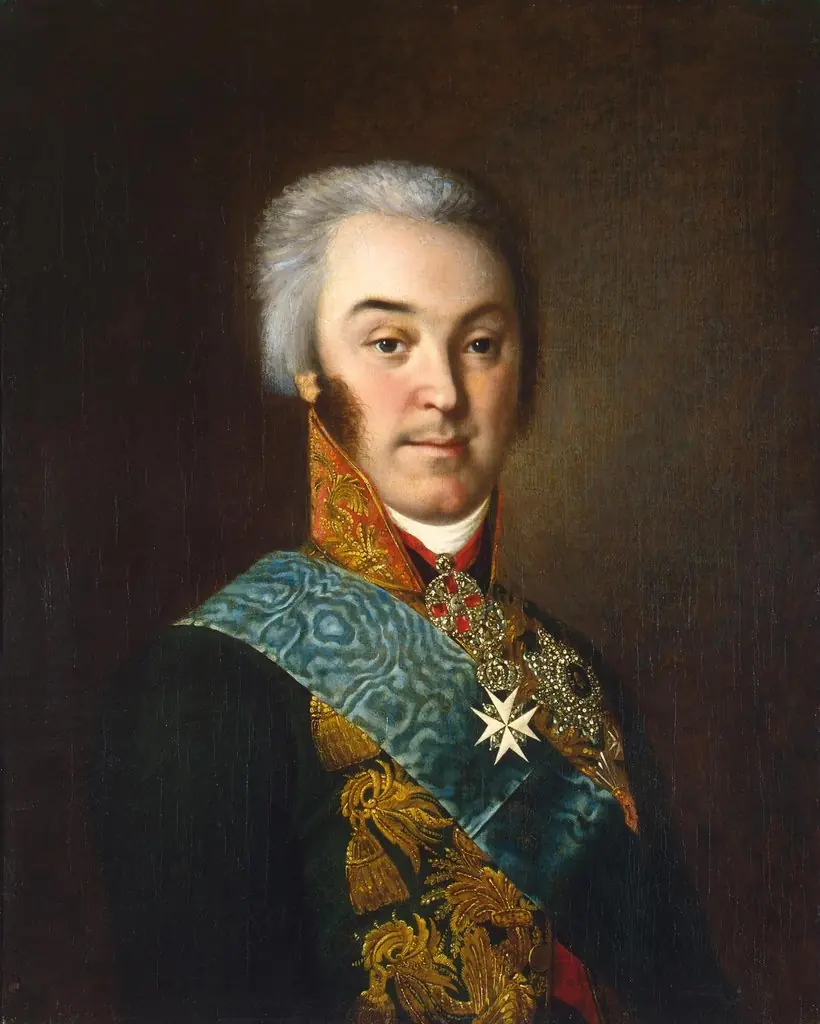 Portrait of Count Nikolay Sheremetev
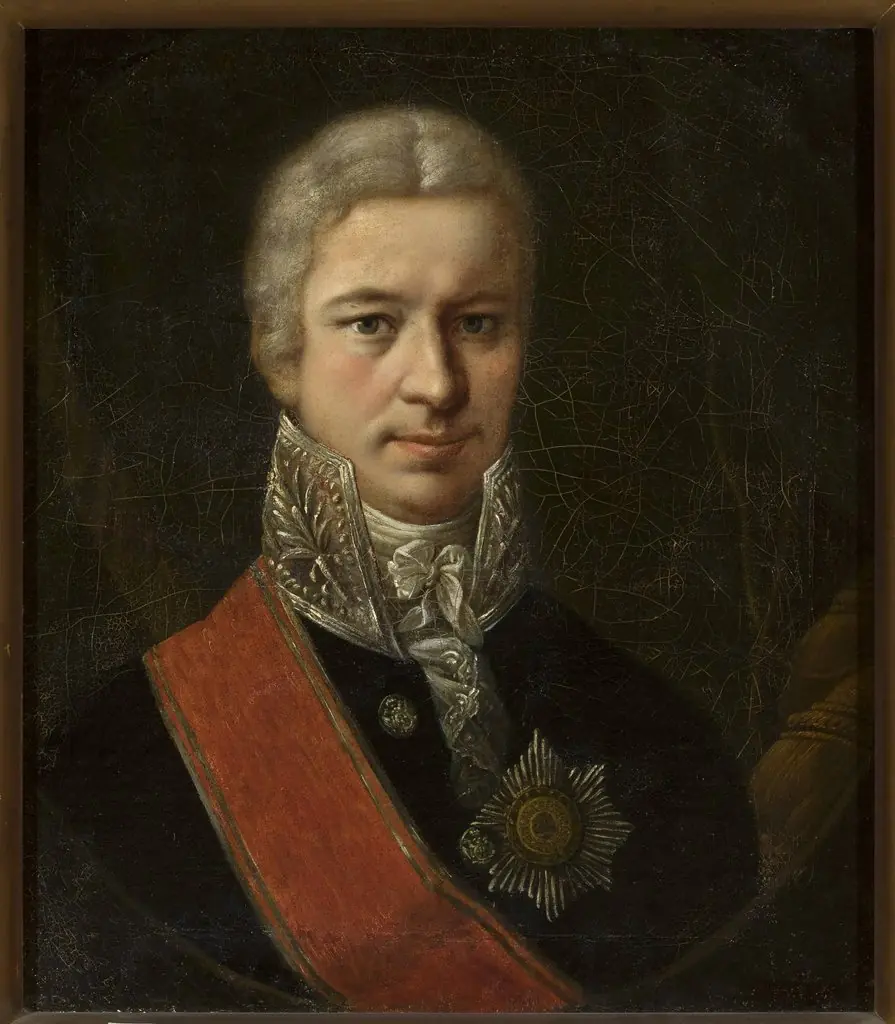 Portrait of Miączyński, voivode
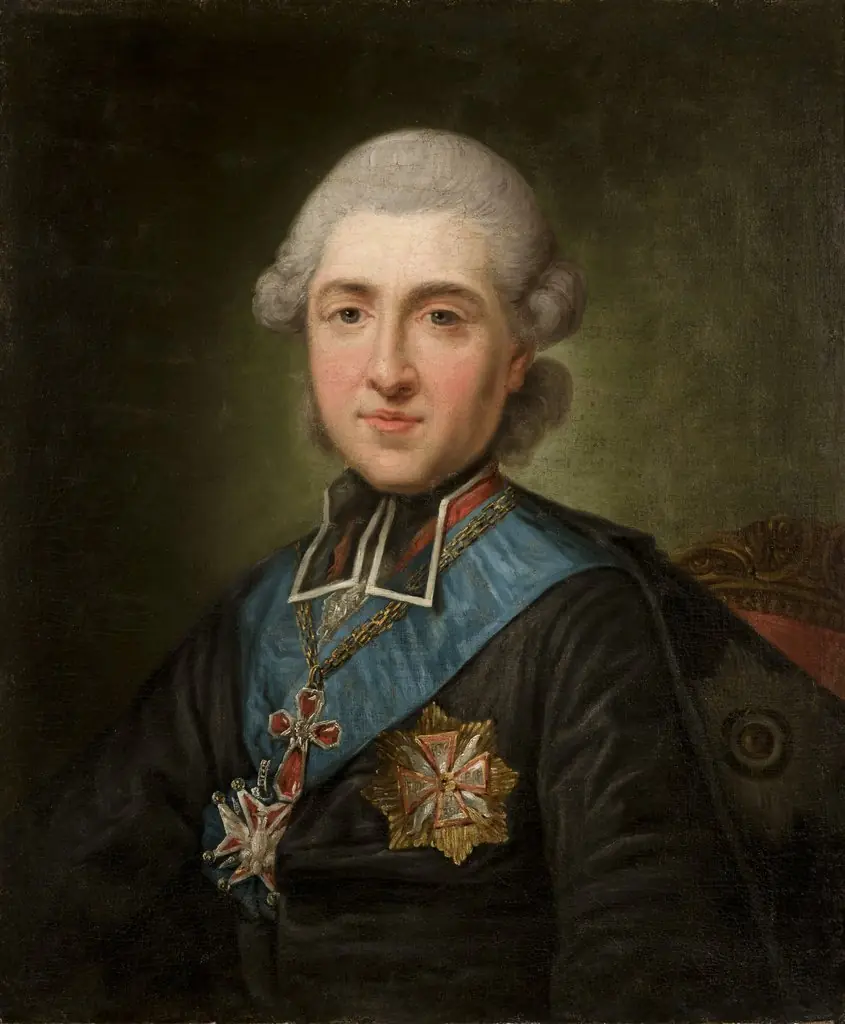 Portrait of Primate Michał Poniatowski
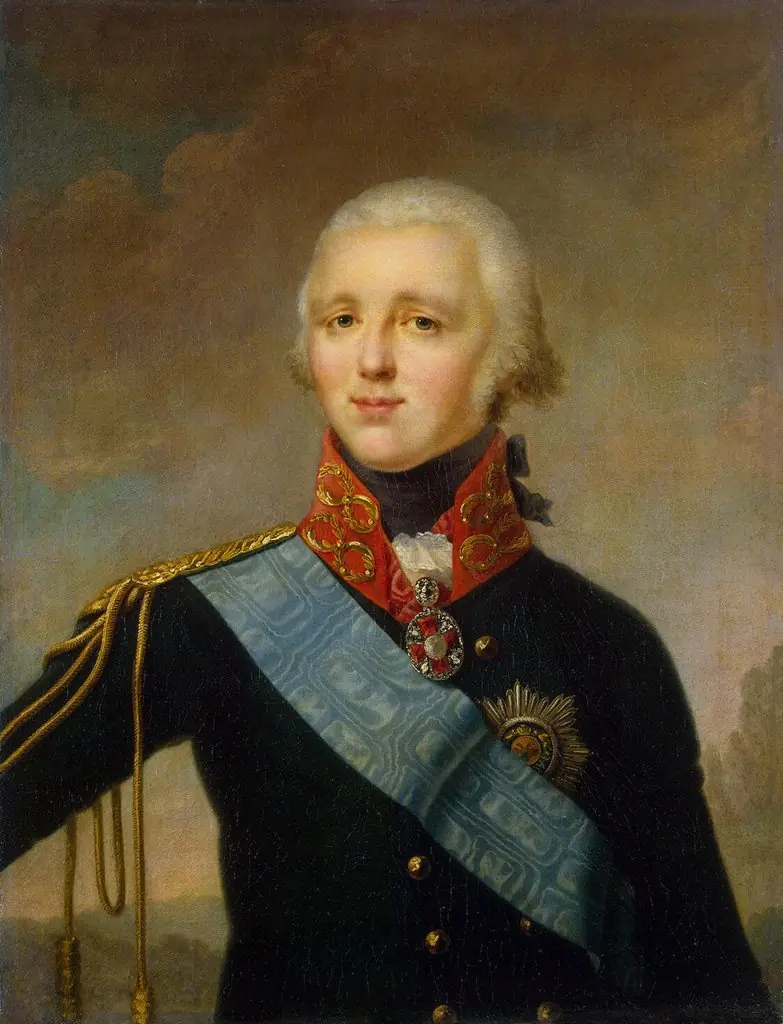 Portrait of Alexander I
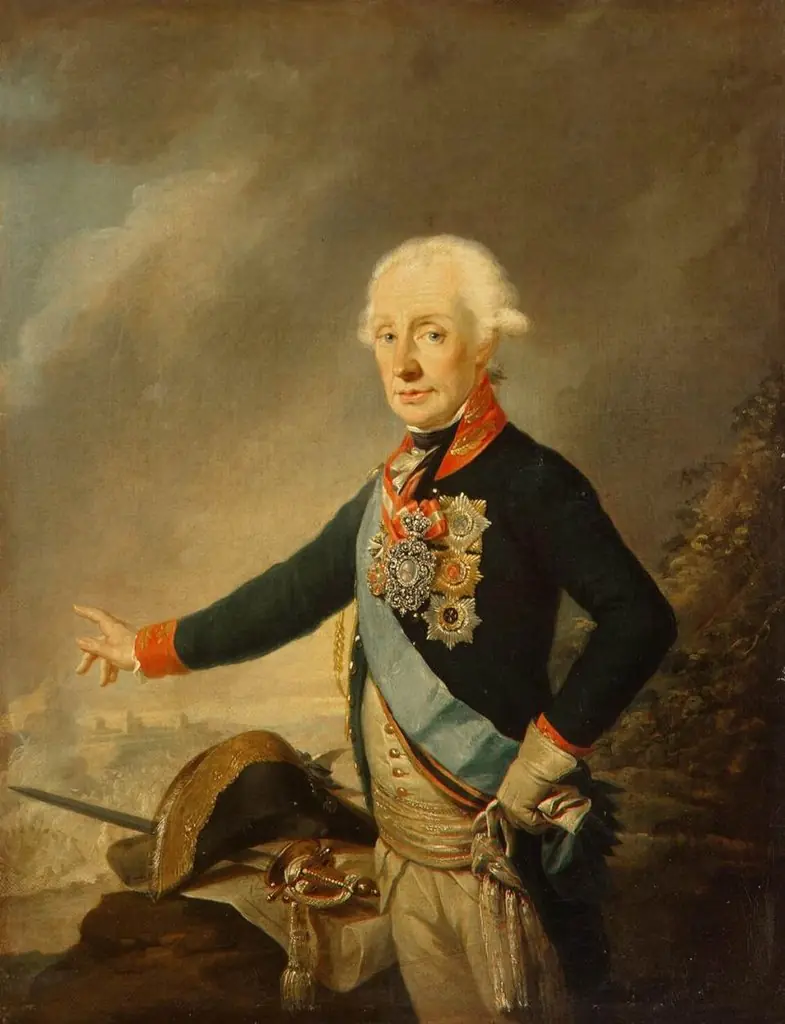 Portrait of Count Alexander Suvorov
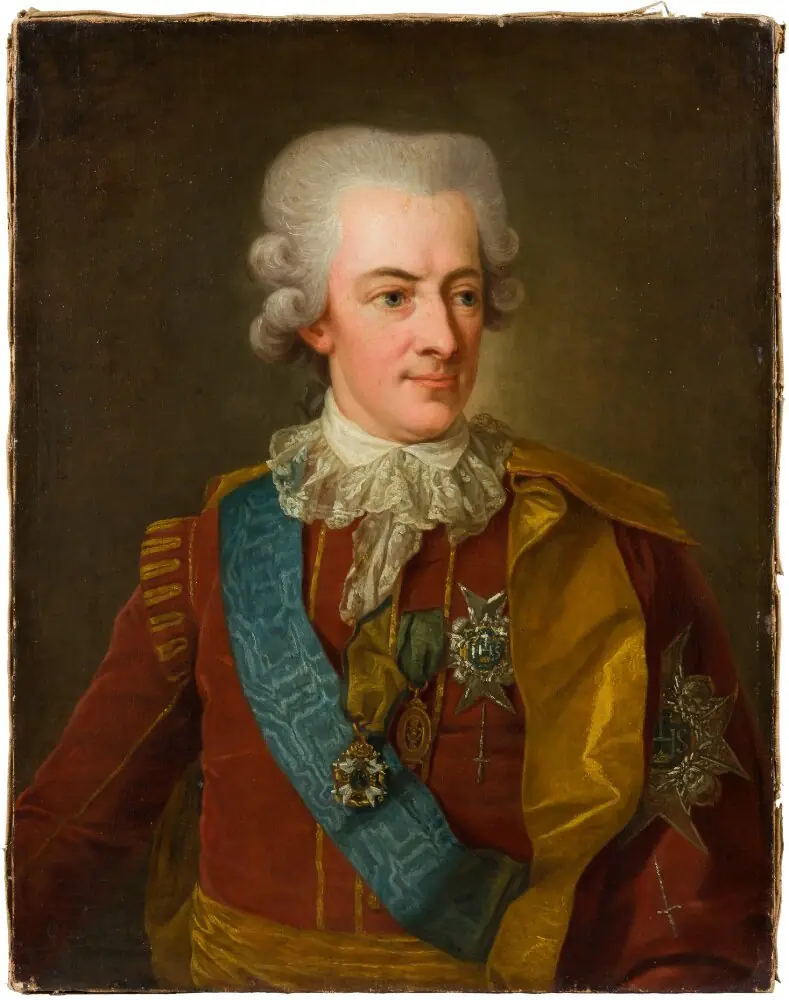 Gustav III (1746–1792), King of Sweden
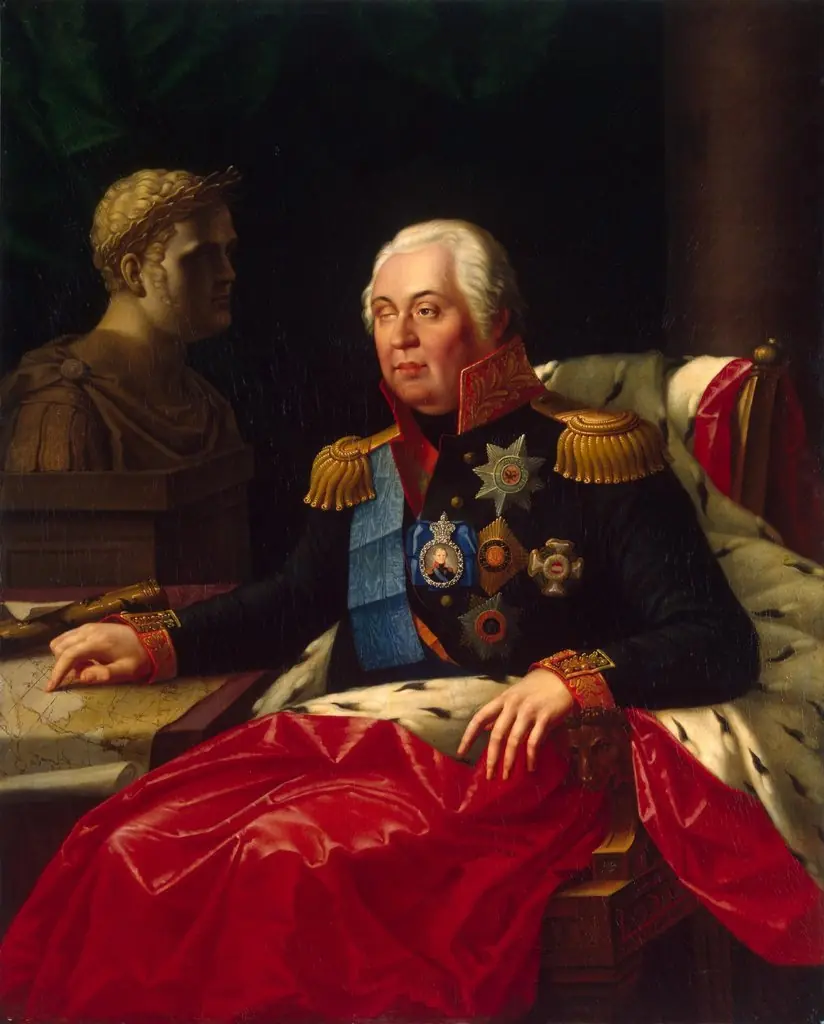 Portrait of Mikhail Kutuzov (Golenishchev-Kutuzov, Prince of Smolensk)
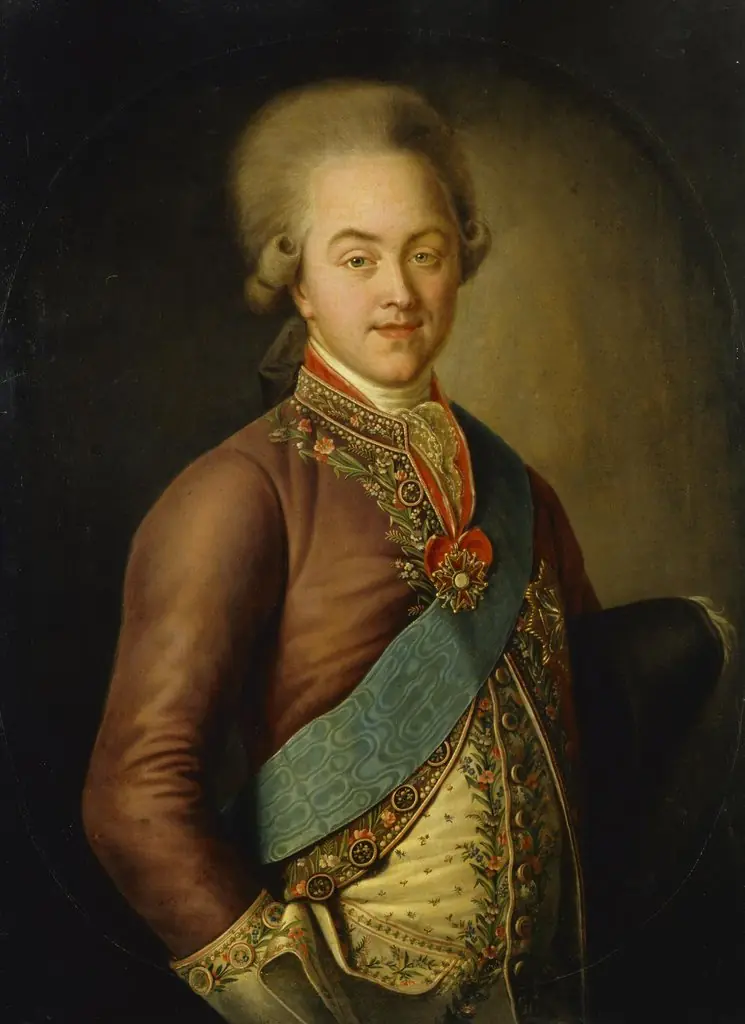 Portrait of Count N.P.Sheremetev
 Portrait of Paul I, Emperor of Russia, at a young age
- Portrait of Senator Piotr Myatlev