Artwork
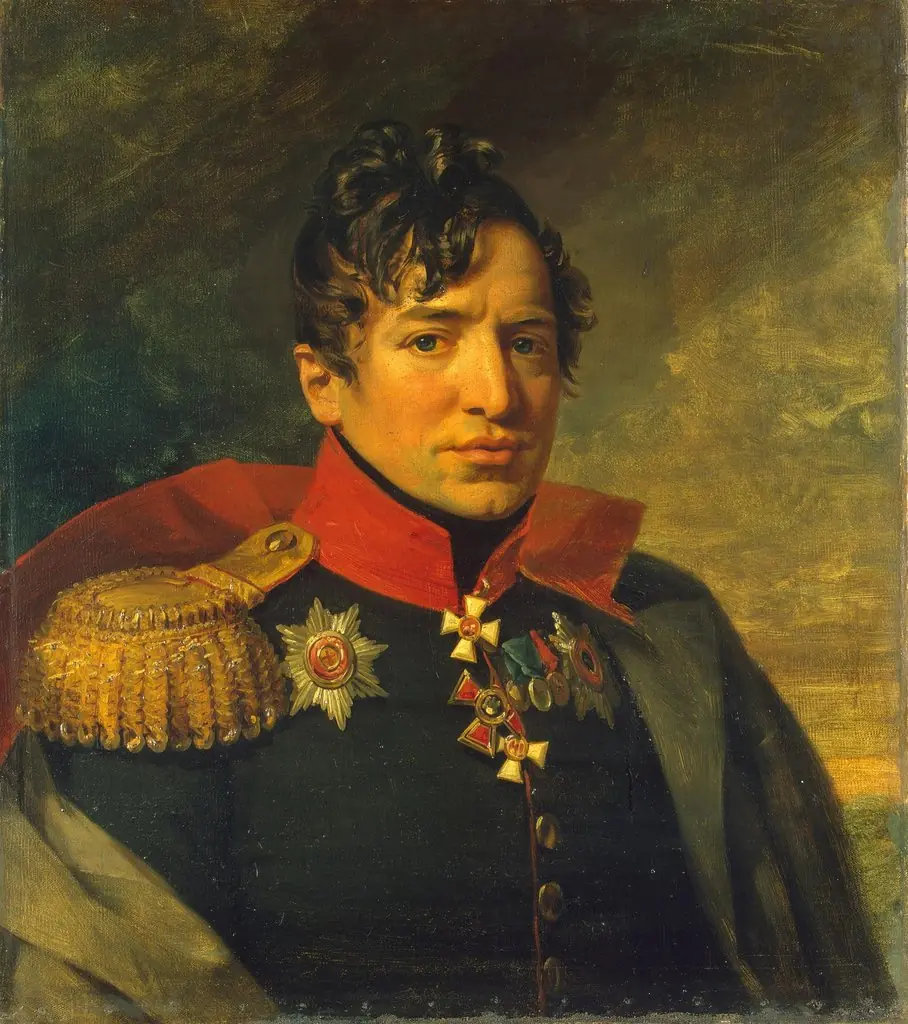
Portrait of Fyodor P. Uvarov (1769-1824) (the artist's replica ?)
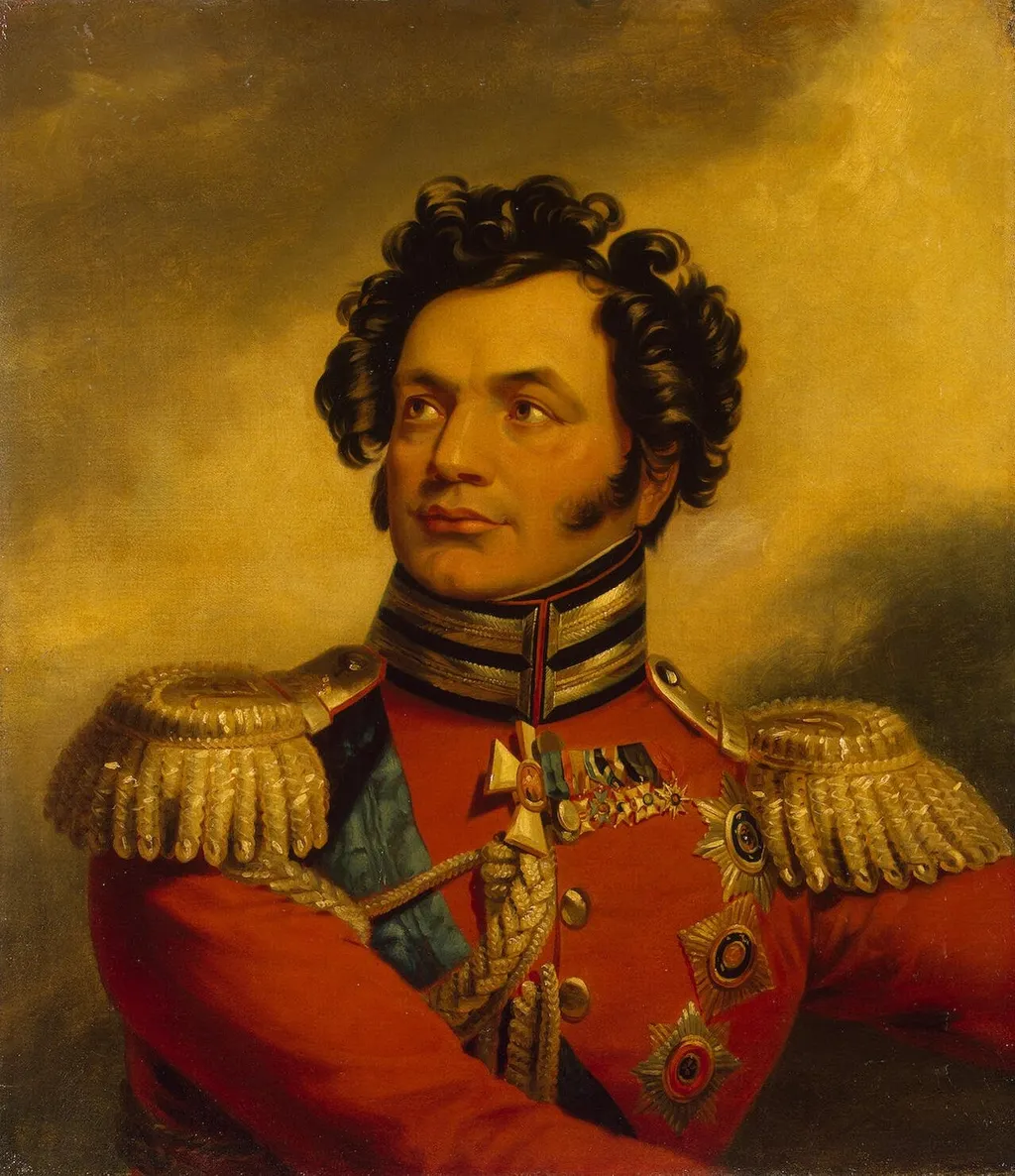
Portrait of Fyodor P. Uvarov (1769-1824) (the artist's replica ?) is an oil painting by the Russian Icon artist Unknown. It dates from 1824 and is held in the collection of the Hermitage Museum. This oil painting depicts a high-ranking military officer in full ceremonial dress.
About this work
Overview
A plain, unadorned backdrop ensures undivided attention on the figure, reinforcing the portrait’s formal and official character.
This oil painting depicts a high-ranking military officer in full ceremonial dress. The subject’s stiff posture and direct gaze convey authority, while the meticulous rendering of his uniform, rich red fabric with gold embroidery and an array of medals, emphasizes his status. A plain, unadorned backdrop ensures undivided attention on the figure, reinforcing the portrait’s formal and official character.
Subject & Meaning
The sitter is identified as Fyodor P. Uvarov, a military officer whose attire and decorations reflect his elevated rank within the imperial hierarchy. The portrait’s composition, devoid of narrative elements, centers on individual prestige and institutional power. The medals and sash signify not only personal achievement but also allegiance to the state, presenting Uvarov as both a distinguished figure and a representative of established order.
Technique & Style
Executed in oil, the painting demonstrates precise brushwork in the depiction of textiles and metalwork, capturing the sheen of gold braid and the weight of fabric. The restrained palette, dominated by red and black, contrasts sharply with the muted background, heightening the figure’s prominence. The artist’s attention to detail aligns with contemporary European portrait conventions, favoring clarity and legibility over decorative flourish.
History & Provenance
The work is believed to be a replica, though its authorship remains uncertain. Uvarov’s dates place the original portrait within the late 18th or early 19th century, a period marked by frequent commissions of military figures in Russia. The painting’s current location and earlier ownership are not fully documented, though its stylistic traits suggest ties to state or aristocratic collections of the era.
Context
Portraits of military officers gained prominence in Russia during the reigns of Catherine the Great and Alexander I, reflecting the empire’s expansion and the valorization of military service. Such images served both as personal commemoration and as propaganda, reinforcing the connection between martial prowess and political authority. The plain background and formal attire typify the genre’s emphasis on duty and hierarchy.
Legacy
While not widely reproduced, the portrait contributes to the visual record of Russia’s military elite during a transformative period. Its replication suggests contemporary demand for such images, whether for private display or official use. Today, it offers insight into the conventions of state portraiture and the representation of power in imperial Russia, complementing similar works in institutional collections.
Artist & collection









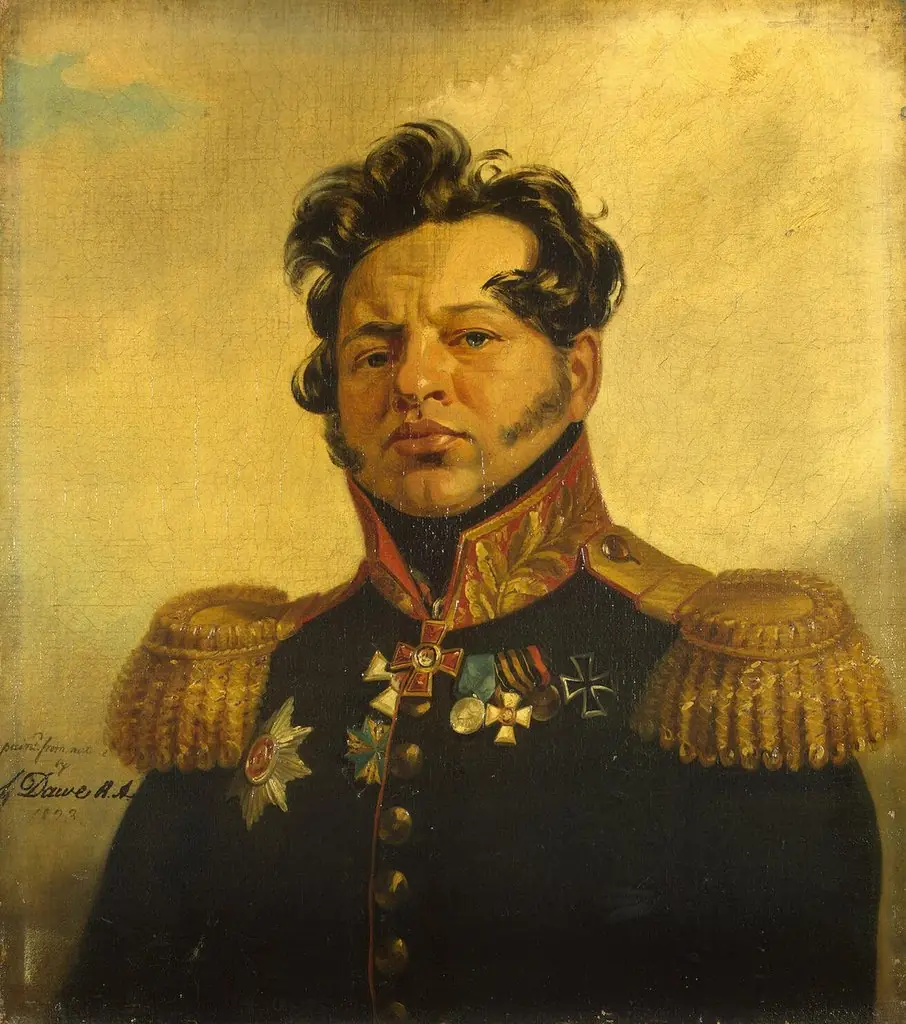
- Portrait of Fyodor N. Posnikov (1784-1841)
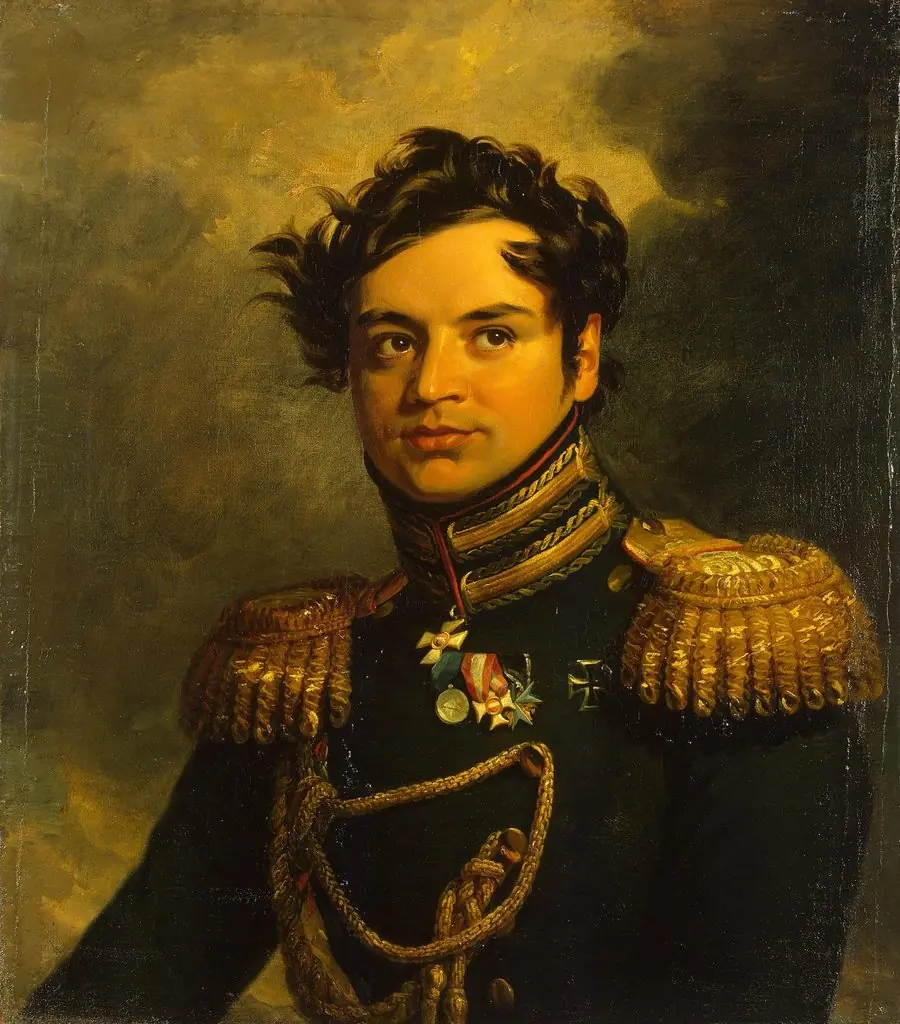 Portrait of Yakov A. Potyomkin (1781-1831)
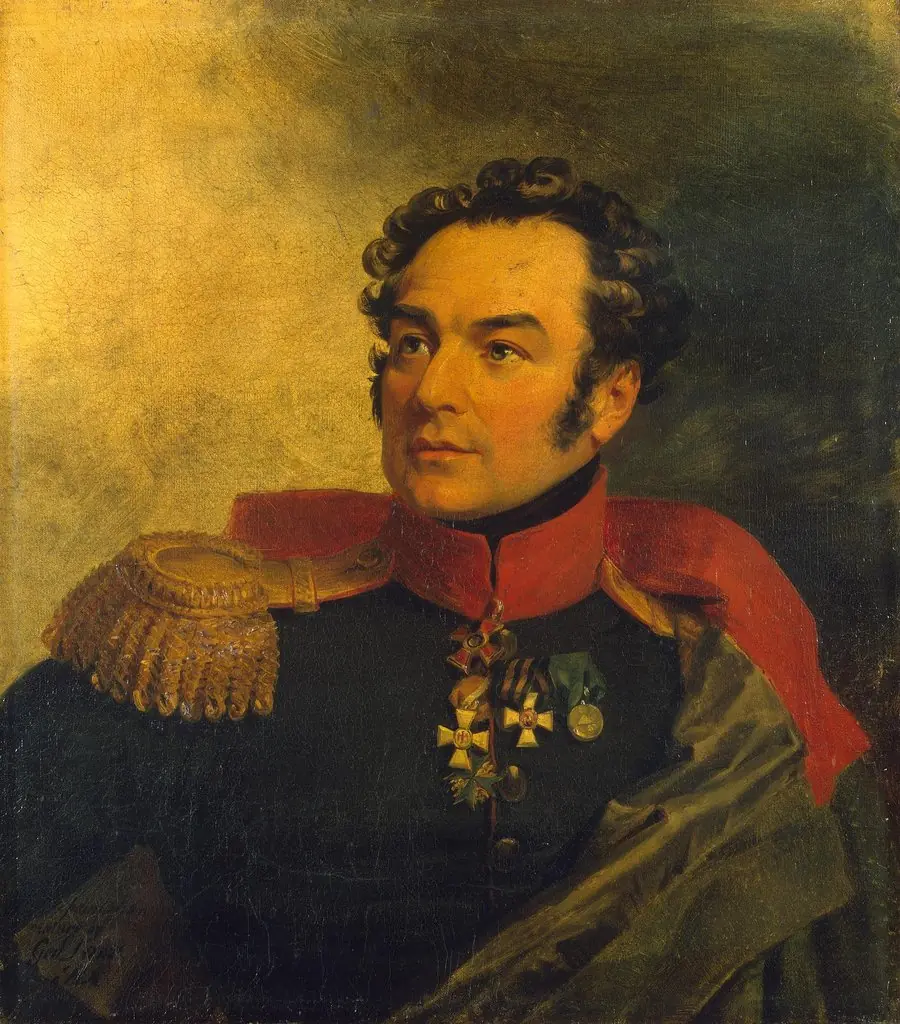 Portrait of Pyotr I. Balabin (1776-1856)
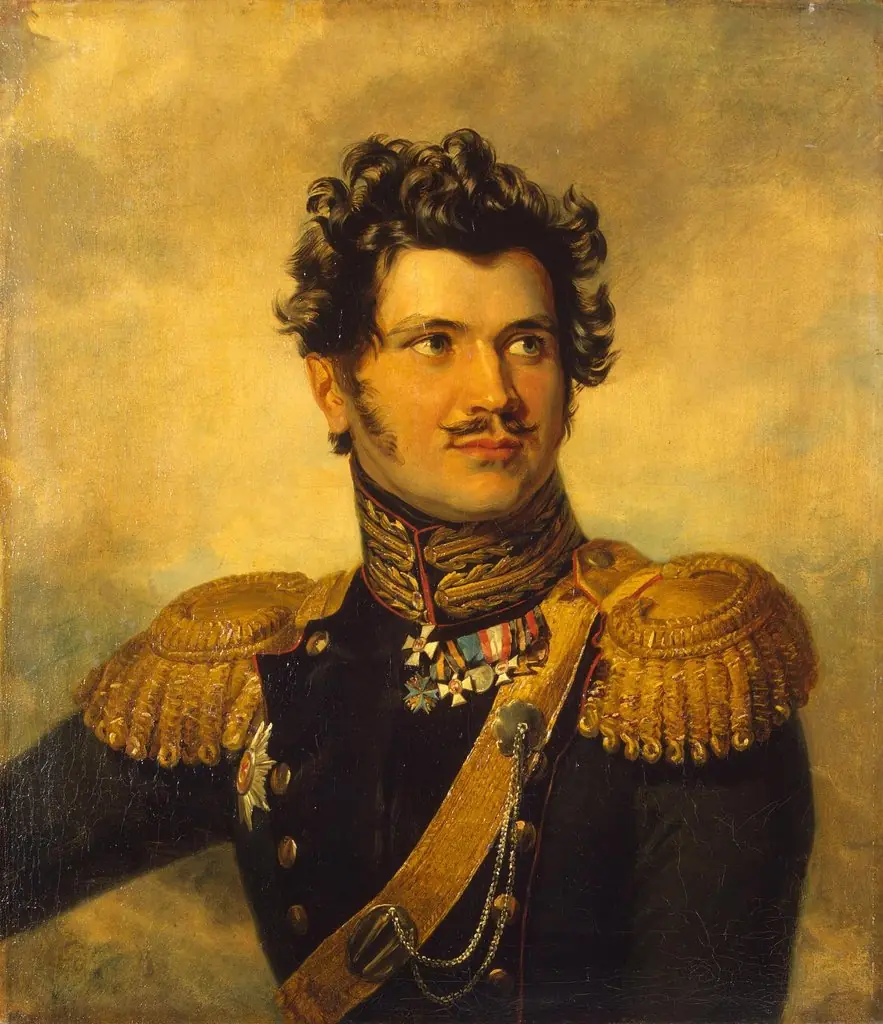 Portrait of Ivan O. Sukhozanet (1788-1861)
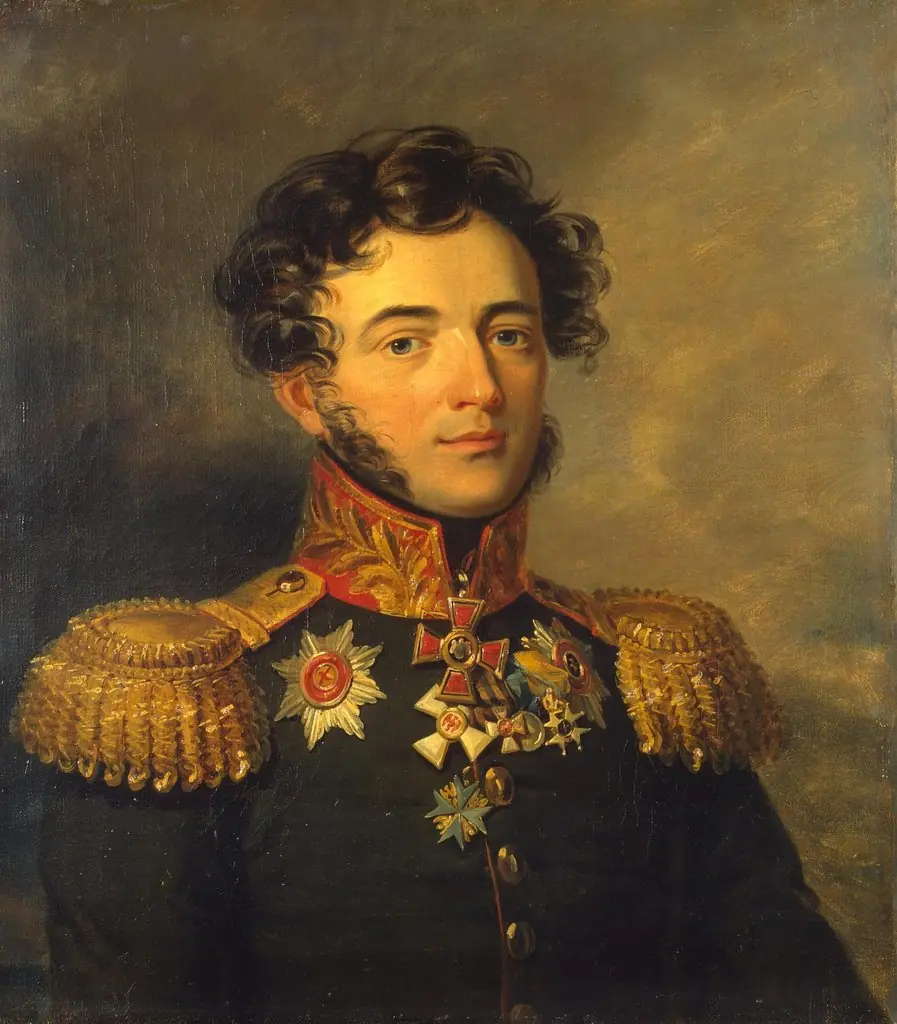 Portrait of Sergey F. Zheltukhin (1776-1833)
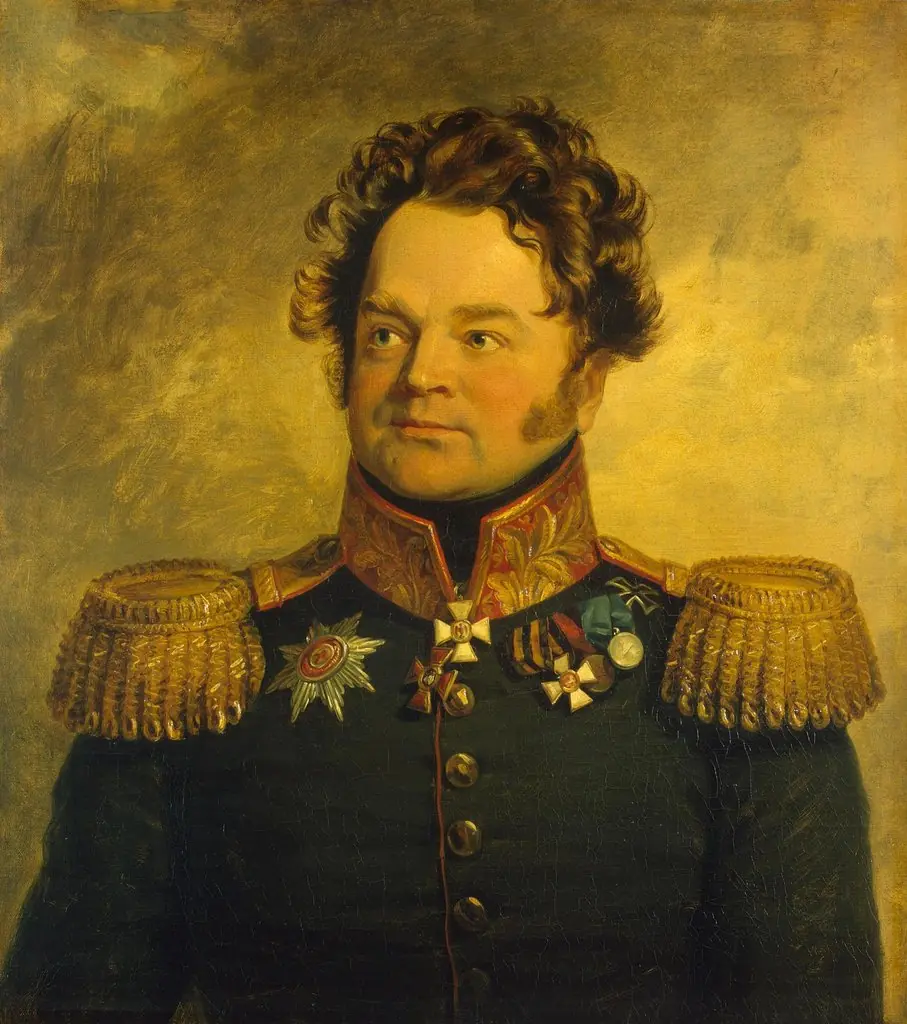 Portrait of Nikanor M. Svechin (1772-1849)
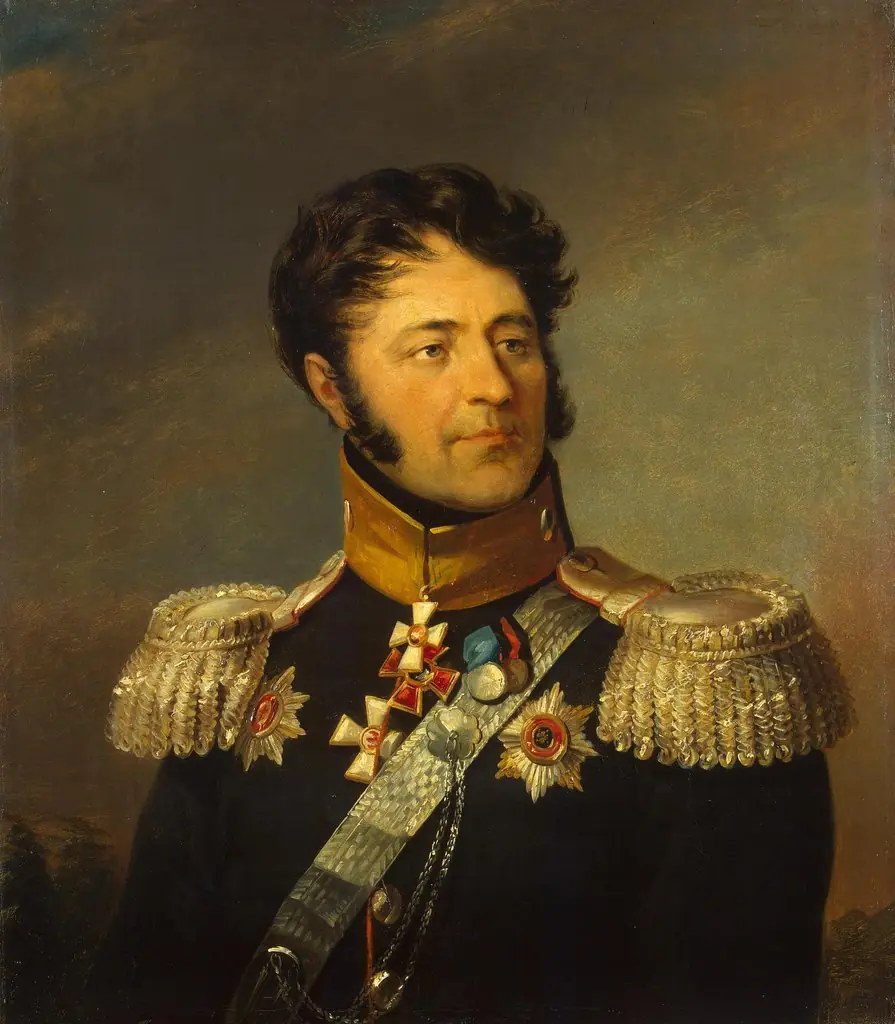 Portrait of Luka A. Denisyev (1762-1846)
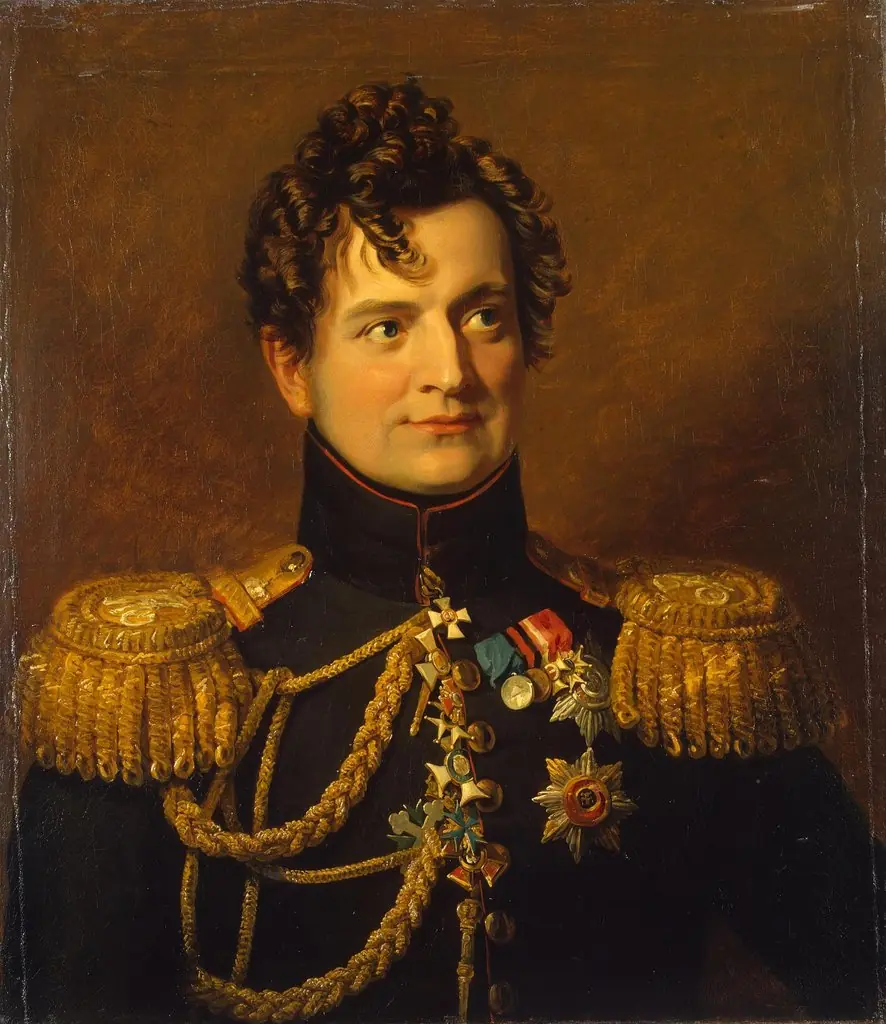 Portrait of Adam P. Ozharovsky (1776-1855)
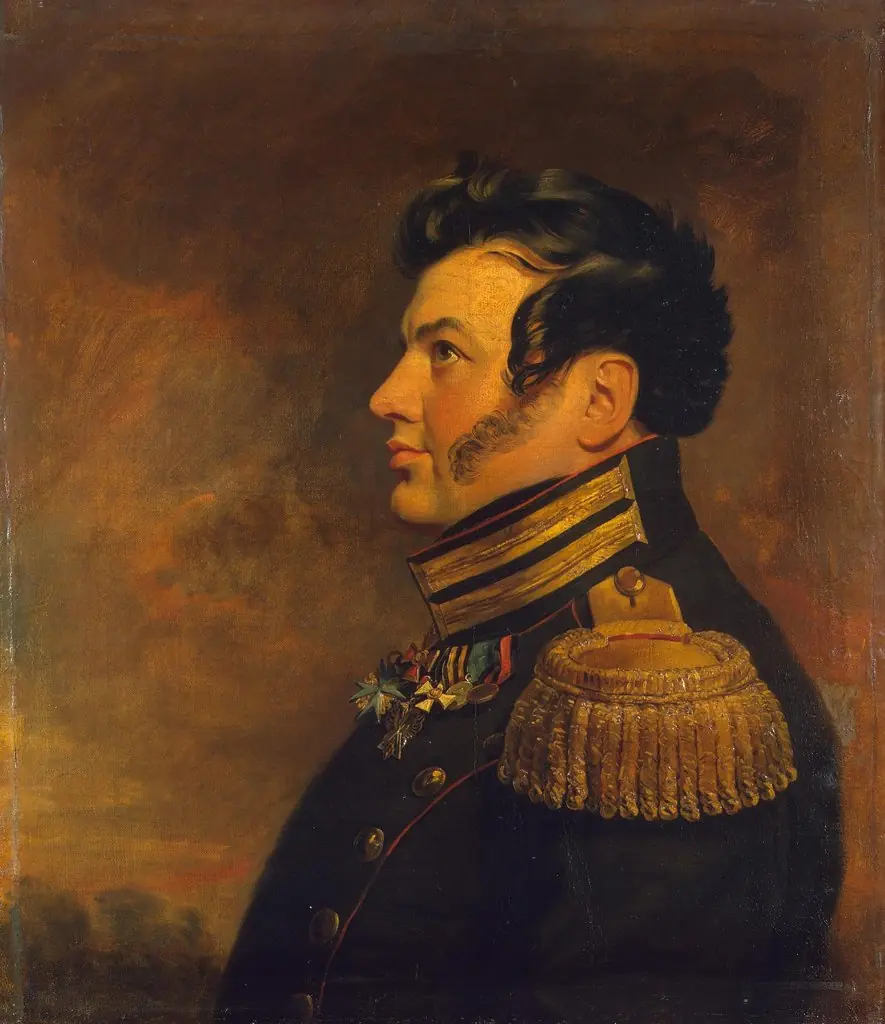 Portrait of Maxim K. Kryzhanovsky (1777-1839)
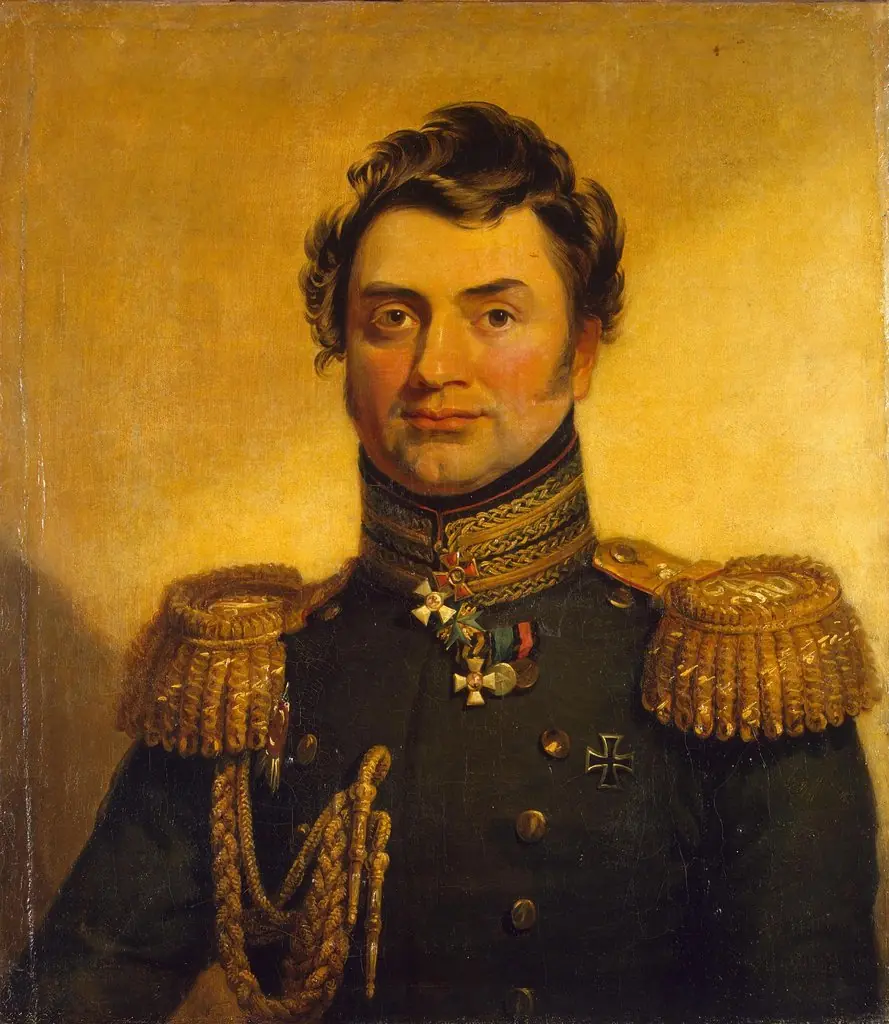 Portrait of Matvey Ye. Khrapovitsky (1784-1847) (replica of the 1821 portrait)
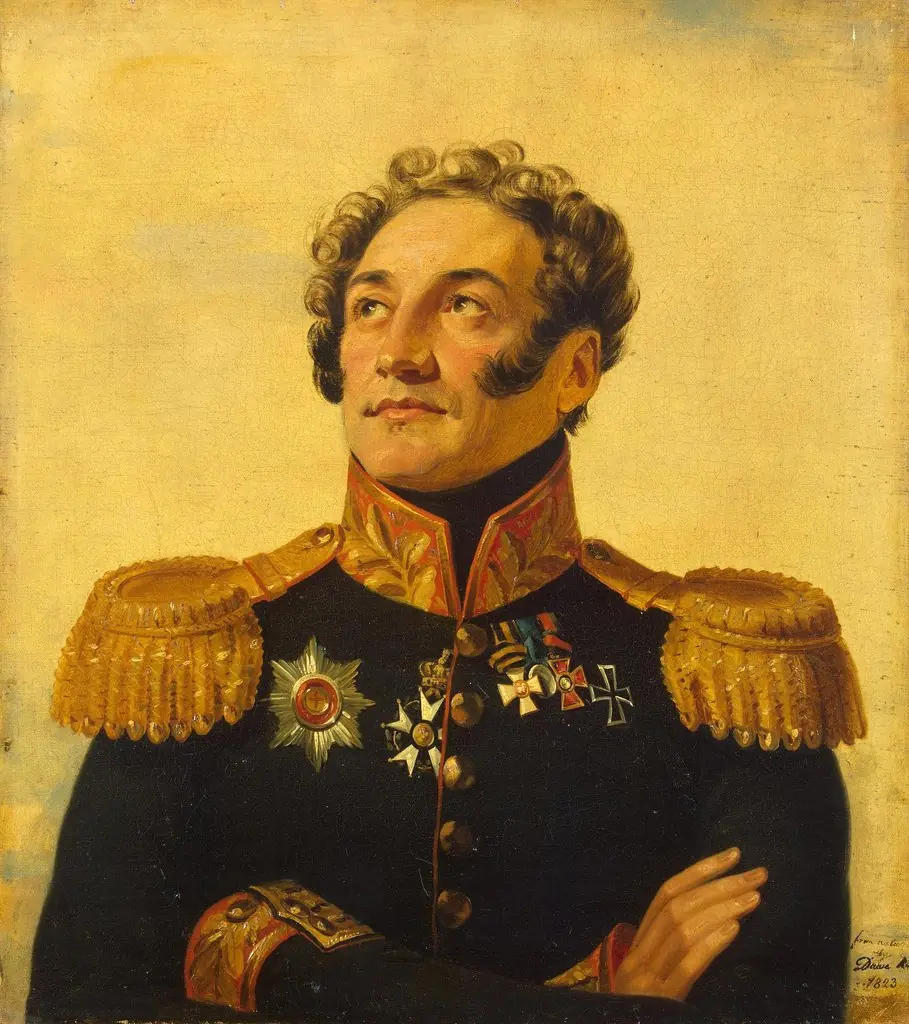 Portrait of Platon I. Kablukov (1781-1835) (1st)
 Portrait of Pyotr A. Kikin (1775-1834)